
Dense-flowered Smartweed (Polygonum glabrum)
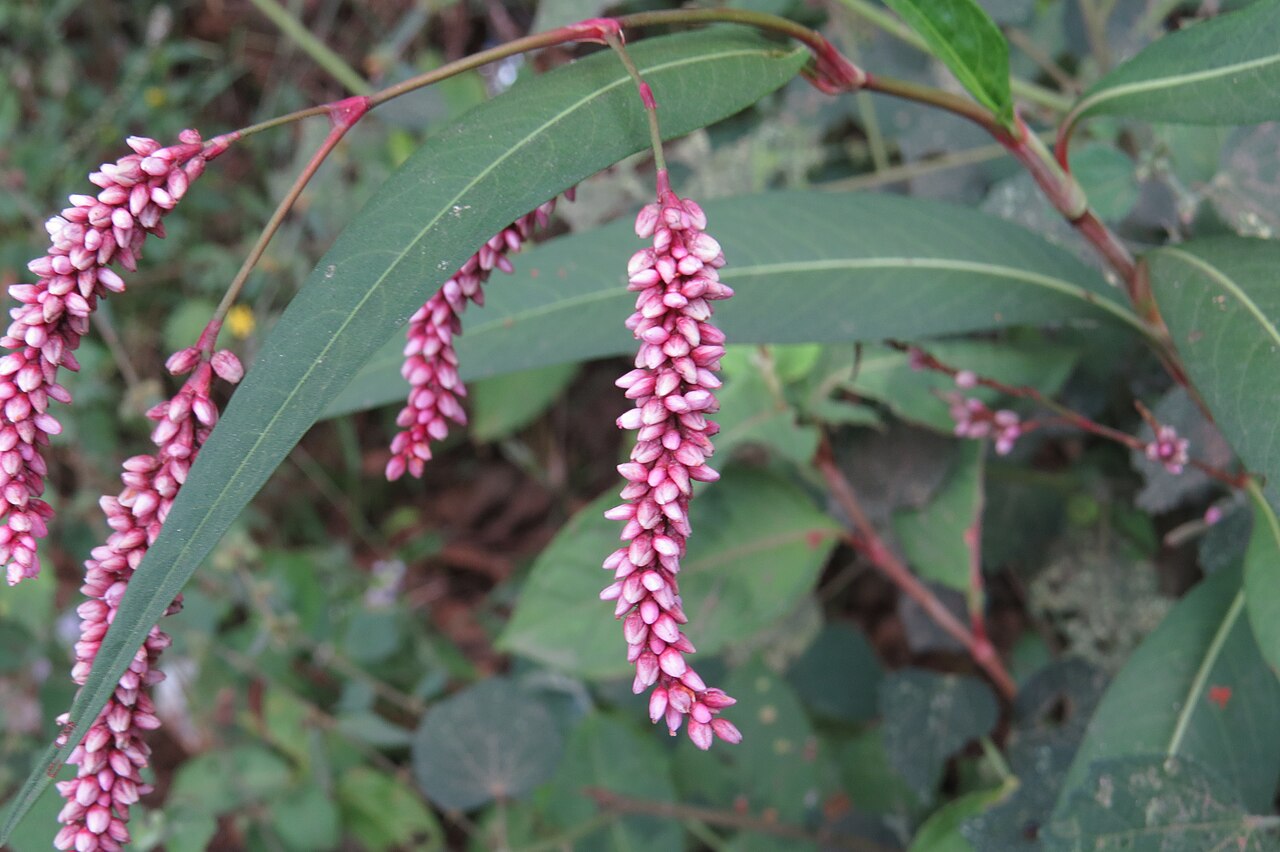
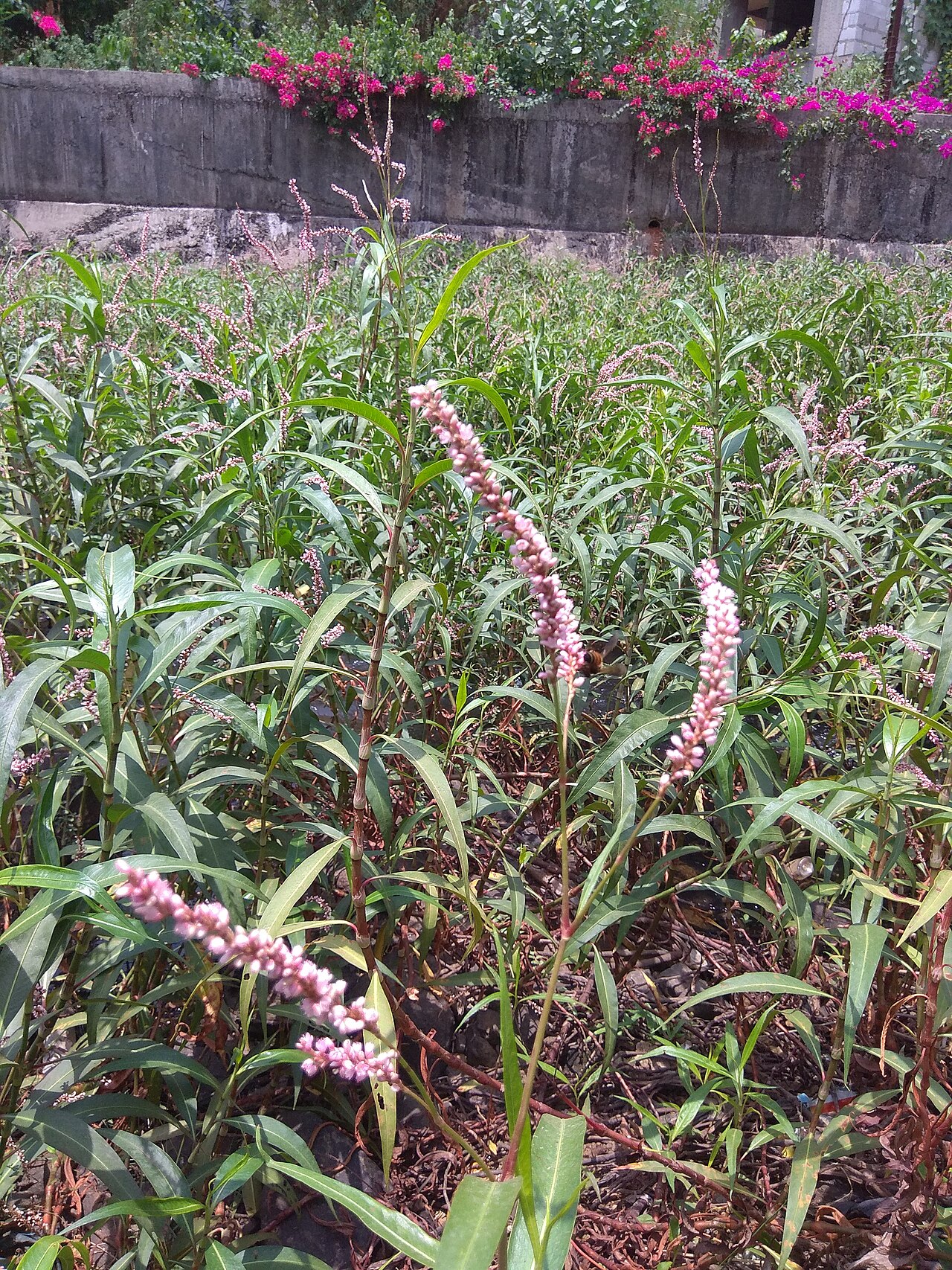
Polygonum glabrum, known as Dense-flowered Smartweed or denseflower knotweed, is a tall, smooth-stemmed smartweed of shallow water and wet ground. In late summer and fall, and nearly year-round in the far South and Puerto Rico, it carries thick spikes of small pink flowers above long, willow-like leaves. Plants commonly reach 3 to 5 feet tall and form leafy stands along ditches, ponds and swamp edges.
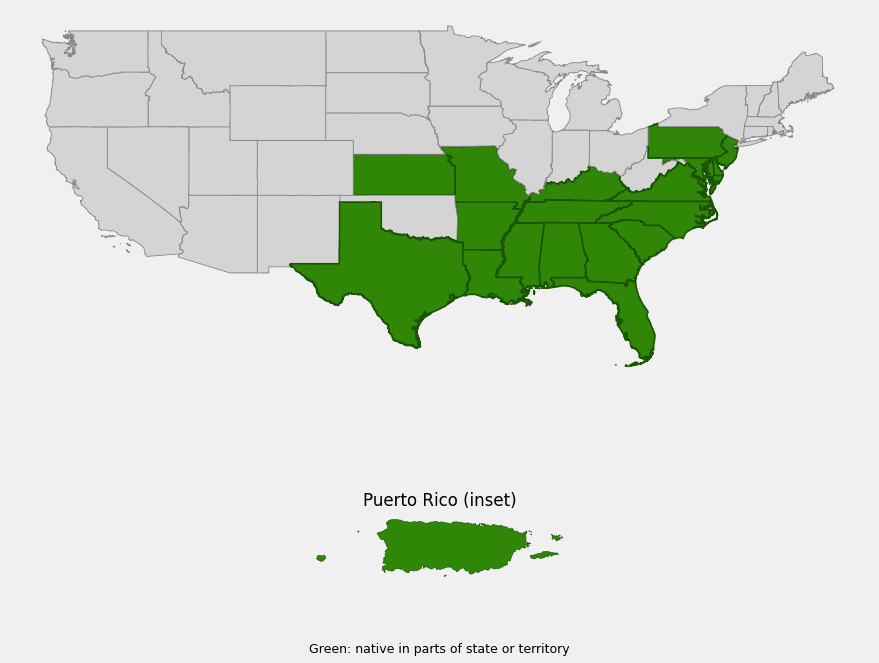
In the United States it is native mainly to the Southeastern Coastal Plain and the lower Mississippi Valley, from Florida and Texas north to Virginia, Kentucky and Missouri, with scattered records farther north in Delaware, Maryland, New Jersey, Pennsylvania and Kansas. It is also native to Puerto Rico and the U.S. Virgin Islands, and it ranges widely through the tropics of the Americas, Africa and Asia.
Many botanists now place this species in the genus Persicaria, as Persicaria glabra; USDA PLANTS keeps it in Polygonum. The species name glabrum means “smooth,” a nod to its hairless stems, leaves and sheaths. This page covers how to identify it, where it grows, how to use it in wet gardens and restorations, and its value to wildlife.
Identification
Dense-flowered smartweed is one of the largest smartweeds in the Southeast. Its combination of smooth, bristle-free stem sheaths, thick pink spikes and stout, often reddish stems is the best way to tell it from its many relatives.
Stems & Sheaths
The stems are stout, smooth, often hollow and spongy, and green to reddish, with swollen joints. The lower stems often lie on the mud or float, rooting at the nodes, before turning upward. At each joint a papery sheath (ocrea) wraps the stem. In this species the sheaths are smooth and lack the fringe of bristles along the top that many other smartweeds have, a key identification feature.
Leaves
The leaves are alternate, narrowly lance-shaped and long-pointed, usually 4 to 10 inches long and up to about 1.5 inches wide. They are smooth on both surfaces, often with a prominent midrib, and lack the dark, thumbprint-like blotch found on some smartweeds. They have no peppery taste.
Flowers
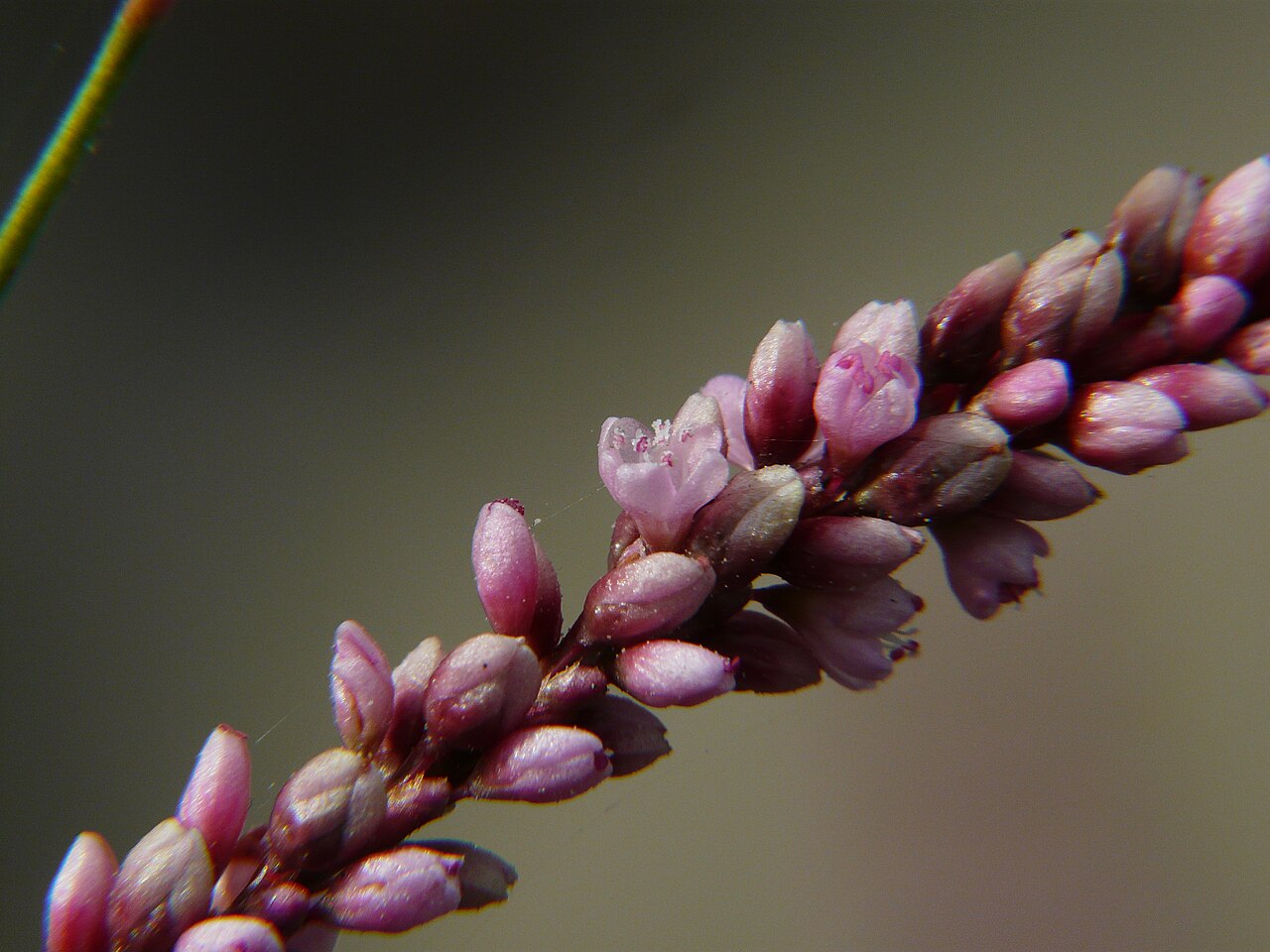
Small flowers crowd into dense, cylindrical spikes 1 to 4 inches long at the ends of the stems and branches. The spikes are erect to arching, and their stalks are smooth rather than glandular or sticky. Each flower is only about an eighth of an inch long, with five pink to rose (sometimes whitish) petal-like sepals.
Seeds
Each flower produces a single small, shiny, dark brown to black achene, lens-shaped and about an eighth of an inch long. Seeds ripen continuously while the plant keeps flowering, so the spikes often show flowers and seeds together.
Similar Species
Swamp Smartweed has slender, interrupted spikes and bristle-fringed sheaths. Dotted Smartweed has greenish-white flowers dotted with glands and a peppery taste. Pennsylvania smartweed (Polygonum pensylvanicum) has sticky, glandular flower stalks, and pale smartweed (P. lapathifolium) usually has whitish, nodding spikes and glandular dots on the leaf undersides. Water Smartweed has shorter, wider spikes and often floating leaves.
Quick Facts
| Scientific Name | Polygonum glabrum Willd. (syn. Persicaria glabra) |
| Family | Polygonaceae (buckwheat family) |
| Plant Type | Emergent wetland herb; annual, or a short-lived perennial in frost-free areas |
| Mature Height | 2–5 ft (occasionally taller) |
| Mature Spread | 1–3 ft; forms stands |
| Growth Rate | Fast |
| Sun Exposure | Full sun to part shade |
| Water Needs | High; wet soil to shallow standing water |
| Soil Type | Mud, muck, sand or clay in wet places |
| Soil pH | About 5.5–7.5 |
| Bloom Time | Late summer to fall; nearly year-round in Florida and Puerto Rico |
| Flower Color | Pink to rose, sometimes whitish |
| Fall Color | Stems and leaves may turn reddish |
| Fruit | Small, shiny, dark brown to black achenes |
| Deer Resistant | Moderate |
| USDA Hardiness Zones | 7–11 (grows as an annual where winters freeze) |
Native Range
USDA PLANTS records dense-flowered smartweed as native in Alabama, Arkansas, Delaware, Florida, Georgia, Kansas, Kentucky, Louisiana, Maryland, Mississippi, Missouri, New Jersey, North Carolina, Pennsylvania, South Carolina, Tennessee, Texas and Virginia, and in Puerto Rico and the U.S. Virgin Islands. Its heartland is the Atlantic and Gulf Coastal Plain and the Mississippi River lowlands. The records from Kansas, Pennsylvania, New Jersey, Delaware and Maryland are outlying ones at the northern edge of its range.
It is an obligate wetland plant, growing in shallow water and on wet mud along the edges of ponds, lakes, rivers and canals, in swamps, marshes, wet ditches and drawdown zones of reservoirs, and in rice fields and other wet farmland. It often appears in late summer on mud exposed by falling water levels. In Puerto Rico it grows in lowland marshes, ditches and stream banks.
Outside the United States it is widespread in tropical and warm-temperate regions: Mexico, Central and South America and the Caribbean, as well as tropical Africa, India, Southeast Asia and the Pacific.
📋 Regional plant lists featuring Dense-flowered Smartweed: North & South Florida · Alabama, Georgia & Mississippi · North & South Carolina · Arkansas, Louisiana, Eastern Oklahoma & Eastern Texas · South & West Texas · Kentucky & Tennessee · Maryland, Virginia & West Virginia · Delaware, Southern New Jersey & Long Island · New York, Pennsylvania & Northern New Jersey · Illinois, Iowa & Missouri · Nebraska, Kansas & Eastern Colorado · Puerto Rico
Growing & Care Guide
Dense-flowered smartweed is easy to grow wherever you have wet soil and sun. It is rarely sold, but it establishes quickly from seed in ponds, rain gardens and wetland restorations, and it reseeds itself. Because it can fill a muddy margin in one season, it is best suited to larger wet spaces rather than small, tidy beds.
Light
Full sun gives the densest flowering and sturdiest stems. It tolerates part shade along wooded swamp edges but flowers less.
Soil & Water
Grow it in constantly wet soil or in shallow water up to about a foot deep. It thrives on mud, muck or wet sand and handles fluctuating water levels well. It does not tolerate drying out for long while it is growing.
Planting Tips
Sow seed on wet mud in fall, or in spring after cold, moist treatment (smartweed seeds usually need a few months of cold, moist conditions before they germinate). Transplants or rooted stem pieces can be set at the water’s edge in spring. In a lined pond, plant it in a large container of heavy soil set on a shelf just below the surface.
Pruning & Maintenance
Little care is needed. Leave the stems standing into winter so birds can feed on the seeds, then cut back the dead stems in spring. Thin seedlings if you want to keep space for other marginal plants.
Propagation
Grows readily from seed, and pieces of stem root easily at the nodes when pushed into wet mud. Plants often reseed on their own on exposed mud.
Landscape Uses
- Pond and lake margins: a fast-growing emergent that fills shallow edges and stabilizes mud
- Wetland restoration: a quick-cover native for mitigation wetlands, moist-soil units and reservoir drawdown zones
- Rain gardens and bioswales: tolerates periodic flooding in the wettest zone of a rain garden
- Waterfowl management: smartweeds are a classic moist-soil plant managed to provide seed for ducks
- Wildlife gardens: late-season flowers for insects and seeds for birds
Wildlife & Ecological Value
Smartweeds are among the most valuable wetland plants for wildlife, and dense-flowered smartweed is no exception.
For Pollinators
The small pink flowers produce nectar over a long season and are visited by bees, wasps, flies and small butterflies. Because it blooms late in the year, and almost year-round in the tropics, it provides food when many other plants are finished.
For Birds
Smartweed seeds are an important food for ducks, especially mallards, teal, pintails and wood ducks, and are also eaten by rails, red-winged blackbirds, sparrows and other seed-eating birds. Wildlife managers often encourage smartweeds in moist-soil impoundments for waterfowl.
For Mammals
Muskrats and other small mammals eat the stems and seeds, and the dense stands give cover to marsh rabbits and other wetland animals.
Ecosystem Role
As a quick colonizer of exposed mud, it holds soil, shades the water margin and adds organic matter. The stems shelter aquatic insects, frogs and young fish when flooded, and the leaves and seeds feed a range of insects, including the caterpillars of some moths.
Cultural & Historical Uses
Smartweeds get their name from the sharp, peppery sap of some species, which can make the eyes and mouth “smart.” Dense-flowered smartweed lacks this strong peppery taste, which is one way botanists separate it from water-pepper and its relatives.
In India and Southeast Asia the plant has a long history in traditional medicine, and in parts of its tropical range it is regarded as a common weed of rice paddies and irrigation ditches. In the Americas, smartweeds of this group have long been recognized by duck hunters and wildlife managers as some of the best natural foods for waterfowl.
Botanists have long debated how to divide the large knotweed family. USDA PLANTS keeps the smartweeds in a broad genus Polygonum, while Flora of North America and most recent studies place them in Persicaria, so you will see this plant listed as Persicaria glabra in many newer field guides.
Frequently Asked Questions
Is dense-flowered smartweed native?
Yes. It is native to the southeastern United States, from Florida and Texas north to Virginia, Kentucky and Missouri, with scattered northern records, and to Puerto Rico and the U.S. Virgin Islands. It is also native across much of the world’s tropics.
How can I tell dense-flowered smartweed from other smartweeds?
Look at the papery sheaths around the stem joints. In dense-flowered smartweed they are smooth with no bristles along the top. Combine that with thick pink spikes, smooth (not sticky) flower stalks, and long, hairless, willow-like leaves.
Is Polygonum glabrum the same as Persicaria glabra?
Yes. They are two names for the same plant. USDA PLANTS uses Polygonum glabrum, while many newer floras use Persicaria glabra.
Is dense-flowered smartweed invasive?
It is a native plant that can spread quickly on wet mud and reseeds freely, so it may fill a pond edge, but it is not an invasive species in its native range. In small water gardens, grow it in a container to keep it in place.
Is dense-flowered smartweed good for wildlife?
Very. Its seeds are a favorite food of ducks and many songbirds, its flowers feed bees and other insects late in the season, and its stands provide cover in wetlands.

Looking for a nursery that carries Dense-flowered Smartweed?
Browse our native plant nursery directory: Alabama & Arkansas · Delaware, Florida & Georgia · Kansas · Kentucky, Louisiana, Maryland, Mississippi & Missouri · New Jersey & North Carolina · Pennsylvania, South Carolina, Tennessee, Texas & Virginia

