
Sweet Four O’Clock (Mirabilis longiflora)
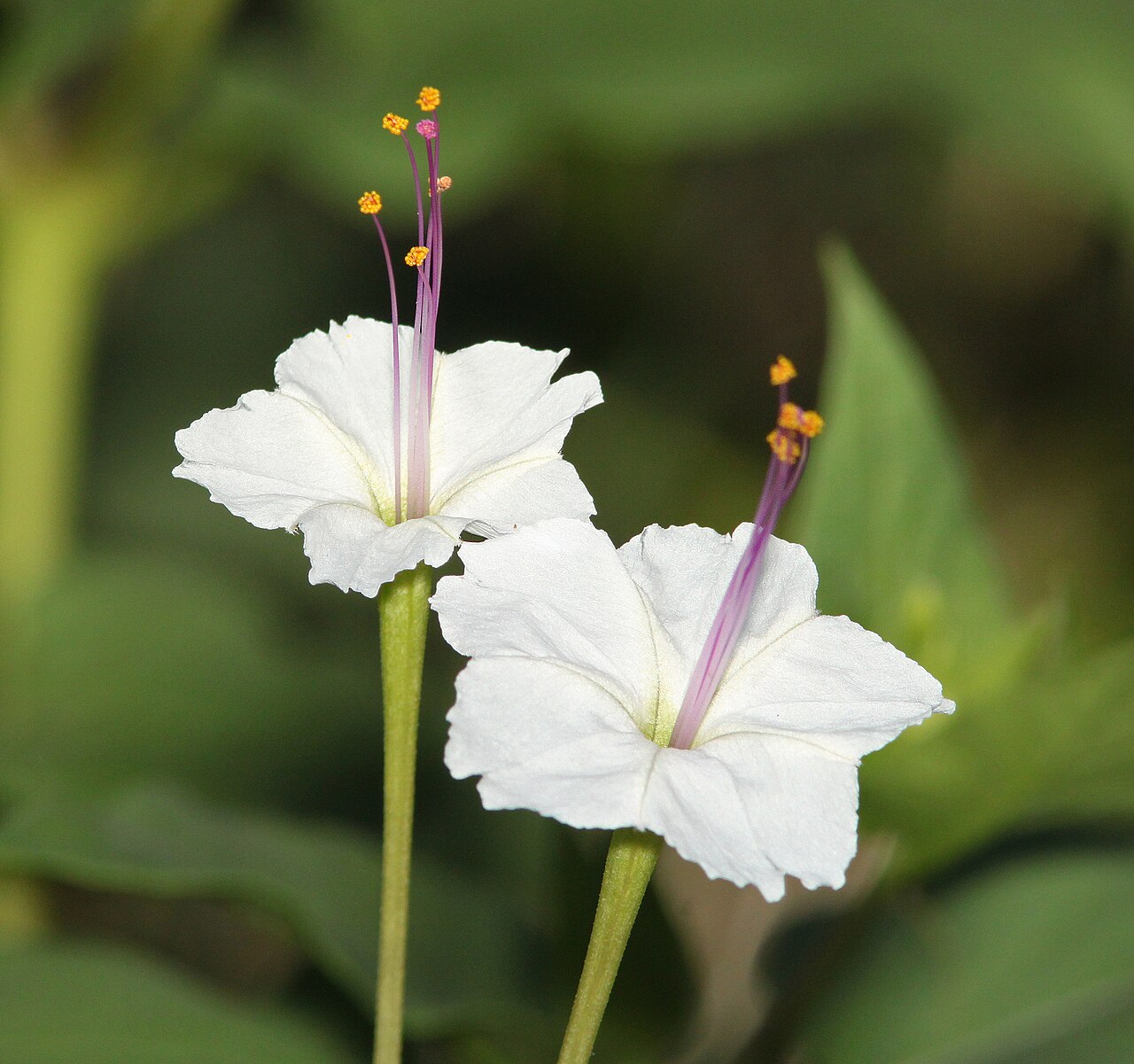
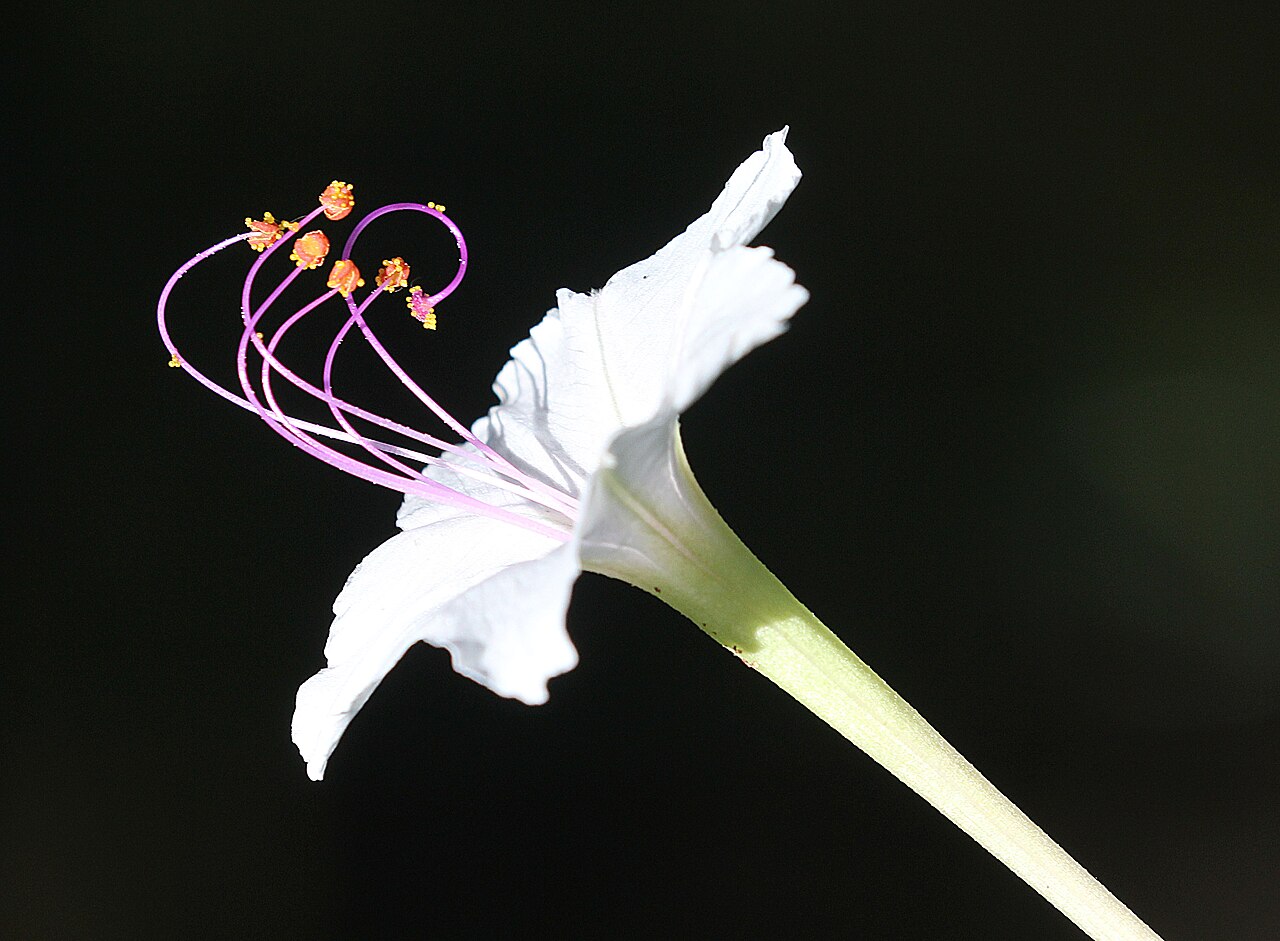
Mirabilis longiflora, known as Sweet Four O’Clock or long-flowered four o’clock, is a bushy perennial wildflower of the desert Southwest with some of the longest flowers of any native North American wildflower. Its white, trumpet-shaped blossoms sit on slender tubes 3 to nearly 7 inches long, open in the late afternoon and evening, and release a sweet fragrance into the night air. Bright magenta-purple stamens and style curl out of each flower.
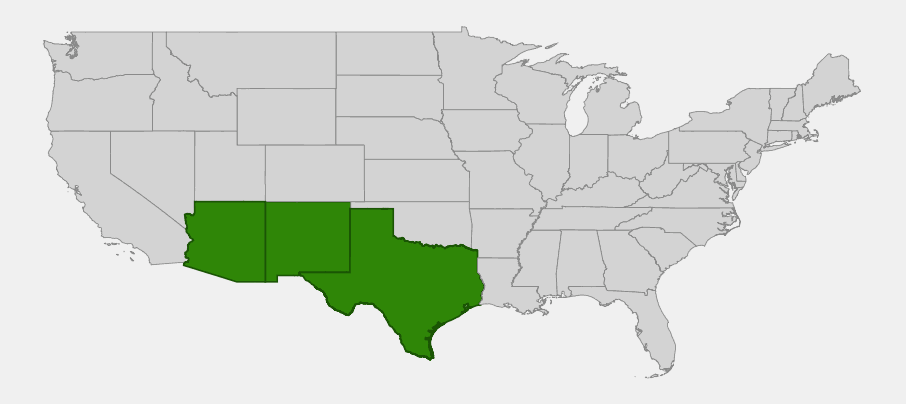
In the United States, sweet four o’clock is native to southern Arizona, southern New Mexico and the Trans-Pecos of West Texas, and its range continues south through much of Mexico. It grows in brushy canyons, along washes and stream banks, and on rocky slopes in oak and juniper woodland and grassland, mostly at middle elevations.
Gardeners in the Southwest grow it in moon gardens and along patios, where its fragrance and its night-flying hawk moth visitors can be enjoyed on summer evenings. This page covers identification, its native range, how to grow it, a toxicity note, and its value to wildlife.
Identification
Sweet four o’clock is easy to recognize when in flower, thanks to its exceptionally long, white, tubular blossoms. Out of flower, look for its sticky stems and opposite, heart-shaped leaves.
Growth Habit
It is a herbaceous perennial that grows from a thick, tuberous root and dies back to the ground in winter. Each spring it produces a bushy clump of upright to sprawling stems, usually 1 1/2 to 3 feet tall and occasionally up to about 5 feet. The stems are brittle, branching, and covered with short, sticky glandular hairs, so they often catch dust and small insects.
Leaves
The leaves are opposite, bright to dark green, ovate to heart-shaped with a pointed tip, about 2 1/2 to 4 1/2 inches long. The lower leaves have short stalks, while the upper ones are nearly stalkless. They are softly hairy and slightly sticky.
Flowers
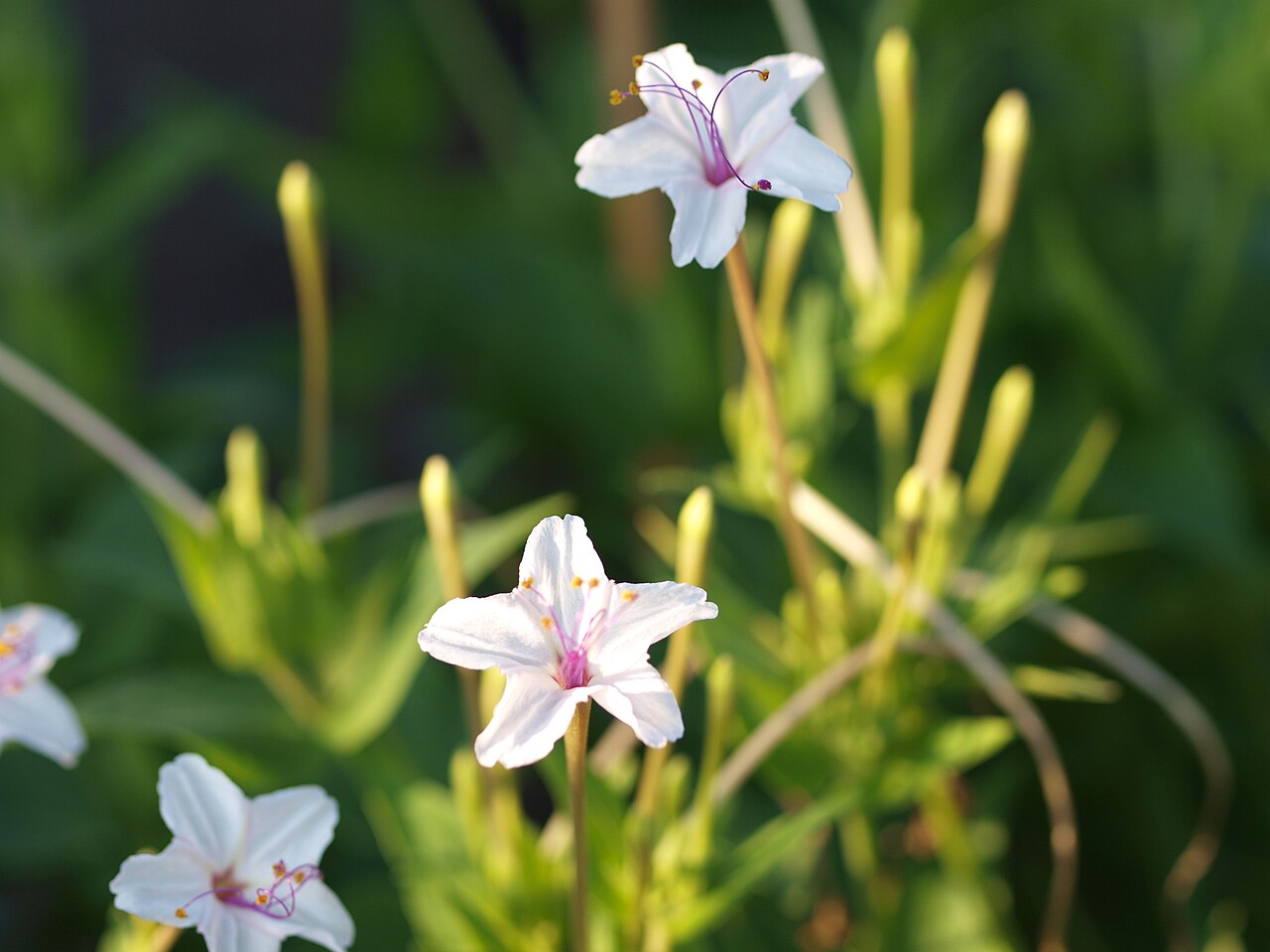
The flowers grow in tight clusters at the stem tips and in the upper leaf axils, each cluster held in a small, bell-shaped green cup of fused bracts. What looks like a petal tube is actually the colored calyx: four o’clocks have no true petals. The slender tube is about 3 to 6 3/4 inches long and flares into a white to pale pink, five-lobed face about an inch across, often with a pinkish throat. Five long, magenta stamens and a style project well beyond the flower. Flowers open from late afternoon into the night and close by the next morning. Bloom season is mainly July to September, with the summer rains.
Fruit
Each flower produces a single hard, dark, oblong fruit (an anthocarp) about a third of an inch long, containing one seed.
Similar Species
Its relatives in the region have much shorter flowers. Colorado Four O’Clock (Mirabilis multiflora) has magenta flowers 1 1/2 to 2 1/2 inches long. White Four O’Clock and Wild Four O’Clock have small flowers under an inch long. The garden four o’clock (M. jalapa) has shorter, often brightly colored flowers. Sacred Datura also has large, white, night-blooming trumpets, but its flowers are much wider and its fruits are spiny capsules.
Quick Facts
| Scientific Name | Mirabilis longiflora L. |
| Family | Nyctaginaceae (four o’clock family) |
| Plant Type | Herbaceous perennial with a tuberous root |
| Mature Height | 1.5–3 ft (occasionally to 5 ft) |
| Mature Spread | 2–3 ft |
| Growth Rate | Fast |
| Sun Exposure | Full sun to part shade |
| Water Needs | Low to medium; drought-tolerant once established |
| Soil Type | Well-drained sandy, gravelly or rocky soil |
| Soil pH | About 6.5–8.0 |
| Bloom Time | July–September (late afternoon to night) |
| Flower Color | White to pale pink with magenta stamens |
| Fall Color | None; dies back after frost |
| Fruit | Small, hard, dark one-seeded fruit |
| Deer Resistant | Moderate |
| USDA Hardiness Zones | 7–10 |
Native Range
USDA PLANTS lists sweet four o’clock as native in Arizona, New Mexico and Texas. In Arizona it grows mainly in the southeastern part of the state, in the mountains and canyons of the Sky Islands region. In New Mexico it occurs in the southern and southwestern counties. In Texas it is a plant of the Trans-Pecos, including the Davis Mountains and the Big Bend region, so it belongs to the West Texas flora rather than the moist east.
Typical habitats are brushy canyon bottoms, washes and stream banks, rocky hillsides, and openings in oak, juniper and pine-oak woodland, as well as desert grassland. It usually grows where shrubs or rocks give it some shade and where summer monsoon rains are dependable, generally from about 3,000 to 7,000 feet in elevation.
Its range continues south across northern and central Mexico. It is one of the few four o’clocks grown in gardens outside its native range, and it has been planted in botanical gardens in Europe and elsewhere.
📋 Regional plant lists featuring Sweet Four O’Clock: Arizona & New Mexico · South & West Texas
Growing & Care Guide
Sweet four o’clock is an easy, fast-growing perennial for dry gardens in the Southwest and other areas with warm summers. It is sometimes available from native plant nurseries and seed companies, and it is simple to start from seed.
Light
Grow it in full sun to part shade. In low desert gardens it appreciates afternoon shade or the dappled light of a small tree; at higher elevations and in cooler climates, full sun is best.
Soil & Water
It needs well-drained soil and tolerates sandy, gravelly, rocky and alkaline soils. Once established it is quite drought-tolerant, but it blooms best with occasional deep watering in summer, mimicking monsoon rains. Keep the soil fairly dry in winter, when soggy conditions can rot the tuber.
Planting Tips
Sow seed in spring after the soil warms, or plant nursery-grown plants in spring. Give each plant 2 to 3 feet of space; the stems may sprawl, so place it near a wall, shrub or fence where it can lean. Plant it near a patio, path or window to enjoy the evening fragrance.
Pruning & Maintenance
Cut the stems to the ground after frost kills them in fall. In zone 7 and colder borderline areas, mulch the crown for winter; in colder regions the tuber can be lifted and stored like a dahlia, or the plant grown as an annual from seed.
Propagation
It grows readily from seed, often blooming in its first summer. Seeds germinate without special treatment. The tuberous roots can also be divided in spring, and plants sometimes self-sow in the garden.
Landscape Uses
- Moon and evening gardens: fragrant white flowers open in late afternoon and glow at dusk
- Pollinator gardens: a nectar source for night-flying hawk moths
- Xeriscapes: drought-tolerant once established in well-drained soil
- Patio and courtyard beds: fragrance is best enjoyed close to where people sit in the evening
- Naturalistic Southwest plantings: fits among shrubs, boulders and grasses in canyon-style gardens
Wildlife & Ecological Value
Sweet four o’clock is a classic example of a moth-pollinated flower, and it supports a small but specialized community of night-flying visitors.
For Pollinators
The extremely long floral tube holds nectar that only hawk moths (sphinx moths) with very long tongues can reach. These large moths hover in front of the flowers at dusk, guided by the white color and strong fragrance, and pick up pollen on their bodies from the long stamens. Bees and butterflies may visit for pollen, but they are not effective pollinators.
For Birds
The seeds may be eaten by ground-foraging birds such as quail and sparrows, and the bushy plants give some cover. Sticky stems often catch small insects, which some birds pick off.
For Mammals
The foliage is not a preferred browse plant, and four o’clocks contain compounds that discourage grazing animals.
Ecosystem Role
As a perennial with a deep, tuberous root, sweet four o’clock survives drought and fire and resprouts each year after the summer rains. Its night flowers support hawk moths, which also pollinate other night-blooming Southwest plants such as daturas and evening primroses.
Cultural & Historical Uses
The genus name Mirabilis means “wonderful” in Latin, and the common name four o’clock refers to the flowers of the family opening in the late afternoon. Linnaeus described Mirabilis longiflora in the 1750s, and the plant has been grown in European gardens ever since for its fragrant night flowers.
Sweet four o’clock is a favorite for evening fragrance gardens in the Southwest. Its long-tubed flowers are also a striking example of how flowers and their pollinators shape one another: the tube length closely matches the long tongues of the hawk moths that visit it.
Safety note: like the garden four o’clock (Mirabilis jalapa), sweet four o’clock should be treated as poisonous if eaten. The roots and seeds of four o’clocks contain compounds that can cause nausea, vomiting and abdominal pain, and the sap can irritate sensitive skin. Keep children and pets from chewing on the plant and its tubers, and wash your hands after handling them.
Frequently Asked Questions
When do sweet four o’clock flowers open?
They open in the late afternoon or evening, stay open through the night, and close by the following morning. Each flower lasts only one night, but a plant produces new flowers for many weeks in summer.
Is sweet four o’clock poisonous?
It should be treated as poisonous. Four o’clock roots and seeds can cause stomach upset if eaten, and the sap may irritate skin. Keep children and pets from eating any part of the plant.
Where is sweet four o’clock native?
In the United States it is native to southern Arizona, southern New Mexico and the Trans-Pecos of West Texas. It also grows across northern and central Mexico.
What pollinates sweet four o’clock?
Long-tongued hawk moths (sphinx moths) are the main pollinators. They visit at dusk, attracted by the white flowers and sweet fragrance, and are among the few insects that can reach nectar at the base of the long tube.
Can I grow sweet four o’clock in a cold climate?
It is reliably perennial in about zones 7 to 10. In colder areas, lift and store the tuber over winter, or grow it as an annual from seed; it often blooms in its first summer.

Looking for a nursery that carries Sweet Four O’Clock?
Browse our native plant nursery directory: Arizona · New Mexico · Texas

