
Florida Pellitory (Parietaria floridana)
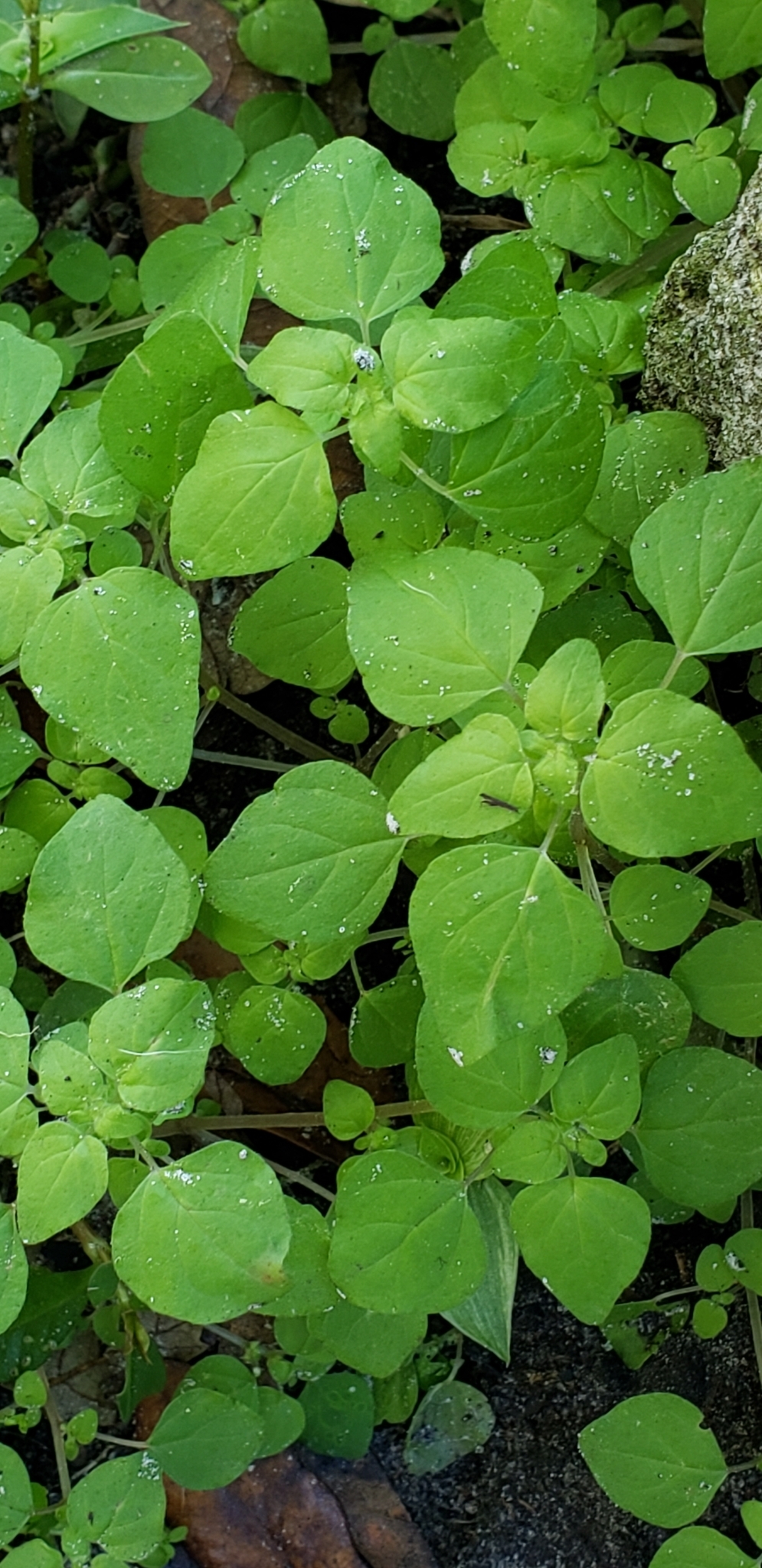
Parietaria floridana, Florida Pellitory, is a small, soft-leaved annual or short-lived perennial in the nettle family. It grows just 2 to 16 inches tall, with weak, branching stems, small oval leaves and tiny greenish flowers tucked into the leaf axils. Despite its family, it has no stinging hairs.
It is native to the southeastern United States, the West Indies and much of Latin America. In the U.S. it is most common in Florida, especially along the coast, and it extends north and west through the Coastal Plain to the Carolinas and Texas, with a few isolated outlying records farther north. It thrives in shady, often limy places: hammocks, shell mounds, rocky ledges, garden beds, the bases of walls and sidewalk cracks.
Most people meet it as a “weed” that turns up in shady garden corners, but it is a native plant with a quiet role: it is a caterpillar host plant for the red admiral butterfly. This guide covers how to identify it, where it grows and why it is worth leaving in some corner of a native garden.
Identification
Florida pellitory is easy to confuse with other small, weedy herbs. Its alternate, smooth-edged leaves, lack of stinging hairs and tiny flower clusters in every leaf axil are the key features.
Stems & Leaves
The stems are slender, soft and finely hairy, upright to sprawling, and often branched from the base, 2 to 16 inches long. The leaves are alternate, oval to diamond-shaped, about ⅜ to 1¼ inches long, with smooth edges, three main veins from the base and a slightly rough, hairy surface. They are thin and bright to yellowish green.
Flowers
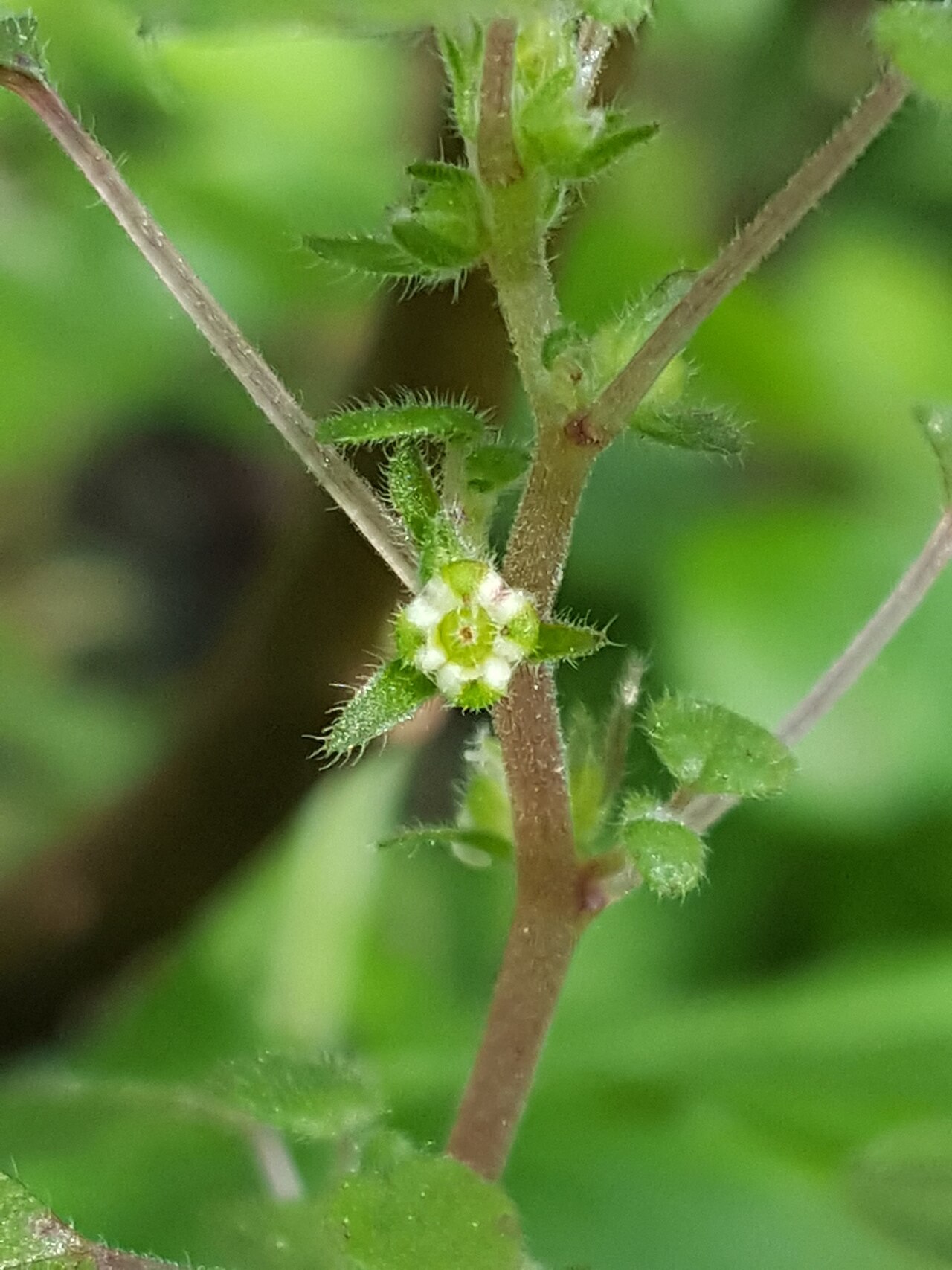
Tiny greenish flowers, about ⅛ inch across, sit in small, crowded clusters in nearly every leaf axil, surrounded by narrow, hairy bracts. Some flowers are male, some female and some bisexual. In Florida it can bloom in almost any month, especially from late winter to spring.
Fruit
Each fertile flower produces a single, tiny, shiny achene less than 1 millimeter long, enclosed in the dry flower parts.
Look-alikes
Pennsylvania pellitory (P. pensylvanica) is more upright, with narrower, lance-shaped leaves and a more northern range. Clearweed (Pilea) has opposite, toothed, translucent-stemmed leaves, and false nettle (Boehmeria) has larger, toothed, opposite leaves. Plants in California and the Southwest once called P. floridana are now treated as a separate species, P. hespera.
Quick Facts
| Scientific Name | Parietaria floridana |
| Family | Urticaceae (nettle family) |
| Plant Type | Annual or short-lived perennial herb; no stinging hairs |
| Mature Height | 2–16 in |
| Mature Spread | 6–12 in; sprawling |
| Growth Rate | Fast |
| Sun Exposure | Part shade to shade |
| Water Needs | Medium |
| Soil Type | Sandy, rocky or shelly soils; often over limestone or shell |
| Soil pH | About 6.0–8.5 |
| Bloom Time | Late winter–spring; nearly year-round in Florida |
| Flower Color | Greenish |
| Fall Color | None |
| Fruit | Tiny shiny achene |
| Deer Resistant | Not notably browsed |
| USDA Hardiness Zones | 8–11 |
Native Range
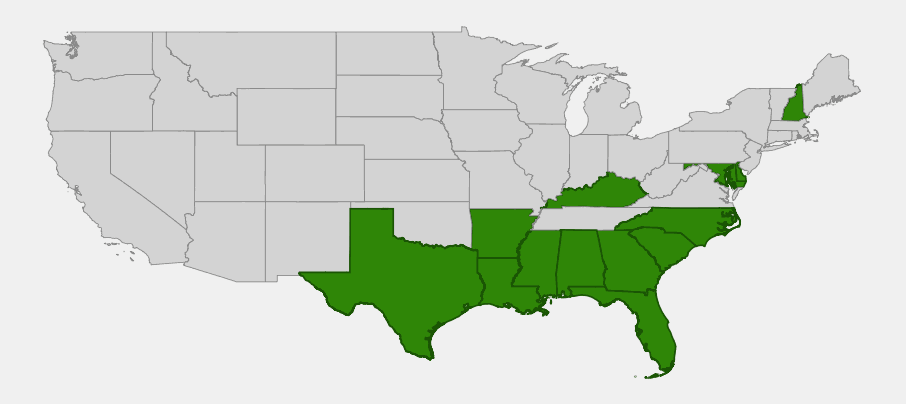
Florida pellitory is native to the southeastern United States, the Caribbean, Mexico, Central America and South America. USDA PLANTS records it from 13 states. The heart of its U.S. range is Florida, Georgia, South Carolina and North Carolina, and it extends west through Alabama, Mississippi, Louisiana and Arkansas to Texas.
Records from Kentucky, Maryland, Delaware and New Hampshire are isolated, outlying occurrences far from the main range. Kentucky specimens include plants from sandstone rock shelters, and the Delaware record is an old collection; these northern stations may be relics, short-lived introductions or overlooked populations, and the plant is rare or historical in each of these states.
It grows in shady, moist to fairly dry places: coastal and inland hammocks, shell middens and mounds, limestone outcrops and ledges, rock shelters, floodplain woods, and around buildings, walls and gardens. It is often most noticeable in winter and spring in Florida, when it fills shady spots with soft green growth.
📋 Regional plant lists featuring Florida Pellitory: North & South Florida · Alabama, Georgia & Mississippi · North & South Carolina · Arkansas, Louisiana, Eastern Oklahoma & Eastern Texas · South & West Texas · Kentucky & Tennessee · Maryland, Virginia & West Virginia · Delaware, Southern New Jersey & Long Island · New Hampshire, Maine & Vermont
Growing & Care Guide
Florida pellitory is rarely planted on purpose and is not sold by nurseries; it usually arrives on its own. If it appears in a shady part of your garden, consider leaving a patch as a natural groundcover and a host plant for red admiral caterpillars. It is easy to pull where it is not wanted.
Light
Part shade to full shade. It grows in sun only where the soil stays moist and wilts quickly in hot, dry, sunny spots.
Soil & Water
It prefers loose, sandy, rocky or shelly soil with some organic matter and moderate moisture, and is especially fond of limestone and shell. It grows most in cool, moist months and may die back in hot, dry summers.
Planting Tips
There is no need to plant it: once present, it reseeds itself. To encourage it, leave shady, lightly disturbed patches of soil under trees and along walls, and avoid heavy mulch where you want it to grow.
Pruning & Maintenance
No maintenance is needed. Pull plants by hand where they are unwanted; the roots are shallow. Avoid herbicides around patches used by butterflies.
Propagation
It spreads by seed. Seedlings appear in fall and winter in Florida, and it can be moved as small plants with a little soil.
Landscape Uses
- Butterfly gardens: a native host plant for red admiral caterpillars
- Shady groundcover: a soft, temporary green carpet under trees and shrubs
- Natural areas: part of the native groundcover of coastal hammocks and shell mounds
- Nature study: an easy way to learn the nettle family without the sting
Wildlife & Ecological Value
Florida pellitory is small and easily overlooked, but it supports some notable wildlife.
For Pollinators
Its tiny flowers are mostly wind-pollinated and offer little to bees. Its main value is to butterflies: the red admiral (Vanessa atalanta) lays its eggs on pellitory and other plants of the nettle family, and the caterpillars feed on the leaves inside folded-leaf shelters.
For Birds
Small ground-feeding birds may pick up the tiny seeds, and the insects living among the leaves are food for wrens and warblers.
For Mammals
It is of little importance to mammals.
Ecosystem Role
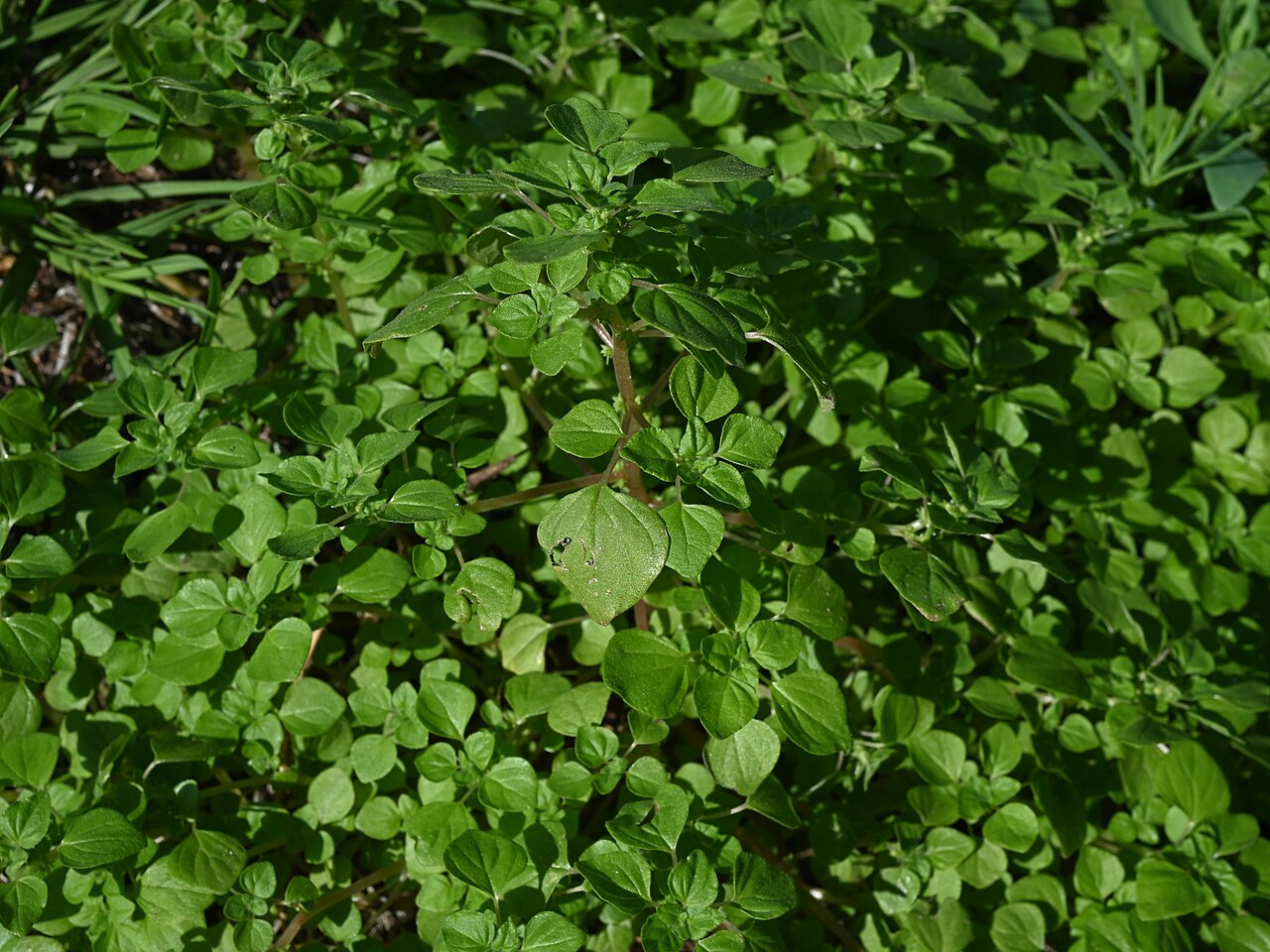
It is a fast-growing, cool-season groundcover that covers bare, shady soil, especially on shell mounds and limestone, where few other herbs grow. Its quick life cycle lets it fill gaps after disturbance.
Cultural & Historical Uses
Thomas Nuttall described Parietaria floridana in the early 19th century. The genus name comes from the Latin paries, “wall”, because the European pellitory-of-the-wall grows in the cracks of old walls, a habit Florida pellitory shares in towns.
European pellitories have a long history in folk medicine and are well known today as a source of allergenic pollen in the Mediterranean region. Florida pellitory is a different species and is not known as an important allergen in the United States.
In Florida it often grows on coastal shell mounds and middens, many of them built by Indigenous peoples over thousands of years, where the lime-rich soil supports a distinctive set of plants. Small, overlooked natives like pellitory are part of what makes these sites botanically interesting.
Frequently Asked Questions
Does Florida pellitory sting?
No. Although it belongs to the nettle family, it has no stinging hairs and is safe to touch.
Is Florida pellitory a weed?
It often grows as a garden weed in shady spots, but it is a native plant and a host for red admiral caterpillars. Leave some if you can.
What butterfly uses Florida pellitory?
The red admiral (Vanessa atalanta), whose caterpillars feed on pellitory and other nettle-family plants.
Where does Florida pellitory grow?
Mainly in Florida and the southeastern Coastal Plain from the Carolinas to Texas, with isolated records farther north, and through the Caribbean and Latin America.
How do I get rid of Florida pellitory?
Pull it by hand; it has shallow roots. It also dies back on its own in hot, dry weather.

Looking for a nursery that carries Florida Pellitory?
Browse our native plant nursery directory: Alabama & Arkansas · Delaware, Florida & Georgia · Kentucky, Louisiana, Maryland & Mississippi · New Hampshire & North Carolina · South Carolina & Texas

