
Nuttall’s Sunflower (Helianthus nuttallii)
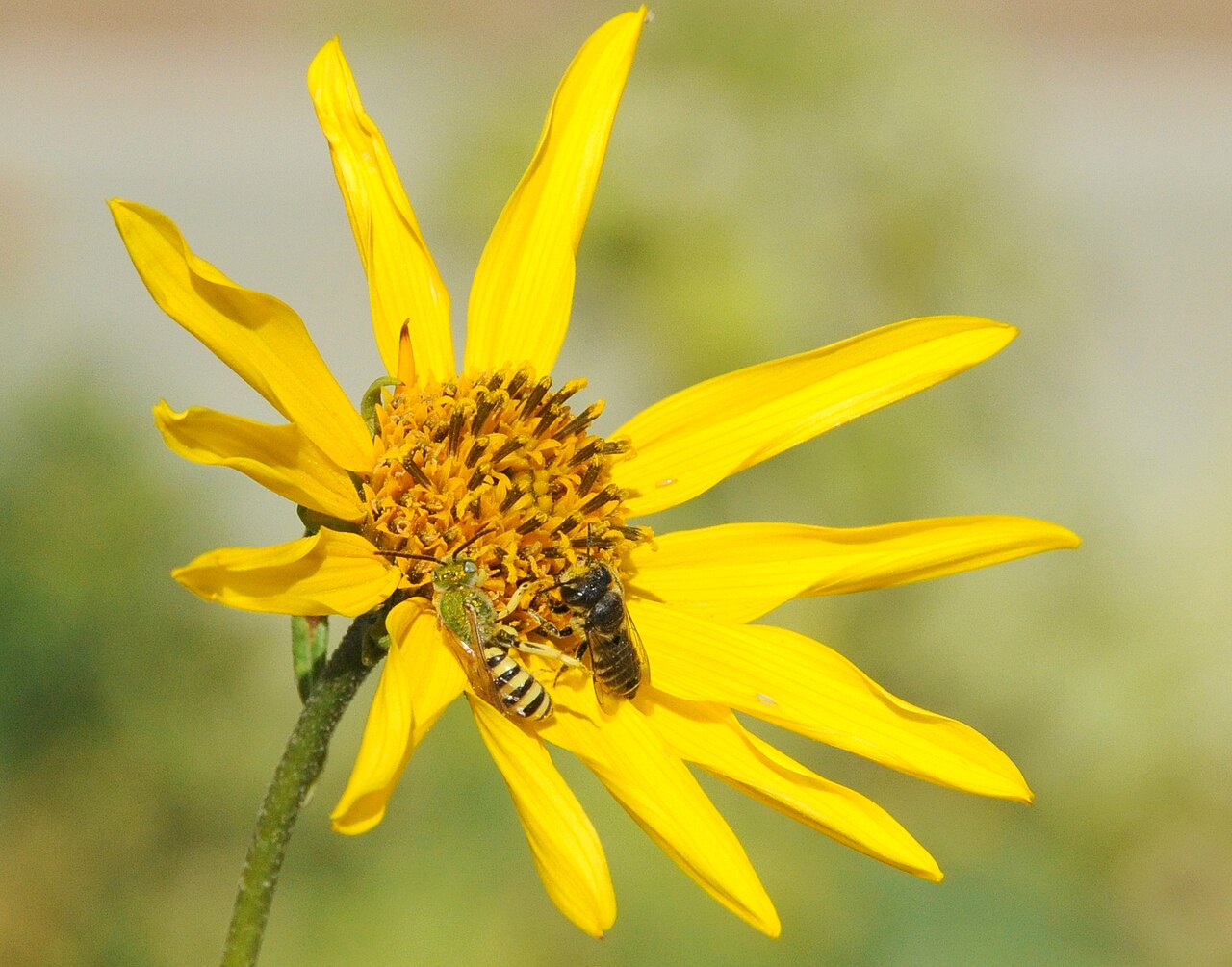
Helianthus nuttallii, known as Nuttall’s Sunflower, is a tall perennial sunflower of wet meadows, stream banks, springs and moist ditches across the American West and the northern Great Plains. Unlike the familiar annual common sunflower of dry roadsides, it is a long-lived plant that returns each year from its roots and forms clumps or loose colonies in places where the soil stays moist into summer.
It usually grows 3 to 8 feet tall, sometimes more, with narrow, rough, lance-shaped leaves and a crown of bright yellow flower heads, each about 2 to 3½ inches across, in late summer and fall. Blooming from about August into October, it adds a late burst of color to western wetlands and riparian areas, when many other wildflowers have finished.
Nuttall’s sunflower is valuable for pollinators, especially native bees, and its seeds feed birds into winter. This guide covers how to identify it, where it grows, how to grow it in moist native gardens and restoration sites, and its value to wildlife.
Identification
Nuttall’s sunflower is one of several tall perennial sunflowers. Its preference for wet ground, its narrow, rough leaves and its relatively few, mid-sized heads at the top of the stem help separate it from relatives.
Growth Habit
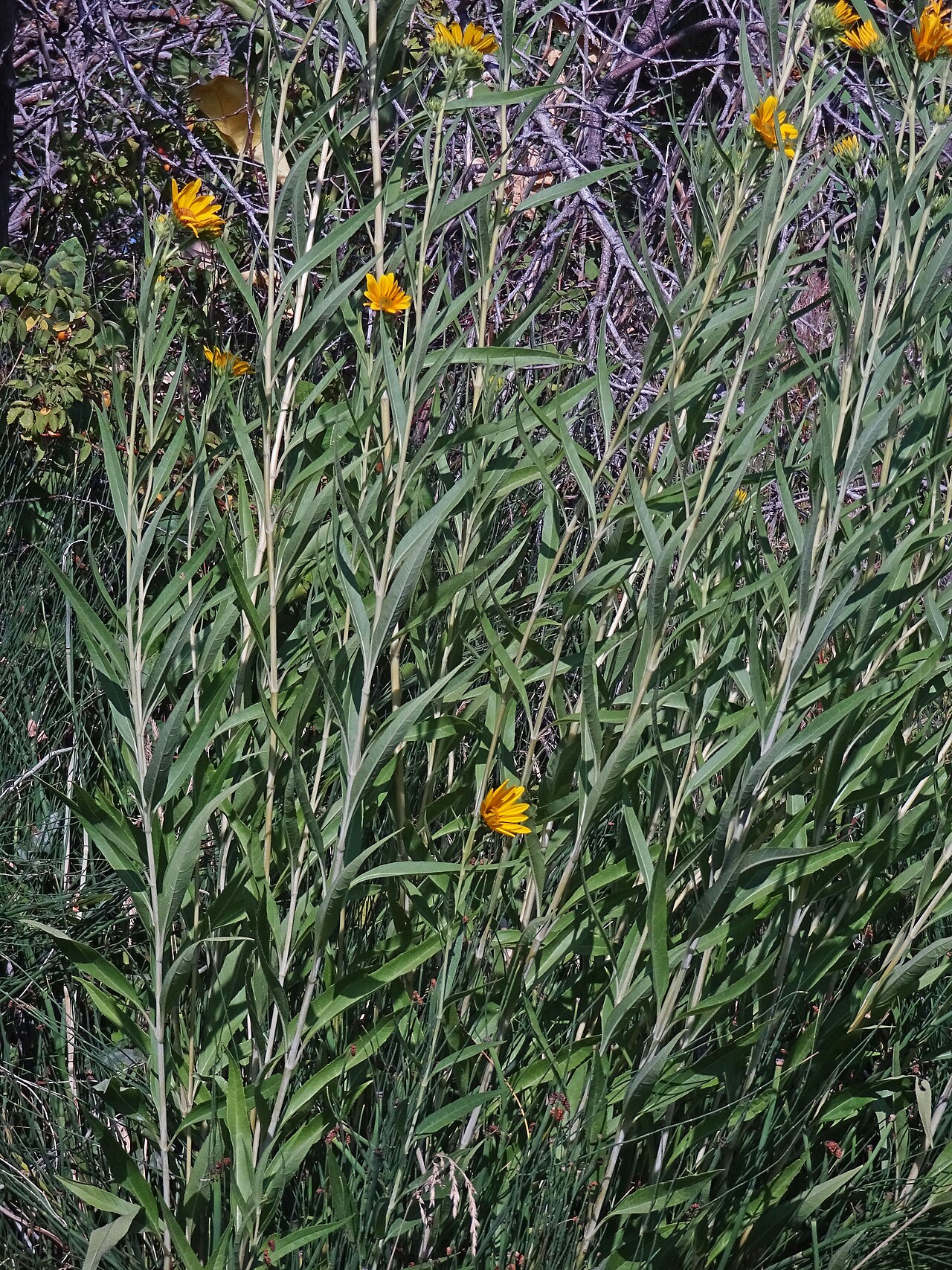
A clump-forming perennial with one to several upright stems, usually 3 to 8 feet tall and occasionally taller in rich, wet sites. It spreads slowly by short rhizomes to form patches. Stems are green to reddish, smooth to somewhat rough or hairy, and often slightly waxy below.
Leaves
Leaves are opposite on the lower stem and alternate higher up, narrowly lance-shaped, about 3 to 8 inches long and ¼ to 1¼ inches wide, with smooth or slightly toothed margins. They are rough to the touch, like sandpaper, and often slightly folded along the midrib.
Flowers
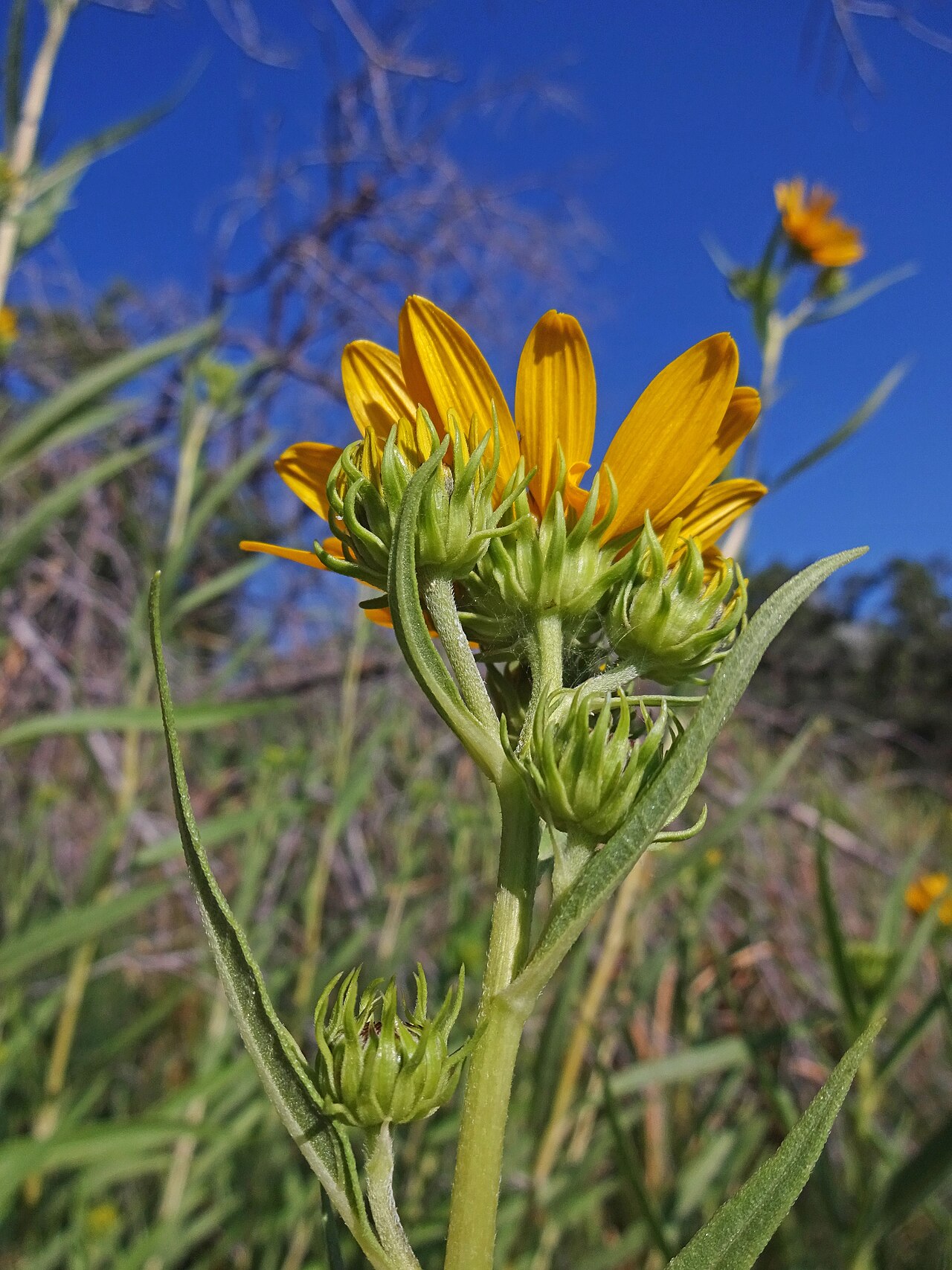
From about August to October, each stem bears one to several flower heads, 2 to 3½ inches across, near the top. Each head has 10 to 20 bright yellow ray florets around a yellow to brownish disc of 60 or more small disc florets. The narrow, pointed green bracts (phyllaries) beneath the head are loose and often slightly spreading.
Fruit & Look-alikes
The fruit is a small, dark, wedge-shaped achene (cypsela). Maximilian Sunflower grows in drier prairies and has many heads in a long, leafy spike along the upper stem. Sawtooth Sunflower has broader, coarsely toothed leaves and a smooth, often purplish, waxy stem. Giant Sunflower is very similar but mostly eastern. Common Sunflower is an annual with broad, heart-shaped leaves and a dark brown disc.
Quick Facts
| Scientific Name | Helianthus nuttallii Torr. & A. Gray |
| Family | Asteraceae (aster family) |
| Plant Type | Herbaceous perennial wildflower |
| Mature Height | 3–8 ft (occasionally taller) |
| Mature Spread | 2–4 ft; spreads slowly by rhizomes |
| Growth Rate | Fast |
| Sun Exposure | Full sun to light shade |
| Water Needs | Moderate to high; moist to wet soil |
| Soil Type | Moist loam, clay, silt or sandy soils; tolerates alkaline and somewhat saline soils |
| Soil pH | Neutral to alkaline |
| Bloom Time | August–October |
| Flower Color | Bright yellow rays; yellow to brownish disc |
| Fall Color | Stems and leaves turn tan to brown |
| Fruit | Small, dark achenes (cypselae) |
| Deer Resistant | Moderately; young growth may be browsed |
| USDA Hardiness Zones | 3–9 |
Native Range
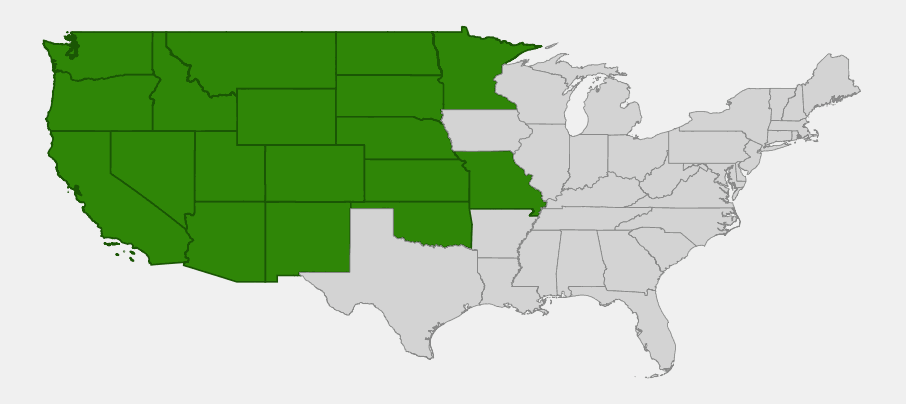
Nuttall’s sunflower is native across much of western and central North America. USDA PLANTS lists it as native in 18 states: Washington, Oregon, California, Idaho, Nevada, Utah, Arizona, Montana, Wyoming, Colorado, New Mexico, North Dakota, South Dakota, Nebraska, Kansas, Oklahoma, Minnesota and Missouri. In Canada it occurs from British Columbia east to Ontario and Quebec. It is most common in the Intermountain West, the Rocky Mountain states and the northern Great Plains; records from Missouri and Oklahoma are at the eastern and southern edges of its range.
It is a wetland-edge plant. Typical habitats are wet meadows, stream and river banks, seeps and springs, marsh margins, moist swales and roadside ditches, from plains and low valleys up into mountain meadows. It often grows where the soil is alkaline or slightly saline, and in the Great Basin it is a characteristic late-summer wildflower of spring-fed meadows.
Botanists recognize up to three subspecies. Subspecies nuttallii is widespread in the West; subspecies rydbergii occurs in central Canada and the interior Northwest; and subspecies parishii, the Los Angeles sunflower of southern California’s coastal marshes, has long been presumed extinct after its habitat was lost to development.
📋 Regional plant lists featuring Nuttall’s Sunflower: Arizona & New Mexico · California & Nevada · Idaho, Eastern Oregon & Eastern Washington · Montana & Wyoming · Utah & Western Colorado · Nebraska, Kansas & Eastern Colorado · North Dakota, South Dakota & Western Minnesota · Michigan, Wisconsin & Eastern Minnesota · Illinois, Iowa & Missouri
Growing & Care Guide
Nuttall’s sunflower is easy to grow in sunny, moist sites and is offered by some native seed companies and nurseries in the West and northern Plains. It is hardy in about USDA zones 3 to 9 and is a good choice for rain gardens, pond edges and moist meadows where it has room to spread.
Light
Full sun is best. It tolerates light shade, but plants become floppy and flower less.
Soil & Water
Moist to wet soil, including clay and alkaline soils. It tolerates seasonal flooding but should not dry out completely during the growing season. In drier gardens, give it regular summer water or plant it at a low spot where runoff collects.
Planting Tips
Plant in spring or fall, 2 to 3 feet apart, at the back of a border, along a pond or stream, or in a rain garden. Because it can reach 8 feet and spreads by rhizomes, give it room or plant it where neighboring plants can hold their own.
Pruning & Maintenance
Leave the seed heads standing into winter for birds, then cut the stems to the ground in late winter or early spring. To reduce height, cut stems back by about a third in early summer. Divide crowded clumps every few years.
Propagation
Sow seed outdoors in fall, or give it 4 to 8 weeks of cold, moist stratification before spring sowing. Clumps can be divided in early spring, and rhizome pieces root easily.
Landscape Uses
- Rain gardens and pond edges: tall late-season color for moist, sunny spots
- Riparian and wet-meadow restoration: helps stabilize stream banks and moist ground
- Pollinator gardens: late-summer pollen and nectar for native bees
- Bird gardens: seed heads feed finches and other birds into winter
Wildlife & Ecological Value
Like other native sunflowers, Nuttall’s sunflower is a powerhouse for pollinators and seed-eating birds, and it blooms late, when food is scarcer.
For Pollinators
The Xerces Society notes that it has special value to native bees. Sunflower specialist bees, such as long-horned bees (Melissodes), and many sweat bees, bumble bees and leafcutter bees gather its pollen and nectar. Butterflies, flower flies and beetles also visit.
For Birds
American goldfinches and other finches, sparrows and chickadees eat the seeds, often clinging to the heads in fall. The tall stands provide cover for birds in wet meadows and riparian areas.
For Mammals
Deer, elk and livestock may graze young plants, and small rodents eat the fallen seeds.
Ecosystem Role
As a late-blooming wetland perennial, it helps bridge the gap in floral resources at the end of summer. Its roots and rhizomes help hold soil along streams and ditches, and its foliage supports many insects, including the caterpillars of several moths and butterflies that feed on sunflowers, such as the bordered patch and the silvery checkerspot.
Cultural & Historical Uses
The species honors Thomas Nuttall (1786-1859), the English botanist and naturalist who explored the American West in the early 19th century and collected many of its plants for the first time. John Torrey and Asa Gray formally described the species in their Flora of North America in the 1840s.
Native peoples of the West made wide use of wild sunflowers for their oily, nutritious seeds, which were roasted and ground into meal. Specific uses of Nuttall’s sunflower are less documented than those of the common sunflower.
Helianthus means “sun flower” in Greek. Nuttall’s sunflower belongs to the same genus as the cultivated sunflower and is one of the many wild relatives that make up the broader gene pool of that important crop.
Frequently Asked Questions
Where does Nuttall’s sunflower grow?
In wet meadows, stream banks, springs, seeps and moist ditches across the western and central United States and southern Canada, from Washington and California east to Minnesota and Missouri.
How tall does Nuttall’s sunflower get?
Usually 3 to 8 feet, and occasionally taller in rich, wet soil.
When does it bloom?
From about August to October, later than many other wildflowers.
Is it invasive?
It is native and spreads slowly by rhizomes to form patches. In a small garden, divide it every few years or plant it where it has room.
Is Nuttall’s sunflower good for bees?
Yes. It has special value to native bees, including sunflower specialist bees, and is visited by many other pollinators.

Looking for a nursery that carries Nuttall’s Sunflower?
Browse our native plant nursery directory: Arizona · California · Colorado · Idaho & Kansas · Minnesota, Missouri & Montana · Nebraska, Nevada, New Mexico, North Dakota & Oklahoma · Oregon · South Dakota & Utah · Washington · Wyoming

