
Water Sedge (Carex aquatilis)
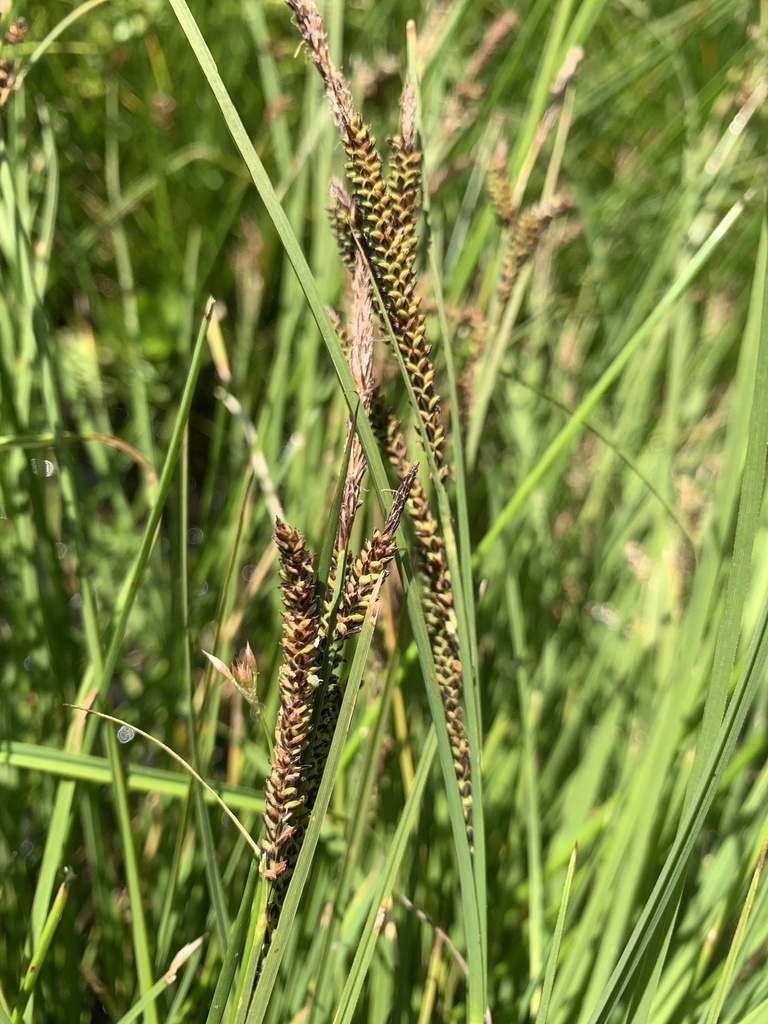
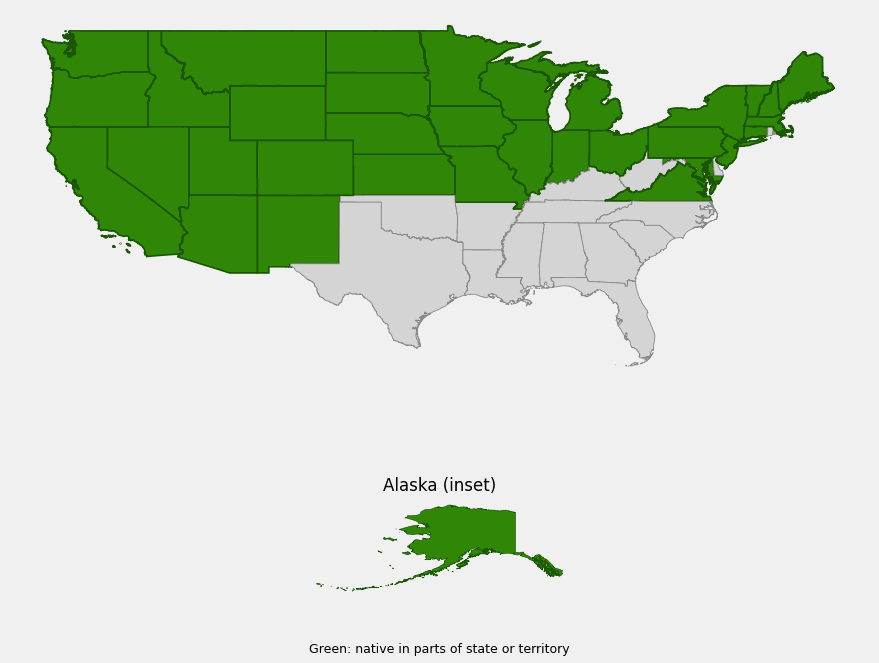
Carex aquatilis, the Water Sedge (also called leafy tussock sedge), is one of the most widespread and important wetland sedges of the Northern Hemisphere. It grows around the world in cold-temperate and arctic regions, and in North America it ranges from Alaska and the Canadian Arctic south through the western mountains to California, Arizona and New Mexico, and in the East through the Great Lakes and Northeast to Pennsylvania, Maryland and Virginia.
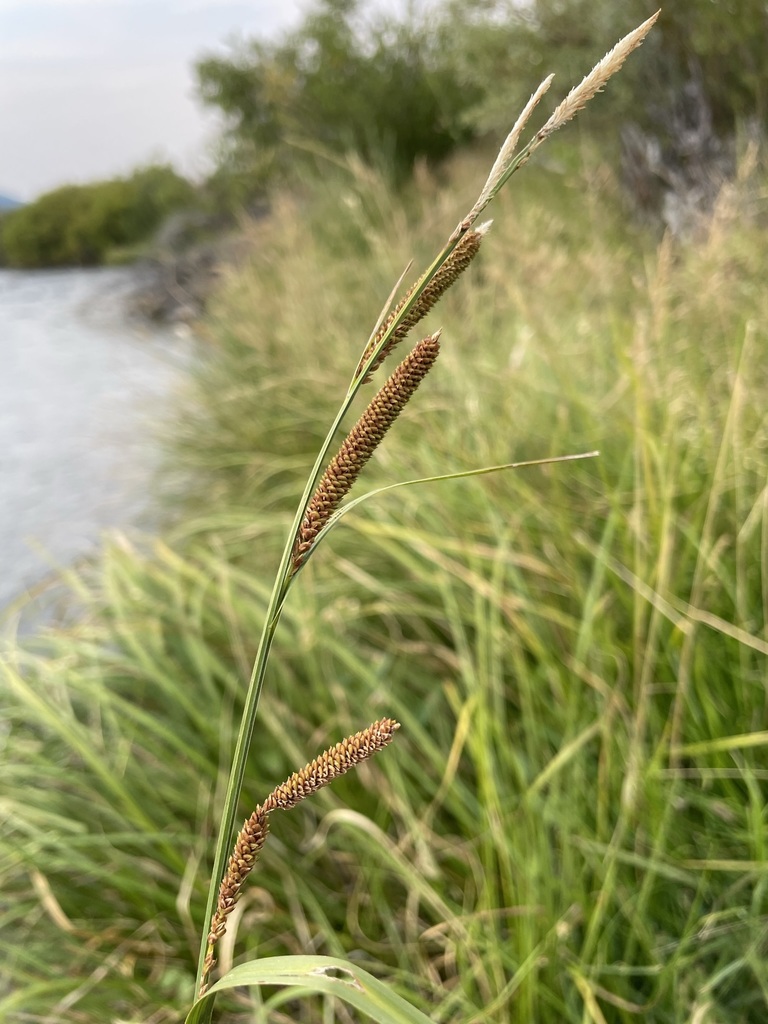
It spreads by long, tough rhizomes into dense, sod-like stands in marshes, wet meadows, fens, bogs, lakeshores and stream banks, often in standing water. Its tall, sharply three-angled stems carry slender, dark, upright spikes, and the lowest leaflike bract is usually longer than the whole flower cluster.
Water sedge is a key plant for wetland restoration and streambank stabilization, and in the Arctic and mountains it is an important forage plant for waterfowl, caribou, elk and moose. This guide covers how to identify it, where it grows, how to grow it and its value to wildlife.
Identification
Water sedge is a tall, rhizomatous sedge with blue-green leaves, sharply three-angled stems, one to three slender male spikes at the top, several dark, upright female spikes below and a long leafy bract at the base of the cluster.
Stems & Leaves
It grows 8 inches to 5 feet tall, depending on the site and variety, spreading by long rhizomes rather than forming discrete clumps. The stems are sharply triangular and often reddish-brown at the base. The leaves are flat, 3 to 8 mm wide, and usually bluish-green or grayish-green, with a waxy coating on the upper surface.
Flowers
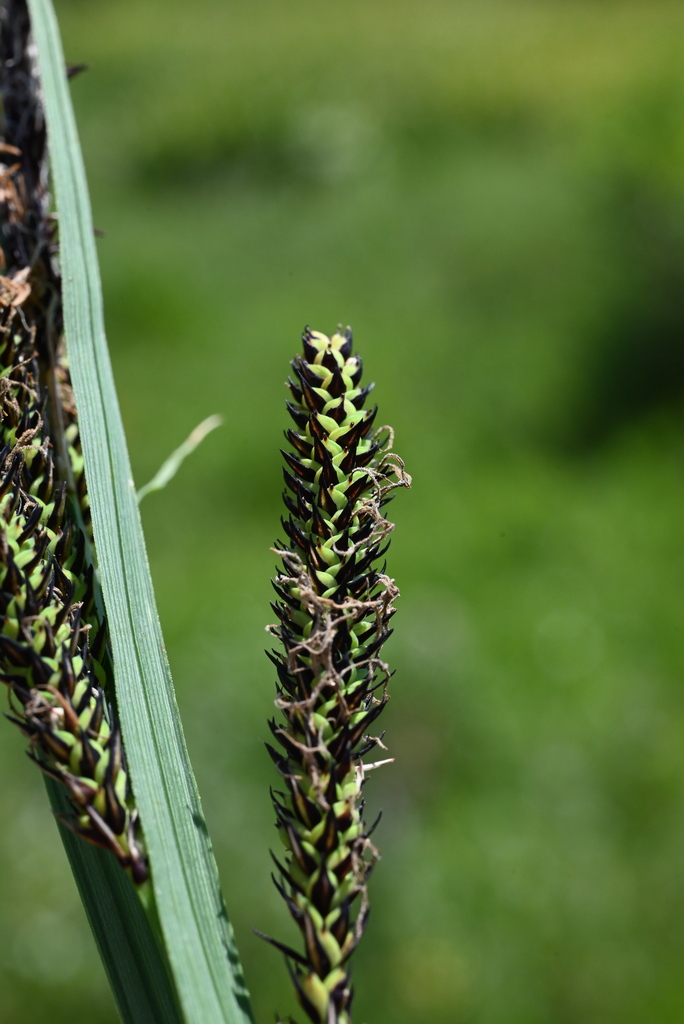
From late spring into summer, each fertile stem bears one to three slender male spikes at the top and two to five narrow, cylindrical female spikes below them, each ½ to 2½ inches long and usually erect. The lowest bract is leaflike and generally longer than the whole inflorescence. In many years most shoots stay vegetative and do not flower.
Fruit
The perigynia (seed sacs) are small, 2 to 3½ mm long, flattened, pale green to golden-brown and essentially beakless, with two stigmas. They are set against dark purplish-black scales with a pale midrib, giving the spikes a checkered look. Each contains a small, glossy, lens-shaped achene.
Look-alikes & Varieties
Tussock sedge (C. stricta) forms tall tussocks and has ladderlike fibers on the lower leaf sheaths. Nebraska sedge (C. nebrascensis) has stiffer, wider bluish leaves and short-beaked perigynia. Beaked sedge (C. utriculata) has inflated, beaked perigynia. Botanists recognize several varieties of water sedge, including the typical var. aquatilis, the eastern and midwestern var. substricta, the small boreal var. minor, and the tall Pacific coast var. dives (Sitka sedge).
Quick Facts
| Scientific Name | Carex aquatilis Wahlenb. |
| Family | Cyperaceae (sedge family) |
| Plant Type | Rhizomatous perennial wetland sedge |
| Mature Height | 8 in–5 ft (usually 1½–3 ft) |
| Mature Spread | Spreads by rhizomes into large stands |
| Growth Rate | Moderate to fast |
| Sun Exposure | Full sun to partial shade |
| Water Needs | High; saturated soil or shallow water |
| Soil Type | Wet mineral or organic soil, muck or peat |
| Soil pH | About 5.0–8.0 |
| Bloom Time | May–August |
| Flower Color | Dark purplish-black and green spikes |
| Fall Color | Tan to golden-brown |
| Fruit | Small flattened perigynia, ripe July–September |
| Deer Resistant | No; grazed by elk, moose and livestock |
| USDA Hardiness Zones | 1–7 |
Native Range
Water sedge is circumboreal, growing across northern Europe, Asia, Greenland, Canada and Alaska. In the United States, USDA PLANTS lists it in Alaska and in 33 states of the lower 48, from Washington, Oregon and California east across the Rocky Mountain and Great Basin states and the northern Plains to the Great Lakes, New England and the Mid-Atlantic, reaching Missouri, Maryland and Virginia in the south.
In the West it is most common in the mountains, in subalpine and montane wet meadows, willow carrs and lakeshores, and reaches its southern limits in the high country of Arizona and New Mexico. In the East it is a plant of marshes, fens, sedge meadows and lake and stream margins, becoming scarce toward the south, where several states consider it rare.
It grows in saturated soils and shallow standing water, on mineral soil, muck and peat, and tolerates seasonal flooding and cold, low-oxygen soils thanks to air channels (aerenchyma) in its roots and rhizomes. In the Arctic it covers large areas of wet tundra.
📋 Regional plant lists featuring Water Sedge: Alaska · Western Oregon & Western Washington · Idaho, Eastern Oregon & Eastern Washington · California & Nevada · Arizona & New Mexico · Utah & Western Colorado · Montana & Wyoming · Nebraska, Kansas & Eastern Colorado · North Dakota, South Dakota & Western Minnesota · Michigan, Wisconsin & Eastern Minnesota · Illinois, Iowa & Missouri · Ohio & Indiana · New York, Pennsylvania & Northern New Jersey · Delaware, Southern New Jersey & Long Island · Maryland, Virginia & West Virginia · Connecticut, Massachusetts & Rhode Island · New Hampshire, Maine & Vermont
Growing & Care Guide
Water sedge is sold by wetland and restoration nurseries as plugs and seed, especially in the West and the northern states. It is one of the most reliable sedges for creating or restoring wetlands, and in large rain gardens, pond edges and bioswales it forms a dense, soil-holding cover.
Light
Full sun to partial shade. It is most vigorous in full sun.
Soil & Water
Saturated soil or shallow water up to about 6 to 12 inches deep, at least during spring and early summer. It tolerates seasonal drawdown, but not long dry periods. It grows in mineral soils, muck and peat.
Planting Tips
Plant plugs 12 to 24 inches apart in spring or early summer, when soils are wet. It spreads by rhizomes to fill in, so it is best for larger wet areas rather than small, tidy beds. Protect new plantings from geese and muskrats.
Pruning & Maintenance
No pruning is required. Old leaves can be cut back in late winter. Control invasive reed canarygrass and cattails while the stand establishes.
Propagation
It is usually propagated by dividing rhizomes or from nursery plugs. Seed germinates best after cold, moist stratification, sown on the surface of saturated soil with light and warm temperatures.
Landscape Uses
- Wetland restoration: a dominant native sedge of marshes and wet meadows
- Streambank and shoreline stabilization: dense rhizome mats bind soil
- Large rain gardens and bioswales: for constantly wet ground
- Peatland reclamation: used to revegetate harvested peat
Wildlife & Ecological Value
Water sedge supports an enormous range of wildlife, from nesting waterfowl to caribou on the tundra.
For Pollinators
It is wind-pollinated and offers no nectar, but sedges are larval host plants for several skippers, including wetland species such as the dion skipper, and for many moths.
For Birds
Ducks, geese and shorebirds eat the seeds and shoots, and the dense stands provide nesting cover for waterfowl, rails, sora, sedge wrens and marsh sparrows.
For Mammals
It is valuable spring and summer forage for caribou, moose, elk, muskoxen and livestock, and muskrats, voles and lemmings feed on it and use it for cover.
Ecosystem Role
Its dense rhizomes stabilize stream banks and lakeshores, filter sediment and nutrients, and slowly build peat as old roots decompose. It is often a dominant plant in northern and mountain wetlands.
Cultural & Historical Uses
Swedish botanist Göran Wahlenberg described Carex aquatilis in 1803 from northern Europe. The name means “growing in water.”
Indigenous peoples of Alaska and northern Canada have long used dried sedges and grasses as insulation in boots and mittens and for bedding and mats.
Because it spreads aggressively by rhizomes and forms peat, it is widely used to restore mined peatlands, reclaimed mine sites and damaged mountain wetlands.
Frequently Asked Questions
How do I recognize water sedge?
Look for a tall, spreading sedge with blue-green leaves, sharply triangular stems, slender dark upright spikes, and a long leafy bract at the base of the flower cluster, growing in wet ground or shallow water.
Where does water sedge grow?
Across Alaska and Canada and south through the western mountains to California, Arizona and New Mexico, and in the East through the Great Lakes and Northeast to Pennsylvania, Maryland and Virginia.
Is water sedge good for restoring wetlands?
Yes. It is one of the most widely used native sedges for wetland and streambank restoration because its rhizomes form dense, soil-holding mats.
Can I grow water sedge in a garden?
Yes, if you have constantly wet soil or a pond edge. It spreads by rhizomes, so it is best for larger wet areas.
What is Sitka sedge?
Sitka sedge is the tall Pacific coast variety of water sedge, Carex aquatilis var. dives, sometimes treated as a separate species.

Looking for a nursery that carries Water Sedge?
Browse our native plant nursery directory: Alaska & Arizona · California · Colorado & Connecticut · Idaho, Illinois, Indiana, Iowa & Kansas · Maine, Maryland, Massachusetts, Michigan, Minnesota, Missouri & Montana · Nebraska, Nevada, New Hampshire, New Jersey, New Mexico, New York, North Dakota & Ohio · Oregon · Pennsylvania, South Dakota, Utah, Vermont & Virginia · Washington · Wisconsin & Wyoming

