
Jointed Flatsedge (Cyperus articulatus)
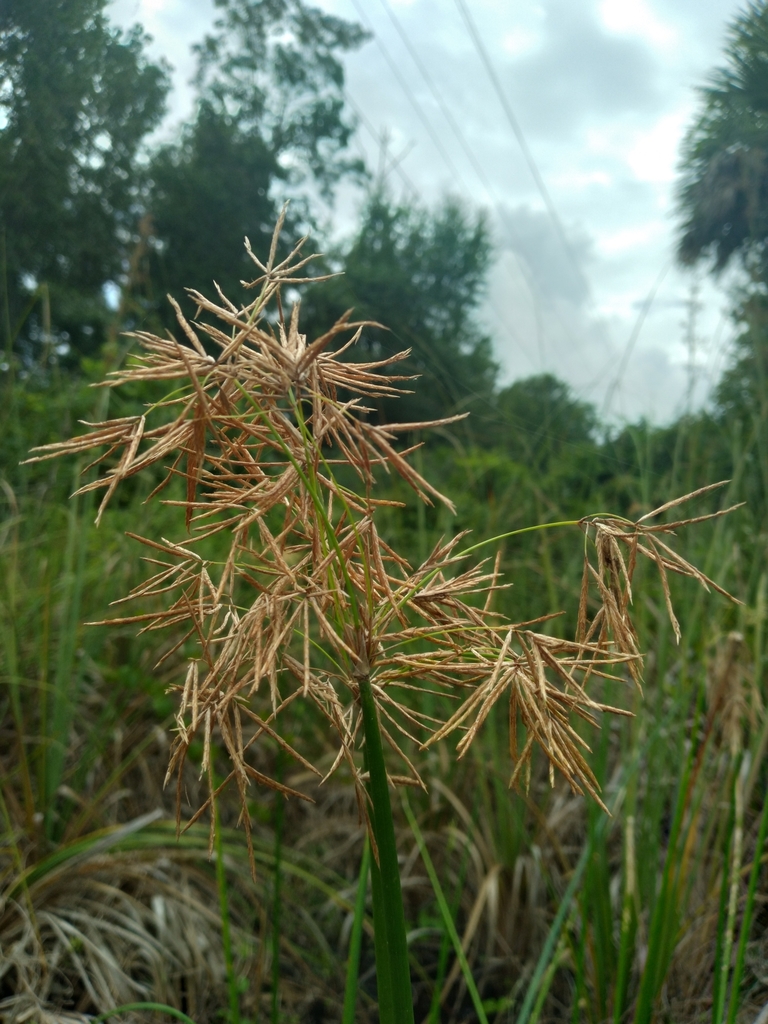
Cyperus articulatus, known as Jointed Flatsedge, is a tall, rush-like wetland sedge of the warm parts of the Americas, Africa and Asia. In the United States it grows along the Gulf and South Atlantic coastal plain, from Texas to Florida and South Carolina, and it is also native to Puerto Rico and the U.S. Virgin Islands. Its round, dark green stems rise 2 to 6 feet tall from short underground rhizomes and end in a loose, drooping cluster of narrow reddish-brown spikelets. It has no real leaf blades, only sheaths at the base of the stems.
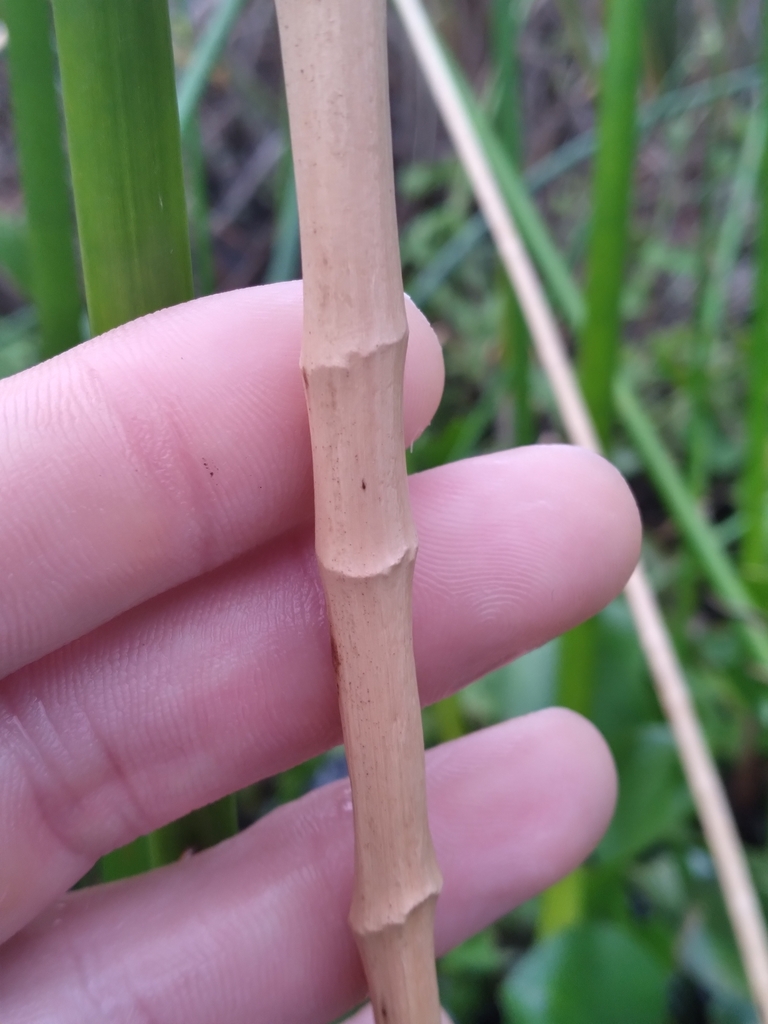
The common name refers to the stems. They are hollow and spongy inside, divided by thin cross-walls every half inch or so. On a fresh stem you can often feel them as faint ridges, and on a dried stem they show as clear rings, so the stem looks jointed like a miniature bamboo. That feature, the leafless stems and the drooping seed head make jointed flatsedge one of the easier Cyperus species to identify in the field.
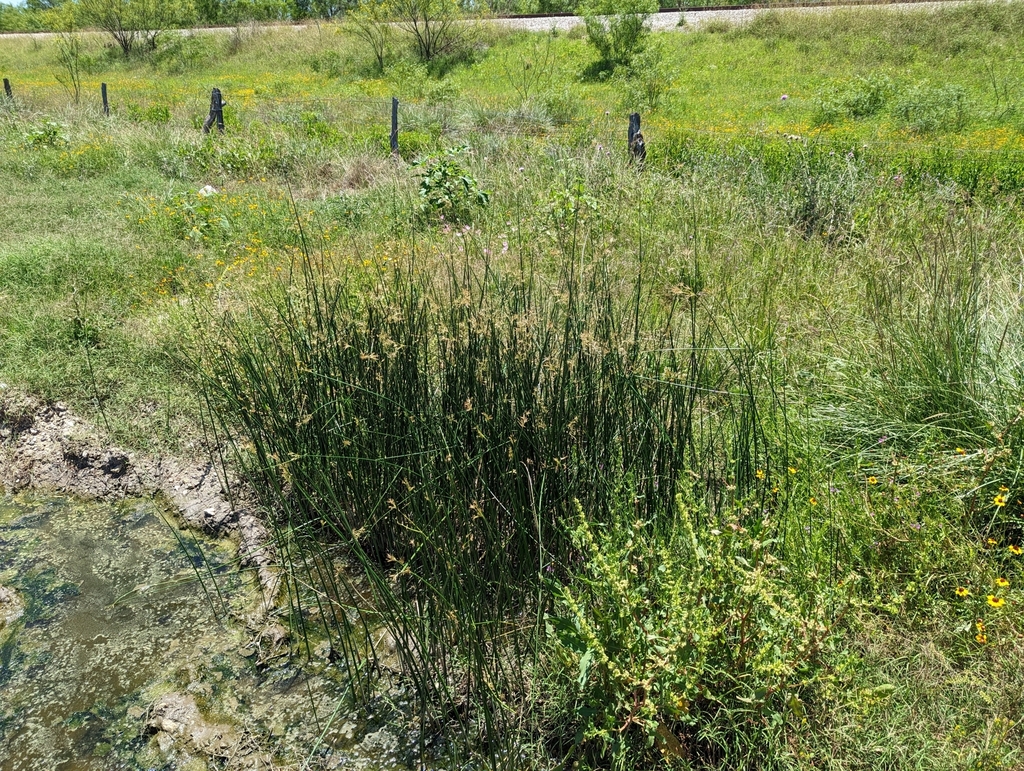
Jointed flatsedge is an obligate wetland plant. It grows in marshes, pond and lake edges, ditches, wet prairies and the shallow margins of slow streams, often standing in water. In water gardens and pond edges it makes a tall, fine-textured vertical accent, and its rhizomes are aromatic. In the Amazon region, where it is called priprioca, the scented rhizomes are a source of an essential oil used in perfumes. This guide covers identification, native range, growing tips and wildlife value.
Identification
Look for tall, round, leafless green stems growing in water or saturated soil, each topped by a loose, often drooping cluster of slender brown spikelets with only tiny bracts beneath it. Roll a stem between your fingers or look at a dry one for the cross-partitions.
Stems & Growth Habit
The stems (culms) are round in cross-section, smooth, dark green and usually 2 to 6 feet tall, about the thickness of a pencil near the base. They grow in loose to dense clumps from short, knobby rhizomes. Inside, the stems are spongy and divided by cross-walls (septa), roughly ½ to ¾ inch apart; these show as raised rings when the stem dries. Unlike most sedges, the stems are not triangular.
Leaves
There are no green leaf blades. The leaves are reduced to brownish or reddish sheaths that wrap the base of each stem, so the plant looks like a clump of bare rushes for most of the year.
Flowers & Seed Heads
The flowers are tiny and wind-pollinated, without petals. They are packed into narrow, flattened spikelets about ½ to 1½ inches long, reddish-brown to golden brown. The spikelets are clustered at the tips of several unequal rays that spread or droop from the top of the stem, forming a loose, umbrella-like head. The bracts under the head are very short and scale-like, much shorter than the head itself. In the U.S. it flowers and fruits mainly from early summer into fall, with a longer season in South Florida and Puerto Rico.
Fruit & Rhizomes
Each flower produces a small, three-sided brown achene (seed). The rhizomes are short and thick, with tuber-like swellings, and they have a pleasant woody, spicy smell when cut.
Look-alikes
Several wetland plants have round stems. Knotted Spikerush also has jointed stems, but it carries a single spikelet at the very tip of the stem instead of a branched cluster. Bulrushes such as Soft-stemmed Bulrush and Giant Bulrush have spongy stems without regular cross-walls, and their spikelets are plump and egg-shaped. Common rush (Juncus effusus) has a cluster of flowers that seems to come out of the side of the stem.
Safety
Jointed flatsedge is not known as a poisonous plant, and it is not an aggressive weed like its relatives yellow and purple nutsedge. It is used in traditional medicine in South America, but Amazonian tradition also warns that it may be harmful in pregnancy, so do not use it medicinally.
Quick Facts
| Scientific Name | Cyperus articulatus L. |
| Family | Cyperaceae (sedge family) |
| Plant Type | Rhizomatous perennial sedge; emergent aquatic |
| Mature Height | 2–6 ft |
| Mature Spread | 1–3 ft clumps; spreads slowly by rhizomes |
| Growth Rate | Moderate |
| Sun Exposure | Full sun to part shade |
| Water Needs | High; wet soil or shallow standing water |
| Soil Type | Mucky, sandy or loamy wet soils |
| Soil pH | Slightly acidic to slightly alkaline |
| Bloom Time | June–October (much of the year in the tropics) |
| Flower Color | Reddish-brown spikelets (no petals) |
| Fall Color | Stems turn tan after frost |
| Fruit | Small three-sided brown achene |
| Deer Resistant | Yes; rarely browsed |
| USDA Hardiness Zones | 8–11 |
Native Range
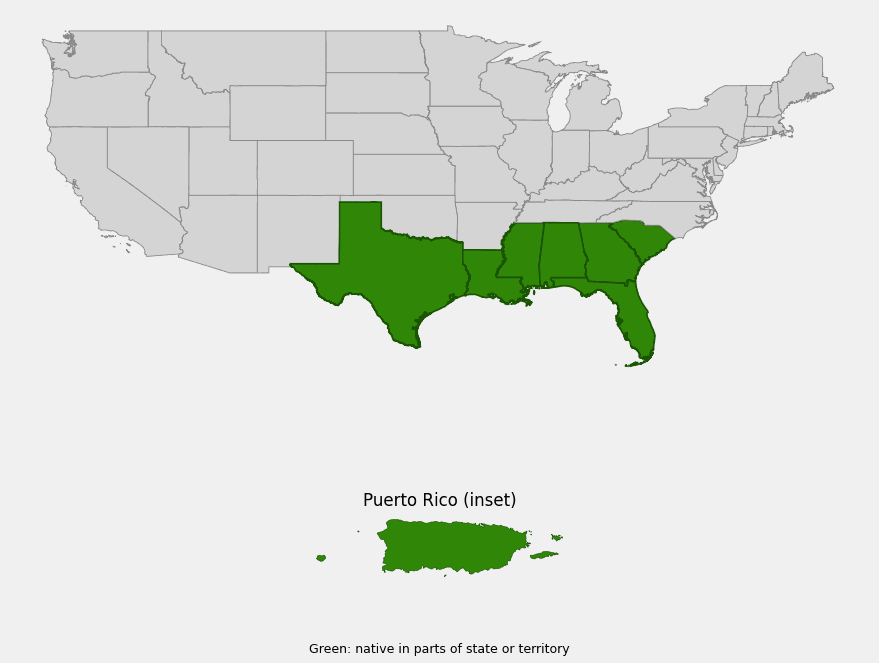
Jointed flatsedge is native to tropical and subtropical regions around the world, including the southeastern United States, the West Indies, Mexico, Central and South America, Africa, southern Asia and northern Australia. USDA PLANTS lists it as native to the lower 48 states, Puerto Rico and the U.S. Virgin Islands. In the U.S. it is recorded from Alabama, Florida, Georgia, Louisiana, Mississippi, South Carolina and Texas. It also occurs in Hawaii, where it is not native.
In the mainland U.S. it is mostly a plant of the coastal plain. It is frequent in Florida and along the upper Texas coast around Houston and Galveston, and it reaches south to the lower Rio Grande Valley. Its habitats are marshes, pond and lake margins, wet prairies, ditches, canals, borrow pits and the edges of slow streams. It often grows in a few inches of standing water and tolerates fluctuating water levels.
In Puerto Rico it grows in freshwater marshes, lagoon edges and wet lowlands. Jointed flatsedge is not considered rare across its U.S. range, but it depends on healthy freshwater wetlands, which have been drained and filled across much of the Gulf Coast.
📋 Regional plant lists featuring Jointed Flatsedge: North & South Florida · Alabama, Georgia & Mississippi · North & South Carolina · Arkansas, Louisiana, Eastern Oklahoma & Eastern Texas · South & West Texas · Puerto Rico
Growing & Care Guide
Jointed flatsedge is a good choice for the wet edge of a pond, a rain garden that holds water, or a large water-garden container. It is not often sold, but native wetland and aquatic plant nurseries in the Gulf states sometimes offer it. Never dig plants from public lands or protected wetlands.
Light
Grow it in full sun for the densest, most upright clumps. It tolerates part shade, but stems become thinner and lean toward the light.
Soil & Water
Plant it in constantly moist to wet soil, or in shallow water up to about 6 inches deep. Mucky, sandy and loamy soils all work. It tolerates seasonal drawdowns but not long dry periods. In containers, use a heavy loam or aquatic planting soil, not a light potting mix, and keep the pot sitting in water.
Planting Tips
Set divisions or potted plants in spring, with the crown at or just below the water surface. Space plants 1½ to 2 feet apart; they slowly fill in from rhizomes. In a small pond, plant in a submerged pot to keep the clump in bounds. It is hardy in USDA zones 8–11. Light frost browns the stems, but the rhizomes resprout in spring.
Pruning & Maintenance
Cut old, tan stems to the base in late winter so new green stems can come up cleanly. Divide crowded clumps every few years. Little else is needed; it has few pest or disease problems.
Propagation
The easiest method is division of the rhizomes in spring: cut off a section with several stems and roots and replant it in wet soil. It can also be grown from fresh seed surface-sown on wet soil in warm conditions, but germination is slower and less reliable.
Landscape Uses
- Pond and lake edges: a tall, fine-textured vertical accent in shallow water
- Water gardens and containers: a native alternative to ornamental horsetail and papyrus
- Wetland restoration: stabilizes muddy shores and ditch banks
- Rain gardens and bioswales: tolerates wet soil and fluctuating water
- Fragrance and crafts: aromatic rhizomes; stems used for mats and weaving
Wildlife & Ecological Value
Like other wetland sedges, jointed flatsedge provides food and cover in marshes and along shorelines.
For Pollinators
The flowers are wind-pollinated and offer no nectar, so they are not a pollinator plant. They still have a role: dense stands give shelter to dragonflies, damselflies and other aquatic insects, whose nymphs climb the stems to emerge as adults.
For Birds
Sedge seeds are eaten by ducks, rails, sparrows and other marsh birds, and the tall stems give cover to wading birds and marsh songbirds.
For Mammals
Muskrats and other wetland mammals may eat sedge rhizomes and stems, and the stands provide cover. Deer seldom browse it.
Ecosystem Role
Its rhizomes and roots help hold soil along shorelines, and the submerged stems shelter small fish, tadpoles and invertebrates. Like other emergent plants, it slows water and traps sediment and nutrients in marshes and ditches.
Cultural & Historical Uses
The name articulatus means “jointed,” for the cross-partitioned stems. The species was named by Linnaeus in 1753, and older herbal books call it adrue or Guinea rush.
In Brazil the plant is called priprioca. Its rhizomes have a woody, spicy fragrance and are one of the traditional aromatics of the Amazon region. Their essential oil is now used in perfumes and cosmetics, and it has been tried as a food flavoring.
In Africa and South Asia, the stems are woven into mats and baskets. In Assam, India, mats made from the plant are known as kothbon.
Frequently Asked Questions
Is jointed flatsedge native to the United States?
Yes. It is native to the Gulf and South Atlantic coastal plain, from Texas to Florida and South Carolina, and to Puerto Rico and the U.S. Virgin Islands. Plants in Hawaii are introduced.
Why is it called jointed flatsedge?
The round stems are divided inside by thin cross-walls. On dry stems they show as rings, so the stem looks jointed like bamboo. “Flatsedge” is the general name for the genus Cyperus, whose spikelets are flattened.
Is jointed flatsedge invasive like nutsedge?
No. It spreads slowly from short rhizomes and only grows in wet places. It does not form the aggressive tubers that make yellow and purple nutsedge such troublesome lawn and garden weeds.
Can I grow jointed flatsedge in a pond?
Yes. Plant it in full sun in wet soil or in water up to about 6 inches deep, either directly in the margin or in a submerged pot. It is hardy in zones 8–11.
What is priprioca?
Priprioca is the Brazilian name for Cyperus articulatus. Its fragrant rhizomes are used in the Amazon region for perfume, and the essential oil is used in cosmetics.

Looking for a nursery that carries Jointed Flatsedge?
Browse our native plant nursery directory: Alabama · Florida & Georgia · Louisiana & Mississippi · South Carolina & Texas

