
Native Fescues (Festuca)
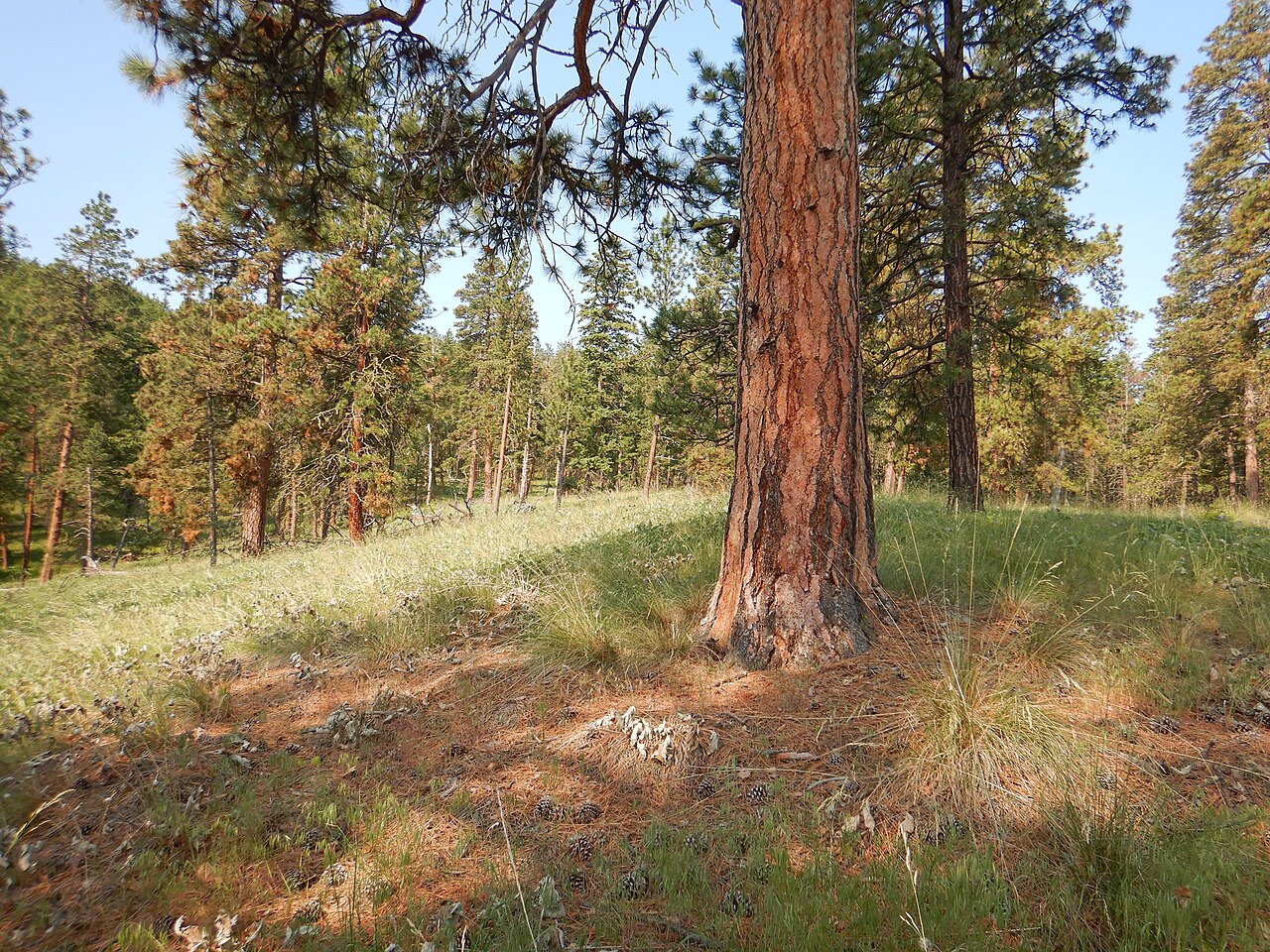
Fescues (genus Festuca) are cool-season grasses with fine, narrow leaves, found in temperate and cold regions around the world. To most American gardeners, “fescue” means a lawn grass: the fine fescues in shade-lawn mixes, or tall fescue in sunny lawns and pastures. Those lawn grasses are almost all European. But North America has its own fescues too, about 30 native species, from the great bunchgrasses of the western prairies and pine forests to a few modest woodland grasses in the East and Midwest.
Native fescues are tough, long-lived bunchgrasses that grow in clumps rather than spreading into a sod. Idaho fescue, rough fescue and Arizona fescue once dominated huge areas of the Intermountain West, the northern Rockies and the Southwest, feeding elk, bighorn sheep and generations of ranch livestock. California fescue and red fescue are prized in western gardens as shade-tolerant, drought-tolerant groundcovers, and nodding fescue grows in rich woods from Maine to Texas.
This guide explains which fescues are native, where each grows, how to tell them from the lawn fescues sold at garden centers, and what to plant if you want a native alternative to a fine fescue lawn. In Michigan and the rest of the Great Lakes region, the honest answer is that no native fescue makes a mowed lawn, but several natives make excellent low, shady groundcovers.
Identification
Fescues can be hard to tell from other grasses until they flower. These features help separate them from bluegrasses, bromes, wheatgrasses and other cool-season grasses.
Growth Form
Most native fescues are bunchgrasses, forming dense, rounded tufts 6 inches to 3 feet tall, with flowering stems rising above the leaves in late spring or early summer. A few, such as some forms of red fescue, spread by short rhizomes and form a loose sod. They are cool-season grasses: they green up early in spring, often stay green into fall, and slow down or go partly dormant in summer heat.
Leaves
Fescue leaves are usually narrow and fine, often rolled or folded so tightly that they look like wires or needles, especially in dry-country species such as Idaho, Arizona and sheep fescue. Colors range from bright green to striking blue-gray. California fescue and nodding fescue have wider, flatter leaves. Bunches of rough fescue are large and dense, with old leaf sheaths persisting at the base.
Seed Heads
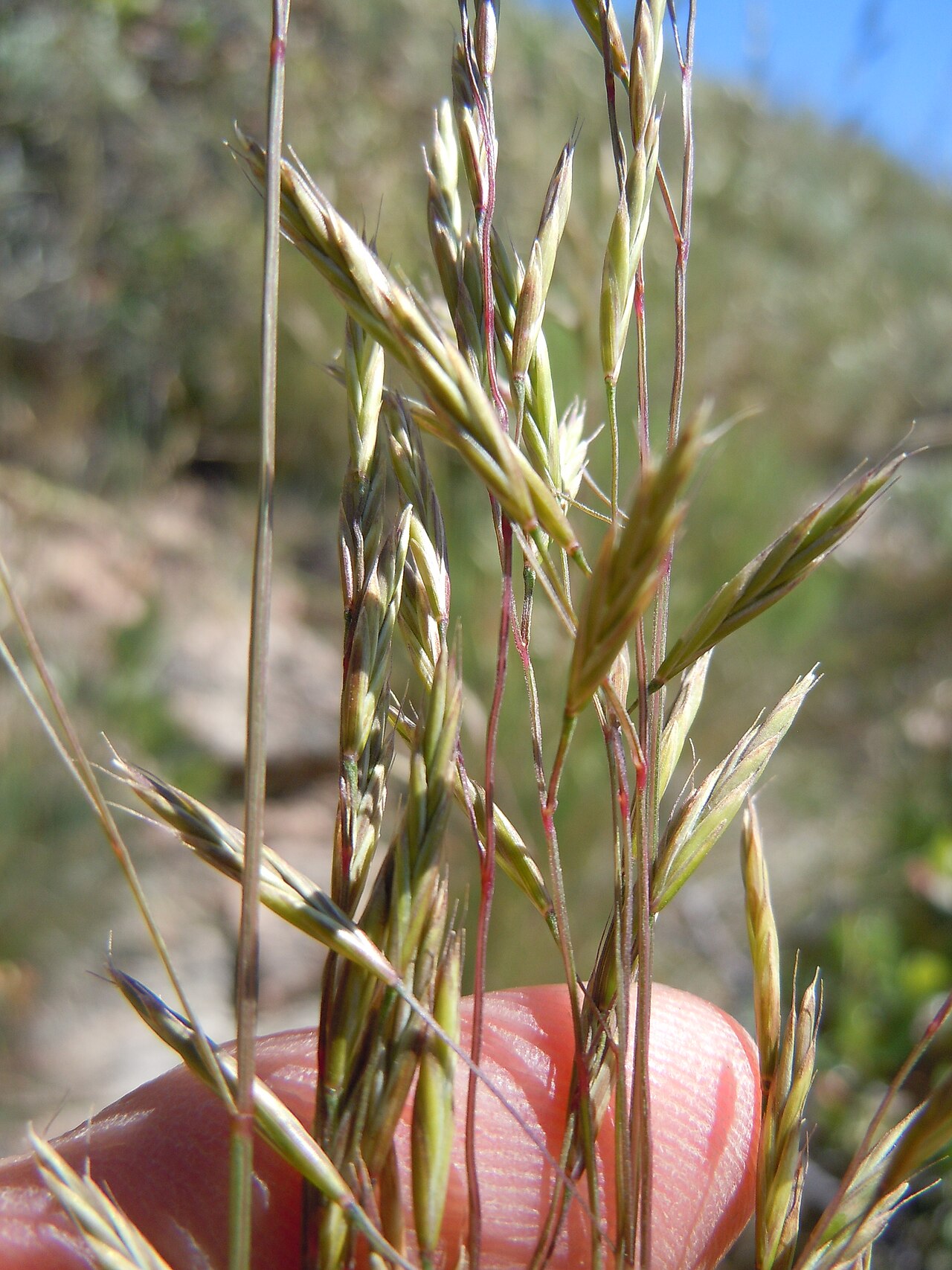
The flowers are carried in a panicle, a branched seed head that may be narrow and upright (Idaho and Arizona fescue) or open and drooping (nodding fescue, California fescue). Each spikelet holds several florets whose outer scales (lemmas) are rounded on the back, not keeled, and often end in a short, straight awn. Fescue seed heads ripen from green to straw-tan or purplish in early summer.
Telling Native from Lawn Fescues
Native and lawn fescues can look nearly identical as clumps of fine leaves. The difference is mostly in origin: the fine fescues in lawn seed mixes are European cultivars of red, chewings, hard and sheep fescue, and tall fescue is a coarse European pasture grass now placed in a different genus. If you want native fescues, buy seed or plants labeled with the species and, ideally, a local seed source.
Quick Facts
| Scientific Name | Festuca (about 30 species native to North America) |
| Family | Poaceae (Grass family) |
| Plant Type | Cool-season perennial bunchgrasses (a few spreading by rhizomes) |
| Mature Height | 6 in–3 ft, with flowering stems above the leaves |
| Mature Spread | 6 in–2 ft per clump |
| Growth Rate | Slow to moderate |
| Sun Exposure | Full sun to part shade (California and nodding fescue tolerate shade) |
| Water Needs | Low to average; western bunchgrasses very drought tolerant |
| Soil Type | Well-drained loam, sand or rocky soil; woodland species in rich, moist soil |
| Soil pH | Slightly acidic to slightly alkaline (about 5.5–8.0) |
| Bloom Time | May – July |
| Flower Color | Inconspicuous; seed heads green to tan or purplish |
| Fall Color | Mostly evergreen or semi-evergreen; some turn tan in summer dormancy |
| Fruit | Small grains (seeds) in early to midsummer |
| Deer Resistant | Moderately; grazed by deer, elk and livestock |
| USDA Hardiness Zones | About 2–9 across the genus |
Native Range
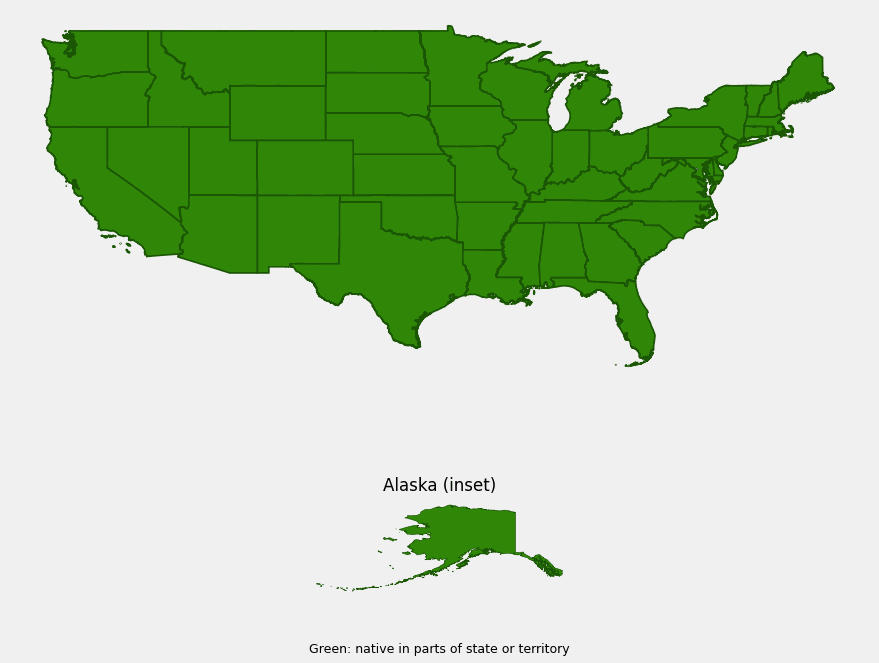
Native fescues grow in every state of the lower 48 and in Alaska, but they are far more important in the West. Idaho fescue and bluebunch wheatgrass once dominated the Palouse prairie and sagebrush steppe of eastern Washington and Oregon, Idaho and Montana. Rough fescue grasslands cover the foothills of the northern Rockies in Montana and adjacent Canada, Arizona fescue is the main bunchgrass of ponderosa pine forests in Arizona and New Mexico, and Thurber fescue fills high mountain parks in Colorado and Utah. On the Pacific Coast, California fescue, Roemer’s fescue and native forms of red fescue grow in oak woodlands, coastal prairies and bluffs.
East of the Great Plains, native fescues are fewer and less conspicuous. Nodding fescue (F. subverticillata) grows in rich deciduous woods across the East, Midwest and South, from Maine and Minnesota to Florida and Texas. Cluster fescue (F. paradoxa) grows in prairies and open woods of the Midwest and South, and Rocky Mountain fescue reaches east to the upper Great Lakes. Alpine fescue and other small species grow on high peaks and in Alaska.
The fine fescues and tall fescue that cover lawns, roadsides and pastures across the country are not native. They were brought from Europe and are now widespread, especially in the Midwest and East. Red fescue is a special case: the species circles the Northern Hemisphere, and some subspecies are native along North American coasts, in the West and in the far north, while the red fescue in lawn seed comes from European stock.
📋 Regional plant lists with native grasses, including fescues: Idaho, Eastern Oregon & Eastern Washington · Western Oregon & Washington · Montana & Wyoming · Utah & Western Colorado · Arizona & New Mexico · California & Nevada · Alaska · North Dakota, South Dakota & Western Minnesota · Nebraska, Kansas & Eastern Colorado · South & West Texas · Michigan, Wisconsin & Eastern Minnesota · Illinois, Iowa & Missouri · Ohio & Indiana · Kentucky & Tennessee · Arkansas, Louisiana, Eastern Oklahoma & Eastern Texas · New York, Pennsylvania & Northern New Jersey · New Hampshire, Maine & Vermont · Connecticut, Massachusetts & Rhode Island · Maryland, Virginia & West Virginia · North Carolina & South Carolina · Georgia, Alabama & Mississippi · Delaware, Southern New Jersey & Long Island
Native Species
These are the native fescues most often used in gardens, restoration and range management. Linked names go to our full growing guides.
Idaho fescue (Festuca idahoensis) is the classic fine-leaved bunchgrass of the interior West, forming dense, blue-green to gray-green tufts about 1 foot tall with seed heads to 2 or 3 feet. It grows from Washington and Montana south to California, Arizona and New Mexico in sagebrush steppe, mountain grasslands and open pine forest. It is very drought tolerant, makes an excellent ornamental for dry gardens, and is a top choice for western meadow plantings.
Rough fescue (Festuca campestris) forms large, coarse bunches up to 2 feet across in the foothill grasslands of Montana, Idaho, Washington and Oregon, extending north into Alberta and British Columbia. It is highly valued winter forage for elk and cattle, and it is the provincial grass of Alberta. Once lost to plowing or heavy grazing, it is slow to come back.
Arizona fescue (Festuca arizonica) is the dominant bunchgrass of ponderosa pine forests in Arizona and New Mexico, extending into Colorado, Utah and Nevada. It forms fine, gray-green tufts and handles drought, cold winters and frequent low-intensity fire.
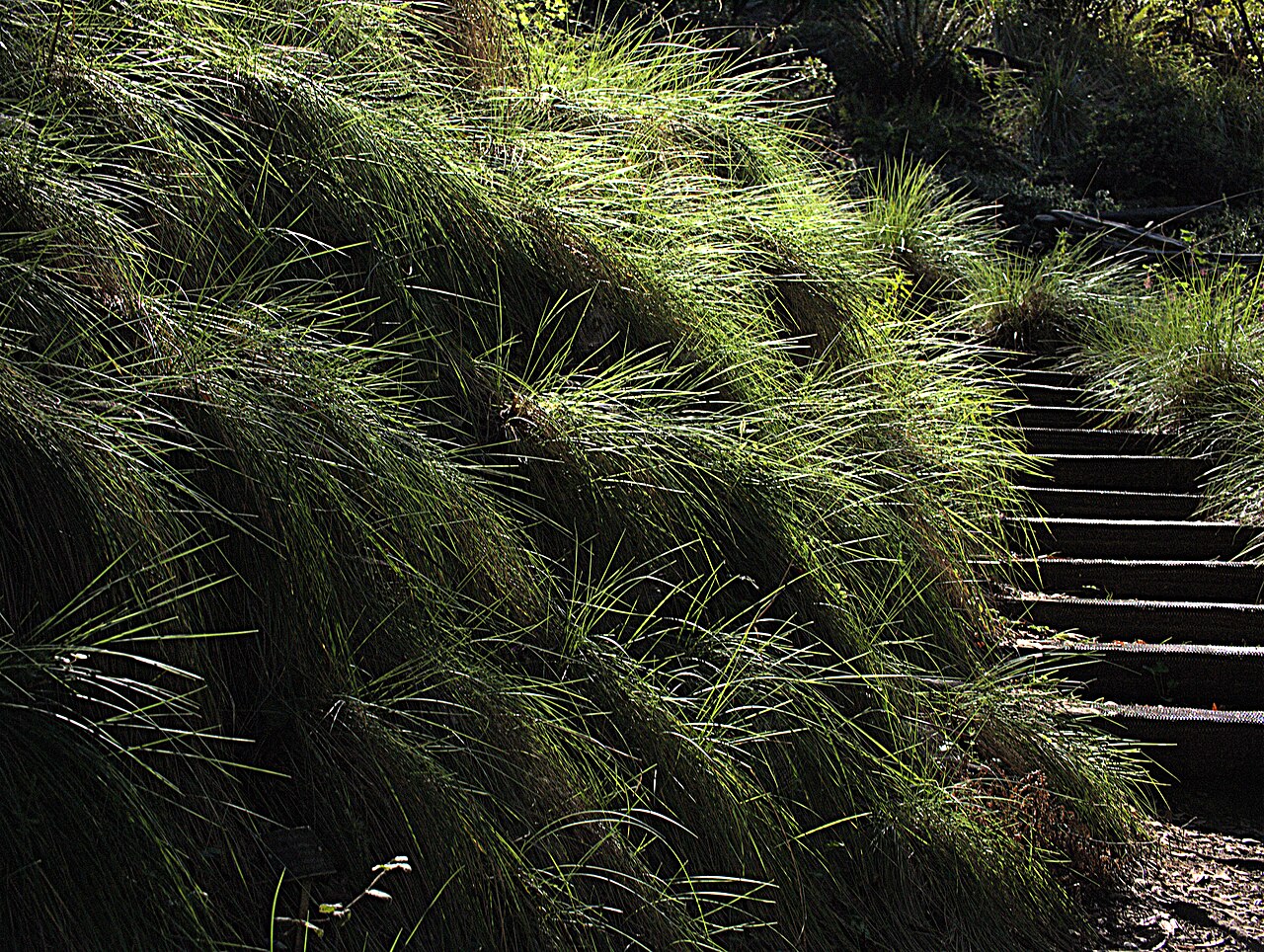
California fescue (Festuca californica) is a larger, fountain-shaped fescue with blue-green to silvery leaves 2 to 3 feet tall, native to oak woodlands and forest edges in California and Oregon. It is one of the best native grasses for dry shade under oaks, and selections such as ‘Serpentine Blue’ and ‘Phil’s Silver’ are widely grown.
Red fescue (Festuca rubra) is a variable species with native subspecies in coastal bluffs and meadows, mountains and the far north, including Alaska. Native coastal selections such as ‘Molate’ are used in California as unmowed or lightly mowed native lawns. Red fescue sold in lawn seed mixes, by contrast, is European in origin.
Nodding fescue (Festuca subverticillata, formerly F. obtusa) is the native fescue of eastern and midwestern woods, including Michigan. It has flat, bright green leaves and loose, airy, drooping seed heads 2 to 3 feet tall, and it grows in part to full shade in rich, moist soil. It is a natural choice for woodland gardens but does not form a lawn.
Cluster fescue (Festuca paradoxa) grows in prairies, savannas and open woods from Iowa, Illinois and Pennsylvania south to Texas and Georgia, with flat leaves and a dense, nodding panicle.
Western fescue (Festuca occidentalis) is a slender, fine-leaved fescue of shady conifer forests in the Pacific Northwest, northern Rockies and northern California.
Roemer’s fescue (Festuca roemeri) is a key bunchgrass of the prairies and oak savannas of western Oregon and Washington, and a staple of prairie restoration in the Willamette Valley and around Puget Sound.
Rocky Mountain fescue (Festuca saximontana) is a small, fine-leaved bunchgrass of grasslands and open forests across the Rockies and northern Plains, east to the upper Great Lakes. It was once treated as a variety of sheep fescue.
Thurber fescue (Festuca thurberi) forms large, coarse bunches in high mountain parks and slopes of Colorado, Wyoming, Utah and New Mexico.
Non-Native Look-Alikes
The fescues most Americans walk on every day are not native. Here is how the common lawn and pasture fescues fit in:
- Creeping red fescue (Festuca rubra subsp. rubra, lawn cultivars): The spreading fine fescue in shade-lawn mixes. Lawn varieties are European, although the species also has native North American subspecies.
- Chewings fescue (Festuca rubra subsp. commutata): A clumping, non-spreading fine fescue of European origin, named for a New Zealand seed merchant, and widely used in shade and low-maintenance lawns.
- Hard fescue (Festuca brevipila, formerly sold as F. trachyphylla or F. longifolia): A very fine, tough, bluish-green European bunchgrass used in “no-mow” lawn and roadside mixes. It has naturalized in parts of the Northeast and Great Lakes.
- Sheep fescue (Festuca ovina): A Eurasian fine fescue used in low-input lawns, meadow mixes and erosion control. Older North American reports of native sheep fescue usually refer to other native species, such as Rocky Mountain fescue.
- Blue fescue (Festuca glauca): The small, powder-blue ornamental grass sold in garden centers, including ‘Elijah Blue’, is European.
- Tall fescue (Schedonorus arundinaceus, formerly Festuca arundinacea): A coarse, wide-bladed European pasture and lawn grass now placed in a separate genus. It has spread widely into prairies, roadsides and natural areas, where it crowds out native plants, and many states treat it as invasive. Most pasture tall fescue carries a fungus (endophyte) that causes fescue toxicosis in cattle and horses. Meadow fescue (S. pratensis) is a related European grass.
Fine fescues are generally well behaved in lawns, and they need less water, fertilizer and mowing than Kentucky bluegrass, which also comes from Eurasia. If you want a lawn, they are a reasonable low-input choice. If you want native plants, look at the alternatives below.
Growing & Care Guide
Native fescues are easy, long-lived plants once you match the species to the site. Western bunchgrasses want sun and sharp drainage; woodland species want shade and humus.
Light
Idaho, Arizona, rough and Roemer’s fescue need full sun to light shade. California fescue grows in sun near the coast and in part to fairly deep shade inland. Nodding fescue and western fescue are woodland grasses for part to full shade.
Soil & Water
Western bunchgrasses do best in lean, well-drained loam, sand or rocky soil and are very drought tolerant once established; overwatering and rich soil make them floppy and short-lived. In hot, dry summers they may go partly dormant and turn tan, then green up again with fall rain. California fescue tolerates clay and summer drought in shade. Nodding fescue wants rich, moist woodland soil with leaf litter.
Planting Tips
Plant plugs or container plants in fall or early spring, 12 to 24 inches apart for a meadow effect, or 8 to 12 inches apart for a groundcover. Seed native fescues in fall in the West, where winter rain and snow do the watering, or in early spring elsewhere. Use local seed sources when restoring native grassland, because each region’s populations are adapted to its climate.
Mowing & Maintenance
Native fescues are not lawn grasses, but some tolerate occasional mowing. California fescue and native red fescue can be mowed two or three times a year at 4 to 6 inches for a soft, meadow-like groundcover. Bunchgrasses such as Idaho fescue look best when old foliage is combed out or the clumps are cut back to 3 to 4 inches in late winter. Avoid heavy fertilizer, which favors weeds over native grasses.
Propagation
Grow native fescues from seed or divide established clumps in early spring or fall. Seed germinates readily in cool, moist conditions without special treatment. Selected cultivars, such as blue forms of Idaho fescue and California fescue, are propagated by division.
Native Alternatives to a Fine Fescue Lawn
- Great Lakes and East, shade: Pennsylvania sedge makes a fine-textured, low, unmowed groundcover under trees, with nodding fescue at woodland edges.
- Great Plains and dry West, sun: buffalograss and blue grama make low-water native lawns where they are native, with Idaho fescue and junegrass for unmowed meadows.
- Pacific Coast: native red fescue selections and California fescue for lightly mowed or unmowed native lawns.
- Texas and the South: Texas sedge for a low, shady lawn substitute.
Wildlife & Ecological Value
Native fescue grasslands are some of the most productive wildlife habitats in the West.
For Pollinators & Insects
Fescues are wind-pollinated, so they offer little to bees. They do serve as caterpillar food plants for many grass-feeding butterflies and moths, including skippers, satyrs and wood-nymphs, and their dense bunches shelter ground-nesting bees and overwintering insects.
For Birds
Sparrows, juncos, longspurs and other seed-eating birds eat fescue seed, and sage-grouse, sharp-tailed grouse and meadowlarks nest among the bunches. Woodland birds forage among nodding fescue in eastern forests.
For Mammals
Rough and Idaho fescue are among the most important forage grasses for elk, bighorn sheep, mule deer and pronghorn, especially in winter, when the cured bunches stay nutritious. Rodents eat the seed and shelter under the clumps.
Ecosystem Role
Deep, fibrous roots build organic-rich grassland soils and hold slopes against erosion. Bunchgrass communities with fescues resist invasion by cheatgrass and other weeds far better than overgrazed or disturbed ground, so restoring native fescues is a key part of western rangeland recovery.
Cultural & Historical Uses
The name Festuca comes from the Latin word for a stalk or straw. In the West, fescue grasslands supported huge herds of bison, elk and pronghorn and later became the backbone of the ranching economy. Overgrazing and plowing in the late 1800s and early 1900s destroyed much of the original Palouse and foothill fescue prairie, and today only small fragments remain in places.
The European fine fescues reached North America with settlers and seed merchants and became lawn grasses in the 20th century, valued for growing in shade and poor soil. Tall fescue was planted widely on farms after the 1940s, especially the cultivar ‘Kentucky 31,’ and later became a common lawn grass across the transition zone of the South and Midwest.
Interest in native fescues has grown with western water restrictions and native gardening. Idaho fescue, Roemer’s fescue, California fescue and native red fescue are now produced by native seed companies and nurseries for restoration, meadows and low-water landscapes.
Frequently Asked Questions
Is fine fescue native to Michigan?
No. The fine fescues sold for Michigan lawns, including creeping red, chewings, hard and sheep fescue, are European cultivars. Michigan’s native fescues, such as nodding fescue, are woodland and prairie grasses that do not form a mowed lawn.
Are fine fescues invasive?
Fine fescues are not usually considered invasive, though hard and sheep fescue can spread into sandy natural areas from roadside seedings. Tall fescue, a coarser European grass now in the genus Schedonorus, is the problem fescue: it invades prairies and old fields in many states.
What native grass can I use instead of a fescue lawn?
It depends on your region. In shady Great Lakes and eastern yards, Pennsylvania sedge is a good low groundcover. On the Great Plains and in the dry West, buffalograss and blue grama make native low-water lawns. On the West Coast, native red fescue and California fescue work as lightly mowed meadows.
How do I tell Idaho fescue from blue fescue?
Both form fine, blue-green tufts. Blue fescue (Festuca glauca) is a small European ornamental, usually under a foot tall and very blue. Idaho fescue is a larger native bunchgrass with taller seed heads, typically gray-green to blue-green, and is the better choice for western native gardens.
Do native fescues stay green all year?
They are cool-season grasses, green in spring and fall. Western bunchgrasses often turn tan in hot, dry summers and green up again with fall rain. California fescue and nodding fescue stay green longer in shade, and several species remain partly evergreen in mild winters.

Looking for a nursery that carries Native Fescues?
Browse our native plant nursery directory: Alabama, Alaska, Arizona & Arkansas · California · Colorado, Connecticut, Delaware, Florida & Georgia · Idaho, Illinois, Indiana, Iowa & Kansas · Kentucky, Louisiana, Maine, Maryland, Massachusetts, Michigan, Minnesota, Mississippi, Missouri & Montana · Nebraska, Nevada, New Hampshire, New Jersey, New Mexico, New York, North Carolina, North Dakota, Ohio & Oklahoma · Oregon · Pennsylvania, Rhode Island, South Carolina, South Dakota, Tennessee, Texas, Utah, Vermont & Virginia · Washington · West Virginia, Wisconsin & Wyoming

