
Poppies (Papaver) and Native Poppy Alternatives
Poppies (genus Papaver) are annuals and perennials with crinkled, silky petals, a ring of many stamens around a round seed capsule, and nodding buds that turn upward as they open. Most of the 70 to 100 species come from Europe, North Africa and Asia, and almost every poppy in American gardens is one of them: the Oriental poppy, the corn or Flanders poppy, the Iceland poppy and the opium poppy.
Only about ten Papaver species are native to the United States, and nearly all of them are small arctic and alpine plants of Alaska’s tundra and the highest Rocky Mountain peaks. Two more are annual wildflowers of California. So when our Colorado and gardening articles recommend “Poppy,” the plant you can buy is almost certainly an imported species. This guide explains which poppies are native and where, how to recognize the garden imports, and which native members of the poppy family make better choices for each region, from California poppy in the West to prickly poppy on the Plains and celandine poppy in eastern woodlands.
Identification
True poppies share several features. The flower buds hang downward on hairy stalks and straighten as they open; two sepals fall off as the flower unfolds. There are usually four petals (sometimes five or six), often crumpled like tissue paper when new, and many stamens. In the center is a round or oval seed capsule topped by a flat, star-like disk of stigma rays. When ripe, the capsule releases tiny seeds through small pores under the disk, like a salt shaker. Leaves are usually lobed or deeply divided, and the stems and leaves contain milky or colored sap.
Native Papaver
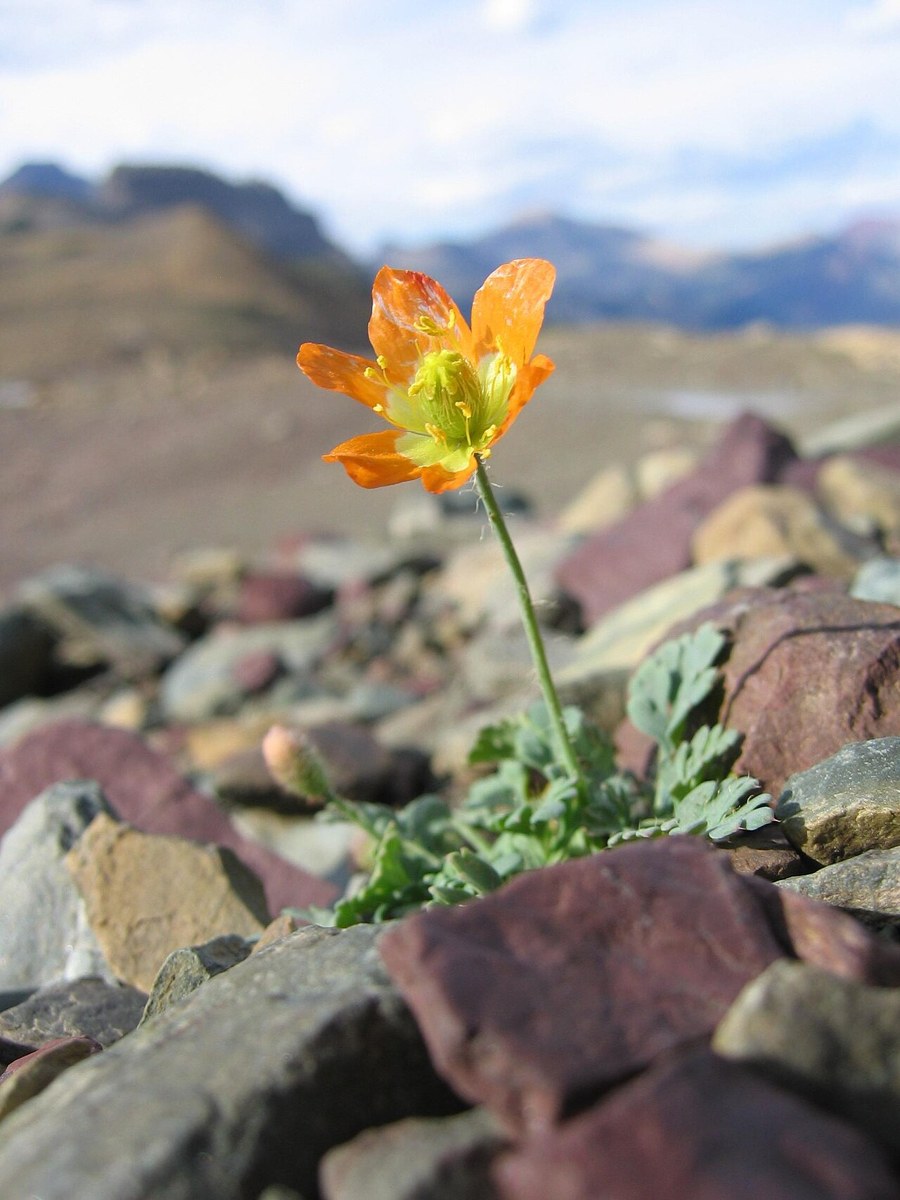
The arctic and alpine natives are tufted perennials only 2–8 inches tall, with a rosette of hairy, divided leaves and single yellow, white, orange or salmon flowers on leafless stalks. The California natives are slender annuals: fire poppy has orange to brick-red flowers, and wind poppy has orange-red petals with a dark purple spot at the base of each.
Telling Poppy-Family Relatives Apart
California poppies (Eschscholzia) have four satiny petals that close at night and on cloudy days, finely cut blue-green leaves, a pink cone-like rim under the flower, and a long, narrow seed pod rather than a round capsule. Prickly poppies (Argemone) have large white, yellow or red flowers on thistle-like, spiny plants with yellow sap. Matilija poppy is a shrub with huge white “fried egg” flowers. Celandine poppy is a woodland perennial with yellow flowers and orange-yellow sap. “Poppy mallows” (Callirhoe) are not poppies at all but members of the mallow family with five petals.
Quick Facts
| Genus | Papaver |
| Family | Papaveraceae (Poppy) |
| U.S. Native Species | About 10, almost all in Alaska; a few in the Rockies and California |
| Growth Forms | Tufted alpine and arctic perennials; slender annuals (California species) |
| Mature Height | 2–8 in (alpine and arctic species); 1–2 ft (fire and wind poppy) |
| Sun Exposure | Full Sun |
| Water Needs | Dry to average; moist in spring, well drained |
| Soil Type | Gravel, scree and rocky tundra (alpine species); burned or disturbed chaparral soils (fire poppy) |
| Bloom Time | Spring (California annuals); summer (alpine and arctic species) |
| Flower Color | Yellow, white, salmon, orange and red |
| Wildlife Value | Pollen for bees, flies and beetles; seeds for small birds and rodents |
| Toxicity | Poppies and most poppy-family plants contain alkaloids and are toxic to people, pets and livestock if eaten |
| Garden Use | Native Papaver are rarely sold; use native poppy-family relatives instead |
Native Range
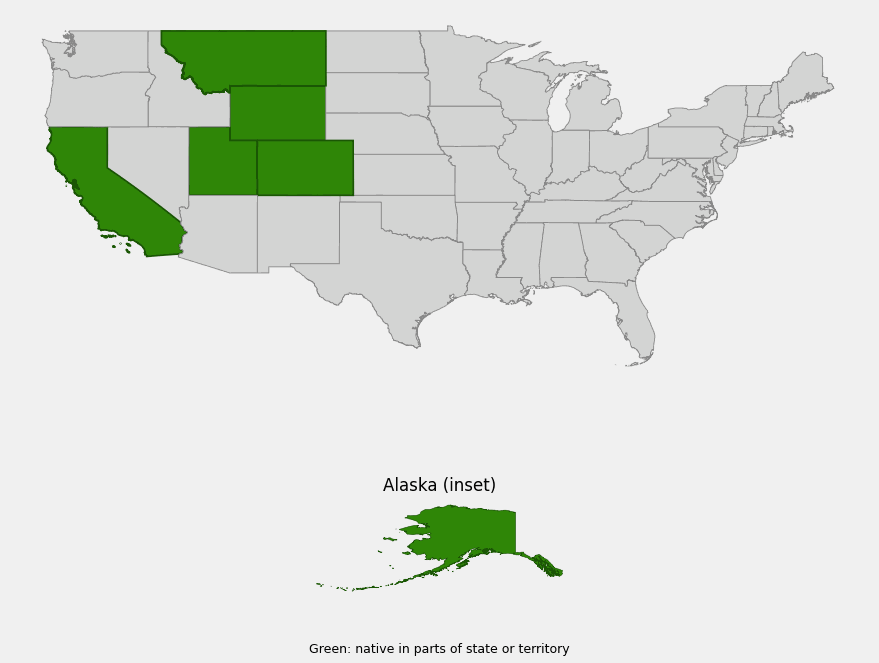
Alaska has most of the native Papaver: arctic poppy (P. lapponicum), Alaska poppy (P. alaskanum), Macoun’s poppy (P. macounii), McConnell’s poppy (P. mcconnellii), Walpole’s poppy (P. walpolei) and others grow on tundra, gravel bars and scree from the Aleutians to the Arctic coast. Botanists still disagree about how to divide this group, so species counts vary.
In the lower 48, a subspecies of the arctic poppy complex (Papaver radicatum subsp. kluanense, also treated as P. kluanense) grows on a handful of alpine summits in Colorado, Utah, Wyoming and Montana. The alpine glacier poppy (P. pygmaeum) is limited to the high country of Glacier National Park in Montana and nearby Canada. In Colorado the native poppy is a rare plant of alpine scree above treeline, not a garden plant.
California has two lowland natives: fire poppy (P. californicum), which appears in central and southern California chaparral after wildfires, and wind poppy (P. heterophyllum, long known as Stylomecon heterophylla), found on grassy and brushy slopes through much of the state. No Papaver is native to the East, the Midwest, the Great Plains, the Southeast, Texas or Hawaii. Corn poppies or opium poppies growing wild in those regions have escaped from gardens or wildflower mixes.
📋 Regional plant lists with native poppies and poppy-family plants: Alaska · CA, NV · MT, WY · UT, CO west · NE, KS, CO east · AZ, NM · TX south/west/central · OH, IN · NY, PA, NJ north · KY, TN
Native Species
Below are the native true poppies, followed by native members of the poppy family that make the best garden substitutes. Species with a full Plant Native profile are linked.
Native True Poppies (Papaver)
Fire Poppy (Papaver californicum)
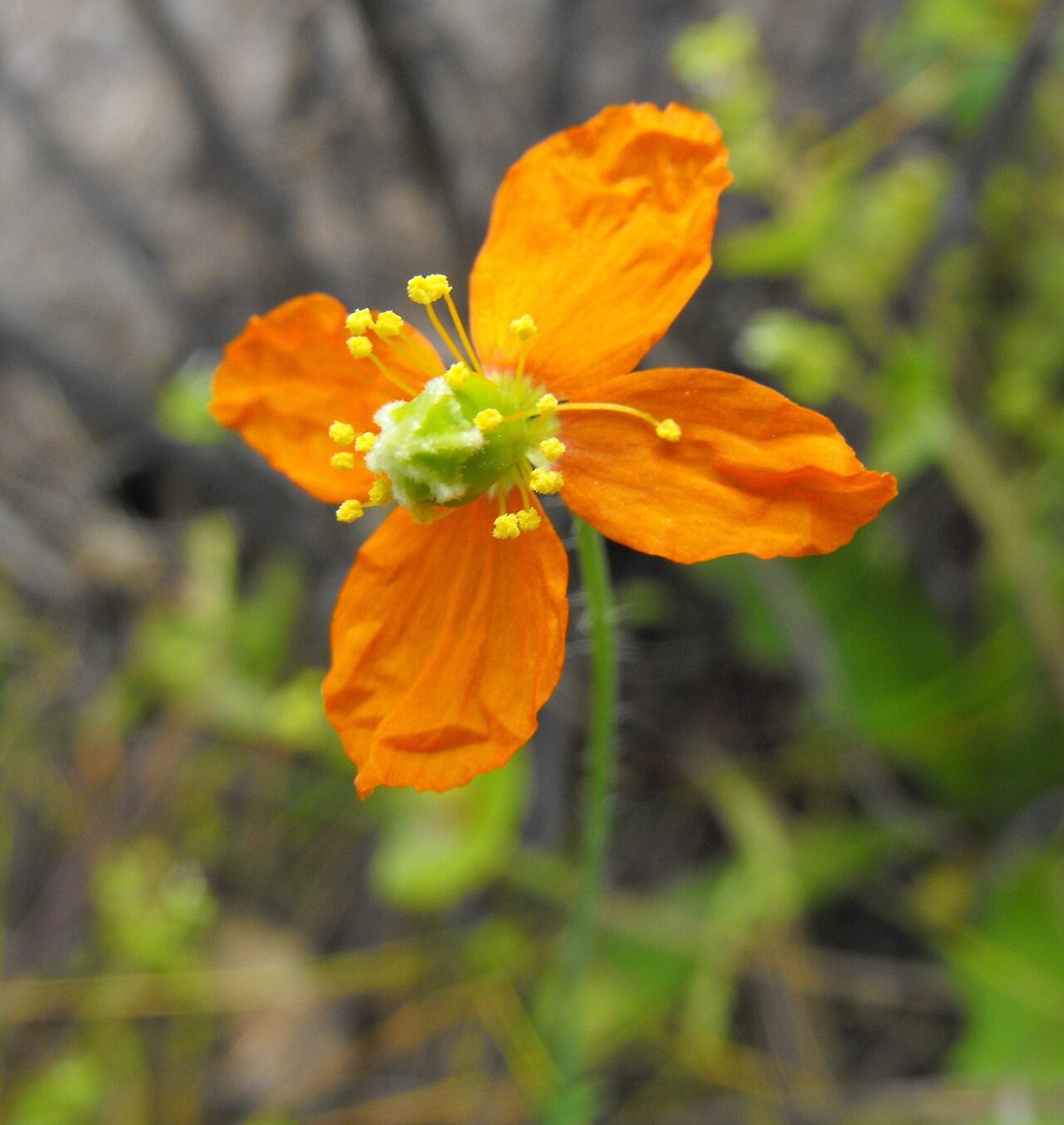
An annual, 1–2 ft tall, with four orange to brick-red petals, sometimes with a green base. Its seeds can wait in the soil for years and sprout in great numbers in the first spring or two after a chaparral fire, then disappear as the shrubs grow back. Native to central and southern California. Seed is occasionally available from native seed suppliers.
Wind Poppy (Papaver heterophyllum)
A slender California annual with orange-red petals marked with a purple-black spot at the base. It grows on grassy and brushy slopes, often in partial shade, and can be sown in fall in California native gardens.
Arctic Poppy (Papaver lapponicum and relatives)
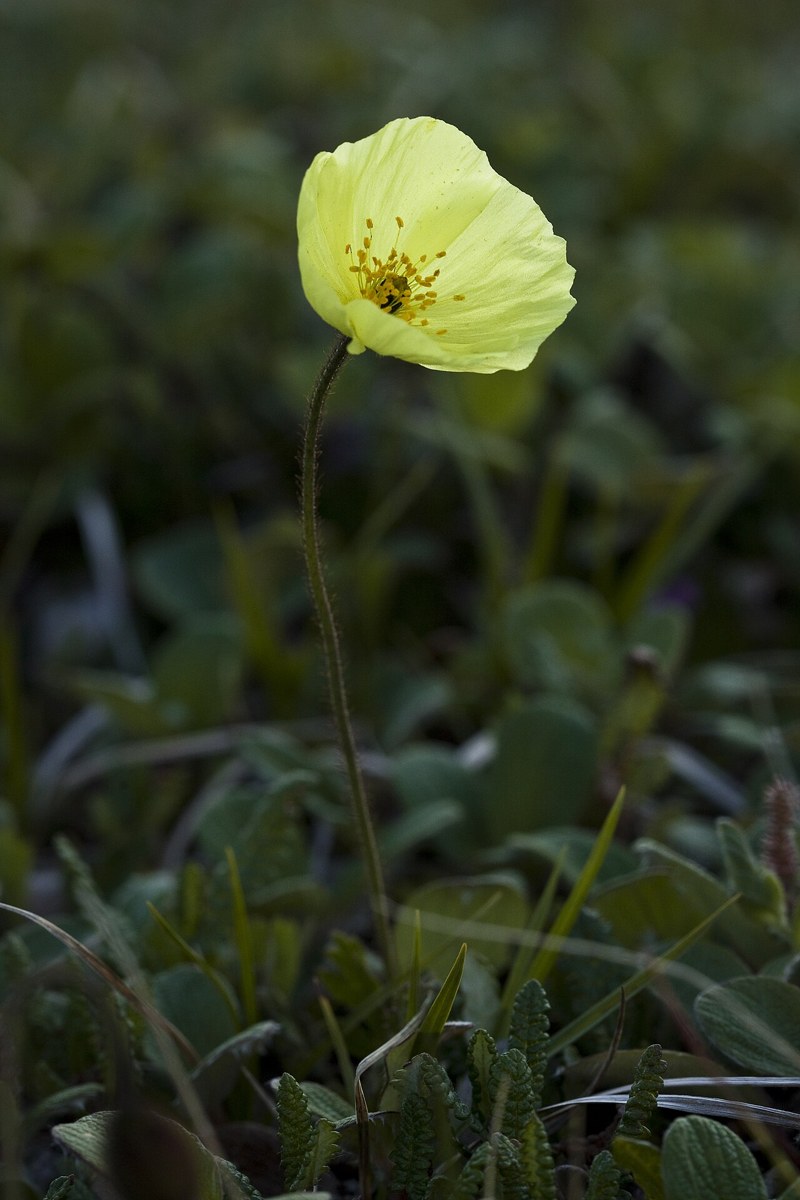
Low, tufted perennials of Alaska’s tundra with yellow (sometimes white or pinkish) flowers on hairy stalks. Like many arctic plants, the cup-shaped flowers track the sun, warming the center and attracting insects.
Rocky Mountain Alpine Poppy (Papaver radicatum subsp. kluanense)
A tiny, pale yellow poppy of a few alpine summits in Colorado, Utah, Wyoming and Montana, and the only true poppy native to Colorado. It is rare; enjoy it in the wild and do not collect it.
Alpine Glacier Poppy (Papaver pygmaeum)
A small salmon to orange-yellow poppy of scree and ridges in and around Glacier National Park, Montana. It is found nowhere else in the U.S.
Native Poppy-Family Alternatives
California Poppy (Eschscholzia californica)
The easiest native “poppy” to grow: an annual or short-lived perennial with satiny orange or yellow flowers from spring into summer and lacy blue-green leaves. It is the state flower of California and native to California and Oregon; the related Mexican gold poppy is native in Arizona, New Mexico and nearby deserts. It is planted and sometimes naturalized in other states, where it is not native. Smaller desert relatives include tufted poppy, little gold poppy and Parish’s poppy.
Crested Prickly Poppy (Argemone polyanthemos)
A native of the Great Plains and foothills, including Colorado, with large white, crinkled flowers 2–4 inches across on blue-green, spiny plants up to 3 ft tall. It thrives in dry, sandy or disturbed soil where little else will grow, and deer and cattle leave it alone. This is the best native “poppy” for most Colorado gardens east of the mountains. Relatives include white prickly poppy in the Southeast and Texas, red prickly poppy in south Texas, flatbud prickly poppy in the West and Hawaii’s puakala.
Matilija Poppy (Romneya coulteri)
A large, shrubby perennial of southern California with white flowers up to 9 inches across, among the largest of any native wildflower. It spreads aggressively by roots once established, so give it space.
Bush Poppy (Dendromecon rigida)
A woody, evergreen shrub of California chaparral with bright yellow, four-petaled flowers in spring. The Channel Islands have a larger relative, island bush poppy.
Creamcups (Platystemon californicus)
A small annual of California and the Southwest with cream to pale yellow flowers. It is a good companion for California poppies in spring meadows.
Celandine Poppy (Stylophorum diphyllum)
A woodland perennial of the Ohio Valley and Midwest, from Pennsylvania west to Wisconsin and Missouri, with bright yellow, 2-inch poppy flowers in spring and lobed leaves. It is the best native poppy for shady eastern gardens. Do not confuse it with the invasive Eurasian greater celandine (Chelidonium majus), which has much smaller flowers and narrow seed pods.
Bloodroot (Sanguinaria canadensis)
An eastern woodland wildflower and poppy-family member with pure white flowers in early spring and a single lobed leaf wrapped around each stem. Its orange-red sap is toxic and irritates skin.
Non-Native Look-Alikes
The poppies in seed catalogs and garden centers are almost all non-native. They are popular, mostly well-behaved garden plants, but they are not native anywhere in the U.S., and some have escaped.
Oriental poppy (Papaver orientale), from Turkey, the Caucasus and Iran, is the big perennial poppy of old gardens, with hairy leaves and huge orange, red, pink or white flowers, often with black blotches, in early summer. It goes dormant and disappears after flowering, then sends up new leaves in fall. It is hardy and long-lived in Colorado and northern gardens.
Corn poppy (Papaver rhoeas), also called Flanders or field poppy, is a European annual with scarlet flowers, often with a black spot at the base. It is the remembrance poppy of World War I and is common in “wildflower” seed mixes, which is why it shows up along roadsides. Shirley poppies are a selection of it.
Opium poppy (Papaver somniferum), also called breadseed poppy, has smooth, blue-gray leaves that clasp the stem and large lavender, pink, red, purple or white flowers. All parts of the plant except the ripe seeds contain opiate alkaloids and are poisonous. Seeds are sold legally, but growing the plant for opium is illegal in the United States.
Iceland poppy (Papaver nudicaule) comes from subarctic Asia. It is a short-lived perennial grown as a cool-season annual, with flowers in white, yellow, orange, pink and red on leafless stems. It looks similar to the native arctic poppies, but the garden strains are larger and more colorful.
Other non-natives include long-headed poppy (Papaver dubium), a small orange European annual that has become a weed in parts of the U.S., and the Himalayan blue poppies (Meconopsis). Blue poppies need cool, moist summers and are notoriously hard to grow in dry, sunny climates such as Colorado’s.
If you want a native flower in a color the garden poppies offer: for orange and gold, grow California poppy in the West; for white, prickly poppy on the Plains or Matilija poppy in California; for yellow in shade, celandine poppy in the East; and for blue, which no poppy offers easily, try blue flax (Linum lewisii) or Rocky Mountain penstemon in Colorado. For magenta cups on the Plains, try purple poppy mallow, a native mallow.
Growing & Care Guide
Light
Nearly all poppies and their native relatives want full sun. The exceptions are celandine poppy and bloodroot, which grow in part to full shade under deciduous trees, and wind poppy, which tolerates light shade.
Soil & Water
Poppies need well-drained soil and rot in heavy, wet ground. California poppy and prickly poppy thrive in lean, sandy or gravelly soil with little water once established; rich soil and frequent watering give floppy plants with few flowers. Celandine poppy wants moist, humus-rich woodland soil. The alpine and arctic natives depend on cold winters, cool summers and very sharp drainage and are rarely grown outside rock gardens in cool climates.
Sowing & Planting
Poppies and their relatives have long taproots and resent transplanting, so sow seeds directly where they will grow. Scatter the tiny seeds on the soil surface in fall or very early spring and press them in without covering; most need light and cool temperatures to sprout. In California, sow native poppies in fall to bloom with the winter rains. Prickly poppy seed sprouts best after a winter outdoors.
Maintenance
Deadhead California poppy to extend bloom, or leave the pods to reseed. Most annual poppies reseed on their own where the soil is open. Wear gloves when handling prickly poppy and bloodroot.
Landscape Uses
- Meadows and wildflower plantings (California poppy, creamcups, fire and wind poppy in California)
- Dry, sandy or disturbed sites on the Plains (crested prickly poppy)
- Shady woodland gardens in the East (celandine poppy, bloodroot)
- Large slopes and banks in southern California (Matilija poppy, bush poppy)
- Alpine rock gardens in cool climates (arctic and alpine poppies, where seed is legally available)
Wildlife & Ecological Value
For Pollinators
Poppy flowers have no nectar but produce plenty of pollen, which draws bees, hover flies and beetles. In the Arctic, the bowl-shaped flowers that follow the sun act as tiny solar collectors, and insects warm themselves inside while they feed. California poppies and prickly poppies are worked heavily by native bees.
For Other Wildlife
Small birds and rodents eat the seeds of annual poppies. Because of their bitter alkaloids, poppies and prickly poppies are usually avoided by deer and rabbits.
Ecosystem Role
Fire poppy is a “fire follower”: its seeds remain dormant in the soil between fires and germinate in response to heat, smoke and charred wood, helping cover the ground in the first years after a burn. Alpine and arctic poppies are pioneers of gravel and scree. Prickly poppies colonize disturbed, overgrazed or eroded ground on the Plains.
Cultural & Historical Uses
Opium poppy has been grown in the Old World for thousands of years for its seeds, oil and narcotic latex, and it remains the source of morphine and codeine. The corn poppy became the symbol of remembrance for soldiers after the poem “In Flanders Fields” (1915). California adopted the California poppy as its state flower in 1903 and celebrates California Poppy Day each April 6. Native peoples in California used parts of the California poppy, and prickly poppy sap and seeds were used in folk remedies; these are historical uses, not advice, and both plants are toxic.
Frequently Asked Questions
Are poppies native to Colorado?
Only one true poppy is: a tiny, rare alpine poppy on a few high peaks. Garden poppies such as Oriental, Iceland and corn poppies are imports. For a native poppy in a Colorado garden, plant crested prickly poppy; for blue flowers, plant blue flax.
Is the California poppy a real poppy?
It is in the poppy family (Papaveraceae) but in a different genus, Eschscholzia. It is native to California and Oregon and is the easiest native poppy-family plant to grow in sunny, dry gardens.
Which garden poppies are invasive?
None of the common garden poppies is considered a major invader, but corn poppy, long-headed poppy and opium poppy reseed and escape along roadsides and fields, and corn poppy is a common ingredient in wildflower mixes. Check seed mixes and choose ones made of regional natives.
Are poppies poisonous to pets?
Yes. Poppies, California poppies, prickly poppies and bloodroot all contain alkaloids and can make dogs, cats, horses and livestock sick if eaten. Animals usually avoid them because they taste bitter.
Can I grow a native poppy in the eastern U.S.?
No true Papaver is native to the East, but celandine poppy and bloodroot are native members of the poppy family that do well in shady gardens from the Midwest to the Atlantic.


