
Common Selfheal (Prunella vulgaris)
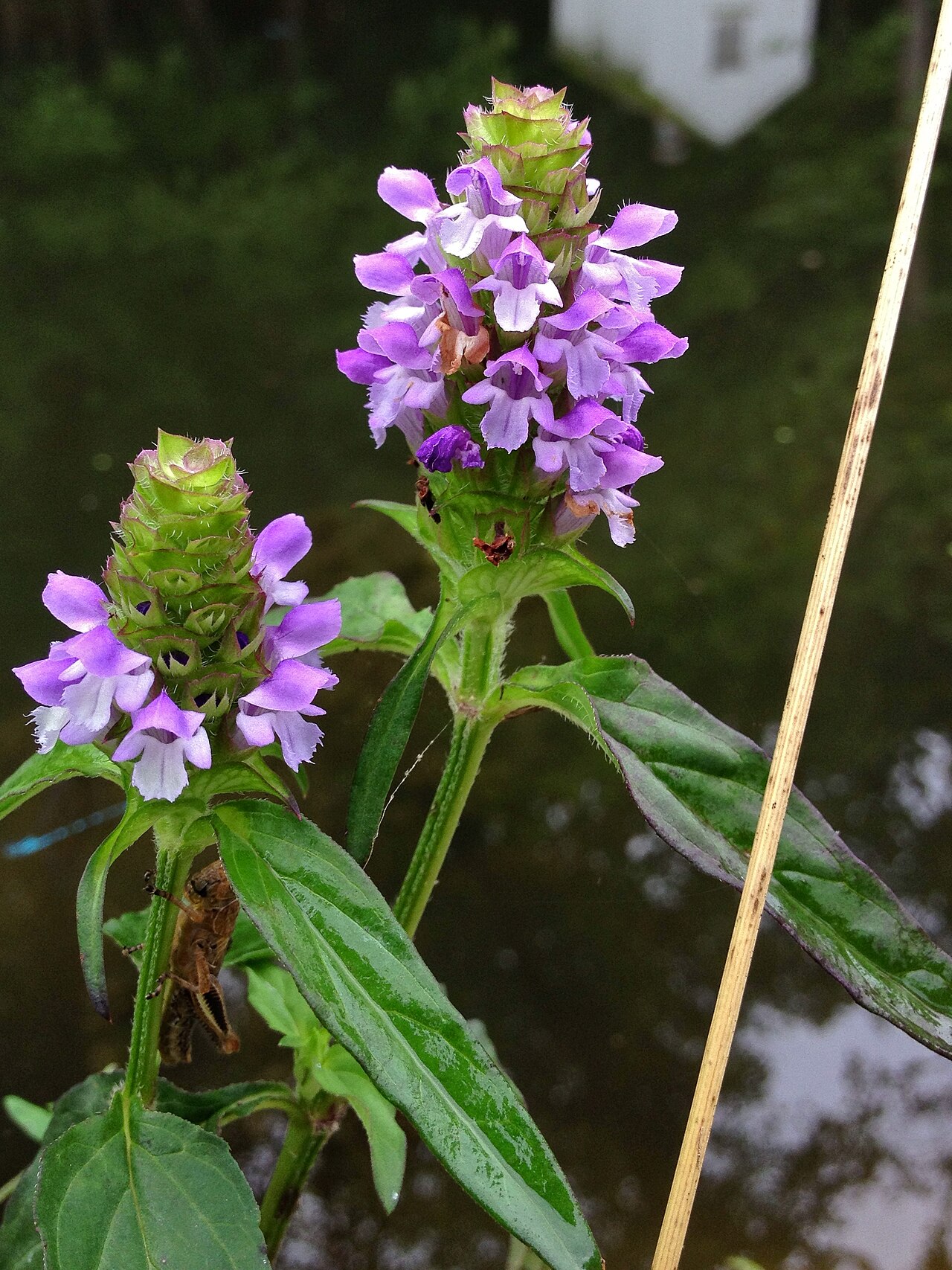
Prunella vulgaris, known as Common Selfheal or heal-all, is a low, creeping perennial of the mint family (Lamiaceae). From late spring to early fall it bears dense, squarish spikes of small violet-purple, hooded flowers. It grows in moist meadows, woodland edges, stream banks and clearings, and it turns up uninvited in lawns from Maine to California and north into Alaska and southern Canada. Few wildflowers are as widespread or as easy to recognize once you know them: a stubby, almost cylindrical flower head made of overlapping purplish bracts, with a few two-lipped blossoms open at a time.
Selfheal is a circumboreal species with both native and introduced forms in North America. The native plants are usually treated as var. or subsp. lanceolata. They are taller, with narrow, lance-shaped leaves that taper at the base, and they grow throughout the continent. The European var. vulgaris arrived with colonists in pasture seed and lawn grass. It has broader, egg-shaped leaves with rounded bases and is the form most often seen in mowed turf. Go Botany notes that New England has one native and one non-native variety, and the USDA PLANTS database lists the species as both native and introduced in Canada and as introduced in Hawaii. The two forms intergrade, but leaf shape and habitat are useful clues. Plants in undisturbed meadows, fens and woodland openings are usually the native form.
For native gardeners, common selfheal is an easy, adaptable groundcover. It blooms for months, feeds bumblebees, tolerates mowing and foot traffic, and fills gaps in rain gardens and wet meadows. It is also one of the most storied medicinal herbs of the Northern Hemisphere, as its common names suggest. This guide covers how to identify the native form, where it grows, and how to use it well without letting it overrun more delicate neighbors.
Identification
Common selfheal is a perennial with square stems, opposite leaves and flowers in tight terminal spikes, all typical mint-family traits. Unlike many mints, it has almost no fragrance when crushed. Plants vary greatly with habitat. In meadows the stems rise 6 to 20 inches (15–50 cm), while in mowed lawns they flatten into rosettes and creeping runners only an inch or two tall that still manage to bloom.
Stems
The stems are square in cross-section, green to purplish, and sparsely hairy. They grow upright or sprawl along the ground and root at the lower nodes, so a single plant slowly forms a loose patch. Stems are usually unbranched or branched only near the base. Each ends in a single flower spike, with a pair of leaves directly beneath it.
Leaves
The leaves are opposite, stalked, 1 to 3½ inches (2.5–9 cm) long, with smooth or faintly toothed margins. Leaf shape is the main clue to the variety. In native var. lanceolata, the upper leaves are narrow, lance-shaped, and roughly three times as long as wide, with a wedge-shaped base. In the introduced var. vulgaris, the leaves are broader and egg-shaped, about twice as long as wide, with a rounded base. Lower leaves on both forms tend to be broader than the upper ones, so compare the leaves just below the flower spike.
Flowers
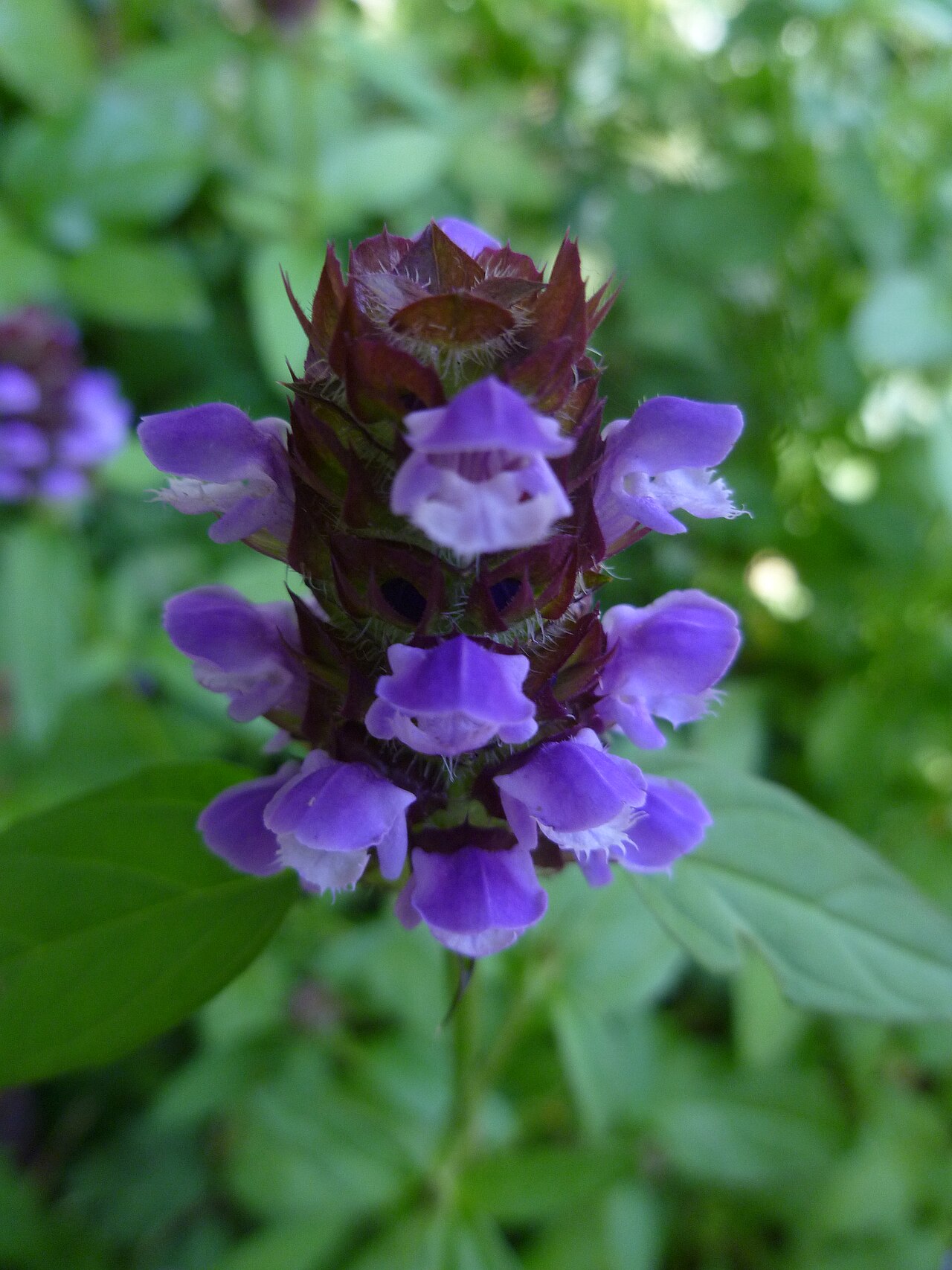
The flower head is a dense, cylindrical spike ¾ to 2 inches (2–5 cm) long, which lengthens as it ages. It is built from tiers of broad, hairy, often purplish bracts that end in short points. Each tier holds a few flowers, and only a ring of flowers opens at once. Each flower is about ½ inch (1–1.5 cm) long and two-lipped. The upper lip is a violet to blue-purple hood, and the lower lip is paler, three-lobed, and fringed on its middle lobe. Pink and white flowers occur occasionally. Bloom runs from May through September, longer in the South and in moist sites.
Fruit & Seeds
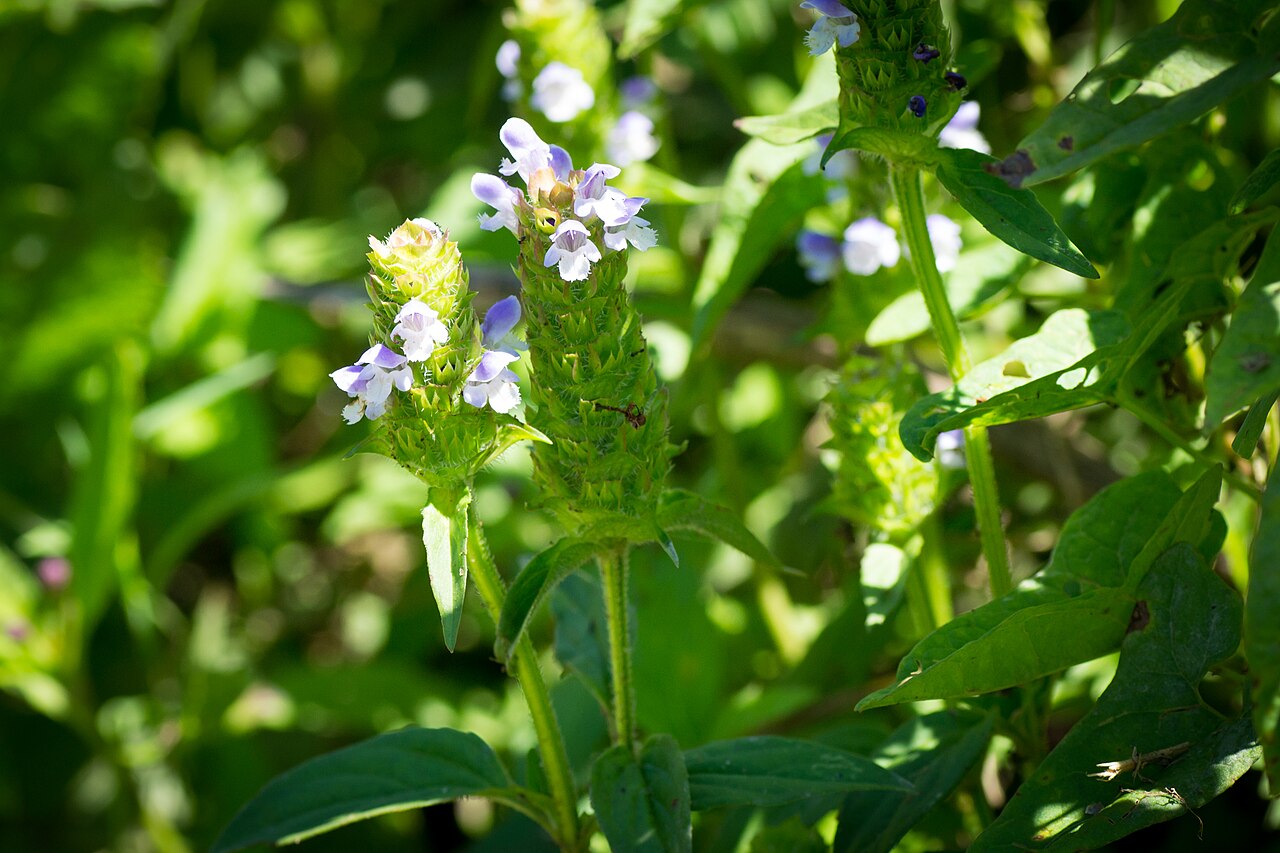
After flowering, the bracts and two-lipped calyxes persist, turning the spike brown and papery. Each calyx closes over four small, smooth, brown nutlets. When wet, the calyx opens and the nutlets are splashed out by raindrops, then often carried further by water and on muddy feet and mowers. The dried spikes stay on the plants into winter.
Quick Facts
| Scientific Name | Prunella vulgaris (native North American form var./subsp. lanceolata) |
| Family | Lamiaceae (mint family) |
| Plant Type | Herbaceous perennial; creeping groundcover |
| Mature Height | 6–20 in (15–50 cm); 1–3 in where mowed |
| Mature Spread | 12–24 in, spreading by rooting stems |
| Growth Rate | Fast |
| Sun Exposure | Full Sun to Part Shade |
| Water Needs | Medium to moist |
| Soil Type | Loam, clay or sandy soil; tolerates compaction |
| Soil pH | 5.5–7.5 (slightly acidic to neutral) |
| Bloom Time | May – September |
| Flower Color | Violet to blue-purple; occasionally pink or white |
| Fall Color | None (semi-evergreen rosettes in mild climates) |
| Fruit | Four small brown nutlets in a persistent calyx |
| Deer Resistant | Minimal |
| USDA Hardiness Zones | 3–9 |
Native Range
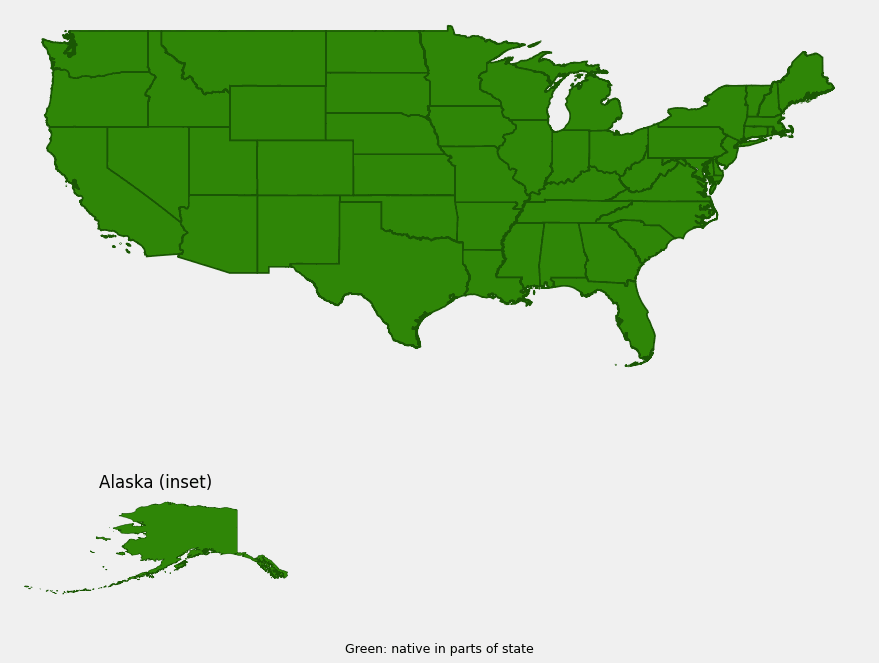
Common selfheal grows across most of North America. The Lady Bird Johnson Wildflower Center describes its native distribution as “throughout much of North America, except far north.” The USDA PLANTS database lists it as native in the lower 48 states and Alaska and as both native and introduced in Canada. In Canada it is recorded from British Columbia east through the southern provinces to the Maritimes, including Ontario, Quebec, New Brunswick, Nova Scotia and Prince Edward Island. It also occurs in Europe, Asia and North Africa. Introduced populations have spread to Hawaii, Australia, New Zealand and South America. In Hawaii it is naturalized in upland pastures and is not part of the native flora.
The native form, var. lanceolata, occupies a remarkable range of habitats. In the East it grows in wet meadows, the edges of fens and marshes, damp woodland openings, stream banks and old fields, from the Appalachians to the coastal plain. In the Midwest and Great Plains it favors moist prairie swales, riverside woods and shaded ravines. In the West it follows water: moist mountain meadows and aspen groves in the Rockies, seeps and stream banks in the Great Basin and Southwest, and coastal prairies, forest edges and clearings in California and the Pacific Northwest. In Alaska it grows in the coastal forests and meadows of the Southeast and Southcentral regions.
Because the European var. vulgaris has naturalized in lawns, pastures and roadsides almost everywhere the native form grows, the two can be difficult to separate in the field. The map on this page shades every state where the species occurs as a native, which is all 48 contiguous states plus Alaska. Hawaii is not shaded. For a native planting, seek out seed of narrow-leaved, wild-origin plants from your own region rather than unlabeled “heal-all” herb seed, which is usually the European form.
📋 Regional plant lists featuring Common Selfheal: Alaska · Western Oregon & Western Washington · Idaho, Eastern Oregon & Eastern Washington · California & Nevada · Arizona & New Mexico · Utah & Western Colorado · Montana & Wyoming · North Dakota, South Dakota & Western Minnesota · Nebraska, Kansas & Eastern Colorado · South & West Texas · Arkansas, Louisiana, Eastern Oklahoma & Eastern Texas · Illinois, Iowa & Missouri · Michigan, Wisconsin & Eastern Minnesota · Ohio & Indiana · Kentucky & Tennessee · Georgia, Alabama & Mississippi · Florida · North Carolina & South Carolina · Maryland, Virginia & West Virginia · Delaware, Southern New Jersey & Long Island · New York, Pennsylvania & Northern New Jersey · Connecticut, Massachusetts & Rhode Island · New Hampshire, Maine & Vermont
Growing & Care Guide
Common selfheal is one of the easiest native perennials to grow. It establishes quickly from seed or divisions, blooms in its first or second year, and asks only for soil that does not dry out completely. Its main limitation is its own vigor. In rich, moist ground it spreads by creeping stems and self-sown seed, so give it room or pair it with neighbors that can hold their own.
Light
Selfheal grows in full sun to part shade. In the North and in coastal climates, full sun gives the most compact plants and the heaviest bloom. In hot southern and interior climates, a site with afternoon shade keeps the leaves from scorching and prolongs flowering. It tolerates fairly heavy shade at woodland edges, though it blooms less there.
Soil & Water
Plant selfheal in average to moist soil. It thrives in loam and tolerates heavy clay, compacted ground and periodic flooding, which is why it does so well in lawns, paths and rain gardens. It also grows in sandy soil if watered during dry spells. Slightly acidic to neutral soil is ideal, but it is not fussy. Once established it needs extra water only during extended droughts. Plants in dry, sunny sites go dormant in midsummer and green up again when the rains return.
Planting Tips
- Sow seed outdoors in fall, or give it a few weeks of moist cold stratification before spring sowing. Press the seed onto the surface or cover it very lightly.
- Set out plugs or divisions 12 inches apart for a groundcover. They will knit together within a season or two.
- Use it as a low edging in front of taller wet-meadow plants such as blue vervain, mountain mint and wild bergamot.
- In a “bee lawn,” overseed selfheal into thin turf along with other low native flowers. Mow high (3 inches or more), and it will keep blooming below the mower blade.
- Buy seed or plants labeled as a native, regional source. Generic herb-garden “heal-all” is usually the European form.
Pruning & Maintenance
Selfheal needs little care. Shear or mow the spent flower spikes in midsummer to tidy the planting, encourage a second flush of bloom and reduce self-seeding. In a mixed bed, pull or cut back runners that creep into smaller neighbors. The plants are rarely bothered by pests. Powdery mildew may appear in crowded, airless spots in late summer but is cosmetic. Divide large patches every few years in spring or early fall to renew them.
Propagation
Selfheal is easy to propagate. Seed germinates readily after a brief cold period, and plants often self-sow in moist, bare soil. The quickest method is division: lift a clump in spring or early fall, pull the rooted stems apart, and replant them at once. Rooted runners can also be snipped from the parent plant and potted up. Stem cuttings root easily in moist sand or water in early summer.
Landscape Uses
- Low-growing native groundcover for rain gardens, swales and damp spots
- Pollinator-friendly “bee lawn” or lawn-alternative mixes
- Edging for paths and the front of wet-meadow and woodland-edge borders
- Erosion control on moist banks and streamside plantings
- Medicinal and heritage herb gardens
Wildlife & Ecological Value
For Pollinators
Selfheal is a bumblebee flower. The Lady Bird Johnson Wildflower Center calls it a favorite of bumblebees and butterflies. The hooded flowers suit long-tongued bees, which push into the throat and brush pollen from the anthers under the hood. Small carpenter bees, sweat bees, skippers and small butterflies also visit it. Because it blooms continuously from late spring into fall, even in mowed turf, it provides a steady nectar source when many lawn-dominated landscapes offer nothing.
Birds
Songbirds such as sparrows and finches pick at the small nutlets from the persistent seed heads in late summer and fall. Turkeys and other ground-feeding birds forage in selfheal patches for seeds and for the insects that shelter in the low foliage.
Mammals
Deer, rabbits and groundhogs graze selfheal lightly, so it is not deer-proof. The plants usually recover quickly from browsing and mowing. Its low, dense foliage provides cover for small mammals and amphibians in damp meadows.
Ecosystem Role
In natural habitats, native selfheal is an early colonist of moist openings. It quickly covers soil exposed by flooding, tree falls or trail-making, holds banks against erosion, and gives way gradually as taller perennials and shrubs move in. Its long flowering season links the spring and fall wildflower peaks for native bees in meadows and woodland edges. In lawns, it is one of the few flowering plants able to persist under mowing, so it adds diversity and food to otherwise sterile turf.
Cultural & Historical Uses
The names selfheal and heal-all reflect the plant’s long use in folk medicine across Europe, Asia and North America. In medieval and Renaissance Europe it was a classic wound herb, applied to cuts and used as a gargle for sore throats and mouth inflammations. The genus name Prunella comes from Brunella, which is thought to derive from the German Bräune, a term for quinsy and other throat ailments it was used to treat. In traditional Chinese medicine, the dried flower spikes, called xia ku cao (“summer-withering herb”), are still sold as a cooling remedy and are an ingredient in herbal teas.
Native peoples across North America used the native plant in many ways. Go Botany notes that the Algonquin of Quebec used it to reduce fever. Other nations used it in washes for wounds, boils and sore eyes, and in teas for throat and stomach complaints. The young leaves are edible raw or cooked, and a mild, slightly bitter tea can be brewed from the dried leaves and flower heads. As with any wild herb, harvest only from clean sites, away from sprayed lawns and roadsides, and seek medical advice before using it as a remedy.
Today, selfheal has a second life as a lawn-alternative plant. Gardeners who once fought it as a weed now encourage it in “bee lawns” and mixed flowering turf, where it adds months of purple bloom and food for native bumblebees with little care. Planted from regional native seed, it brings a widespread native flower back into the places where people spend the most time.
Frequently Asked Questions
Is common selfheal native or a weed?
Both forms grow in North America. The narrow-leaved var. lanceolata is native across the continent. The broader-leaved European var. vulgaris was introduced and is common in lawns and pastures. Wild plants in undisturbed meadows, fens and woodland edges are usually native. For a native planting, use seed or plants from a regional native source.
Will selfheal take over my garden?
It spreads by creeping stems and self-sown seed, especially in moist soil, but it is low and shallow-rooted and easy to pull. Deadheading after the first flush of bloom reduces seeding. Pair it with sturdy neighbors such as Blue Vervain and Mountain Mint rather than delicate woodland wildflowers.
Can I grow selfheal in a lawn?
Yes. It is one of the best native flowers for a “bee lawn.” It tolerates mowing, foot traffic and compacted soil, and it continues to bloom at mowing height. Raise the mower to 3 inches or more and avoid broadleaf herbicides. Low companions include Wild Strawberry and Blue-eyed Grass.
Is selfheal edible?
The young leaves and shoots are edible raw or cooked, and the leaves and flower spikes can be dried for tea. It has a long history as a medicinal herb. Harvest only from unsprayed sites, and consult a health professional before using it medicinally.
What attracts pollinators to selfheal?
The hooded, nectar-rich flowers are built for bumblebees, which are its main pollinators. Smaller bees, skippers and butterflies also visit. Because it blooms from late spring to early fall, it fills gaps between bigger seasonal wildflower displays such as Wild Bergamot and Lyreleaf Sage.

Looking for a nursery that carries Common Selfheal?
Browse our native plant nursery directory: Alabama, Alaska, Arizona & Arkansas · California · Colorado, Connecticut, Delaware, Florida & Georgia · Idaho, Illinois, Indiana, Iowa & Kansas · Kentucky, Louisiana, Maine, Maryland, Massachusetts, Michigan, Minnesota, Mississippi, Missouri & Montana · Nebraska, Nevada, New Hampshire, New Jersey, New Mexico, New York, North Carolina, North Dakota, Ohio & Oklahoma · Oregon · Pennsylvania, Rhode Island, South Carolina, South Dakota, Tennessee, Texas, Utah, Vermont & Virginia · Washington · West Virginia, Wisconsin & Wyoming