
Native Firs (Abies)
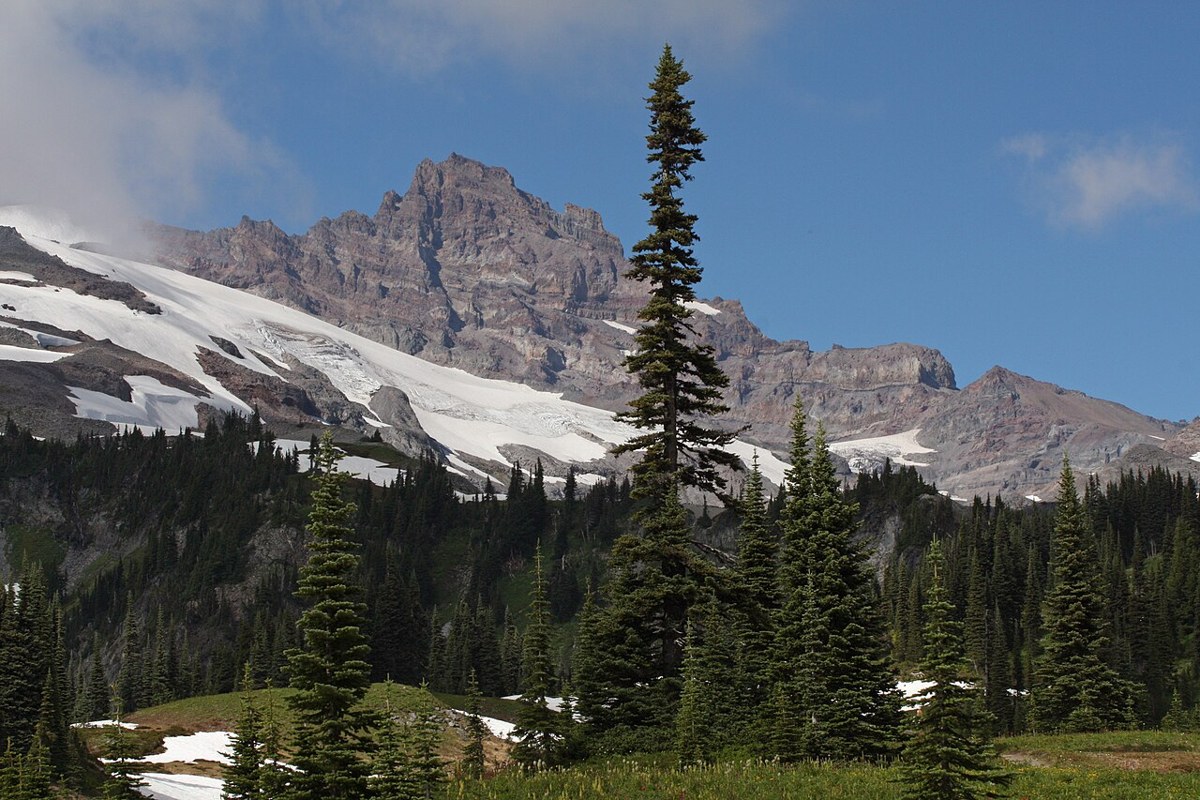
Firs are evergreen conifers in the genus Abies, part of the pine family (Pinaceae). They are the classic symmetrical, cone-shaped evergreens of cool mountain and northern forests, with soft, flat needles, a strong resinous fragrance and upright cones that sit on top of the branches like candles. There are roughly 50 fir species around the Northern Hemisphere, and about nine of them grow wild in the United States.
America’s native firs include some of the country’s best-known Christmas trees, such as balsam fir, Fraser fir and noble fir, as well as giants of the western forests: grand fir and noble fir can exceed 200 feet. Eastern firs grow in the boreal forests of the Northeast and upper Midwest and on the highest peaks of the Appalachians; western firs range from the Pacific coast to the Rocky Mountains and the sky islands of Arizona and New Mexico. Only one, white fir, is commonly planted as a landscape tree far outside its native range.
If you arrived here from one of our evergreen or ornamental-tree guides, this page explains which firs are native to your region, how to tell a true fir from a spruce or a Douglas-fir, and which popular nursery firs, such as Korean fir and Nordmann fir, are imports. In much of the central and southern United States, including Missouri, Illinois, Ohio and the Deep South, no fir is native at all, and the firs sold there are planted from other regions or continents.
Identification
Firs are easy to separate from other conifers once you know three features: the needles, the way the needles attach to the twig, and the cones.
Bark
Young firs have smooth, gray bark dotted with raised resin blisters that squirt fragrant, sticky resin when pressed. This is one of the quickest ways to recognize a young fir. On older trees of the large western species, the bark thickens and becomes deeply furrowed, gray to reddish-brown; California red fir is named for its reddish bark.
Needles
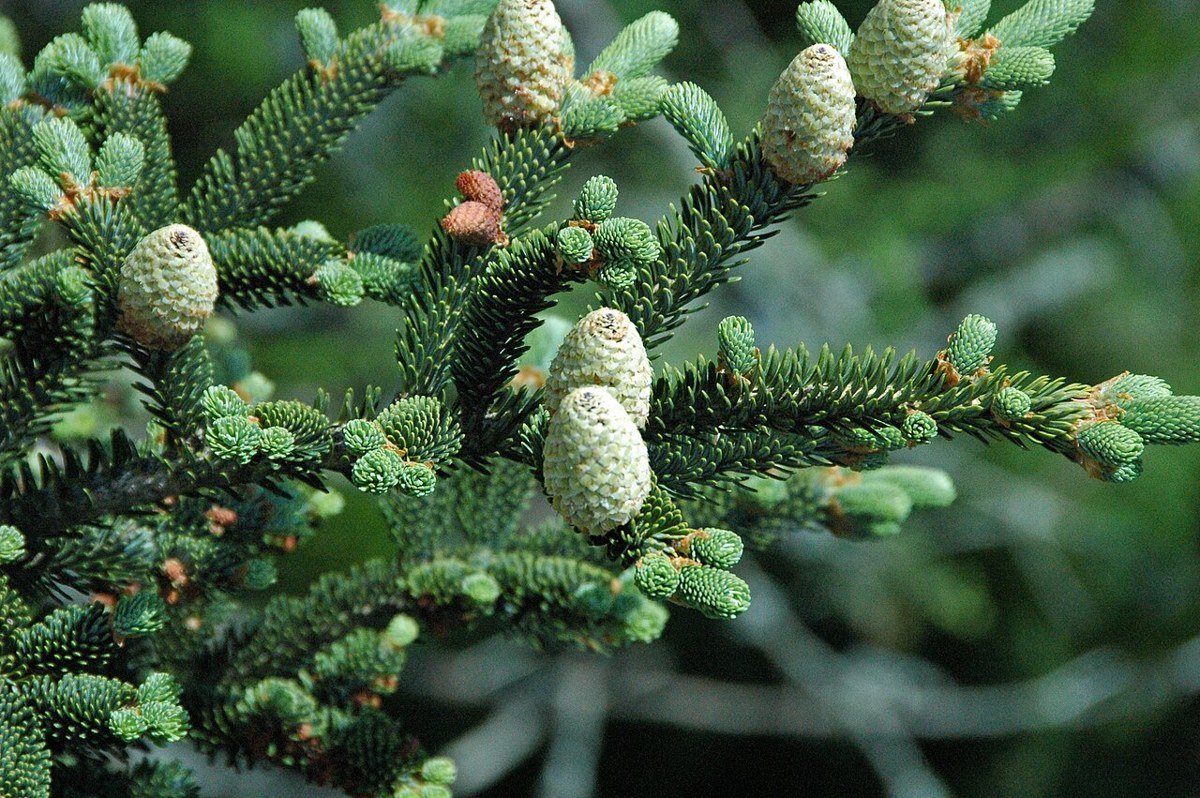
Fir needles are usually flat, soft and blunt or notched at the tip, not sharp, and most have two whitish bands of breathing pores (stomata) on the underside. Each needle attaches to the twig by a small, round, suction-cup-like base. When a needle falls or is pulled off, it leaves a smooth, round scar flush with the twig, unlike spruces, whose needles sit on raised woody pegs that make bare twigs rough. Needles may stand in two flat rows (balsam fir, grand fir) or curve upward along the twig (noble fir, subalpine fir, white fir). White fir has long, bluish-gray needles; Pacific silver fir’s needles are glossy dark green above and bright silvery-white below.
Cones
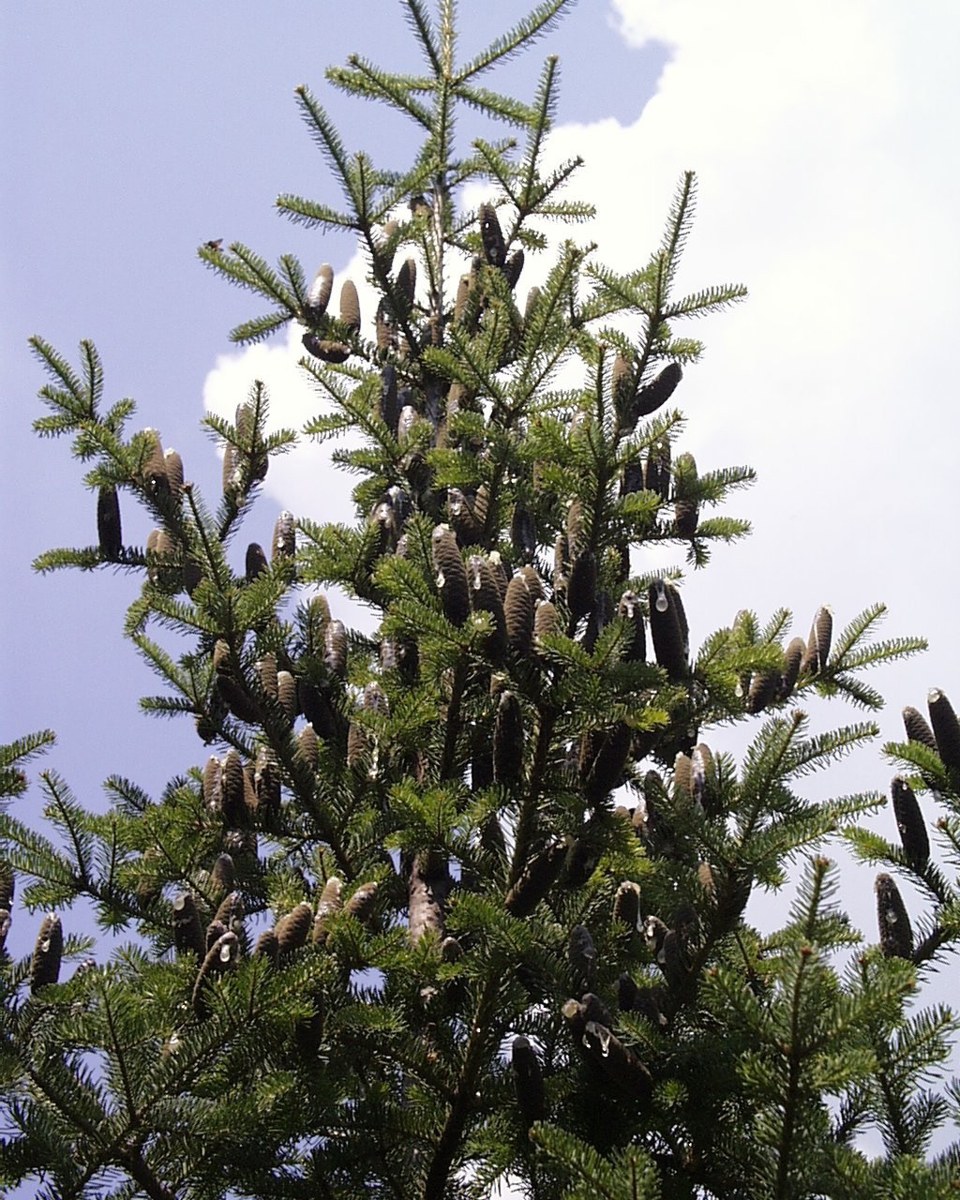
Fir cones stand upright on the upper branches near the top of the tree, never hanging down. They are typically 2 to 6 inches long (larger on noble and red fir) and may be purple, blue-gray, green or brown when young. When ripe in fall, the cones fall apart on the tree, scale by scale, leaving only a bare central spike. You will almost never find an intact fir cone on the ground, which is another quick way to tell firs from spruces, pines and Douglas-fir. In some species (Fraser fir, noble fir, bristlecone fir) papery bracts stick out between the scales.
Shape
Most firs form a dense, narrow, symmetrical pyramid with a straight central trunk and branches in regular tiers, often down to the ground on open-grown trees. High-elevation species, especially subalpine fir, grow into very narrow spires; at treeline they may form low, shrubby mats (krummholz).
Quick Facts
| Scientific Name | Abies (genus) |
| Family | Pinaceae (Pine) |
| U.S. Native Species | About 9 (up to 11 or 12 if some varieties are treated as species) |
| Plant Type | Evergreen coniferous trees |
| Mature Height | 30–60 ft for eastern species; 60–200+ ft for large western species |
| Mature Spread | 15–30 ft (narrow, pyramidal crowns) |
| Growth Rate | Slow to moderate |
| Sun Exposure | Full sun to part shade; most tolerate shade when young |
| Water Needs | Moist, cool sites; white fir is the most drought tolerant |
| Soil Type | Well-drained, acidic loams; poor tolerance of heavy, wet clay |
| Soil pH | Acidic (about 4.5–6.5); white fir tolerates higher pH |
| Cones | Upright, 2–8 in, falling apart on the tree in fall |
| Fall Color | None (evergreen) |
| Wildlife Value | Winter cover, browse for moose and deer, seeds for squirrels and birds |
| Deer Resistant | No; deer and moose browse firs, especially in winter |
| USDA Hardiness Zones | 2–7 for most species; few tolerate hot, humid summers |
Native Range
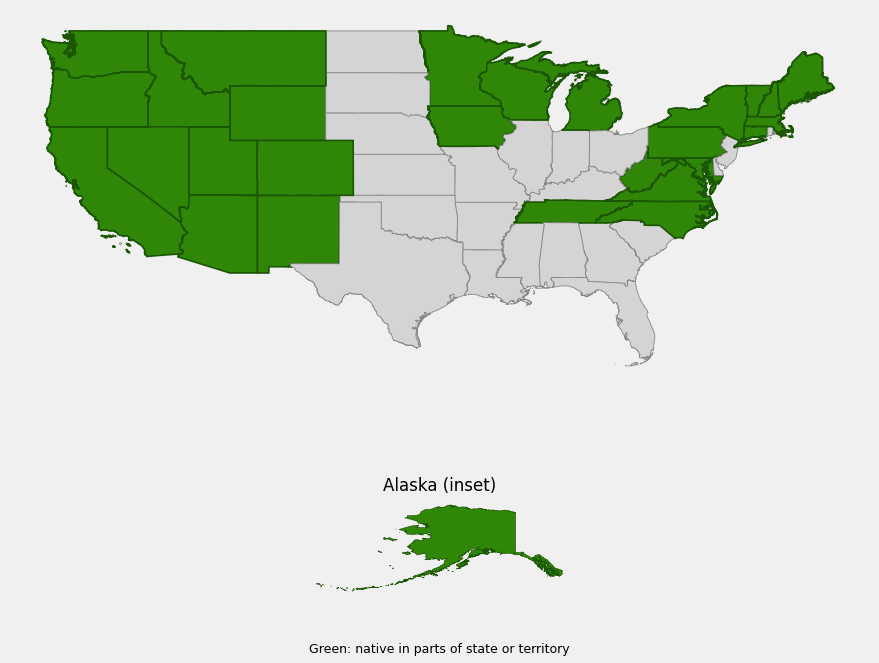
In the East, balsam fir is the native fir of the boreal and northern hardwood forests, from Maine, New Hampshire, Vermont and the Adirondacks west across Michigan, Wisconsin and Minnesota, with scattered southern outposts in Massachusetts, Connecticut, Pennsylvania, northeastern Iowa and the high mountains of West Virginia, western Maryland and Virginia. Fraser fir grows only on the highest peaks of the southern Appalachians in North Carolina, Tennessee and southwestern Virginia, typically above about 4,500 feet.
The West is where firs are most diverse. subalpine fir grows from Alaska and the Cascades through the Rockies to Arizona and New Mexico; white fir ranges from Oregon and California through Nevada, Utah, Colorado, Arizona and New Mexico. The Pacific Northwest adds grand fir, noble fir and Pacific silver fir; California has California red fir in the Sierra Nevada and the very rare bristlecone fir, found only in the Santa Lucia Mountains of the central coast. Alaska has two native firs, Pacific silver fir and subalpine fir, in its southeastern and south-central regions.
No fir is native to the Great Plains, the lower Midwest (including Missouri, Illinois, Indiana and Ohio), the Southeast below the Appalachian high peaks, or Texas. Firs grown in those regions, mostly white fir and Fraser fir, are planted. Because firs need cool summers, many struggle in hot, humid lowland climates even when they are native to the same state’s mountains.
📋 Regional plant lists covering native fir ranges: Maine, New Hampshire & Vermont · Southern New England · New York, Pennsylvania & Northern New Jersey · Maryland, Virginia & West Virginia · North Carolina & South Carolina · Kentucky & Tennessee · Michigan, Wisconsin & Eastern Minnesota · Illinois, Iowa & Missouri · Montana & Wyoming · Utah & Western Colorado · Arizona & New Mexico · Idaho, Eastern Oregon & Washington · Western Oregon & Washington · California & Nevada · Alaska
Native Species
These are the native firs of the United States. Click a name for a full growing guide.
Balsam Fir (Abies balsamea)
Native to: the Northeast, upper Midwest and central Appalachian high country, from Maine to Minnesota and south to West Virginia and Virginia. A 40- to 60-foot, narrow, very fragrant tree with short, flat, dark green needles and purplish cones. The classic northern Christmas tree and a key winter food and shelter tree for moose and deer. Best in cool, moist sites in zones 3 to 5; struggles in hot summers.
Fraser Fir (Abies fraseri)
Native to: the high peaks of the southern Appalachians in North Carolina, Tennessee and Virginia. Closely related to balsam fir, with short, glossy needles and cones whose papery bracts bend back over the scales. The most popular Christmas tree in the eastern United States, grown on farms in the North Carolina mountains. Wild stands have been devastated by the non-native balsam woolly adelgid, and the species is now considered endangered in the wild.
White Fir (Concolor Fir) (Abies concolor)
Native to: the western mountains, from Oregon and California to Colorado and New Mexico. Long, soft, bluish-gray to silvery needles that smell faintly of citrus when crushed. The most heat-, drought- and soil-tolerant fir, and the best fir for landscapes in the Midwest and Mid-Atlantic, where it is often sold as concolor fir. Grows 40 to 70 feet in gardens.
Subalpine Fir (Abies lasiocarpa)
Native to: Alaska and the Cascades through the Rocky Mountains to Arizona and New Mexico. A very narrow, spire-like tree of high mountain forests and treeline, with dense, upward-curving needles and dark purple cones. The Rocky Mountain form is sometimes treated as a separate species, Rocky Mountain subalpine fir (Abies bifolia). Corkbark fir, a southwestern variety, has soft, corky white bark.
Grand Fir (Abies grandis)
Native to: the Pacific Northwest and northern Rockies: Washington, Oregon, northern California, Idaho and Montana. A fast-growing giant, often 140 to 200 feet in the wild, with glossy needles in two flat rows that smell of citrus when crushed. Grows in moist valley and lower mountain forests.
Noble Fir (Abies procera)
Native to: the Cascades and Coast Ranges of Washington and Oregon, just reaching northwestern California. The largest true fir, sometimes over 200 feet, with stiff, upturned, blue-green needles and large cones covered by papery bracts. A popular Christmas tree and source of holiday greenery.
Pacific Silver Fir (Abies amabilis)
Native to: southeastern Alaska through the Coast Mountains and Cascades of Washington and Oregon to far northwestern California. A shade-tolerant tree of wet, snowy mid-elevation forests with glossy dark green needles that are brilliant silvery-white beneath. Smooth, pale gray bark and those silvery needle undersides give it its name.
California Red Fir (Abies magnifica)
Native to: the Sierra Nevada and southern Cascades of California, extreme southern Oregon and a small area of western Nevada. A massive tree of snowy upper-montane forests with deep reddish-brown, furrowed bark and large, upright cones up to 8 inches long. The Shasta red fir variety grows in the Klamath and southern Cascades.
Bristlecone Fir (Santa Lucia Fir) (Abies bracteata)
Native to: only the Santa Lucia Mountains of Monterey County and extreme northwestern San Luis Obispo County, California. The rarest and most unusual North American fir, with stiff, sharp-pointed needles and cones bristling with long, needle-like bracts. Grows on steep, rocky canyon slopes and is rarely seen in cultivation.
Non-Native Look-Alikes
Several firs from Europe and Asia are popular in American nurseries and Christmas-tree lots. None is considered invasive in the United States, but none is native. Several other native conifers are also commonly called “fir” without being true firs.
Korean Fir (Abies koreana)
A slow-growing, compact fir from the mountains of South Korea, usually 15 to 30 feet in gardens. It is grown for its short, dark green needles with bright silvery-white undersides (strongly so in cultivars such as ‘Horstmann’s Silberlocke’, whose needles curl to show the white side) and for its striking violet-blue cones, which appear even on young trees. It is a good choice for small gardens but is not native anywhere in North America.
Nordmann Fir (Abies nordmanniana)
A large fir from the Caucasus Mountains and northeastern Turkey, with glossy, dark green needles and excellent needle retention. It is the most popular Christmas tree in Europe and is increasingly grown in American Christmas-tree farms and landscapes, where it tolerates heat somewhat better than balsam or Fraser fir. Turkish fir (Abies bornmuelleriana), a close relative, is similar.
Other imported firs
Nikko fir (Abies homolepis), momi fir (Abies firma) and Spanish fir (Abies pinsapo) are grown by collectors and in arboreta. Like all firs, they can be recognized by their upright cones and smooth leaf scars.
Native trees called “fir” that are not true firs
Douglas-fir (Pseudotsuga menziesii) is a native western conifer but belongs to a different genus: its cones hang down and have distinctive three-pointed bracts sticking out like a mouse’s tail and hind legs. Spruces such as red spruce and white spruce have sharp, four-sided needles on woody pegs and hanging cones. American hemlock has tiny, hanging cones and short needles on slender stalks.
Growing & Care Guide
Firs are beautiful but particular. In cool climates with moist, acidic soil they are long-lived, low-maintenance evergreens. In hot, humid or poorly drained sites, most of them decline, so choosing the right species for your climate matters more than any care you give afterward.
Light
Most firs grow best in full sun in cool regions, with light afternoon shade helpful where summers are warm. Young firs are shade tolerant and often grow up beneath other trees in the wild; Pacific silver fir and balsam fir are especially tolerant of shade.
Soil & Water
Plant firs in moist but well-drained, acidic soil rich in organic matter. Heavy, compacted clay and poorly drained sites lead to root rot, a common killer of Fraser and balsam fir in landscapes. Water deeply during dry spells for the first several years and mulch the root zone with 2 to 3 inches of bark or needles. White fir is the exception: it handles drier, rockier and more alkaline soils than other firs.
Choosing a fir for your region
- Northeast and Great Lakes: balsam fir is native and hardy; white fir is a tougher landscape alternative on drier sites.
- New York: balsam fir is native in the Adirondacks, Catskills and other cool uplands; in warmer lowland areas, white fir usually does better as a landscape tree.
- Southern Appalachians: Fraser fir grows well at higher elevations; in the hot lowland Piedmont it usually declines.
- Missouri and the lower Midwest: no fir is native, but white fir (concolor fir) is the fir most likely to thrive in the heat and clay soils of the region.
- Rocky Mountains and Intermountain West: white fir for lower elevations and gardens; subalpine fir for cool, high-elevation sites.
- Pacific Northwest: grand fir, noble fir and Pacific silver fir, depending on elevation and moisture.
Planting Tips
Plant balled-and-burlapped or container firs in early spring or early fall. Set the root flare at or slightly above grade, remove burlap and twine from the top of the root ball, and water thoroughly. Give firs room to keep their lower branches; a fir that is crowded or limbed up loses much of its beauty.
Pruning & Maintenance
Firs need little pruning. Remove dead or damaged branches, and if a tree develops two leaders, cut out the weaker one. Light shaping is possible by pinching new shoots in late spring, but avoid cutting back into old wood, which rarely resprouts. Watch for the non-native balsam woolly adelgid on balsam and Fraser fir in the East, and for spider mites in hot, dry weather.
Propagation
Firs are grown from seed. Collect cones from the tree in late summer, just before they begin to fall apart, and let them dry to release the seeds. Most species benefit from 30 to 60 days of cold, moist stratification before sowing. Seedlings grow slowly for the first few years and appreciate light shade.
Landscape Uses
- Specimen evergreens in lawns and large beds, where their symmetrical form can develop fully
- Screens and windbreaks in cool climates, alongside spruces and native pines
- Living Christmas trees: balsam, Fraser and white fir can be bought balled-and-burlapped and planted after the holidays
- Wildlife plantings with paper birch, bunchberry and native spruces in northern gardens
- Mountain gardens with Engelmann spruce and thinleaf huckleberry in the West
Wildlife & Ecological Value
Firs are foundation trees of cool forests, providing year-round shelter and food for many animals.
For Pollinators
Firs are wind-pollinated and offer little to bees. Their real value to insects is as caterpillar host plants: many moths feed on fir needles, including the native spruce budworm, whose periodic outbreaks shape northern forests and feed huge numbers of warblers and other birds.
For Birds
Dense fir crowns give birds shelter from winter wind and snow and safe nesting sites. Red crossbills, pine siskins, chickadees, nuthatches and grosbeaks eat the seeds, and spruce grouse and dusky grouse feed heavily on fir and other conifer needles in winter. Many warblers, kinglets and thrushes nest in fir forests.
For Mammals
Balsam fir is an important winter food for moose, and white-tailed deer browse firs and shelter in dense fir and spruce stands (“deer yards”) during deep snow. Red squirrels cut and cache fir cones before they shatter, and snowshoe hares, porcupines and other mammals use firs for food and cover.
Ecosystem Role
Firs dominate or co-dominate many northern, subalpine and Pacific forests, shading streams, building deep forest soils and holding snowpack on mountain slopes. Fraser fir forests on the southern Appalachian peaks are a rare and threatened ecosystem; the loss of mature trees to the balsam woolly adelgid has changed these “sky island” forests dramatically since the 1950s.
Cultural & Historical Uses
Firs have long been valued for their fragrant resin, timber and evergreen boughs. Balsam fir resin, known as Canada balsam, was used for more than a century as a clear cement for mounting microscope slides and bonding optical lenses, because it dries with nearly the same optical properties as glass. Dried balsam needles are still used to fill fragrant pillows and sachets in New England.
Today firs are among the most important Christmas trees in North America. Fraser fir, balsam fir, noble fir, grand fir and white fir are all grown on farms, and fir boughs are used for wreaths and garlands. The lightweight, straight-grained wood of western firs is cut for construction lumber and pulp.
Fir needles and resin are generally considered low in toxicity, but the oils can irritate the mouth and stomach of pets that chew needles or drink Christmas-tree water, and the resin can irritate sensitive skin. Firs are not a food or herbal plant.
Frequently Asked Questions
Which firs are native to the United States?
About nine: balsam fir, Fraser fir, white fir, subalpine fir, grand fir, noble fir, Pacific silver fir, California red fir and bristlecone fir. Some botanists split a few more, such as Rocky Mountain subalpine fir and Sierra white fir. Korean fir and Nordmann fir are popular imports.
Is any fir native to Missouri?
No. No fir is native to Missouri, Illinois, Indiana, Ohio or the Deep South. Firs planted there are from other regions; white fir (concolor fir) is usually the best performer because it tolerates heat, drought and clay better than other firs.
How can I tell a fir from a spruce?
Pull off a needle. Fir needles are flat, soft and leave a smooth, round scar on the twig; spruce needles are stiff, sharp and four-sided and leave a rough woody peg. Fir cones stand upright and fall apart on the tree, while spruce cones hang down and fall whole.
Is a Douglas-fir a true fir?
No. Douglas-fir is a native conifer in the genus Pseudotsuga. Its cones hang down and have three-pointed bracts, unlike the upright cones of true firs.
Which native fir is best for New York?
Balsam fir is native to New York and thrives in cool, moist upstate sites. In warmer, drier parts of the state, the western native white fir is often more reliable as a landscape tree.

Looking for a nursery that carries Native Firs?
Browse our native plant nursery directory: Alaska & Arizona · California · Colorado & Connecticut · Idaho & Iowa · Montana, Maine, Massachusetts, Maryland, Michigan & Minnesota · Nevada, New Mexico, New Hampshire, New York & North Carolina · Oregon · Utah, Vermont, Pennsylvania, Virginia & Tennessee · Washington · Wyoming, West Virginia & Wisconsin

