
Native St. John’s Worts (Hypericum)
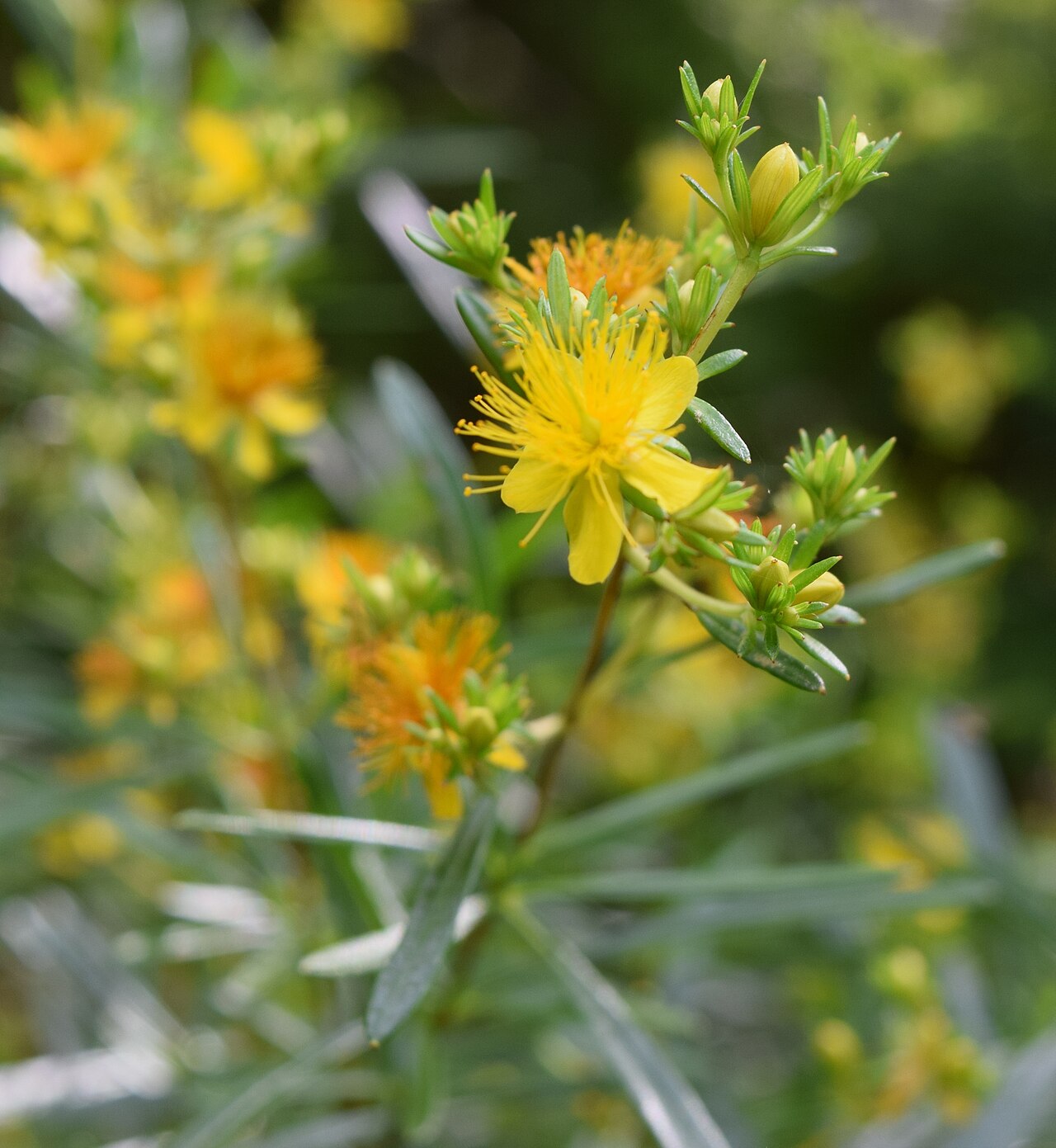
St. John’s worts (genus Hypericum) are shrubs and herbaceous plants with bright yellow, five- or four-petaled flowers and a central brush of many stamens. The genus contains about 500 species worldwide and belongs to its own family, Hypericaceae. North America is one of its centers of diversity: roughly 50 to 60 species are native to the United States, with the greatest number in the Southeast, where more than 30 grow in Florida, Georgia and Alabama alone.
Native St. John’s worts range from tiny annual wildflowers such as dwarf St. John’s wort and pineweed to tough, summer-flowering shrubs such as shrubby St. John’s wort, Kalm’s St. John’s wort and peelbark St. John’s wort, and low, mat-forming coastal shrubs such as Atlantic St. John’s wort. They are excellent, under-used garden plants: long-blooming, drought tolerant once established, deer resistant and heavily visited by bumble bees.
If you came here from our list of ground covers for Alabama, the “St. John’s wort” described there, a creeping, semi-evergreen plant with 2- to 3-inch flowers also called Aaron’s beard, is Hypericum calycinum, a non-native species from southeastern Europe and Turkey. Alabama has many native St. John’s worts, including low shrubs such as Atlantic St. John’s wort and St. Andrew’s cross that can fill a similar role. The other well-known non-native, common St. John’s wort (H. perforatum), is an invasive weed in much of the country. This page shows how to tell natives from these imports and which native species suit different gardens.
Identification
St. John’s worts are easy to recognize as a group by their opposite leaves, their translucent or black dots, and their yellow flowers with a mass of stamens. Separating species takes a closer look at petal number, leaf shape and habit.
Stems & Bark
Shrubby species have woody, often two-edged or winged young stems and reddish-brown bark that peels or shreds in thin papery strips on older stems; peelbark St. John’s wort is named for it. Herbaceous species have slender, erect or sprawling green to reddish stems that die back each winter.
Leaves
Leaves are opposite, simple and smooth-edged, without leaf stalks or with very short ones. Hold a leaf up to the light: most species show tiny translucent dots (oil glands), and many have black dots along the margins or across the blade. Leaf shape varies from needle-like and clustered (peelbark St. John’s wort) to narrow and bluish (Kalm’s), oblong (shrubby), clasping and round (fourpetal) or scale-like (pineweed).
Flowers
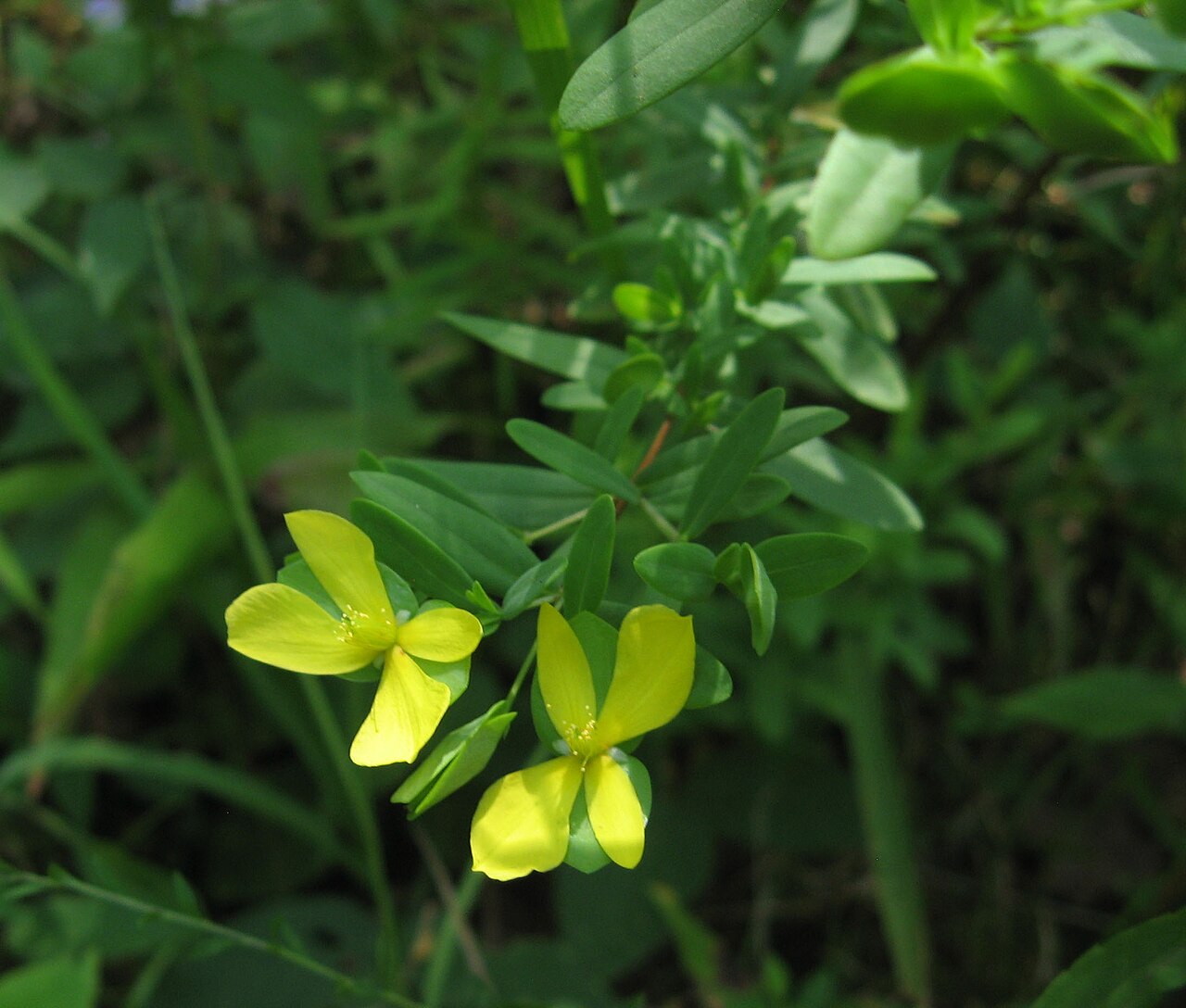
Flowers are yellow, from 1/4 inch across in dwarf St. John’s wort to about 2 inches in great St. John’s wort, with a conspicuous central tuft of many stamens. Most species have five petals; a group of southeastern species, including St. Andrew’s cross and fourpetal St. John’s wort, has four petals arranged like an X or a cross. The flowers open for only a day each, but plants bloom continuously for weeks in summer. Hypericum flowers produce pollen but no nectar.
Fruit & Seeds
The fruit is a dry capsule, often reddish-brown, that splits to release many tiny seeds. On shrubby species the persistent brown capsules add winter interest.
Native versus non-native at a glance
Aaron’s beard has large flowers, 2 to 3 inches across, held singly at the tips of short, creeping, leafy stems. Common St. John’s wort is an upright, many-branched herb, 1 to 3 feet tall, with small leaves full of translucent dots and petals edged with black dots. Many native herbaceous species look similar to it, so check the leaf and petal details and the range descriptions below.
Quick Facts
| Scientific Name | Hypericum (genus) |
| Family | Hypericaceae (St. John’s wort) |
| U.S. Native Species | About 50–60, most in the Southeast |
| Plant Type | Deciduous to semi-evergreen shrubs, herbaceous perennials and annuals |
| Mature Height | 4 in (pineweed) to 5 ft (great St. John’s wort, peelbark); most shrubs 1–4 ft |
| Mature Spread | 1–4 ft |
| Growth Rate | Moderate to fast |
| Sun Exposure | Full sun to part shade; best flowering in sun |
| Water Needs | Dry (Kalm’s, shrubby, St. Andrew’s cross) to wet (peelbark, myrtleleaf, great) |
| Soil Type | Sandy, rocky or loamy, well-drained to wet depending on species |
| Soil pH | Acidic to alkaline (about 5.0–8.0); Kalm’s and golden tolerate limestone |
| Bloom Time | June–September for most species |
| Flower Color | Yellow |
| Fall Color | Some shrubs turn reddish; others semi-evergreen |
| Wildlife Value | Pollen for bumble bees and other native bees; seeds for small birds |
| Deer Resistant | Yes; leaves contain bitter compounds that deer avoid |
| USDA Hardiness Zones | 3–10 across the genus; Kalm’s to zone 4, southeastern species zones 7–10 |
Native Range
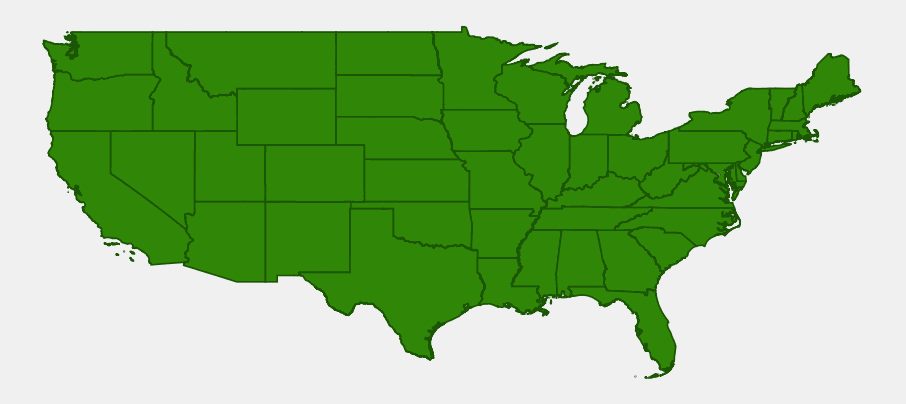
Native St. John’s worts grow in every state of the lower 48. The Southeast, especially the coastal plain from North Carolina to Florida and west to Louisiana, is the heart of the genus, with many shrubby species of pine flatwoods, sandhills, bogs and pond margins: peelbark St. John’s wort, myrtleleaf St. John’s wort, roundpod St. John’s wort, fourpetal St. John’s wort, Atlantic St. John’s wort and St. Andrew’s cross, among others. Florida alone has about 30 native species.
In the Northeast and Midwest, the common species are shrubby St. John’s wort, spotted St. John’s wort, dwarf St. John’s wort, pineweed and great St. John’s wort, and around the Great Lakes Kalm’s St. John’s wort grows on dunes, sandy shores and limestone pavements. Across the northern and central Great Plains, large Canadian St. John’s wort (H. majus) grows in wet meadows. In the West, Scouler’s St. John’s wort (H. scouleri) grows in mountain meadows and along streams from Washington and Montana to California, Arizona and New Mexico, and tinker’s penny (H. anagalloides) creeps on wet ground in the Pacific states.
Two European species are now widespread too. Common St. John’s wort (H. perforatum) has naturalized in nearly every state and is invasive in pastures and rangeland, especially in the West. Aaron’s beard (H. calycinum) persists and spreads from plantings, particularly in the Southeast and on the Pacific coast. Neither is native anywhere in North America.
📋 Regional plant lists covering native St. John’s wort ranges: Maine, New Hampshire & Vermont · Southern New England · New York, Pennsylvania & Northern New Jersey · Delaware, Southern New Jersey & Long Island · Maryland, Virginia & West Virginia · North Carolina & South Carolina · Georgia, Alabama & Mississippi · Arkansas, Louisiana, Eastern Oklahoma & East Texas · Kentucky & Tennessee · Ohio & Indiana · Illinois, Iowa & Missouri · Michigan, Wisconsin & Eastern Minnesota · Dakotas & Western Minnesota · Nebraska, Kansas & Eastern Colorado · South & West Texas · Arizona & New Mexico · Utah & Western Colorado · Montana & Wyoming · Idaho, Eastern Oregon & Washington · Western Oregon & Washington · California & Nevada
Native Species
These are the native St. John’s worts gardeners are most likely to grow or meet, from northern shrubs to southeastern coastal-plain specialists. Click a name for its full growing guide.
Shrubby St. John’s Wort (Hypericum prolificum)
Native to: the eastern and central United States, from New York and Ontario west to Minnesota and south to Georgia and Arkansas. A dense, rounded shrub 1 to 4 feet tall with narrow, glossy leaves, peeling bark and masses of 1-inch yellow flowers from midsummer. Tolerates dry, rocky or clay soils and urban conditions. One of the best native shrubs for bumble bees.
Kalm’s St. John’s Wort (Hypericum kalmianum)
Native to: the Great Lakes region, including Michigan, Wisconsin, Illinois, Indiana, Ohio and New York, plus Ontario and Quebec. A compact shrub, 1 to 3 feet tall, with narrow bluish-green leaves and bright yellow flowers in July and August. Grows on dunes, sandy shores and limestone; very cold hardy and drought tolerant. The cultivar ‘Ames’ is widely sold.
Great St. John’s Wort (Hypericum pyramidatum (H. ascyron))
Native to: the Northeast and Midwest, from Maine and Quebec west to Minnesota and Iowa and south to Maryland, with scattered sites farther west. A tall herbaceous perennial, 2 to 5 feet, with the largest flowers of any native species, up to 2 inches across with five slightly twisted petals. Grows in moist meadows, stream banks and thickets.
Spotted St. John’s Wort (Hypericum punctatum)
Native to: most of the eastern United States, from Maine to Minnesota and south to Florida and Texas. An upright herbaceous perennial, 1 to 3 feet, with small yellow flowers and leaves and petals covered in tiny black dots. Common in old fields, prairies and woodland edges. Easily confused with invasive common St. John’s wort, which has fewer black dots and many translucent leaf dots.
Dwarf St. John’s Wort (Hypericum mutilum)
Native to: the eastern and central United States from Maine to Minnesota, south to Florida and Texas. A small, branching annual or short-lived perennial, 6 to 20 inches tall, with tiny 1/4-inch flowers. Grows on wet sandy or muddy ground and sometimes appears on its own in moist garden beds and nursery pots.
Pineweed (Hypericum gentianoides)
Native to: the eastern United States, from Maine to Minnesota and south to Florida and Texas. An odd little annual, 4 to 20 inches tall, with wiry, broom-like green stems, scale-like leaves and tiny yellow flowers. Grows on poor, dry, sandy or rocky soil where little else will, often in sidewalk cracks and on bare sandy ground.
St. Andrew’s Cross (Hypericum hypericoides)
Native to: mainly from the mid-Atlantic states south to Florida and west to Texas and Oklahoma. A low, often sprawling shrub, 1 to 3 feet, with narrow leaves and pale yellow flowers whose four petals form an X. Grows in dry, sandy or rocky woods in sun or shade. A tough, informal ground-covering shrub for southern gardens.
Atlantic St. John’s Wort (Hypericum tenuifolium)
Native to: the southeastern coastal plain from North Carolina to Florida and west along the Gulf Coast. A low, mat-forming shrub usually under 18 inches tall, with tiny needle-like leaves and small yellow flowers through summer. Grows on dry sandhills, scrub and coastal dunes. One of the best native evergreen ground covers for sandy soil in coastal Alabama and Florida.
Myrtleleaf St. John’s Wort (Hypericum myrtifolium)
Native to: the Gulf and southern Atlantic coastal plain of Florida, Georgia, Alabama and Mississippi. A small shrub, 1 to 3 feet, with gray-green leaves that clasp the stem and bright yellow flowers in late spring and summer. Grows in wet pine flatwoods and pond margins.
Roundpod St. John’s Wort (Hypericum cistifolium)
Native to: the coastal plain from North Carolina to Florida and west to Louisiana. An upright shrub, 1 to 3 feet, with narrow leaves and clusters of small yellow flowers followed by round capsules. Grows in wet flatwoods and savannas.
Fourpetal St. John’s Wort (Hypericum tetrapetalum)
Native to: Florida and southern Georgia. A low shrub, 1 to 2 feet, with rounded, clasping, blue-green leaves and four-petaled yellow flowers almost all year in South Florida. Grows in pine flatwoods.
Peelbark St. John’s Wort (Hypericum fasciculatum)
Native to: the southeastern coastal plain from the Carolinas to Florida and west to Mississippi. A shrub 2 to 5 feet tall with clusters of needle-like leaves, thick, spongy, peeling bark and small yellow flowers. Grows in pond margins and seasonally flooded flatwoods; a good shrub for wet, sandy sites.
Golden St. John’s Wort (Hypericum frondosum)
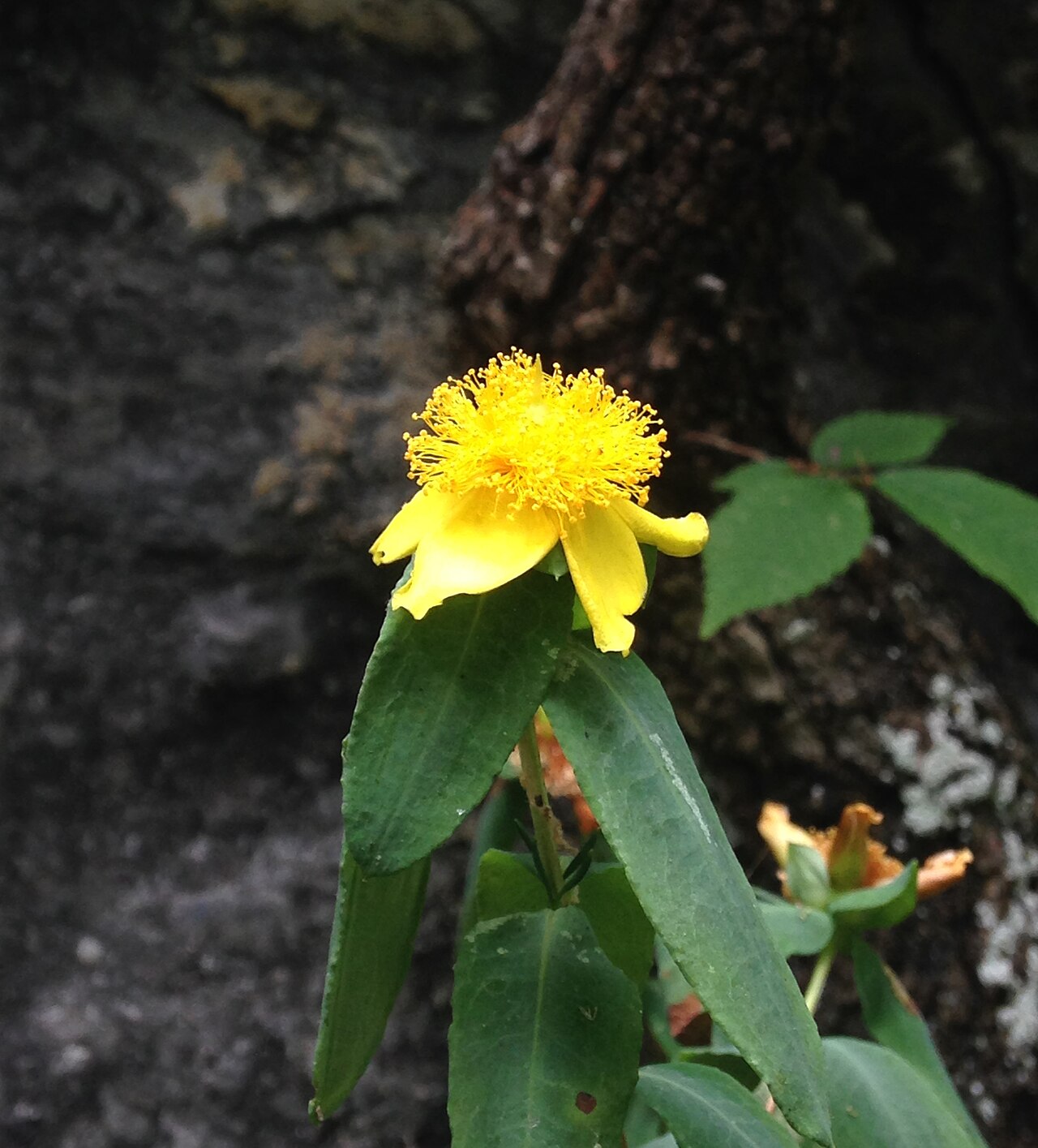
Native to: the south-central and southeastern states, chiefly on limestone in Kentucky, Tennessee, Alabama and Georgia. A 2- to 4-foot shrub with blue-green leaves, peeling reddish bark and large, 1 1/2-inch flowers with a big pompom of stamens. Grows on cliffs and cedar glades. The cultivar ‘Sunburst’ is one of the best native St. John’s worts for gardens.
Bushy St. John’s Wort (Hypericum densiflorum)
Native to: the eastern United States from New Jersey and Pennsylvania south to Georgia and west to Missouri and Texas. An upright, densely branched shrub, 2 to 6 feet, with narrow leaves and many small yellow flowers crowded at the branch tips in midsummer. Grows in moist thickets, bogs and stream banks.
Scouler’s St. John’s Wort (Hypericum scouleri)
Native to: the western states, from Washington, Idaho and Montana south to California, Arizona and New Mexico. The main native St. John’s wort of the West: an herbaceous perennial, 4 to 20 inches tall, with black-dotted yellow petals, growing in wet mountain meadows and along streams. Often confused with invasive common St. John’s wort, which grows on drier, disturbed ground.
Non-Native Look-Alikes
Four non-native St. John’s worts are common in American gardens and wild places. One is a serious invasive weed; the others are garden plants that can spread.
Common St. John’s Wort (Hypericum perforatum) – invasive
A European herb, 1 to 3 feet tall, with many branches, small oblong leaves packed with translucent dots (hold them to the light and they look perforated) and clusters of yellow flowers with black dots along the petal edges. It spreads by seed and creeping roots into pastures, rangelands, roadsides and fields and is listed as a noxious weed in several western states. It contains hypericin, which causes sunburn-like photosensitivity in livestock that eat it. In the 1940s it was one of the first weeds in the United States to be controlled by introduced insects, leaf beetles of the genus Chrysolina. It is also sold as an herbal supplement and is known to interact with many prescription drugs. Do not plant it.
Aaron’s Beard (Hypericum calycinum)
The ground-cover St. John’s wort of many southern and Pacific Coast landscapes, native to southeastern Europe and Turkey. It forms a dense, 12- to 18-inch carpet of semi-evergreen leaves with large, 2- to 3-inch flowers and long, bushy stamens. It spreads quickly by underground runners and can escape plantings into nearby woods. Native low St. John’s worts such as Atlantic St. John’s wort and St. Andrew’s cross, or other native ground covers, are better choices.
Hybrid St. John’s Wort (Hypericum × moserianum)
A garden hybrid of Aaron’s beard and a Chinese species, grown for its arching, 1- to 2-foot habit and large yellow flowers; ‘Tricolor’ has leaves variegated with pink and cream. It is not native.
Tutsan (Hypericum androsaemum)
A European shrub, 2 to 3 feet tall, with broad leaves, small yellow flowers and showy berry-like fruits that ripen from red to black; cultivars such as ‘Albury Purple’ are sold for flower arranging. It can self-sow outside gardens in mild, moist climates and is not native.
Growing & Care Guide
Native shrubby St. John’s worts are easy, long-blooming plants for sunny gardens. The key is matching the species to your soil moisture: some come from dry sandhills and limestone, others from bogs and pond edges.
Light
Plant in full sun for the most flowers and the most compact habit. Most species tolerate part shade, especially in the South, but flower less and grow looser. St. Andrew’s cross tolerates more shade than most.
Soil & Water
For dry, sandy, rocky or limestone soils, choose Kalm’s St. John’s wort, shrubby St. John’s wort, golden St. John’s wort, St. Andrew’s cross or Atlantic St. John’s wort. For wet, sandy or peaty soils and rain gardens, choose peelbark St. John’s wort, myrtleleaf St. John’s wort, roundpod St. John’s wort, bushy St. John’s wort or great St. John’s wort. Water new plantings through their first summer; established dry-site species rarely need watering. Avoid heavy fertilizing, which produces floppy growth.
Choosing a native St. John’s wort
- Ground cover in the Deep South: Atlantic St. John’s wort on sandy soil; St. Andrew’s cross in part shade.
- Low hedge or foundation shrub in the North and Midwest: shrubby St. John’s wort or Kalm’s St. John’s wort.
- Showiest flowers: golden St. John’s wort (‘Sunburst’) and Kalm’s St. John’s wort.
- Wet, sunny sites in the Southeast: peelbark St. John’s wort, myrtleleaf St. John’s wort or roundpod St. John’s wort.
- Meadow and prairie plantings: spotted St. John’s wort and great St. John’s wort.
- Western gardens: Scouler’s St. John’s wort beside streams or in wet meadows.
Planting Tips
Plant container-grown shrubs in spring or fall, spacing them 2 to 4 feet apart for a massed planting or low hedge. Group several plants for a strong summer display. Most species are short-lived to moderately long-lived (often 5 to 10 years) but replace themselves by self-seeding in suitable spots.
Pruning & Maintenance
Shrubby species bloom on new wood, so prune in late winter or early spring. Cut back by up to one-third to keep plants dense, and remove a few of the oldest stems every few years to renew older shrubs. Leave some seed capsules for winter interest and for birds.
Propagation
Most species grow easily from seed sown on the soil surface in fall or early spring; seeds need light to germinate. Softwood cuttings taken in early summer root readily, especially for shrubby species.
Landscape Uses
- Low, informal hedges, foundation plantings and mass plantings
- Native ground cover on sandy or rocky slopes (Atlantic St. John’s wort, St. Andrew’s cross)
- Rain gardens, pond edges and bog gardens (peelbark, myrtleleaf, bushy, great St. John’s wort)
- Pollinator gardens, especially for bumble bees
- Dune, sandhill and limestone glade restorations
Wildlife & Ecological Value
For Pollinators
St. John’s wort flowers have no nectar but produce abundant pollen, which is collected by bumble bees, sweat bees, mining bees and other native bees. Bumble bees often “buzz” the flowers, vibrating their flight muscles to shake the pollen loose. Shrubby species in bloom are often covered with bees for weeks in midsummer, when fewer shrubs are flowering.
For Birds
Small seed-eating birds such as goldfinches and sparrows pick seeds from the capsules in fall and winter, and dense shrubby species provide cover for ground-nesting birds in coastal-plain habitats.
For Mammals
The bitter leaves are seldom browsed by deer or rabbits, which makes native St. John’s worts useful in deer country.
Ecosystem Role
In the Southeast, shrubby St. John’s worts are characteristic plants of fire-maintained pine flatwoods, sandhills and pond margins, resprouting quickly after burns. Kalm’s St. John’s wort is a typical plant of Great Lakes dunes and alvars. Herbaceous species colonize open, disturbed and wet ground. Invasive common St. John’s wort displaces native plants and forage on western rangelands.
Cultural & Historical Uses
The name St. John’s wort comes from Europe, where common St. John’s wort blooms around June 24, the feast of St. John the Baptist; “wort” is an old English word for plant. In European folklore, the plants were hung over doors on St. John’s Eve to ward off evil spirits. The red pigment released when the flowers or buds are crushed was associated with the saint.
Common St. John’s wort was probably brought to North America deliberately as a garden and folk-remedy plant before it escaped; it was well established in the eastern states by the 1800s. Native species were long overlooked by gardeners until native-plant nurseries began offering shrubs such as Kalm’s and golden St. John’s wort, which are now widely sold.
Its spread across western rangelands in the early 1900s, where it poisoned livestock and was called Klamath weed, led to one of the classic success stories in weed control: beetles imported from Europe and released in California in the 1940s reduced the weed dramatically over the following decade. Today native St. John’s worts are increasingly grown by native-plant nurseries as tough, pollinator-friendly shrubs.
Frequently Asked Questions
Is the St. John’s wort used as a ground cover native?
No. The ground-cover St. John’s wort, also called Aaron’s beard (Hypericum calycinum), comes from southeastern Europe and Turkey. Native alternatives include Atlantic St. John’s wort and St. Andrew’s cross in the Southeast and low forms of Kalm’s St. John’s wort in the North.
Is common St. John’s wort invasive?
Yes. Common St. John’s wort (Hypericum perforatum) is a European plant that has naturalized across the United States and is listed as a noxious weed in several western states. It spreads into pastures and rangeland and can poison livestock.
Which native St. John’s wort grows in Alabama?
Alabama has many, including St. Andrew’s cross, Atlantic St. John’s wort, shrubby St. John’s wort, spotted St. John’s wort, dwarf St. John’s wort, myrtleleaf St. John’s wort, peelbark St. John’s wort, golden St. John’s wort and bushy St. John’s wort. For a ground-covering effect, use Atlantic St. John’s wort on sandy soil or St. Andrew’s cross in light shade.
Are St. John’s worts toxic?
St. John’s worts contain hypericin and related compounds. Grazing animals that eat large amounts, especially of common St. John’s wort, can develop severe sunburn-like skin damage (photosensitization). Keep livestock off heavy infestations. Garden plantings of native shrubs are not considered a significant risk to people or pets, but they should not be eaten.
Do native St. John’s worts attract pollinators?
Yes. Their flowers have no nectar, but they produce large amounts of pollen that bumble bees and many other native bees collect. Shrubby species such as shrubby and Kalm’s St. John’s wort are among the best summer-blooming shrubs for bees.
Are native St. John’s worts deer resistant?
Generally yes. Deer and rabbits rarely eat them, which is one reason they are recommended for gardens where deer are common.

Looking for a nursery that carries Native St. John’s Worts?
Browse our native plant nursery directory: Alabama, Arizona & Arkansas · California · Colorado, Connecticut, Delaware, Florida & Georgia · Idaho, Illinois, Indiana, Iowa & Kansas · Kentucky, Louisiana, Maine, Maryland, Massachusetts, Michigan, Minnesota, Mississippi, Missouri & Montana · Nebraska, Nevada, New Hampshire, New Jersey, New Mexico, New York, North Carolina, North Dakota, Ohio & Oklahoma · Oregon · Pennsylvania, Rhode Island, South Carolina, South Dakota, Tennessee, Texas, Utah, Vermont & Virginia · Washington · West Virginia, Wisconsin & Wyoming

