
Cutleaf Water Parsnip (Berula erecta)
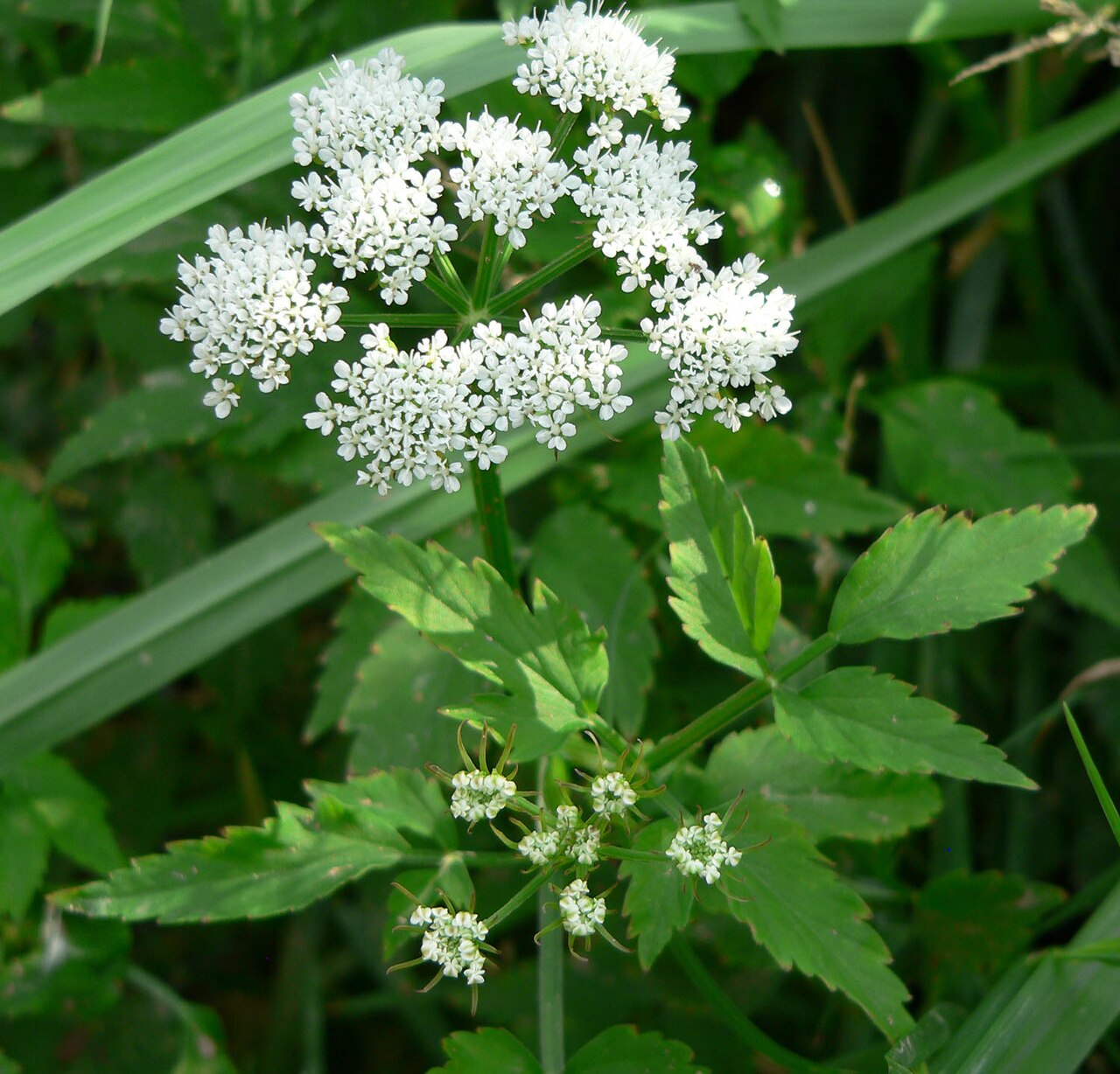
Berula erecta, Cutleaf Water Parsnip, also called lesser water parsnip or narrow-leaved water parsnip, is a perennial member of the carrot family (Apiaceae) that grows in cold springs, spring-fed creeks, ditches, fens and the shallow edges of slow streams. It is usually 1 to 3 feet tall, with hollow stems, once-pinnate leaves of toothed leaflets, and small, flat-topped umbels of white flowers from early summer into fall. It spreads by runners and often forms dense green mats in clear, flowing water.
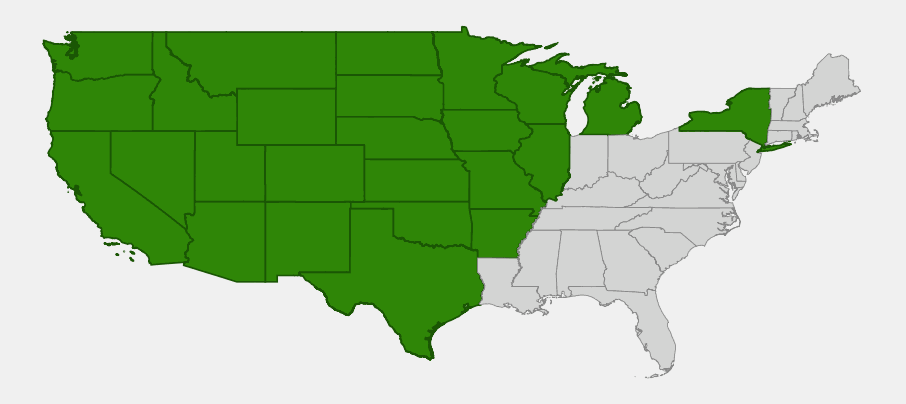
In the United States it is a plant of the West and the interior. USDA PLANTS records it as native in 25 states, from Washington, Oregon and California east across the Great Basin, Rockies and Southwest to the Great Plains, the Upper Midwest and Arkansas, with outlying eastern records in Michigan and New York. It also grows in southern Canada, in Mexico, and across Europe, western Asia and Africa. In the dry West it is an indicator of permanent water: where you find cutleaf water parsnip, there is almost always a spring nearby.
Cutleaf water parsnip belongs to a family with some of the most poisonous plants in North America, including water hemlock (Cicuta), and several white-flowered water umbels look alike. Do not eat it or any wild water-parsnip-like plant unless you are completely sure of the identification. This guide explains how to tell it apart from its look-alikes, where it grows, and how to use it in a pond, rain garden or spring restoration.
Identification
Cutleaf water parsnip is easiest to recognize by its leaves and by the position of its flower clusters. Its closest look-alike is the native water parsnip (Sium suave), and the most important one to rule out is the deadly water hemlock (Cicuta maculata).
Stems & Habit
Plants are 8 inches to about 3 feet tall (occasionally taller in rich springs), with erect or reclining, hollow, finely ribbed stems that root at the lower nodes. Slender runners (stolons) spread across mud and through shallow water, so a single plant soon becomes a mat. In winter and in cold spring runs the plants often stay green and partly submerged. Crushed leaves have a carrot-like or parsnip-like smell.
Leaves
Emergent leaves are once-pinnately compound, with about 5 to 12 pairs of stalkless leaflets, each ½ to 2 inches long, lance-shaped to oval and irregularly toothed or shallowly lobed. The name “cutleaf” refers to this toothing. Leaves that grow under water are quite different, divided into narrow, almost thread-like segments. Leaf stalks sheath the stem at the base.
Flowers
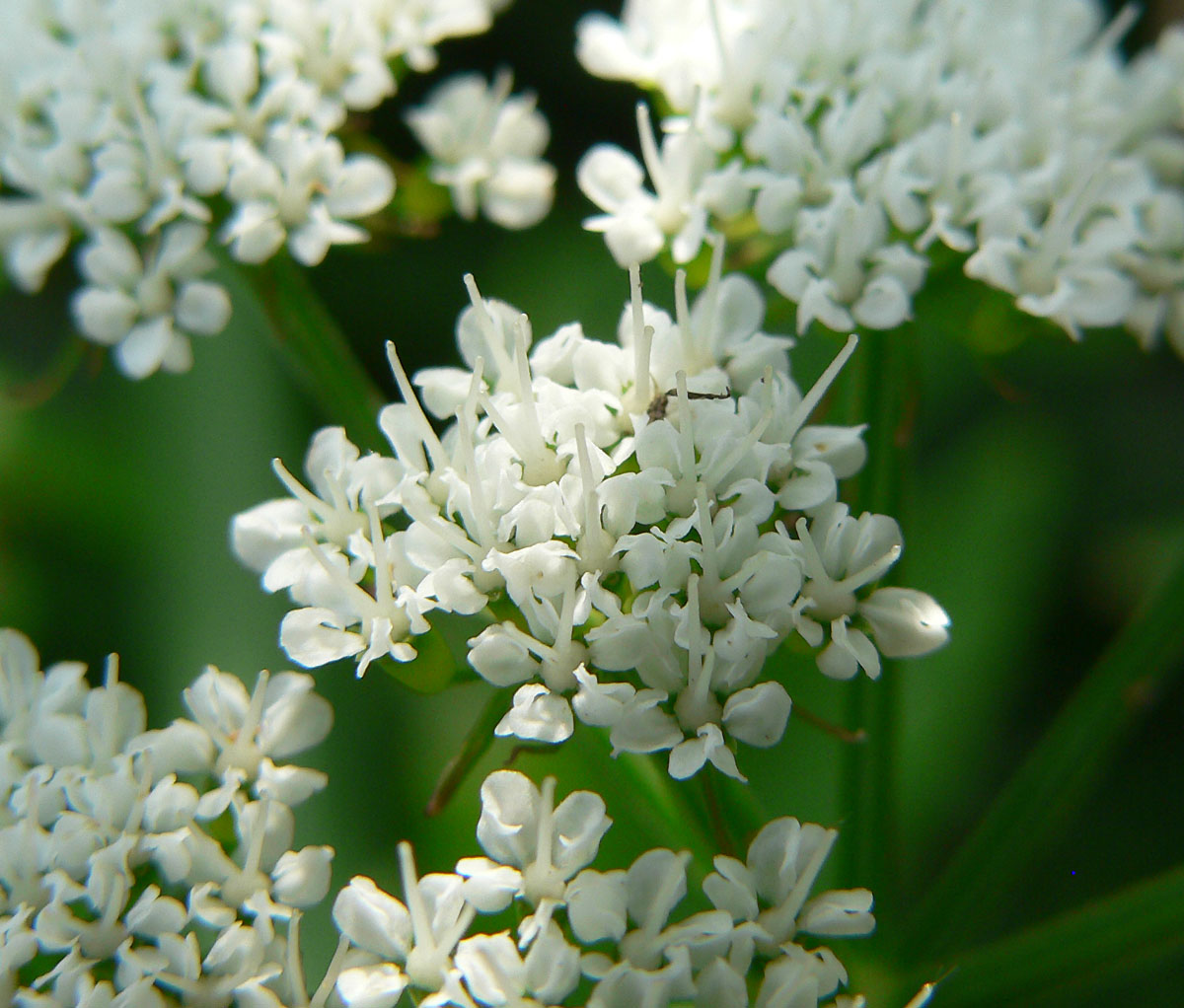
From June to October (year-round in some warm springs), small compound umbels 1 to 2 inches across open on short stalks opposite the leaves along the stem, rather than only at the tips. Each umbel sits above a ring of several narrow, often toothed or divided bracts. The flowers are tiny, white, with five petals and five stamens.
Fruit
The fruit is a small, nearly round, slightly flattened schizocarp about 1/16 inch long that splits into two one-seeded halves. Its ribs are faint and the corky wall helps the seeds float, so they travel downstream with the current.
Look-alikes
Water parsnip (Sium suave) is taller, with fewer, narrower, finely and evenly toothed leaflets and umbels mostly at the stem tips. Water hemlock (Cicuta) has twice- or three-times-divided leaves whose veins run to the notches between teeth, and a thickened, chambered stem base and tuberous roots. All of these grow in the same wet places, which is why none of them should be eaten.
Quick Facts
| Scientific Name | Berula erecta |
| Family | Apiaceae (carrot family) |
| Plant Type | Perennial emergent aquatic herb, spreading by runners |
| Mature Height | 1–3 ft |
| Mature Spread | 1–3 ft; spreads into mats |
| Growth Rate | Fast in cool, flowing water |
| Sun Exposure | Full sun to part shade |
| Water Needs | High; shallow water, saturated mud or spring seeps |
| Soil Type | Mucky, sandy or gravelly wet soils; often calcareous spring water |
| Soil pH | About 6.0–8.0 |
| Bloom Time | June–October |
| Flower Color | White |
| Fall Color | Stays green late; often semi-evergreen in springs |
| Fruit | Tiny, nearly round, corky schizocarp |
| Deer Resistant | Moderately; not a preferred browse plant |
| USDA Hardiness Zones | 4–9 |
Native Range
USDA PLANTS lists cutleaf water parsnip as native in 25 states: Washington, Oregon, Idaho, Montana, Wyoming, California, Nevada, Utah, Colorado, Arizona and New Mexico in the West; North Dakota, South Dakota, Nebraska, Kansas, Oklahoma and Texas on the Plains; and Minnesota, Wisconsin, Iowa, Illinois, Missouri, Arkansas and Michigan in the Midwest, with an outlying eastern record in New York. In Canada it grows in British Columbia and Ontario, and it extends south into Mexico.
Across the arid West it is tied to permanent water: desert springs, spring-fed creeks, seeps in canyon bottoms and irrigation ditches fed by groundwater. In the Midwest it is a characteristic plant of calcareous fens, spring runs and cold headwater streams. At the eastern edge of its range it is scattered and local, and Michigan’s Natural Features Inventory tracks it as a rare plant. Where groundwater is pumped down and springs dry up, local populations disappear.
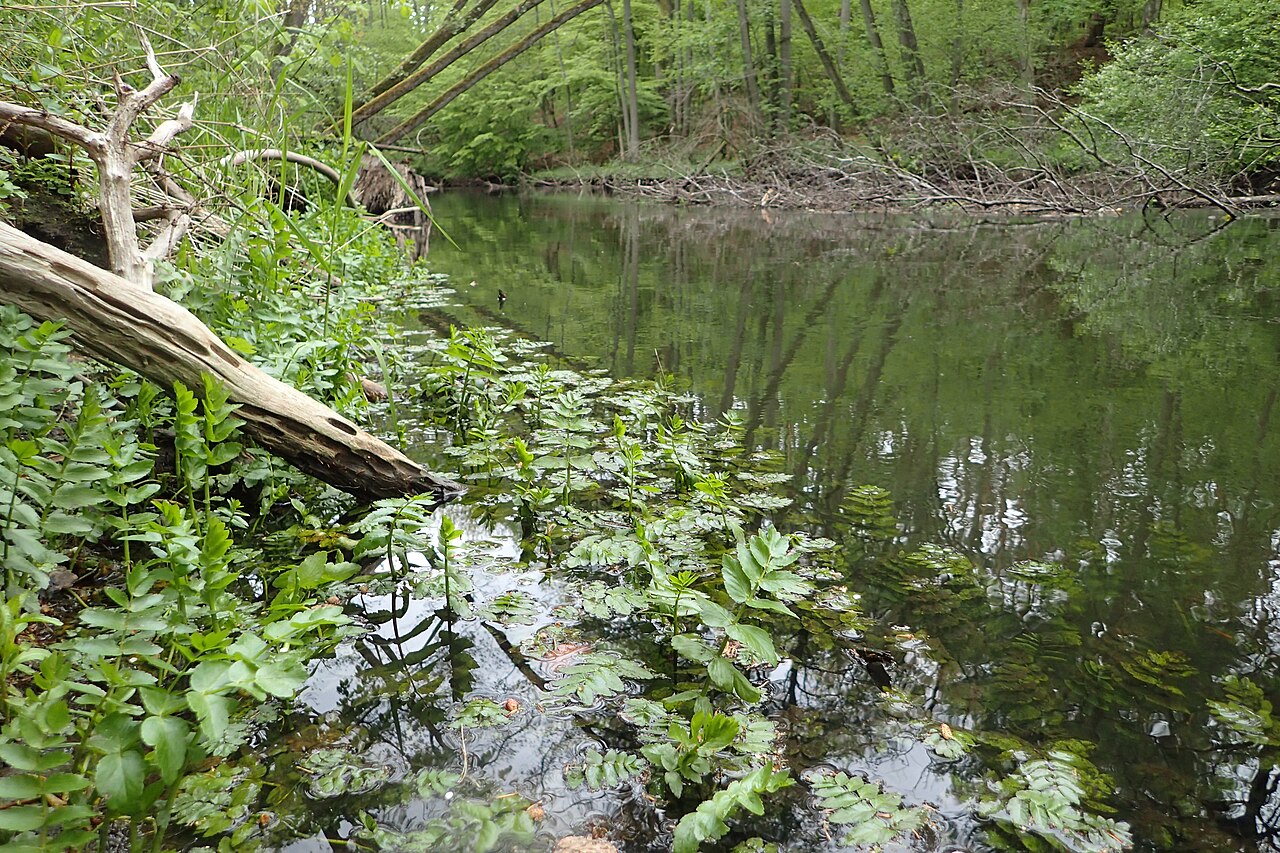
It grows in full sun to light shade, in shallow, clear, slow-moving to gently flowing water up to about a foot deep, and on the saturated mud and gravel beside it. Like watercress, it does best in cool, steady spring water that rarely freezes.
📋 Regional plant lists featuring Cutleaf Water Parsnip: California & Nevada · Arizona & New Mexico · Utah & Western Colorado · Montana & Wyoming · Idaho, Eastern Oregon & Eastern Washington · Nebraska, Kansas & Eastern Colorado · North Dakota, South Dakota & Western Minnesota · Illinois, Iowa & Missouri · Michigan, Wisconsin & Eastern Minnesota · Arkansas, Louisiana, Eastern Oklahoma & Eastern Texas · South & West Texas · New York, Pennsylvania & Northern New Jersey · Delaware, Southern New Jersey & Long Island
Growing & Care Guide
Cutleaf water parsnip is not a common nursery plant, but it is an easy and useful native for wet places: pond margins, stream and spring restorations, bog gardens and constructed wetlands. It is offered by some native wetland nurseries and mitigation suppliers. Buy nursery-grown plants or grow your own from seed rather than collecting from the wild, especially from small desert springs where every plant matters.
Light
Full sun to part shade. In hot climates, shade during the afternoon and cool water keep it lush; in cool northern climates it takes full sun.
Soil & Water
Grow it in saturated mud or in shallow water up to about 6 to 12 inches deep. It prefers clear, cool, gently moving water and tolerates hard, alkaline spring water. It does not tolerate drying out, so it is not for ordinary garden beds. In a still pond it grows well along the margins but is less vigorous than in moving water.
Planting Tips
Plant in spring in pots of heavy loam sunk at the pond edge, or directly into the mud of a stream margin. Space plants 1 to 2 feet apart; runners will fill the gaps in a season. In stream restorations it can be pinned into gravel bars, where its roots help hold the substrate.
Pruning & Maintenance
Little care is needed. Thin the mats every year or two if they crowd smaller plants, and cut back tired stems in late summer for a fresh flush of growth. In small water features, pull runners that spread where you don’t want them. Wear gloves when handling large amounts, since sap from some members of the carrot family can irritate skin.
Propagation
The easiest method is division: pull rooted pieces from the runners and replant them in mud or shallow water at any time during the growing season. Seed can be sown fresh on the surface of wet soil; cold, moist stratification over winter improves germination. Keep seed pots standing in water.
Landscape Uses
- Pond and water-garden margins: a fine-textured, white-flowered edge plant for shallow water
- Spring and stream restoration: stabilizes gravel and mud in spring runs and headwater streams
- Fens and constructed wetlands: tolerates alkaline, mineral-rich water
- Pollinator wetlands: long bloom season for small bees, flies and wasps
- Wildlife habitat: cover for aquatic insects, amphibians and small fish
Wildlife & Ecological Value
In small springs and desert streams, cutleaf water parsnip is often one of the main plants holding the habitat together, and many small animals depend on it.
For Pollinators
The small white umbels attract a wide range of short-tongued visitors: small native bees, syrphid flies, other flies, small wasps and beetles. Its long flowering season, often into October, makes it a late source of nectar along water.
For Birds
Its mats shelter the aquatic insects and snails that wading birds, rails, dippers and songbirds feed on. Waterfowl eat the foliage and seeds on occasion.
For Mammals
Muskrats and beavers eat the foliage and stems. Deer and elk sometimes graze it at springs, but it is not a preferred food.
Ecosystem Role
In spring-fed streams the dense submerged and emergent growth slows the current, traps sediment and gives shelter to aquatic insects, springsnails, amphibians and small native fish. Desert springs with cutleaf water parsnip are often home to rare species, so protecting the springs protects both.
Cultural & Historical Uses
The genus name Berula is an old Latin plant name for a watercress-like plant, and erecta means upright. The species was first described by William Hudson as Sium erectum in 1762 and later moved to Berula by Frederick Coville. Some botanists separate the North American plants as Berula erecta var. incisa or as their own species, Berula incisa, but most references, including USDA PLANTS, still treat them as Berula erecta.
The Zuni of New Mexico used the plant as an ingredient in food and used it externally for rheumatism, and a wash of the whole plant was used for rashes. Today, however, the plant is generally treated as potentially toxic. It has been reported as poisonous to livestock, and because it grows alongside deadly water hemlock and looks similar to other water umbels, foraging guides advise against eating it.
Its essential oil contains polyacetylenes, the same class of compounds found in carrots and in water hemlock’s toxin, and these have been studied for antifungal and nematicidal activity. In the West, cutleaf water parsnip is better known to biologists as a sign of a healthy spring, one of the most threatened habitats in the desert.
Frequently Asked Questions
Is cutleaf water parsnip poisonous?
Treat it as poisonous. It has been reported as toxic to livestock, and it belongs to the carrot family, which includes deadly water hemlock. It also grows alongside water hemlock and looks similar to other water umbels. Don’t eat any part of it, and keep livestock away from large stands.
How do I tell cutleaf water parsnip from water hemlock?
Cutleaf water parsnip has once-divided leaves with many toothed leaflets and umbels borne opposite the leaves along the stem. Water hemlock has leaves divided two or three times, leaf veins that end in the notches between teeth, and a swollen, chambered stem base. If you are not certain, don’t touch or eat it.
What is the difference between Berula erecta and Sium suave?
Both are native water parsnips with white umbels. Sium suave is taller, with fewer, longer, finely toothed leaflets and umbels mostly at the stem tips. Berula erecta is smaller, spreads by runners, has more pairs of irregularly cut leaflets, and carries umbels opposite the leaves.
Can I grow cutleaf water parsnip in a pond?
Yes. Plant it in mud or shallow water up to about a foot deep, at the edge of a pond or stream, in sun or part shade. It grows best in cool, clear, moving water and spreads by runners.
Is cutleaf water parsnip invasive?
No. It is native across much of the western and central United States. It can spread quickly in small water features, but it is easy to thin.

Looking for a nursery that carries Cutleaf Water Parsnip?
Browse our native plant nursery directory: Arizona & Arkansas · California · Colorado · Idaho, Illinois, Iowa & Kansas · Michigan, Minnesota, Missouri & Montana · Nebraska, Nevada, New Mexico, New York, North Dakota & Oklahoma · Oregon · South Dakota, Texas & Utah · Washington · Wisconsin & Wyoming

