
Ten-Petal Blazingstar (Mentzelia decapetala)
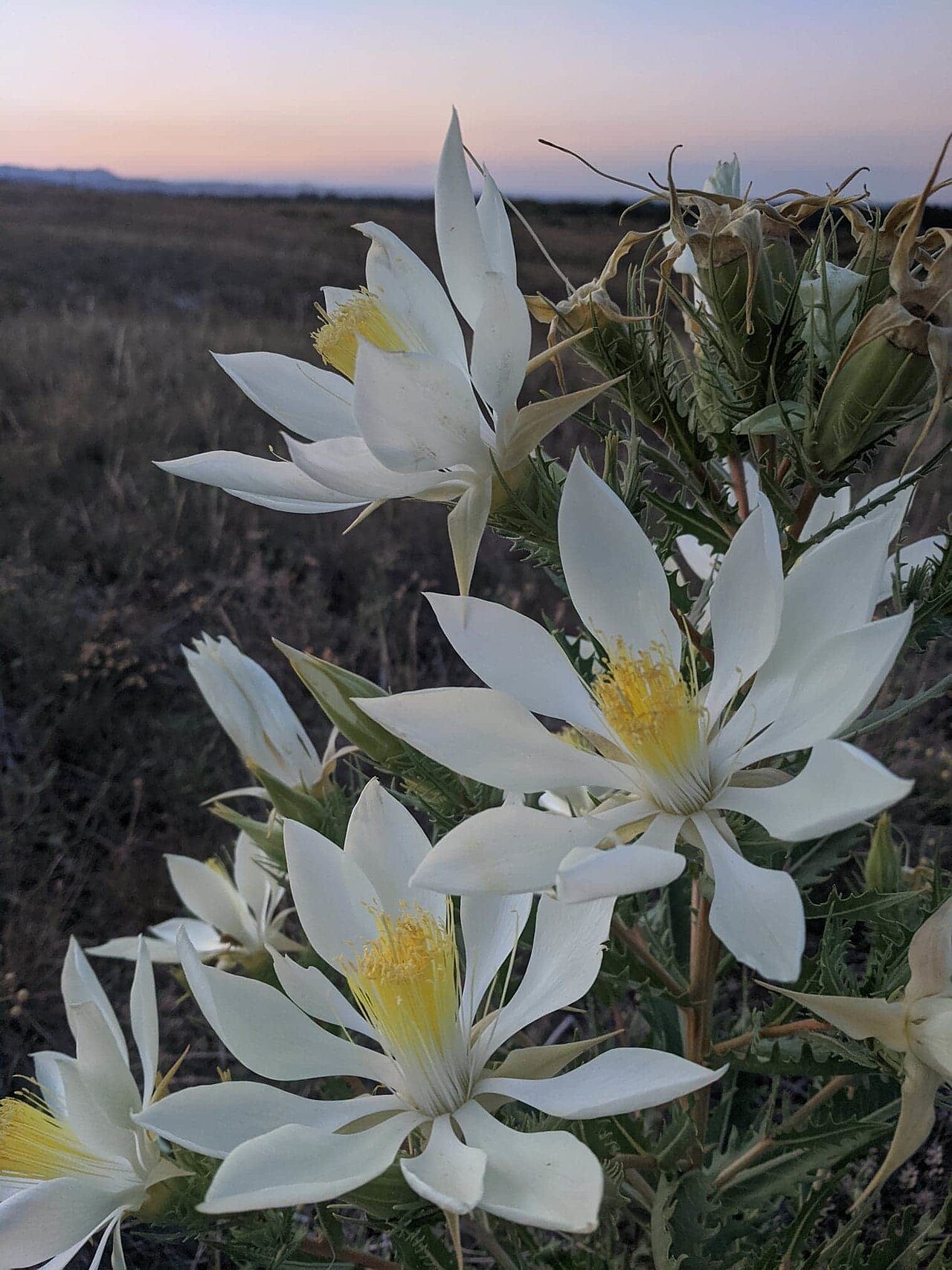
Mentzelia decapetala, Ten-Petal Blazingstar, also called gumbo lily, evening star, sand lily and ten-petal mentzelia, is a stout biennial or short-lived perennial of the Great Plains with some of the largest flowers of any prairie wildflower. Each creamy white to pale yellow flower is 3 to 5 inches across, with ten pointed petals around a brush of 100 to 200 long stamens. The flowers open in late afternoon and evening and close by the next morning, so many people walk past the plant for years without seeing it in bloom.
It grows on bare, eroding ground: road cuts, badlands, clay and shale slopes, sandy banks and gravelly hillsides, from the Dakotas, Montana and the Canadian prairies south through Wyoming, Nebraska, Kansas and Colorado to New Mexico, Oklahoma and Texas. The leaves and stems are covered with tiny barbed hairs that make them cling to clothing and fur like Velcro, which is why the genus is also called stickleaf.
This guide covers how to identify ten-petal blazingstar and tell it from its relatives, where it grows, how to grow it from seed in a dry, sunny garden, and the night-flying moths and bees that visit it.
Identification
Several blazingstars grow on the plains, and most have yellow flowers that open in the afternoon. Ten-petal blazingstar is the one with the biggest, palest flowers. Its close relative, white bractspine blazing star, grows in the southwestern deserts instead.
Growth Habit
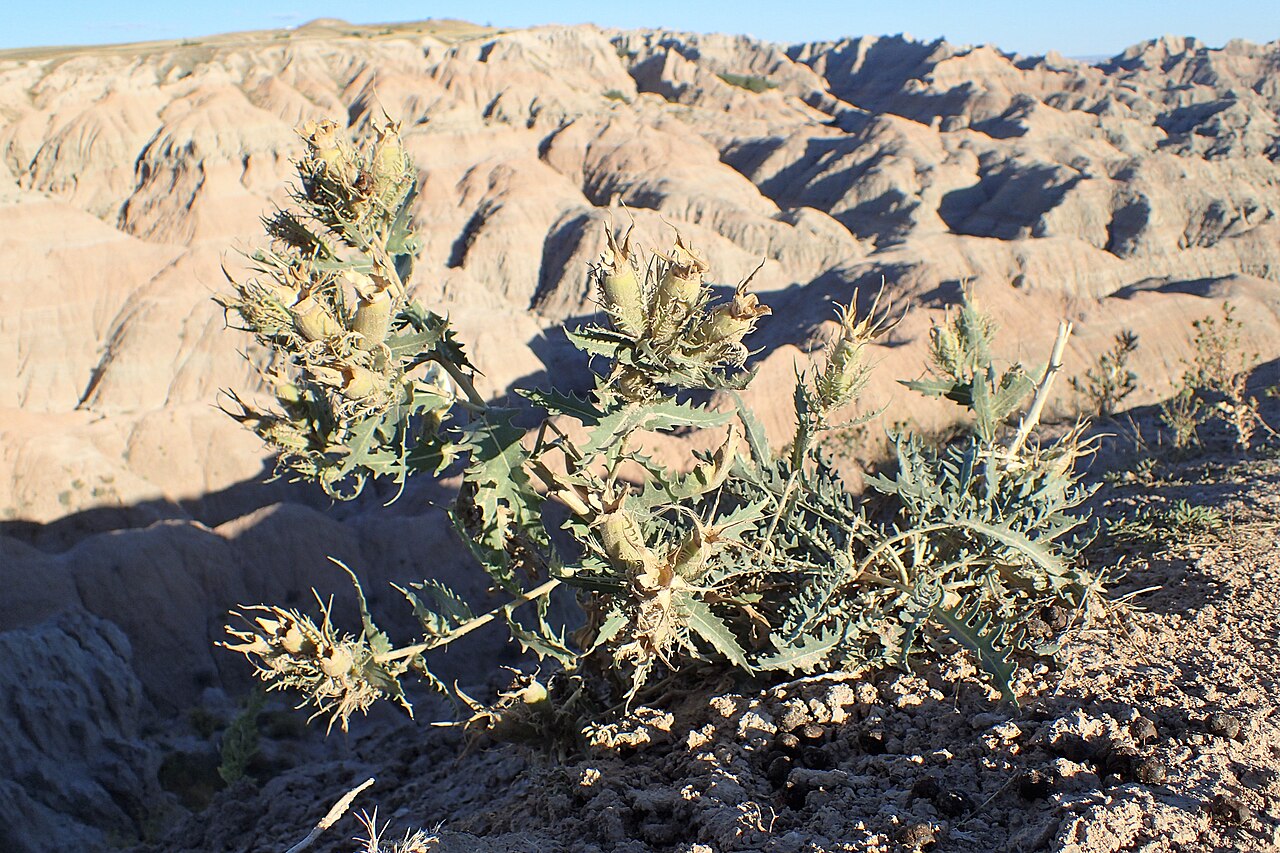
In its first year the plant forms a flat rosette of deeply toothed leaves. In the second year (sometimes later) it sends up one to several stout, branching stems 1 to 3 feet tall, with whitish, shiny bark that peels near the base. After flowering and setting seed it usually dies.
Leaves
Leaves are alternate, stalkless or short-stalked, lance-shaped to oblong, about 2 to 6 inches long, with coarse, sharp, regular teeth or shallow lobes along the margins. Both leaf surfaces are rough with barbed hairs, so leaves stick firmly to cloth.
Flowers
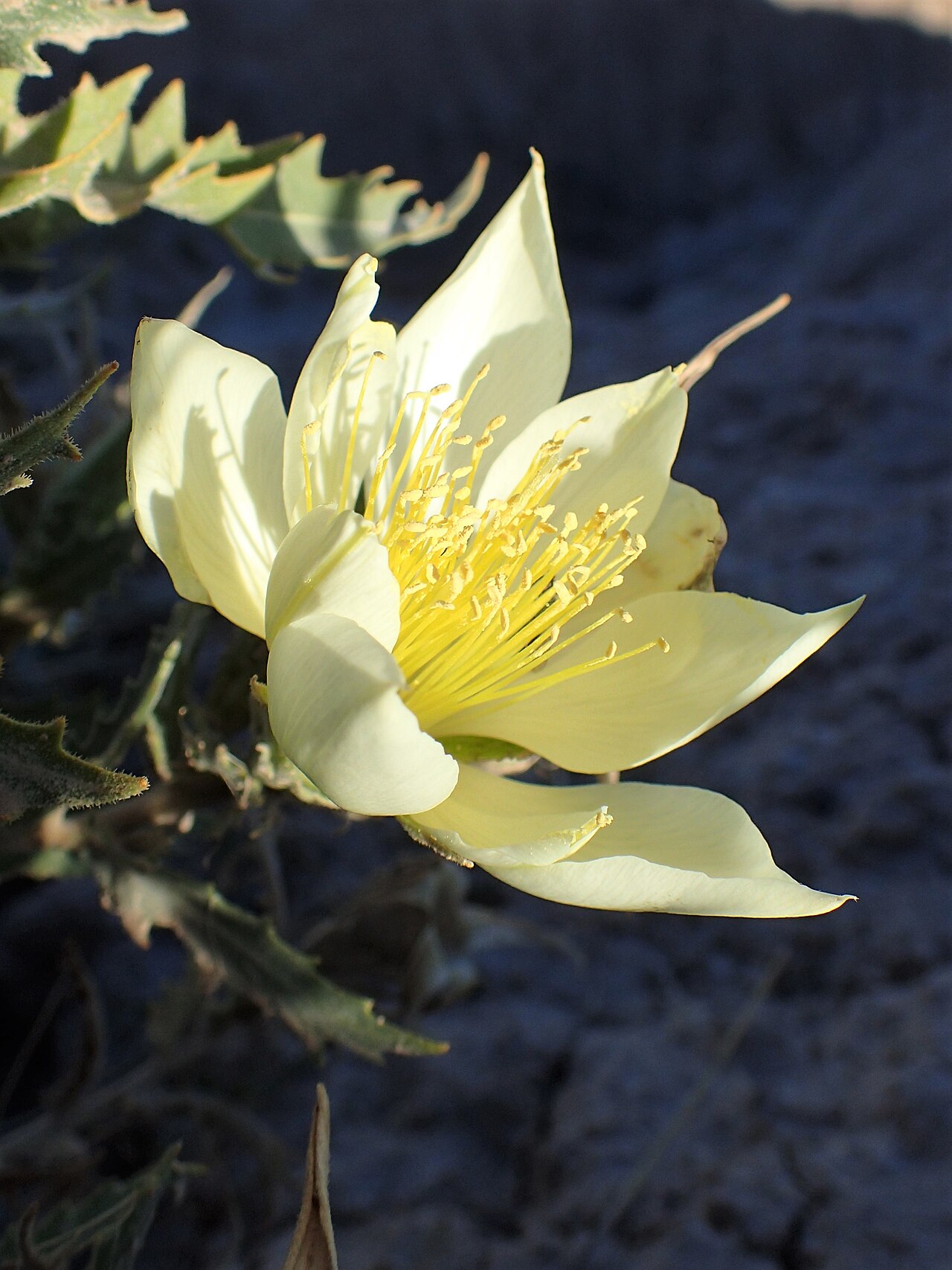
The flowers sit at the ends of the branches, each above a set of narrow, toothed bracts. They have ten narrow, pointed petals (five true petals and five petal-like outer stamens) about 2 to 3 inches long, creamy white to pale yellow, which often overlap when fully open. In the center is a dense mass of long, pale yellow stamens. They open in late afternoon or at dusk, are lightly fragrant, and close the next morning. Bloom time is from about June to September.
Fruit & Seeds
The fruit is a woody, cylindrical capsule 1¼ to 2 inches long, crowned with the remains of the sepals, that opens at the top. It holds many flat, winged seeds that are shaken out by wind. The dry stalks and capsules often stand through winter.
Similar Species
Smooth-stem blazingstar (M. nuda), found in the same region, is less coarse and has smaller petals, about 1 to 2 inches long, that do not overlap. Stickleaf (M. oligosperma) is a small, bushy plant with small orange-yellow, five-petaled flowers that open in the morning.
Quick Facts
| Scientific Name | Mentzelia decapetala |
| Family | Loasaceae (stickleaf family) |
| Plant Type | Biennial or short-lived perennial herb |
| Mature Height | 1–3 ft |
| Mature Spread | 1–2 ft |
| Growth Rate | Moderate; flowers in second year |
| Sun Exposure | Full sun |
| Water Needs | Low; very drought tolerant |
| Soil Type | Dry, sandy, gravelly, shale or clay soils; disturbed, eroding sites |
| Soil pH | About 6.5–8.5 |
| Bloom Time | June–September |
| Flower Color | Creamy white to pale yellow |
| Fall Color | None |
| Fruit | Cylindrical capsule with flat, winged seeds |
| Deer Resistant | Yes; leaves are rough and clinging |
| USDA Hardiness Zones | 3–8 |
Native Range
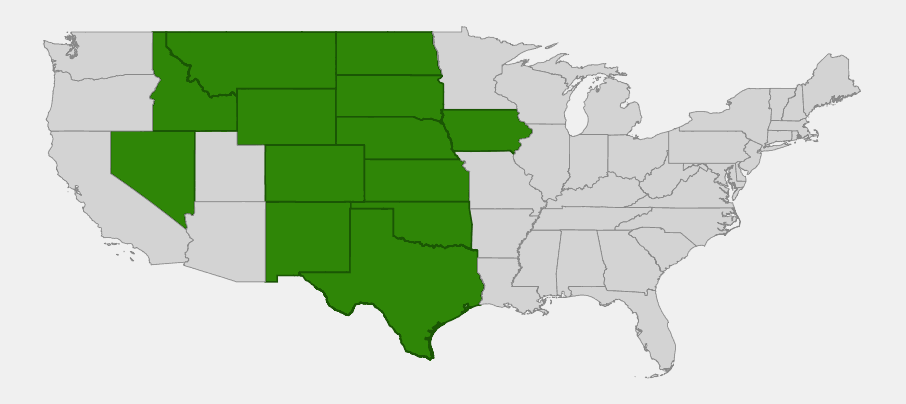
Ten-petal blazingstar is a plant of the Great Plains and the eastern foothills of the Rocky Mountains. USDA PLANTS records it as native in Montana, North Dakota, South Dakota, Wyoming, Nebraska, Kansas, Colorado, Oklahoma, Texas, New Mexico, Iowa, Idaho and Nevada, and in Alberta, Saskatchewan and Manitoba. It is most common on the northern and central plains, from the Missouri River breaks and badlands of the Dakotas and Montana to the sandhills and canyons of Nebraska, Kansas and eastern Colorado. In Iowa it reaches its eastern edge in the Loess Hills along the Missouri River, and in Texas it grows mainly in the Panhandle and west.
Records from Idaho, mainly along the Snake River Plain and Salmon River, and from Nevada are scattered and form the western edge of its range. Old collections from Illinois and Indiana came from railroad rights-of-way and sandy, disturbed ground, and regional floras treat the plant as adventive (introduced from farther west) there, so those states are not shown on the map.
Throughout its range it favors open, unstable ground with little competition: badlands, eroding clay and shale banks, road cuts, sandy blowouts, gravel slopes and dry prairie. It is often one of the first plants on freshly disturbed slopes.
📋 Regional plant lists featuring Ten-Petal Blazingstar: Idaho, Eastern Oregon & Eastern Washington · Montana & Wyoming · Nebraska, Kansas & Eastern Colorado · Illinois, Iowa & Missouri · South & West Texas · North Dakota, South Dakota & Western Minnesota · California & Nevada · Arizona & New Mexico
Growing & Care Guide
Ten-petal blazingstar is a dramatic plant for dry, sunny gardens on the plains, and its evening flowers are a reason to sit outside at sunset. It is not common in nurseries, but seed is offered by some native seed companies in the Great Plains and Rocky Mountain states. Grow it from purchased or garden-collected seed rather than digging wild plants; its long taproot rarely survives transplanting.
Light
Full sun. In shade it grows weak and flowers poorly.
Soil & Water
It needs very well-drained, lean soil: sand, gravel, crushed shale or a dry clay slope. Rich, watered garden soil causes rot and floppy growth. Once it has germinated it needs no irrigation in most of its range.
Planting Tips
Sow seed directly where you want plants, in fall or very early spring, on bare, loose soil and press it in lightly. Seedlings form rosettes the first year and flower the second. Because it is biennial, sow in two consecutive years, or let plants reseed, to get blooms every year. Give it a spot where you can see it in the evening.
Pruning & Maintenance
Little care is needed. Leave the dry stalks standing until the seed has dropped if you want it to reseed. Wear gloves when handling it: the barbed hairs cling to skin and clothing.
Propagation
Grow it from seed. Fall sowing outdoors gives seeds the natural cold, moist period that helps them germinate; for spring sowing in containers, give them a few weeks of cold, moist stratification first. Use deep pots, since the plant forms a taproot, and transplant seedlings while small.
Landscape Uses
- Xeriscapes and rock gardens: thrives in lean, gravelly soil without irrigation
- Evening and moon gardens: large pale flowers that open at dusk
- Erosion-prone slopes: an early colonizer of bare clay, shale and sand
- Prairie and badlands restoration: a native pioneer for disturbed sites on the plains
- Pollinator gardens: feeds night-flying moths and late-day bees
Wildlife & Ecological Value
Ten-petal blazingstar’s evening flowers serve a different group of pollinators from most prairie wildflowers.
For Pollinators
The large, pale, fragrant flowers that open at dusk are typical of moth-pollinated plants, and hawk moths and other night-flying moths are thought to be important visitors in the evening. Bees, especially large bees active late in the day, collect pollen from the masses of stamens while the flowers are opening and before they close in the morning.
For Birds
Seed-eating birds pick seeds from the open capsules in fall and winter. The plant provides little cover.
For Mammals
The rough, clinging leaves are not favored by deer or livestock. The barbed hairs can catch on the fur of passing animals and are thought to help discourage grazing and insect feeders.
Ecosystem Role
As a pioneer on bare, eroding clay, shale and sand, it is one of the first plants to colonize disturbed slopes, and its taproot and rosettes help hold loose soil until longer-lived plants move in.
Cultural & Historical Uses
The plant was first published in the early 1810s as Bartonia decapetala, a name coined by Frederick Pursh and printed by John Sims in Curtis’s Botanical Magazine from plants grown in England from seed collected on the upper Missouri River. It has also been called Bartonia ornata and Nuttallia decapetala. The genus name honors the 17th-century German botanist Christian Mentzel, and decapetala means “ten-petaled.”
The name gumbo lily refers to the sticky “gumbo” clay soils of the northern plains, where it often grows. The oily seeds of several western Mentzelia species were gathered as food by Indigenous peoples, but uses of this particular species are poorly documented.
The barbed hairs of the stickleaf family are a striking adaptation. Under a microscope they look like tiny grappling hooks, and studies of related species have found that they can trap and kill small insects that walk on the leaves.
Frequently Asked Questions
Why are the flowers closed when I see the plant?
Ten-petal blazingstar opens its flowers in late afternoon or at dusk and closes them the next morning. Visit in the evening to see it in full bloom.
Why do the leaves stick to my clothes?
The leaves and stems are covered with tiny barbed hairs that hook onto fabric and fur. That is why Mentzelia species are often called stickleafs.
Is ten-petal blazingstar a perennial?
It is usually a biennial, forming a rosette the first year and flowering the second, and sometimes lives a few years. Let it reseed to keep it in your garden.
Is ten-petal blazingstar native to Illinois?
No. It is native to the Great Plains and western states. Old records from Illinois and Indiana came from railroads and disturbed sandy ground and are treated as adventive.
What is the difference between blazingstar and gayfeather?
The name blazingstar is used both for Mentzelia (stickleaf family), which has large, open, starry flowers, and for Liatris (aster family), whose purple flower spikes are also called gayfeather. They are not related.

Looking for a nursery that carries Ten-Petal Blazingstar?
Browse our native plant nursery directory: Colorado · Idaho, Iowa & Kansas · Montana · Nebraska, Nevada, New Mexico, North Dakota & Oklahoma · South Dakota & Texas · Wyoming

