
Sweet Bugleweed (Lycopus virginicus)
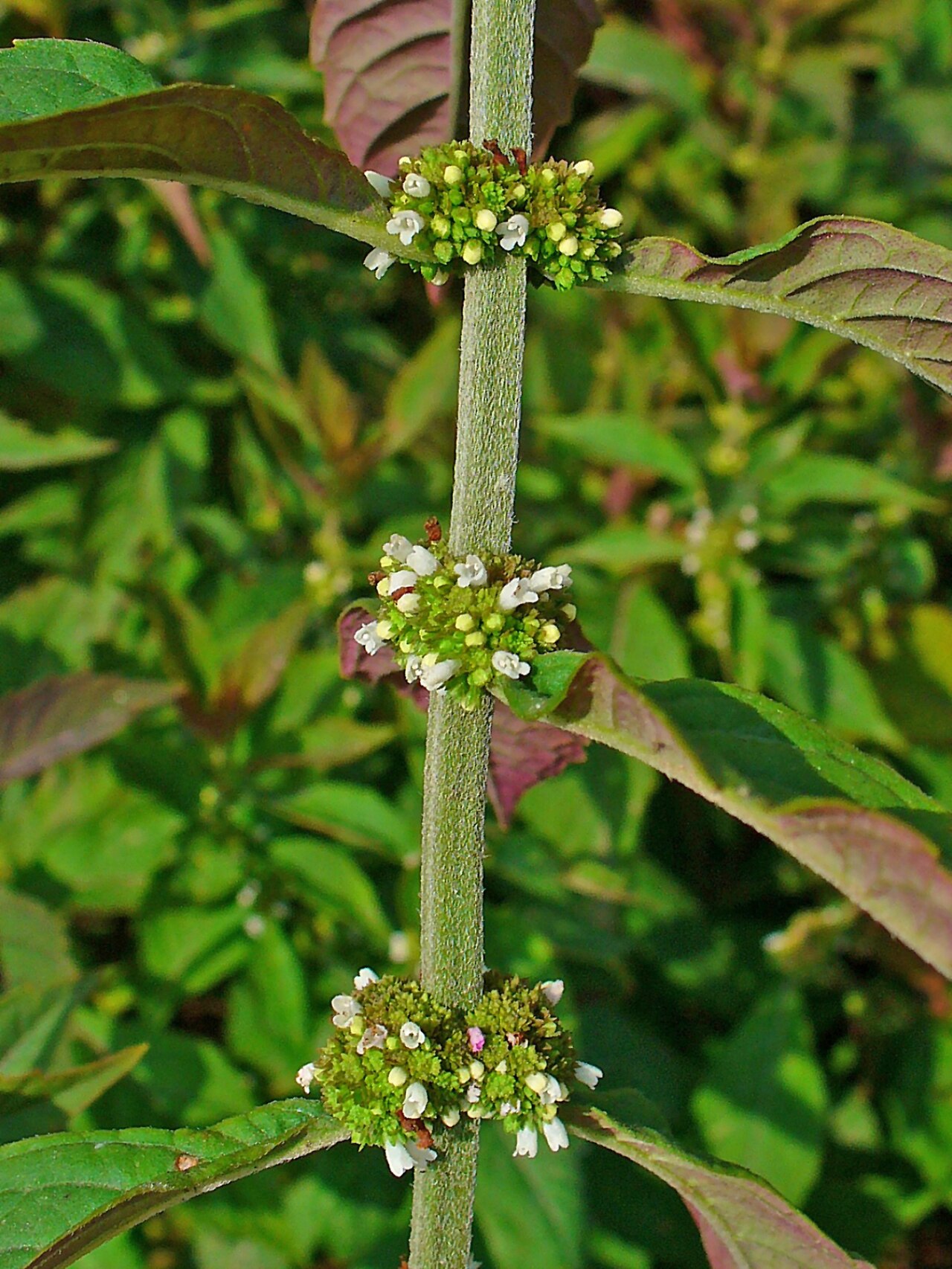
Lycopus virginicus, known as Sweet Bugleweed, Virginia bugleweed or Virginia water horehound (the USDA name), is a mint-family wildflower of wet woods, stream banks and swamps in the eastern United States. It has square stems, opposite toothed leaves that are often tinged purple, and tight whorls of tiny white flowers tucked in the leaf axils in late summer. Unlike most mints, it has almost no minty smell.
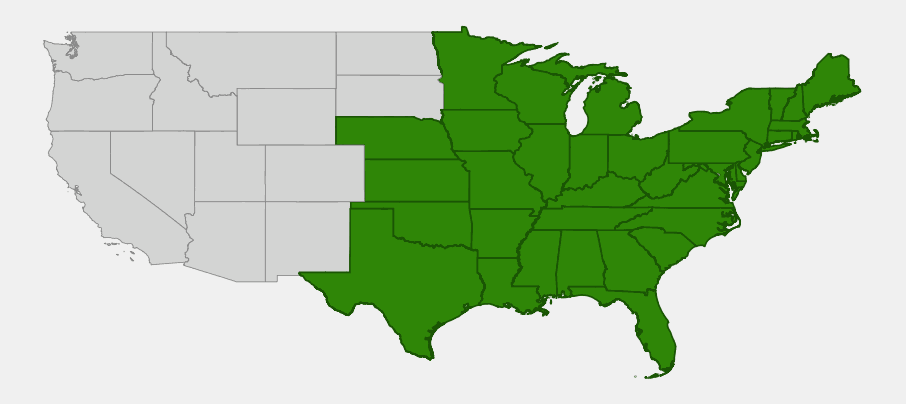
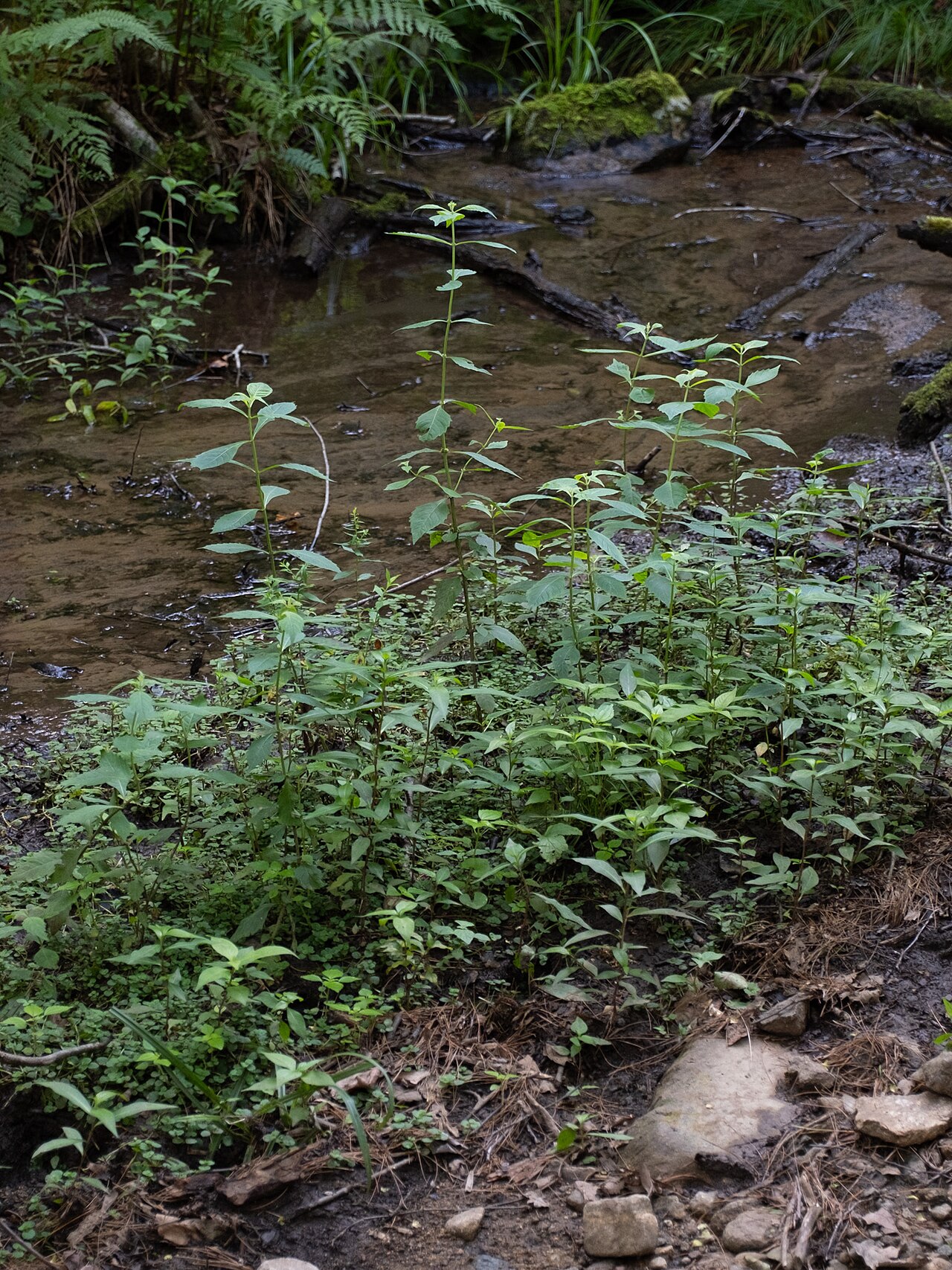
Sweet bugleweed is native from Maine and Minnesota south to Florida and eastern Texas, and west to Nebraska, Kansas and Oklahoma, as well as in southern Ontario and Quebec. It is one of the most shade-tolerant bugleweeds, often growing in muddy places under trees where other wetland plants are sparse. It spreads by slender runners to form loose colonies.
Bugleweed has a long history as an herbal medicine, especially for thyroid conditions. For the native plant gardener it is a modest but useful groundcover for rain gardens, shady stream banks and wet woodland edges, where its tiny flowers attract small bees and flies. This guide covers identification, range, growing conditions, wildlife value and a safety note on its medicinal use.
Identification
Bugleweeds (Lycopus) are easy to recognize as a group: square stems, opposite leaves and small white flowers in whorls at the leaf nodes, without the strong scent of true mints. Telling sweet bugleweed from its relatives takes a closer look at the leaves and the tiny fruits.
Stems & Growth Habit
Sweet bugleweed grows 6 inches to 2 feet tall, occasionally to 3 feet, from slender runners (stolons) that creep along the soil and root at the tips. Stems are square, usually unbranched or with a few branches, and finely hairy. In late summer the runners can be tipped with small, thickened buds for the next year.
Leaves
The leaves are opposite, lance-shaped to elliptic, about 2 to 5 inches long, with coarse, sharp teeth along the edges. They taper gradually to a narrow, wing-like stalk. They are dark green to purplish, especially in sun or in fall, and are often finely hairy. They have little or no fragrance when crushed.
Flowers
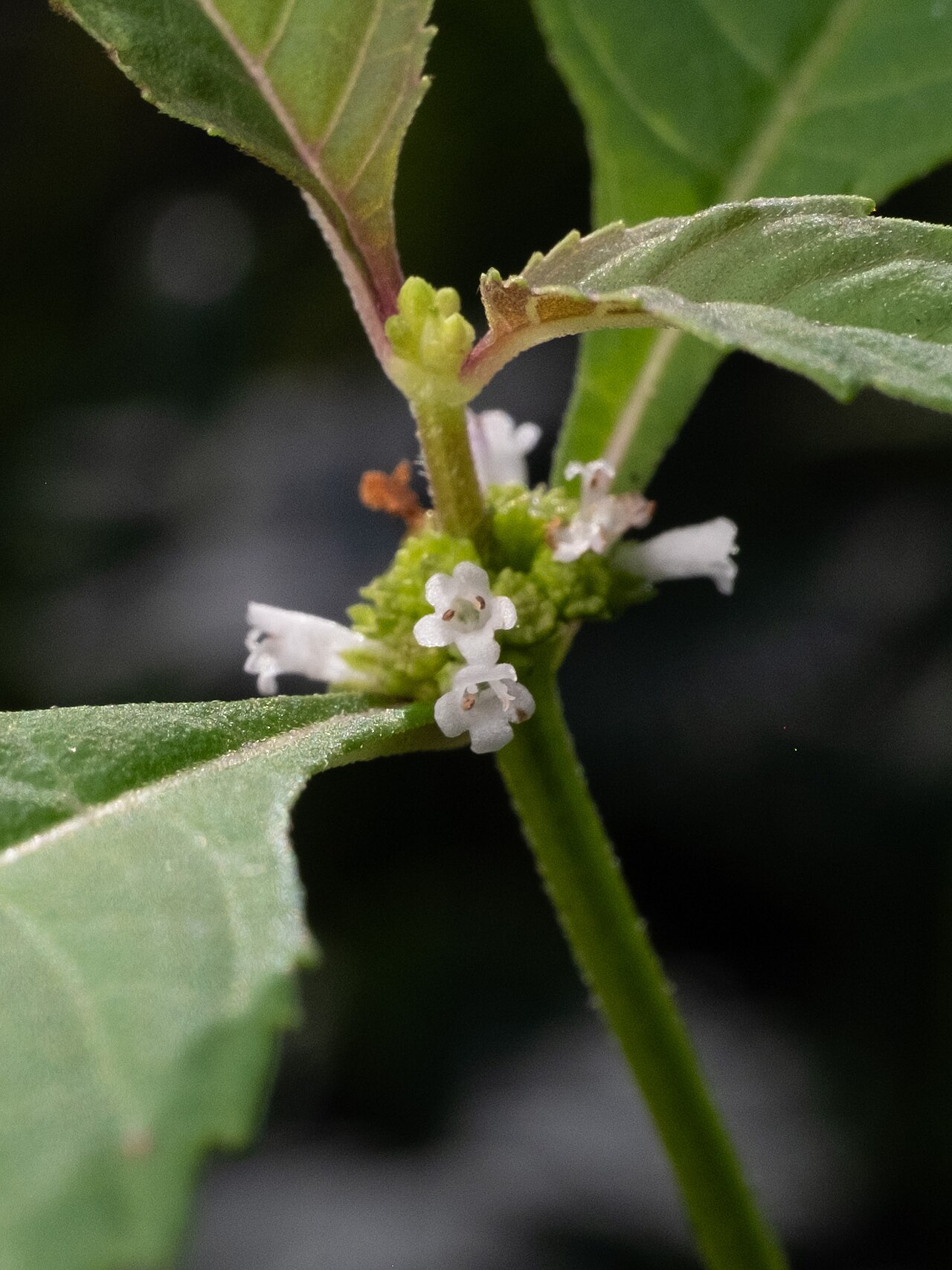
From July into September, small white flowers form dense, rounded clusters in the axils of the middle and upper leaves. Each flower is about an eighth of an inch long, with a short tube and four nearly equal lobes. Unlike most mints, bugleweeds have only two fertile stamens.
Fruit
Each flower produces four small, flattened nutlets with corky ridged edges, which help them float and disperse on water. In sweet bugleweed, the calyx lobes are short and blunt, usually no longer than the nutlets, which is a key difference from American bugleweed.
Similar Species
American Bugleweed (Lycopus americanus) has deeply lobed or cut lower leaves and long, sharp-pointed calyx lobes that stick out past the nutlets; it prefers sunnier sites. Northern bugleweed (L. uniflorus) has shorter, less tapered leaves and forms small tubers. Water horehound (L. rubellus) of the Coastal Plain has leaves with a distinct stalk. American Wild Mint looks similar, but it has lavender flowers and a strong mint smell.
Quick Facts
| Scientific Name | Lycopus virginicus L. |
| Family | Lamiaceae (mint family) |
| Plant Type | Herbaceous perennial wildflower; spreads by stolons |
| Mature Height | 6–24 in (occasionally to 3 ft) |
| Mature Spread | 1–2 ft; forms loose colonies |
| Growth Rate | Moderate to fast |
| Sun Exposure | Part shade to full shade; tolerates sun in wet soil |
| Water Needs | High; moist to wet soil |
| Soil Type | Rich, mucky, loamy or silty soils; tolerates clay |
| Soil pH | About 5.0–7.5 |
| Bloom Time | July–September |
| Flower Color | White |
| Fall Color | Leaves often turn purplish to bronze |
| Fruit | Four small corky-edged nutlets |
| Deer Resistant | Moderately; seldom browsed |
| USDA Hardiness Zones | 4–9 |
Native Range
USDA PLANTS lists sweet bugleweed as native in 35 states and the District of Columbia: Alabama, Arkansas, Connecticut, Delaware, Florida, Georgia, Iowa, Illinois, Indiana, Kansas, Kentucky, Louisiana, Massachusetts, Maryland, Maine, Michigan, Minnesota, Missouri, Mississippi, North Carolina, Nebraska, New Hampshire, New Jersey, New York, Ohio, Oklahoma, Pennsylvania, Rhode Island, South Carolina, Tennessee, Texas, Virginia, Vermont, Wisconsin and West Virginia. It is most common in the Ohio Valley, the mid-Atlantic and the Southeast, and becomes scarcer at the northern and western edges of its range, such as Maine, Minnesota and Nebraska.
It grows in moist to wet, often shady places: floodplain forests, wooded swamps, the muddy banks of streams and rivers, seeps and springs, wet ditches and the edges of ponds and marshes. In Texas and Oklahoma it is limited to the wetter eastern part of each state.
Outside the United States, sweet bugleweed grows in southern Ontario and Quebec. It has been grown in Europe as a medicinal plant, but it is a North American native.
📋 Regional plant lists featuring Sweet Bugleweed: North & South Florida · Alabama, Georgia & Mississippi · North & South Carolina · Maryland, Virginia & West Virginia · Kentucky & Tennessee · Arkansas, Louisiana, Eastern Oklahoma & Eastern Texas · Illinois, Iowa & Missouri · Ohio & Indiana · Nebraska, Kansas & Eastern Colorado · Michigan, Wisconsin & Eastern Minnesota · New York, Pennsylvania & Northern New Jersey · Delaware, Southern New Jersey & Long Island · Connecticut, Massachusetts & Rhode Island · New Hampshire, Maine & Vermont
Growing & Care Guide
Sweet bugleweed is an easygoing native for wet, shady spots where many garden plants fail. It is not showy, but its purplish foliage, late-summer flowers and tolerance of shade and wet soil make it a good filler and groundcover in rain gardens and naturalistic plantings. It is sold by some native plant nurseries, mostly in the East and Midwest.
Light
It grows best in part shade or light, dappled shade, and tolerates fairly deep shade. In full sun it needs consistently wet soil.
Soil & Water
Give it moist to wet soil rich in organic matter. It thrives in mucky, poorly drained soils and tolerates short flooding, but it suffers in dry soil. It is a good choice for the lowest zone of a rain garden or the bank of a pond or stream.
Planting Tips
Plant in spring or fall, about 12 to 18 inches apart. Combine it with taller wetland plants such as cardinal flower, great blue lobelia, turtlehead and sedges, which hide its rather plain stems while it fills the gaps below.
Pruning & Maintenance
Little care is needed. It spreads by runners but is not usually aggressive; pull out stems that wander too far. Leave the seed heads standing over winter for birds and for natural reseeding in wet ground.
Propagation
Divide clumps or replant rooted runners in spring. Seed can be sown on the surface of moist soil in fall, or cold-stratified for about 60 days and sown in spring; it needs light to germinate.
Safety Note
Sweet bugleweed is not considered poisonous to touch or to grazing animals, but it is a potent herbal medicine. It has been used to reduce thyroid activity, and it should not be taken as a tea or supplement during pregnancy or breastfeeding, by people with thyroid conditions or taking thyroid medication, or without a doctor’s advice. Do not harvest it from the wild for medicinal use.
Landscape Uses
- Rain gardens: the wettest, shadiest zone of a rain garden, where it fills in low spaces under taller plants
- Stream and pond banks: a low, spreading cover that helps hold muddy soil along shady water edges
- Woodland gardens: wet hollows and seeps in a shade garden, with ferns and jewelweed
- Wetland restoration: floodplain and swamp forest restoration, where it tolerates both flooding and shade
- Pollinator gardens: a late-summer source of nectar for small bees and flies in shady wet sites
Wildlife & Ecological Value
Sweet bugleweed is a small plant with a quiet but real role in wetland ecosystems.
For Pollinators
The tiny white flowers provide nectar and pollen for small bees (such as sweat bees and small carpenter bees), flies, wasps and small butterflies in late summer, when the shady wetland edges where it grows have few other flowers.
For Birds
Its tiny nutlets are eaten by some ground-feeding birds and waterfowl, and its colonies provide cover for small birds and other animals along streams.
For Mammals
Deer and other mammals browse it only occasionally. Its bitter taste and slight aroma make it less attractive than many wetland plants.
Ecosystem Role
Its creeping runners help stabilize muddy stream banks and the floors of wooded swamps. Its corky, floating nutlets are spread by water, letting it quickly colonize newly deposited mud along streams and in floodplains.
Cultural & Historical Uses
The genus name Lycopus comes from the Greek for “wolf’s foot,” a fanciful reference to the shape of the leaves of a European species. The name “bugleweed” was borrowed from bugle (Ajuga), another mint-family plant.
Sweet bugleweed was used by several Native American nations, and it entered American herbal medicine in the 1800s as a mild sedative and as a remedy for coughs and a rapid heartbeat. Today it is best known in herbal practice for its effects on the thyroid, and it is included in some homeopathic and herbal preparations.
Linnaeus named Lycopus virginicus in 1753, based on specimens from Virginia. The common name “water horehound,” used by USDA, compares its whorled flowers to those of horehound (Marrubium), an unrelated European mint.
Frequently Asked Questions
Is sweet bugleweed a mint?
Yes. It is in the mint family (Lamiaceae), with square stems and opposite leaves, but unlike true mints (Mentha) it has little or no minty smell and its tiny white flowers have only two stamens.
Does sweet bugleweed grow in shade?
Yes. It is one of the best native wildflowers for wet, shady places, such as floodplain woods, swamps and shady stream banks. It also grows in sun if the soil stays wet.
How do I tell sweet bugleweed from American bugleweed?
American bugleweed has deeply cut lower leaves and sharp, pointed calyx lobes that stick out beyond the nutlets. Sweet bugleweed has toothed but not lobed leaves, often purplish, and short, blunt calyx lobes.
Is sweet bugleweed invasive?
No. It is native to the eastern United States. It spreads by runners into loose colonies, but it is not aggressive and is easy to control.
Is bugleweed safe to use as an herbal remedy?
Bugleweed affects the thyroid and should only be used under medical supervision. It should be avoided during pregnancy and breastfeeding and by people with thyroid conditions or taking thyroid medicines.

Looking for a nursery that carries Sweet Bugleweed?
Browse our native plant nursery directory: Alabama & Arkansas · Connecticut, Delaware, Florida & Georgia · Illinois, Indiana, Iowa & Kansas · Kentucky, Louisiana, Maine, Maryland, Massachusetts, Michigan, Minnesota, Mississippi & Missouri · Nebraska, New Hampshire, New Jersey, New York, North Carolina, Ohio & Oklahoma · Pennsylvania, Rhode Island, South Carolina, Tennessee, Texas, Vermont & Virginia · West Virginia & Wisconsin

