
Northern Bugleweed (Lycopus uniflorus)
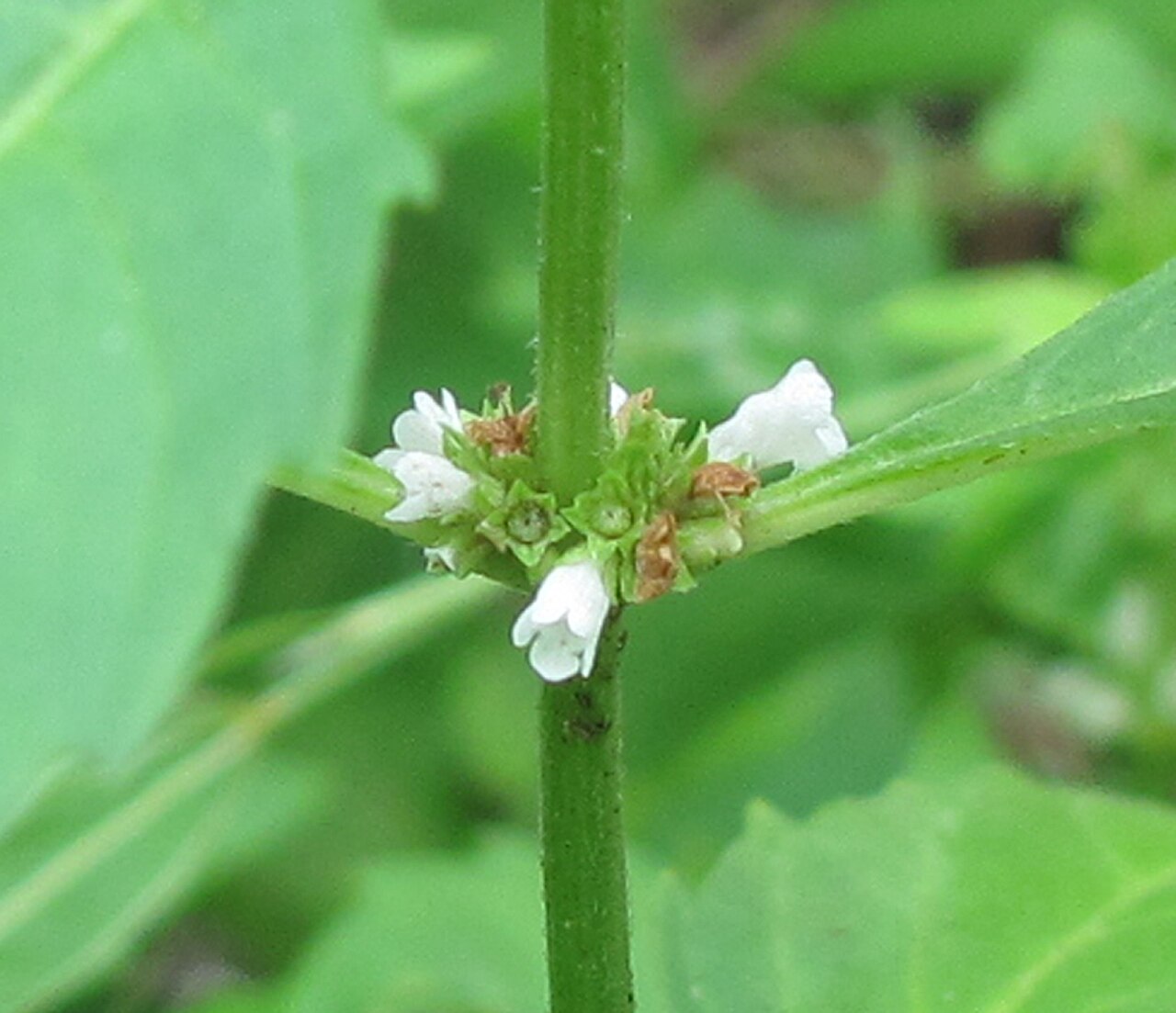
Lycopus uniflorus, known as Northern Bugleweed or northern water-horehound, is a slender, unscented member of the mint family that grows in marshes, bogs, wet meadows and along shores across the northern half of North America. It stands 4 to 24 inches tall, with square stems, paired, coarsely toothed leaves and, from midsummer into fall, tight rings of tiny white flowers tucked into the leaf axils.
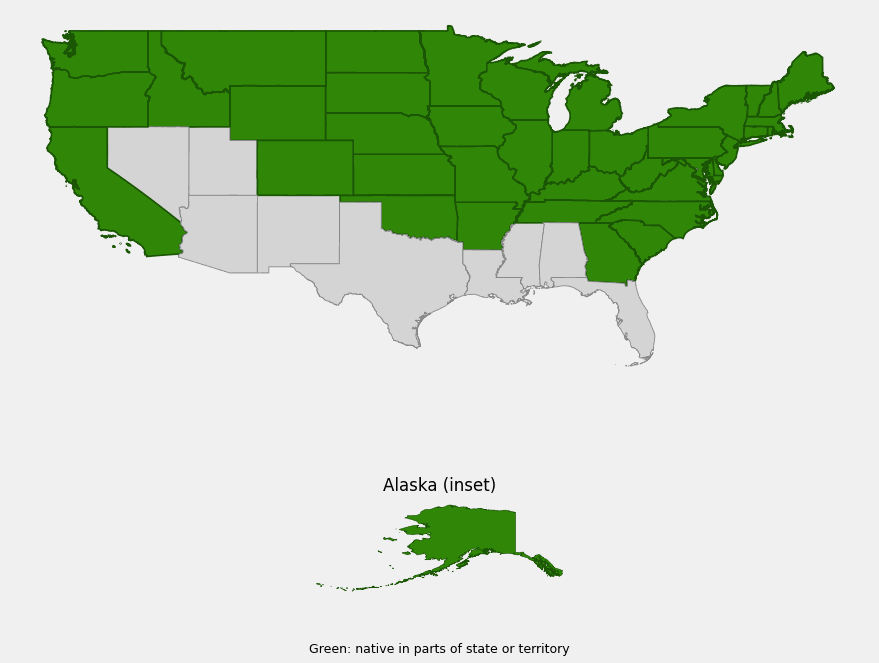
It is one of the most widespread wetland plants on the continent. USDA PLANTS lists it as native in Alaska and 39 of the lower 48 states, from Washington and California east to Maine and south in the mountains and coastal plain to Georgia and the Carolinas, and in every Canadian province. It also grows in eastern Asia, in Japan, Korea, China and the Russian Far East.
Like other bugleweeds, it lacks the minty smell of most of its relatives, but it has a hidden surprise: its rhizomes end in small, white, crisp tubers that several Indigenous peoples ate. This guide covers how to identify northern bugleweed, where it grows, how to grow it in a rain or bog garden, and its role in wetlands.
Identification
Bugleweeds (Lycopus) are easy to recognize as a group: mint-family plants with square stems, opposite toothed leaves, no minty scent, and tiny white flowers clustered in the leaf axils. Telling the species apart takes a closer look at the leaves, calyx and roots.
Leaves & Growth Habit
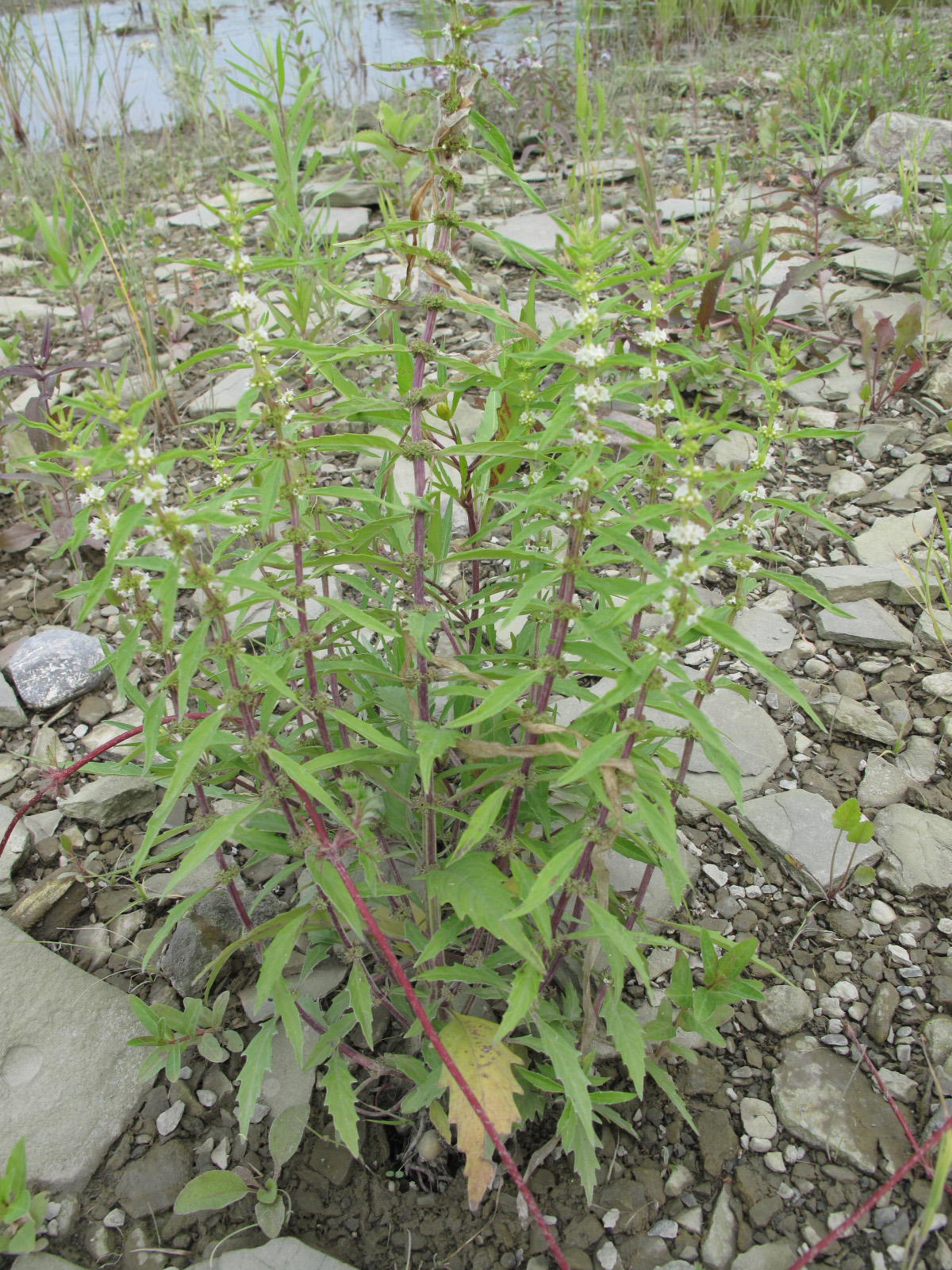
An upright perennial, 4 to 24 inches tall, usually unbranched or with a few branches, spreading by slender rhizomes into loose colonies. The stems are four-angled and smooth to finely hairy. The leaves are opposite, lance-shaped to elliptic, 1 to 3 inches long, with a few coarse, sharp teeth along each edge, and taper to a short stalk or none. Unlike most mints, the plant has no noticeable scent when crushed.
Flowers
Flowers bloom from July into September in dense, ball-like whorls in the axils of the middle and upper leaves. Each flower is only about ⅛ inch long, white or sometimes pink-tinged, bell-shaped with four or five lobes, and has two protruding stamens. The calyx lobes are short and blunt to bluntly pointed.
Fruit & Tubers
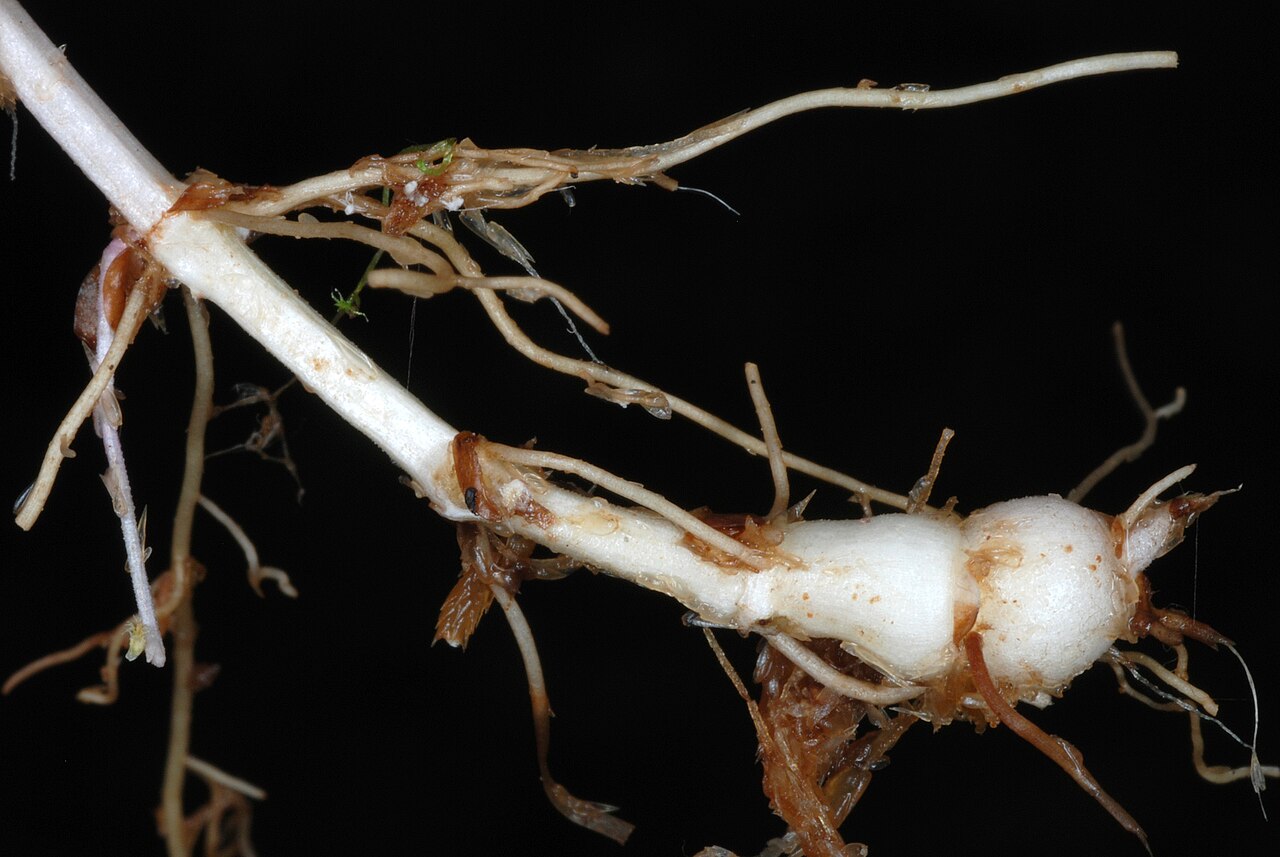
Each flower produces four tiny, wedge-shaped nutlets with corky ridges that help them float. By late summer the thin underground rhizomes swell at their tips into white, carrot- or bead-shaped tubers about ½ to 1 inch long, which store food and grow into new plants the next spring.
Look-alikes
American Bugleweed is usually taller, with deeply cut lower leaves and sharp calyx teeth longer than the nutlets, and it does not form tubers. Sweet Bugleweed has broader, often purplish leaves and four-lobed flowers, and it ranges farther south. American Wild Mint looks similar in flower but smells strongly of mint.
Quick Facts
| Scientific Name | Lycopus uniflorus |
| Family | Lamiaceae (mint family) |
| Plant Type | Herbaceous perennial wetland wildflower |
| Mature Height | 4–24 in |
| Mature Spread | Spreads by rhizomes into loose colonies |
| Growth Rate | Moderate to fast |
| Sun Exposure | Full sun to part shade |
| Water Needs | Wet; moist to saturated soil or shallow water |
| Soil Type | Muck, peat, sand or gravel along shores and in marshes |
| Soil pH | Acidic to neutral |
| Bloom Time | July–September |
| Flower Color | White, sometimes pink-tinged |
| Fall Color | Leaves may turn reddish or purplish |
| Fruit | Four small corky nutlets; tubers on rhizome tips |
| Deer Resistant | Moderately; not a preferred browse plant |
| USDA Hardiness Zones | About 2–8 |
Native Range
Northern bugleweed ranges across boreal and temperate North America, from Alaska and the Northwest Territories to Newfoundland and Labrador, and south through every Canadian province. In the United States, USDA PLANTS lists it as native in Alaska and in 39 of the lower 48 states. It is common across the northern tier, from Washington, Oregon and northern California through the Rocky Mountains and Great Plains to the Great Lakes and New England.
Farther south it becomes scattered: it follows the Appalachian Mountains and Atlantic Coastal Plain to Virginia, the Carolinas and Georgia, and reaches Missouri, Kentucky, Tennessee, Arkansas, Oklahoma and Kansas, where it is uncommon. It is absent from most of the Gulf Coast and the desert Southwest. Outside North America it grows in Japan, Korea, northeastern China and the Russian Far East.
It grows in almost any open or lightly shaded wet place: marshes, bogs, fens, wet meadows, swamps, beaver ponds, ditches and the sandy, gravelly or rocky shores of lakes and rivers. It often grows at the water’s edge, where water levels drop in late summer and expose wet mud.
📋 Regional plant lists featuring Northern Bugleweed: Alaska · Western Oregon & Western Washington · Idaho, Eastern Oregon & Eastern Washington · California & Nevada · Montana & Wyoming · Nebraska, Kansas & Eastern Colorado · North Dakota, South Dakota & Western Minnesota · Michigan, Wisconsin & Eastern Minnesota · Illinois, Iowa & Missouri · Ohio & Indiana · Kentucky & Tennessee · Arkansas, Louisiana, Eastern Oklahoma & Eastern Texas · Alabama, Georgia & Mississippi · North & South Carolina · Maryland, Virginia & West Virginia · New York, Pennsylvania & Northern New Jersey · Delaware, Southern New Jersey & Long Island · Connecticut, Massachusetts & Rhode Island · New Hampshire, Maine & Vermont
Growing & Care Guide
Northern bugleweed is not a showy garden plant, but it is useful and easy in wet places. It is sometimes offered by wetland and restoration nurseries, especially in the Great Lakes and Northeast, and it fills in quickly around ponds, in rain gardens and in bog gardens.
Light
Full sun to part shade. It flowers best in sun but tolerates the light shade of shrub swamps and wooded shores.
Soil & Water
It needs consistently moist to wet soil and tolerates standing water a few inches deep, as well as periodic flooding. Sand, gravel, muck and peat all work. It does not tolerate drought, so keep it out of dry garden beds.
Planting Tips
Plant plugs or divisions in spring along a pond edge, in the low zone of a rain garden, in a bog garden or along a wet ditch, spacing them about 12 inches apart. It mixes well with sedges, blue flag iris, swamp milkweed and turtleheads.
Pruning & Maintenance
Little care is needed. Leave the stems standing over winter for their seeds and for overwintering insects, then cut them back in spring. It spreads by rhizomes and tubers, but usually not aggressively, since it competes poorly with tall, dense vegetation.
Propagation
Divide clumps or replant the tubers in spring or fall. Seed can be sown on the surface of moist soil in fall, or in spring after a month of cold, moist stratification; it needs light and constant moisture to germinate.
Landscape Uses
- Rain and bog gardens: fine-textured filler for the wettest zones
- Pond and stream edges: helps hold soft soil along shorelines
- Wetland restoration: a common component of native marsh and wet-meadow seed mixes
- Edible plant interest: crisp, edible tubers used by several Indigenous peoples
Wildlife & Ecological Value
Northern bugleweed is a small but steady contributor to the wetland food web, flowering late in the season when many wetland plants are done.
For Pollinators
Its tiny white flowers are visited by small bees, including sweat bees, as well as small wasps, flies and occasionally small butterflies. Because it blooms from midsummer into early fall, it adds to the late-season nectar supply in marshes and wet meadows.
For Birds
The tiny nutlets float and are eaten in small amounts by waterfowl and other wetland birds, and its stems provide cover at the water’s edge. The insects it supports are food for wetland birds such as swallows, flycatchers and warblers.
For Mammals
Muskrats and other wetland mammals may eat the rhizomes and tubers, and deer occasionally browse the plants, but the bitter, unscented foliage is not a favorite.
Ecosystem Role
Its rhizomes and tubers help bind soft mud and sand along shorelines, and its corky, floating nutlets are spread by water to new wet sites. It is a characteristic plant of open northern wetlands and an indicator of saturated soils, rated an obligate wetland plant in most U.S. regions.
Cultural & Historical Uses
The genus name Lycopus comes from the Greek lykos, wolf, and pous, foot, apparently for the shape of the leaves of a European species. The species was named uniflorus, “one-flowered,” by André Michaux in 1803, a puzzling name for a plant with many flowers in each whorl.
Several Indigenous peoples of North America ate the crisp white tubers of northern bugleweed, peeled and eaten raw, cooked or pickled. The tubers are small, so gathering them takes patience, and they should be collected only where the plant is abundant and the land manager allows it.
Bugleweeds, especially sweet bugleweed (Lycopus virginicus), have a long history in North American and European herbal medicine, notably for thyroid conditions. These uses are not a substitute for medical care, and anyone considering them should consult a doctor.
Frequently Asked Questions
Is northern bugleweed a mint?
Yes, it is in the mint family (Lamiaceae), with the family’s square stems and paired leaves, but unlike most mints it has no minty scent.
Are northern bugleweed tubers edible?
Yes. Several Indigenous peoples ate the small white tubers that form at the tips of the rhizomes, raw, cooked or pickled. Be certain of identification, and harvest only small amounts where the plant is abundant and harvesting is allowed.
How is it different from American bugleweed?
American bugleweed is usually taller, its lower leaves are deeply cut or lobed, its calyx teeth are sharp and longer than the nutlets, and it does not form tubers. Northern bugleweed has shallowly toothed leaves, short blunt calyx lobes and tuber-tipped rhizomes.
Is northern bugleweed invasive?
No. It is native across most of North America and spreads by rhizomes and tubers into loose colonies, but it is easily crowded out by taller plants and rarely becomes a problem in gardens.
Where should I plant it?
In the wettest part of a rain garden, in a bog garden, or along a pond, stream or ditch edge, in full sun to part shade, where the soil never dries out.

Looking for a nursery that carries Northern Bugleweed?
Browse our native plant nursery directory: Alaska & Arkansas · California · Colorado, Connecticut, Delaware & Georgia · Idaho, Illinois, Indiana, Iowa & Kansas · Kentucky, Maine, Maryland, Massachusetts, Michigan, Minnesota, Missouri & Montana · Nebraska, New Hampshire, New Jersey, New York, North Carolina, North Dakota, Ohio & Oklahoma · Oregon · Pennsylvania, Rhode Island, South Carolina, South Dakota, Tennessee, Vermont & Virginia · Washington · West Virginia, Wisconsin & Wyoming

