
Cowpen daisy (Verbesina encelioides)
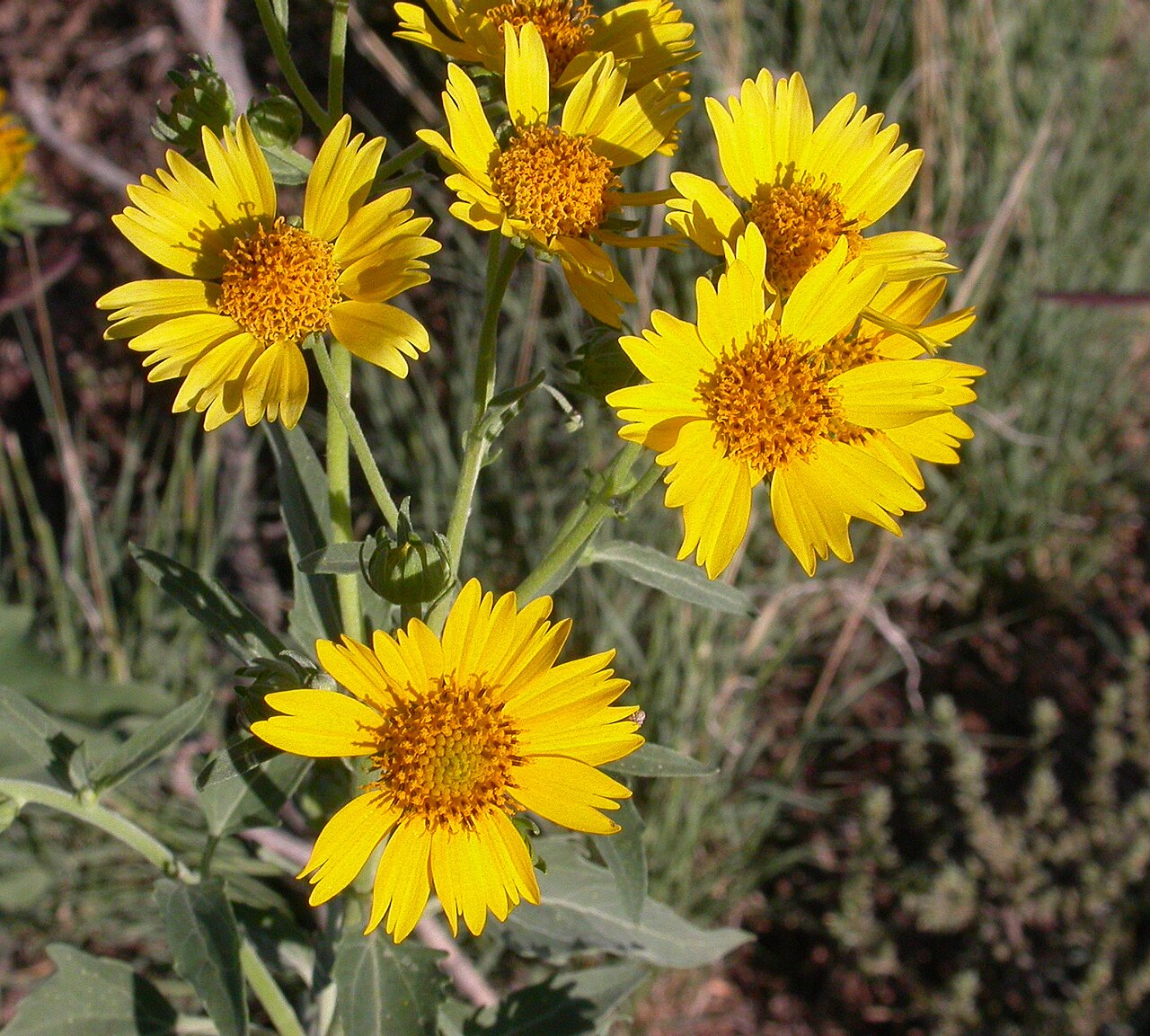
Verbesina encelioides, known as Cowpen daisy and as golden crownbeard (the USDA common name), is a cheerful, fast-growing annual sunflower relative of dry, open and disturbed ground. From late spring until frost it carries a steady supply of bright yellow daisies, 1½ to 2 inches across, above soft, gray-green, toothed leaves. Each ray ends in three small teeth, which gives the flower heads a neatly scalloped edge. Plants usually grow 1 to 3 feet tall, and occasionally taller with good rain.
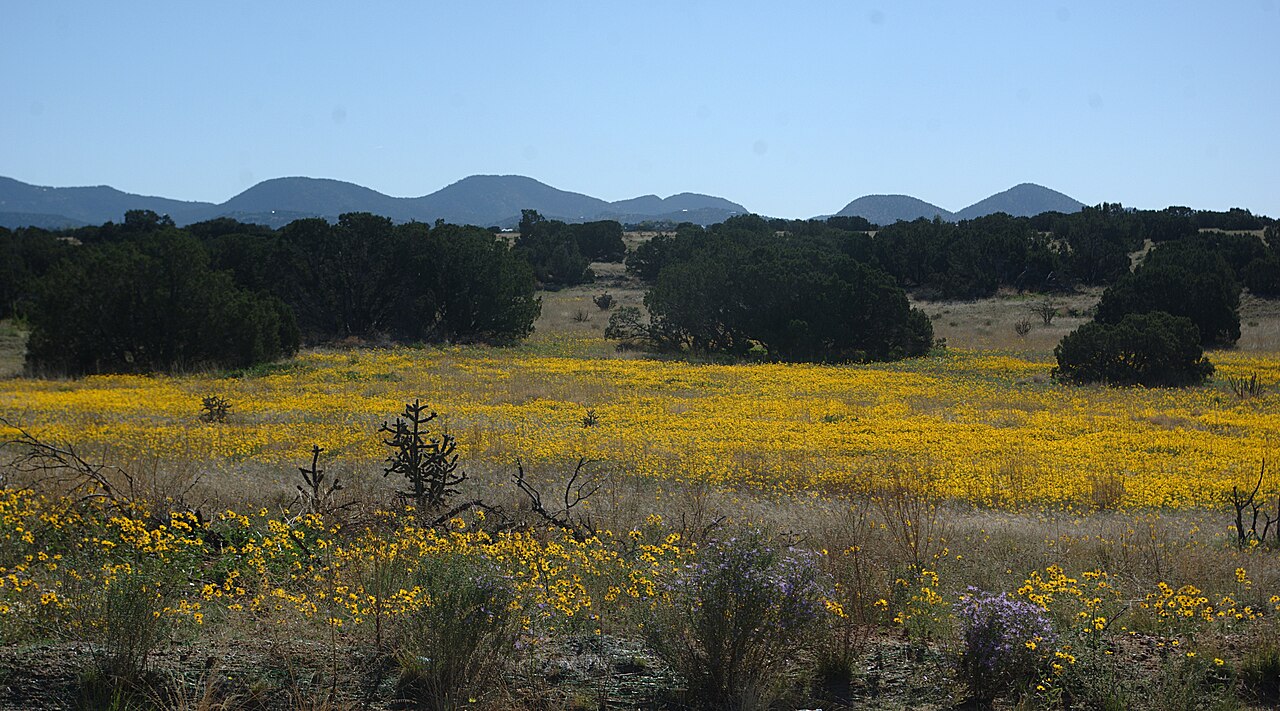
The common name says a lot about where it grows. Cowpen daisy thrives in trampled, fertile, disturbed soil, the kind of ground found around livestock pens, corrals, watering tanks, roadsides, vacant lots and field edges. It is also a natural part of open grasslands, desert washes and sandy flats, especially in the Southwest and southern Great Plains, where in wet years it can paint whole meadows yellow. It belongs to the aster family (Asteraceae).
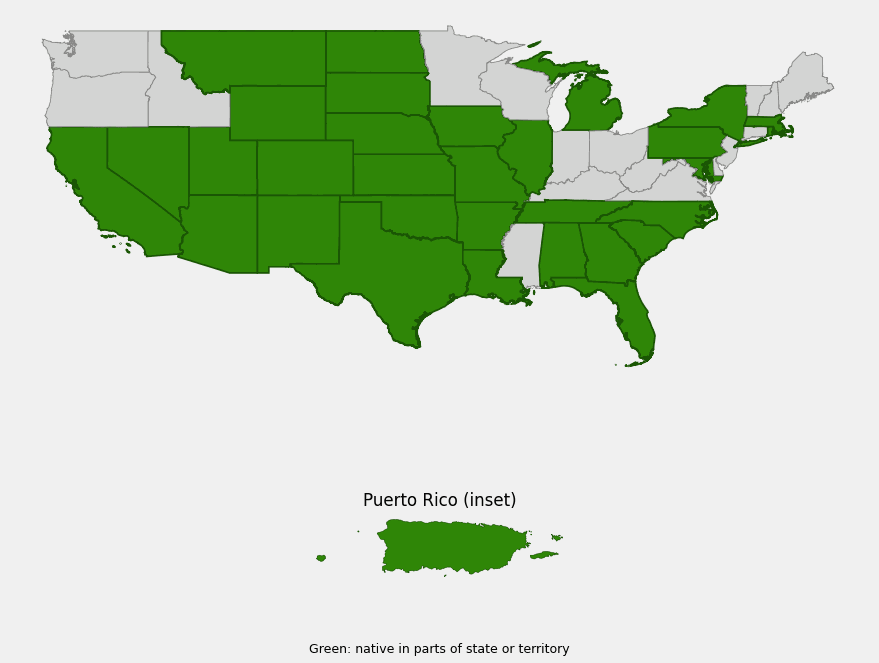
USDA PLANTS treats cowpen daisy as native across much of the Lower 48 and in Puerto Rico, though many regional floras regard it as truly native to the Southwest and Great Plains and as an adventive, weedy newcomer farther east. It can behave weedily anywhere, reseeding freely in disturbed ground. It is introduced in Hawaii and on Pacific islands, where it is an invasive weed. For pollinators, though, it is a valuable, long-blooming nectar source, especially for late-season butterflies and native bees.
Identification
Cowpen daisy is easy to recognize by the combination of gray-green, coarsely toothed leaves, winged leaf stalks, and yellow flower heads with three-toothed rays. It can be confused with other yellow annual composites such as common sunflower and prairie sunflower, but those have rougher, darker green leaves and larger, dark-centered heads.
Stems & Habit
Cowpen daisy is an annual with an erect, branching stem, usually 1 to 3 feet tall and up to about 5 feet in rich, moist soil. The stems are covered with fine, grayish hairs. Plants branch freely, forming a bushy, rounded shape when growing alone, and dense stands in disturbed ground.
Leaves
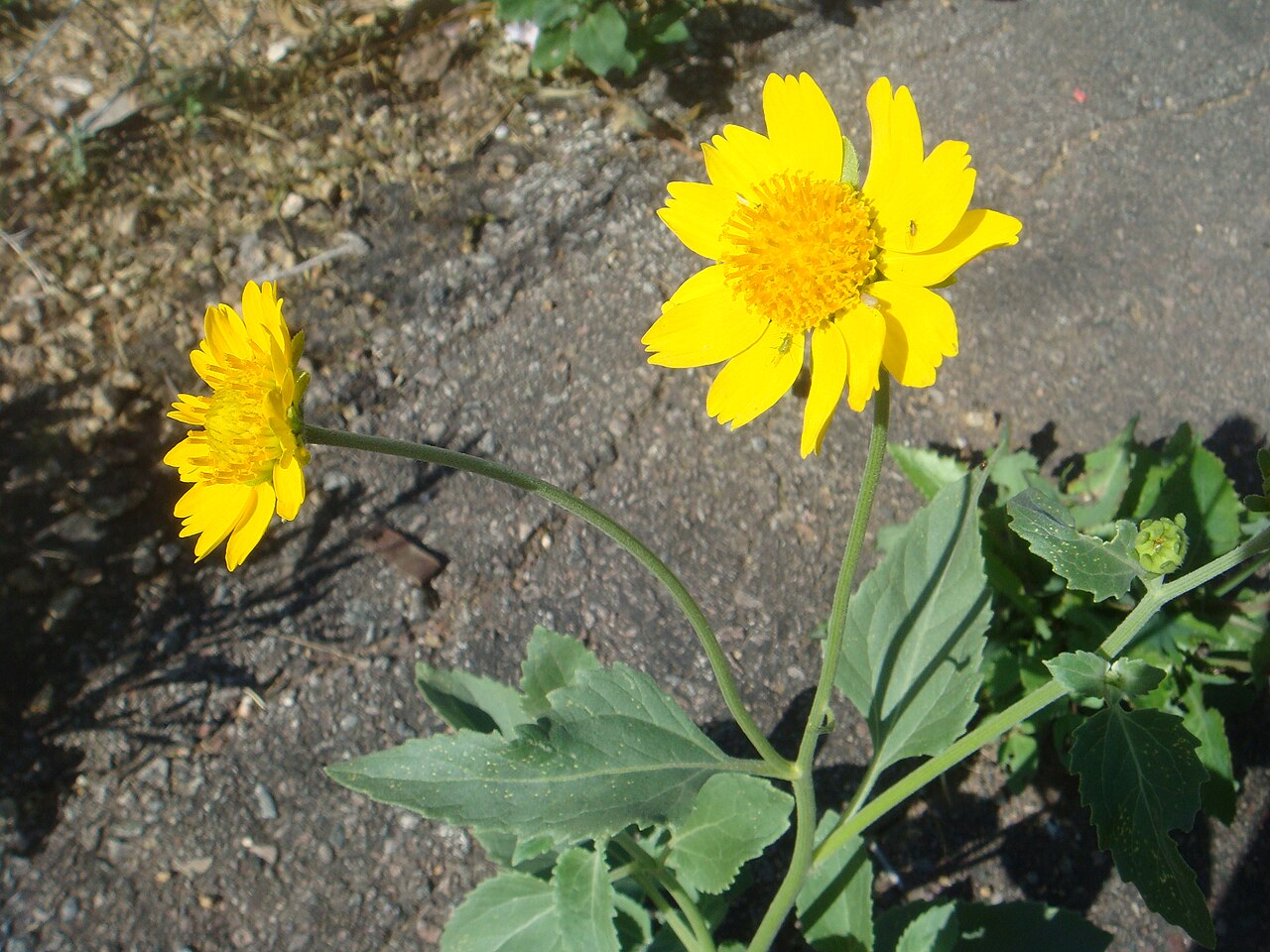
The leaves are triangular to lance-shaped, 2 to 4 inches long, with coarse, irregular teeth along the edges. They are gray-green above and paler and densely hairy beneath, giving the plant a soft, silvery look. The lower leaves are usually opposite, and the upper ones alternate. The leaf stalks are often winged and may have small, ear-like lobes at their base where they meet the stem. Crushed leaves have a slightly unpleasant odor.
Flowers
The flower heads are 1½ to 2 inches across and grow singly or in loose clusters on long stalks at the ends of the branches. Each head has about 10 to 15 yellow ray florets, each notched into three teeth at the tip, around a yellow to orange-yellow central disk. The bracts below the head are narrow, green and hairy. Cowpen daisy blooms from spring through fall, typically from April or May until the first hard frost, and in mild climates it can bloom almost year-round.
Fruit & Seeds
The seeds are flattened achenes. Those from the disk florets have broad, papery wings and two short awns at the top, while those from the ray florets are thicker and wingless. Plants produce large numbers of seeds, which are spread by wind, water, animals, vehicles and machinery. This is one reason cowpen daisy spreads so readily along roads and in disturbed ground.
Quick Facts
| Scientific Name | Verbesina encelioides |
| Family | Asteraceae (aster family) |
| Plant Type | Annual herb |
| Mature Height | 1–3 ft (occasionally to 5 ft) |
| Mature Spread | 1–3 ft |
| Growth Rate | Fast |
| Sun Exposure | Full sun |
| Water Needs | Low; drought tolerant |
| Soil Type | Sandy, gravelly, loamy or clay soils; disturbed ground |
| Soil pH | About 6.5–8.5; tolerates calcareous soils |
| Bloom Time | April–October (until frost) |
| Flower Color | Bright yellow rays with a yellow-orange disk |
| Fall Color | None; plants die at frost |
| Fruit | Flattened achenes; disk achenes winged |
| Deer Resistant | Yes; rarely browsed |
| USDA Hardiness Zones | Grown as an annual; reseeds in zones 4–11 |
Native Range
USDA PLANTS records cowpen daisy as native in Puerto Rico and in 31 states of the Lower 48, from California, Nevada, Utah, Arizona and New Mexico east across Colorado, Wyoming, Montana, the Dakotas, Nebraska, Kansas, Oklahoma and Texas to the Midwest, the Southeast including Florida, and scattered sites in the Northeast. Its range extends south through Mexico and Central America into South America, and it is also found in the Caribbean.
Its heartland is the arid and semi-arid Southwest and the southern Great Plains, especially Texas, New Mexico, Arizona and Oklahoma, where it is one of the most common late-summer wildflowers in grasslands, roadsides, washes and disturbed ground. Many regional floras consider it native there and adventive farther north and east, where it tends to appear around railroads, ports, roadsides and farm areas. We follow USDA’s state-level native status, but in much of the East you are most likely to see it as a weedy roadside plant rather than in natural habitats.
Cowpen daisy is not native to Hawaii, Guam or other Pacific islands, where USDA lists it as introduced. There it has become a serious weed in coastal areas and on seabird nesting islands, including Midway Atoll, where dense stands have crowded nesting habitat for albatrosses and other seabirds. It has also naturalized in Australia, Africa, the Middle East and Asia.
📋 Regional plant lists featuring Cowpen daisy: New York, Pennsylvania & Northern New Jersey · Idaho, Eastern Oregon & Eastern Washington · Montana & Wyoming · Michigan, Wisconsin & Eastern Minnesota · Kentucky & Tennessee · Nebraska, Kansas & Eastern Colorado · Utah & Western Colorado · Connecticut, Massachusetts & Rhode Island · New Hampshire, Maine & Vermont · Maryland, Virginia & West Virginia · Delaware, Southern New Jersey & Long Island · Arizona & New Mexico · Illinois, Iowa & Missouri · Alabama, Georgia & Mississippi · North & South Florida · Puerto Rico
Growing & Care Guide
Cowpen daisy is one of the easiest native annuals to grow in sunny, dry gardens in the Southwest and southern Plains. It germinates quickly, flowers for months, and needs no special care. Because it reseeds freely and can be weedy, it is best in informal pollinator gardens, meadows and wild areas rather than tidy borders, and it should not be planted outside its native range where it can spread into natural areas.
Light
Plant cowpen daisy in full sun. In partial shade it becomes leggy and flowers less.
Soil & Water
It grows in almost any well-drained soil, including sand, gravel, clay and caliche, and it tolerates alkaline soils. Once established it is very drought tolerant. Occasional deep watering during long dry spells extends flowering, but too much water and fertilizer make plants tall and floppy.
Planting Tips
Sow seed directly in spring after the danger of frost, or in fall in mild climates, on lightly raked soil. Cover seeds very lightly. Seedlings appear within one to two weeks in warm soil and flower within about two months. Thin plants to 12 to 18 inches apart if you want sturdy, bushy specimens.
Pruning & Maintenance
Deadheading prolongs flowering and reduces reseeding. Pinching young plants encourages bushier growth. If plants become rangy in midsummer, cut them back by a third to encourage a new flush of flowers. Leave some seed heads in fall for birds if you are happy for the plant to reseed.
Propagation
Grow from seed. No pretreatment is needed, and fresh seed germinates readily in warm soil. Plants reseed easily in open ground, so you may not need to replant once established.
Landscape Uses
- Pollinator and butterfly gardens: a long-blooming nectar source, especially in late summer and fall
- Wildflower meadows: fast color in the first season while perennials establish
- Xeriscapes and dry gardens: thrives with little water in the Southwest and southern Plains
- Restoration of disturbed ground: quick cover on bare, sunny soils in its native range
- Wildlife gardens: seeds for songbirds and cover for insects
Wildlife & Ecological Value
Cowpen daisy is an important wildlife plant in the Southwest and southern Plains, providing nectar, pollen and seeds over a long season.
For Pollinators
The flowers are visited by many native bees, honey bees, butterflies and other insects. The Xerces Society recognizes cowpen daisy as having special value to native bees and honey bees, and it is a reliable nectar source for late-season butterflies, including migrating butterflies passing through the southern Plains in fall.
For Birds
Seed-eating birds such as finches, sparrows and doves feed on the seeds in late summer and fall. Insects living on and around the plants provide food for insect-eating birds.
For Mammals
Cowpen daisy is rarely browsed by deer and is generally avoided by livestock. It has been reported as potentially toxic to livestock if eaten in quantity, and it is not considered a good forage plant.
Ecosystem Role
In its native range, cowpen daisy is a quick colonizer of bare and disturbed soil after drought, flooding, grazing or other disturbance, providing cover and food before longer-lived plants return. Outside its native range, especially on Pacific islands, it can form dense stands that displace native plants and wildlife.
Cultural & Historical Uses
The species name encelioides means “like Encelia“, a genus of related desert sunflowers such as brittlebush, which cowpen daisy resembles. The genus Verbesina, the crownbeards, includes about 300 species in the Americas, among them the eastern wingstem and frostweed.
According to the Lady Bird Johnson Wildflower Center, cowpen daisy was reputedly used by Native Americans and early settlers to treat skin ailments. Such historical uses are not recommendations for home remedies, especially since the plant may be toxic to livestock.
In the Southwest and on the southern Plains, cowpen daisy is a familiar sign of late summer, lining roads and filling pastures, vacant lots and the margins of stock tanks with bright yellow flowers. Its humble name reflects its close association with livestock and the disturbed ground of ranch country.
Frequently Asked Questions
Is cowpen daisy native?
USDA PLANTS lists it as native in much of the Lower 48 and in Puerto Rico. Many botanists consider it truly native to the Southwest and Great Plains and adventive farther east. It is introduced and invasive in Hawaii and on other Pacific islands.
Why is it called cowpen daisy?
It thrives in the trampled, disturbed, nutrient-rich soil around livestock pens and corrals, as well as on roadsides and other disturbed ground.
Is cowpen daisy weedy?
It can be. It is an annual that reseeds freely and quickly colonizes bare ground. In gardens, deadhead it to limit spreading, and avoid planting it outside its native range.
Does cowpen daisy attract butterflies?
Yes. It is an excellent nectar source for butterflies, especially in late summer and fall, and it also attracts native bees and honey bees.
Is cowpen daisy the same as golden crownbeard?
Yes. Golden crownbeard is the USDA common name for Verbesina encelioides. Other names include crownbeard and butter daisy.

Looking for a nursery that carries Cowpen daisy?
Browse our native plant nursery directory: Alabama, Arizona & Arkansas · California · Colorado, Florida & Georgia · Illinois, Iowa & Kansas · Louisiana, Maryland, Massachusetts, Michigan, Missouri & Montana · Nebraska, Nevada, New Mexico, New York, North Carolina, North Dakota & Oklahoma · Pennsylvania, Rhode Island, South Carolina, South Dakota, Tennessee, Texas & Utah · Wyoming