
Pennsylvania Pellitory (Parietaria pensylvanica)
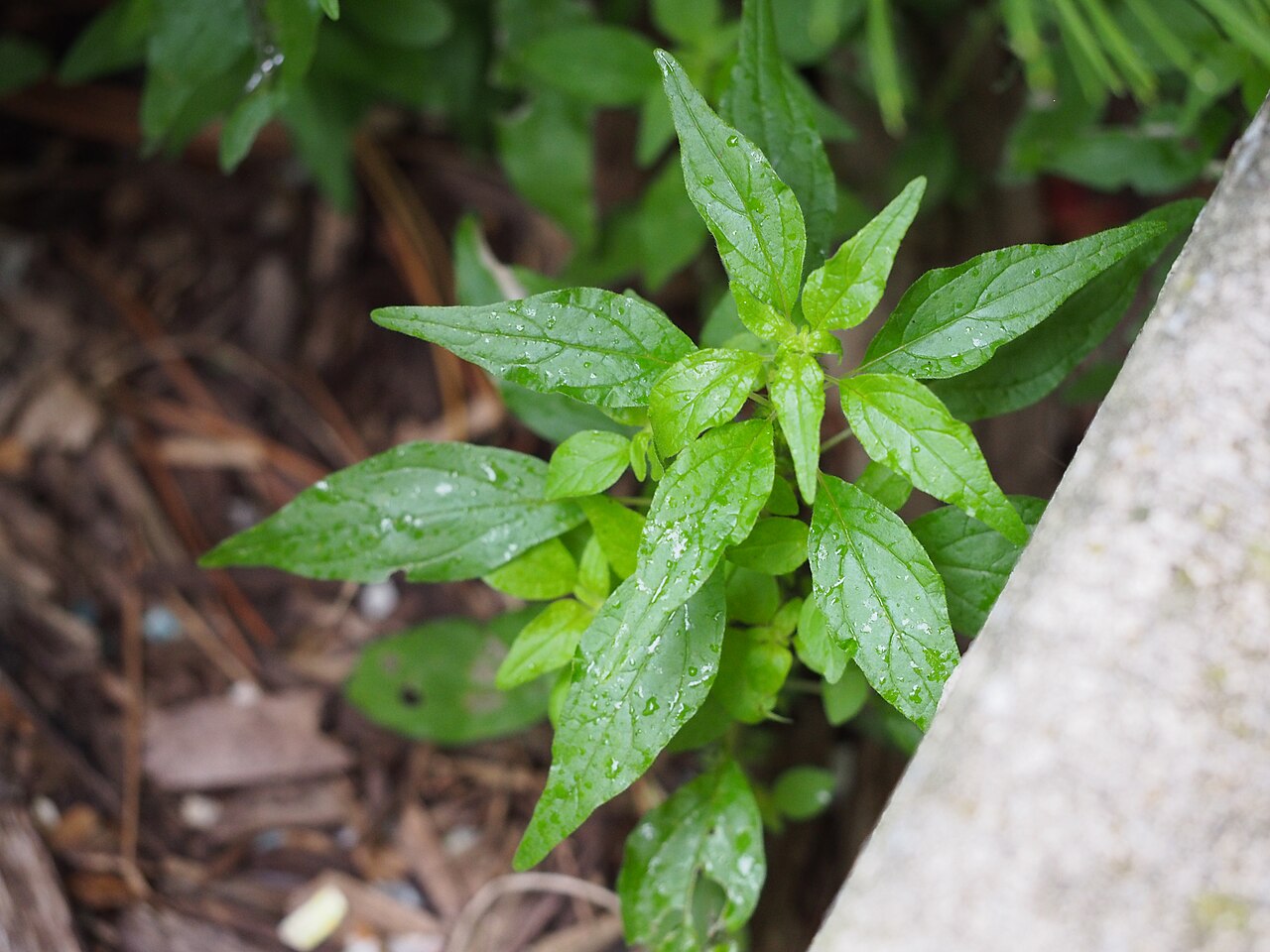
Parietaria pensylvanica, known as Pennsylvania Pellitory, is a small, soft-stemmed native annual in the nettle family (Urticaceae). Unlike its relatives the stinging nettles, it has no stinging hairs. It usually grows 4 to 16 inches tall, with slender, often unbranched stems, narrow lance-shaped leaves and tiny greenish flowers tucked in clusters along the stem.
It is one of the most widespread native plants in North America, growing in almost every state of the lower 48 and across southern Canada. It is most often found in shaded or partly shaded places with thin soil: rocky ledges and bluffs, the bases of cliffs, open woods, stream banks, sandy floodplains, old walls and disturbed ground around buildings.
Pennsylvania pellitory is not a showy plant, and most gardeners know it as a modest volunteer in shady corners. It is easy to overlook, but it is an honest native annual that fills small gaps, feeds insects and is easy to pull where it is not wanted.
Identification
Look for a small, soft, hairy annual with narrow, untoothed leaves with three main veins, and tiny greenish flower clusters in the leaf axils, without any stinging hairs.
Growth Habit
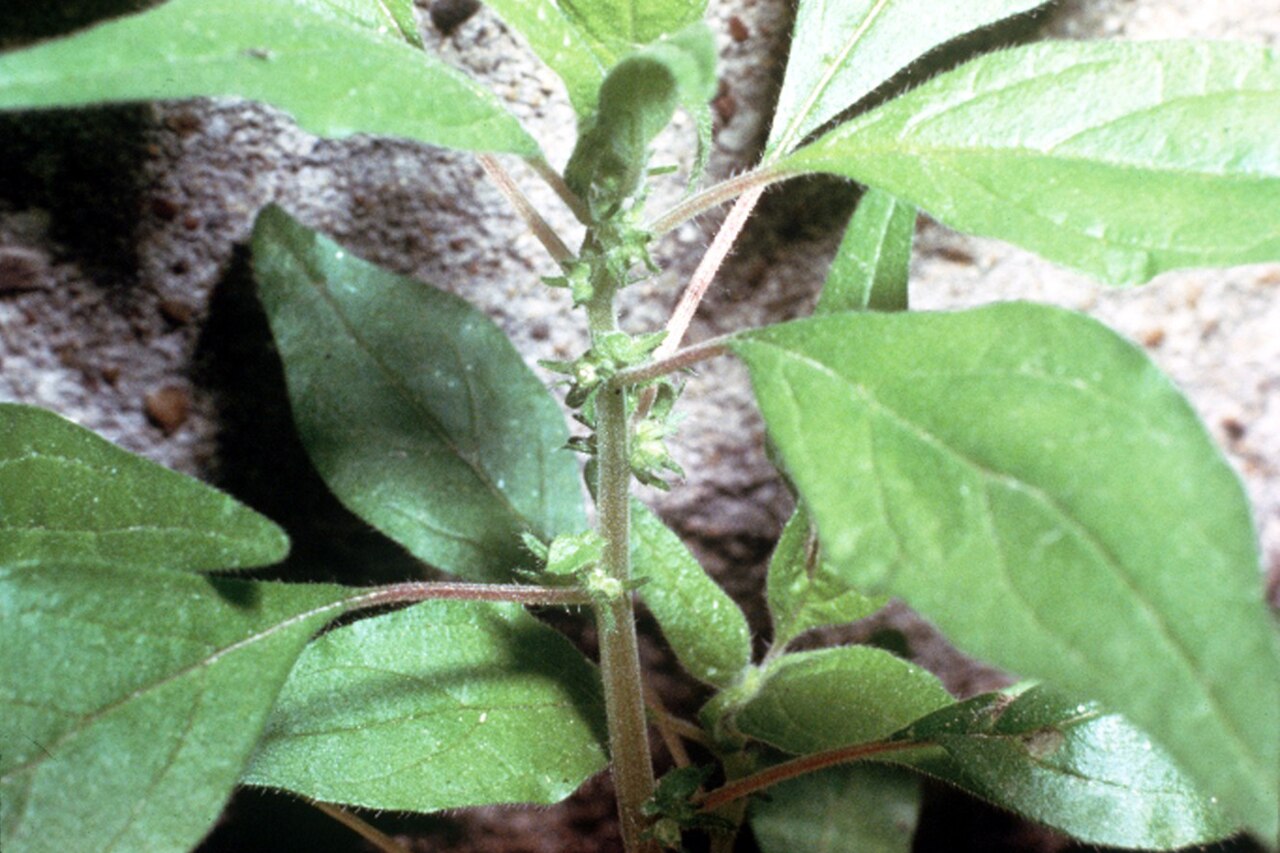
It is an annual, germinating in spring and dying in fall. Stems are slender, weak and usually erect or leaning, 4 to 16 inches tall (occasionally to about 2 feet), sometimes branched from the base. They are covered with short, soft, curved hairs. Plants often grow in loose patches where seeds have fallen.
Leaves
The leaves are alternate, thin, 1 to 3 inches long and up to about 1/2 inch wide, lance-shaped to narrowly oval, with smooth (untoothed) edges and a tapering tip. They have three main veins from the base and are finely hairy. Under a lens, the leaf surface shows tiny dots (cystoliths), a feature of the nettle family.
Flowers
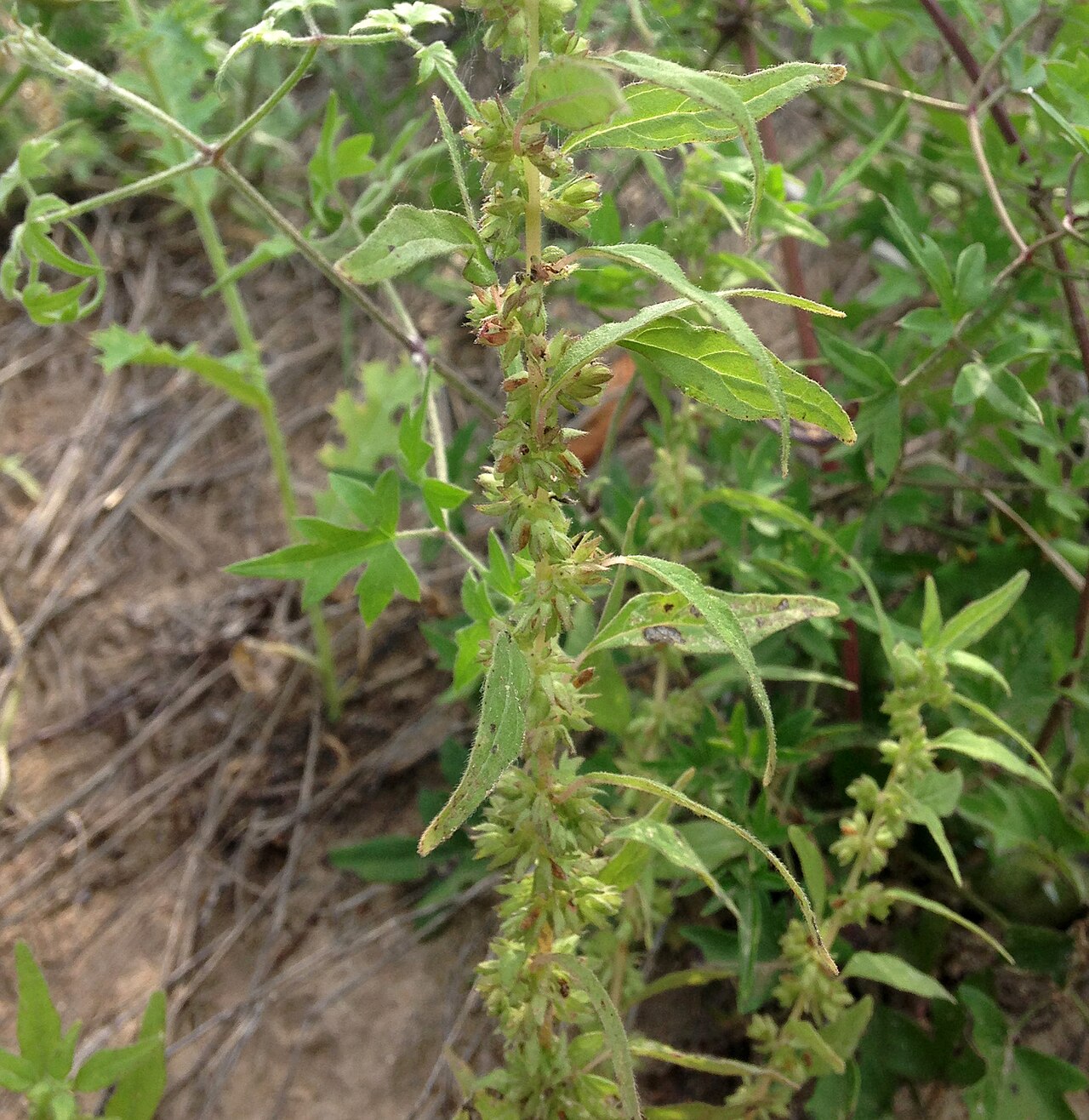
The flowers are tiny, greenish, without petals, and grouped in small clusters in the leaf axils. Each cluster is surrounded by narrow, green, leaf-like bracts that are longer than the flowers. Flowering lasts from about April to September. The flowers are wind-pollinated.
Fruit
Each flower produces a single, tiny, shiny, oval seed (achene) about 1 mm long, enclosed by the persistent flower parts.
Look-alikes
Canada clearweed (Pilea pumila) has opposite, toothed leaves and translucent, watery stems. False nettle (Boehmeria cylindrica) is a taller perennial with opposite, toothed leaves and long spikes of flowers. Stinging nettles (Urtica) and wood nettle have stinging hairs and toothed leaves. The introduced spreading pellitory (Parietaria judaica) is a sprawling perennial with broader leaves and reddish stems.
Quick Facts
| Scientific Name | Parietaria pensylvanica |
| Family | Urticaceae (nettle family) |
| Plant Type | Annual herb (stingless) |
| Mature Height | 4–16 in |
| Mature Spread | 3–8 in |
| Growth Rate | Fast |
| Sun Exposure | Part shade to shade; tolerates sun |
| Water Needs | Low to medium |
| Soil Type | Thin, rocky, sandy or loamy soil; rock ledges |
| Soil pH | Slightly acidic to alkaline (about 6.0–8.0) |
| Bloom Time | Spring to late summer (April–September) |
| Flower Color | Green (inconspicuous) |
| Fall Color | None |
| Fruit | Tiny shiny achenes |
| Deer Resistant | Moderately |
| USDA Hardiness Zones | 3–10 (annual) |
Native Range
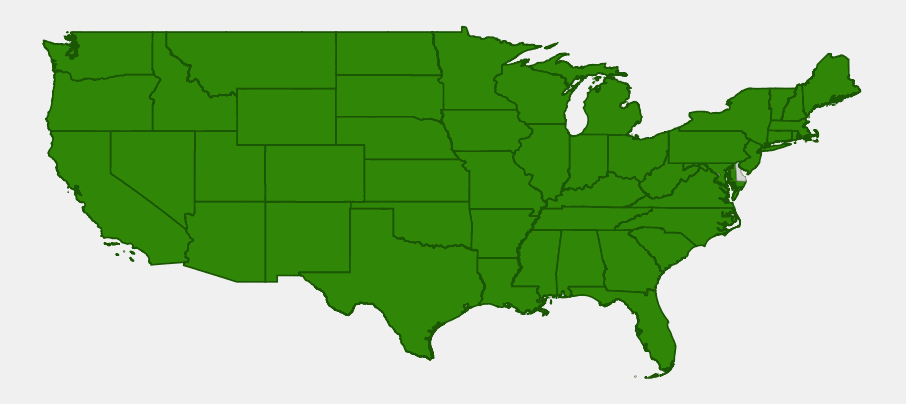
Pennsylvania pellitory is native across most of North America north of Mexico. USDA PLANTS records it from 47 of the lower 48 states, and from Alberta, British Columbia, Manitoba, Ontario, Quebec, Saskatchewan and Yukon in Canada. It also grows in northern Mexico.
It is common in the East and Midwest, on the Great Plains and in the Rocky Mountains and the Southwest, wherever there are shaded rock outcrops, bluffs and woodland edges. In the Pacific Northwest it grows mainly east of the Cascades, in rocky canyons and along rivers. In California it is less common and scattered.
Its habitats include rocky woods and ledges, bluffs and cliff bases, talus slopes, canyon walls, stream banks and sandy floodplains, open woodlands and disturbed ground such as gardens, alleys, fencerows and the shaded bases of walls and buildings. It often grows where thin soil and partial shade keep competing plants sparse.
📋 Regional plant lists featuring Pennsylvania Pellitory: New York, Pennsylvania & Northern New Jersey · Idaho, Eastern Oregon & Eastern Washington · Ohio & Indiana · Montana & Wyoming · Michigan, Wisconsin & Eastern Minnesota · Kentucky & Tennessee · Nebraska, Kansas & Eastern Colorado · Utah & Western Colorado · Connecticut, Massachusetts & Rhode Island · New Hampshire, Maine & Vermont · Maryland, Virginia & West Virginia · Delaware, Southern New Jersey & Long Island · Arizona & New Mexico · Illinois, Iowa & Missouri · Alabama, Georgia & Mississippi · North & South Florida · North & South Carolina · Arkansas, Louisiana, Eastern Oklahoma & Eastern Texas · South & West Texas · North Dakota, South Dakota & Western Minnesota · California & Nevada
Growing & Care Guide
Pennsylvania pellitory is rarely planted on purpose. It usually arrives on its own and reseeds in shaded, rocky or disturbed spots. If you want it in a naturalistic woodland or rock garden, simply leave a few plants to set seed.
Light
Part shade to shade is typical, such as under trees or at the base of a north-facing wall or ledge. It also grows in sun where the soil stays somewhat moist.
Soil & Water
It grows in thin, rocky, sandy or loamy soil, including soil pockets on ledges and in wall crevices. It tolerates dry periods but grows larger with some moisture. No watering or fertilizing is needed.
Planting Tips
Scatter seed in fall or early spring on bare soil in a shaded rock garden, woodland edge or stony bank. It is not sold as a nursery plant.
Pruning & Maintenance
No maintenance is needed. It is easy to pull by hand if it spreads into paths or beds, ideally before it sets seed. Its pollen is wind-borne, and the pollen of some pellitories is a known allergen, so people with hay fever may prefer not to let it grow next to doors and windows.
Propagation
It reseeds itself readily. Seeds germinate in spring after a winter outdoors.
Landscape Uses
- Shade and woodland gardens: fills small gaps under trees and along paths
- Rock gardens and walls: grows in crevices and soil pockets
- Natural areas: part of the native ground layer of rocky woods and bluffs
- Butterfly gardens: a nettle-family plant used by some butterfly caterpillars
- Low-maintenance corners: a self-sowing native for shady, neglected spots
Wildlife & Ecological Value
Pennsylvania pellitory is a small but useful member of the native ground layer in shady, rocky habitats.
For Pollinators
Its flowers are wind-pollinated and offer little nectar. However, plants in the nettle family, including pellitories, are host plants for the caterpillars of the red admiral butterfly, and other nettle-feeding insects also use them.
For Birds
Small seed-eating birds, such as sparrows and juncos, eat the tiny seeds from the ground in fall and winter.
For Mammals
Deer and rabbits sometimes nibble it, but it is seldom heavily browsed.
Ecosystem Role
As a quick-growing annual on ledges, cliff bases and disturbed ground, it helps cover and hold thin soils and adds organic matter when it dies back each year. It is part of the specialized plant community of shaded rock outcrops.
Cultural & Historical Uses
The genus name Parietaria comes from the Latin paries, meaning “wall,” because European pellitories often grow on old walls. The common name “pellitory” comes from the same root, via Old French. The species name pensylvanica refers to Pennsylvania, and it is spelled with a single “n,” as in many older botanical names.
In Europe, the related pellitory-of-the-wall (Parietaria judaica) was used in traditional herbal medicine. Pennsylvania pellitory has no well-documented uses and should not be used as a home remedy.
Members of the genus Parietaria are known for producing allergenic pollen, especially in the Mediterranean region. Pennsylvania pellitory is much less abundant than those species, but it is still wind-pollinated.
Frequently Asked Questions
Does Pennsylvania pellitory sting?
No. Although it is in the nettle family, it has no stinging hairs.
Is Pennsylvania pellitory a weed?
It often appears on its own in shady, disturbed spots, but it is a native annual that is easy to pull and does not take over gardens.
Where does Pennsylvania pellitory grow?
Throughout most of the contiguous United States and southern Canada, usually in rocky, shaded places, open woods, stream banks and around buildings.
Does Pennsylvania pellitory support butterflies?
Yes. Like other nettle-family plants, pellitories are used as host plants by red admiral caterpillars.
Is Pennsylvania pellitory perennial?
No. It is an annual that grows from seed each spring and dies in fall, but it usually reseeds itself.

Looking for a nursery that carries Pennsylvania Pellitory?
Browse our native plant nursery directory: Alabama, Arizona & Arkansas · California · Colorado, Connecticut, Florida & Georgia · Idaho, Illinois, Indiana, Iowa & Kansas · Kentucky, Louisiana, Maine, Maryland, Massachusetts, Michigan, Minnesota, Mississippi, Missouri & Montana · Nebraska, Nevada, New Hampshire, New Jersey, New Mexico, New York, North Carolina, North Dakota, Ohio & Oklahoma · Oregon · Pennsylvania, Rhode Island, South Carolina, South Dakota, Tennessee, Texas, Utah, Vermont & Virginia · Washington · West Virginia, Wisconsin & Wyoming