
Field Sagewort (Artemisia campestris)
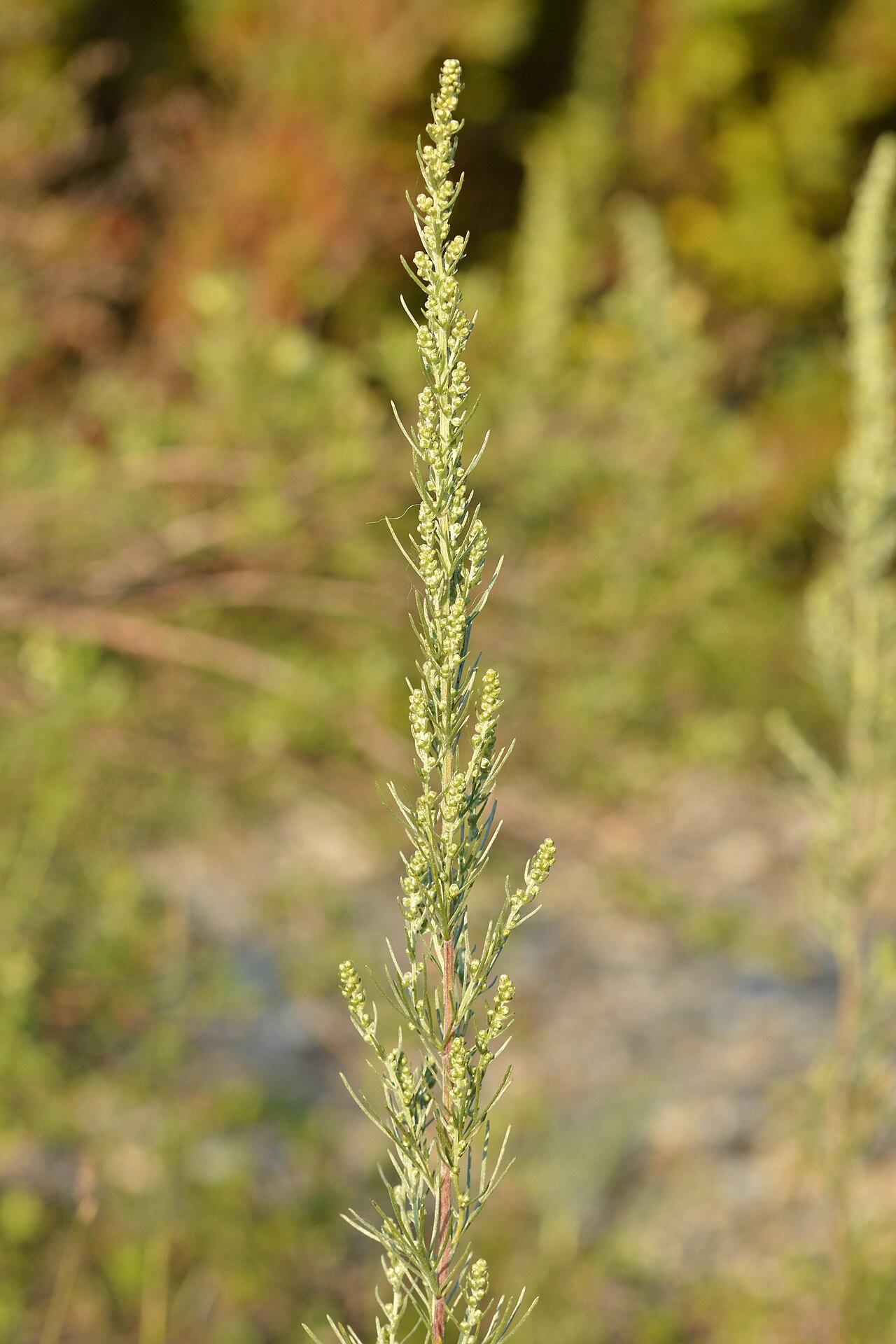
Artemisia campestris, known as Field Sagewort, field wormwood, beach wormwood or Pacific wormwood, is a wiry, gray-green member of the aster family (Asteraceae) that grows on sand and gravel across much of North America, Europe and Asia. In the United States it is native from Alaska and the Pacific Northwest across the Great Plains and Great Lakes to New England and the Gulf Coast.
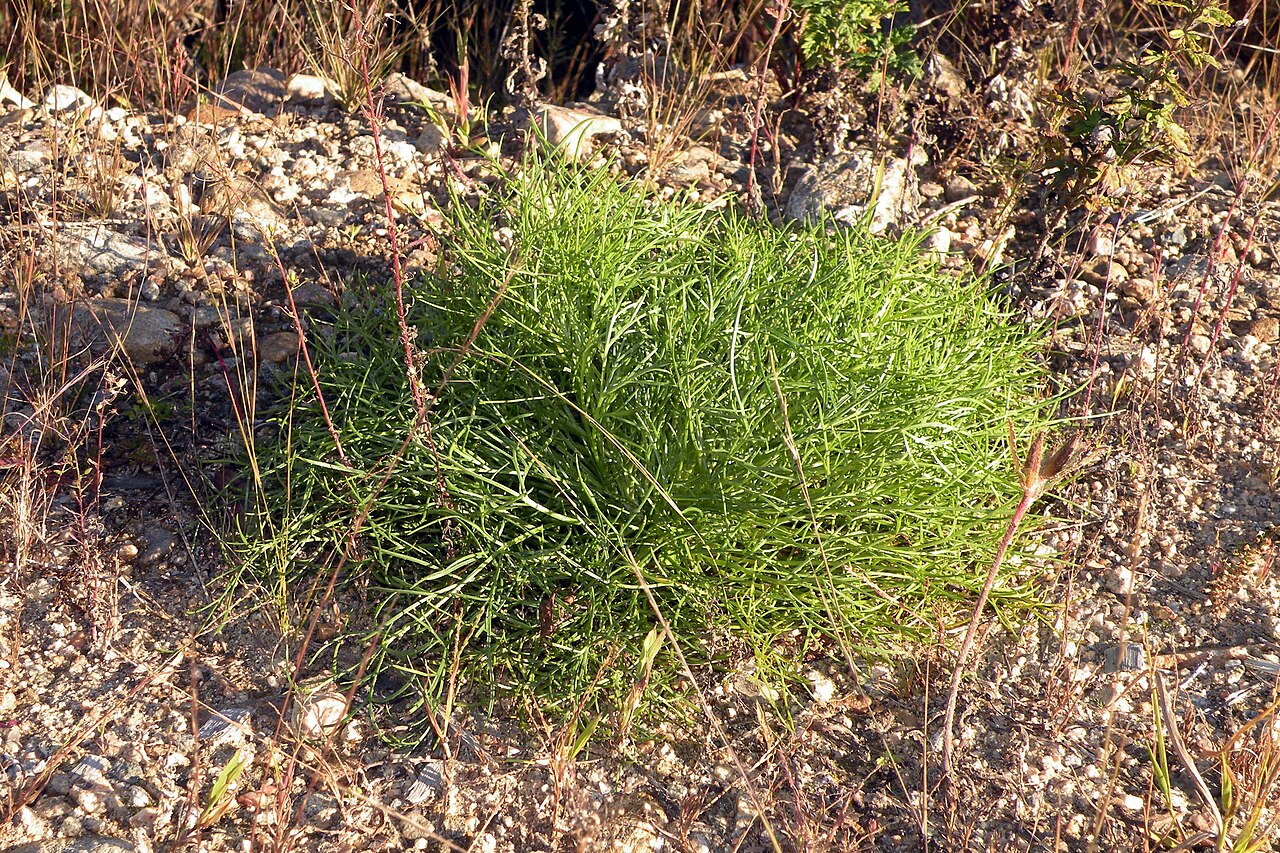
Most North American plants are biennials or short-lived perennials. The first year they form a soft, ferny rosette of thread-like leaves; later, they send up one or several reddish stems 1 to 3 feet tall, topped by narrow sprays of hundreds of tiny, nodding flower heads in late summer and fall. Unlike big sagebrush and many other Artemisia species, the plant has little or no scent.
Field sagewort is a plant of dunes, beaches, sand prairies, gravel bars, rocky outcrops and dry, open ground. It is not showy, but its fine texture and silvery, feathery foliage suit sandy native gardens, dune restorations and dry prairie plantings, where it holds loose sand and shelters small insects.
Identification
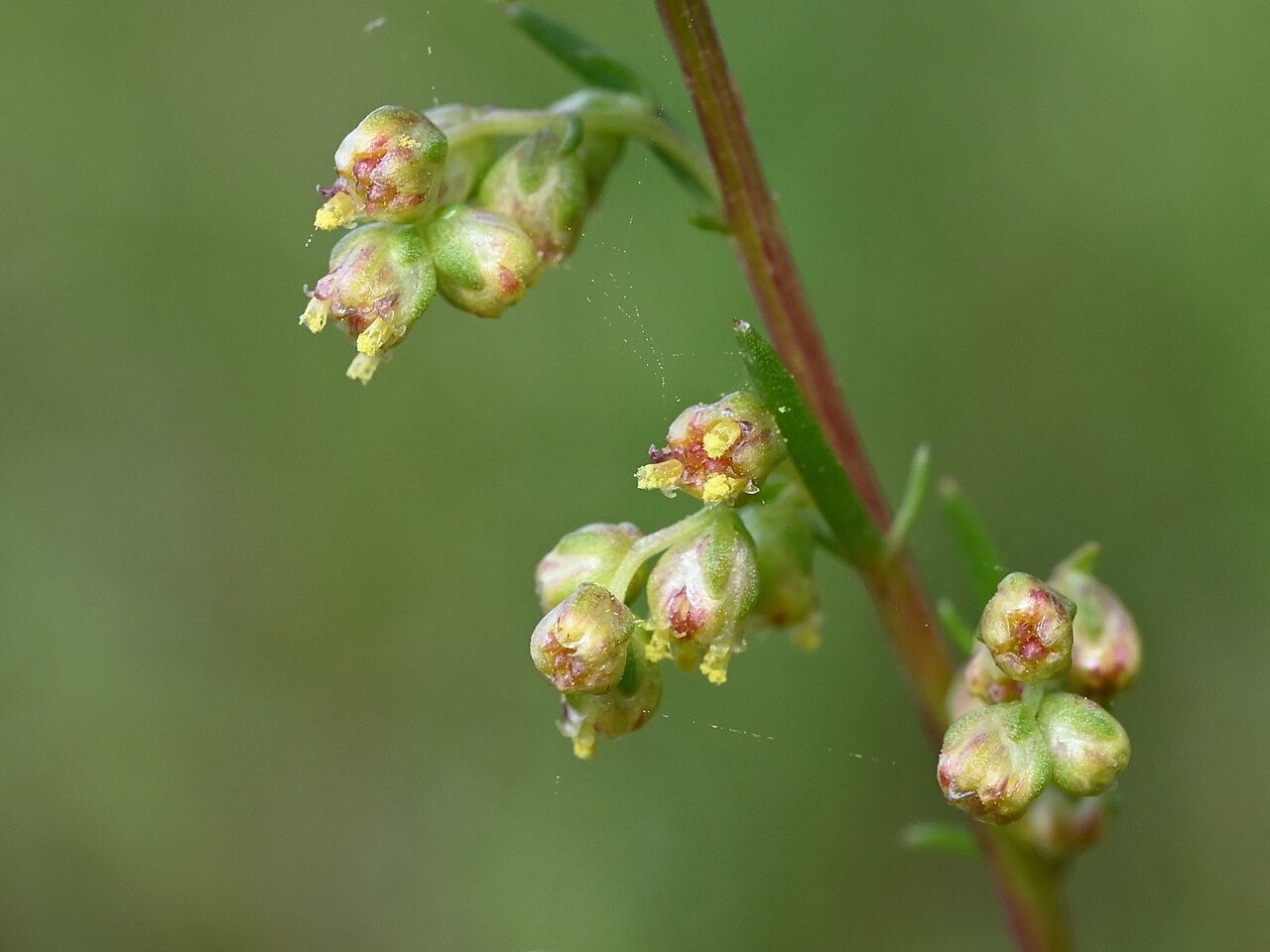
Look for a low rosette of finely cut, thread-like leaves, or a wiry stem with a narrow, spire-shaped spray of tiny greenish to reddish flower heads, on open sand or gravel.
Growth Habit
Field sagewort grows from a taproot. In its first year it makes a flat to mounded rosette of leaves, often 4 to 12 inches across. In a later year one to several stems rise 1 to 3 feet (rarely to about 4 feet), often reddish to purplish, and branching mainly in the upper part. Most plants in eastern and central North America die after flowering and setting seed; some western forms live several years.
Leaves
The leaves are alternate and two or three times divided into very narrow, thread-like lobes, giving a feathery look. They range from bright green and nearly hairless to silvery with silky hairs. Basal leaves are on long stalks and are the largest; stem leaves get smaller and less divided upward. Crushed leaves have only a faint odor, unlike the strong sage scent of many relatives.
Flowers
From about July to October, the upper stems carry a long, narrow, open panicle of many tiny flower heads, each about 1/8 inch wide, nodding on short stalks. There are no petals. Each head holds a few small florets, the outer ones female and the central ones male, with greenish-yellow to reddish tones. The flowers are wind-pollinated.
Fruit & Seeds
The fruits are tiny, smooth achenes without a pappus. They ripen in fall and drop close to the parent plant, so field sagewort often grows in loose colonies on sand.
Look-alikes
Sand sagebrush (Artemisia filifolia) also has thread-like leaves, but it is a woody, strongly aromatic shrub of the southern Plains. White sagebrush (Artemisia ludoviciana) has whitish, mostly undivided or shallowly lobed, aromatic leaves and spreads by rhizomes. Common ragweed (Ambrosia artemisiifolia) has broader, fern-like leaves and separate male flower spikes. The non-native annual wormwood (Artemisia annua) is strongly sweet-scented and much leafier.
Safety Notes
Like other Artemisia species, field sagewort sheds wind-borne pollen that can contribute to late-summer hay fever in sensitive people. It is not considered a garden poison, but it is not a culinary herb either.
Quick Facts
| Scientific Name | Artemisia campestris |
| Family | Asteraceae (aster family) |
| Plant Type | Biennial or short-lived perennial herb |
| Mature Height | 1–3 ft in flower (rosette 4–12 in) |
| Mature Spread | 6–18 in |
| Growth Rate | Moderate |
| Sun Exposure | Full sun |
| Water Needs | Low; dry, well-drained soil |
| Soil Type | Sand, gravel or thin rocky soil |
| Soil pH | About 5.5–8.0 |
| Bloom Time | July–October |
| Flower Color | Greenish yellow to reddish |
| Fall Color | Stems often turn red to purplish |
| Fruit | Tiny brown achenes |
| Deer Resistant | Generally yes |
| USDA Hardiness Zones | 2–9 |
Native Range
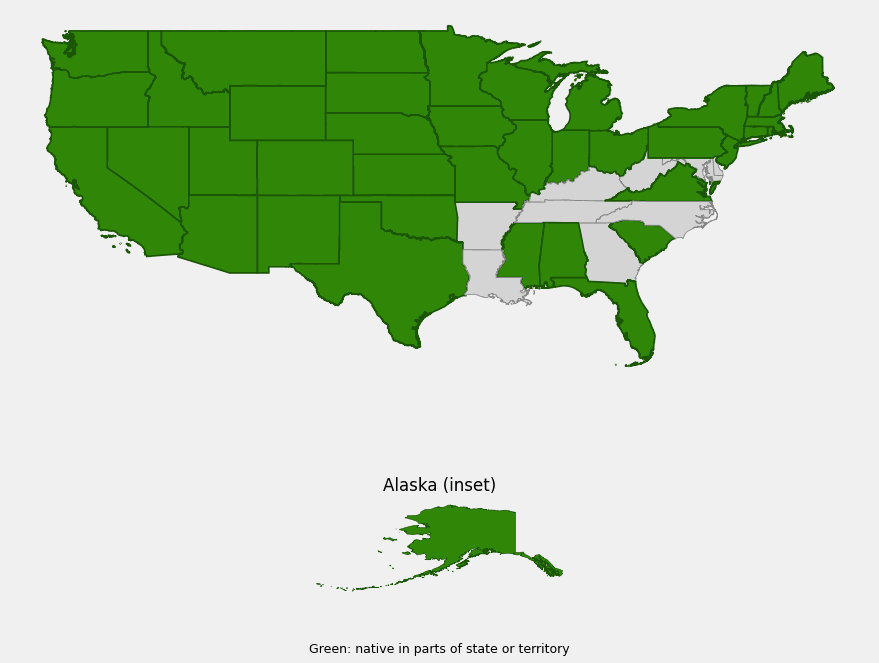
Field sagewort has one of the widest ranges of any North American wormwood. USDA PLANTS lists it as native in Alaska and in 39 of the lower 48 states, from Washington, Oregon and California east through the Rockies and Great Plains to the Great Lakes, New England, the Mid-Atlantic and the Gulf Coast from Texas to Florida. It is also native across most of Canada and in Greenland, and the species also grows in Europe and Asia.
North American plants belong to several subspecies. Subspecies caudata, the beach wormwood of eastern and central North America, is the familiar form of Great Lakes dunes, Atlantic coastal sands and sand prairies. Western and northern plants, often called Pacific wormwood or boreal sagewort (subspecies pacifica and borealis), range from the Arctic and the high mountains to sagebrush steppe and river bars. In the Southeast it is scattered and local, mostly on coastal and inland sands.
Typical habitats are open, sunny and sandy or gravelly: beaches and foredunes, blowouts, sand prairies and barrens, gravel bars, rocky outcrops and ledges, alpine slopes, sagebrush grassland, roadsides and old fields on sand.
📋 Regional plant lists featuring Field Sagewort: Alaska · North & South Florida · Alabama, Georgia & Mississippi · North & South Carolina · Maryland, Virginia & West Virginia · Arkansas, Louisiana, Eastern Oklahoma & Eastern Texas · Illinois, Iowa & Missouri · Ohio & Indiana · Nebraska, Kansas & Eastern Colorado · North Dakota, South Dakota & Western Minnesota · Michigan, Wisconsin & Eastern Minnesota · New York, Pennsylvania & Northern New Jersey · Delaware, Southern New Jersey & Long Island · Connecticut, Massachusetts & Rhode Island · New Hampshire, Maine & Vermont · Idaho, Eastern Oregon & Eastern Washington · California & Nevada · Arizona & New Mexico · Utah & Western Colorado · Montana & Wyoming · South & West Texas · Western Oregon & Western Washington
Growing & Care Guide
Field sagewort is sold mainly as seed by native seed companies and dune-restoration suppliers. It is easy in sunny, sandy, lean ground and short-lived in rich, wet soil.
Light
Give it full sun. In shade it gets leggy and flowers poorly.
Soil & Water
Plant it in sand, gravel or thin, rocky soil with sharp drainage. Water seedlings until they root, then let them live on rainfall; established plants handle drought, heat, wind and salt spray. Heavy, wet or fertile soil leads to floppy growth and crown rot.
Planting Tips
Sow seed or set out small plants in a sand garden, gravel bed, dune planting or dry prairie with little bluestem, June grass and other low grasses. Because most plants are biennial, sow two years in a row or let plants self-seed so you have both rosettes and flowering stems each season.
Pruning & Maintenance
Little care is needed. Do not fertilize. Leave the flowering stems standing until the seed drops if you want it to self-sow, then cut them down. Remove extra seedlings where you do not want them.
Propagation
Sow the tiny seed on the soil surface in fall or early spring and press it in lightly; it needs light to germinate. Seedlings appear within a few weeks in spring. Plants can also be lifted as young rosettes from a garden colony and moved in cool weather.
Landscape Uses
- Dune and shoreline restoration: helps stabilize loose sand behind beaches and in blowouts
- Sand and gravel gardens: fine, feathery texture among grasses and low wildflowers
- Dry prairie plantings: a native filler for sandy, low-fertility sites
- Rock gardens: compact rosettes and wiry fall stems on lean soil
- Coastal gardens: tolerates wind, salt spray and drought once established
Wildlife & Ecological Value
Field sagewort is wind-pollinated, so it does little for nectar-seeking pollinators, but it is an important plant in open sand communities.
For Pollinators
The flowers make no nectar and are pollinated by wind. Bees occasionally collect the pollen. The foliage feeds the caterpillars of several moths that specialize on Artemisia, and a gall midge (Rhopalomyia) forms woolly galls on the shoots.
For Birds
Sparrows, juncos and other ground-feeding birds pick the small seeds from standing stems and from the sand in fall and winter. Low colonies give cover to birds of beaches and sand prairies.
For Mammals
Small mammals eat the seeds. The bitter foliage is browsed lightly, if at all, by deer and rabbits.
Ecosystem Role
As a pioneer of bare sand and gravel, field sagewort helps hold loose soil and builds the first plant cover in dune blowouts, sand barrens and river bars. On Great Lakes dunes it is a typical member of the foredune and back-dune community.
Cultural & Historical Uses
Carl Linnaeus named Artemisia campestris in 1753 from European plants; campestris means “of the fields.” The North American beach wormwood was described separately by André Michaux in 1803 as Artemisia caudata, from the Latin for “tailed,” for its long, narrow flower sprays. Botanists now treat it as a subspecies of the same widespread species.
The genus Artemisia is named for the Greek goddess Artemis. It includes the culinary herb tarragon, the bitter wormwood used in absinthe and the sagebrushes of the American West.
Several Native American peoples of the Plains and Great Lakes used field sagewort in traditional medicine. Today it is valued mainly as a sturdy native of sand dunes and dry prairies, where it is often one of the first plants to colonize bare sand.
Frequently Asked Questions
Is field sagewort a true sage?
No. It is in the aster family, not the mint family that includes culinary sage (Salvia). The name “sagewort” refers to its relationship to the sagebrushes in the genus Artemisia.
Does field sagewort smell like sagebrush?
Not much. Its leaves have only a faint odor, which helps tell it from strongly aromatic relatives such as sand sagebrush and big sagebrush.
Is field sagewort annual or perennial?
Most eastern and central plants are biennials or short-lived perennials that form a rosette first and flower in a later year. Some western and northern forms live longer.
Can I grow field sagewort in my garden?
Yes, in full sun and sandy or gravelly, well-drained soil. It is ideal for sand gardens, dune plantings and dry prairie gardens, and it self-sows in open ground.
Does field sagewort cause allergies?
Like other wind-pollinated Artemisia species, it releases pollen in late summer and fall that can bother people with hay fever.

Looking for a nursery that carries Field Sagewort?
Browse our native plant nursery directory: Alabama, Alaska & Arizona · California · Colorado, Connecticut & Florida · Idaho, Illinois, Indiana, Iowa & Kansas · Maine, Massachusetts, Michigan, Minnesota, Mississippi, Missouri & Montana · Nebraska, Nevada, New Hampshire, New Jersey, New Mexico, New York, North Dakota, Ohio & Oklahoma · Oregon · Pennsylvania, Rhode Island, South Carolina, South Dakota, Texas, Utah, Vermont & Virginia · Washington · Wisconsin & Wyoming

