
Bulblet Fern (Cystopteris bulbifera)
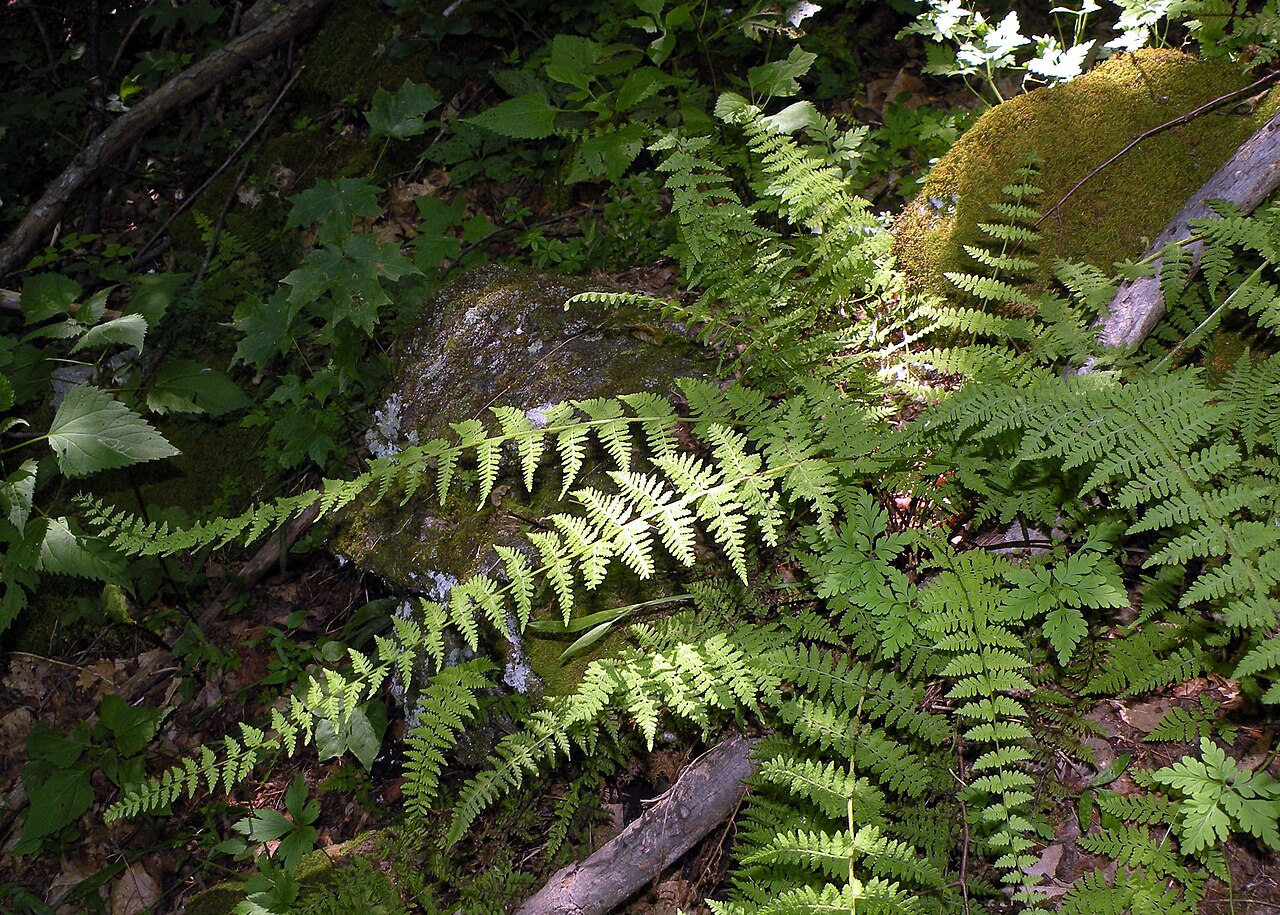
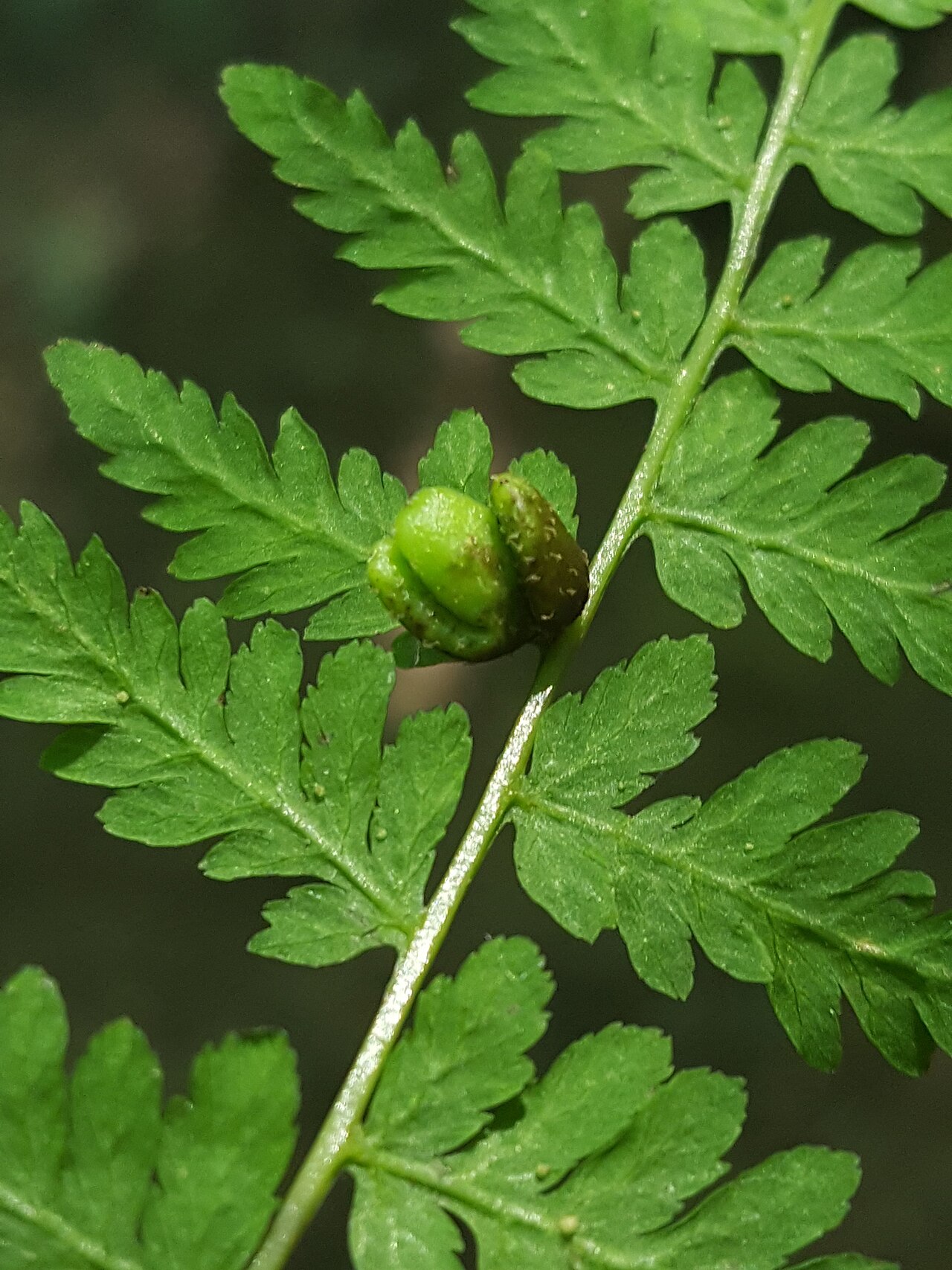
Cystopteris bulbifera, known as Bulblet Fern or bulblet bladderfern, is a native deciduous fern of the bladderfern family (Cystopteridaceae). It is easy to recognize by its long, narrowly triangular fronds, 1 to 2 1/2 feet long, which taper to a slender, almost tail-like tip, and by the small, green, pea-like bulblets that form on the underside of the fronds in summer. The bulblets drop off and grow into new plants, a habit few other ferns share.
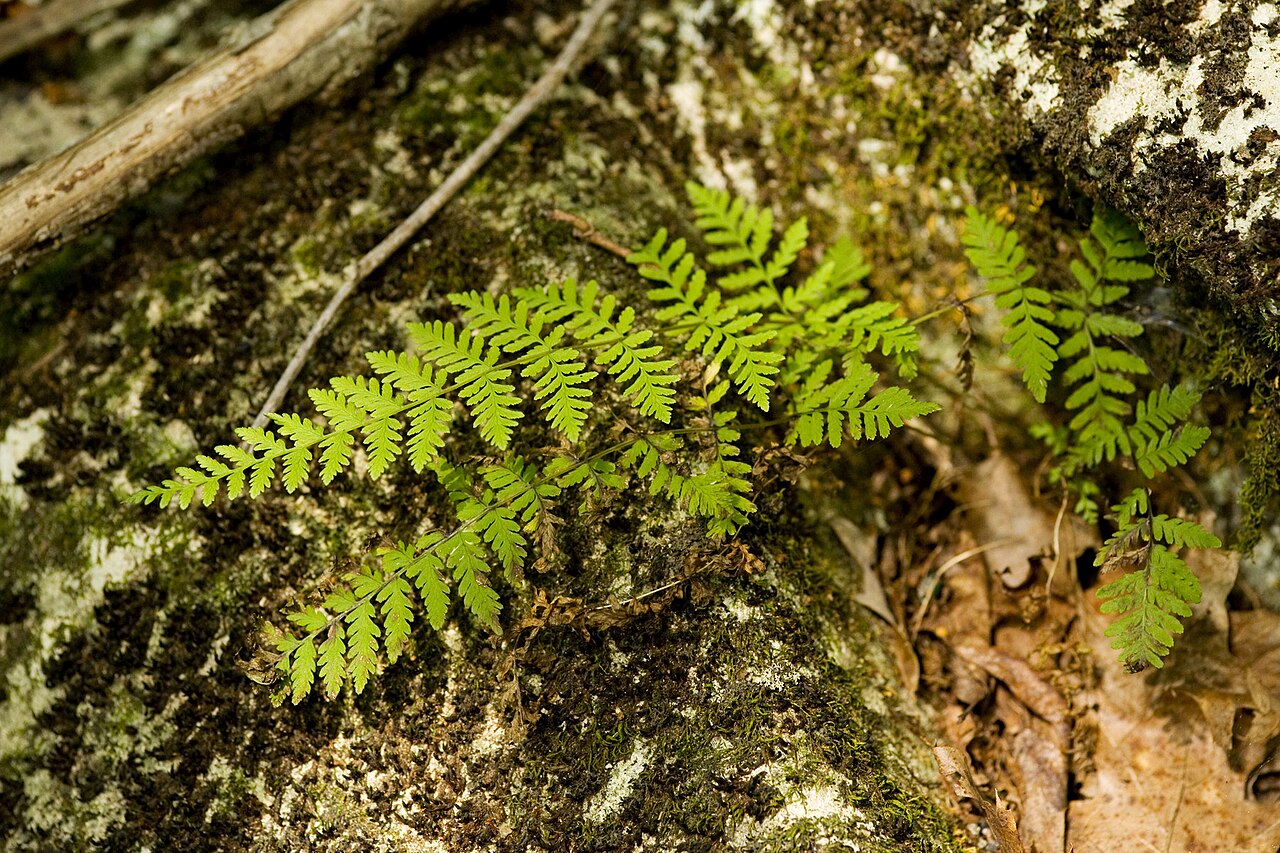
Bulblet fern is a calciphile: it grows mostly on moist, shaded limestone and dolomite cliffs, ledges and talus, in seepy ravines and along cool streams, and on wet mossy rocks. It is common in the limestone regions of the Northeast, the Great Lakes, the Ohio Valley, the Appalachians and the Ozarks, and grows in scattered, isolated populations in shaded canyons of Arizona, New Mexico, Utah and West Texas.
In gardens it is a graceful, easy fern for moist, shady rock gardens, stone walls and stream banks, especially on limy soils. It spreads gently by its bulblets but is not aggressive.
Identification
Look for delicate, light green, narrowly triangular fronds with a long, tapering tip, often hanging from wet limestone, and check the underside of the upper fronds for small green bulblets.
Growth Habit
Bulblet fern grows from a short, creeping rhizome and forms loose clumps of arching to drooping fronds, usually 1 to 2 1/2 feet long, and occasionally longer when they hang from cliffs. The fronds are deciduous and die back in fall.
Fronds
The fronds are lance-shaped to narrowly triangular, widest near the base and tapering gradually to a long, narrow tip. They are twice-pinnate, with 20 to 30 pairs of leaflets that are divided into toothed or lobed segments. The stalk is short, greenish to pinkish or reddish at the base, and the central stalk (rachis) often has small glandular hairs. The light green color and delicate texture are characteristic.
Bulblets
From midsummer, small, round to pea-shaped green bulblets, up to about 1/4 inch across, form on the underside of the rachis and the leaflet stalks, mostly on the upper part of the frond. They fall to the ground in late summer and fall and can sprout into new plants. Bulblet fern is the only North American Cystopteris species that produces them regularly.
Sori & Spores
The small, round sori are scattered on the underside of the leaflets, each covered at first by a hood-shaped (bladder-like) indusium that gives the genus the name bladderfern. Spores ripen in summer.
Look-alikes
Brittle bladderfern (Cystopteris fragilis) and lowland brittle fern (C. protrusa) are smaller, with shorter, broader fronds that are not long-tapered, and they lack bulblets. Hybrids of bulblet fern with other bladderferns, such as Laurentian bladderfern and Tennessee bladderfern, may have a few misshapen bulblets. Walking fern also grows on limestone, but its fronds are simple and strap-shaped.
Quick Facts
| Scientific Name | Cystopteris bulbifera |
| Family | Cystopteridaceae (bladderfern family) |
| Plant Type | Deciduous fern |
| Mature Height | 1–2.5 ft (frond length) |
| Mature Spread | 1–2 ft |
| Growth Rate | Moderate |
| Sun Exposure | Part shade to full shade |
| Water Needs | Medium to high; consistently moist |
| Soil Type | Moist, rocky, humus-rich soils; limestone and dolomite |
| Soil pH | Neutral to alkaline (about 6.5–8.0) |
| Bloom Time | None; spores ripen in summer |
| Flower Color | None (fern) |
| Fall Color | Yellow-green before dying back |
| Fruit | None; round sori and green bulblets |
| Deer Resistant | Yes; rarely browsed |
| USDA Hardiness Zones | 3–8 |
Native Range
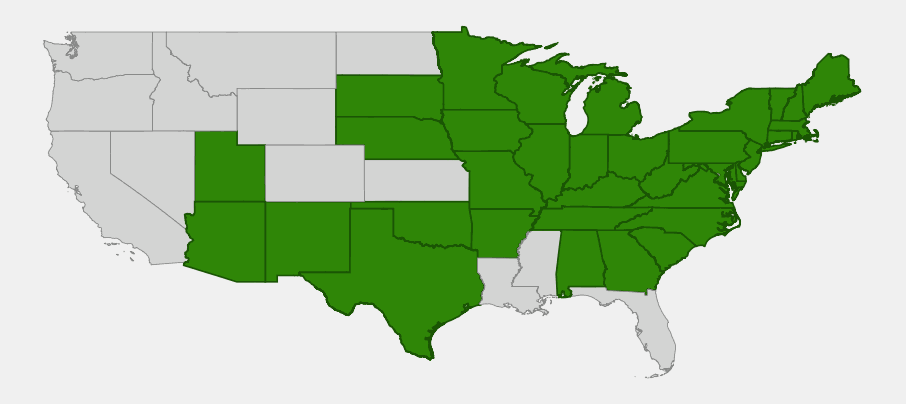
Bulblet fern is native to eastern North America. USDA PLANTS lists it in 35 states, from Maine and the Great Lakes south to Georgia and Alabama and west to Minnesota, the eastern Dakotas, Nebraska, Oklahoma and Texas. In Canada it grows from Newfoundland and the Maritime provinces west through Quebec and Ontario to Manitoba.
It is most common where limestone and other calcareous rocks are exposed: the Appalachians and the Valley and Ridge, the Great Lakes region, the Driftless Area of Wisconsin, Minnesota and Iowa, the Ohio Valley and the Ozarks. It becomes rare at the edges of its range. In South Dakota it is known from wooded ravines in the northeast, in Nebraska from the far southeast, and in North and South Carolina from a few calcareous sites. In Texas it grows only in the Guadalupe Mountains in the west.
In the Southwest it occurs as disjunct, outlying populations in moist, shaded canyons and spring-fed alcoves, including the Grand Canyon area of Arizona, the Zion area of southwestern Utah and a few canyons in New Mexico. These are relict populations from cooler, wetter times. Typical habitats are moist, shaded limestone and dolomite cliffs, ledges and boulders, seeps, ravines, cool stream banks and rich, rocky woods.
📋 Regional plant lists featuring Bulblet Fern: New York, Pennsylvania & Northern New Jersey · Ohio & Indiana · Michigan, Wisconsin & Eastern Minnesota · Kentucky & Tennessee · Nebraska, Kansas & Eastern Colorado · Utah & Western Colorado · Connecticut, Massachusetts & Rhode Island · New Hampshire, Maine & Vermont · Maryland, Virginia & West Virginia · Delaware, Southern New Jersey & Long Island · Arizona & New Mexico · Illinois, Iowa & Missouri · Alabama, Georgia & Mississippi · North & South Carolina · Arkansas, Louisiana, Eastern Oklahoma & Eastern Texas · South & West Texas · North Dakota, South Dakota & Western Minnesota
Growing & Care Guide
Bulblet fern is one of the easiest native ferns to grow in a moist, shady spot, especially where the soil is neutral to limy. Buy nursery-propagated plants from native or fern nurseries, or start new plants from bulblets.
Light
Part shade to full shade. It tolerates a little morning sun if the soil stays moist, but hot afternoon sun scorches the delicate fronds.
Soil & Water
Give it moist, well-drained, humus-rich soil with plenty of rocks or gravel. It prefers neutral to alkaline soil; in acidic gardens, add limestone chips or plant it near mortared walls or concrete. Keep it moist, especially in summer; dry soil causes the fronds to brown early.
Planting Tips
Plant in spring or early fall in a shady rock garden, among stones along a path, on the north side of a wall, or along a stream or pond. Space plants 12 to 18 inches apart. It looks especially good where its long fronds can hang down over rocks.
Pruning & Maintenance
Little care is needed. Remove the dead fronds in late fall or early spring. Mulch lightly with leaf litter to keep the soil cool and moist.
Propagation
The easiest way to propagate it is from bulblets. Collect them in late summer when they loosen from the fronds, press them lightly into moist soil in a pot or bed, and keep them moist; they sprout the following spring. It can also be grown from spores or by dividing clumps in spring.
Landscape Uses
- Shady rock gardens: long, lacy fronds that drape over stones
- Stone walls: grows well in shaded wall crevices with mortar
- Stream and pond banks: thrives in cool, moist soil
- Woodland gardens: a light green, fine-textured groundcover
- Limestone sites: one of the best ferns for alkaline soils
Wildlife & Ecological Value
Bulblet fern is an important member of the cool, moist plant communities on limestone cliffs and in ravines.
For Pollinators
As a fern, it has no flowers and offers no nectar or pollen.
For Birds
It provides little direct food, but its dense growth on ledges and in ravines offers cover for insects that birds eat.
For Mammals
Deer rarely browse it. Its foliage gives shelter to small animals such as salamanders and invertebrates on moist rocks.
Ecosystem Role
Bulblet fern helps stabilize soil and moss on wet ledges and talus. Its disjunct populations in the desert Southwest are relicts of cooler, wetter climates and mark rare, spring-fed microhabitats.
Cultural & Historical Uses
The name Cystopteris comes from the Greek kystis, “bladder,” and pteris, “fern,” a reference to the hood-like indusium covering each sorus. Bulbifera means “bearing bulbs,” for the bulblets on its fronds.
Its ability to reproduce by bulblets as well as by spores has made it a favorite example in botany classes. Bulblet fern has also hybridized with other bladderferns, and some of these hybrids, such as Tennessee bladderfern (Cystopteris tennesseensis) and Laurentian bladderfern (C. laurentiana), have become fertile species in their own right.
The isolated populations in the Grand Canyon region and other western canyons are of special interest to botanists and fern enthusiasts, since they are separated from the main range by hundreds of miles.
Frequently Asked Questions
What are the bulblets on bulblet fern?
They are small, green, pea-like buds on the underside of the fronds. They fall off in late summer and can sprout into new plants.
Does bulblet fern need limestone?
It prefers neutral to alkaline soils and is most common on limestone and dolomite, but it grows in average garden soil if it is moist and shaded.
Is bulblet fern evergreen?
No. It is deciduous and dies back in fall, returning in spring.
How do I tell bulblet fern from other bladderferns?
Bulblet fern has longer fronds that taper to a long, narrow tip, and it produces bulblets. Brittle and lowland bladderferns are smaller and lack bulblets.
Does bulblet fern grow in the West?
Only in a few disjunct, shaded canyons in Arizona, New Mexico, Utah and West Texas. Its main range is eastern North America.

Looking for a nursery that carries Bulblet Fern?
Browse our native plant nursery directory: Alabama, Arizona & Arkansas · Connecticut, Delaware & Georgia · Illinois, Indiana & Iowa · Kentucky, Maine, Maryland, Massachusetts, Michigan, Minnesota & Missouri · Nebraska, New Hampshire, New Jersey, New Mexico, New York, North Carolina, Ohio & Oklahoma · Pennsylvania, Rhode Island, South Carolina, South Dakota, Tennessee, Texas, Utah, Vermont & Virginia · West Virginia & Wisconsin

