
Native Sumacs (Rhus)
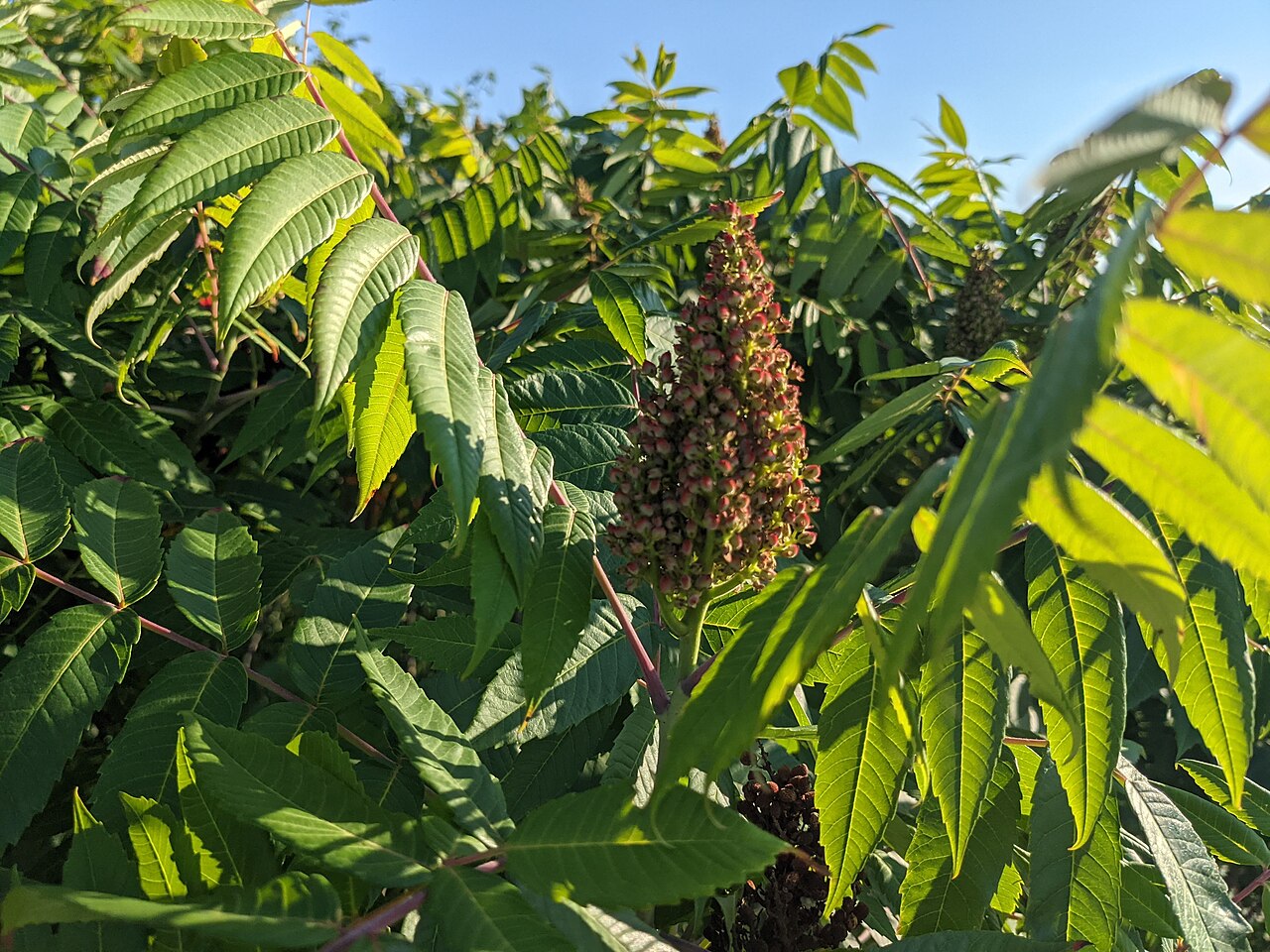
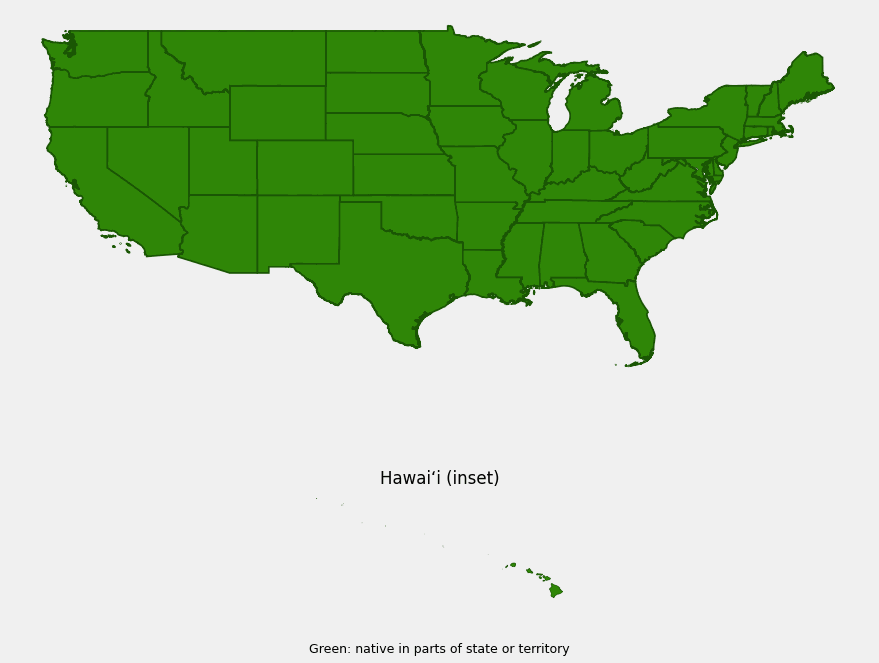
Sumacs are shrubs and small trees of the genus Rhus in the cashew family (Anacardiaceae). They are best known for their long, feather-like compound leaves, their fiery red and orange fall color, and their upright, cone-shaped clusters of fuzzy red fruit that stand on bare branches through the winter. About a dozen species are native to the United States, and sumacs grow wild in every one of the lower 48 states and in Hawaii. In fact, smooth sumac is the only woody plant native to all 48 contiguous states.
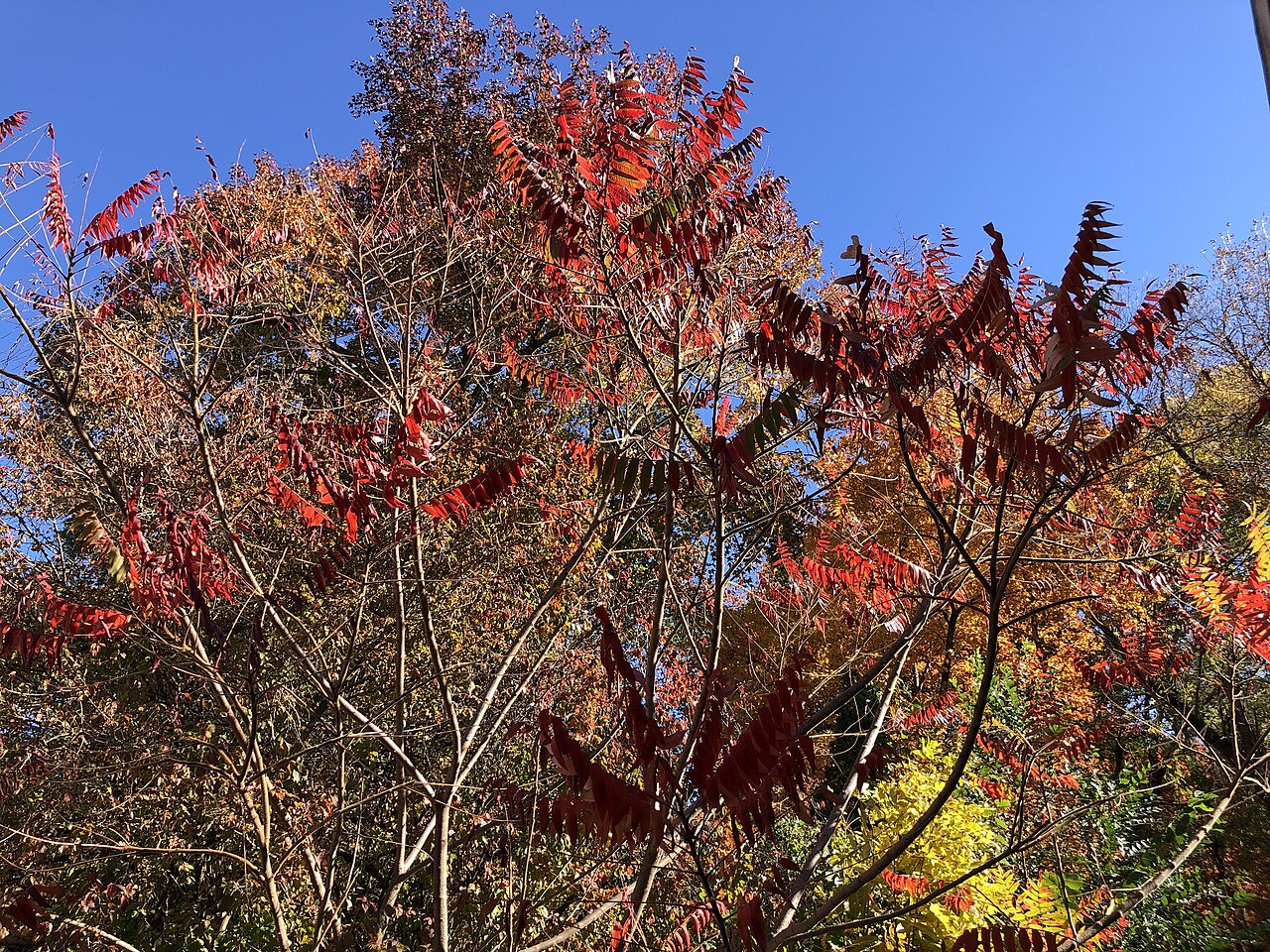
In Iowa and across the Midwest, the sumac of roadsides, prairie edges and old fields is usually smooth sumac, with fragrant sumac on bluffs and rocky woods and staghorn sumac in the northeast. They are exactly what our Iowa article describes: low-maintenance, drought-tolerant shrubs whose spreading roots hold soil on slopes, and whose leaves turn rich red in fall. Low forms of fragrant sumac, such as ‘Gro-Low’, even work as a woody groundcover. In the West, sumacs include skunkbush sumac, the evergreen sugar bush and lemonade berry of California, and desert species of Texas and Arizona.
Despite their bad reputation by association, true sumacs are not poisonous. The infamous poison sumac belongs to a different genus, Toxicodendron, along with poison ivy and poison oak. This guide explains how to tell them apart, introduces the main native sumacs, and flags the invasive tree of heaven, which looks surprisingly similar.
Identification
Most sumacs share a few unmistakable features. Learn these and you can also tell them from their poisonous cousins.
Leaves
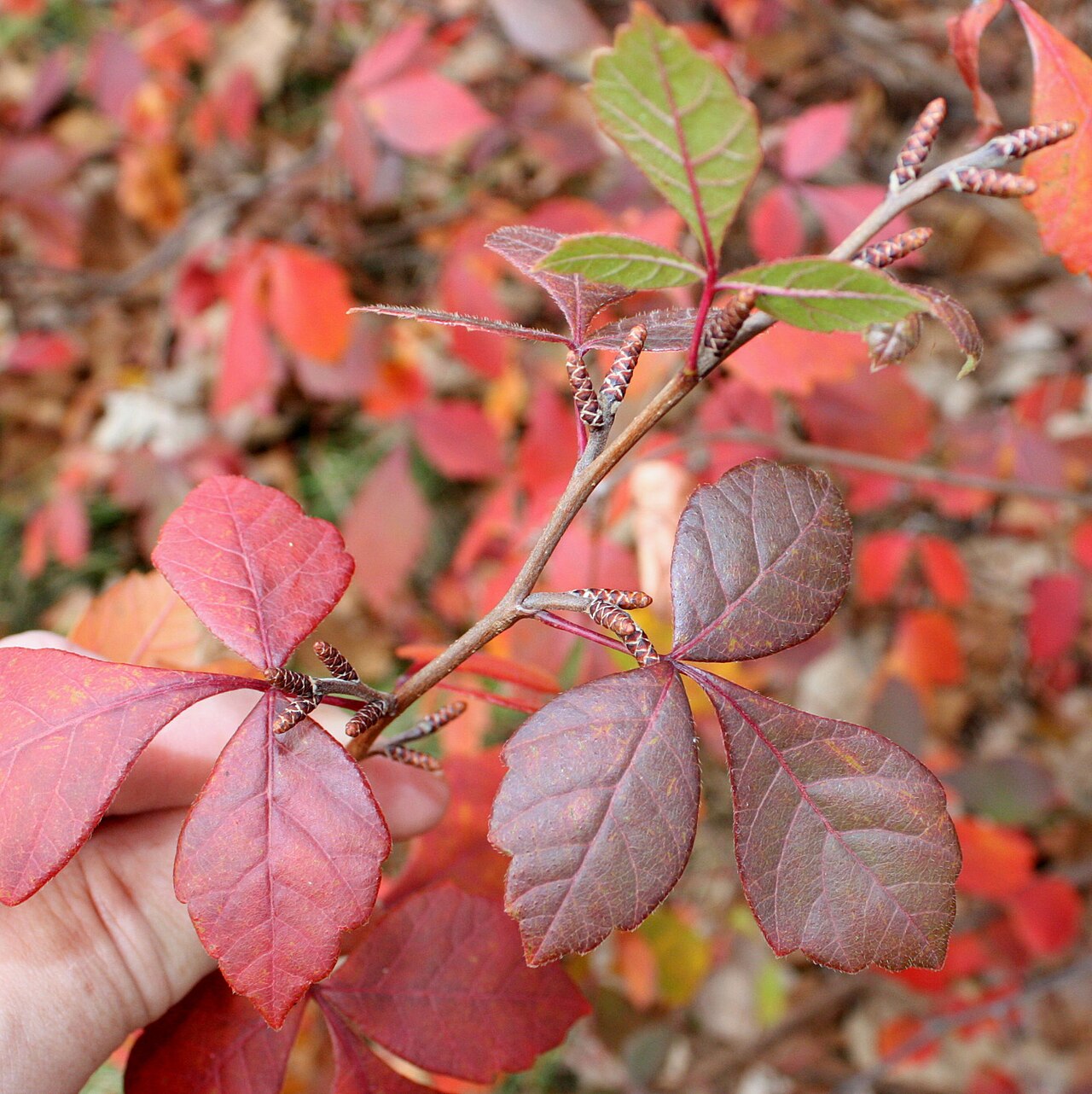
The common eastern and Midwestern sumacs have pinnately compound leaves, 1 to 2 feet long, with 9 to 31 lance-shaped, usually toothed leaflets arranged like the rungs of a ladder. Winged sumac has a flat green “wing” along the leaf stalk between the leaflets. Fragrant and skunkbush sumacs have three leaflets, and several southwestern and California species (sugar bush, lemonade berry, evergreen sumac) have leathery, evergreen leaves, simple in sugar bush and lemonade berry. Crushed leaves and twigs of most species have a resinous or citrus-like smell. Fall color is brilliant scarlet, orange, purple or yellow in the deciduous species.
Stems & Bark
Smooth sumac has smooth, hairless, often whitish-bloomed twigs. Staghorn sumac’s twigs are covered in dense, velvety hairs, like a deer’s antlers “in velvet.” Stems of both are thick and pithy and exude a milky sap when cut. Bark is thin and gray to brown. Most species spread by root suckers into colonies, with the tallest stems in the center.
Flowers
Flowers are small, yellow-green to creamy white, and packed into dense clusters at the branch tips in late spring or early summer; fragrant sumac blooms in early spring before its leaves emerge, from catkin-like buds formed the previous fall. Male and female flowers are usually on separate plants, so only female plants bear fruit.
Fruit
Sumac fruits are small, red and fuzzy drupes held in upright clusters, cone-shaped in smooth and staghorn sumac, looser in fragrant and winged sumac. This is the key difference from poison sumac and poison ivy, whose fruits are smooth, waxy, white to cream-colored and hang in drooping clusters.
Quick Facts
| Scientific Name | Rhus (genus) |
| Family | Anacardiaceae (Cashew or Sumac) |
| U.S. Native Species | About a dozen |
| Plant Type | Deciduous or evergreen shrubs and small trees, often forming colonies |
| Mature Height | 2–6 ft (fragrant, skunkbush) to 10–25 ft (smooth, staghorn, winged, flameleaf) |
| Mature Spread | 6 ft to colonies 20 ft or more across |
| Growth Rate | Fast |
| Sun Exposure | Full Sun to Part Shade |
| Water Needs | Low; drought tolerant once established |
| Soil Type | Dry, rocky, sandy or clay soils; adaptable but needs drainage |
| Soil pH | Acidic to alkaline (about 5.0–8.0) |
| Bloom Time | Early spring (fragrant sumac) to midsummer (smooth, staghorn, winged) |
| Flower Color | Yellow-green to creamy white |
| Fall Color | Brilliant red, orange, scarlet and purple (deciduous species) |
| Fruit | Red, fuzzy, upright clusters persisting into winter |
| Deer Resistant | Moderately; deer browse young growth |
| USDA Hardiness Zones | 3–11 (smooth and staghorn 3–9; California species 8–11) |
Native Range
Native sumacs grow wild in all lower 48 states, from coastal Maine to the deserts of southern California. Smooth sumac is the most widespread, found in every one of those states in prairies, woodland edges, old fields, roadsides and canyon bottoms. Staghorn sumac grows in the Northeast, the Great Lakes states and the Appalachians, and fragrant sumac ranges across the eastern half of the country and the southern Plains. Winged sumac is a southeastern and south-central species that reaches north to New England, Michigan and Iowa.
Western species take over beyond the Plains. Skunkbush sumac, closely related to fragrant sumac, grows from Washington and Montana to Texas, Arizona and California. Prairie flameleaf sumac, evergreen sumac and littleleaf sumac grow in Texas, Oklahoma, New Mexico and Arizona. Sugar bush and lemonade berry are evergreen shrubs of southern California chaparral and coastal sage scrub, and sugar bush also grows in central Arizona.
Hawaii has its own endemic sumac, neneleau (Rhus sandwicensis), a shrub or small tree of Hawaiian forests. No Rhus is native to Alaska. In Iowa, smooth sumac and fragrant sumac are common statewide, winged sumac is found in the southeast, and staghorn sumac is native mainly in the northeast.
📋 Regional plant lists featuring native sumacs (they grow in every region but Alaska): Illinois, Iowa & Missouri · Michigan, Wisconsin & Eastern Minnesota · Dakotas & Western Minnesota · Nebraska, Kansas & Eastern Colorado · Ohio & Indiana · Kentucky & Tennessee · New York, Pennsylvania & North Jersey · Southern New England · Northern New England · Delaware, South Jersey & Long Island · Maryland, Virginia & West Virginia · North & South Carolina · Georgia, Alabama & Mississippi · Arkansas, Louisiana, Eastern Oklahoma & East Texas · South & West Texas · Arizona & New Mexico · Utah & Western Colorado · Montana & Wyoming · Idaho & Eastern Oregon/Washington · Western Oregon & Washington · California & Nevada · Hawaii
Native Species
These are the sumacs native to the United States. Every species with a full Plant Native profile is linked.
Smooth Sumac (Rhus glabra)
The common sumac of Iowa and the Midwest, 10–15 ft, forming colonies on prairie edges, roadsides and old fields. Smooth, hairless twigs, 11 to 31 toothed leaflets, cone-shaped clusters of red fruit and scarlet to orange fall color. Native in all 48 contiguous states. Excellent for erosion control and wildlife.
Staghorn Sumac (Rhus typhina)
The largest of the eastern sumacs, 15–25 ft, with velvety twigs like deer antlers and big, fuzzy, dark red fruit clusters. Native from the Maritimes and Minnesota south through the Appalachians, including northeastern Iowa. Cutleaf and golden-leaved selections such as ‘Tiger Eyes’ are popular in gardens. It hybridizes with smooth sumac.
Fragrant Sumac (Rhus aromatica)
A rounded shrub, 2–6 ft, with three-part leaves that smell of citrus when crushed, yellow flowers in early spring before the leaves, red fuzzy fruit in early summer and orange, red and purple fall color. Native across the eastern U.S. and southern Plains, including rocky bluffs and open woods throughout Iowa. ‘Gro-Low’ is a spreading 2-ft selection used as a groundcover on slopes.
Winged Sumac (Rhus copallinum, syn. R. copalina)
Also called shining or dwarf sumac, a colony-forming shrub or small tree, 10–20 ft, with glossy leaflets and a winged leaf stalk. Native from New England and the Great Lakes to Florida and Texas. It blooms later than smooth sumac, in late summer, and has some of the most brilliant scarlet fall color of any native shrub.
Prairie Flameleaf Sumac (Rhus lanceolata)
Also called Texas sumac, a small tree or large shrub, 15–30 ft, of limestone hills in Texas, Oklahoma and New Mexico, with narrow, lance-shaped leaflets, a winged leaf stalk and blazing red fall color. One of the best small native trees for central Texas gardens.
Skunkbush Sumac (Rhus trilobata)
Also called three-leaf sumac or lemonade bush, a tough, thicket-forming shrub, 3–8 ft, of the western U.S. from Washington and Montana to Texas and California. Three-lobed leaflets with a strong odor when crushed (hence the name), sticky red fruit and orange to red fall color. Very cold- and drought-hardy and widely used for windbreaks and wildlife plantings in the West.
Evergreen Sumac (Rhus virens)
A rounded evergreen shrub, 6–12 ft, of rocky limestone hills in central and west Texas, New Mexico and Arizona, with glossy, leathery leaflets that turn reddish in winter. White flowers in late summer feed late-season pollinators. An excellent native screen for dry Texas gardens.
Littleleaf Sumac (Rhus microphylla)
A twiggy, deciduous desert shrub, 5–10 ft, of the Chihuahuan Desert in west Texas, New Mexico and Arizona, with tiny leaflets and clusters of white flowers that appear before the leaves in spring, followed by orange-red fruit.
Sugar Bush (Rhus ovata)
An evergreen shrub, 6–15 ft, of chaparral in southern California and central Arizona, with thick, glossy, folded leaves and clusters of pink to white flowers in late winter and spring. Very drought tolerant and fire-resilient; it resprouts from the base after fire.
Lemonade Berry (Rhus integrifolia)
An evergreen shrub, 3–10 ft, of coastal sage scrub and bluffs in southern California and Baja California, with leathery, rounded leaves and sticky, tart, red fruit. Tolerant of salt spray and wind; a superb native hedge near the coast.
Michaux’s Sumac (Rhus michauxii)
A low, hairy, colony-forming shrub, usually 1–3 ft, of sandy, open woods in the Carolinas, Georgia and Virginia. It is federally listed as endangered because fire suppression and development have destroyed most of its habitat.
Neneleau (Rhus sandwicensis)
Hawaii’s native sumac, a shrub or small tree, 6–25 ft, endemic to the Hawaiian Islands, with pinnately compound leaves and small clusters of fuzzy fruit. It is occasionally grown in native Hawaiian landscaping.
Non-Native Look-Alikes
The most important look-alikes for sumacs are not garden plants but two groups you should be able to recognize on sight: the poisonous Toxicodendron species and invasive trees.
Poison sumac (Toxicodendron vernix) is a native shrub of swamps, bogs and wet woods in the East and Great Lakes region. Like all Toxicodendron, it contains urushiol, the oil that causes a severe, itchy rash, and it is considered even more potent than poison ivy. Tell it from true sumacs by its smooth-edged leaflets (7 to 13), red leaf stalks, wet habitat, and drooping clusters of smooth, white to grayish berries. True sumacs have toothed leaflets (in the common eastern species), grow in dry or well-drained ground, and bear upright clusters of red, fuzzy fruit. poison sumac and poison ivy have their own profiles; neither should be planted.
Poison ivy and poison oak have three leaflets like fragrant and skunkbush sumac. The difference: in poison ivy the end leaflet sits on a long stalk, while in fragrant sumac the end leaflet is nearly stalkless. Poison ivy has white berries and no early-spring yellow flowers; fragrant sumac has red fruit and catkins at the twig tips in winter.
Tree of heaven (Ailanthus altissima), from China, is one of the worst invasive trees in the U.S. and is often mistaken for sumac. Its compound leaves are larger, with smooth-edged leaflets that have one or two small glandular teeth at the base, and the crushed leaves smell like rancid peanut butter. It bears hanging clusters of tan, papery, winged seeds rather than red berries, and grows rapidly into a tall tree. It is also the main host of the invasive spotted lanternfly.
Chinese sumac (Rhus chinensis), from East Asia, is occasionally planted as an ornamental for its late-summer flowers and has a winged leaf stalk like winged sumac; it is the source of the “Chinese galls” historically used for tannin and ink. Brazilian pepper (Schinus terebinthifolia), a South American member of the sumac family, is a major invasive shrub in Florida, Texas, California and Hawaii, with glossy compound leaves and bright red berries. The culinary spice sumac comes mostly from Sicilian sumac (Rhus coriaria) of the Mediterranean and Middle East.
Growing & Care Guide
Native sumacs are tough, fast-growing shrubs that thrive where many plants struggle. Their one drawback in small gardens is their tendency to spread by root suckers.
Light
Sumacs grow best and color most brilliantly in full sun. Fragrant sumac and smooth sumac tolerate part shade, though they flower and fruit less. Deep shade produces leggy plants with poor fall color.
Soil & Water
Sumacs tolerate dry, rocky, sandy, clay and alkaline soils, as long as they are not waterlogged. Water new plants for the first season; after that, most need no irrigation in their native regions. Avoid rich, constantly moist soil, which encourages excessive suckering and weak growth.
Planting Tips
Plant container-grown sumacs in spring or fall. Choose the species to fit the space: fragrant sumac and ‘Gro-Low’ stay low and are ideal for slopes, foundations and mass plantings; smooth, staghorn and winged sumac need room to colonize and are best on banks, prairie edges, roadsides and naturalized areas. In small gardens, install a root barrier or plant where mowing can contain suckers.
Pruning & Maintenance
Remove unwanted suckers by cutting or mowing them at ground level. Old colonies of smooth and staghorn sumac can be renewed by cutting all stems to the ground in late winter; they regrow quickly. Fragrant sumac can be sheared after flowering. Sumacs have few serious pests, though verticillium wilt and stem cankers can kill individual stems.
Propagation
Sumacs are easy to propagate from root cuttings taken in late winter or by digging rooted suckers in spring. Seeds have a hard coat and germinate best after scarification (a brief soak in hot water or nicking the coat) followed by cold, moist stratification.
Landscape Uses
- Erosion control on slopes, banks and road cuts
- Woody groundcover with fragrant sumac ‘Gro-Low’
- Fall color in borders, prairie edges and naturalized areas
- Wildlife hedgerows with wild plum, dogwoods and native roses
- Windbreaks on the Plains and in the West with skunkbush sumac
- Drought-tolerant screens in Texas and California with evergreen sumac, sugar bush and lemonade berry
Wildlife & Ecological Value
Sumacs are outstanding wildlife plants, supporting pollinators in spring and summer and birds through the hungry months of late winter.
For Pollinators
Sumac flowers produce abundant nectar and pollen and are visited by honey bees, bumble bees, small native bees, wasps and flies. Fragrant sumac provides some of the earliest shrub pollen in spring. Sumacs are host plants for the caterpillars of the red-banded hairstreak, which feeds on fallen sumac leaves, and many moth caterpillars also feed on sumac foliage.
For Birds
Sumac fruit is a key winter and early-spring food. It is not a first choice, so it is still available when other fruit is gone, and it is eaten by many birds, including eastern bluebirds, American robins, northern cardinals, woodpeckers, wild turkeys, ruffed grouse, bobwhite quail and pheasants. Dense colonies provide nesting cover for brown thrashers, catbirds and other shrub-nesting birds.
For Mammals
White-tailed deer, mule deer and elk browse sumac twigs and leaves, rabbits eat the bark in winter, and small mammals shelter in the colonies.
Ecosystem Role
As fast-growing pioneers, sumacs colonize disturbed ground, prairie edges and abandoned fields, stabilizing soil and preparing the way for forest. Along the prairie–woodland border they form a natural “shrub zone” valuable to wildlife.
Cultural & Historical Uses
Sumacs have a long history of use across North America. The red, tart fruit clusters of smooth, staghorn and fragrant sumac were steeped in cold water to make a lemony drink, often called “sumac-ade” or “Indian lemonade,” and lemonade berry of California and skunkbush sumac were used the same way. The sour taste comes from malic acid on the hairy surface of the fruit. People with allergies to cashews, mangoes or pistachios, which are in the same family, may react to sumac.
Dried sumac leaves were a common ingredient in kinnikinnick, the smoking mixture used by many Plains and Great Lakes tribes. The leaves and bark are rich in tannins and were used for tanning leather and making dyes and ink. In the Southwest and Great Basin, the long, flexible young stems of skunkbush sumac are a classic basketry material, still prized by Ute, Navajo, Apache and other weavers.
Gardeners long dismissed sumacs as roadside weeds, but they are increasingly appreciated as tough, wildlife-friendly native shrubs with some of the best fall color in North America. Selections such as fragrant sumac ‘Gro-Low’ and staghorn sumac ‘Tiger Eyes’ have brought them into mainstream landscaping.
Frequently Asked Questions
Are sumacs poisonous?
True sumacs (Rhus) are not poisonous and do not cause the rash associated with poison sumac. Poison sumac is a different plant (Toxicodendron vernix) of wet ground with smooth-edged leaflets and drooping white berries. True sumacs have upright clusters of red, fuzzy fruit.
Which sumac is best for Iowa landscaping?
Fragrant sumac is the best choice for small yards, slopes and as a woody groundcover (try ‘Gro-Low’). Smooth sumac is ideal for large areas, prairie edges and erosion control. Both are native throughout Iowa and turn brilliant red in fall.
Do sumacs spread?
Smooth, staghorn and winged sumac spread by root suckers into colonies, which is useful on slopes and in naturalized areas but can be a problem in small beds. Fragrant sumac spreads more slowly, and clumping selections stay compact.
How do I tell sumac from tree of heaven?
Sumacs have toothed leaflets (in most species), red fuzzy fruit in upright clusters and stay shrub-sized. Tree of heaven has smooth-edged leaflets with small glands at the base, a foul smell when crushed, tan winged seeds, and grows into a tall tree. Tree of heaven is invasive and should be removed.
Can you eat sumac berries?
The red fruit of native sumacs such as smooth and staghorn sumac has traditionally been soaked in cold water to make a tart, lemony drink. Never confuse them with poison sumac, which has white berries. People allergic to cashews or mangoes should avoid sumac.

Looking for a nursery that carries native sumacs?
Browse our native plant nursery directory: Alabama, Arkansas & Arizona · California · Colorado, Connecticut, Delaware, Florida, Georgia & Hawaii · Iowa, Idaho, Illinois, Indiana & Kansas · Kentucky, Louisiana, Massachusetts, Maryland, Maine, Michigan, Minnesota, Missouri, Mississippi & Montana · North Carolina, North Dakota, Nebraska, New Hampshire, New Jersey, New Mexico, Nevada, New York, Ohio & Oklahoma · Oregon · Pennsylvania, Rhode Island, South Carolina, South Dakota, Tennessee, Texas, Utah, Virginia & Vermont · Washington · Wisconsin, West Virginia & Wyoming

