
Knot Grass (Paspalum distichum)
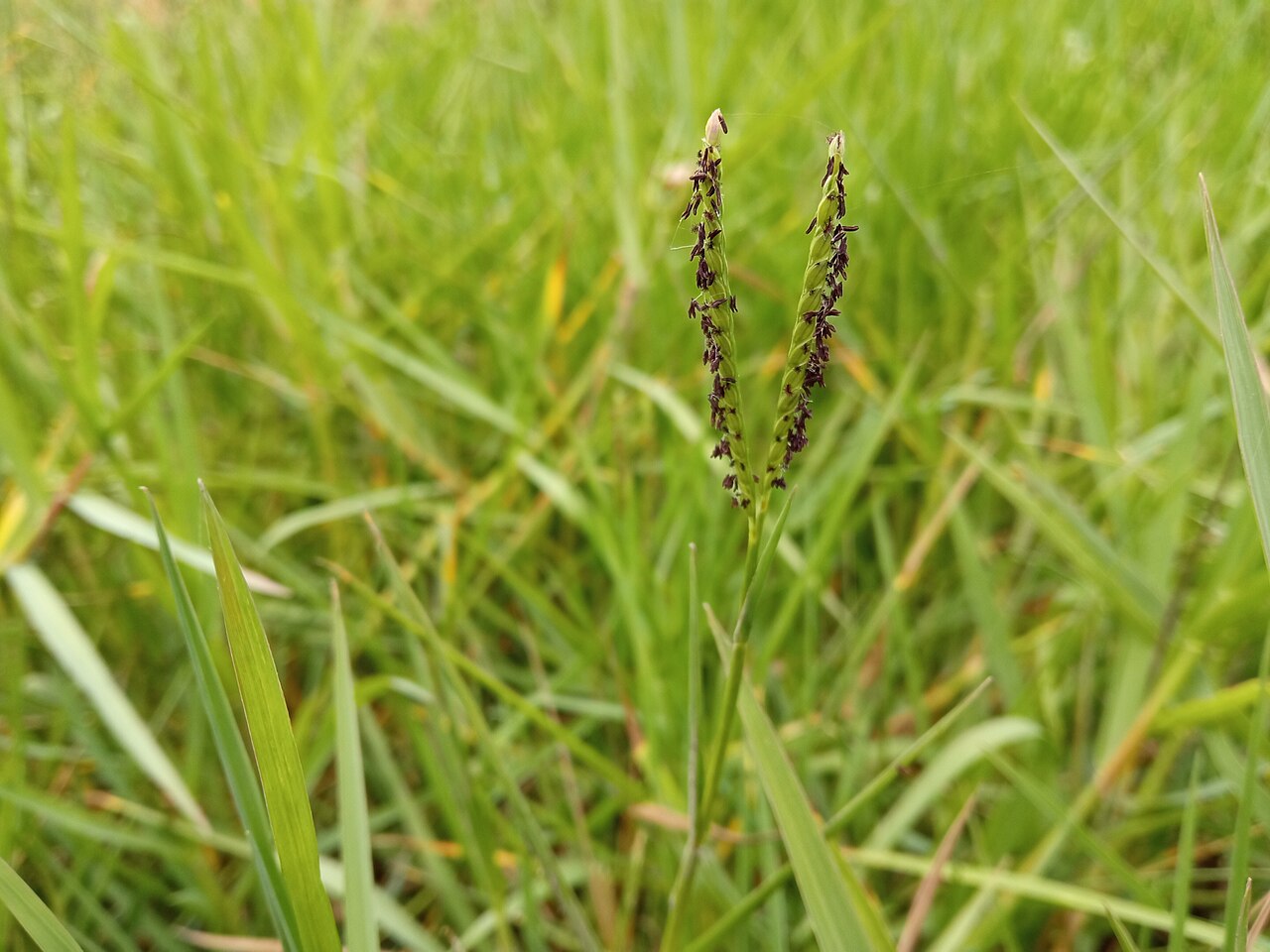
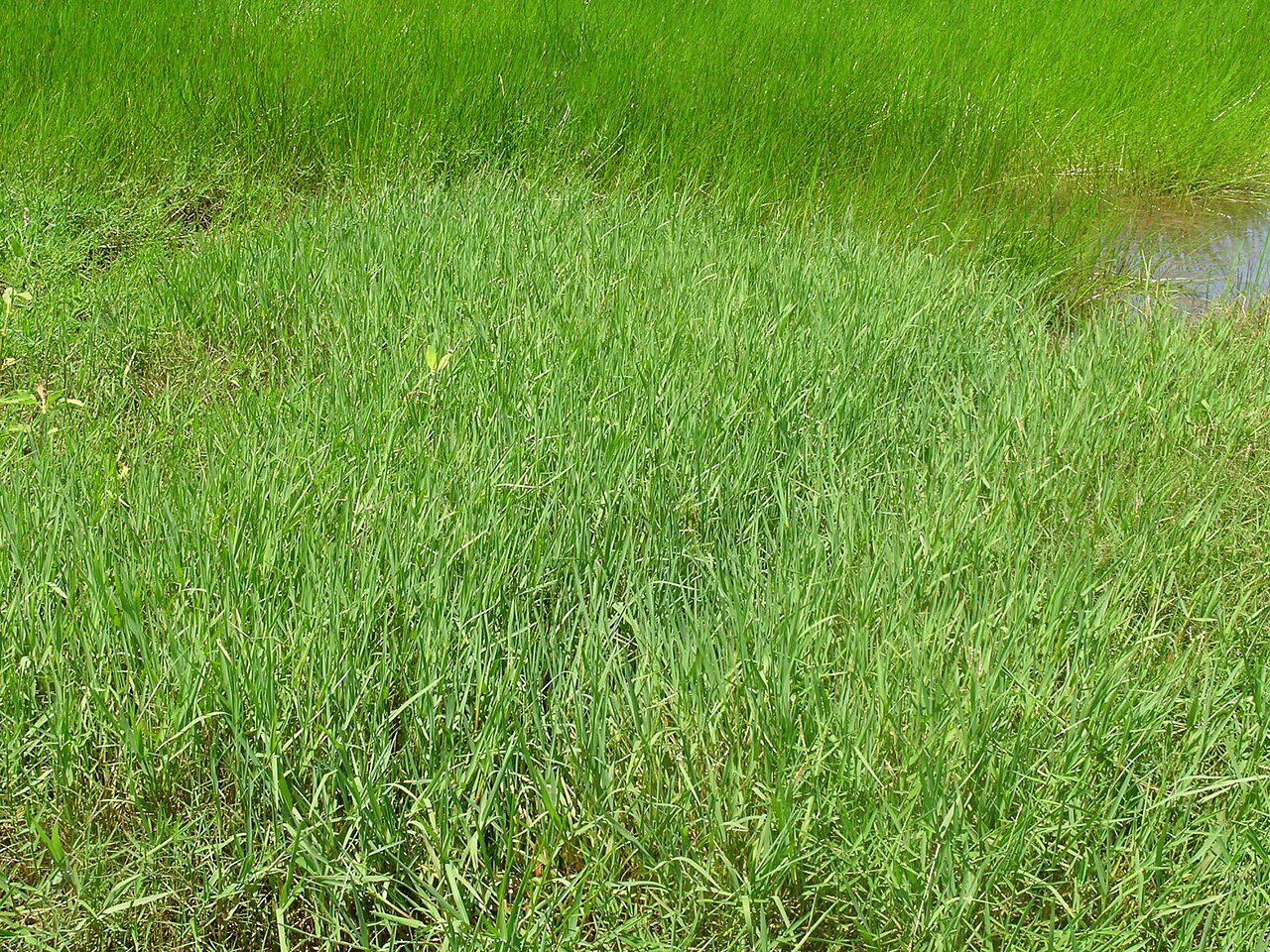
Paspalum distichum, known as Knot Grass or knotgrass, joint paspalum and ditch grass, is a low, mat-forming perennial grass of wet ground. It spreads by long, creeping runners that root at the knobby nodes, the “knots” that give it its name, and it sends up short flowering stems topped by a distinctive pair of slender spikes. It grows along pond and lake shores, ditches, wet pastures, rice fields, stream banks and the edges of brackish marshes.
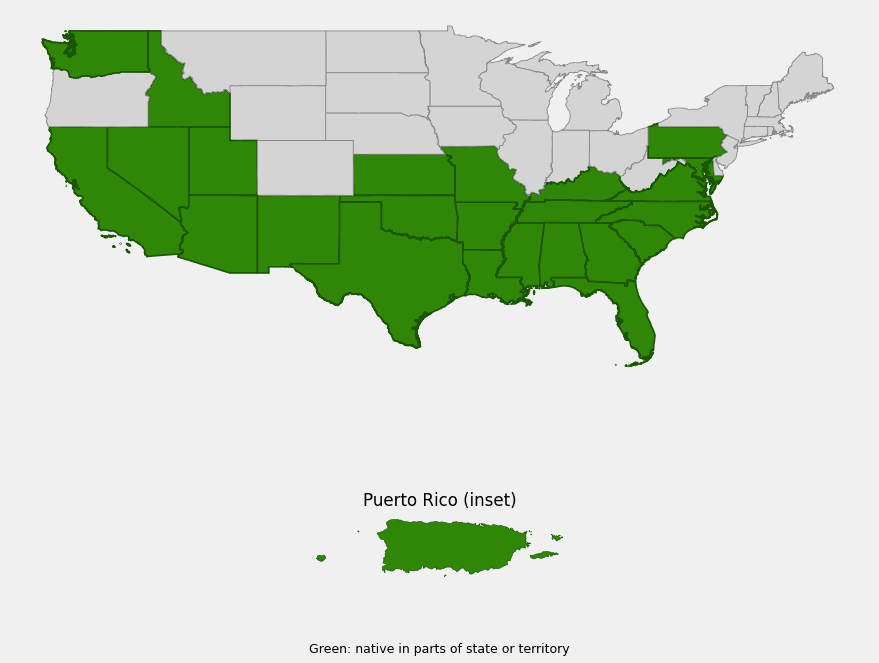
Knot grass is found in warm-temperate and tropical regions around the world. In the United States it is native across the South from the Carolinas and Florida to Texas, north to Kansas, Missouri, Kentucky, Virginia and Maryland, and through the Southwest and Great Basin to California, Idaho and Washington. It is also native in Puerto Rico and the U.S. Virgin Islands. It has been introduced in Hawaiʻi and is considered non-native in a few states, including Oregon and New Jersey.
This guide covers how to tell knot grass from its close relative seashore paspalum, where it grows, how it is used for erosion control, wetland restoration and wildlife, and the one safety caution for livestock owners: its seed heads can carry a toxic ergot fungus.
Identification
Knot grass is a common grass of wet places, and its paired spikes make it easy to recognize. Its closest look-alike is seashore paspalum, which grows in saltier places.
Growth Habit
Knot grass forms low, spreading mats from long stolons (above-ground runners) and rhizomes that can grow several feet in a season. The runners root at each node, and in water they can float out over the surface. Upright flowering stems are usually 4 to 20 inches tall. The nodes are often slightly swollen and may be finely hairy.
Leaves
The leaves are flat, about 1 to 6 inches long and roughly an eighth to a quarter inch wide, tapering to a point. They are mostly smooth, sometimes with a few hairs near the base, and are arranged in two ranks along the stems. The sheaths are loose and often keeled, and the ligule is a short membrane.
Flower Spikes
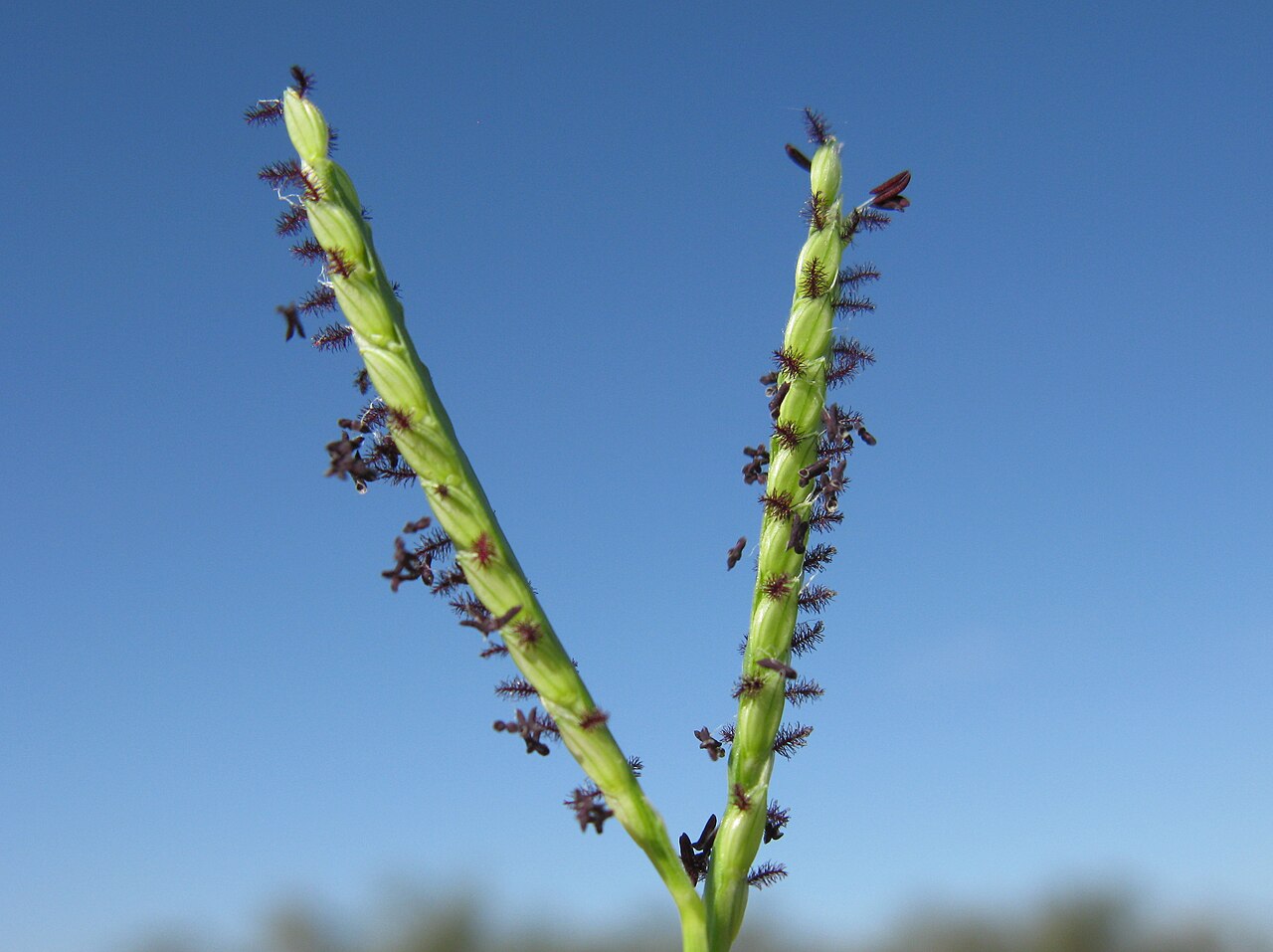
The inflorescence usually has two spikes, sometimes three, each about 1 to 3 inches long, attached at or very near the tip of the stem and spreading like a V or a pair of fingers. The flattened, pale green spikelets sit in two rows along one side of each spike. In flower, dark purple feathery stigmas and anthers hang from the spikelets. Flowering runs from late spring into fall.
Seeds
Each spikelet produces a single small grain. Knot grass sets seed fairly sparingly, and it spreads mostly by its runners and by stem fragments carried by water.
Similar Species
Seashore Paspalum (Paspalum vaginatum) is very similar but grows on salty beaches, dunes and salt marsh edges, and its spikelets are hairless and slightly larger and more pointed; the two have often been confused. Bermuda grass (Cynodon dactylon), an introduced turf grass, has three to seven thin spikes radiating from the tip. Crabgrasses (Digitaria) have several spikes and grow in dry, disturbed ground.
Quick Facts
| Scientific Name | Paspalum distichum L. (incl. P. paspalodes) |
| Family | Poaceae (grass family) |
| Plant Type | Warm-season perennial grass; mat-forming by runners and rhizomes |
| Mature Height | 4–20 in |
| Mature Spread | Spreads indefinitely by runners; forms mats several feet wide |
| Growth Rate | Fast in warm, wet conditions |
| Sun Exposure | Full sun to light shade |
| Water Needs | High; moist to wet soil or shallow water; tolerates flooding |
| Soil Type | Mud, clay, silt or sand; tolerates slightly brackish soils |
| Soil pH | About 5.5–8.5 |
| Bloom Time | May–October |
| Flower Color | Green spikelets with dark purple stigmas and anthers |
| Fall Color | Turns tan to straw-colored after frost |
| Fruit | Small grains in paired spikes |
| Deer Resistant | No; grazed by deer and livestock |
| USDA Hardiness Zones | 6–11 |
Native Range
USDA PLANTS lists knot grass as native in the lower 48 states, Puerto Rico and the U.S. Virgin Islands, and as introduced in Hawaiʻi. Taking state sources into account, it is native in Alabama, Arizona, Arkansas, California, Florida, Georgia, Idaho, Kansas, Kentucky, Louisiana, Maryland, Mississippi, Missouri, Nevada, New Mexico, North Carolina, Oklahoma, South Carolina, Tennessee, Texas, Utah, Virginia and Washington, with an outlying record in Pennsylvania. NatureServe treats the populations in Oregon, New Jersey and Indiana as non-native, so they are not shown on the map.
It grows in shallow water and on wet soils in full sun: the muddy shores of ponds, lakes and reservoirs, ditches and canals, wet pastures and low meadows, river sandbars, rice fields, and the fresh to brackish edges of coastal marshes. In the West it follows rivers and irrigation canals far into the dry interior, along the Colorado, Rio Grande, Snake and Columbia river systems.
Worldwide, knot grass is found across the tropics and warm-temperate zones of the Americas, Africa, Europe, Asia and Australia. Botanists debate where it first evolved, but it is widely accepted as native in the Americas. Some floras separate the freshwater plants as Paspalum paspalodes, a name you may see in older references.
📋 Regional plant lists featuring Knot Grass: North & South Florida · Alabama, Georgia & Mississippi · North & South Carolina · Maryland, Virginia & West Virginia · Kentucky & Tennessee · Arkansas, Louisiana, Eastern Oklahoma & Eastern Texas · South & West Texas · Illinois, Iowa & Missouri · Nebraska, Kansas & Eastern Colorado · New York, Pennsylvania & Northern New Jersey · Idaho, Eastern Oregon & Eastern Washington · Utah & Western Colorado · Arizona & New Mexico · California & Nevada · Puerto Rico
Growing & Care Guide
Knot grass is not an ornamental grass, but it is a useful native for stabilizing wet, muddy ground, pond edges and drainage channels in warm climates. It is occasionally sold as plugs by wetland restoration nurseries. Because it spreads quickly and can invade lawns, irrigated crops and rice fields, plant it only where a vigorous, spreading groundcover is wanted.
Light
Full sun is best. It tolerates light shade but thins out under trees or tall vegetation.
Soil & Water
It thrives in wet to saturated soil and shallow water up to about a foot deep, and it tolerates long periods of flooding. It grows in clay, silt, mud or sand and tolerates moderately salty or alkaline soils. It survives short dry spells but goes dormant without water.
Planting Tips
Plant plugs or rooted runner pieces 1 to 2 feet apart in spring or early summer, when soil is warm and moist. On eroding banks, lay runner sections on the mud and press them in; they root quickly at the nodes. Keep it away from lawns and garden beds, where its runners are hard to remove.
Pruning & Maintenance
Little care is needed. It can be mowed like a turf grass where a low cover is wanted. To keep it in bounds, use an edging barrier or a mowed strip on drier ground, where it spreads more slowly.
Propagation
Propagation is easiest from runners or rhizome pieces with at least one node, planted into wet soil. Seed is produced but is often of low viability.
Livestock Safety Note
Knot grass is good forage, but in late summer and fall its seed heads can be infected by the ergot fungus Claviceps paspali, which forms sticky, then hard, gray-brown masses in place of the seeds. Cattle, horses and sheep that eat heavily infected heads can develop “paspalum staggers,” with tremors and lack of coordination. If you graze animals on wet pastures with knot grass, mow or graze it before seed heads mature in years when ergot is common.
Landscape Uses
- Erosion control: pond banks, canal edges, drainage ditches and stream banks where its mats bind mud and slow water
- Wetland restoration: a fast native cover for created wetlands, stormwater ponds and drawdown zones in warm climates
- Wildlife ponds: a low, spreading edge plant that gives cover to frogs, fish fry and insects in shallow water
- Wet pastures: a palatable native forage grass for cattle on flooded or irrigated ground
- Brackish edges: tolerates slightly salty water at the upper edges of coastal marshes and estuaries
Wildlife & Ecological Value
Knot grass may be a plain grass, but its dense mats feed and shelter a wide range of wetland animals.
For Pollinators
Like most grasses, it is wind-pollinated and offers no nectar. Some bees collect its pollen. More important, it is a host plant for the caterpillars of several grass-feeding skippers and other moths.
For Birds
Ducks, geese, rails and many seed-eating songbirds eat its seeds, and waterfowl graze its leaves and runners. In rice country and on flooded fields it is part of the mix of wild foods that wintering ducks depend on.
For Mammals
Deer, rabbits, nutria and muskrats eat the foliage and runners, and livestock graze it readily.
Ecosystem Role
Its creeping, rooting stems stabilize shorelines and stream banks, trap sediment and slow flowing water. Floating mats shelter aquatic insects, snails, small fish and tadpoles, and the decaying leaves feed the detritus food web of shallow wetlands.
Cultural & Historical Uses
The species name distichum means “in two rows,” referring to the two-ranked arrangement of its leaves or spikelets. The genus name Paspalum comes from an old Greek name for a kind of millet.
Knot grass is a problem weed of rice fields in many countries, including California, where it competes with the crop and spreads through irrigation canals. At the same time, it has been planted for erosion control and forage in wet places, and in some regions it is used as a low-maintenance turf on wet, salty ground.
Linnaeus named Paspalum distichum in 1759. For a long time the name was applied to both knot grass and seashore paspalum, and the two were not clearly separated until the twentieth century. Some botanists still debate the correct name for the freshwater knot grass, so you may also see Paspalum paspalodes.
Frequently Asked Questions
Is knot grass native to the United States?
Yes. It is native across much of the southern and western United States, in Puerto Rico and in the U.S. Virgin Islands. It is introduced in Hawaiʻi, and NatureServe treats it as non-native in Oregon, New Jersey and Indiana.
How do I tell knot grass from seashore paspalum?
Both form mats with paired spikes. Seashore paspalum grows on salty beaches, dunes and salt marshes and has smooth, slightly larger, pointed spikelets, while knot grass mostly grows in fresh to slightly brackish wet places and has short-hairy spikelets. Habitat is usually the best clue.
Is knot grass invasive?
In its native range it is a natural part of wetlands, but it spreads aggressively and is a weed in rice fields, irrigated crops and lawns. Plant it only where you want a vigorous groundcover, such as a pond bank or ditch.
Is knot grass poisonous to livestock?
The grass itself is good forage, but its seed heads can be infected by the ergot fungus Claviceps paspali, which can cause “paspalum staggers” in cattle, horses and sheep. Graze or mow before seed heads mature when ergot is present.
Why is it called knot grass?
The name refers to its swollen, knotty nodes along the creeping runners, where roots and new shoots form. Several unrelated plants, such as Polygonum knotweeds, also go by “knotgrass,” so the scientific name helps avoid confusion.

Looking for a nursery that carries Knot Grass?
Browse our native plant nursery directory: Alabama, Arizona & Arkansas · California · Florida & Georgia · Idaho & Kansas · Kentucky, Louisiana, Maryland, Mississippi & Missouri · Nevada, New Mexico, North Carolina & Oklahoma · Pennsylvania, South Carolina, Tennessee, Texas, Utah & Virginia · Washington

