
Bristly Buttercup (Ranunculus hispidus)
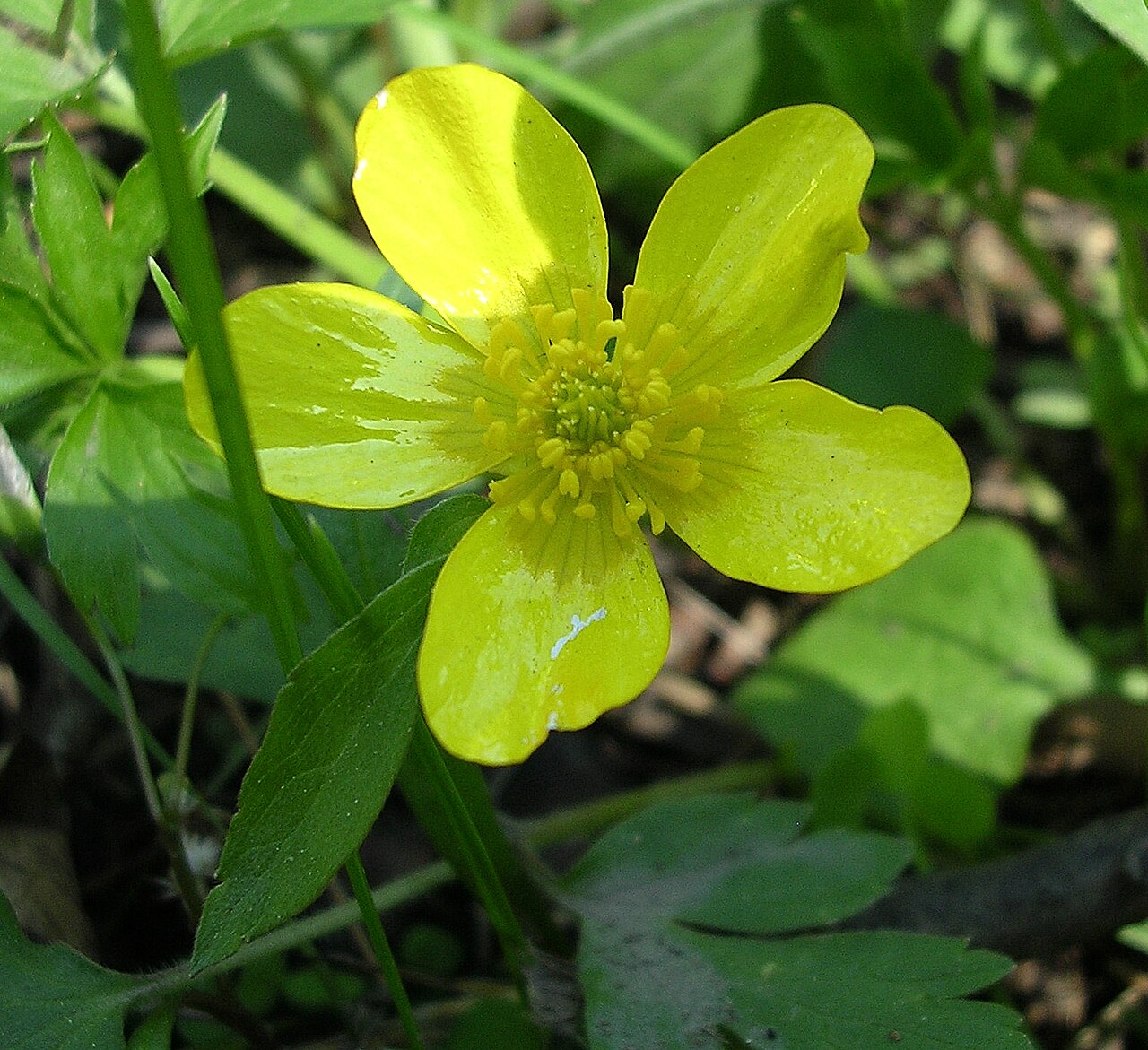
Ranunculus hispidus, the Bristly Buttercup (also called hispid buttercup, and in its wetland form swamp buttercup), is a native perennial wildflower of eastern North America. It ranges from southern Canada south to Florida and east Texas and west to the eastern Dakotas, Nebraska, Kansas and Oklahoma, growing in woods, on wooded slopes and along streams, swamps and wet meadows.
In spring it brings bright, glossy yellow flowers about an inch across, held above clumps of hairy, three-parted leaves. It is one of the earliest and showiest native buttercups of eastern woods, and unlike the European creeping and meadow buttercups that fill lawns and pastures, it belongs in native woodland and wetland plant communities.
Botanists recognize three varieties: an upland form of dry woods, and two wetland forms (often called swamp buttercup) that spread by runners. Like all buttercups, it is toxic: its sap contains an irritant that can blister skin and sicken livestock or pets that eat it. This guide covers how to identify it, where it grows, how to grow it and its value to wildlife.
Identification
Bristly buttercup is a low, clump-forming or sprawling perennial with hairy stems, three-parted leaves and glossy yellow, five-petaled flowers in spring.
Stems & Habit
It grows from a short base with thick, fibrous roots, usually 6 to 12 inches tall (up to about 2 feet in wet sites). The stems are covered with long, spreading hairs, especially in the upland form, which gives the plant its names “bristly” and “hispid.” The wetland forms often lean or sprawl as the season goes on, rooting at the tips to form runners.
Leaves
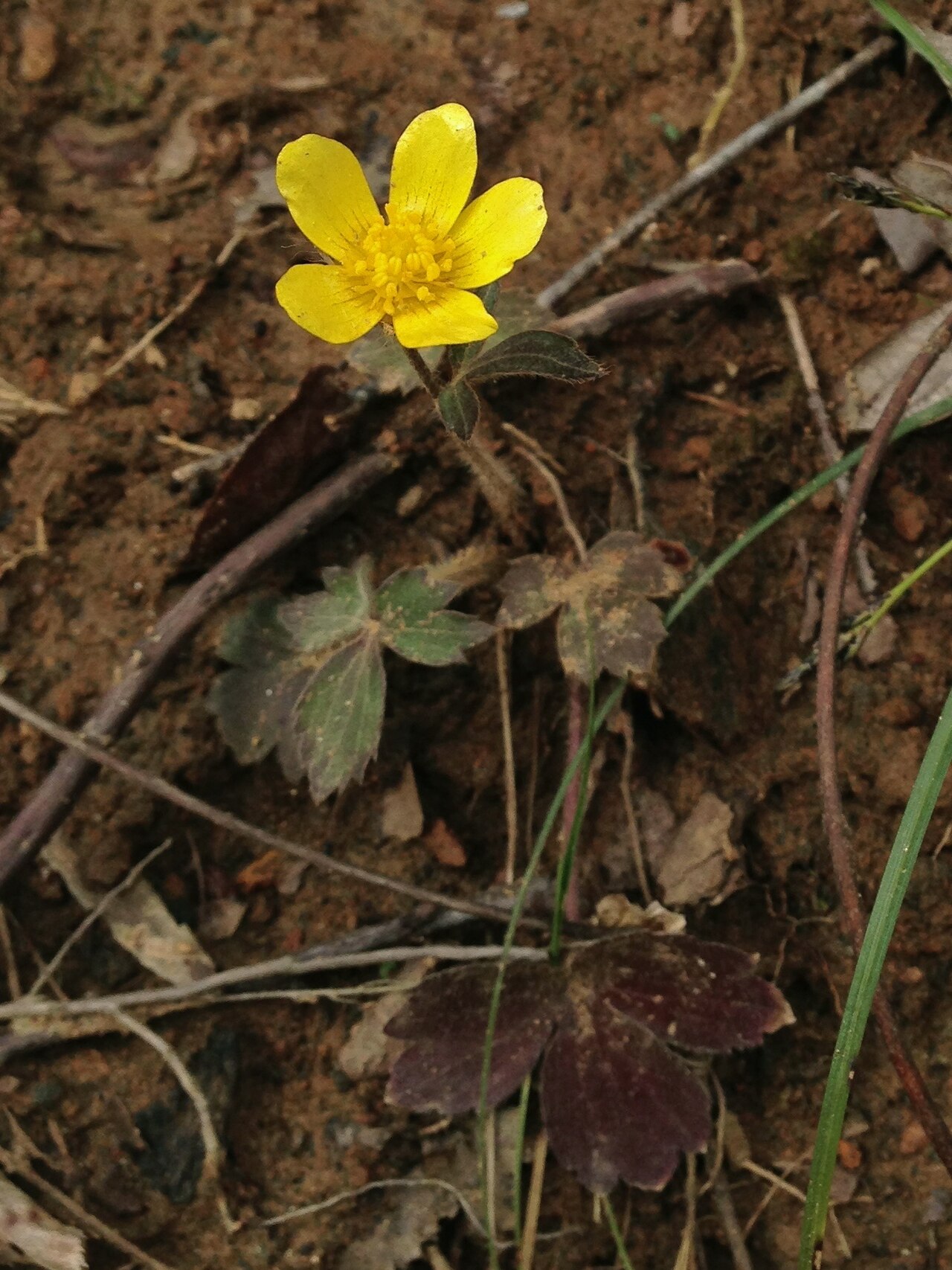
The basal leaves are long-stalked and divided into three leaflets or deep lobes, each coarsely toothed and often lobed again. Leaves are up to about 4 inches long and often wider than long. Smaller, shorter-stalked leaves grow along the stems. In early spring the upland form’s leaves are often hairy and purplish or mottled.
Flowers
The flowers are ¾ to 1¼ inches across, with five (sometimes more) shiny, bright yellow petals around a central cluster of many stamens and pistils, and five hairy, greenish sepals that spread or fold back. They are borne singly on long, hairy stalks from about March to June, earlier in the South.
Fruit & Look-alikes
Each flower forms a round head of flattened seeds (achenes) about ⅛ inch long, each with a broad rim and a short, straight or curved beak. Hooked Buttercup has tiny, pale yellow flowers with petals shorter than the sepals and hooked seed beaks. Early Buttercup is smaller, with narrow-lobed leaves and tuberous roots. The introduced creeping buttercup (R. repens) and meadow buttercup (R. acris) are weeds of lawns and pastures, the first with runners and leaves often spotted pale, the second taller with deeply cut, palmate leaves.
Quick Facts
| Scientific Name | Ranunculus hispidus Michx. |
| Family | Ranunculaceae (buttercup family) |
| Plant Type | Herbaceous perennial wildflower |
| Mature Height | 6–12 in (up to 2 ft in wet sites) |
| Mature Spread | 8–18 in; wetland forms spread by runners |
| Growth Rate | Moderate |
| Sun Exposure | Partial shade to full shade; sun in moist sites |
| Water Needs | Moderate to wet, depending on variety |
| Soil Type | Woodland loam; moist to wet soils for swamp forms |
| Soil pH | About 5.5–7.5 |
| Bloom Time | March–June |
| Flower Color | Glossy bright yellow |
| Fall Color | None notable |
| Fruit | Head of flattened, beaked achenes |
| Deer Resistant | Yes; toxic, acrid foliage |
| USDA Hardiness Zones | 3–9 |
Native Range
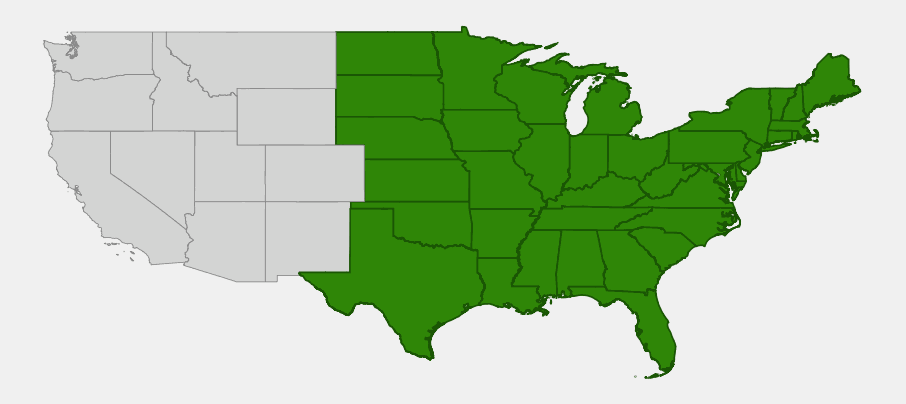
Bristly buttercup has a wide range across eastern and central North America. USDA PLANTS lists it in 37 states from Maine and the Great Lakes south to Florida and the Gulf Coast, and west to North Dakota, South Dakota, Nebraska, Kansas, Oklahoma and eastern Texas. In Canada it grows from Manitoba and Ontario east to Quebec, New Brunswick and Prince Edward Island.
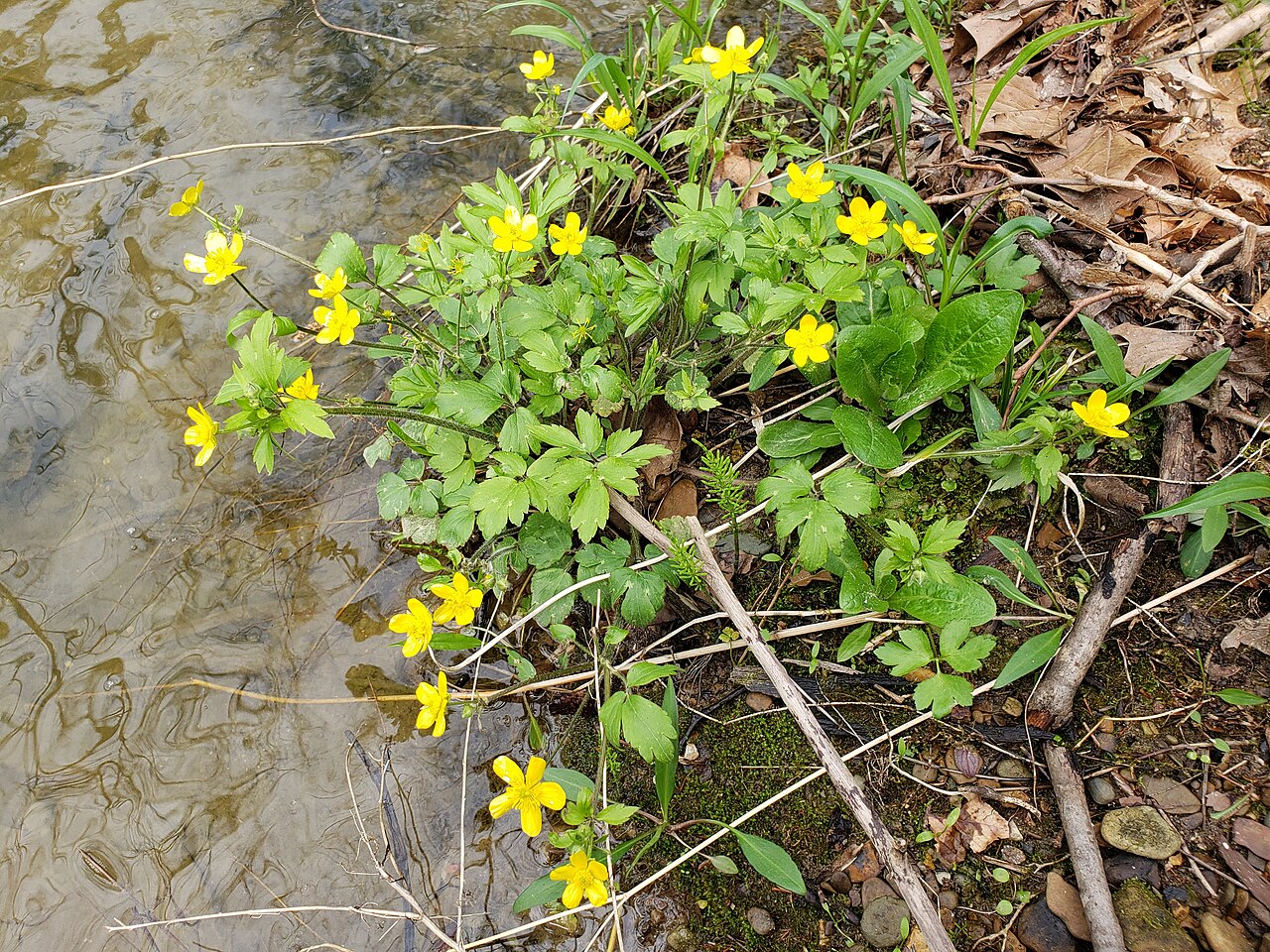
The three varieties have somewhat different ranges and habitats. The upland form (var. hispidus) is most common in the East and South, in dry to moist deciduous woods, rocky slopes and ridges. The swamp buttercup forms, var. nitidus and var. caricetorum (sometimes treated as Ranunculus septentrionalis or R. carolinianus), are more widespread across the Midwest and Northeast and grow in wet woods, floodplains, swamps, stream banks and sedge meadows.
It usually grows in partial shade under deciduous trees, where it flowers before the canopy fills in, but the wetland forms also grow in open, wet meadows and marsh edges. It is found from low elevations along the coast and in river valleys up into the Appalachian foothills.
📋 Regional plant lists featuring Bristly Buttercup: North & South Florida · Alabama, Georgia & Mississippi · North & South Carolina · Maryland, Virginia & West Virginia · Kentucky & Tennessee · Arkansas, Louisiana, Eastern Oklahoma & Eastern Texas · Illinois, Iowa & Missouri · Ohio & Indiana · Nebraska, Kansas & Eastern Colorado · North Dakota, South Dakota & Western Minnesota · Michigan, Wisconsin & Eastern Minnesota · New York, Pennsylvania & Northern New Jersey · Delaware, Southern New Jersey & Long Island · Connecticut, Massachusetts & Rhode Island · New Hampshire, Maine & Vermont · South & West Texas
Growing & Care Guide
Bristly buttercup is an easy, cheerful native for a woodland garden, shady streamside or rain garden, and it is occasionally offered by native plant nurseries in the eastern United States. Choose the variety to suit your site: the upland form for drier woodland shade, and the swamp buttercup forms for moist to wet soil. Toxicity note: like all buttercups, its fresh leaves and stems contain ranunculin, which forms the irritant protoanemonin when the plant is crushed or chewed. It can cause blistering of the skin and mouth, and digestive upset in people, dogs, cats and livestock. Wear gloves when dividing plants, and keep children and pets from chewing it. Dried buttercup in hay is much less toxic.
Light
Partial shade to full shade under deciduous trees is ideal. In consistently moist or wet soil it can take more sun.
Soil & Water
The upland form prefers well-drained woodland loam with leaf litter and tolerates somewhat dry summer conditions once established. The swamp forms need moist to wet, humus-rich soil and do well along stream banks, pond edges and in rain gardens.
Planting Tips
Plant in spring or fall, 12 inches apart, among ferns, sedges and other spring wildflowers. The wetland forms can spread by runners to form patches, so give them room or pair them with vigorous companions.
Pruning & Maintenance
It needs very little care. Leave the leaf litter in place as natural mulch. The foliage may decline in summer heat and drought; this is normal.
Propagation
Divide clumps or pot up rooted runners in early spring or fall, wearing gloves. Sow fresh seed outdoors in late spring or summer; it germinates after a period of cold, moist conditions over winter.
Landscape Uses
- Woodland gardens: early spring color under deciduous trees
- Rain gardens and stream banks: swamp buttercup forms for wet soil
- Naturalized areas: native alternative to weedy European buttercups
- Pollinator plantings: early-season pollen and nectar for small bees and flies
Wildlife & Ecological Value
Bristly buttercup supports early spring insects and provides seeds for birds and small mammals.
For Pollinators
The open, glossy flowers attract small native bees such as sweat bees and mining bees, as well as syrphid flies and other flies and beetles, which collect pollen and nectar in early spring when few other flowers are open.
For Birds
Wild turkeys, ruffed grouse and other ground-feeding birds eat the seeds.
For Mammals
Chipmunks, mice and other small rodents eat the seeds. Deer, rabbits and livestock usually avoid the bitter, irritating foliage.
Ecosystem Role
As a spring-flowering perennial of the woodland floor and wetland edges, it is part of the early-season food web for insects. The runners of the swamp forms help bind soil on wet banks.
Cultural & Historical Uses
The French botanist André Michaux named Ranunculus hispidus in his 1803 Flora Boreali-Americana, based on plants he collected in the eastern United States. The species name means “bristly” or “with stiff hairs.” The genus name Ranunculus means “little frog,” a reference to the damp places where many buttercups grow.
Several Native American peoples used various buttercups in traditional medicine, typically as external treatments such as poultices. Because of their toxicity, buttercups should not be used as home remedies.
Botanists have long debated how to treat the swamp buttercups. They were once considered a separate species, Ranunculus septentrionalis, and some authors still separate them; many current floras include them in R. hispidus as var. nitidus and var. caricetorum.
Frequently Asked Questions
Is bristly buttercup poisonous?
Yes. Like all buttercups, its sap contains an irritant that can blister skin and cause mouth and stomach irritation if eaten. Keep pets and livestock from grazing on it, and wear gloves when handling it.
How do I tell bristly buttercup from creeping buttercup?
Bristly buttercup is native and grows in woods and wetlands, with very hairy stems and leaves. Creeping buttercup is a European lawn and pasture weed with long runners and leaves often spotted pale.
Where does bristly buttercup grow?
Across eastern and central North America, from southern Canada to Florida and east Texas and west to the eastern Great Plains, in woods, slopes and wetlands.
What is swamp buttercup?
Swamp buttercup is the wetland form of bristly buttercup (var. nitidus and var. caricetorum, sometimes called Ranunculus septentrionalis), which grows in wet woods and meadows and spreads by runners.
When does bristly buttercup bloom?
From about March to June, earlier in the South. The bright yellow flowers appear before or as the trees leaf out.

Looking for a nursery that carries Bristly Buttercup?
Browse our native plant nursery directory: Alabama & Arkansas · Connecticut, Delaware, Florida & Georgia · Illinois, Indiana, Iowa & Kansas · Kentucky, Louisiana, Maine, Maryland, Massachusetts, Michigan, Minnesota, Mississippi & Missouri · Nebraska, New Hampshire, New Jersey, New York, North Carolina, North Dakota, Ohio & Oklahoma · Pennsylvania, Rhode Island, South Carolina, South Dakota, Tennessee, Texas, Vermont & Virginia · West Virginia & Wisconsin

