
Native Larkspurs (Delphinium)
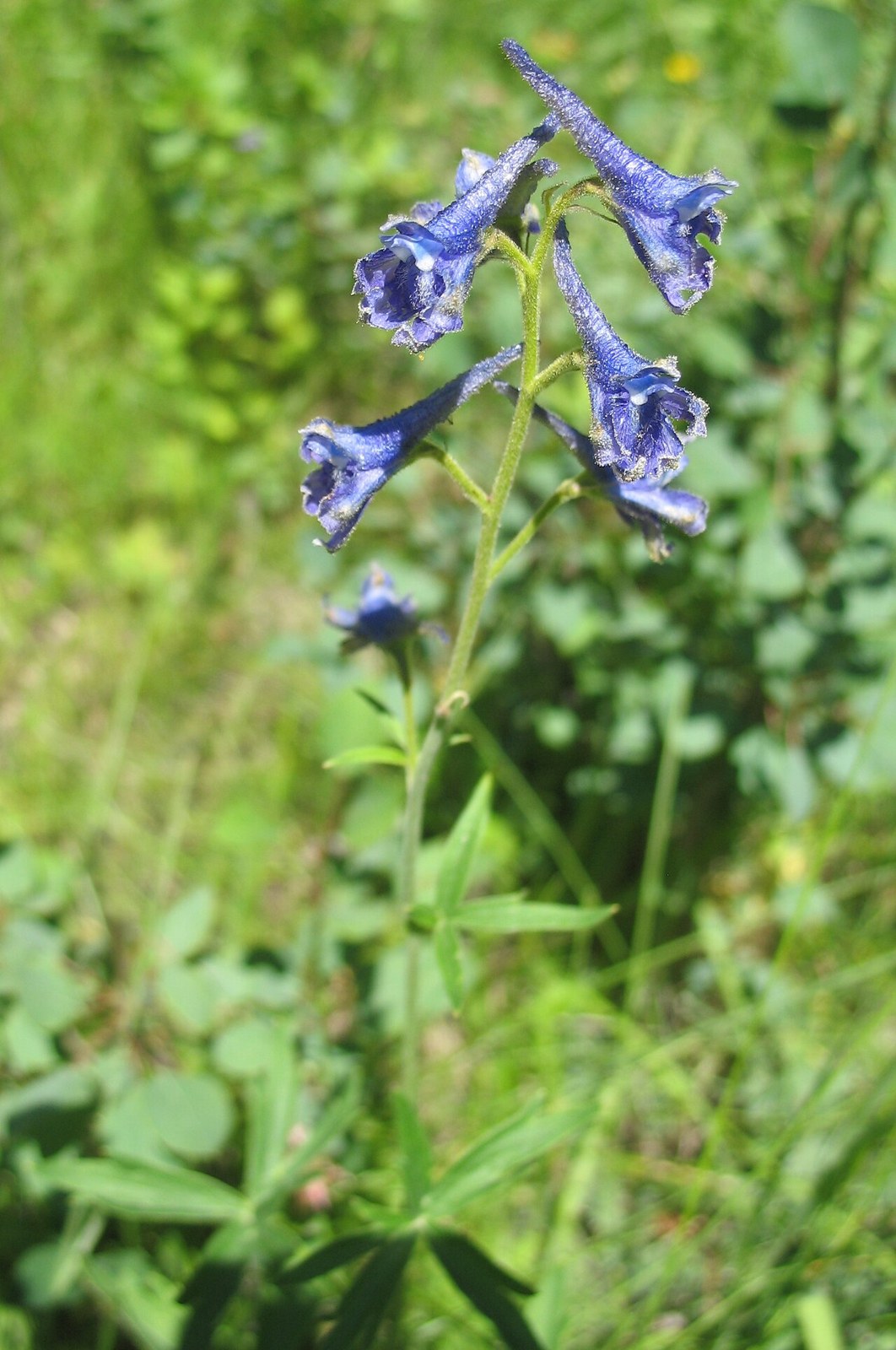
Larkspurs (genus Delphinium) are members of the buttercup family with tall spikes of spurred flowers, usually in deep blue or purple. Gardeners know them best as the towering hybrid delphiniums of English borders, which come from European and Asian species. What many garden articles miss is that North America has around 60 native larkspurs of its own. Utah and Colorado alone each have several wild species.
Native larkspurs come in two broad types. Low larkspurs, such as upland larkspur and dwarf larkspur, are spring wildflowers 6 inches to 2 feet tall that bloom early and then go dormant for the summer. Tall larkspurs, such as subalpine larkspur and tall larkspur, grow 3 to 6 feet in moist mountain meadows and woodland edges and bloom in summer. A few western species, like scarlet larkspur and red larkspur in California, have red flowers built for hummingbirds.
Every larkspur, native or garden, is poisonous. The plants contain alkaloids that are toxic to people and pets, and tall larkspurs are one of the leading causes of cattle deaths on western rangelands. That doesn’t make them bad garden plants, but it does mean they belong where children, pets and livestock won’t graze on them. This guide shows how to recognize native larkspurs, which species grow in which regions, and how to tell them from garden delphiniums and the introduced annual larkspur.
Identification
Larkspur flowers are unusual and easy to recognize once you know what to look for. They grow in an upright spike (raceme) or loose branched cluster at the top of a leafy stem.
Flowers
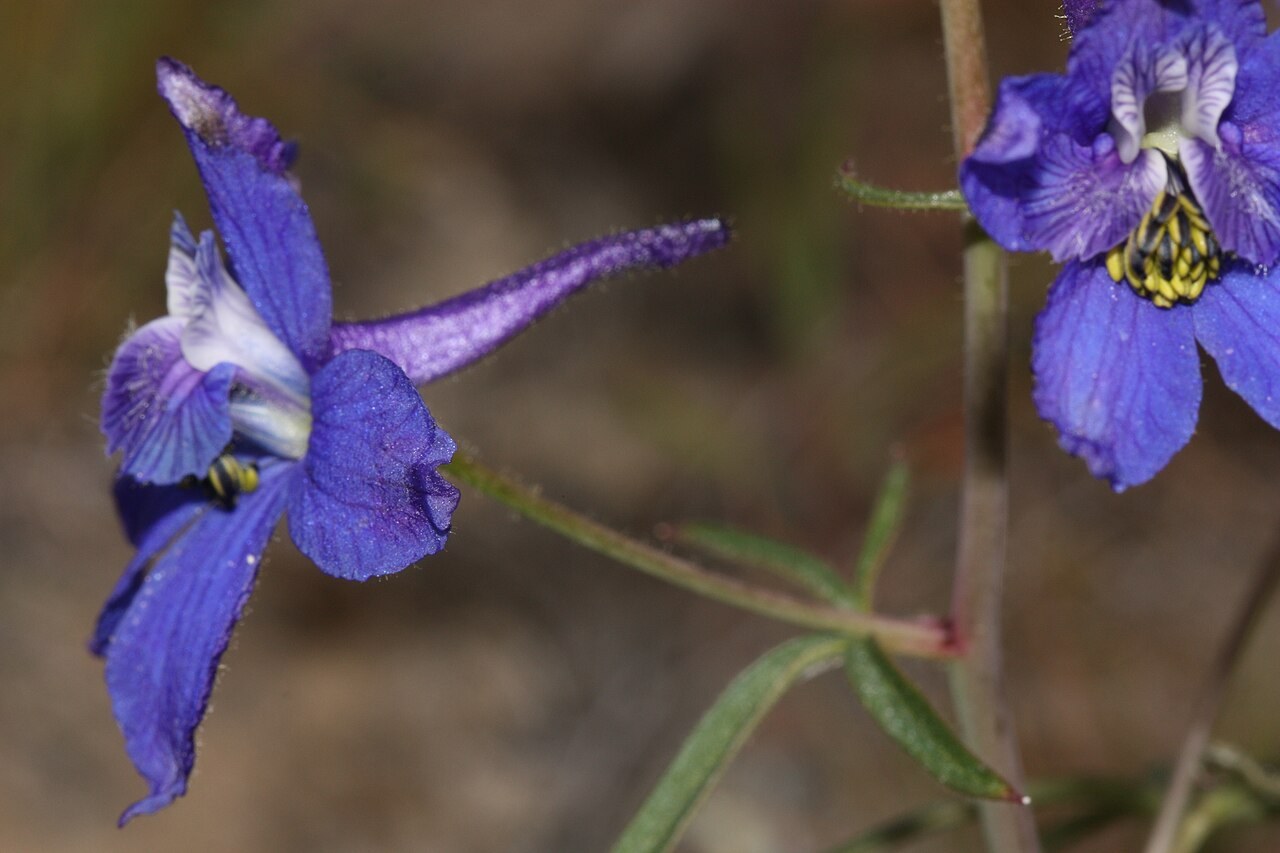
What look like five petals are actually five colorful sepals. The upper sepal is drawn out behind into a long, hollow spur, the “lark’s spur” that gives the plant its name. In the center are four small true petals: the upper two have nectar spurs that tuck inside the sepal spur, and the lower two are often hairy, notched and paler or bicolored, forming a landing pad for bees. Flowers are usually blue to purple, but some species are white, pale blue, pinkish or red.
Leaves
The leaves are palmately lobed or divided, like a hand with fingers, and often deeply cut into narrow segments. In low larkspurs most of the leaves sit near the base of the plant and wither by flowering time or soon after. Tall larkspurs have large, broad, lobed leaves all the way up the stem.
Roots & Stems
Low larkspurs grow from small tuberous or fleshy roots that let them survive summer drought dormant underground. Tall larkspurs grow from a woody crown with thick roots. Stems are usually unbranched or branched only in the flower cluster.
Fruit & Seeds
After flowering, each blossom develops usually three upright pods (follicles) that split open along one side to release many small, dark seeds. The seeds are among the most toxic parts of the plant.
Similar Plants
Monkshoods (Aconitum), also in the buttercup family and also poisonous, have similar leaves and blue flowers, but the upper sepal forms a hood or helmet rather than a spur. Columbines have spurs on all five petals, not just one. The introduced annual larkspur (see below) has finely divided, thread-like leaves and only one spurred petal inside.
Quick Facts
| Genus | Delphinium |
| Family | Ranunculaceae (Buttercup) |
| U.S. Native Species | About 60 in North America, most of them in the West |
| Growth Forms | Herbaceous perennials: low spring-blooming species and tall summer-blooming species |
| Mature Height | About 0.5–2 ft (low larkspurs) to 3–6 ft (tall larkspurs) |
| Sun Exposure | Full Sun to Part Shade; dwarf larkspur grows in deciduous woods |
| Water Needs | Dry in summer for low larkspurs; consistently moist for tall larkspurs |
| Soil Type | Well-drained; rich and moist for tall species |
| Bloom Time | March – September, depending on species and elevation |
| Flower Color | Blue, purple, violet, white, pale blue; red in a few California species |
| Fall Color | None; low species go dormant by summer |
| Fruit | Upright pods (follicles) with many small seeds |
| Toxicity | All parts poisonous to people, pets and livestock, especially cattle |
| Wildlife Value | Bumblebees and hummingbirds; important early nectar in the West |
| Deer Resistant | Yes; rarely browsed by deer |
| USDA Hardiness Zones | About 3–9, depending on species |
Native Range
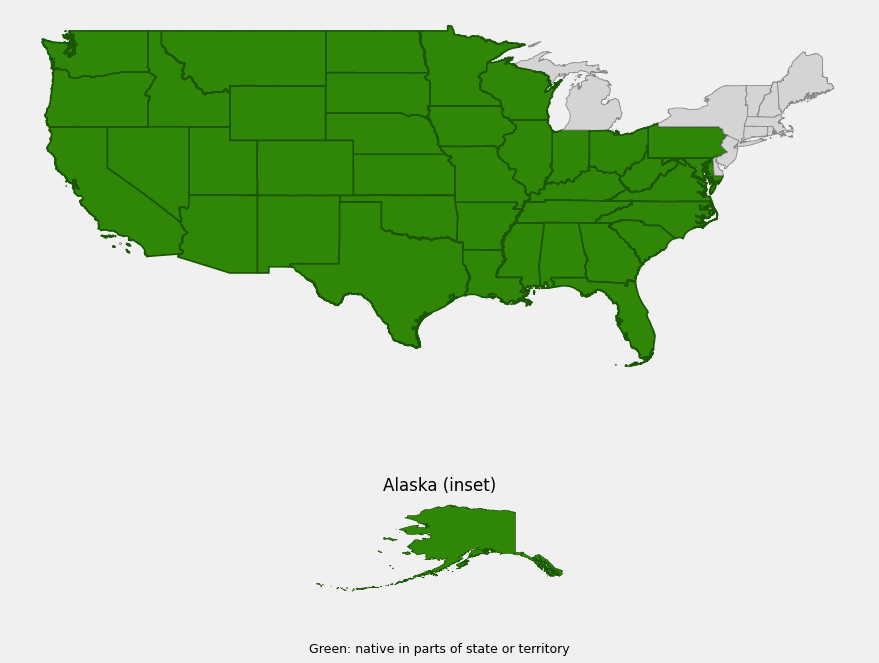
Native larkspurs grow wild from Alaska and the Pacific coast across the Rockies, Great Plains and Midwest to the southern Appalachians and the Gulf Coast. The West is the center of diversity. California has more native larkspurs than any other state, including several that grow nowhere else, and the Rocky Mountain and Great Basin states each have a mix of low spring species and tall meadow species. In Utah, for example, upland larkspur (D. nuttallianum) and Anderson’s larkspur (D. andersonii) bloom on dry foothills in spring, while subalpine larkspur (D. barbeyi) and its relatives fill high mountain meadows in summer. Colorado adds Geyer’s larkspur (D. geyeri) on the plains and foothills.
East of the Rockies, prairie larkspur (D. carolinianum subsp. virescens) grows on the Great Plains and Midwest prairies, Carolina larkspur on dry prairies, glades and sandy open ground in the South, dwarf larkspur in rich deciduous woods from Pennsylvania and Minnesota south to Georgia and Oklahoma, and tall larkspur (D. exaltatum) in scattered Appalachian and Ozark woodlands, where it is rare.
Larkspurs are not native to New England, New York, New Jersey, Delaware or Michigan, although garden delphiniums and annual larkspur are planted there and sometimes escape. The range map below shows states where at least one native larkspur grows wild.
📋 Regional plant lists featuring native larkspurs: NY, PA, NJ north · MD, VA, WV · NC, SC · GA, AL, MS · AR, LA, OK east, TX east · KY, TN · OH, IN · IL, IA, MO · MI, WI, MN east · ND, SD, MN west · NE, KS, CO east · UT, CO west · MT, WY · ID, OR east, WA east · OR west, WA west · AZ, NM · AK · CA, NV · TX south/west/central
Native Species
These native larkspurs have full profiles on Plant Native. They show the range of the genus, from spring ephemerals of eastern woods to red hummingbird flowers in California.
Rocky Mountain, Great Basin and Northwestern Larkspurs
- Upland Larkspur (Delphinium nuttallianum): the most widespread low larkspur of the West, 6 to 18 inches tall, with deep blue-violet flowers in spring on sagebrush slopes, foothills and open pine woods from Washington and Montana to California, Arizona and Colorado. It goes dormant by midsummer. A great native choice for dry Utah and Colorado gardens.
- Tall Larkspur, also called Sierra or mountain larkspur (Delphinium glaucum): a robust plant of wet mountain meadows and streamsides from Alaska to California and the northern Rockies, often 4 to 6 feet tall with dense spikes of purple flowers in summer.
- Columbian Larkspur (Delphinium trolliifolium): a Pacific Northwest larkspur of moist, shady woods and stream banks in western Oregon, Washington and northern California, 2 to 5 feet tall with broad leaves and blue flowers in spring.
California and Desert Larkspurs
- Scarlet Larkspur (Delphinium cardinale): a striking 3- to 6-foot larkspur of southern California chaparral and open slopes with bright red flowers pollinated by hummingbirds. Summer-dormant after bloom.
- Red Larkspur (Delphinium nudicaule): a smaller red-flowered larkspur, 1 to 2 feet, of rocky, shady slopes in northern and central California and southwest Oregon. Another hummingbird favorite.
- Royal Larkspur (Delphinium variegatum): a low California grassland larkspur with large, royal-blue flowers in spring.
- San Bernardino Larkspur, also called Parry larkspur (Delphinium parryi): a blue-flowered larkspur of chaparral, oak woodland and coastal scrub in southern California.
- Desert Larkspur (Delphinium parishii): a pale sky-blue larkspur of desert scrub and Joshua tree woodland in the Mojave and nearby deserts, blooming in spring after winter rain.
Prairie, Midwestern and Eastern Larkspurs
- Prairie Larkspur (Delphinium virescens, now often treated as D. carolinianum subsp. virescens): a 1- to 3-foot prairie wildflower with spikes of white to very pale blue flowers in late spring and early summer, native across the Great Plains and western Midwest, including eastern Colorado.
- Carolina Larkspur (Delphinium carolinianum): a blue- to violet-flowered larkspur of dry prairies, glades, sandhills and open woods across the South and lower Midwest. It blooms in late spring and tolerates poor, dry soils.
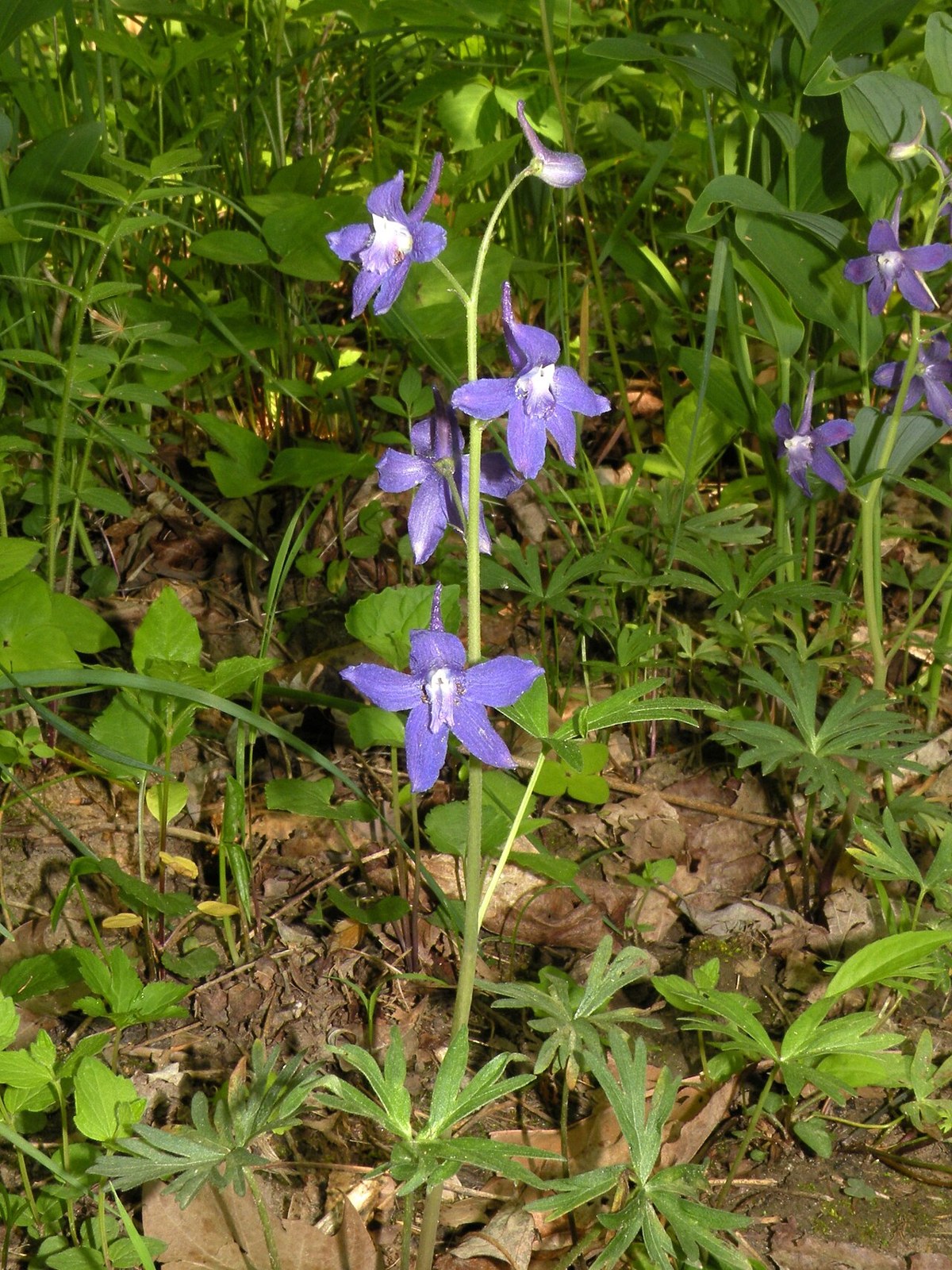
- Dwarf Larkspur (Delphinium tricorne): a spring ephemeral of rich deciduous woods, 1 to 2 feet tall with loose spikes of blue-violet (sometimes white or bicolored) flowers in April and May. It disappears by early summer. Native from Pennsylvania and Minnesota south to Georgia and Oklahoma.
- Tall Larkspur (Delphinium exaltatum): an eastern tall larkspur, 2 to 6 feet, of open woods and rocky slopes in the central Appalachians and nearby states, with blue to purple flowers in summer. It is rare and listed as endangered or threatened in several states, so grow it only from nursery-propagated seed.
Several other U.S. larkspurs are rare, and two California species, Baker’s larkspur (D. bakeri) and yellow larkspur (D. luteum), are federally listed as endangered. Never dig larkspurs from the wild.
Non-Native Look-Alikes
- Garden delphiniums (Delphinium elatum hybrids, including Pacific Giant and Elatum Group plants): these are bred from European and Asian species and are the tall, often double-flowered spikes in blue, purple, white and pink sold in garden centers. They need cool summers, rich soil, staking and frequent replacement, and they are just as poisonous as native larkspurs. Some garden articles describe “delphiniums” as native only to Europe and Asia; that is true of these hybrids, not of the genus.
- Belladonna and Chinese delphiniums (Belladonna Group hybrids and D. grandiflorum): shorter, branched garden delphiniums, often sold as short-lived perennials or annuals.
- Annual larkspur (Consolida ajacis, also called Delphinium ajacis), from the Mediterranean: a cool-season annual with feathery, thread-like leaves and spikes of blue, pink or white flowers, popular in cottage gardens and for cut flowers. It reseeds and has naturalized along roadsides and in old fields in much of the South, Midwest and elsewhere. It is not a major invasive, but it is not native and is also toxic.
Growing & Care Guide
Light
Most western larkspurs grow best in full sun to light shade. Tall larkspurs in hot, low-elevation gardens appreciate afternoon shade. Dwarf larkspur is a woodland plant that does well under deciduous trees, where it gets spring sun before the canopy leafs out.
Soil & Water
Low larkspurs such as upland, Carolina, prairie, royal and desert larkspurs need very well-drained soil and dry summers; summer irrigation can rot their tuberous roots after they go dormant. Tall larkspurs need deep, rich soil that stays moist through the growing season, like the mountain meadows and stream banks where they grow wild. Dwarf larkspur likes humus-rich woodland soil that is moist in spring.
Planting Tips
Larkspurs have fleshy or tuberous roots that resent disturbance, so they are usually started from seed sown where they will grow, or planted from small containers. Mark the spot of summer-dormant species so you don’t dig into them later. Plant in groups; a single larkspur stem is easy to lose among other plants. Keep them away from pastures, play areas and dog runs.
Pruning & Maintenance
Native larkspurs need little care. Let low species ripen seed and die back naturally. Cut tall larkspurs back after seed drop or leave stems for winter structure. They do not need fertilizer. Wear gloves when handling large amounts of plant material, and dispose of cuttings where livestock cannot reach them.
Propagation
Grow larkspurs from fresh seed. Most native species need a period of cold, moist conditions to germinate, so sow seed outdoors in fall or give it 4 to 8 weeks of cold stratification in the refrigerator before spring sowing. Germination can be slow and uneven, and seedlings of low species may take two or three years to bloom.
Landscape Uses
- Dry foothill and sagebrush gardens in Utah, Colorado and the Great Basin with upland larkspur
- Mountain meadow and rain gardens with tall larkspurs where soil stays moist
- Prairie plantings with prairie larkspur and Carolina larkspur
- Woodland wildflower gardens in the East with dwarf larkspur
- Hummingbird gardens in California with scarlet and red larkspurs
- Deer-resistant borders, away from pets, children and livestock
Wildlife & Ecological Value
For Pollinators
The blue and purple larkspurs are classic bumblebee flowers. Bees land on the hairy lower petals and push their heads in to reach nectar deep in the spur, picking up pollen on the way. Some short-tongued bees and other insects “rob” nectar by biting holes in the spur. Western larkspurs bloom early in spring in many places, when bumblebee queens are starting colonies and need reliable nectar.
For Birds
Hummingbirds visit blue larkspurs as well as the red-flowered California species, which are adapted specifically for them. Broad-tailed and rufous hummingbirds often feed at tall larkspurs in Rocky Mountain meadows in summer.
For Mammals
Larkspurs are toxic to most mammals. Cattle are especially vulnerable, and tall larkspurs cause significant livestock losses on western mountain ranges in early summer. Sheep are much less affected, and deer and elk generally avoid larkspurs or eat only small amounts.
Ecosystem Role
Larkspurs add early and midsummer nectar to sagebrush steppe, prairies, mountain meadows and woodlands. Low species use the brief wet season and then retreat underground, a strategy shared with many western wildflowers. Their presence often signals healthy native grassland or meadow plant communities.
Cultural & Historical Uses
The name Delphinium comes from the Greek for “dolphin,” for the shape of the flower buds, while “larkspur” refers to the spur’s resemblance to the long hind claw of a lark. In Europe, garden delphiniums and annual larkspurs have been grown for centuries and bred into many cultivars.
Several Native American peoples used larkspur flowers as a source of blue dye. Larkspur preparations were also historically applied externally to kill lice and other parasites, a use that reflects the plant’s toxicity. These are historical practices only; larkspur is poisonous and should not be used at home.
In the American West, larkspur has long been known to ranchers as “poison weed” because of its toll on cattle. Agricultural researchers have studied the alkaloids responsible, and grazing plans in larkspur country often keep cattle off high meadows during the risky period from flowering to seed-pod stage, when cattle most readily eat tall larkspur.
Frequently Asked Questions
Are larkspurs native to the United States?
Yes. About 60 larkspur species are native to North America, most in the West. The large garden delphiniums are bred from European and Asian species, and annual larkspur comes from the Mediterranean, but many wild larkspurs are native to states such as Utah, Colorado and California.
What is the difference between a delphinium and a larkspur?
Botanically they are the same genus, Delphinium. Gardeners usually call the tall perennial hybrids “delphiniums” and the wild species and annual Consolida “larkspurs.” The annual larkspur is sometimes placed in its own genus, Consolida.
Are larkspurs poisonous?
Yes. All parts contain toxic alkaloids, and the young plants and seeds are especially toxic. They can poison people, pets and livestock, particularly cattle. Don’t plant them where children or animals might eat them.
Which larkspur is native to Utah and Colorado?
Upland larkspur (Delphinium nuttallianum) is common on dry foothills in both states, and subalpine larkspur (D. barbeyi) grows in high meadows. Colorado also has Geyer’s larkspur and, on the eastern plains, prairie larkspur. Utah has Anderson’s larkspur in its western deserts and foothills.
Why did my native larkspur disappear in summer?
Low larkspurs such as upland, Carolina and dwarf larkspur are summer-dormant. After flowering and setting seed, the leaves die back and the plant rests underground until the next spring. Mark the spot and avoid watering or digging there.

Looking for a nursery that carries native larkspurs?
Browse our native plant nursery directory: Washington · Oregon · California · Nevada, New Mexico, North Dakota, Nebraska, Oklahoma, Ohio & North Carolina · Idaho, Kansas, Iowa, Illinois & Indiana · Montana, Minnesota, Missouri, Louisiana, Mississippi, Kentucky & Maryland · Wyoming, Wisconsin & West Virginia · Utah, South Dakota, Texas, South Carolina, Tennessee, Virginia & Pennsylvania · Colorado, Georgia & Florida · Arizona, Alaska, Arkansas & Alabama

