
Mints (Mentha): Native American Wild Mint and Garden Mints
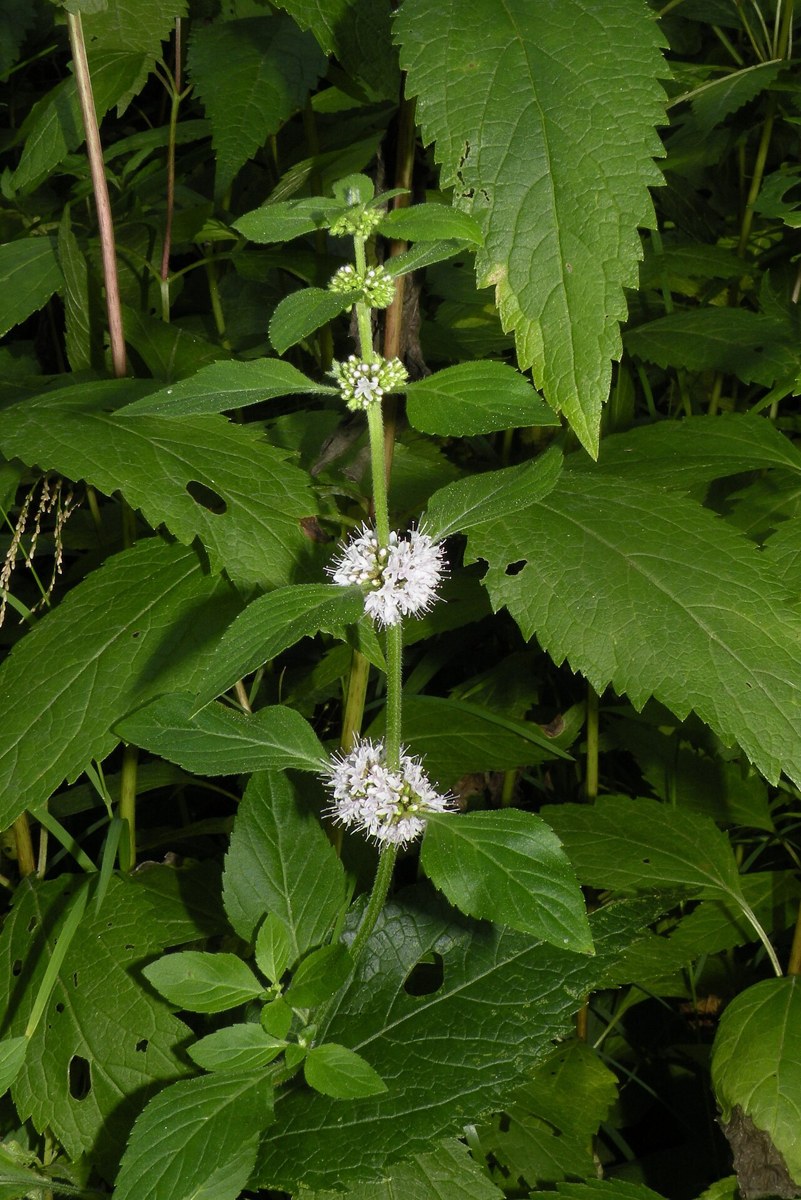
Mints (genus Mentha) are fragrant perennial herbs with square stems, paired leaves and creeping underground stems that let them spread into wide patches. There are about 20 species and countless hybrids and cultivars, nearly all native to Europe, Asia and Africa. Only one mint is native to North America: American wild mint (Mentha canadensis, also treated as part of Mentha arvensis), a modest plant of stream banks, wet meadows and marsh edges found in most of the United States.
Every other mint in American gardens, including spearmint, peppermint, apple mint, chocolate mint, ginger mint and the many named flavors sold at nurseries, is an import or a garden hybrid. Many of them have escaped along streams and ditches across the country, and pennyroyal has become an invasive weed of wetlands in California and Oregon. They are valuable herbs and good nectar plants, but they are not native and they spread aggressively.
Our Oregon pollinator article recommends mint for bees, and mint flowers really are busy with pollinators. If you came here from it, this guide explains which mint is native in Oregon, how to grow garden mints without letting them escape, and which native Oregon plants in the mint family give pollinators the same late-summer flowers without the risk of spreading into wild wetlands.
Identification
All mints share the traits of the mint family (Lamiaceae): square stems, opposite leaves and small, two-lipped flowers. What sets true mints apart is the minty or pungent smell of crushed leaves, flowers with four nearly equal lobes (so they look almost star-shaped rather than strongly two-lipped), and creeping rhizomes or runners that form patches.
American Wild Mint
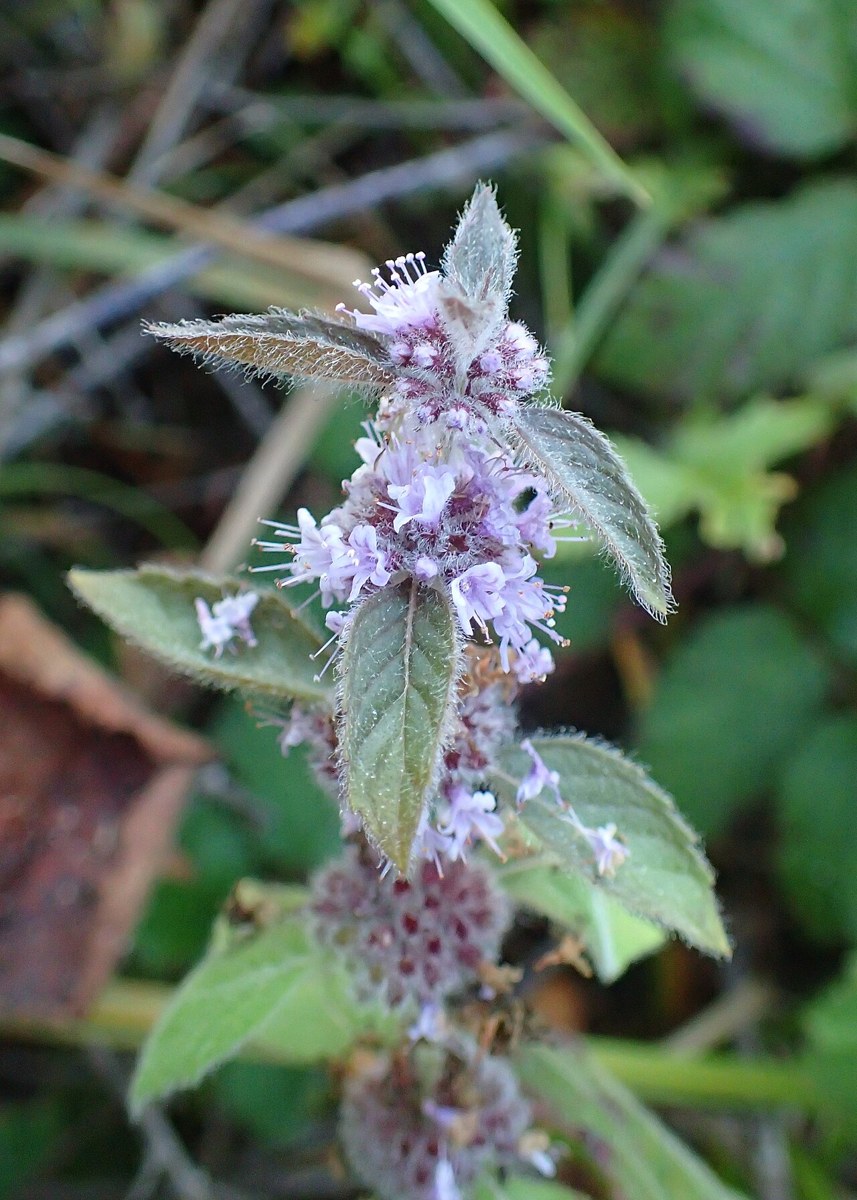
Wild mint grows 6–30 inches tall, with upright, often hairy stems and lance-shaped to oval, toothed leaves 1–3 inches long on short stalks. Its tiny white, pink or lavender flowers are packed in round whorls in the leaf axils along the middle and upper stem, and the stem usually ends in a tuft of leaves rather than a flower spike. The scent varies from plant to plant, from sweet peppermint-like to sharp and pennyroyal-like. It flowers from July to September.
Garden Mints
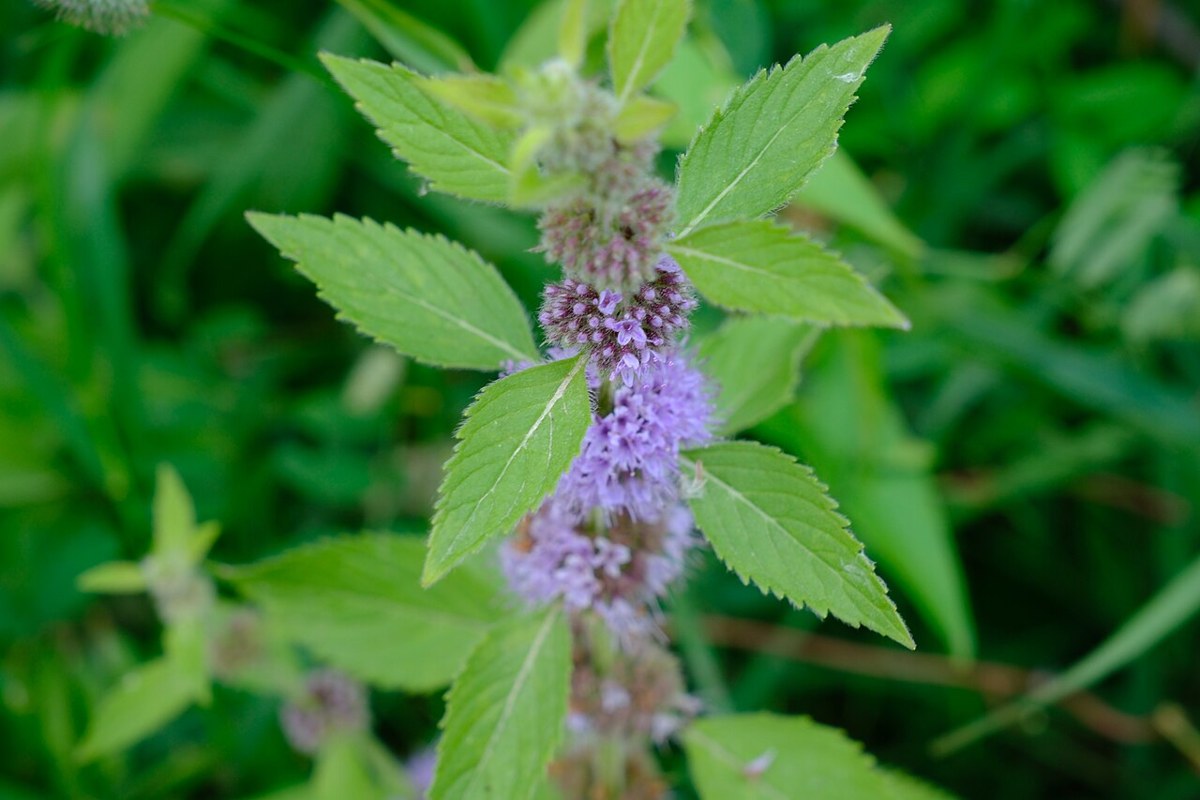
Spearmint and peppermint carry their flowers in narrow spikes at the tips of the stems. Spearmint has nearly stalkless, bright green, wrinkled leaves; peppermint has stalked, darker leaves, often purplish stems, and a cooling menthol taste. Apple mint has round, woolly, gray-green leaves. Pennyroyal is a low, creeping plant with small oval leaves and flowers in whorls like wild mint, but with a strong, sharp smell and a lower, sprawling habit; it usually grows in seasonally wet ground that dries in summer.
Mint Relatives
Many plants called “mint” belong to other genera: mountain mints (Pycnanthemum) of the East, coyote mints (Monardella) of the West, horsemints and bee balms (Monarda), giant hyssops (Agastache), bugleweeds (Lycopus, which look like wild mint but have no minty smell) and hedgenettles (Stachys). Many of these are native and excellent pollinator plants.
Quick Facts
| Genus | Mentha |
| Family | Lamiaceae (Mint family) |
| U.S. Native Species | 1: American wild mint (Mentha canadensis, often included in M. arvensis) |
| Common Non-Native Mints | Spearmint, peppermint, apple mint, water mint, horsemint, pennyroyal, Corsican mint and many hybrids and cultivars |
| Plant Type | Herbaceous perennials spreading by rhizomes or runners |
| Mature Height | About 6–30 in for wild mint; garden mints mostly 1–3 ft; Corsican mint under 1 in |
| Growth Rate | Fast |
| Sun Exposure | Full Sun to Part Shade |
| Water Needs | Moist to wet; wild mint grows on stream banks and in wet meadows |
| Soil Type | Rich, moist loam, silt or muck |
| Bloom Time | Mid to late summer (July–September) |
| Flower Color | White, pink or lavender |
| Deer Resistant | Yes; the strong scent deters most deer and rabbits |
| USDA Hardiness Zones | 3–8 for wild mint; garden mints mostly 4–9 |
| Wildlife Value | Nectar for small bees, wasps, flies and butterflies; wild mint provides cover along stream banks |
Native Range
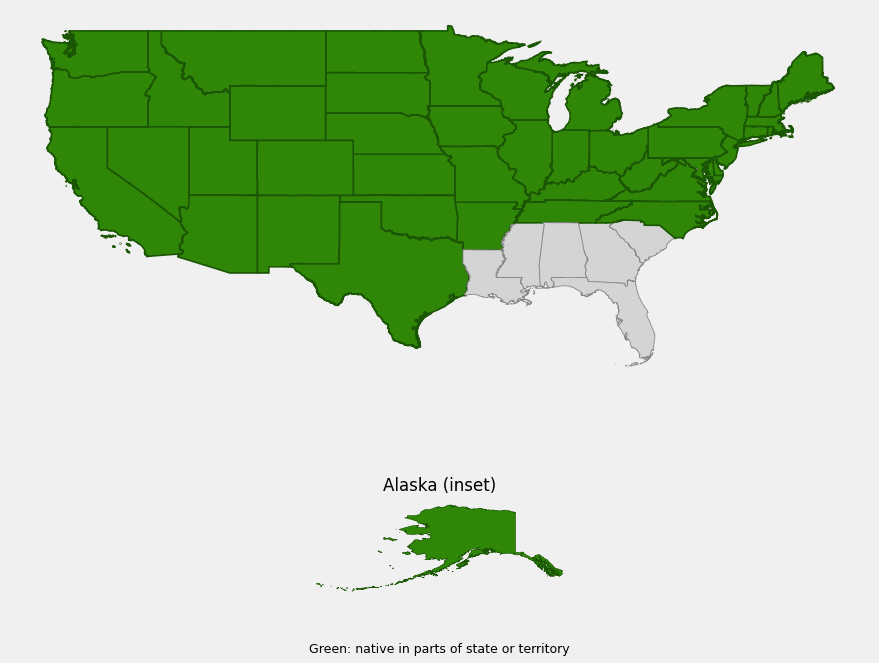
American wild mint is one of the most widespread wildflowers in North America. It grows from Alaska across Canada and south through nearly every state, from the wet meadows of Oregon and Washington and the mountain streams of the Rockies to the prairie potholes of the Dakotas and the river banks of New England. It is found from sea level to high mountain meadows, wherever the soil stays moist in summer.
It is rare or absent in the humid Deep South: it is not native in Florida, Georgia, Alabama, Mississippi, Louisiana or South Carolina, where any mint growing wild is an escaped garden plant. In Oregon it grows statewide in wet places, both west of the Cascades and in the high desert and Blue Mountains to the east.
Taxonomists disagree on its name. Some treat American wild mint as part of Mentha arvensis, a species that also grows across Europe and Asia; others separate the North American plants as Mentha canadensis. Either way, the native plant of North American wetlands is the same, and the European field mint is a separate plant that has also become naturalized here.
📋 Find native mint-family plants on our regional plant lists: OR west, WA west · ID, OR east, WA east · CA, NV · MT, WY · UT, CO west · AZ, NM · ND, SD, MN west · NE, KS, CO east · MI, WI, MN east · IL, IA, MO · OH, IN · KY, TN · NH, ME, VT · CT, MA, RI · NY, PA, NJ north · DE, NJ south, NY Long Island · MD, VA, WV · TX south/west/central · Alaska
Native Species
North America has one native mint. Its full Plant Native profile is linked below, followed by native plants in other genera that gardeners often use in its place.
American Wild Mint (Mentha arvensis / M. canadensis)
The only native Mentha, a 6–30 inch perennial of wet ground found in most of the country. Its leaves can be used like garden mint for tea, though the flavor varies from plant to plant. It spreads by rhizomes but is far less aggressive than spearmint or peppermint, and it is an excellent plant for rain gardens, pond edges and wet meadows. Plant it in moist soil in sun or light shade.
Native Alternatives in the Mint Family
For a dry, sunny Oregon pollinator garden, native relatives give the late-summer nectar of garden mint without the spread. Mountain coyote mint (Monardella odoratissima) is a fragrant, compact perennial of dry slopes in eastern Oregon and the mountains. Nettleleaf giant hyssop (Agastache urticifolia) has spikes of pink-violet flowers loved by bumble bees and hummingbirds. Native selfheal and great hedgenettle suit moist, partly shaded gardens west of the Cascades. In the East, mountain mints such as Virginia mountain mint and clustered mountain mint are some of the best pollinator plants available.
Non-Native Look-Alikes
Almost every mint sold for gardens is non-native. All of them spread by underground stems, and most will root from a broken piece of stem, which is how they travel down streams and ditches.
Spearmint (Mentha spicata)
From Europe and western Asia. Bright green, wrinkled, nearly stalkless leaves and slender flower spikes at the stem tips. Naturalized along streams and in moist waste places across much of the U.S. ‘Kentucky Colonel’ and the Moroccan and “mojito” mints are spearmint selections or spearmint hybrids.
Peppermint (Mentha × piperita)
A hybrid of water mint and spearmint, from Europe. Darker, stalked leaves, often purple-tinged stems, and a strong menthol flavor. Because it is a sterile hybrid it spreads only by runners, but it has escaped widely along ditches and streams. Chocolate mint and other flavored “mints” are peppermint cultivars. Oregon and Washington are among the country’s largest producers of peppermint oil.
Apple Mint, Water Mint and Horsemint
Apple mint (Mentha suaveolens) has round, woolly leaves; water mint (Mentha aquatica) has rounded flower heads at the stem tips and grows in shallow water; horsemint (Mentha longifolia) has long, gray, hairy leaves. Ginger mint and other “flavored” mints are hybrids among these species. All are European or Asian and can escape into wet places.
Pennyroyal (Mentha pulegium)
A low, creeping European mint that has invaded vernal pools, wet meadows and pastures in California and Oregon, where it crowds out native wetland plants. Its oil is highly toxic: pennyroyal oil has caused fatal liver and kidney poisoning in people and can poison pets. Do not plant it, and never use pennyroyal oil on yourself, children or animals.
Growing & Care Guide
Light
Mints grow in full sun to part shade. In hot, dry climates they appreciate afternoon shade.
Soil & Water
Mints want rich, evenly moist soil. American wild mint is happiest in wet ground, at the edge of a pond, rain garden or stream. Garden mints tolerate ordinary garden soil but sulk in drought.
Planting Tips
For the native wild mint, plant divisions or nursery plants in spring along a wet edge where it can form a patch. For garden mints, plant in containers: a pot on a patio, or a bottomless bucket sunk into the bed with the rim 2 inches above the soil so runners cannot escape over the top. Never plant non-native mints next to streams, ponds, ditches or wetlands, where broken stems can wash away and root downstream.
Pruning & Maintenance
Cut mint back by half after the first flowering to get a flush of fresh leaves, or harvest stems regularly to keep plants bushy. If you want garden mint to stop spreading, cut it back before it sets seed and pull runners as soon as they appear. Remove escaped garden mint from the edges of wet areas by digging out every piece of rhizome. Mint rust is a common fungal disease; cut out affected stems.
Propagation
Mints are propagated by division, by rooted runners or by stem cuttings, which root in a glass of water within a week or two. Most named garden mints do not come true from seed. American wild mint can also be grown from seed sown on the surface of moist soil in spring.
Landscape Uses
- Rain gardens, pond edges and wet meadows (American wild mint)
- Pollinator gardens, for late-summer nectar
- Kitchen herb gardens, in containers (garden mints)
- Streambank and wetland restoration within its native range (wild mint only)
Wildlife & Ecological Value
For Pollinators
Mint flowers are small and shallow, with easily reached nectar, so they draw a wide range of insects: small native bees such as sweat bees, honey bees, wasps, hover flies and small butterflies such as hairstreaks and skippers. Wild mint blooms in mid to late summer, a useful time for pollinators in wet meadows.
For Caterpillars and Other Wildlife
The strong-smelling oils in mint leaves deter most browsing mammals, and relatively few insects feed on mint. Native mint-family plants such as mountain mints, bee balms and giant hyssops are generally more valuable to native wildlife than garden mints.
Ecosystem Role
American wild mint helps bind soil on stream banks and pond edges and is part of the native wet-meadow plant community. Escaped garden mints and pennyroyal can form dense patches that displace native wetland plants.
Cultural & Historical Uses
Many Native American peoples across North America used wild mint as a beverage tea and a flavoring for food, and some used it to scent clothing and stored goods. Settlers used it in the same ways as the spearmint and peppermint they brought from Europe.
Spearmint and peppermint have been grown as herbs since ancient times in the Mediterranean and were among the first garden plants brought to the American colonies. Peppermint oil became a major American crop in the 1800s, first in New York and Michigan and later in the Pacific Northwest, where Oregon’s Willamette Valley and central Washington remain important growing areas.
Mint teas and flavorings are widely used today. Concentrated mint essential oils are a different matter: they can irritate skin and are dangerous to swallow, and pennyroyal oil is especially toxic.
Frequently Asked Questions
Is any mint native to Oregon?
Yes. American wild mint is native in wet places throughout Oregon. Spearmint, peppermint and the other garden mints are European or hybrid plants, and pennyroyal is an invasive weed in Oregon wetlands.
Is it okay to plant garden mint for pollinators?
Bees and other insects do visit garden mint flowers. Grow it in containers and well away from streams, ponds and ditches so it cannot spread into wild wetlands, and consider native mint-family plants such as mountain coyote mint, nettleleaf giant hyssop or, in the East, mountain mints.
How do I tell wild mint from spearmint?
Look at where the flowers are. Wild mint has its flowers in round clusters at the leaf joints along the stem, and the stem ends in leaves. Spearmint and peppermint have flowers in slender spikes at the top of the stem.
Can I use wild mint like garden mint?
Its leaves have long been used for tea and flavoring, but the scent and flavor vary between plants and some taste sharp. Make sure of your identification, avoid plants from polluted ditches or roadsides, and never confuse it with pennyroyal.
Is mint toxic to pets?
The ASPCA lists garden mints as toxic to dogs, cats and horses in quantity, causing vomiting and diarrhea, and concentrated mint essential oils are more dangerous. Pennyroyal and its oil are toxic to people and animals.

Looking for a nursery that carries American wild mint?
Browse our native plant nursery directory: Alaska, Arizona & Arkansas · California · Colorado, Connecticut & Delaware · Idaho, Illinois, Indiana, Iowa & Kansas · Kentucky, Maine, Maryland, Massachusetts, Michigan, Minnesota, Missouri & Montana · Nebraska, Nevada, New Hampshire, New Jersey, New Mexico, New York, North Carolina, North Dakota, Ohio & Oklahoma · Oregon · Pennsylvania, Rhode Island, South Dakota, Tennessee, Texas, Utah, Vermont & Virginia · Washington · West Virginia, Wisconsin & Wyoming

