
Alpine Marsh Violet (Viola palustris)
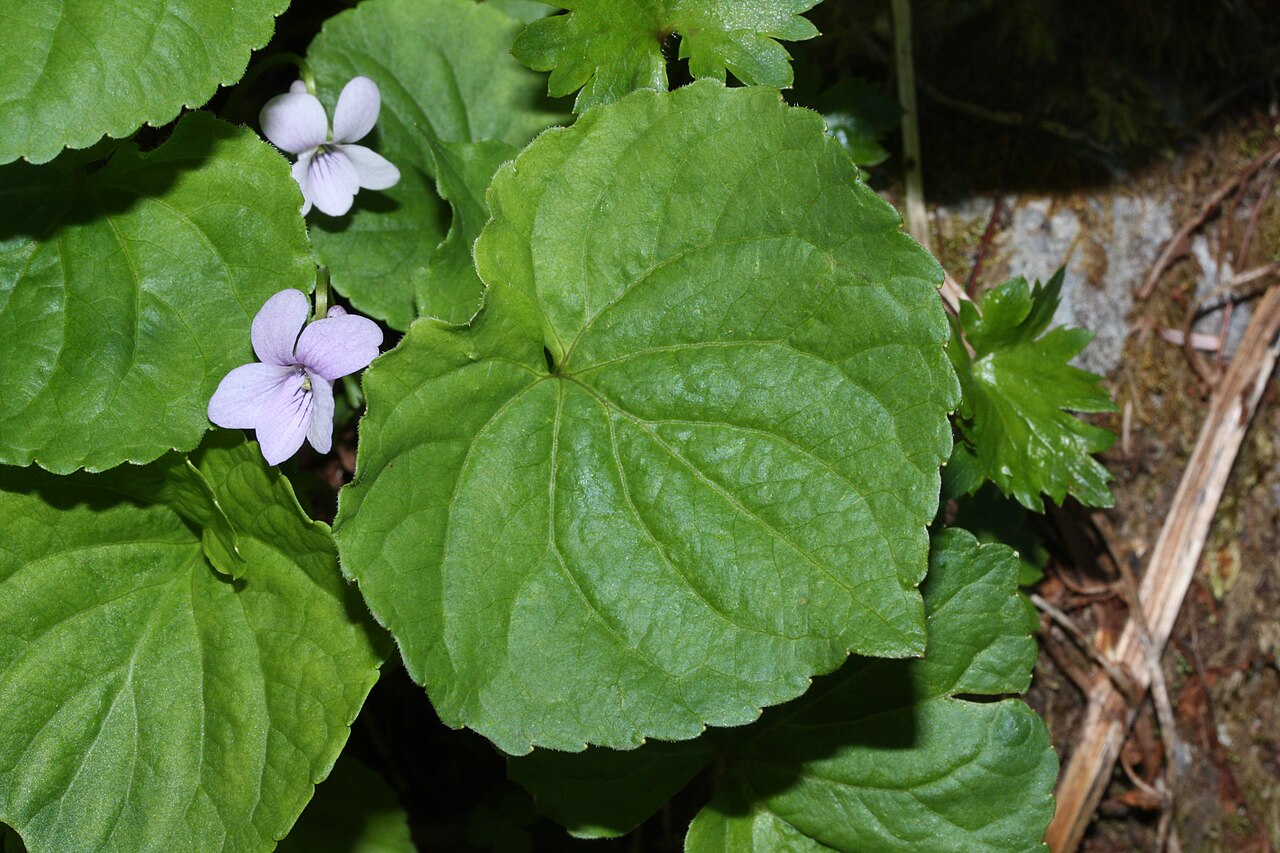
Viola palustris, Alpine Marsh Violet, usually just called marsh violet, is a small, stemless violet of bogs, fens, wet meadows and stream banks. It grows only 2 to 6 inches tall, with broad, rounded, heart- to kidney-shaped leaves that rise straight from creeping rhizomes, and from spring into summer it holds pale lilac to nearly white flowers, delicately veined with purple, on slender stalks just above them. Over time it forms loose carpets in wet, mossy ground.
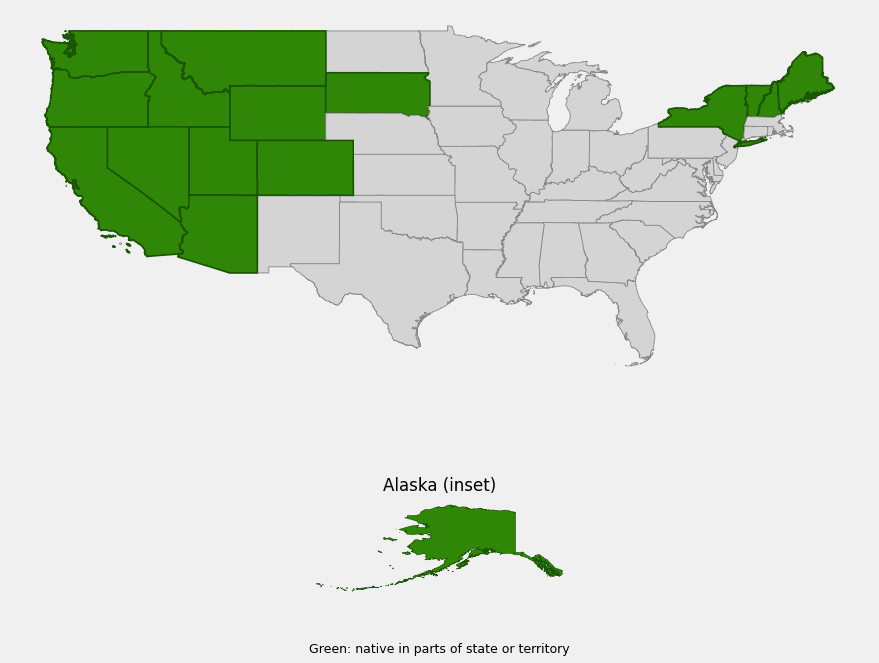
It is one of the most widespread violets in the world, native across the cool and boreal parts of the Northern Hemisphere, from Europe and northern Asia to Greenland and North America. In the United States, USDA PLANTS lists it as native in 16 states: Alaska and the western mountains from Washington and Oregon to California, Arizona, Colorado and the Black Hills of South Dakota, plus northern New England and New York. In the West it ranges from near sea level along the Pacific Northwest coast to subalpine meadows, which is where its USDA name “alpine marsh violet” comes from.
Marsh violet is not a showy garden plant, but it is a charming, easy groundcover for a bog garden, rain garden or pond margin in a cool climate, and, like other violets, it is a food plant for fritillary butterfly caterpillars. This guide covers how to identify it, where it grows and how to grow it.
Identification
Marsh violet is a “stemless” violet: leaves and flowers rise separately from an underground rhizome, with no leafy above-ground stem. Its combination of pale flowers, rounded leaves and wet habitat sets it apart from most other violets in its range.
Leaves
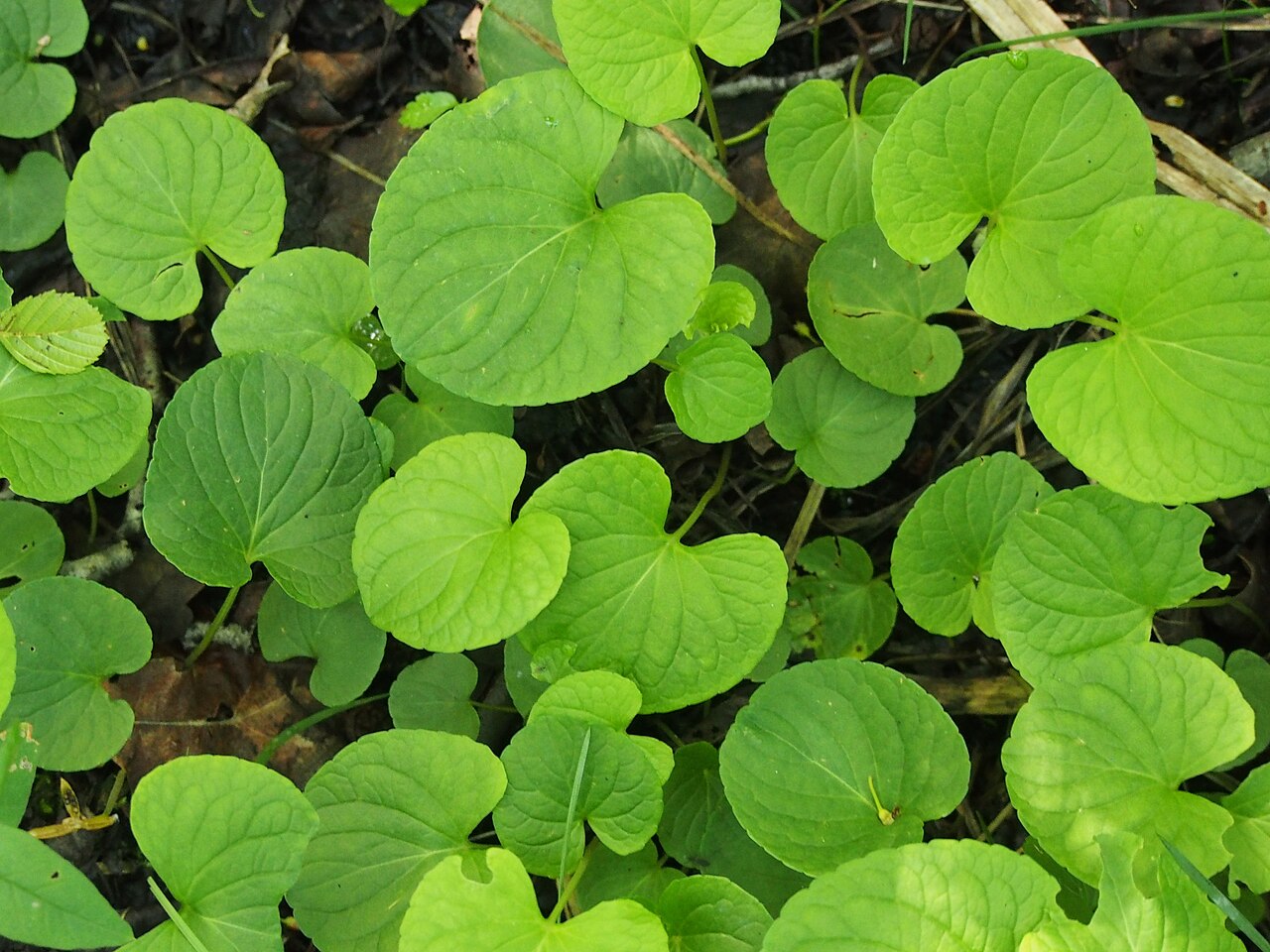
The leaves are smooth, thin, broadly heart-shaped to kidney-shaped, about 1 to 2 inches wide and often wider than long, with shallow rounded teeth. They stand on long, slender stalks, one or two at a time along the creeping rhizome rather than in a dense rosette, so a patch looks like a scattering of small round leaves across wet moss.
Flowers
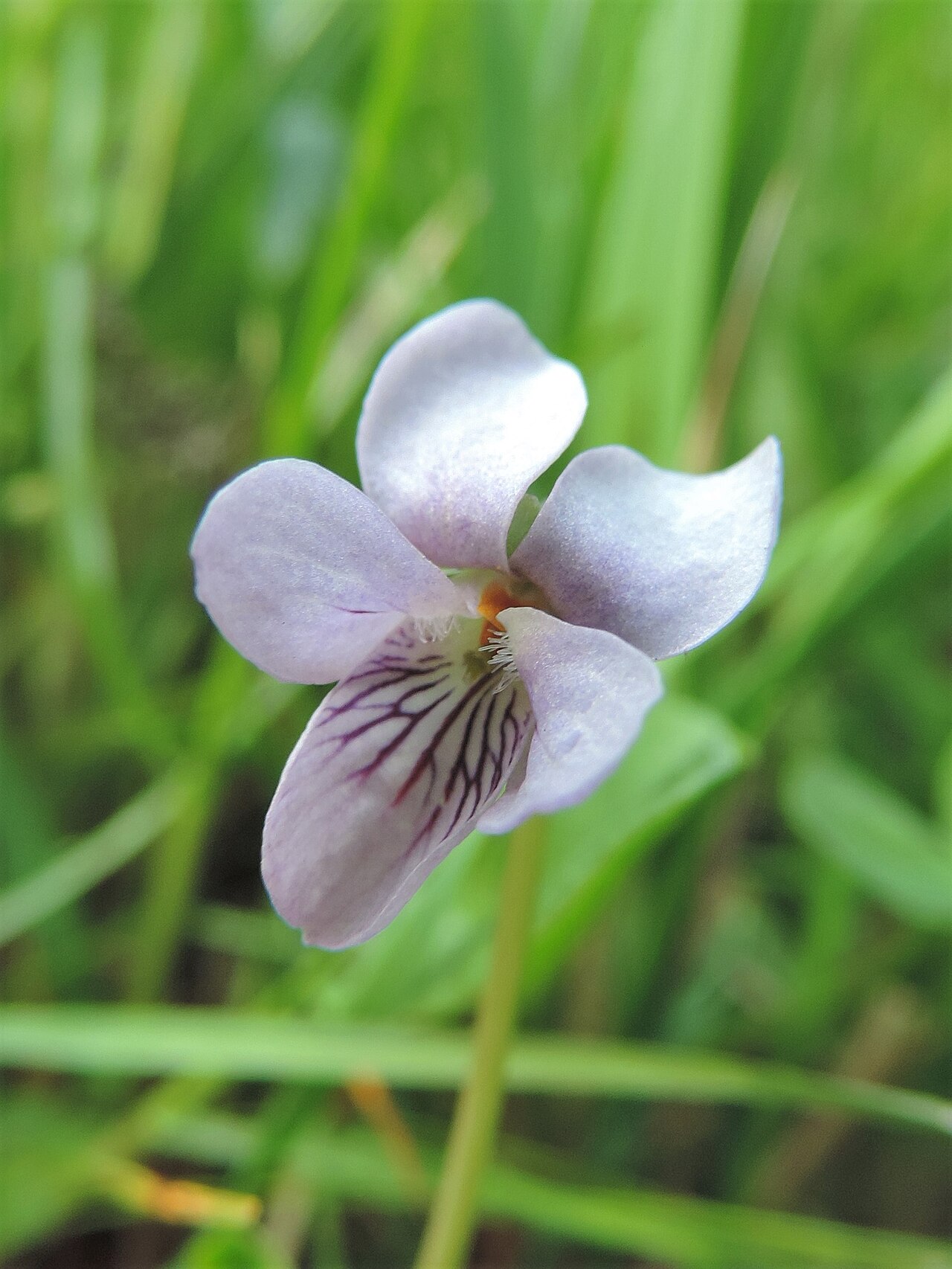
Flowers are about ½ inch across, pale lilac, lavender or almost white, borne singly on leafless stalks. The lower petal and usually the two side petals carry dark purple veins that guide insects to the short, blunt spur behind. The side petals are beardless or only slightly bearded. Bloom time runs from April at low elevations to July or August in the mountains and the far north.
Fruit & Seeds
After flowering, the flower stalk bends and the small, smooth, three-parted capsule ripens near the ground. When dry, the capsule splits and its walls squeeze the seeds out, flinging them a short distance. The seeds carry a small oily appendage (elaiosome) that ants collect, carrying the seeds farther.
Look-alikes
The closely related dwarf marsh violet (Viola epipsila subsp. repens) has slightly larger flowers and usually only two leaves per plant, and the two can hybridize. The purple-flowered Marsh Blue Violet of the East has deeper violet flowers held well above the leaves, with club-shaped hairs on the side petals. Early Blue Violet has a leafy stem and grows in drier ground.
Quick Facts
| Scientific Name | Viola palustris |
| Family | Violaceae (violet family) |
| Plant Type | Low, stemless perennial spreading by rhizomes |
| Mature Height | 2–6 in |
| Mature Spread | 6–18 in; forms loose patches |
| Growth Rate | Moderate |
| Sun Exposure | Part shade to full sun |
| Water Needs | High; constantly moist to wet soil |
| Soil Type | Peaty, mossy or mucky acidic soils; bogs, fens and seeps |
| Soil pH | About 4.5–6.5 |
| Bloom Time | April–August, depending on elevation and latitude |
| Flower Color | Pale lilac to nearly white, veined purple |
| Fall Color | None; leaves die back in fall |
| Fruit | Small three-parted capsule that ejects seeds |
| Deer Resistant | Moderately; occasionally browsed |
| USDA Hardiness Zones | 2–7 |
Native Range
USDA PLANTS records marsh violet as native in Alaska, Washington, Oregon, Idaho, Montana, Wyoming, California, Nevada, Utah, Colorado, Arizona and South Dakota in the West, and in Maine, New Hampshire, Vermont and New York in the Northeast. It is common in the Pacific Northwest and Alaska, from coastal bogs and wet forest openings up to subalpine meadows. Farther south and east it becomes a mountain plant, found in the Sierra Nevada, the Rockies and the high plateaus of Utah and Arizona. The Black Hills of South Dakota hold an isolated outlying population.
In the Northeast it is mainly a plant of cold, wet places in the mountains of northern New England, such as wet subalpine ground in New Hampshire’s White Mountains, with scattered records in Maine, Vermont and New York. In Canada it grows across the country from British Columbia to Labrador, and worldwide it ranges through Greenland, Iceland, Europe and northern Asia.
It grows in sphagnum bogs and fens, wet meadows, seeps, the mossy banks of streams and lakes, swampy forest openings and wet subalpine meadows, usually in acidic, constantly wet soil and in sun to partial shade.
📋 Regional plant lists featuring Alpine Marsh Violet: Alaska · Western Oregon & Western Washington · Idaho, Eastern Oregon & Eastern Washington · California & Nevada · Arizona & New Mexico · Utah & Western Colorado · Montana & Wyoming · North Dakota, South Dakota & Western Minnesota · New Hampshire, Maine & Vermont · New York, Pennsylvania & Northern New Jersey · Delaware, Southern New Jersey & Long Island
Growing & Care Guide
Marsh violet is easy to grow if you can give it what it needs most: cool, constantly moist, acidic soil. It suits bog gardens, the wet edge of a pond, a shady rain garden or a mossy seep. It is offered by a few native nurseries in the Pacific Northwest and by specialist bog-plant growers. Buy nursery-propagated plants or grow it from seed rather than digging from the wild.
Light
Part shade to full sun. In cool, wet climates it takes full sun; in warmer areas, give it afternoon shade and keep the soil wet.
Soil & Water
Use a peaty, acidic, humus-rich soil that never dries out. A mix of peat-free compost, sand and leaf mold, or a sphagnum bog bed, works well. It tolerates saturated soil and shallow seepage but not long periods of standing water over the crown. It does poorly in hot, humid summers and in alkaline soil.
Planting Tips
Plant in spring or early fall, about 6 to 12 inches apart, and water in well. In a bog garden, set plants among mosses and low sedges, where they can creep freely.
Pruning & Maintenance
No pruning is needed. Keep it from being smothered by taller, aggressive plants. Leaves die back in fall and regrow from the rhizome in spring.
Propagation
Divide established patches in spring by cutting off rooted sections of rhizome. Seed needs cold, moist stratification: sow fresh seed outdoors in fall, or refrigerate it in moist sand for 2 to 3 months before spring sowing. Collect capsules just before they split, or bag them, because ripe capsules eject their seeds.
Landscape Uses
- Bog gardens: a delicate native groundcover among mosses, sundews and sedges
- Pond and stream margins: creeps through wet soil at the water’s edge
- Shady rain gardens: for cool climates where the soil stays wet
- Butterfly gardens: a caterpillar host for fritillary butterflies
- Wetland restoration: for bogs, fens and wet meadows in the Northwest and mountains
Wildlife & Ecological Value
Small as it is, marsh violet feeds early pollinators and the caterpillars of some of the North’s most characteristic butterflies.
For Pollinators
The purple-veined petals guide small bees, bee flies and hoverflies to the nectar in the short spur, and the flowers are an early-season resource in bogs and mountain meadows.
For Butterflies
Violets are the caterpillar food plants of fritillaries. In the wet meadows and bogs where marsh violet grows, it is used by violet-feeding fritillaries, including the small, bog-loving fritillaries of the genus Boloria, and greater fritillaries (Speyeria) also use violets as hosts.
For Birds & Mammals
Ground-feeding birds such as juncos and sparrows pick up the seeds, and grouse, hares and deer occasionally graze the leaves. Ants carry off the seeds for their oily appendages and help disperse them.
Ecosystem Role
In bogs and fens, marsh violet is part of the low layer of herbs and mosses that defines these wetlands. Its presence indicates cool, wet, acidic conditions that are increasingly threatened by drainage, development and warming at the southern edge of its range.
Cultural & Historical Uses
The name palustris is Latin for “of the marsh,” and Carl Linnaeus described the species in 1753 from European plants. In Europe it is a familiar plant of bogs and wet heaths, called marsh violet in English and Sumpf-Veilchen in German.
North American botanists have long debated how to treat the pale, stemless marsh violets of the West and North. Some plants have been called Viola palustris var. brevipes, and the closely related Viola epipsila, the dwarf marsh violet, overlaps with it and hybridizes with it. In practice, any small, pale violet with rounded leaves in a western bog is likely to belong to this group.
Unlike the familiar lawn violets, marsh violet is a plant of wild, wet places. In the Northeast it is mostly confined to cold mountain wetlands, and some states with only a few populations track it as a rare plant.
Frequently Asked Questions
Where does marsh violet grow?
In bogs, fens, wet meadows, seeps and stream banks across Alaska and the western mountains, in the Black Hills, and in northern New England and New York, as well as across Canada, Europe and northern Asia.
What color are marsh violet flowers?
Pale lilac, lavender or almost white, with dark purple veins on the lower petals. They are about ½ inch across.
Can I grow marsh violet in my garden?
Yes, if you can keep the soil cool, acidic and constantly moist, for example in a bog garden or at a shady pond edge. It struggles in hot, dry or alkaline conditions.
Is marsh violet a host plant for butterflies?
Yes. Like other violets, it feeds the caterpillars of fritillary butterflies, including bog-loving fritillaries of the genus Boloria.
Is marsh violet edible?
The leaves and flowers of many violets are edible, but marsh violet is small and slow-growing, and wild patches are better left alone. Never eat a wild plant unless you are sure of its identification.

Looking for a nursery that carries Alpine Marsh Violet?
Browse our native plant nursery directory: Alaska & Arizona · California · Colorado · Idaho · Maine & Montana · Nevada, New Hampshire & New York · Oregon · South Dakota, Utah & Vermont · Washington · Wyoming

