
Water Parsnip (Sium suave)
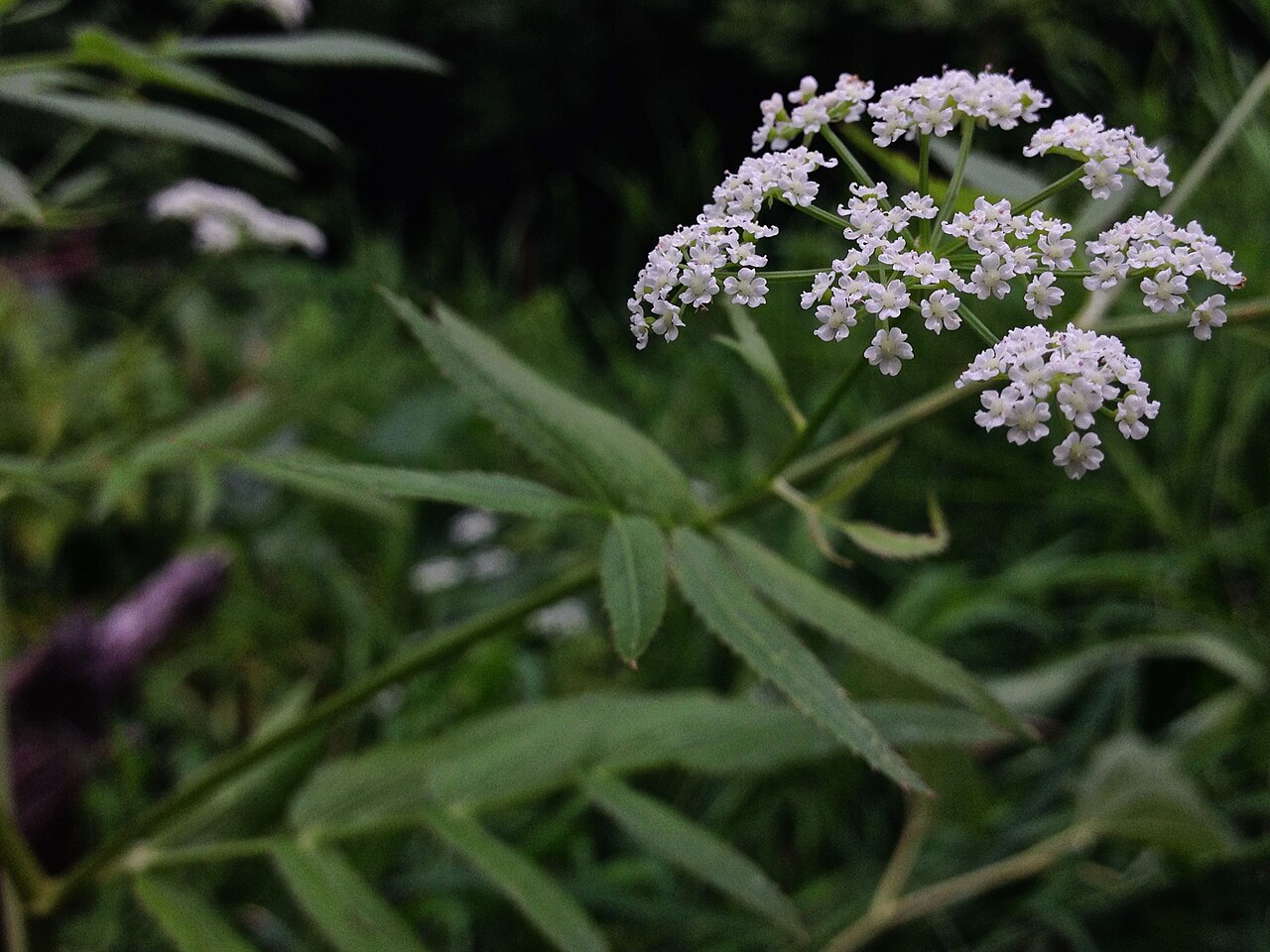
Sium suave, known as Water Parsnip, hemlock water parsnip (the USDA name) or common water parsnip, is a tall wetland wildflower of marshes, pond edges and stream banks across most of North America. It grows 2 to 6 feet tall, with stout, ridged, hollow stems, once-divided leaves with narrow, toothed leaflets, and flat-topped clusters of tiny white flowers from midsummer to early fall.
It belongs to the carrot or parsley family (Apiaceae), a family that includes both food plants and some of the most poisonous plants in North America. Water parsnip closely resembles the deadly spotted water hemlock (Cicuta maculata), which grows in the same habitats. Safety note: never eat any part of a wild white-flowered plant in this family unless an expert has identified it; mistakes with water hemlock are often fatal.
Water parsnip is native from Alaska and across Canada through nearly all of the lower 48 states. It is an excellent plant for pond margins, rain gardens and wetland restoration, and its flowers attract a wide variety of pollinators. This guide covers how to identify it, how to tell it from water hemlock, where it grows and how to grow it.
Identification
Water parsnip is a tall, upright plant of shallow water and wet ground, crowned in summer with white, umbrella-like flower clusters. The leaves, with their evenly spaced pairs of narrow, sharply toothed leaflets, are the most useful feature for identification.
Growth Habit
It is a perennial, usually 2 to 6 feet tall, from a cluster of fibrous roots. The stems are stout, hollow and strongly ridged or corrugated, branching in the upper part. Plants often grow with their bases in shallow water or saturated mud.
Leaves
The leaves are alternate and pinnately compound, with 7 to 17 narrow, lance-shaped leaflets, each 1 to 5 inches long, arranged in pairs along the stalk with one at the tip. The leaflets have fine, sharp teeth along the edges. Leaves that develop underwater in spring are often finely divided and feathery, quite unlike the emergent leaves.
Flowers
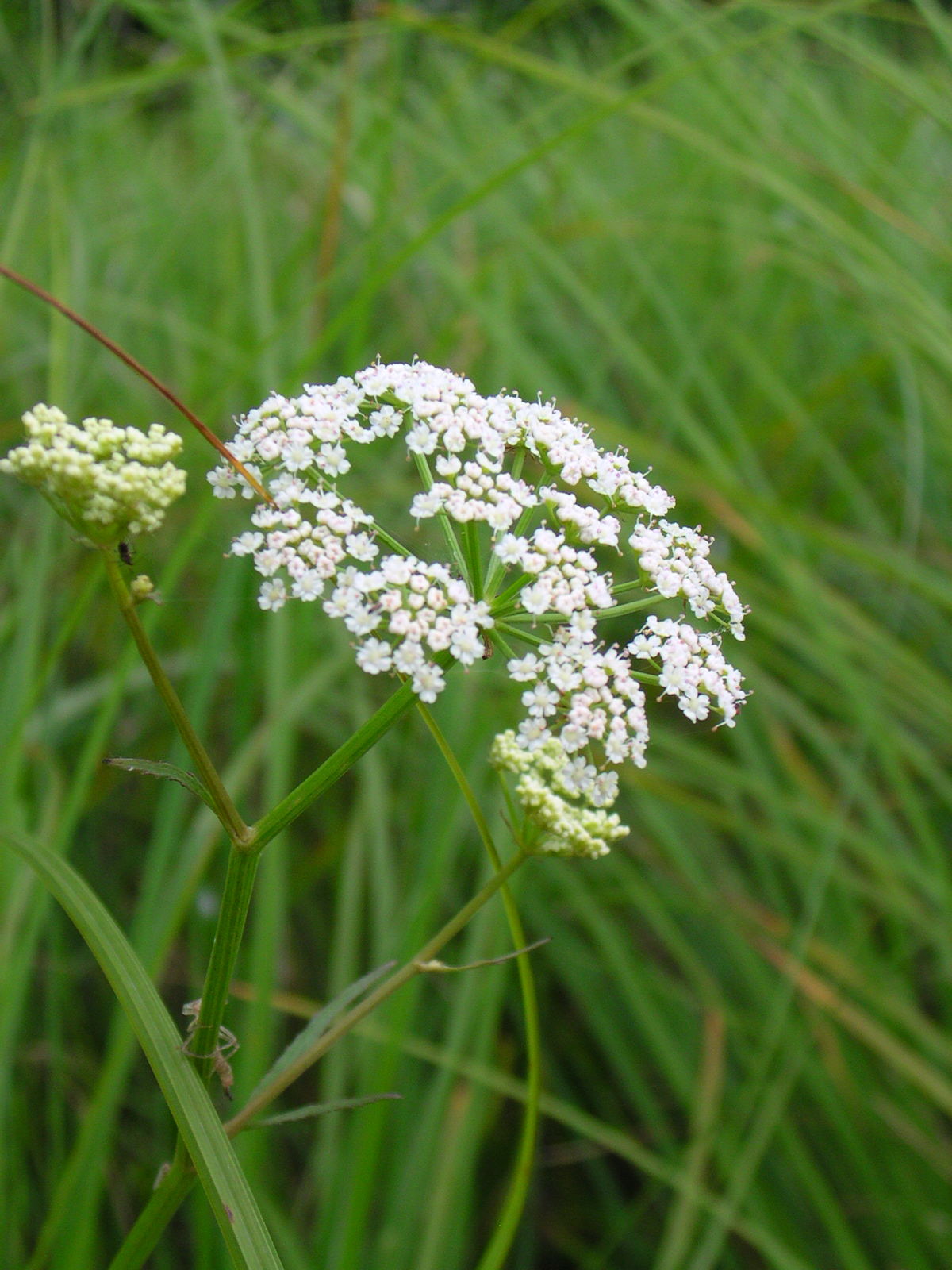
The tiny white flowers are borne in compound umbels, flat-topped clusters 2 to 5 inches across made up of many smaller umbels. Narrow, leaf-like bracts surround the base of both the main umbel and the smaller ones. Bloom time is mainly July to September.
Fruit & Seeds
The small, oval, flattened fruits, about 1/8 inch long, have prominent corky ribs. They split into two one-seeded halves that can float and are dispersed by water.
Water Hemlock and Other Look-alikes
Spotted water hemlock grows in the same places and has similar white umbels, but its leaves are two or three times divided, and the leaf veins usually run to the notches between the teeth rather than to the tips. Its stems are often streaked or mottled with purple, and its lower stem base contains chambered, hollow cavities with an oily yellow liquid. Water parsnip has once-divided leaves with veins running to the tips of the teeth. Because the two can be confused, and both are considered toxic, treat any similar plant as poisonous.
Quick Facts
| Scientific Name | Sium suave Walter |
| Family | Apiaceae (carrot or parsley family) |
| Plant Type | Herbaceous perennial wetland wildflower |
| Mature Height | 2–6 ft |
| Mature Spread | 1–2 ft |
| Growth Rate | Moderate to fast |
| Sun Exposure | Full sun to part shade |
| Water Needs | High; wet soil or shallow water up to about 6 in deep |
| Soil Type | Mucky, silty or sandy wet soils; marsh and shoreline mud |
| Soil pH | About 5.5–8.0 |
| Bloom Time | July–September |
| Flower Color | White |
| Fall Color | Foliage yellows and dies back |
| Fruit | Small, ribbed, oval fruit that splits in two |
| Deer Resistant | Moderately; considered toxic and seldom browsed |
| USDA Hardiness Zones | 3–9 |
Native Range
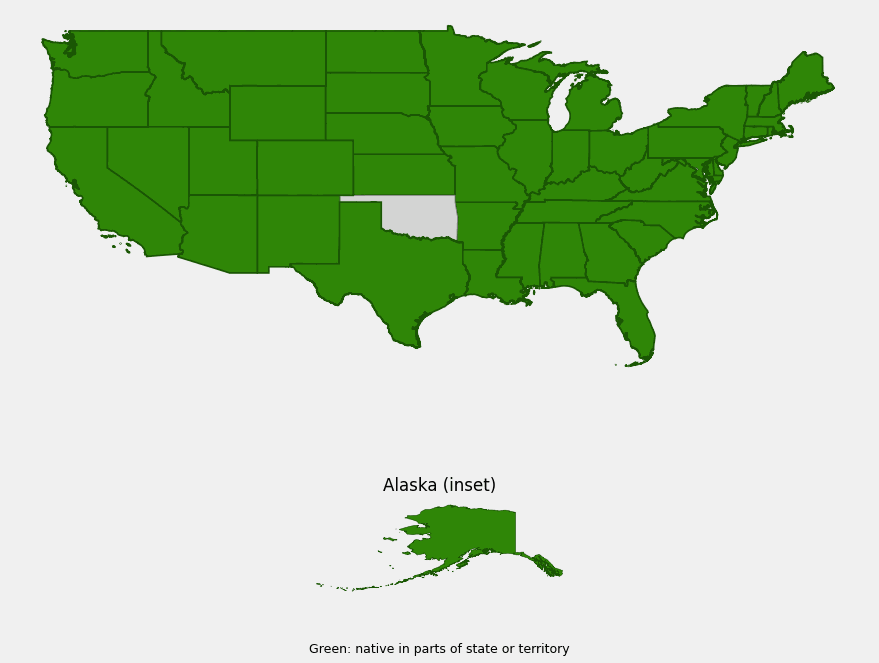
Water parsnip has one of the widest ranges of any North American wetland wildflower. USDA PLANTS lists it as native in Alaska, across Canada from Yukon and British Columbia to Newfoundland, and in nearly every state of the lower 48 except Oklahoma. A closely related variety also grows in eastern Asia.
It is most common in the glaciated North, the Great Lakes region, the Northeast and the northern Great Plains, where marshes and wet meadows are abundant. In the Southeast it is more scattered, mainly in freshwater marshes and swamps, and in the arid West it is confined to the wet edges of lakes, rivers, springs and mountain meadows.
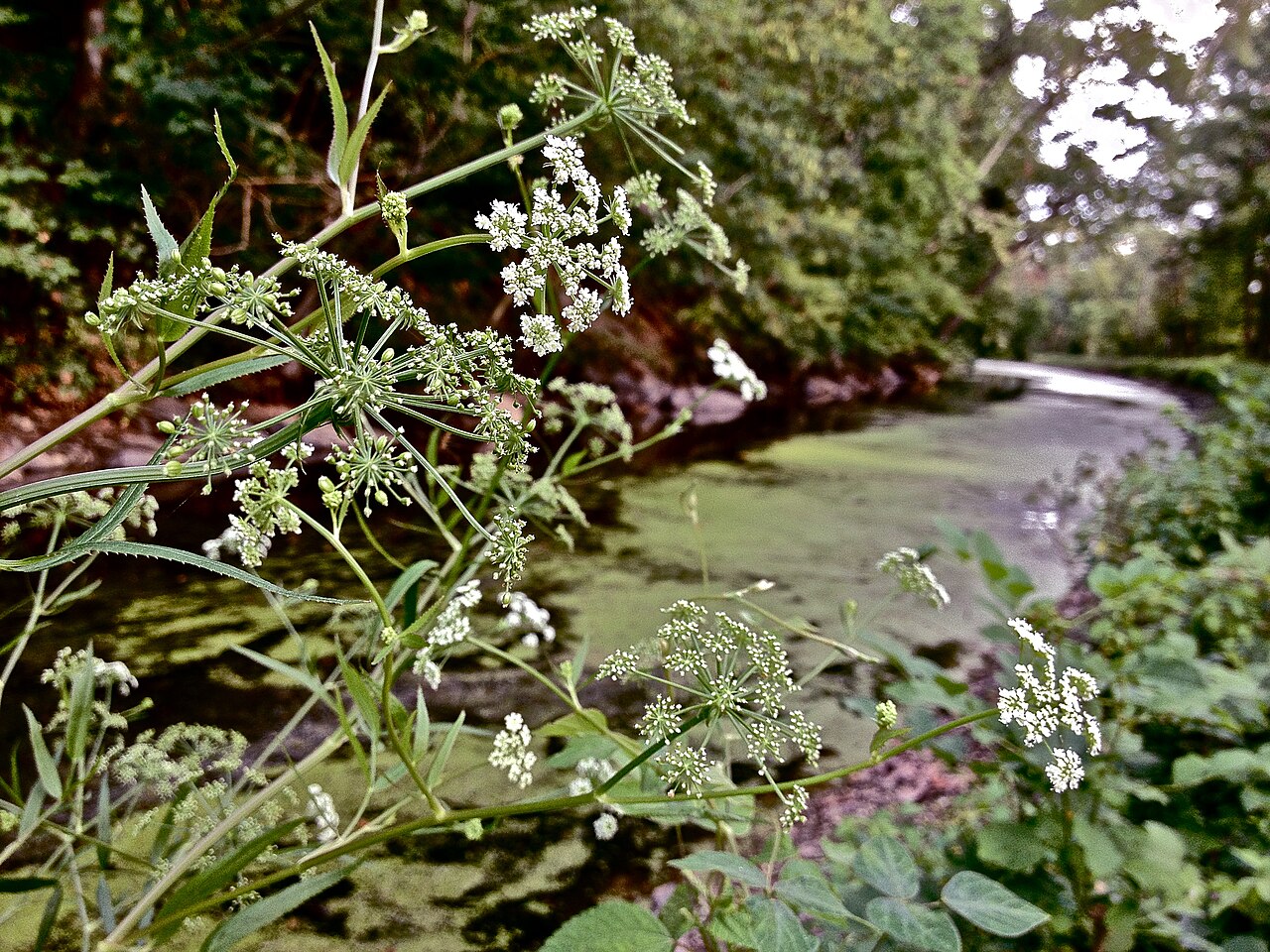
It grows in shallow water and saturated soil: freshwater marshes, wet meadows, fens, pond and lake shores, slow streams, river backwaters, ditches and swamp openings. It is found from sea level to moderate elevations in the mountains.
📋 Regional plant lists featuring Water Parsnip: New York, Pennsylvania & Northern New Jersey · Idaho, Eastern Oregon & Eastern Washington · Ohio & Indiana · Montana & Wyoming · Michigan, Wisconsin & Eastern Minnesota · Kentucky & Tennessee · Nebraska, Kansas & Eastern Colorado · Utah & Western Colorado · Connecticut, Massachusetts & Rhode Island · New Hampshire, Maine & Vermont · Maryland, Virginia & West Virginia · Delaware, Southern New Jersey & Long Island · Arizona & New Mexico · Illinois, Iowa & Missouri · Alabama, Georgia & Mississippi · Alaska · North & South Florida · North & South Carolina · Arkansas, Louisiana, Eastern Oklahoma & Eastern Texas · North Dakota, South Dakota & Western Minnesota · Western Oregon & Western Washington · California & Nevada
Growing & Care Guide
Water parsnip is easy to grow in any consistently wet, sunny spot, such as a pond edge, bog garden, rain garden basin or wetland restoration site. It is sold by some native wetland nurseries as plants or seed. Because it is considered toxic and resembles water hemlock, label it clearly and plant it away from areas where children forage or play.
Light
Plant it in full sun to part shade. It flowers most heavily in full sun.
Soil & Water
It needs constantly moist to wet soil and grows well in shallow standing water up to about 6 inches deep. Mucky, silty or sandy soils all work. It will not tolerate drying out for long, so it is not suitable for ordinary garden beds.
Planting Tips
Set plants at the water’s edge or in shallow water in spring, about 1 to 2 feet apart. In ponds, plants can be grown in submerged containers. Combine it with pickerelweed, arrowhead, blue flag iris, swamp milkweed and sedges for a natural, pollinator-rich shoreline.
Pruning & Maintenance
Little care is needed. Cut back the dead stems in late winter or early spring, wearing gloves. It may self-sow in wet ground; remove unwanted seedlings while young.
Propagation
Grow it from seed sown in fall or after cold, moist stratification, keeping the soil constantly wet. Established clumps can also be divided in spring. Wear gloves when handling roots and stems.
Landscape Uses
- Pond and stream margins: a tall, white-flowered plant for shallow water and wet banks
- Rain gardens and bioswales: tolerates periodic flooding in the wettest zone
- Pollinator gardens: late-summer flowers visited by many bees, wasps, flies and beetles
- Butterfly gardens: a larval host plant for black swallowtails
- Wetland restoration: a widespread native marsh plant for most of North America
Wildlife & Ecological Value
Water parsnip is a valuable late-summer resource in wetlands, where its open, flat flower clusters are easy for many small insects to use.
For Pollinators
The small, open flowers offer easily reached nectar and pollen, attracting a wide variety of short-tongued insects: small native bees, wasps, flower flies, soldier flies and beetles. Like other members of the carrot family, it is a larval host plant for the black swallowtail butterfly, whose caterpillars feed on the leaves.
For Birds
Marsh birds use stands of water parsnip and its companions for cover, and insect-eating birds forage among the flowers. Some waterfowl and marsh birds may eat the seeds.
For Mammals
Muskrats and other wetland mammals may eat the plants, and deer occasionally browse them, although the plant is considered toxic to livestock.
Ecosystem Role
Water parsnip helps bind shoreline mud with its roots and adds plant diversity to marshes and wet meadows. Its floating fruits spread along waterways, allowing it to colonize new wetland edges. It is a common component of healthy, native-dominated wetland plant communities across the continent.
Cultural & Historical Uses
Some Indigenous peoples in North America are reported to have used the roots of water parsnip as food, and the young plants have been mentioned as edible in some older sources. Other sources consider the plant toxic, and it is very easy to confuse with water hemlock, one of the most poisonous plants on the continent. For these reasons, water parsnip should never be gathered for food.
The species was described by Thomas Walter in 1788 in his Flora Caroliniana. The species name suave means “sweet” or “pleasant”, perhaps referring to the scent of the plant. The genus name Sium is an old Greek name for a water plant.
The name hemlock water parsnip used by USDA reflects the strong resemblance to water hemlock, with which it often grows. Learning to tell the two apart is a classic exercise for botany students and wetland naturalists.
Frequently Asked Questions
Is water parsnip poisonous?
It is generally considered toxic and should never be eaten. It also closely resembles spotted water hemlock, which is deadly, so any similar wild plant should be treated as poisonous.
How do I tell water parsnip from water hemlock?
Water parsnip has once-divided leaves with narrow, toothed leaflets whose veins run to the tips of the teeth. Water hemlock has two- or three-times divided leaves with veins running to the notches, and often purple-streaked stems.
Where does water parsnip grow?
It grows in marshes, wet meadows, pond and lake shores, slow streams and ditches from Alaska and Canada through nearly all of the lower 48 states.
Can I grow water parsnip in a pond?
Yes. It grows well in full sun to part shade in wet soil or shallow water up to about 6 inches deep, and it can be grown in submerged pots.
Is water parsnip good for butterflies?
Yes. Its flowers attract many pollinators, and it is a larval host plant for the black swallowtail butterfly.

Looking for a nursery that carries Water Parsnip?
Browse our native plant nursery directory: Alabama, Alaska, Arizona & Arkansas · California · Colorado, Connecticut, Delaware, Florida & Georgia · Idaho, Illinois, Indiana, Iowa & Kansas · Kentucky, Louisiana, Maine, Maryland, Massachusetts, Michigan, Minnesota, Mississippi, Missouri & Montana · Nebraska, Nevada, New Hampshire, New Jersey, New Mexico, New York, North Carolina, North Dakota & Ohio · Oregon · Pennsylvania, Rhode Island, South Carolina, South Dakota, Tennessee, Texas, Utah, Vermont & Virginia · Washington · West Virginia, Wisconsin & Wyoming

