
American Bugleweed (Lycopus americanus)
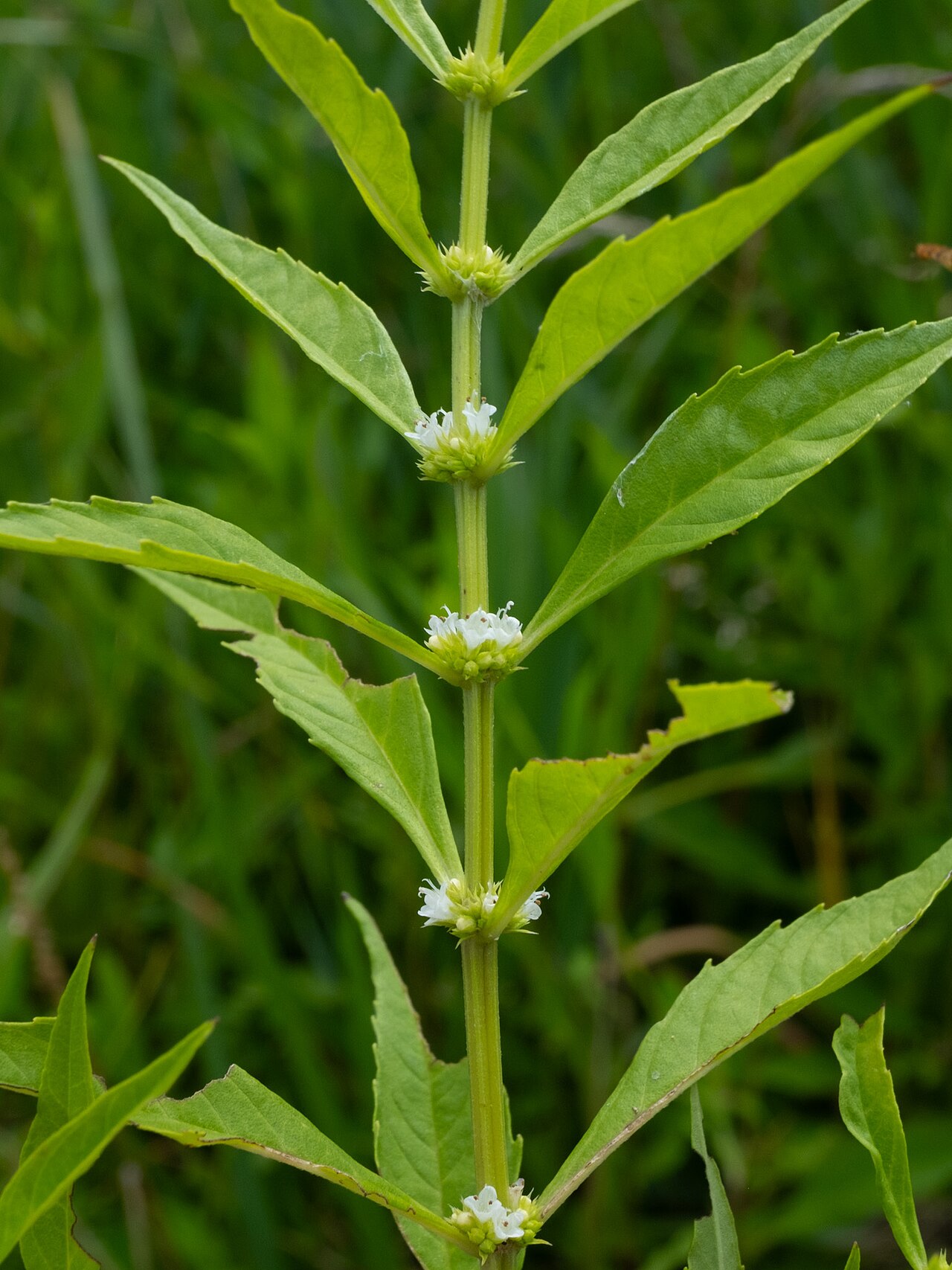
Lycopus americanus, known as American Bugleweed, American water horehound (the name USDA uses) or cut-leaved water horehound, is a common native perennial of wet ground across almost all of North America. It is a member of the mint family (Lamiaceae) with the square stems and paired leaves typical of mints, but it has almost no minty scent. From early summer into fall it carries dense rings of tiny white flowers tucked tightly against the stem where each pair of leaves attaches.
Its sharply toothed leaves, the lower ones cut almost into lobes, set it apart from its relatives. It grows 1 to 3 feet tall along pond and lake shores, in marshes, wet meadows, ditches, fens and stream banks, and it spreads by underground runners into loose colonies. It is one of the most widespread wetland wildflowers on the continent.
American bugleweed is not a showy plant, but it is a dependable, easy native for rain gardens, pond edges and wet meadow plantings. Its small flowers draw a steady stream of tiny bees, wasps and flies, and its foliage helps stabilize muddy shorelines.
Identification
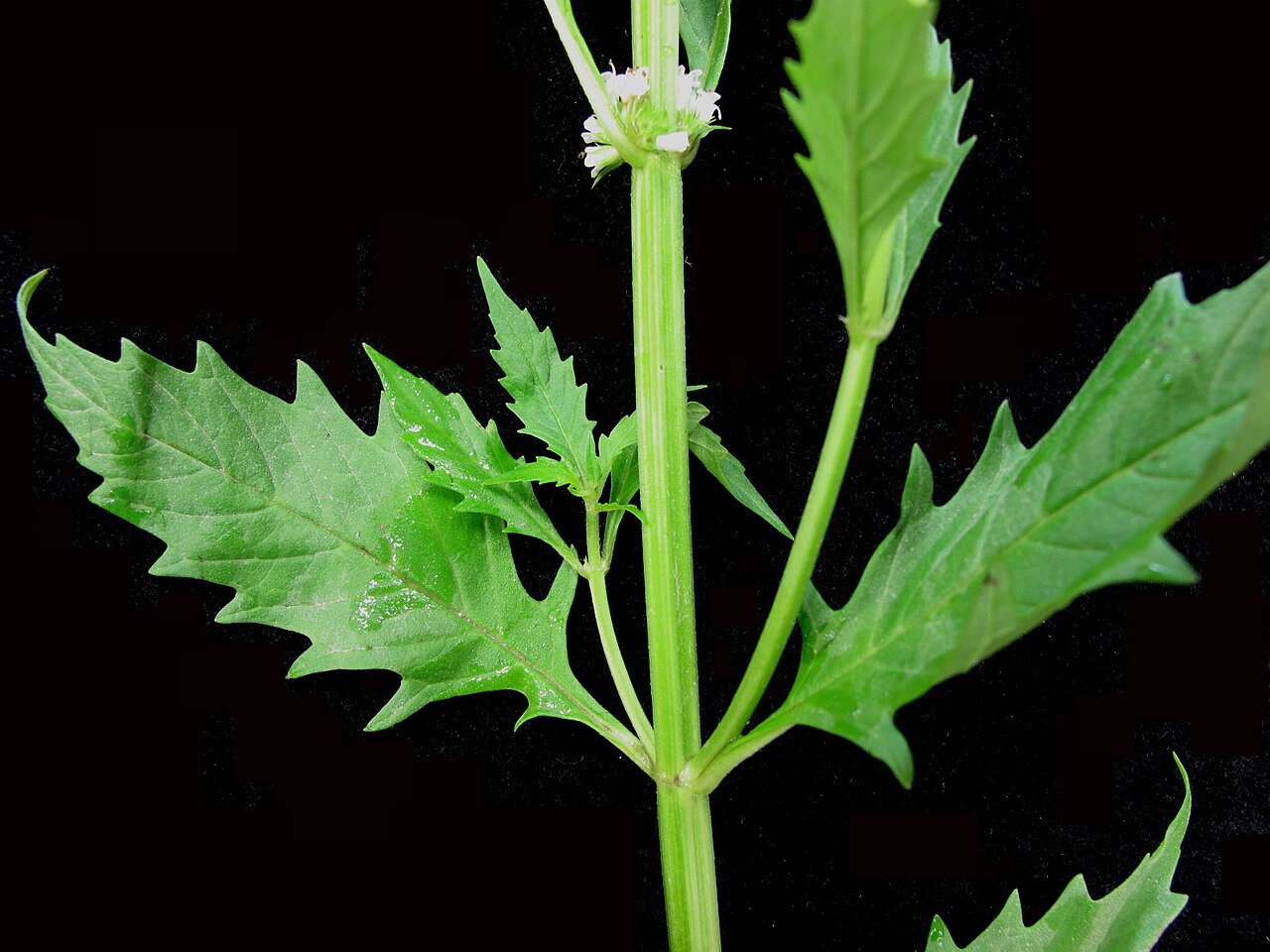
Several bugleweeds (Lycopus) look alike, and all have square stems, opposite leaves and whorls of tiny white flowers in the leaf axils. American bugleweed is usually the easiest to identify because its lower leaves are deeply cut, almost pinnately lobed.
Growth Habit
An upright perennial 1 to 3 feet tall, with a square, smooth or slightly hairy stem that is usually unbranched or sparingly branched. It spreads by slender underground stolons and forms loose colonies, but it does not produce the thick tubers found on northern bugleweed (L. uniflorus).
Leaves
Leaves are opposite, lance-shaped, about 1½ to 3 inches long, tapered at both ends and often nearly stalkless. The lower and middle leaves have large, irregular, jagged teeth, and near the base they are cut almost to the midrib into narrow lobes. Upper leaves are smaller and less toothed. Unlike most mints, the crushed leaves have only a faint smell.
Flowers
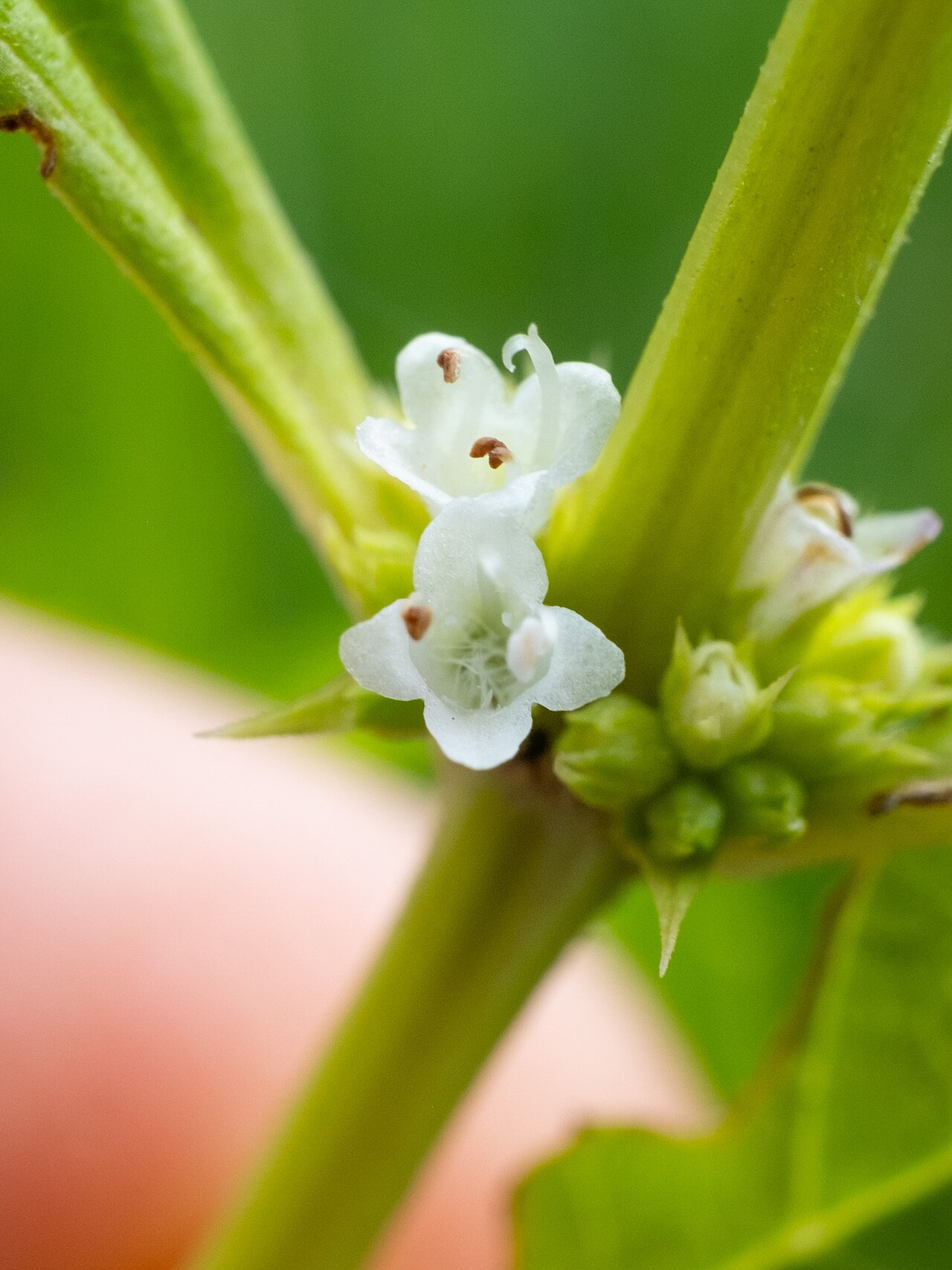
Tiny, bell-shaped white flowers about ⅛ inch long grow in dense, rounded clusters around the stem at each leaf pair. Each flower has four nearly equal lobes, sometimes with small purple dots, and two stamens that stick out slightly. The calyx has four or five narrow, sharp-pointed teeth that are longer than the nutlets, another useful feature. Bloom time is June to September.
Virginia bugleweed (L. virginicus) has leaves that are toothed but never lobed, and often purple-tinged stems. Gypsywort (L. europaeus), a European species naturalized in the East, can also have lobed lower leaves but is more hairy overall.
Fruit & Seeds
Each flower produces four small, flattened nutlets with thick, corky edges. The corky tissue helps them float, so they are carried by water along shorelines and streams. Seed clusters remain on the stem in fall and winter.
Quick Facts
| Scientific Name | Lycopus americanus Muhl. ex W. Bartram |
| Family | Lamiaceae (mint family) |
| Plant Type | Herbaceous perennial, spreading by stolons |
| Mature Height | 1–3 ft |
| Mature Spread | 1–2 ft; forms loose colonies |
| Growth Rate | Moderate to fast |
| Sun Exposure | Full sun to partial shade |
| Water Needs | Wet to moist; tolerates shallow standing water |
| Soil Type | Mucky, loamy, sandy or clay soils of wetlands |
| Soil pH | Slightly acidic to alkaline (about 5.5–8.0) |
| Bloom Time | June–September |
| Flower Color | White (sometimes with purple dots) |
| Fall Color | Leaves may turn reddish-purple |
| Fruit | Four corky, floating nutlets per flower |
| Deer Resistant | Yes; seldom browsed |
| USDA Hardiness Zones | 3–9 |
Native Range
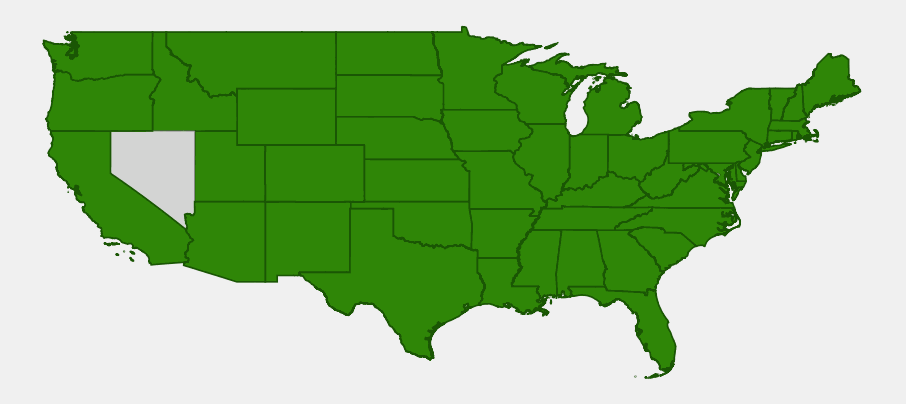
American bugleweed has one of the widest ranges of any North American wetland wildflower. USDA PLANTS lists it as native in 47 states, absent only from Alaska, Hawaii and Nevada, and it grows across southern Canada from British Columbia to Newfoundland and the Maritime provinces. It is most common in the Northeast, the Great Lakes region and the northern Great Plains.
It is widespread in the East and Midwest, becomes more scattered in the arid Southwest and the Intermountain West, where it is limited to springs, ditches and stream banks, and is less common in the far Southeast. In Texas it is most frequent in the eastern and central parts of the state and at scattered springs farther west.
Its habitats are wet and open: marshes, wet meadows, fens, sedge meadows, lake and pond shores, river banks, sandbars, ditches and wet prairies. It tolerates periodic flooding and often colonizes disturbed muddy ground.
📋 Regional plant lists featuring American Bugleweed: New York, Pennsylvania & Northern New Jersey · Idaho, Eastern Oregon & Eastern Washington · Ohio & Indiana · Montana & Wyoming · Michigan, Wisconsin & Eastern Minnesota · Kentucky & Tennessee · Nebraska, Kansas & Eastern Colorado · Utah & Western Colorado · Connecticut, Massachusetts & Rhode Island · New Hampshire, Maine & Vermont · Maryland, Virginia & West Virginia · Delaware, Southern New Jersey & Long Island · Arizona & New Mexico · Illinois, Iowa & Missouri · Alabama, Georgia & Mississippi · North & South Florida · North & South Carolina · Arkansas, Louisiana, Eastern Oklahoma & Eastern Texas · South & West Texas · North Dakota, South Dakota & Western Minnesota · Western Oregon & Western Washington · California & Nevada
Growing & Care Guide
American bugleweed is an easy, adaptable native for any consistently wet spot. It is sold by many native and wetland plant nurseries and is commonly included in wet meadow and shoreline seed mixes.
Light
Full sun to partial shade. It flowers best in sun but tolerates a few hours of shade, such as along wooded stream banks.
Soil & Water
It needs moist to wet soil and tolerates shallow standing water for part of the season. It grows in muck, sand, loam or clay and handles both acidic and alkaline conditions. It will not survive long in dry garden beds.
Planting Tips
Plant plugs 12 to 18 inches apart along pond edges, in rain gardens, bioswales or low spots, ideally in spring. Seed can be sown on the surface of moist soil in fall. Its stolons spread to fill gaps but are much less aggressive than true mints.
Pruning & Maintenance
Little care is required. Leave the stems standing over winter for seeds and insect shelter, and cut them back in early spring. Thin colonies if they spread farther than you want.
Propagation
Grows readily from seed sown in fall or cold-stratified for a month or two before spring sowing; seed needs light to germinate. Divisions of rooted stolons in spring establish quickly.
Landscape Uses
- Rain gardens and bioswales: tolerates alternating flooding and drying
- Pond and stream edges: stabilizes muddy banks with its runners
- Wet meadow and wetland restoration: a common component of native wetland seed mixes
- Pollinator gardens: late-summer flowers for small bees and wasps
- Naturalized low areas: fills wet spots where lawn struggles
Wildlife & Ecological Value
American bugleweed is an important, if inconspicuous, part of wetland plant communities across the continent.
For Pollinators
The tiny flowers are visited by many small insects, including sweat bees, small carpenter bees, small wasps and flower flies, which can reach the short-tubed flowers easily. Its long summer bloom provides a steady nectar source in wetlands.
For Birds
Waterfowl and marsh birds use its stands for cover, and some ducks and other birds eat the small nutlets. Insects on the flowers feed wrens, swallows and other insect-eating birds.
For Mammals
Deer rarely browse it. Muskrats may eat the stems and roots in marshes.
Ecosystem Role
Its creeping runners help bind soil along shorelines and in wet meadows, and its corky, floating seeds let it colonize new mudflats and banks after floods. It is a common member of fens, sedge meadows and marsh edges and often among the first natives to establish in restored wetlands.
Cultural & Historical Uses
The genus name Lycopus comes from Greek words meaning “wolf’s foot,” a reference to the shape of the deeply toothed leaves of the European species. “Bugleweed” is an old English name shared with several unrelated plants, and “water horehound” compares it to the horehound of herb gardens.
Bugleweeds, especially Virginia bugleweed and the European gypsywort, have a history of use in folk and herbal medicine, and gypsywort was reportedly used to make a dark dye. American bugleweed has been used in similar ways in some traditions. These uses are of historical interest only and are not a recommendation.
Botanists and wetland ecologists know American bugleweed as a classic indicator of wet, open ground. It is listed as an obligate wetland plant in most regions, meaning it almost always occurs in wetlands, which makes it useful for identifying wetland boundaries.
Frequently Asked Questions
Is American bugleweed a mint?
Yes, it belongs to the mint family and has square stems and paired leaves, but it has little or no minty smell, and it spreads much less aggressively than garden mints.
How do I tell American bugleweed from Virginia bugleweed?
American bugleweed has lower leaves that are deeply toothed to lobed and sharp calyx teeth longer than the nutlets. Virginia bugleweed has toothed but never lobed leaves, often with a purplish tinge, and short, blunt calyx teeth.
Where should I plant it?
In any spot that stays moist or wet: rain gardens, pond and stream edges, ditches and low meadows, in full sun to partial shade.
Is American bugleweed invasive?
No. It is native almost everywhere in the United States and spreads by runners into loose colonies, but it is easy to manage and does not crowd out other wetland plants the way invasive species do.
When does it bloom?
From June to September, with tiny white flowers clustered around the stem at each pair of leaves.

Looking for a nursery that carries American Bugleweed?
Browse our native plant nursery directory: Alabama, Arizona & Arkansas · California · Colorado, Connecticut, Delaware, Florida & Georgia · Idaho, Illinois, Indiana, Iowa & Kansas · Kentucky, Louisiana, Maine, Maryland, Massachusetts, Michigan, Minnesota, Mississippi, Missouri & Montana · Nebraska, New Hampshire, New Jersey, New Mexico, New York, North Carolina, North Dakota, Ohio & Oklahoma · Oregon · Pennsylvania, Rhode Island, South Carolina, South Dakota, Tennessee, Texas, Utah, Vermont & Virginia · Washington · West Virginia, Wisconsin & Wyoming

