
Native Wild Buckwheats (Eriogonum)
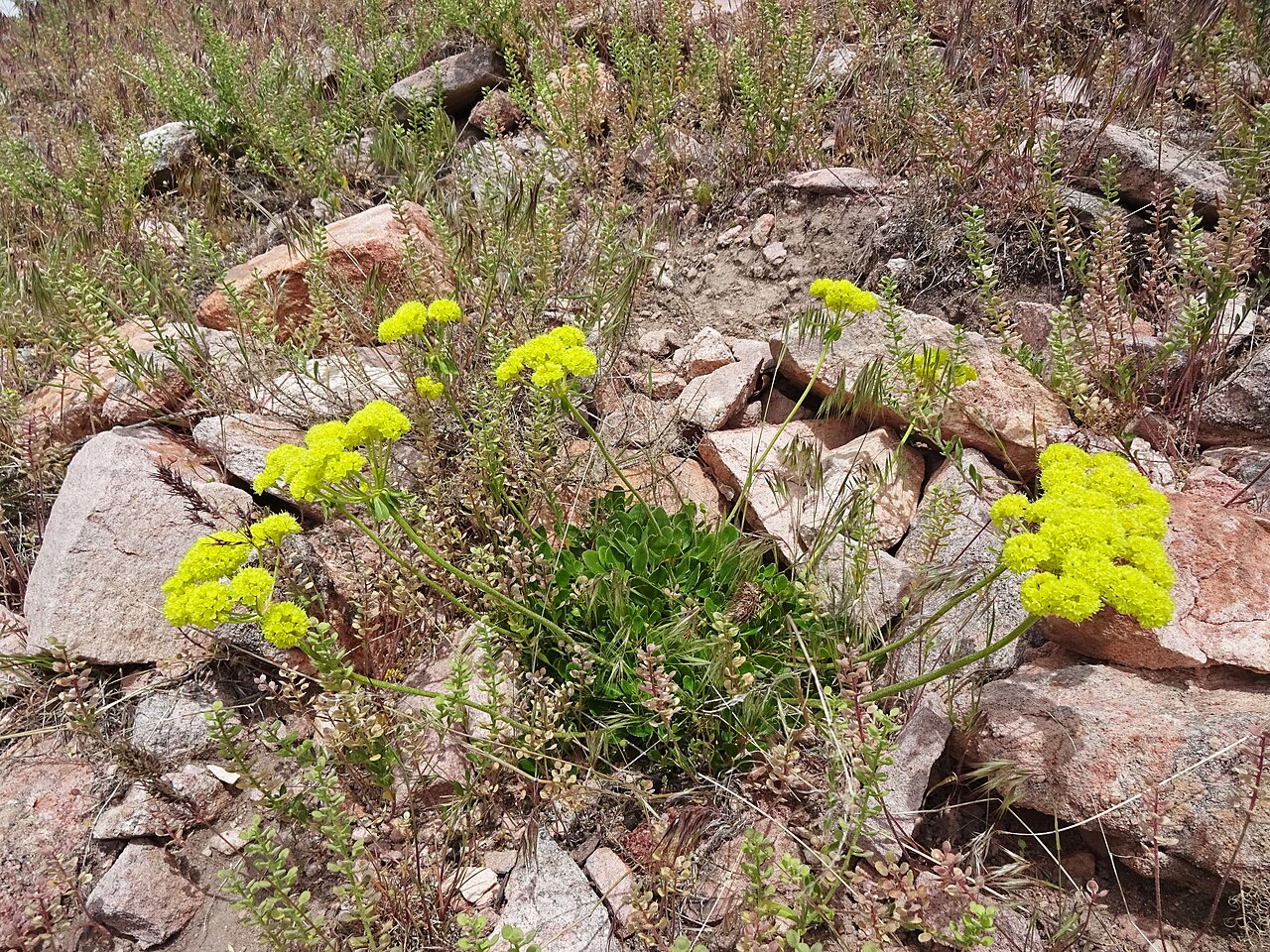
Wild buckwheats are a large group of tough, drought-adapted wildflowers and shrubs in the genus Eriogonum. With roughly 250 species, almost all of them found only in North America, they are one of the defining plant groups of the American West. They cover desert flats, sagebrush hills, canyon ledges, coastal bluffs and alpine ridges with lacy clusters of tiny white, cream, pink, yellow or red flowers that often fade to rust and stay attractive for months.
Wild buckwheats are among the most valuable plants in the West for pollinators. Bees, wasps, flies and butterflies swarm the flowers, and dozens of small blue, hairstreak and metalmark butterflies lay their eggs only on buckwheats, including several endangered California butterflies. Utah alone has dozens of native species, and California has well over a hundred, many found nowhere else.
Despite the shared name, wild buckwheats are not the plant that buckwheat flour and buckwheat cover crops come from. That is common buckwheat (Fagopyrum esculentum), an annual from Asia in the same family. This guide covers the native wild buckwheats: how to recognize them, the best species for Utah, California and other regions, how to tell them from crop buckwheat and other relatives, and how to grow them.
Identification
Wild buckwheats range from tiny annuals and ground-hugging cushion plants to perennials and woody shrubs 6 feet tall or more. Most garden species are low, mounding perennials or small shrubs with woody bases.
Leaves & Stems
Leaves are simple, without teeth, and often covered with white or gray woolly hairs, especially underneath, which help the plants survive heat and drought. In many species the leaves form a basal rosette or a dense mat, and the flowering stems are nearly leafless; in shrubby species such as California buckwheat, small, narrow leaves are bundled along the woody stems. Old stems often have shredding reddish-brown bark.
Flowers
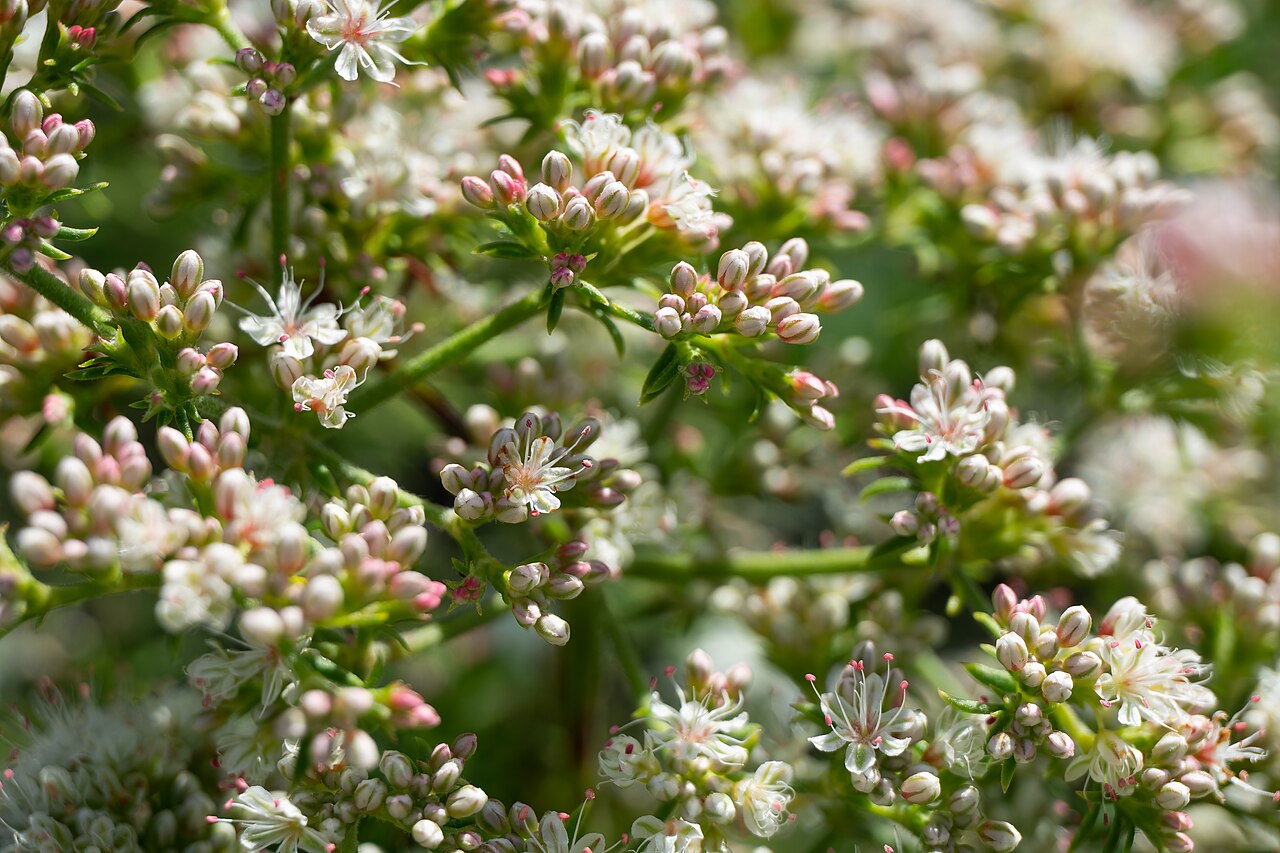
The flowers are tiny, each with six petal-like tepals, and they sit in small cup- or bell-shaped bracts called involucres. Many involucres together form the flower heads, which may be round balls, flat-topped umbrellas (as in sulfur buckwheat), long wands or open, airy sprays. Flower color ranges from white and cream to pink, yellow and red, and many species turn rust-red, coppery or chocolate-brown as they age. The dried heads stay on the plant into winter.
Fruit & Seeds
Each flower produces a single small, dry, usually three-angled seed (achene), much like a miniature version of crop buckwheat grain. Seeds are shed in late summer and fall and are eaten by birds and small mammals.
Quick Facts
| Scientific Name | Eriogonum Michx. (genus) |
| Family | Polygonaceae (Buckwheat family) |
| US-Native Species | Roughly 250 in the genus; nearly all native to the US (approximate) |
| Growth Forms | Annuals, perennials, cushion and mat plants, subshrubs and shrubs |
| Mature Height | A few inches (cushion species) to about 6 ft or more (St. Catherine’s lace); most garden species 6 in – 3 ft |
| Mature Spread | About 6 in to 6 ft |
| Sun Exposure | Full sun |
| Water Needs | Very low to low once established; many western species need dry summers |
| Soil Type | Sandy, gravelly or rocky soil with excellent drainage |
| Bloom Time | Spring to fall depending on species; many bloom in summer when little else does |
| Flower Color | White, cream, pink, yellow, red; often aging to rust or brown |
| Wildlife Value | Outstanding: native bees, wasps, flies and butterflies; caterpillar host for blue, hairstreak and metalmark butterflies; seeds for birds |
| Deer Resistant | Moderately; deer browse some species |
| USDA Hardiness Zones | About 3–10 across the genus, varying by species |
Native Range
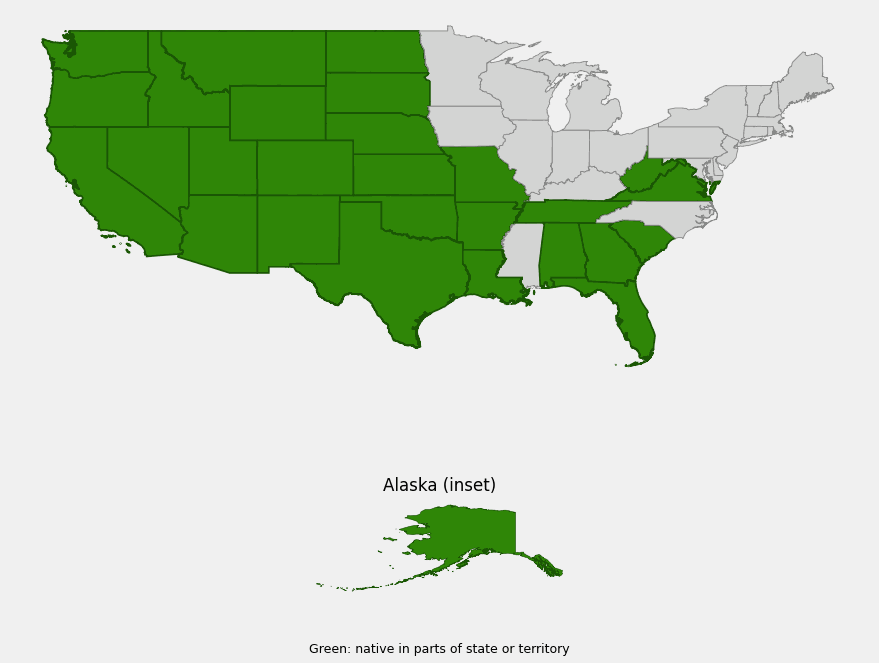
Wild buckwheats are overwhelmingly western. Every state from the Rocky Mountains and the western Great Plains to the Pacific coast has native species, and the genus is richest in California, Nevada, Utah, Arizona and Oregon, where many species are restricted to a single mountain range or soil type. A few species reach Alaska, including sulfur-colored alpine golden buckwheat.
East of the Great Plains, native buckwheats are few. Longleaf buckwheat ranges across the southern states from Florida and Georgia to Texas, Oklahoma, Arkansas and Missouri, with a rare variety in Tennessee; dogtongue wild buckwheat grows in the sandhills of the Southeast coastal plain; and Allen’s or shale barren buckwheat (Eriogonum allenii) is found only on the shale barrens of Virginia and West Virginia. There are no native wild buckwheats in the Northeast, the Great Lakes states or the upper Midwest.
📋 Regional plant lists with native wild buckwheats: Utah & Western Colorado · California & Nevada · Arizona & New Mexico · Idaho, Eastern Oregon & Eastern Washington · Western Oregon & Western Washington · Montana & Wyoming · North Dakota, South Dakota & Western Minnesota · Nebraska, Kansas & Eastern Colorado · South & West Texas · Arkansas, Louisiana, Eastern Oklahoma & Eastern Texas · Georgia, Alabama & Mississippi · Maryland, Virginia & West Virginia · Alaska
Native Species
These 15 wild buckwheats are among the most common and garden-worthy, and each links to our full profile. Every other wild buckwheat profile on the site is listed at the end of this section.
Utah, the Rockies & the Intermountain West
Sulfur buckwheat (Eriogonum umbellatum) is the most widespread and most often grown wild buckwheat, native across the West from Washington and California to Colorado and New Mexico. It forms low mats of green leaves, often white-woolly beneath, topped in early summer by umbrella-shaped clusters of bright yellow flowers that age to orange and red. There are dozens of varieties, some with cream or reddish flowers. ‘Kannah Creek’ is a popular selection from western Colorado.
Wyeth or parsnipflower buckwheat (Eriogonum heracleoides) is a sagebrush-country species with cream to white umbrella-like heads. A whorl of small leaves partway up each flowering stem is a good identification clue.
Cushion buckwheat (Eriogonum ovalifolium) forms tight, silvery cushions of small rounded leaves, with ball-shaped heads of cream, yellow or pink flowers on short stems. It is a choice rock-garden plant across the interior West.
Redroot buckwheat (Eriogonum racemosum) sends up tall, wand-like stems of white to pink flowers from a rosette of woolly leaves in open pine and juniper woodlands of Utah, Colorado, Arizona and New Mexico.
Snow buckwheat (Eriogonum niveum) of the Columbia Basin and nearby dry country in Washington, Oregon and Idaho has white-woolly leaves and white to pinkish flowers that open in late summer, when few other plants are in bloom.
The Desert Southwest
Wright buckwheat (Eriogonum wrightii) is a small, gray-leaved subshrub with sprays of white to pink flowers from summer into fall, native from California and Nevada to Arizona, New Mexico and west Texas.
Desert trumpet (Eriogonum inflatum) is one of the strangest desert wildflowers: its blue-green stems swell into hollow, bottle-shaped inflations below the branches, topped by airy sprays of tiny yellow flowers.
California & the Pacific Coast
California buckwheat (Eriogonum fasciculatum) is the classic buckwheat of southern California’s coastal sage scrub and deserts, a 2- to 4-foot shrub with bundles of small, needle-like leaves and dense clusters of white to pink flowers from spring through summer that age to rust-brown. Our profile covers the gray-leaved inland form, var. poliofolium. It is one of the most important nectar plants in southern California.
St. Catherine’s lace (Eriogonum giganteum), from Santa Catalina and other southern Channel Islands, is the giant of the genus: a gray-leaved shrub that can reach 6 feet or more, with flat, lacy white flower heads up to about a foot across.
Santa Cruz Island buckwheat (Eriogonum arborescens), from the northern Channel Islands, is a picturesque, tree-like shrub with shredding bark, narrow leaves and pale pink flower clusters.
Coast buckwheat (Eriogonum latifolium) grows on bluffs and dunes along the Oregon and California coast, with broad, woolly leaves and round heads of white to pink flowers. It is a host plant for the endangered Smith’s blue butterfly.
Seacliff wild buckwheat (Eriogonum parvifolium) is a low coastal shrub of central and southern California bluffs and dunes, and the host plant of the endangered El Segundo blue butterfly.
Coastal wild buckwheat (Eriogonum cinereum), also called ashyleaf buckwheat, is a gray-leaved shrub of the southern California coast with pale pink, ball-shaped flower heads.
The South & East
Longleaf buckwheat (Eriogonum longifolium) is the most widespread eastern species, a tall perennial with long, narrow leaves that are silvery-woolly beneath and branched sprays of cream to yellowish flowers, native in sandy and rocky open ground from Florida to Texas, Oklahoma, Arkansas and Missouri. Scrub buckwheat (var. gnaphalifolium) of central Florida sand scrub is federally listed as threatened.
Dogtongue wild buckwheat (Eriogonum tomentosum) grows in dry sandhills and pinelands of Florida, Georgia, Alabama and South Carolina. Its leaves are densely woolly beneath, and its white to pinkish flowers open in late summer and fall.
More wild buckwheat profiles: arrowleaf buckwheat (E. compositum) · naked buckwheat (E. nudum) · long-stemmed buckwheat (E. elongatum) · slender buckwheat (E. microthecum) · flatcrown buckwheat (E. deflexum)
Non-Native Look-Alikes
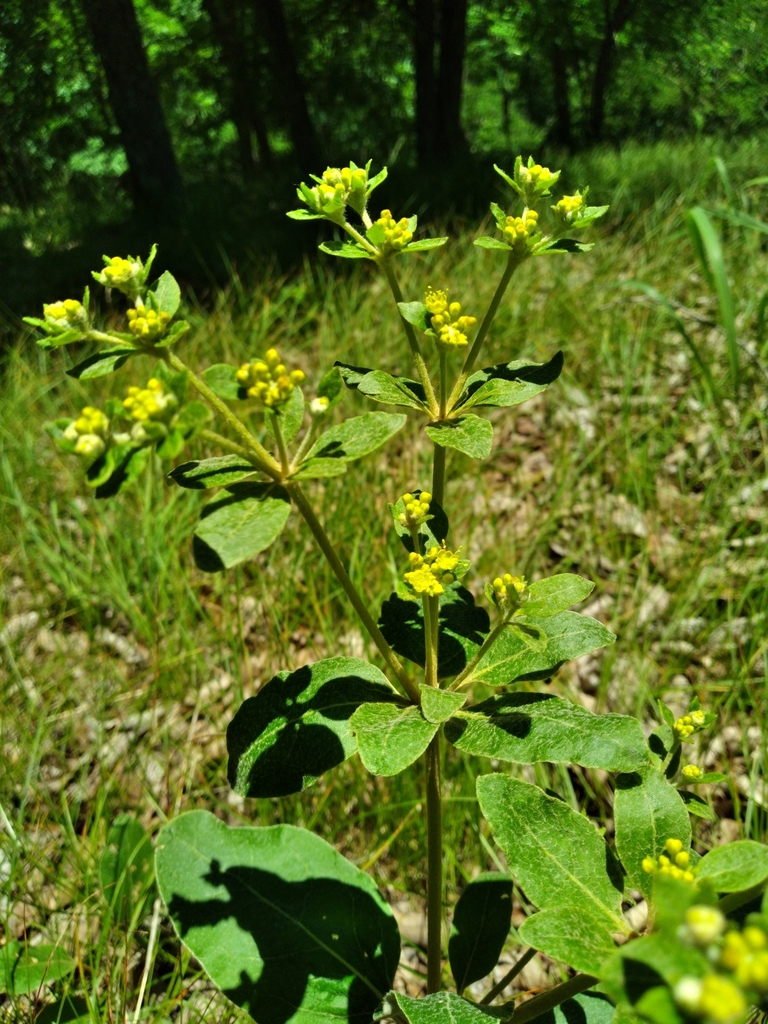
Common buckwheat (Fagopyrum esculentum). The buckwheat of pancakes, soba noodles and cover-crop seed mixes is an annual from Asia. It looks quite different from the native wild buckwheats: it has soft, bright green, heart- to arrow-shaped leaves on succulent reddish stems, and short clusters of white to pinkish flowers. It is grown widely as a summer cover crop and bee forage and sometimes comes up as a volunteer near fields, but it rarely persists in the wild and is not considered invasive. It is not native anywhere in North America. Tartary buckwheat (Fagopyrum tataricum), also from Asia, is a weedier relative with greenish flowers.
Japanese knotweed and other invasive relatives. The buckwheat family also includes some of the worst invasive plants in the country. Japanese knotweed (Reynoutria japonica) and giant knotweed form dense, bamboo-like thickets along streams and roadsides across much of the US, and silver lace vine or fleeceflower (Fallopia baldschuanica), sold as a fast-growing vine, can escape. These have big leaves and sprays of small white flowers, and none of them is a native buckwheat.
Similar-looking natives. Yarrow (Achillea millefolium) and native wild parsleys have flat-topped flower clusters like sulfur buckwheat, but yarrow has feathery, finely divided leaves and true daisy-family flowers, and parsleys have compound leaves. Wild buckwheat leaves are simple and untoothed.
Growing & Care Guide
Light
Full sun. Wild buckwheats grow weak and short-lived in shade.
Soil & Water
Excellent drainage is essential. Plant in sandy, gravelly or rocky soil, on slopes, berms or rock gardens, and mulch with gravel rather than bark. Once established, most western species need little or no supplemental water, and California species from summer-dry climates may rot if watered regularly in summer, especially in heavy soil. Do not fertilize; rich soil makes them floppy and short-lived. Eastern species such as longleaf and dogtongue buckwheat want deep, well-drained sand.
Planting Tips
Choose species native to your region and climate: a coastal California buckwheat will not survive a Utah winter, and many high-elevation Utah species dislike humid summers. Plant in fall in mild-winter areas such as coastal California, and in spring or early fall in cold-winter areas. Water regularly through the first season only. Space low species 12 to 18 inches apart and shrubby species 3 to 6 feet apart.
Pruning & Maintenance
The rust-colored dried flower heads are attractive and feed birds, so leave them through fall. In late winter, trim spent stems and lightly shape shrubby species, cutting no farther back than leafy growth; old woody stems often do not resprout. Shrubby California species are often fairly short-lived, but they are easy to replace from seed.
Propagation
Sow fresh seed in fall, either outdoors or in containers left outside. Many mountain and Intermountain species need a cold, moist period before they germinate, while most California species germinate with winter rains. Shrubby species also grow from semi-hardwood cuttings. Never dig wild plants; a number of wild buckwheats are rare, and several are federally listed.
Landscape Uses
- Pollinator and butterfly gardens throughout the West
- Xeriscapes, rock gardens and gravel gardens
- Coastal bluff and dune gardens in California and Oregon
- Erosion control on dry slopes
- Dried flowers and long-lasting fall color from aging flower heads
Wildlife & Ecological Value
For Pollinators
Wild buckwheats bloom for weeks or months and offer easy-to-reach nectar to a huge range of insects: native bees of many kinds, honey bees, wasps, flies, beetles and butterflies. California buckwheat is considered one of the single most important nectar plants in southern California, and summer- and fall-blooming species fill the gap when spring wildflowers are done. Despite the claims sometimes made in garden guides, buckwheats are not hummingbird flowers; their tiny open flowers are built for insects.
Butterflies
Wild buckwheats are host plants for many butterflies, especially small blues in the genus Euphilotes, several hairstreaks and metalmarks. Some are highly specialized and endangered: the El Segundo blue depends on seacliff buckwheat, Smith’s blue on coast and seacliff buckwheat, and Lange’s metalmark on a variety of naked buckwheat that grows at Antioch Dunes.
Birds & Mammals
Seed-eating birds such as sparrows, finches and quail eat the small seeds, and the shrubby species provide cover. Deer, bighorn sheep and pronghorn browse some species. Small mammals gather the seeds.
Ecosystem Role
Wild buckwheats are early colonizers of disturbed, rocky and sandy ground and are standard components of western restoration seed mixes. Many species are restricted to a single soil type, such as gypsum, shale or volcanic ash, which is why the genus has so many rare species.
Cultural & Historical Uses
Several Native American peoples of the West used wild buckwheats, including as teas and washes for various ailments and, for some species, as food. These are recorded as historical uses, not recommendations; do not eat or use wild plants without expert identification and guidance.
In the 20th century, wild buckwheats became staples of western water-wise gardening. Botanic gardens, Plant Select in Colorado and native nurseries in California and Utah have introduced selections such as ‘Kannah Creek’ sulfur buckwheat and low, compact forms of California buckwheat, and native seed producers grow sulfur buckwheat and other species for highway and rangeland restoration.
Frequently Asked Questions
Is wild buckwheat the same as the buckwheat used for flour?
No. Flour and cover-crop buckwheat is Fagopyrum esculentum, an annual from Asia. Wild buckwheats (Eriogonum) are native North American plants in the same family.
Which wild buckwheats are best for Utah gardens?
Sulfur buckwheat is the most widely available and adaptable. Cushion buckwheat, redroot buckwheat and Wyeth buckwheat are also good choices. Give them full sun, gravelly soil and very little water once established.
Which buckwheat should I plant in a California garden?
California buckwheat is the go-to plant for southern and inland California. Along the coast, try seacliff, coast or coastal wild buckwheat, and for a large accent shrub, St. Catherine’s lace or Santa Cruz Island buckwheat. All want sun, sharp drainage and little summer water.
Do hummingbirds visit wild buckwheat?
Rarely. Wild buckwheat flowers are tiny and open, which suits bees, wasps, flies and butterflies. For hummingbirds, pair them with native penstemons, sages or California fuchsia.
Are wild buckwheats native in the eastern US?
Only a few. Longleaf buckwheat and dogtongue wild buckwheat grow in the South, and shale barren buckwheat grows in Virginia and West Virginia. There are none native in the Northeast or the Great Lakes states.

Looking for a nursery that carries Native Wild Buckwheats?
Browse our native plant nursery directory: Alabama, Alaska, Arizona & Arkansas · California · Colorado, Florida & Georgia · Idaho & Kansas · Louisiana, Missouri & Montana · Nebraska, Nevada, New Mexico, North Dakota & Oklahoma · Oregon · South Carolina, South Dakota, Tennessee, Texas, Utah & Virginia · Washington · West Virginia & Wyoming

