
Native Ragworts and Groundsels (Packera)
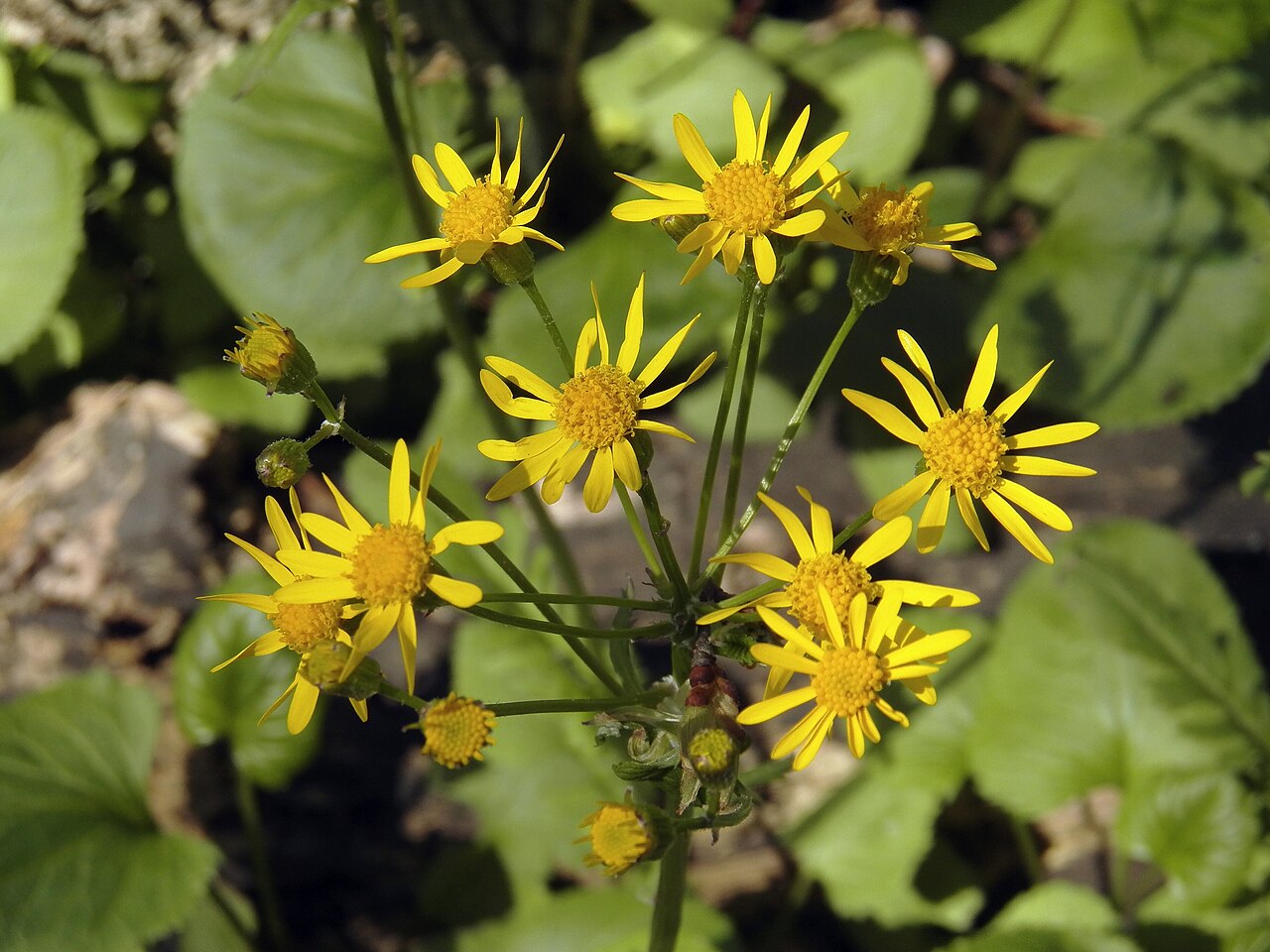
In April and May, moist woods and stream banks across the eastern United States light up with flat-topped clusters of small, bright yellow daisies. These are ragworts and groundsels in the genus Packera, a group of native wildflowers that includes golden ragwort, one of the best native ground covers for shade, and butterweed, the annual that turns wet fields and roadsides yellow across the South each spring.
Packera is a North American genus in the aster family (Asteraceae) with roughly 60 species, nearly all native to the United States and Canada, plus a few in Mexico and northeastern Asia. Until 1976 these plants were all included in Senecio, and many field guides and nursery labels still use the old names, such as Senecio aureus for golden ragwort. Botanists separated them based on their chromosomes and their typical shape: a rosette of long-stalked basal leaves with progressively smaller, often deeply cut leaves up the flowering stem.
The names “groundsel” and “ragwort” also belong to two introduced weeds: common groundsel (Senecio vulgaris), a small annual of gardens and fields, and tansy ragwort (Jacobaea vulgaris), a toxic noxious weed of western pastures. This guide covers the native species, how to grow them, and how to tell them from those look-alikes. If you came here from a Michigan landscaping list, the native groundsels of Michigan are spring-blooming perennials with yellow flowers, not blue ones: golden ragwort, balsam ragwort, roundleaf ragwort and prairie ragwort.
Identification
Native ragworts are mostly perennial herbs, with a few annuals and biennials. Most are low rosettes for much of the year and send up flowering stems in spring or early summer.
Leaves & Stems
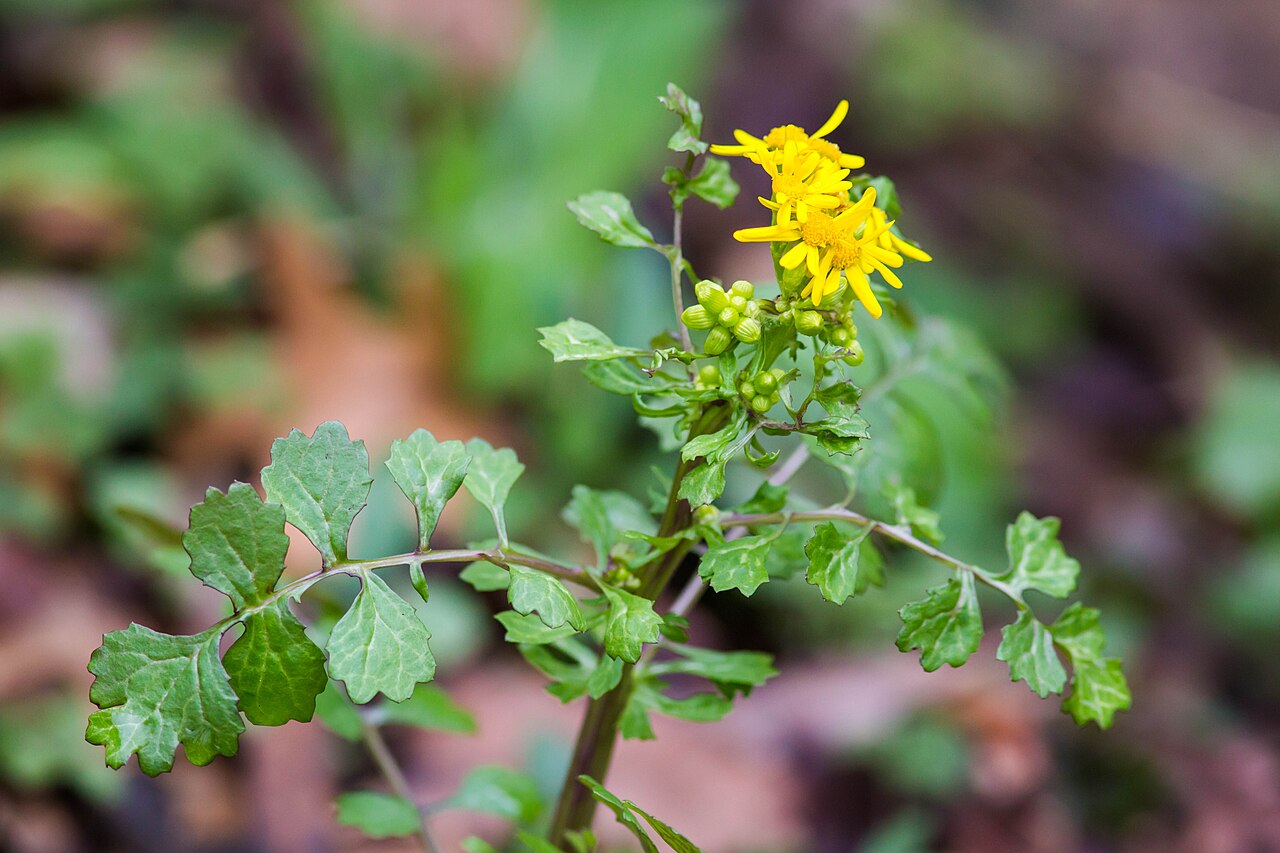
The basal leaves are the key. In most species they are long-stalked and much larger and simpler than the stem leaves: heart-shaped in golden ragwort, rounded to spoon-shaped in roundleaf and balsam ragwort, narrow and woolly in western species such as woolly groundsel. Leaves on the flowering stem are smaller, stalkless and often deeply lobed or cut like a fern. Many species have purplish leaf undersides, especially in winter, and several eastern species keep green rosettes all winter. Butterweed differs: it is an annual with a hollow, often purple-tinged stem and soft, deeply lobed leaves along its whole height.
Flowers
The flower heads are small yellow daisies, usually half an inch to an inch across, each with a ring of 8 to 13 yellow ray flowers around a yellow to orange center of disk flowers. They are held in flat or rounded clusters at the top of the stem. A few western and northern species have short rays or none. Bloom time runs from March in the South (butterweed, Small’s ragwort) through April and May for golden and roundleaf ragwort, and into summer in western mountains.
Fruit & Seeds
Like dandelions, ragworts produce small, ribbed seeds (achenes) each topped with a tuft of soft white bristles, carried off by the wind in late spring. Golden ragwort and roundleaf ragwort also spread by creeping stems and form colonies.
Quick Facts
| Scientific Name | Packera Á. Löve & D. Löve (genus); formerly part of Senecio |
| Family | Asteraceae (Aster) |
| US-Native Species | Roughly 60 (approximate); nearly all North American |
| Growth Forms | Rosette-forming perennials, a few annuals and biennials |
| Mature Height | 4 in (alpine species) to 1–3 ft (golden ragwort, butterweed) |
| Growth Rate | Moderate to fast; golden ragwort spreads into colonies |
| Sun Exposure | Full Sun to Part Shade; golden ragwort tolerates shade |
| Water Needs | Varies: wet to moist (golden ragwort, butterweed) to dry (prairie, Small’s and western species) |
| Soil Type | Moist loam and clay along streams; dry sand, gravel or rock for prairie and western species |
| Bloom Time | March–June for most eastern species; May–August in western mountains |
| Flower Color | Yellow to golden orange |
| Wildlife Value | Early nectar and pollen for small native bees, flies and butterflies; caterpillar host for some moths |
| Deer Resistant | Yes; foliage contains toxic alkaloids and is rarely browsed |
| USDA Hardiness Zones | 3–8 (golden ragwort); varies by species |
Native Range
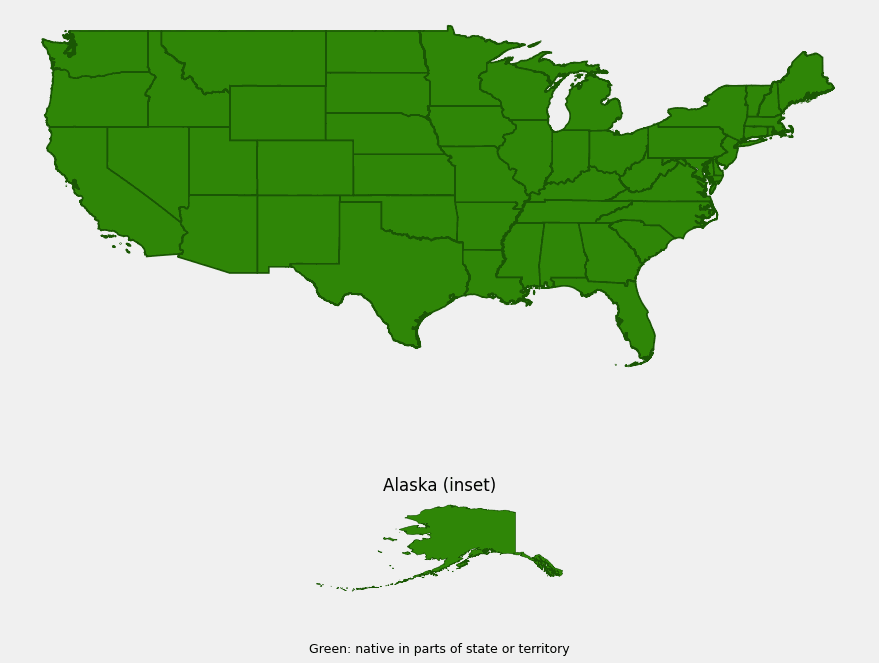
Native ragworts grow in every state of the lower 48 and in Alaska. In the East and Midwest, golden ragwort grows in wet woods, swamps, stream banks and seeps from Newfoundland and Minnesota south to Georgia and Arkansas. Roundleaf ragwort favors drier, often limestone woods and slopes across much of the East, and Small’s ragwort grows in dry, open woods and fields of the Southeast. Butterweed is an annual of wet fields, ditches and floodplains in the Southeast and the Mississippi and Ohio valleys, north to Ohio and Illinois and west to Texas.
In Michigan and the Great Lakes states, the common species are golden ragwort in wet woods, balsam ragwort (P. paupercula) on wet meadows, shores and rock outcrops, roundleaf ragwort in drier woods, and prairie ragwort (P. plattensis) in prairies and dry sandy openings. The Great Plains have prairie ragwort and Great Plains ragwort (P. tampicana), a spring annual of the southern plains.
The West has the most species, many of them small plants of dry slopes, sagebrush and alpine ridges. Lobeleaf groundsel grows from the Great Basin through the Rockies and the Southwest, woolly groundsel on dry ridges and plains of the interior West, and several species are rare plants of single mountain ranges or serpentine soils. Arctic and alpine species reach Alaska. Hawaii has no native Packera.
📋 Regional plant lists covering native ragwort country: Michigan, Wisconsin & Eastern Minnesota · Ohio & Indiana · Illinois, Iowa & Missouri · New Hampshire, Maine & Vermont · Connecticut, Massachusetts & Rhode Island · New York, Pennsylvania & Northern New Jersey · Delaware, Southern New Jersey & Long Island · Maryland, Virginia & West Virginia · North Carolina & South Carolina · Georgia, Alabama & Mississippi · Kentucky & Tennessee · Arkansas, Louisiana, Eastern Oklahoma & Eastern Texas · South & West Texas · Nebraska, Kansas & Eastern Colorado · North Dakota, South Dakota & Western Minnesota · Montana & Wyoming · Utah & Western Colorado · Arizona & New Mexico · Idaho, Eastern Oregon & Eastern Washington · Western Oregon & Washington · California & Nevada · Alaska
Native Species
These are the US-native ragworts most often grown in gardens or met in the wild. Follow the links for full growing profiles.
Eastern and Midwestern Species
Golden Ragwort (Packera aurea): Also called golden groundsel; formerly Senecio aureus. The most popular garden species, native from Newfoundland and Minnesota south to Georgia and Arkansas, in wet woods, stream banks and swamps. Its glossy, heart-shaped basal leaves stay green, often purple-backed, through winter and spread by creeping stems into a dense, weed-suppressing ground cover. Flower stems 1 to 2 feet tall carry clusters of golden-yellow daisies in April and May. One of the best native ground covers for moist shade.
Roundleaf Ragwort (Packera obovata): Also called roundleaf groundsel. A low, stoloniferous perennial with rounded to spoon-shaped, scalloped basal leaves, native through much of the East and Midwest and into Texas, often on rocky, limestone slopes and drier woods. Flower stems are about a foot tall. More tolerant of dry shade than golden ragwort, and a good evergreen ground cover.
Small’s Ragwort (Packera anonyma): A perennial of dry, open woods, fields and roadsides in the Southeast and southern Appalachians, with narrow, toothed basal leaves and showy, many-headed clusters of yellow flowers on stems 1 to 2.5 feet tall in late spring. Tolerant of poor, dry, rocky soil.
Butterweed (Packera glabella): Also called cressleaf groundsel. A native annual of wet fields, ditches, floodplains and disturbed ground in the Southeast and the Mississippi and Ohio valleys. Grows 1 to 3 feet tall with a hollow stem, soft, deeply lobed leaves and abundant yellow flowers in March to May. It is often mistaken for an invasive weed because it can blanket fallow fields, but it is native. It is toxic to livestock.
Plains and Western Species
Great Plains Ragwort (Packera tampicana): A small spring annual of open, often disturbed ground in Texas, Oklahoma and neighboring states south into Mexico, with finely divided leaves and bright yellow flowers. It can carpet roadsides and pastures after wet winters.
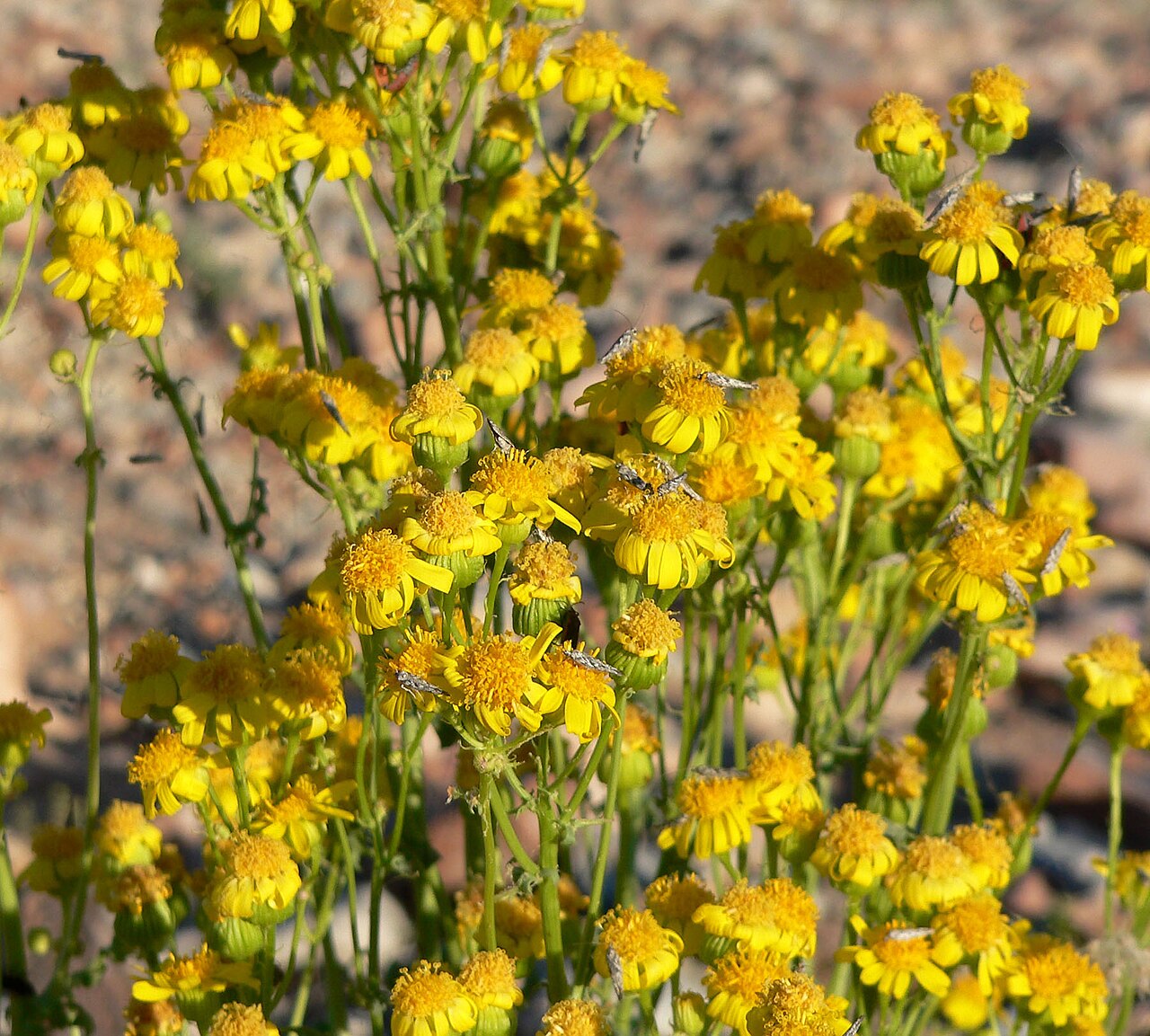
Lobeleaf Groundsel (Packera multilobata): A short-lived perennial of sagebrush, pinyon-juniper woodland and dry mountain slopes in the Great Basin, Colorado Plateau and Rockies. Grows 6 to 18 inches tall with finely lobed, gray-green leaves and masses of yellow flowers in spring and early summer. A good wildflower for dry, rocky western gardens.
Other native species without their own profile yet include balsam ragwort (P. paupercula) of northern wet meadows and shores, prairie ragwort (P. plattensis) of Midwestern and Great Plains prairies, woolly groundsel (P. cana) of dry ridges in the interior West, New Mexico groundsel (P. neomexicana) of the Southwest, and woolly ragwort (P. tomentosa) of the southeastern coastal plain. Some plants called “groundsel” on this site, such as threadleaf groundsel and tall western groundsel, are native species that remain in Senecio.
Non-Native Look-Alikes
The most troublesome “groundsels” and “ragworts” in the United States are introduced species in related genera. Both contain the same type of liver-damaging alkaloids as native ragworts.
Common Groundsel (Senecio vulgaris)
A small European annual, usually under a foot tall, common in vegetable gardens, nurseries, lawns and fields throughout the country. Its flower heads are narrow, cylindrical and usually have no ray petals at all, with black tips on the bracts around each head. It blooms and sets seed almost year-round in mild climates. Native ragworts have obvious yellow rays and a basal rosette of larger leaves. Pull common groundsel before it seeds.
Tansy Ragwort (Jacobaea vulgaris)
Formerly Senecio jacobaea. A Eurasian biennial or short-lived perennial 1 to 4 feet tall, with deeply divided, ruffled leaves and large, flat-topped clusters of yellow daisies in summer. It is a serious invasive in pastures of the Pacific Northwest and northern California and is listed as a noxious weed in Oregon, Washington, California, Idaho and Montana. It is poisonous to cattle and horses, causing liver damage. In Oregon, introduced cinnabar moths and ragwort flea beetles have been used for biological control.
Other Introduced Relatives
- Sticky groundsel (Senecio viscosus) and woodland groundsel (S. sylvaticus): Small European annuals of disturbed ground, the second common after logging in the Pacific Northwest.
- Ligularia (Ligularia): Asian perennials in a related genus, sometimes sold as golden groundsel or leopard plant, with big, bold leaves and tall yellow flower spikes or clusters. Not native.
- Dusty miller (Jacobaea maritima): A silver-leaved Mediterranean bedding plant, formerly Senecio cineraria.
Growing & Care Guide
Light
Golden ragwort grows in full sun to fairly deep shade as long as the soil stays moist; in hot, dry sun its leaves scorch. Roundleaf ragwort does well in part shade and tolerates some dry shade. Prairie ragwort, Small’s ragwort and western species want full sun.
Soil & Water
Golden ragwort likes moist to wet, rich soil and handles clay, seasonal flooding and rain-garden conditions. Roundleaf ragwort prefers well-drained loam and is often found on limestone. Prairie ragwort, Small’s ragwort, lobeleaf groundsel and other western species need well-drained, lean soil and little extra water once established; rich, wet soil shortens their lives.
Planting Tips
Plant in spring or fall, 12 to 18 inches apart for golden or roundleaf ragwort; they will spread to fill the space within two or three years. Golden ragwort can spread aggressively in moist, open ground, which makes it excellent for covering difficult areas but too vigorous for a small, tidy bed. Pair it with tall, sturdy companions that can hold their own.
Pruning & Maintenance
Cut off the flower stems after bloom if you want to prevent self-seeding or keep the planting neat; the evergreen rosettes remain attractive. Otherwise, little care is needed. Wear gloves when handling large amounts of foliage, since the plants contain toxic alkaloids.
Propagation
Divide golden and roundleaf ragwort colonies in early spring or fall; rooted runners transplant easily. Seed can be sown fresh in late spring or fall and needs light to germinate, so press it onto the soil surface without covering. Annual species such as butterweed and Great Plains ragwort reseed on their own.
Landscape Uses
- Shade ground cover under trees and along north walls with golden or roundleaf ragwort, foamflower and Pennsylvania sedge
- Rain gardens and stream banks with golden ragwort, marsh marigold, Virginia blue flag and cardinal flower
- Spring woodland gardens with bloodroot, woodland phlox and wild geranium
- Prairie and meadow plantings with prairie ragwort and golden Alexanders for early yellow color
- Dry western gardens with lobeleaf groundsel, Rocky Mountain penstemon and western yarrow
Wildlife & Ecological Value
For Pollinators
Ragworts bloom early, when few other flowers are open, and their small, shallow flowers are easy for short-tongued insects to use. Small native bees, including sweat bees and mining bees, syrphid flies, beetles and early butterflies such as spring azures, skippers and pearl crescents visit them. Butterweed fields in the South are an important early nectar source.
For Caterpillars
Several native moths feed on ragworts, which are protected by the same alkaloids that make them toxic to mammals. Some insects store these chemicals for their own defense.
For Birds
Goldfinches and other small seed-eating birds eat the seeds, and the evergreen rosettes of golden ragwort provide some winter ground cover.
For Mammals
Deer, rabbits and livestock generally avoid ragworts. All Packera and related Senecio and Jacobaea species contain pyrrolizidine alkaloids, which can cause liver damage when grazing animals eat large amounts over time, especially in hay. Do not eat any part of these plants, and keep pets and livestock from grazing on them.
Ecosystem Role
Golden ragwort and roundleaf ragwort form evergreen colonies that hold soil on stream banks and slopes. Butterweed and Great Plains ragwort are pioneer annuals that quickly cover bare, wet or disturbed ground. In the West, many species are part of sagebrush, pinyon-juniper and alpine plant communities, and several rare species are tied to unusual soils.
Cultural & Historical Uses
The genus is named for John G. Packer, a Canadian botanist who studied the flora of Alberta and the Arctic. It was separated from Senecio in 1976 by the botanists Áskell and Doris Löve, and the change was widely adopted in the 1990s and 2000s, which is why older books and nursery tags still say Senecio.
Golden ragwort was used in 19th-century American folk medicine. That is history only: the plant contains liver-damaging alkaloids and is not safe to take internally.
Today golden ragwort is one of the most widely recommended native ground covers for wet shade in the East, and butterweed is gaining appreciation as a native early-spring wildflower rather than a weed.
Frequently Asked Questions
Is groundsel native?
Some groundsels are and some are not. Native groundsels and ragworts in the genus Packera, such as golden ragwort, roundleaf ragwort and butterweed, grow wild across the United States. Common groundsel (Senecio vulgaris), a small garden weed, is from Europe.
Which groundsels are native to Michigan?
Golden ragwort, balsam ragwort, roundleaf ragwort and prairie ragwort are all native to Michigan. They are perennials with yellow daisy-like flowers in spring and early summer. Common groundsel and tansy ragwort are introduced.
Is golden ragwort invasive?
No, it is native to the eastern United States. It does spread quickly in moist soil, so it can crowd out smaller plants in a small bed, but in the right place it is an excellent native ground cover.
Are ragworts poisonous?
Yes. Native and introduced ragworts contain pyrrolizidine alkaloids that can damage the liver. They are not edible and should not be used as herbal remedies. Deer and livestock usually avoid them, but contaminated hay can poison horses and cattle.
How can I tell butterweed from tansy ragwort?
Butterweed is a native annual that blooms in early spring in the South and Midwest, with a hollow stem and soft, lobed leaves. Tansy ragwort is an introduced biennial that blooms in summer, mostly in the Pacific Northwest and northern California, with ruffled, finely divided leaves and large, flat-topped flower clusters.

Looking for a nursery that carries Native Ragworts and Groundsels?
Browse our native plant nursery directory: Alabama, Alaska, Arizona & Arkansas · California · Colorado, Connecticut, Delaware, Florida & Georgia · Idaho, Illinois, Indiana, Iowa & Kansas · Kentucky, Louisiana, Maine, Maryland, Massachusetts, Michigan, Minnesota, Mississippi, Missouri & Montana · Nebraska, Nevada, New Hampshire, New Jersey, New Mexico, New York, North Carolina, North Dakota, Ohio & Oklahoma · Oregon · Pennsylvania, Rhode Island, South Carolina, South Dakota, Tennessee, Texas, Utah, Vermont & Virginia · Washington · West Virginia, Wisconsin & Wyoming

