
Native Viburnums (Viburnum)
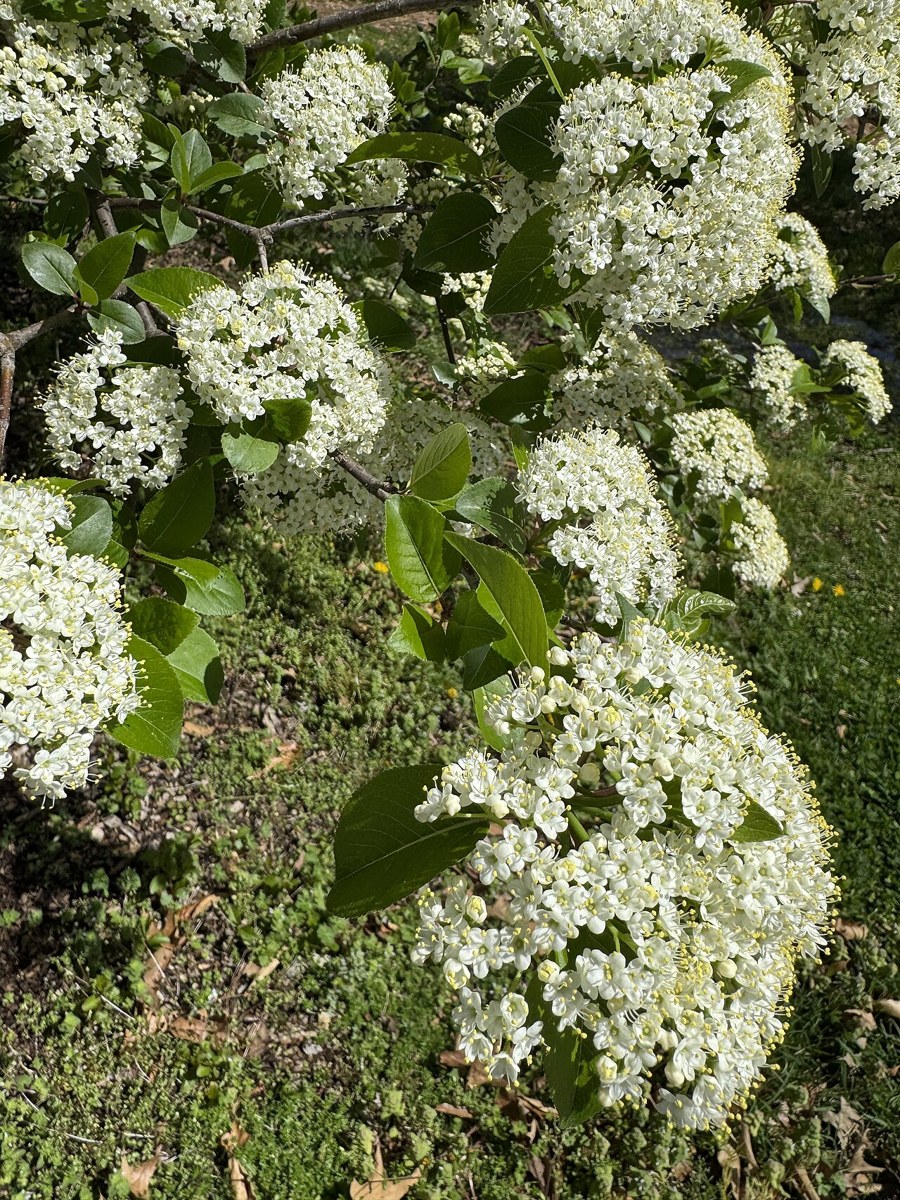
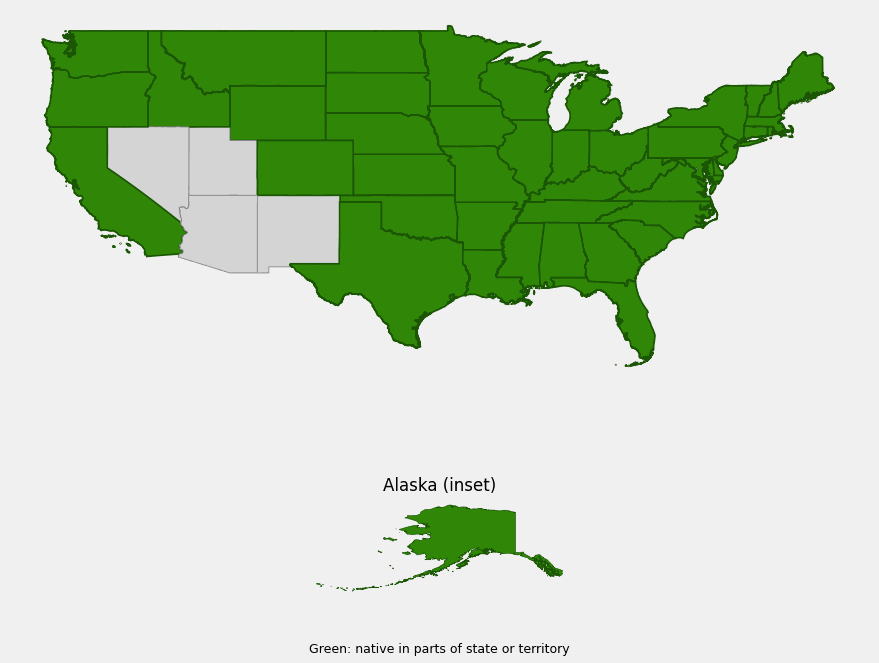
Viburnums (genus Viburnum) are woody shrubs and small trees with opposite leaves, flat or domed clusters of small white flowers in spring, and berry-like fruits that ripen in late summer and fall to blue-black, red, or a mix of pink and blue on the same cluster. The genus has roughly 150 to 175 species across the Northern Hemisphere and into South America. Roughly 15 to 20 of them are native to the United States (the exact number depends on how botanists split the arrowwood and witherod groups), and native viburnums grow wild in every state except Nevada, Utah, Arizona, New Mexico and Hawaii.
Native viburnums are among the most useful shrubs a gardener can plant. They are easy to grow, they flower reliably, many have good red to purple fall color, and their fruit feeds birds from late summer into winter. There is a native viburnum for almost every situation: dry shade under oaks, wet ground at the edge of a pond, a sunny hedge, or a small yard that needs a multi-season tree.
Garden centers sell just as many Asian and European viburnums, and several of them, especially linden viburnum, European cranberrybush and wayfaring tree, have escaped into woods and fields. Before you buy, check the scientific name on the label.
Our guide to native Missouri plants for landscaping mentions “common viburnum” in the Ozarks. No species is actually called common viburnum. In the Ozarks and south-central Missouri the native viburnums people usually notice are rusty blackhaw and blackhaw, along with arrowwoods and the rarer Kentucky viburnum. These native viburnums are not invasive, but several sucker from the roots and can slowly form thickets. This guide covers how to identify viburnums, which ones are native where you live, and how to tell them from the non-native species sold beside them.
Identification
You can recognize a viburnum by a few traits that hold across the genus:
- Opposite leaves. Leaves and buds grow in pairs directly across the twig from each other. Among common shrubs, only a few genera have opposite leaves, including viburnums, dogwoods, maples, ashes, honeysuckles and buckeyes.
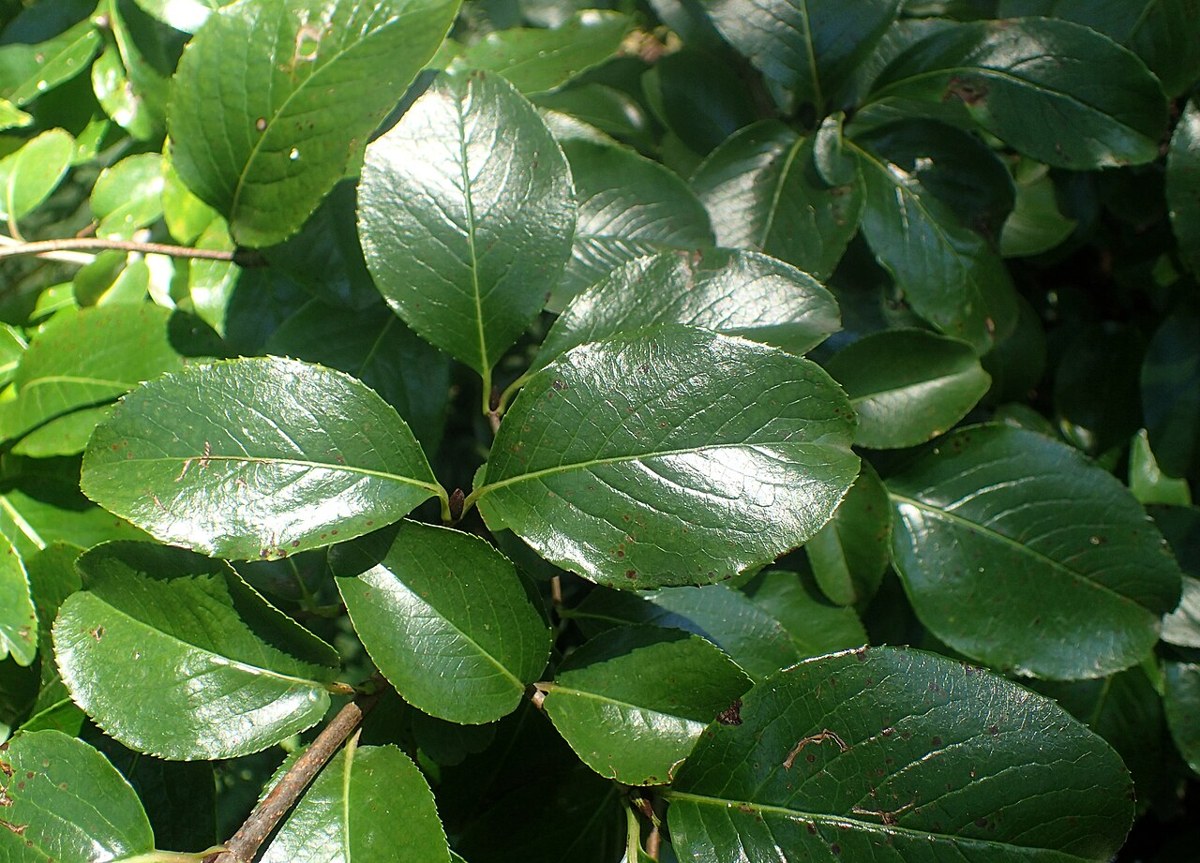
- Simple leaves. Each leaf is a single blade, never divided into leaflets. Depending on the species, the leaves can be toothed or nearly smooth-edged, round or narrow, or lobed like a maple leaf.
- Flower clusters. Small, five-lobed white or creamy flowers in flat-topped or domed clusters (cymes) at the ends of short shoots, usually in April to June. In hobblebush and the cranberrybushes, the cluster is ringed by larger, showy sterile flowers, like a lacecap hydrangea.
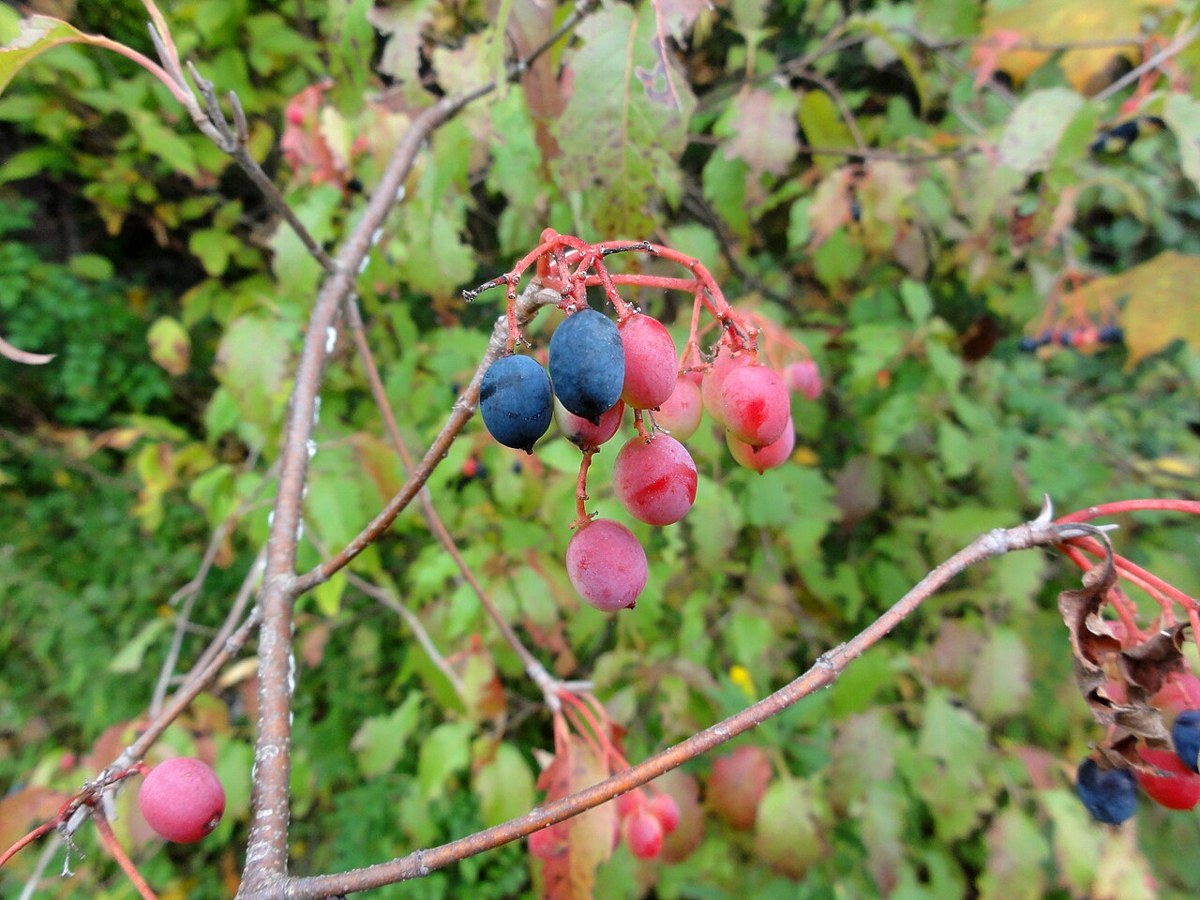
- Drupes. The fruits are fleshy drupes with a single flattened stone. They ripen blue-black, red, or through a mix of green, pink and blue, often with several colors on one cluster.
- Buds. Many blackhaws and witherods have naked or two-scaled buds. Nannyberry and blackhaw flower buds are swollen at the base like a tiny fig.
Telling Viburnums from Dogwoods
Native shrubby dogwoods such as gray dogwood share opposite leaves and white flower clusters. Dogwood leaves have smooth edges and veins that curve to run parallel to the leaf margin, and if you gently tear a dogwood leaf, threads of latex stretch between the pieces. Viburnum leaves lack those threads, and most have toothed edges with veins that run straight to the teeth.
Three Leaf Types
For garden purposes, native viburnums fall into three groups. The arrowwoods have coarsely toothed, roundish leaves with straight, prominent veins. The blackhaws and witherods have finely toothed or nearly smooth, oval, often glossy leaves. The maple-leaved species, maple-leaf viburnum, squashberry and American highbush cranberry, have three-lobed leaves.
Quick Facts
| Genus | Viburnum |
| Family | Viburnaceae (formerly placed in Adoxaceae or Caprifoliaceae) |
| U.S. Native Species | Roughly 15–20, depending on taxonomy |
| Plant Type | Deciduous shrubs and small trees; Walter’s viburnum is semi-evergreen |
| Mature Height | About 2–8 ft (squashberry, maple-leaf viburnum) to 15–30 ft (nannyberry, rusty blackhaw) |
| Growth Rate | Moderate |
| Sun Exposure | Full Sun to Full Shade, depending on species |
| Water Needs | Dry to wet, depending on species; most prefer moist, well-drained soil |
| Soil Type | Adaptable: loam, clay and sandy soils |
| Bloom Time | February–June (earliest in the Deep South) |
| Flower Color | White to creamy white |
| Fruit | Blue-black, red, or pink ripening to blue drupes, late summer–fall |
| Fall Color | Red, burgundy, purple or pink in many species |
| Wildlife Value | Spring pollinators; fruit for many birds and mammals; larval host for spring azure butterfly and hummingbird clearwing moth |
| USDA Hardiness Zones | About 2–9, depending on species |
Native Range
Viburnums are most diverse in the eastern half of the country. From New England south to Florida and west to Minnesota, Missouri and east Texas, almost every county has at least one native species, and many eastern woodlands have three or four. The arrowwoods, maple-leaf viburnum, blackhaw and nannyberry are the most widespread eastern species. Possumhaw and Walter’s viburnum grow on the southeastern Coastal Plain, and rusty blackhaw is the common species of the southern Appalachians, the Ozarks and the eastern edge of the southern Great Plains.
In the northern states, American highbush cranberry and nannyberry reach west across the northern Great Plains, and squashberry follows cool, moist boreal and mountain forests from Maine and the Great Lakes to the Rocky Mountains and the Pacific Northwest. Squashberry is also the native viburnum of Alaska, together with American highbush cranberry in places.
The West has few native viburnums. Squashberry grows in the mountains of Washington, Oregon, Idaho, Montana, Wyoming and Colorado, American highbush cranberry reaches parts of the northern Rockies and the Pacific Northwest, and western blackhaw grows in foothill woods and chaparral edges of northern California, Oregon and Washington. No viburnum is native to Nevada, Utah, Arizona, New Mexico or Hawaii. Viburnums planted in those states are garden plants, not natives.
📋 Find native viburnums on our regional plant lists: NH, ME, VT · CT, MA, RI · NY, PA, NJ north · DE, NJ south, NY Long Island · MD, VA, WV · NC, SC · GA, AL, MS · AR, LA, OK east, TX east · KY, TN · OH, IN · IL, IA, MO · MI, WI, MN east · ND, SD, MN west · NE, KS, CO east · MT, WY · ID, OR east, WA east · OR west, WA west · CA, NV · TX south/west/central · Alaska
Native Species
These are the most widely grown and most commonly encountered US-native viburnums. Each has a full Plant Native profile. Some sites use older scientific names; the current name is noted where it differs.
Arrowwood Viburnum (Viburnum dentatum)
A multi-stemmed shrub 6–10 ft tall with coarsely toothed, roundish leaves and flat white flower clusters in late spring, followed by blue-black fruit that birds strip quickly in fall. Native throughout the East from Maine to Florida and west to Texas. Its straight young shoots were used for arrow shafts, which gave the plant its name. Very adaptable to sun or part shade and to wet or dry soil.
Northern Arrowwood (Viburnum recognitum)
The northern member of the arrowwood group, often lumped into V. dentatum. Its leaves and twigs are hairless or nearly so. Common in moist woods, swamps and stream banks from New England and the Great Lakes south to the mid-Atlantic, and the arrowwood most often sold in northern nurseries.
Downy Arrowwood (Viburnum rafinesqueanum)
A smaller arrowwood, usually 3–6 ft, with very short leaf stalks and soft hairs on the leaf undersides. It grows on dry, rocky slopes, open woods and prairie edges across the Midwest and into the Northeast. A good choice for dry, sunny sites where other arrowwoods struggle.
Maple-leaf Viburnum (Viburnum acerifolium)
A low, suckering shrub, 3–6 ft, with three-lobed leaves like a small maple and flat clusters of creamy flowers, followed by blue-black fruit. Native to dry woods across the eastern US. It is one of the few shrubs that thrives in dry shade under oaks, and its fall color ranges from pink to deep purple.
Hobblebush (Viburnum lantanoides, syn. V. alnifolium)
A sprawling shrub, 6–10 ft, of cool, moist forests in the Northeast and along the Appalachians to Georgia. Its leaves are large and nearly round, and its flower clusters are ringed with large white sterile flowers. The arching branches root where they touch the ground, forming loops that trip (“hobble”) hikers. It needs shade and moist, acidic soil.
Nannyberry (Viburnum lentago)
A large shrub or small tree, often 15–20 ft, with glossy, finely toothed leaves on winged leaf stalks and long, slender, pointed buds. Native from New England west to the northern Great Plains. Very cold hardy and tough in sun or shade; it suckers to form thickets, which makes it a good screen. The blue-black fruits are sweet when fully ripe.
Blackhaw (Viburnum prunifolium)
A small tree or large shrub, 12–15 ft, with stiff branching, small, finely toothed leaves like those of a cherry, and short, blunt buds. Native from Connecticut to Georgia and west to Missouri, Kansas and Texas. It blooms heavily in early spring, takes dry soil and drought well, and makes an excellent native small tree for a hedge or yard.
Rusty Blackhaw (Viburnum rufidulum)
A small tree, usually 10–20 ft, named for the rusty-red hairs on its buds, young twigs and leaf stalks. The leaves are thick and very glossy, and the fall color is deep red to burgundy. Native from Virginia and southern Ohio to Florida and west to Kansas, Oklahoma and Texas, including the Missouri Ozarks. Very drought tolerant once established.
Possumhaw Viburnum (Viburnum nudum)
A shrub 6–12 ft of swamps, wet woods and pocosins on the southeastern Coastal Plain and Piedmont, from Long Island to Florida and west to Texas. Its leaves are glossy and nearly smooth-edged, and the fruit clusters turn pink and then blue at the same time, a striking sight in early fall. Tolerates wet soil.
Witherod (Viburnum cassinoides, syn. V. nudum var. cassinoides)
The northern counterpart of possumhaw, 5–12 ft, with duller leaves. Native to bogs, wet thickets and rocky woods in the Northeast, the Great Lakes and the Appalachians. Its fruit ripens from green through pink to blue-black. A good shrub for acidic, moist soil in sun or part shade.
Walter’s Viburnum (Viburnum obovatum)
A small-leaved, semi-evergreen shrub or small tree of the Southeast, native mainly to Florida, Georgia, South Carolina and Alabama. Wild plants can reach 10–20 ft, but compact selections stay much smaller and are popular in southern gardens as a native alternative to boxwood and Asian hollies. It blooms very early, often in February or March.
American Highbush Cranberry (Viburnum trilobum, syn. V. opulus var. americanum)
A shrub 8–12 ft with three-lobed leaves and lacecap-like flower clusters ringed with large sterile flowers, followed by glossy, translucent red fruit that hangs on into winter. Native across the northern states from Maine to Washington. It looks nearly identical to the non-native European cranberrybush (see below).
Squashberry (Viburnum edule)
A low shrub, 2–8 ft, of cool, moist boreal and mountain forests from Alaska across Canada, south into the northern Rockies, Colorado, the Pacific Northwest, the Great Lakes and northern New England. Its leaves are shallowly three-lobed, its flower clusters are small and lack showy sterile flowers, and its fruit is red to orange.
Western Blackhaw (Viburnum ellipticum)
The West Coast’s own viburnum, a shrub 3–12 ft of open woods and brushy slopes in northern California, Oregon and Washington. Its leaves are rounded to elliptic and coarsely toothed toward the tip, and its fruit is black. Drought tolerant once established and a good choice for Pacific Northwest and northern California gardens.
Other native species include Kentucky viburnum (V. molle), a rare arrowwood relative of the Ozarks and the Ohio Valley, and the bracted and smooth-leaved arrowwoods of the Southeast.
Non-Native Look-Alikes
Many of the viburnums sold in garden centers come from Europe and Asia. Some are well-behaved garden shrubs; others have escaped and are invasive.
European Cranberrybush (Viburnum opulus)
Native to Europe, western Asia and North Africa. It looks almost exactly like the native American highbush cranberry. The reliable difference is in the small glands on the leaf stalk just below the blade: in the European plant they are broad and dish-shaped (concave), in the American plant they are smaller, rounded and club-shaped. European cranberrybush has escaped from cultivation and is considered invasive in parts of the Northeast and the Great Lakes region, where it hybridizes with the native. Its fruit is very bitter. The sterile, ball-flowered “snowball bush” (‘Roseum’) is a cultivar of this species.
Linden Viburnum (Viburnum dilatatum)
From eastern Asia. It has hairy, coarsely toothed leaves and heavy crops of bright red fruit. It is invasive in forests of the mid-Atlantic and Northeast, including Pennsylvania, New Jersey, New York, Connecticut, Delaware, Maryland and Virginia, where birds spread its seed into woodland understories. Siebold viburnum (V. sieboldii) and tea viburnum (V. setigerum), also Asian, escape in the same region.
Doublefile and Japanese Snowball Viburnum (Viburnum plicatum)
From China and Japan. Doublefile viburnum holds its lacecap flowers in two neat rows along tiered, horizontal branches, and its leaves are deeply pleated between the veins. Japanese snowball is its sterile form with round white flower balls. It has escaped into woods in parts of the mid-Atlantic and southern Appalachians.
Wayfaring Tree (Viburnum lantana)
From Europe and western Asia. Thick, wrinkled, gray-hairy leaves and fruit that ripens red, then black. It has naturalized widely in the Midwest and Northeast and is considered invasive in parts of that region. Do not confuse its name with the native hobblebush, whose scientific name, V. lantanoides, means “like lantana.”
Burkwood, Korean Spice and Other Hybrid Viburnums
Burkwood viburnum (Viburnum × burkwoodii), Korean spice viburnum (V. carlesii), Judd viburnum and other fragrant hybrids are Asian or garden-made plants with sweetly scented pink-budded flowers. They are not considered invasive, but they offer little to the native insects that depend on native viburnums.
Growing & Care Guide
Light
Most native viburnums flower and fruit best in full sun to part shade. Maple-leaf viburnum and hobblebush are true shade plants. Plant at least two different plants of the same species, preferably not clones of one cultivar, because most viburnums need pollen from a genetically different plant to set a full crop of fruit.
Soil & Water
Viburnums tolerate a wide range of soils. Match the species to your site: possumhaw, witherod, northern arrowwood and American highbush cranberry for wet ground; blackhaw, rusty blackhaw, downy arrowwood and maple-leaf viburnum for drier soil. Water new plantings through their first summer.
Planting Tips
Plant in spring or fall. Space shrubs 5–8 ft apart for a hedge or screen and give small-tree species 10–15 ft. Native viburnums mix well with dogwoods, serviceberries, spicebush and other shrubs in a mixed hedgerow for birds.
Pruning & Maintenance
Viburnums bloom on wood grown the previous year. Prune right after flowering, if at all, by removing a few of the oldest stems at the base. Suckering species such as nannyberry, arrowwood and maple-leaf viburnum can be kept in bounds by pulling or cutting unwanted suckers.
Pests: Viburnum Leaf Beetle
The viburnum leaf beetle (Pyrrhalta viburni), a European insect, has spread through the Northeast and Great Lakes states since the 1990s. Its larvae and adults can skeletonize the leaves and, after several years, kill plants. Arrowwoods and the cranberrybushes are among the most heavily damaged; blackhaw and rusty blackhaw are among the less affected. In infested areas, check twigs in winter for rows of egg sites and prune them out before they hatch in spring.
Propagation
Viburnums root well from softwood cuttings in early summer. Seed has a double dormancy and often takes two years to germinate; sow cleaned seed outdoors in late summer or fall. Suckering species can also be divided.
Landscape Uses
- Hedges, screens and hedgerows for birds
- Small native flowering trees (blackhaw, rusty blackhaw, nannyberry)
- Dry shade under trees (maple-leaf viburnum)
- Rain gardens, pond edges and wet ground (possumhaw, witherod, arrowwoods)
- Native alternatives to linden viburnum, European cranberrybush and boxwood
Wildlife & Ecological Value
For Pollinators
The open, flat flower clusters are visited by a wide range of small bees, flies, beetles and butterflies in spring. Viburnums are larval host plants for the spring azure butterfly and the hummingbird clearwing moth, and they support many other native moth caterpillars that, in turn, feed nesting birds.
For Birds and Mammals
The fruit is eaten by many birds, including American robins, eastern bluebirds, cedar waxwings, thrushes, catbirds and northern flickers. Arrowwood fruit is high in fat and is important for birds fueling up for fall migration, while nannyberry and the highbush cranberries hold their fruit into winter. Small mammals eat fallen fruit, and the dense branches provide nesting cover.
Ecosystem Role
Viburnums are core members of the shrub layer in eastern forests and along woodland edges, streams and wetlands. Suckering species stabilize stream banks and form thickets that shelter wildlife.
Cultural & Historical Uses
Native peoples used the straight young stems of arrowwood for arrow shafts. The fruits of nannyberry, blackhaw and American highbush cranberry were gathered as food by Native peoples and settlers, and highbush cranberry is still cooked into jelly in the northern states. The fruit of most other viburnums is not eaten, and raw highbush cranberry fruit can upset the stomach.
The bark of blackhaw and of European cranberrybush (sold as “cramp bark”) was used in 19th-century American medicine. That is history, not a recommendation; do not use viburnum bark as a home remedy.
Frequently Asked Questions
What is “common viburnum”?
There is no species with that name. In Missouri and the Ozarks, the native viburnums you are most likely to see are rusty blackhaw and blackhaw, both small trees with white spring flowers and blue-black fruit, along with arrowwoods in moist woods.
Are viburnums invasive?
Native viburnums are not invasive, though some spread by suckers to form thickets. Several non-native species are invasive: linden viburnum in the mid-Atlantic and Northeast, and European cranberrybush and wayfaring tree in parts of the Northeast and Midwest.
How can I tell American highbush cranberry from European cranberrybush?
Look at the glands on the leaf stalk just below the leaf. American highbush cranberry has small, rounded, club-shaped glands; European cranberrybush has broad, dish-shaped, concave glands. The European plant’s fruit is also much more bitter.
Are viburnum berries edible?
Most viburnum fruit is not eaten by people. Nannyberry and blackhaw fruit is sweet when fully ripe, and American highbush cranberry is cooked into jelly, but eat wild fruit only if you are certain of the species. Fruit of non-native species, especially European cranberrybush, can cause stomach upset.
Why doesn’t my viburnum make fruit?
Most viburnums need cross-pollination from a genetically different plant of the same or a closely related species. Plant two or more seedlings, or two different cultivars, near each other.
Which native viburnum is best for a small yard?
Blackhaw and rusty blackhaw grow into small, multi-season trees with spring flowers, fall fruit and red fall color. In the Southeast, compact forms of Walter’s viburnum stay small enough for foundation plantings.

Looking for a nursery that carries native viburnums?
Browse our native plant nursery directory: Alabama, Alaska & Arkansas · California · Colorado, Connecticut, Delaware, Florida & Georgia · Idaho, Illinois, Indiana, Iowa & Kansas · Kentucky, Louisiana, Maine, Maryland, Massachusetts, Michigan, Minnesota, Mississippi, Missouri & Montana · Nebraska, New Hampshire, New Jersey, New York, North Carolina, North Dakota, Ohio & Oklahoma · Oregon · Pennsylvania, Rhode Island, South Carolina, South Dakota, Tennessee, Texas, Vermont & Virginia · Washington · West Virginia, Wisconsin & Wyoming

