
Native Phlox (Phlox)
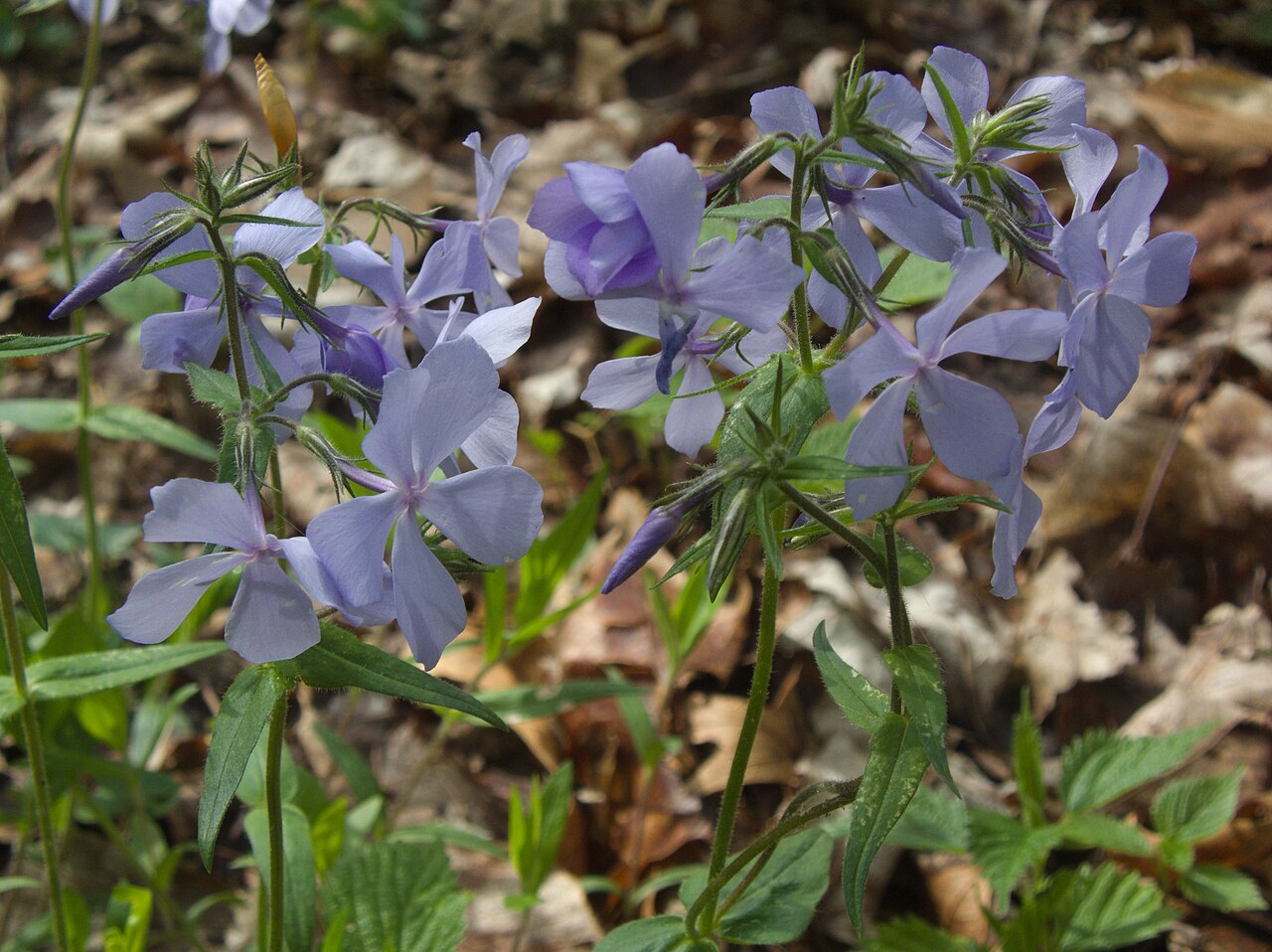
Phlox (genus Phlox) is one of the great North American wildflower groups. Nearly all of its roughly 65 species are native only to North America (one, Siberian phlox, also ranges into Asia), and most of them grow in the United States, from the moss phlox that carpets eastern rock ledges in spring to the tall, fragrant summer phlox of meadows and woodland edges and the tight, cushion-forming phloxes of western deserts and mountains. If you grow phlox in your garden, you are almost certainly growing a native species or a hybrid bred from native species.
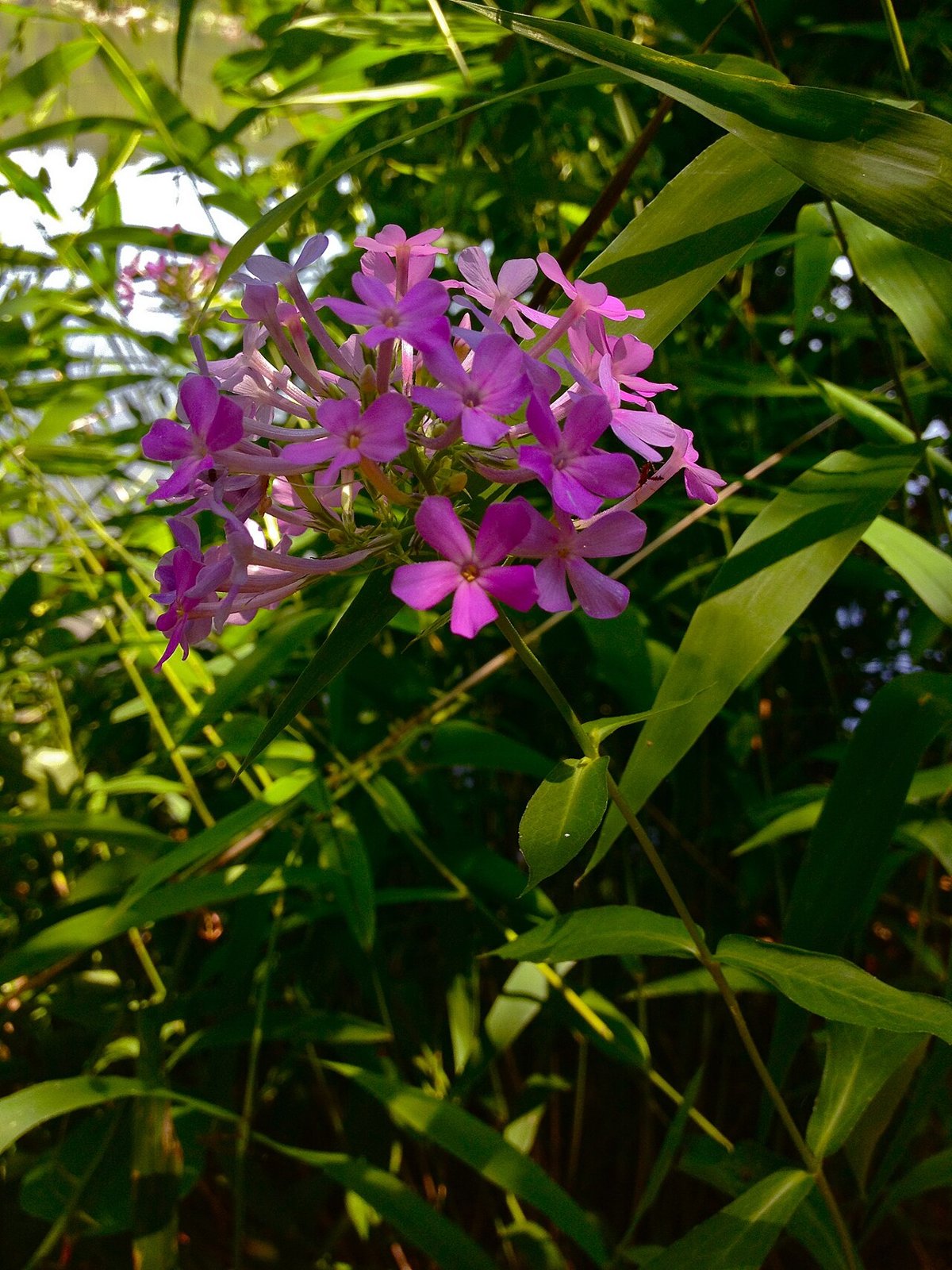
Phlox flowers are easy to recognize: five flat petals at the end of a slender tube, often with a contrasting eye, carried in clusters in white, pink, lavender, blue, purple or red. Most are fragrant and rich in nectar, and they are favorites of butterflies, moths, bees and hummingbird moths. Phlox are native in almost every state, from Alaska and Washington to Florida and Texas.
Garden phlox has also been bred intensively, in Europe and North America, so the plants sold at garden centers are often cultivars or interspecific hybrids, such as the Fashionably Early series, Phlox × arendsii and annual Drummond phlox seed strains. This guide explains the native species behind them, where each grows wild, and how to choose and grow phlox that support native pollinators.
Identification
All phlox share the same basic flower plan, but growth forms range from mats a few inches tall to upright plants of 4 feet or more.
Growth Form
Phlox fall into three broad groups. Upright, clumping perennials 1 to 4 feet tall bloom in summer: summer phlox, spotted phlox and Carolina phlox. Low, spreading spring phlox 6 to 18 inches tall form loose colonies in woods and prairies: woodland, creeping, prairie and chalice phlox. Creeping and cushion phlox form dense, often evergreen mats or mounds just a few inches high: moss phlox, sand phlox, trailing phlox and the many western cushion species such as spiny phlox and spreading phlox. Drummond phlox and goldeneye phlox are annuals.
Leaves
Leaves are simple and untoothed and, on most species, arranged in opposite pairs along the stem. They range from broad and lance-shaped in summer phlox to short, stiff and needle-like in moss phlox and the western cushion species. Spotted phlox gets its name from the purple spots or streaks on its stems, a useful field mark.
Flowers
Each flower has a narrow tube about ½ to 1 inch long that opens into five flat, spreading petal lobes, ½ to 1 inch across. The lobes may be rounded, notched (as in sand phlox and showy phlox) or deeply cleft. The style inside the tube has three short branches. Flowers are held in loose or dense clusters at the stem tips. This five-petaled, tubular form separates phlox from dame’s rocket, which has four petals, and from sweet William, whose petals are fringed.
Fruit & Seeds
The fruit is a small, oval, three-part capsule that splits when ripe, often flinging the few seeds a short distance. Phlox spread slowly by seed, and many species also spread by rooting stems or short rhizomes.
Quick Facts
| Scientific Name | Phlox (about 65 species, nearly all native to North America) |
| Family | Polemoniaceae (Phlox family) |
| Plant Type | Perennials (mats, cushions and upright clumps) and a few annuals |
| Mature Height | 2 in (cushion species) to 2–4 ft (summer and spotted phlox) |
| Mature Spread | 6 in–3 ft |
| Growth Rate | Moderate |
| Sun Exposure | Full sun to shade, by species (woodland and creeping phlox for shade) |
| Water Needs | Low to average; western cushion species very drought tolerant |
| Soil Type | Rich, moist loam for woodland and summer phlox; sandy, gravelly or rocky soil for mat and cushion species |
| Soil pH | Acidic to slightly alkaline (about 5.5–7.5) |
| Bloom Time | March – May (spring species); June – September (summer species) |
| Flower Color | White, pink, lavender, blue, purple, magenta or red |
| Fall Color | Mostly none; mat species stay green through winter |
| Fruit | Small three-part capsules |
| Deer Resistant | No; deer and rabbits often eat phlox |
| USDA Hardiness Zones | About 3–9 across the genus (spiny phlox and Alaska species colder) |
Native Range
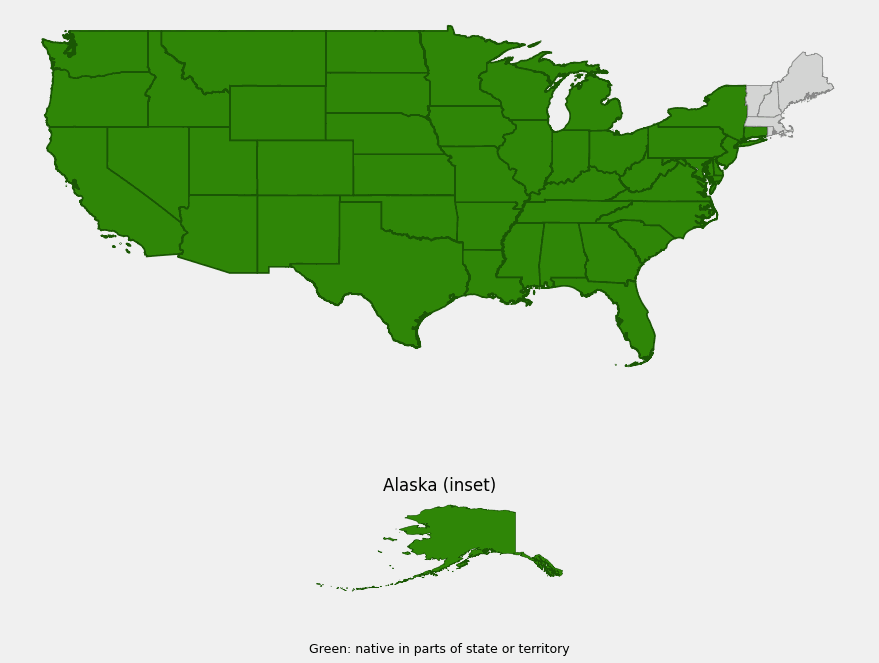
Phlox is native from Alaska and the Yukon south through the western mountains and Great Plains and across the East to Florida and Texas. The West has the most species, many of them low cushion plants of sagebrush steppe, deserts, rocky ridges and alpine slopes, such as spiny phlox, tufted phlox, spreading phlox and longleaf phlox. The Southeast and Appalachians are the center of diversity for the tall and woodland phlox, including summer, spotted, Carolina, creeping, chalice and trailing phlox. Texas has its own annual species, including Drummond phlox and goldeneye phlox.
In the Midwest and Ohio Valley, the common wild phlox are woodland phlox in rich woods, prairie phlox in prairies and open woods, smooth and spotted phlox in wet meadows, sand phlox on sandy and rocky ground, and summer phlox along stream banks and woodland edges. Ohio, for example, has woodland, summer, spotted, smooth and prairie phlox. In the Northeast, moss phlox, woodland phlox and summer phlox are native to Pennsylvania, New Jersey and New York, and prairie phlox reaches southern Connecticut, the only phlox native to New England.
Garden phlox has escaped widely. Summer phlox, moss phlox, spotted phlox and woodland phlox grow wild across New England, including Vermont and Maine, and Drummond phlox, native to Texas, has spread along roadsides in the Southeast. Those are escapes from gardens, so the map shows only states with native phlox populations; Maine, New Hampshire, Vermont, Massachusetts and Rhode Island are left off because their wild phlox are garden escapes, according to the Flora Novae Angliae. Connecticut is included for its native prairie phlox.
📋 Regional plant lists with native phlox: Ohio & Indiana · Kentucky & Tennessee · Maryland, Virginia & West Virginia · New York, Pennsylvania & Northern New Jersey · Connecticut, Massachusetts & Rhode Island · Delaware, Southern New Jersey & Long Island · North Carolina & South Carolina · Georgia, Alabama & Mississippi · Arkansas, Louisiana, Eastern Oklahoma & Eastern Texas · Illinois, Iowa & Missouri · Michigan, Wisconsin & Eastern Minnesota · North Dakota, South Dakota & Western Minnesota · Nebraska, Kansas & Eastern Colorado · South & West Texas · Montana & Wyoming · Utah & Western Colorado · Arizona & New Mexico · Idaho, Eastern Oregon & Eastern Washington · Western Oregon & Washington · California & Nevada · Alaska
Native Species
These are the native phlox most often grown in gardens or seen in the wild, roughly from tallest to lowest and east to west. Each name links to our full growing guide.
Summer or garden phlox (Phlox paniculata) grows 2 to 4 feet tall with large, domed clusters of fragrant pink, magenta, lavender or white flowers from July into September. It is native to stream banks, moist woods and meadows from New York and the Ohio Valley south to Georgia and west to Missouri and Arkansas. It is the parent of most tall garden phlox; mildew-resistant cultivars such as ‘Jeana’ and ‘David’ are the most rewarding for pollinators.
Spotted or meadow phlox (Phlox maculata) has purple-spotted stems and long, cylindrical clusters of pink to purple flowers in early to midsummer. It grows in wet meadows and stream banks from the Great Lakes to the Southeast and is more resistant to powdery mildew than summer phlox. It is a parent of several early-blooming garden hybrids.
Carolina phlox (Phlox carolina) is a southeastern species 2 to 3 feet tall with glossy, thick leaves and pink to purple flowers in late spring and early summer. It grows in open woods and clearings and is also resistant to mildew.
Woodland phlox (Phlox divaricata), also called wild blue phlox, carpets eastern and midwestern woods in April and May with fragrant, pale blue to lavender flowers on 10- to 15-inch stems. It is native from New York and southern Quebec to Georgia and west to Minnesota and Texas and is one of the best spring wildflowers for shade gardens.
Creeping phlox (Phlox stolonifera) is an Appalachian woodland species that spreads by runners into a low, evergreen groundcover and sends up pink, blue, purple or white flowers in spring. It is one of the best native groundcovers for shade.
Moss phlox (Phlox subulata), also called creeping phlox in the nursery trade, forms dense mats of needle-like, evergreen leaves smothered in pink, magenta, lavender or white flowers in early spring. It grows wild on rocky slopes, ledges and sandy openings from New York and Michigan to North Carolina and Tennessee and is widely planted elsewhere.
Prairie or downy phlox (Phlox pilosa) is a slender, hairy, 1- to 2-foot species with pink to lavender flowers in late spring, native to prairies, savannas and open woods across the Midwest and South. It is the host plant of the phlox moth, a small pink-and-white moth whose caterpillars feed on its flowers.
Chalice or hairy phlox (Phlox amoena) is a low, hairy species of dry, sandy woods and clearings in the Southeast, with bright pink to lavender flowers in spring.
Trailing phlox (Phlox nivalis) forms evergreen mats in sandy pinelands of the southeastern coastal plain, from Virginia to Florida and Texas, with pink, lavender or white flowers in early spring.
Sand or cleft phlox (Phlox bifida) has deeply notched, star-like petals in pale lavender to white on low, wiry mats. It grows on sand, gravel and limestone ledges from Minnesota and Michigan south to Tennessee and Missouri.
Drummond phlox (Phlox drummondii) is an annual native to central and south Texas, where it paints roadsides red, pink and purple in spring. It is the parent of annual garden phlox seed strains and has spread beyond Texas along roadsides in the Southeast.
Goldeneye phlox (Phlox roemeriana) is a small Texas annual with bright pink flowers and a golden-yellow eye, found on limestone soils of the Edwards Plateau and nearby areas.
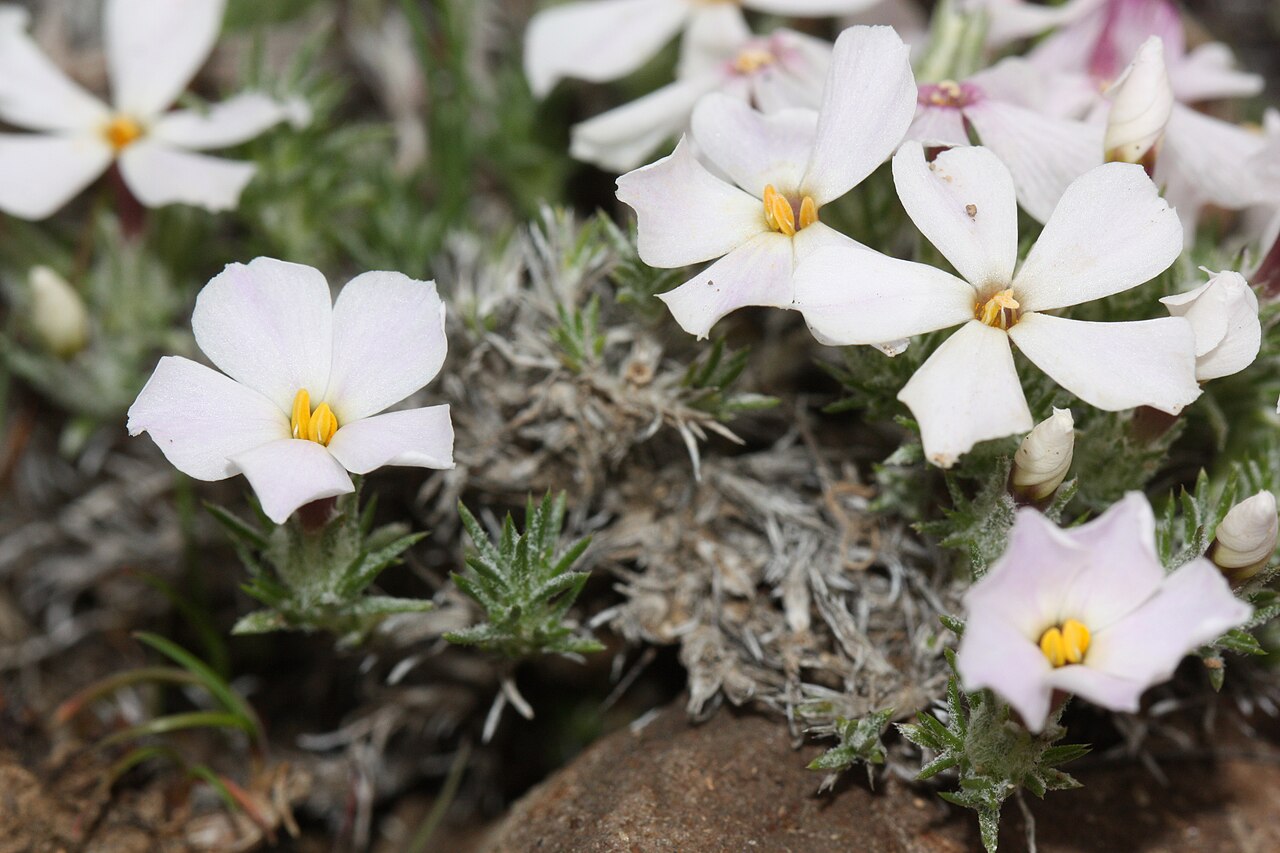
Spiny phlox (Phlox hoodii) forms low, prickly cushions of tiny, sharp leaves covered with white to pale lavender flowers in early spring. It grows on dry plains and sagebrush steppe from western Canada through the northern Great Plains and the Intermountain West.
Spreading phlox (Phlox diffusa) makes loose mats of pink, lavender or white flowers on rocky slopes and open forests in the mountains of the West, from Washington, Idaho and Montana to California and Nevada.
Showy phlox (Phlox speciosa) is a shrubby, 6- to 16-inch phlox of the Pacific Northwest, Idaho and northern California, with large pink to white flowers with notched petals in spring, often among sagebrush and ponderosa pine.
More native phlox profiles: longleaf phlox (P. longifolia) · Douglas’s phlox (P. douglasii) · desert mountain phlox (P. austromontana) · mountain phlox (P. latifolia)
Non-Native Look-Alikes
Because the genus is almost entirely North American, “non-native” phlox in gardens are mostly cultivars and hybrids of native species rather than foreign plants. A few true look-alikes from other families are invasive.
- Fashionably Early series (such as ‘Fashionably Early Crystal’, ‘Flamingo’ and ‘Lavender Ice’): Compact, early-blooming garden phlox bred from crosses between North American species for mildew resistance and a long bloom starting in early summer. They come from native parents but are garden hybrids, not wild plants, so they are best thought of as “nativars.” ‘Fashionably Early Crystal’ has white flowers with a lavender eye.
- Arends phlox (Phlox × arendsii): Hybrids of woodland phlox and summer phlox made in Germany by Georg Arends in the early 1900s, with mid-height plants and early summer flowers.
- Annual phlox seed strains: Bedding phlox sold in six-packs, including dwarf and star-flowered strains, are cultivated forms of Texas’s native Drummond phlox. They are fine summer annuals but are not native outside Texas.
- Dame’s rocket (Hesperis matronalis): A European plant in the mustard family with tall clusters of fragrant purple, pink or white flowers in late spring. It is often mistaken for phlox and sold in “wildflower” seed mixes, but it has four petals and alternate, toothed leaves. It is invasive in woods and roadsides across the Northeast, Midwest and Northwest; pull it before it sets seed.
- Sweet William (Dianthus barbatus): A European pink with flat clusters of fringed, five-petaled flowers and grass-like leaves. Its petals are toothed and not joined into a tube.
- Rock cress (Aubrieta): A European mat plant with four-petaled purple flowers, sometimes confused with moss phlox in rock gardens.
Growing & Care Guide
Phlox are easy, rewarding perennials once you match the type to the site: tall summer phlox for sunny borders, woodland and creeping phlox for shade, and mat and cushion species for dry, sunny rock gardens.
Light
Summer, spotted, Carolina, prairie and moss phlox flower best in full sun to light shade. Woodland and creeping phlox grow in part to full shade under deciduous trees, where they get spring sun before the canopy leafs out. Western cushion species need full sun.
Soil & Water
Tall phlox want rich, moist, well-drained soil and regular water in dry summers; drought stress makes them more prone to powdery mildew. Woodland and creeping phlox like humus-rich soil with leaf mulch. Moss, sand and trailing phlox need lean, sandy or gravelly soil with sharp drainage. Western cushion phlox need very fast drainage and little summer water, and they often fail in humid, rainy climates.
Planting Tips
Plant in spring or early fall, spacing tall phlox 18 to 24 inches apart so air can move between them, and mat-forming species 12 to 18 inches apart. Choose mildew-resistant cultivars of summer phlox, or grow spotted or Carolina phlox, which are naturally more resistant. Protect new plantings from rabbits and deer, which eat phlox.
Pruning & Maintenance
Thin tall phlox to four or five strong stems per clump in spring to improve air flow and reduce mildew. Deadhead summer phlox to extend bloom and reduce self-sowing, since seedlings of cultivars often revert to magenta. Shear moss phlox lightly after bloom to keep it dense. Divide tall phlox every three to four years in spring.
Propagation
Divide clumps in early spring or fall. Root stem cuttings of tall phlox in late spring, or root cuttings in winter. Creeping, woodland and moss phlox root wherever their stems touch the ground, so rooted pieces are easy to move. Native species can be grown from seed sown outdoors in fall; most need a cold period to germinate.
Landscape Uses
- Sunny perennial borders: summer, spotted and Carolina phlox with wild bergamot and coneflowers
- Woodland gardens: woodland and creeping phlox with Virginia bluebells and foamflower
- Rock gardens, slopes and wall tops: moss, sand and cushion phlox
- Prairie and meadow plantings: prairie phlox with native grasses
- Butterfly and moth gardens, especially with fragrant summer phlox for evening visitors
- Groundcovers for shade: creeping phlox in place of non-native vinca or pachysandra
Wildlife & Ecological Value
Phlox are pollinator magnets, and their nectar is held in long tubes that suit long-tongued insects.
For Pollinators
Swallowtails, fritillaries, sulphurs, skippers and other butterflies visit phlox heavily, along with hummingbird moths, sphinx moths at dusk, bumblebees and long-tongued bees. Spring phlox provide early nectar for queen bumblebees and butterflies, and summer phlox carry pollinators through midsummer.
Moths & Caterpillars
Prairie phlox is the host plant of the phlox moth (Schinia indiana), a rare moth of Midwestern prairies whose caterpillars feed on prairie phlox flowers and seed pods.
For Birds & Mammals
Ruby-throated hummingbirds occasionally visit tall phlox. Deer and rabbits browse phlox readily, which is one reason woodland phlox has declined in areas with heavy deer populations.
Ecosystem Role
Mat-forming phlox help hold soil on rocky slopes, sand barrens and dry plains, and cushion species are among the first flowers of spring in western shrub-steppe and alpine areas, feeding early-season pollinators.
Cultural & Historical Uses
The name Phlox comes from the Greek word for flame, a reference to the bright flower colors of some species. North American phlox reached Europe in the 1700s, and summer phlox became a staple of English cottage gardens and German perennial breeding long before American gardeners took the native species seriously.
Drummond phlox was named for Thomas Drummond, a Scottish plant collector who sent its seed from Texas to Britain in the 1830s. It became one of the most popular annuals of the Victorian era. Several Native American peoples used phlox in traditional remedies, but phlox is grown today as an ornamental, not for any use.
In recent decades, trials at places such as Mt. Cuba Center in Delaware have compared phlox cultivars for mildew resistance and pollinator value, and found that some native-species selections, such as ‘Jeana’, attract far more butterflies than many showy hybrids. That work has pushed growers toward phlox that serve both gardeners and wildlife.
Frequently Asked Questions
Is ‘Fashionably Early Crystal’ phlox native?
It is a garden hybrid bred from North American phlox species, so it has native parents but is not a wild native plant. It is a good, mildew-resistant garden perennial. For a true native in Ohio and the Midwest, choose summer phlox, spotted phlox, woodland phlox or prairie phlox.
Which phlox are native to Ohio?
Ohio has several native phlox, including woodland phlox, summer phlox, spotted phlox, smooth phlox and prairie phlox. Woodland phlox suits shade gardens, and summer and spotted phlox suit sunny borders.
How do I prevent powdery mildew on phlox?
Plant mildew-resistant cultivars or species such as spotted and Carolina phlox, give plants full sun and good air circulation, thin crowded stems in spring, and water at the base during dry spells. Mildew is unsightly but rarely kills the plants.
Is creeping phlox the same as moss phlox?
Not quite. “Creeping phlox” is used for two native species: moss phlox (Phlox subulata), which forms sunny mats of needle-like leaves, and Phlox stolonifera, a shade-loving woodland groundcover with rounded leaves. Check the scientific name when buying.
Is phlox deer resistant?
No. Deer and rabbits readily eat phlox, especially tall and woodland types. Use fencing or repellents where deer are common, or plant phlox near the house where browsing pressure is lower.

Looking for a nursery that carries Native Phlox?
Browse our native plant nursery directory: Alabama, Alaska, Arizona & Arkansas · California · Colorado, Connecticut, Delaware, Florida & Georgia · Idaho, Illinois, Indiana, Iowa & Kansas · Kentucky, Louisiana, Maryland, Michigan, Minnesota, Mississippi, Missouri & Montana · Nebraska, Nevada, New Jersey, New Mexico, New York, North Carolina, North Dakota, Ohio & Oklahoma · Oregon · Pennsylvania, South Carolina, South Dakota, Tennessee, Texas, Utah & Virginia · Washington · West Virginia, Wisconsin & Wyoming

