
Native Clematis (Clematis)
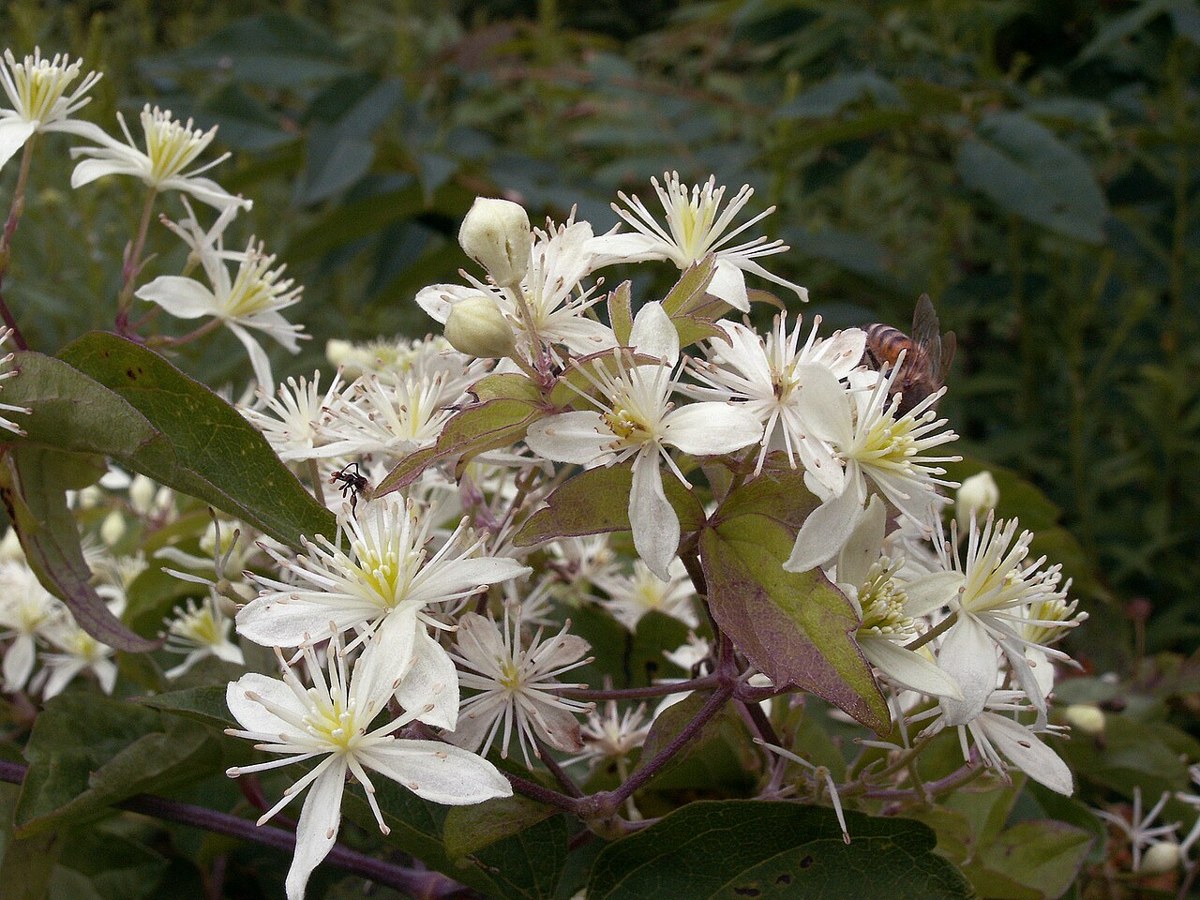
Clematis is a genus of roughly 300 climbing vines and perennials in the buttercup family (Ranunculaceae), and most of the big, flat, purple or pink “clematis” sold at garden centers are hybrids of Asian and European species. But the United States has its own clematis, about 30 native species, found in every one of the lower 48 states. They range from vigorous white-flowered vines that blanket fencerows in late summer, to delicate bell-flowered “leatherflowers” of southern woodlands, to knee-high, non-climbing wildflowers of western grasslands.
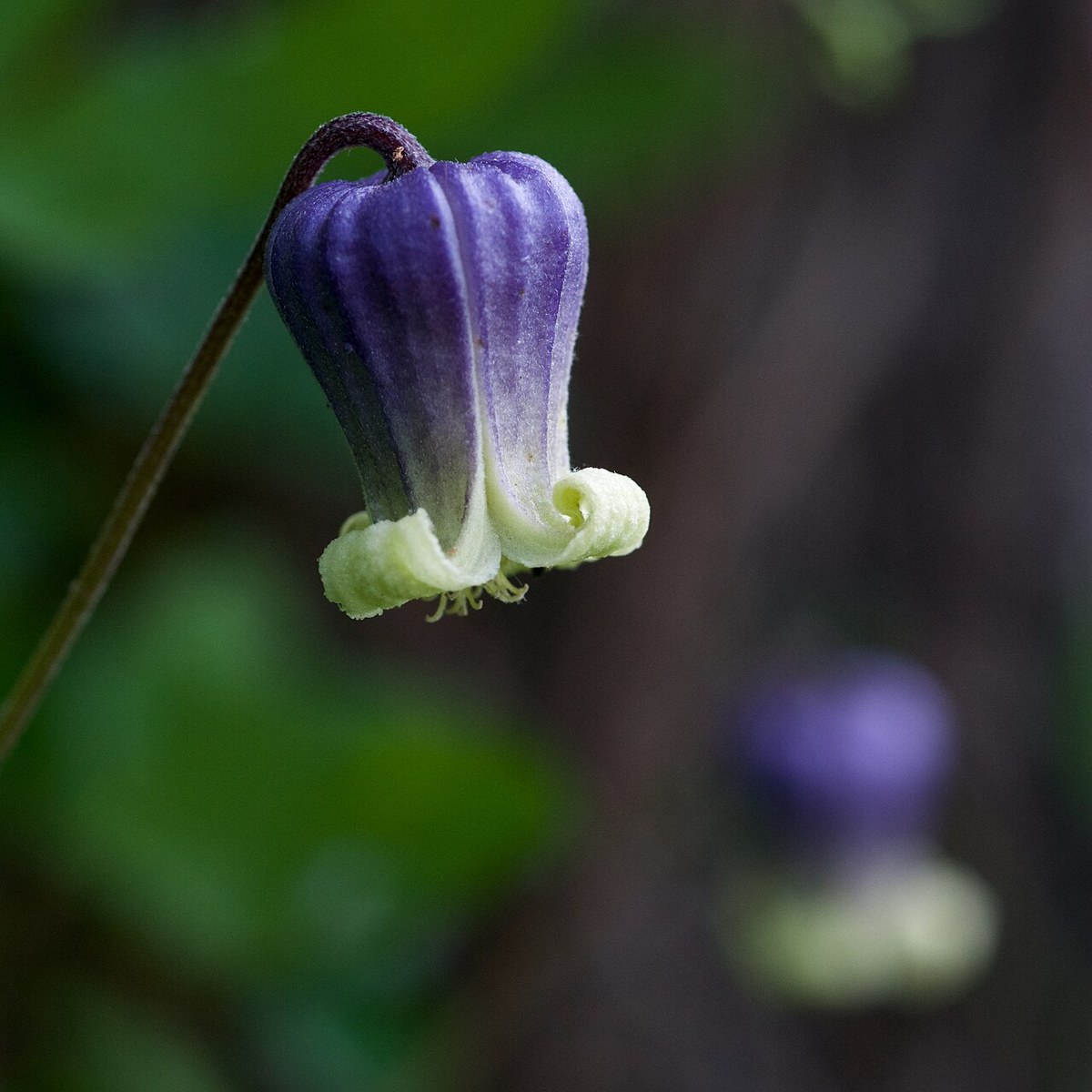
Native clematis rarely look like the catalog hybrids. Many have small, starry white flowers in large sprays, followed by silvery, feathery seedheads that give them names such as “old man’s beard”. Others carry thick, nodding, urn- or bell-shaped flowers in purple, lavender, pink or scarlet, which is why the group is called leatherflower or vasevine. What they share is the clematis way of climbing (by wrapping their leaf stalks around supports), opposite, usually divided leaves, and seeds topped with long, often plumy tails.
This guide covers the most important native species, how to tell them from the popular non-native clematis (including the invasive sweet autumn clematis), and how to grow them. If you came here from one of our state vine guides, use the native species list below to find a clematis that actually belongs in your region, whether that is virgin’s bower in Ohio, New York or Minnesota, purple leatherflower in Missouri and Illinois, western white clematis in Idaho and Utah, or chaparral clematis in Southern California.
Identification
All clematis share a few features that separate them from other vines. Learning them makes it easy to recognize a clematis in the wild, and then to decide which kind it is.
Stems & Climbing Habit
Climbing clematis have no tendrils, suckers or twining stems. Instead, the stalks of the leaves and leaflets bend and wrap around anything thin they touch: twigs, wire, string or other plants. Large species such as virgin’s bower and western white clematis become woody at the base and can climb 15 to 20 feet or sprawl over shrubs. The leatherflowers are lighter, semi-woody or herbaceous vines, usually 6 to 12 feet, that often die back to the ground in winter. A few natives, such as sugarbowls and pine-hyacinth, do not climb at all and grow as upright, clump-forming perennials 1 to 2 feet tall.
Leaves
Leaves are opposite (in pairs) on the stem. In most species they are compound, divided into three, five, seven or more leaflets, and the leaflets may be toothed, lobed or smooth-edged. In some leatherflowers and in the non-climbing species the leaves are simple or only shallowly divided. Leaflet number and toothing are among the most useful clues for telling native species from non-native ones (see the look-alikes section below).
Flowers
Clematis flowers have no true petals. What look like petals are four (sometimes five or six) colored sepals. Native clematis flowers come in three basic forms: small, flat, white or cream stars about an inch across, borne in large sprays (virgin’s bower, western white clematis, old man’s beard); thick, nodding bells or urns with sepal tips that curl or flare outward (the leatherflowers); and larger, nodding, four-sepaled blue or purple flowers on spring vines (western blue virgin’s bower and rock clematis). Several white-flowered species are dioecious, with male and female flowers on separate plants.
Fruit & Seeds
Each flower produces a cluster of small, flattened seeds (achenes), each tipped with the persistent style. In most species these styles grow into long, feathery tails, so the seed clusters look like silky silver or tan pompoms in late summer and fall. Some leatherflowers have shorter, less feathery tails. The fluffy seedheads are often as ornamental as the flowers.
Quick Facts
| Scientific Name | Clematis (genus) |
| Family | Ranunculaceae (Buttercup) |
| U.S. Native Species | About 30 (approximate; treatments differ), plus several introduced species |
| Plant Type | Climbing woody or herbaceous vines; a few upright, non-climbing perennials |
| Mature Height | Vines 6–20 ft; non-climbing species 1–2 ft |
| Growth Rate | Moderate to fast (white-flowered vines); moderate (leatherflowers) |
| Sun Exposure | Full sun to part shade; roots prefer cool, shaded soil |
| Water Needs | Average moisture for most; western and chaparral species drought tolerant |
| Soil Type | Well-drained loam; many leatherflowers favor limestone or rocky soils |
| Bloom Time | Spring (blue western species) through late summer (white vines) |
| Flower Color | White, cream, blue, lavender, purple, pink or scarlet |
| Fruit | Clusters of seeds with long, often feathery tails |
| Wildlife Value | Nectar and pollen for bees and flies; cover and nesting sites for birds |
| Deer Resistant | Moderately; foliage is bitter, but young shoots may be browsed |
| Toxicity | Sap and foliage are irritating and toxic if eaten |
| USDA Hardiness Zones | 3–10, depending on species |
Native Range
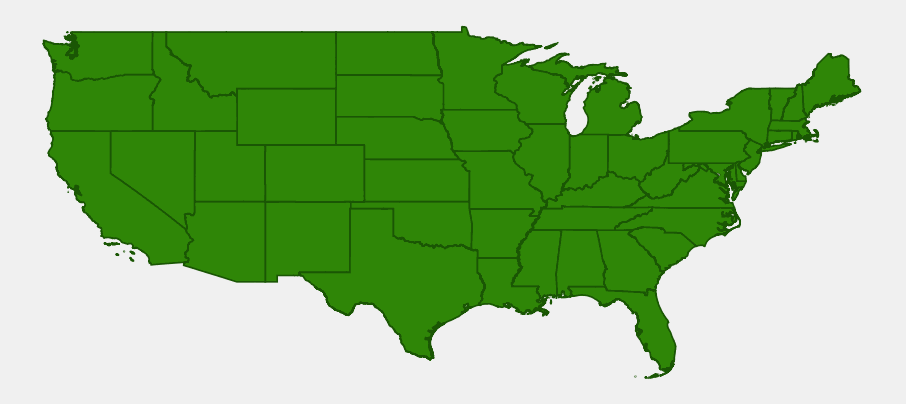
Clematis is one of the few vine genera native to every state in the lower 48. In the East, virgin’s bower is the common species from Maine to Florida and west to the Dakotas and Texas, often joined by purple clematis (the eastern form of western blue virgin’s bower) in northern and Appalachian woods. The Southeast and south-central states are the center of diversity for the leatherflowers, with species such as vasevine, swamp leatherflower, pale leatherflower, purple leatherflower and netleaf leatherflower, several of them found only on limestone glades or in a few counties.
West of the Great Plains, western white clematis climbs over willows and cottonwoods along streams from the Dakotas and Nebraska to the Pacific, while western blue virgin’s bower and rock clematis bloom in spring in mountain forests. Sugarbowls grows in sagebrush and mountain meadows. California adds its own species, including chaparral clematis and small-leaf clematis, and the deserts and canyons of Texas, New Mexico and Arizona have old man’s beard. Florida has the endemic pine-hyacinth.
No clematis is native to Hawaii, and Alaska has no native species in the USDA PLANTS database, so the map shows the lower 48 only. Many clematis seen along roadsides, especially sweet autumn clematis in the East and traveller’s joy in the Pacific Northwest, are escaped non-natives rather than wild native plants.
📋 Regional plant lists with native clematis and other native vines: Maine, New Hampshire & Vermont · Southern New England · New York, Pennsylvania & Northern New Jersey · Maryland, Virginia & West Virginia · North Carolina & South Carolina · Georgia, Alabama & Mississippi · Kentucky & Tennessee · Ohio & Indiana · Illinois, Iowa & Missouri · Michigan, Wisconsin & Eastern Minnesota · Dakotas & Western Minnesota · Arkansas, Louisiana, Eastern Oklahoma & Eastern Texas · South & West Texas · Nebraska, Kansas & Eastern Colorado · Montana & Wyoming · Utah & Western Colorado · Arizona & New Mexico · Idaho, Eastern Oregon & Washington · Western Oregon & Washington · California & Nevada
Native Species
These are the native clematis you are most likely to meet in the wild or find at native-plant nurseries. Click a name for a full growing guide.
Virgin’s Bower (Clematis virginiana)
Native to: Maine to Florida, west to the Dakotas, Kansas and Texas. The common white clematis of eastern and Midwestern woodland edges and streambanks. A fast vine to 20 feet with three toothed leaflets per leaf and big sprays of small white flowers in August and September, followed by feathery seedheads. Male and female flowers grow on separate plants. The best native substitute for sweet autumn clematis in Ohio, Indiana, Illinois, New York and Minnesota.
Western White Clematis (Clematis ligusticifolia)
Native to: The Great Plains west to the Pacific states. The western counterpart of virgin’s bower, climbing over willows and cottonwoods along streams and ditches. Leaves usually have five to seven leaflets. Clouds of white summer flowers and silvery seedheads; tough and drought tolerant once established, a good choice for Idaho and Utah gardens.
Western Blue Virgin’s Bower (Purple Clematis) (Clematis occidentalis)
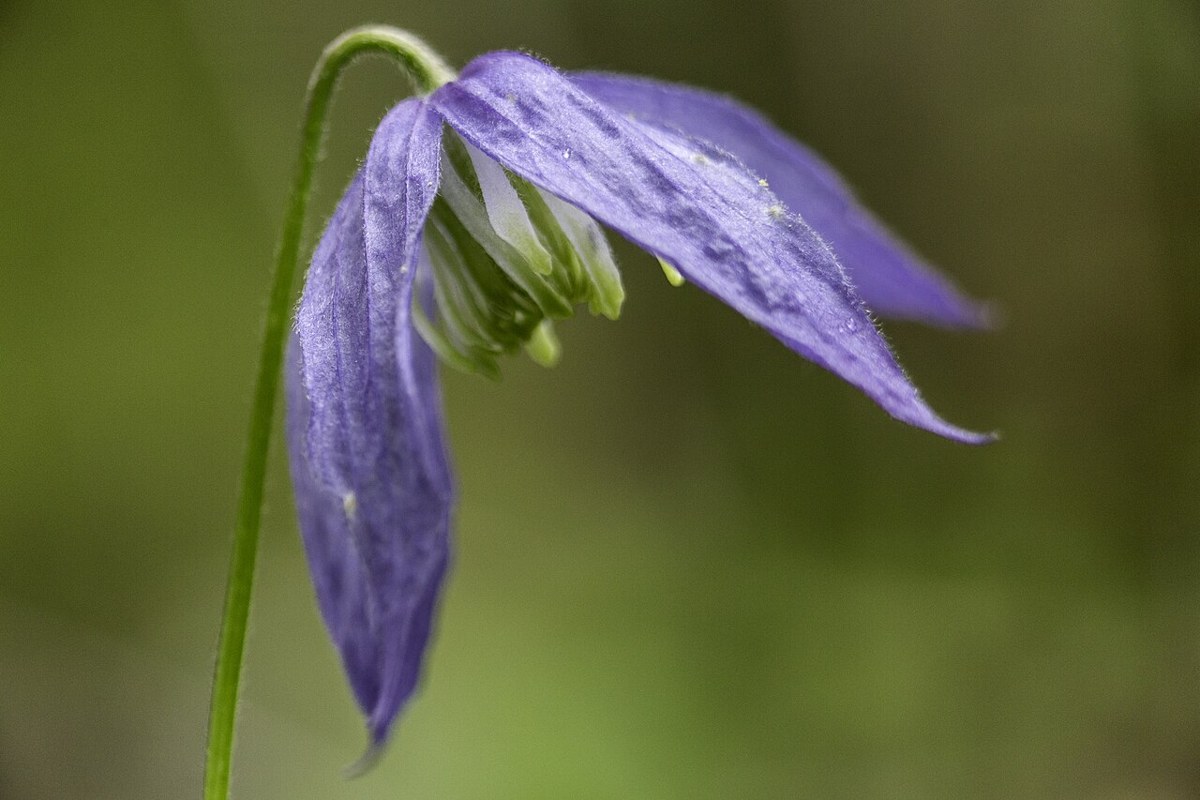
Native to: Rocky Mountain and Pacific Northwest states, and northern and Appalachian forests from Minnesota to New England and Virginia. A slender woody vine with three leaflets and single, nodding, four-sepaled blue-violet flowers in spring. Grows on rocky, wooded slopes and forest edges; best in cool, part-shaded sites.
Rock Clematis (Clematis columbiana)
Native to: Rocky Mountains from Montana and eastern Washington south to Arizona, New Mexico and west Texas. A low, trailing or scrambling relative of western blue virgin’s bower with finely divided leaves and nodding blue-purple flowers in spring. Suited to rock gardens and the edges of mountain conifer forests.
Sugarbowls (Hairy Clematis) (Clematis hirsutissima)
Native to: Interior West from eastern Washington and Oregon to Montana, Colorado and northern Arizona and New Mexico. Not a vine at all: an upright, clump-forming perennial 1 to 2 feet tall with finely cut, hairy leaves and single, nodding, dark purple, velvety urn-shaped flowers in spring, followed by shaggy seedheads. A wildflower of sagebrush slopes and mountain meadows.
Vasevine (Leatherflower) (Clematis viorna)
Native to: Pennsylvania and Ohio south to Georgia and west to Missouri and Arkansas. A semi-woody vine, usually 6 to 12 feet, with thick, urn-shaped, reddish-purple flowers tipped in cream from late spring through summer. Grows on wooded slopes and streambanks, often over limestone.
Swamp Leatherflower (Blue Jasmine) (Clematis crispa)
Native to: Coastal Plain from Virginia to Florida and Texas, north in the Mississippi Valley to Kentucky, Missouri and southern Illinois. A light vine of swamps, floodplains and wet woods with lavender to blue-purple bells whose thin sepal tips flare out and crinkle. Lightly fragrant. A good clematis for wet, sunny spots in the South and lower Midwest.
Purple Leatherflower (Bluebill) (Clematis pitcheri)
Native to: South-central states: Missouri, Kansas, Oklahoma, Arkansas, Louisiana and Texas, with scattered records farther east in the Mississippi Valley, including Illinois. Dull purple, thick-sepaled bells with rolled-back, paler tips, borne singly from late spring into summer on a vine 6 to 10 feet long. Grows on woodland edges, thickets and fencerows. A dependable native for Missouri gardens.
Pale Leatherflower (Clematis versicolor)
Native to: Kentucky and Tennessee west to Missouri, Arkansas, Oklahoma and Texas. A leatherflower of limestone glades and rocky woods, with bluish-green, often whitish-backed leaves and pale lavender-pink bells. Good for dry, alkaline soils.
Whiteleaf Leatherflower (Clematis glaucophylla)
Native to: Scattered across the Southeast, from Virginia to the Florida panhandle and west to Oklahoma and Louisiana. Named for its strongly whitened (glaucous) leaves. Carries reddish-purple bells with flared tips in summer on a slender vine. Uncommon in the wild.
Netleaf Leatherflower (Clematis reticulata)
Native to: Coastal Plain from South Carolina and Florida west to Texas, Oklahoma and Arkansas. Recognized by stiff, leathery leaflets with a raised net of veins. Pale purple to lavender bells on a vine of sandy woods and clearings; tolerates dry, sandy soils.
Scarlet Leatherflower (Clematis texensis)
Native to: Texas only, on the Edwards Plateau. The only native clematis with true scarlet to rose-red bells. Rare in the wild, it is the parent of many garden hybrids (such as ‘Duchess of Albany’ and ‘Princess Diana’), which are crosses with non-native clematis rather than the wild species.
Old Man’s Beard (Texas Virgin’s Bower) (Clematis drummondii)
Native to: Texas, Oklahoma, New Mexico and Arizona. A drought-tough vine of desert washes, canyons and brushy fencerows with small, greenish-white flowers and very large, silky seedheads that cover the plant in late summer and fall.
Chaparral Clematis (Pipestem) (Clematis lasiantha)
Native to: California only. A Southern and central California native that blooms in early spring with cream-white flowers larger than those of most white-flowered clematis, scrambling over chaparral shrubs. Summer-dry once established; the best clematis for Southern California native gardens, along with western white clematis.
Pine-hyacinth (Clematis baldwinii)
Native to: Florida only (endemic). An upright, non-climbing perennial of pine flatwoods with single, nodding, pink to lavender bells on long stalks and feathery seedheads. Adapted to frequent fire.
Other native species without their own page yet include satin curls (Clematis catesbyana) of the Southeast, a white-flowered vine similar to virgin’s bower; small-leaf clematis (Clematis pauciflora) of Southern California; curlyheads (Clematis ochroleuca), an upright eastern species; and Fremont’s leatherflower (Clematis fremontii), a rare upright plant of limestone glades in Missouri, Kansas and Nebraska.
Non-Native Look-Alikes
Most clematis sold in garden centers are not native to the United States. Some are harmless garden plants; a few have escaped and become serious invasive weeds. Here is how to tell them apart from the natives.
Large-flowered hybrids (‘Jackmanii’, ‘Nelly Moser’ and others)
The big, flat, 4- to 8-inch flowers in purple, pink, blue or white that most people picture as “clematis” come from hybrids bred in Europe from Asian and European species. ‘Jackmanii’, with velvety deep purple flowers, was raised in England in the 1800s; ‘Nelly Moser’, with pale mauve-pink sepals striped darker pink down the center, came from France. They are not native, are not invasive, and offer pollinators some pollen but little else. Their flowers are flat, open and much larger, with four to eight broad sepals, unlike the small white stars or nodding bells of native species. If a state vine guide recommends “clematis” with a photo of a large purple flower, it is describing one of these hybrids.
Sweet autumn clematis (Clematis terniflora), invasive
This Japanese species is the native virgin’s bower’s most common look-alike, and it is invasive across much of the eastern United States, from New England and the Mid-Atlantic through the Southeast and Midwest, where it smothers shrubs and young trees along forest edges and streams. Both have masses of small, white, four-sepaled flowers in late summer. The easiest way to tell them apart is the leaves: sweet autumn clematis has glossy, leathery leaflets with smooth, untoothed edges, usually three to five per leaf, while virgin’s bower has thinner leaflets with coarse teeth or lobes, usually three per leaf. Sweet autumn clematis is also more strongly fragrant and often blooms a little later, into October. It is still widely sold (sometimes under the old names C. paniculata or C. maximowicziana), so check labels and choose virgin’s bower instead.
Traveller’s joy or old man’s beard (Clematis vitalba), invasive
A vigorous European vine that can climb 30 feet or more into tree canopies. It has escaped in the Pacific Northwest, where Oregon and Washington list it as a noxious weed, and it is naturalized in parts of the East. Its leaves usually have five leaflets, and its creamy flowers and fluffy seedheads look much like those of western white clematis, so check carefully west of the Cascades, where the native species is rare and traveller’s joy is common. Note that “old man’s beard” is also a common name for the native Texas species Clematis drummondii.
Yellow-flowered clematis (Clematis orientalis, C. tangutica)
No native US clematis has bright yellow, lantern-shaped flowers. Chinese or oriental clematis (C. orientalis) has escaped in the Intermountain West and Rocky Mountain region, and Colorado lists it as a noxious weed. Its relative golden clematis (C. tangutica) is a common garden plant. Gardeners in Utah, Idaho and Colorado should choose western white clematis, rock clematis or sugarbowls instead.
Other garden clematis
Anemone clematis (C. montana), alpine clematis (C. alpina) and Italian clematis (C. viticella) and their hybrids are popular Old World species. They are not native but are generally not considered invasive. Hybrids of the native scarlet leatherflower, such as ‘Princess Diana’, carry some native genes but are garden crosses, not wild plants.
Growing & Care Guide
Native clematis are easier than the large-flowered hybrids. They suffer less from clematis wilt, need little or no fussy pruning, and many of them thrive on neglect once established.
Light
The old rule “head in the sun, feet in the shade” works for natives too. Most bloom best with at least half a day of sun on their upper stems, while their roots stay cool under mulch, a groundcover or a low shrub. Virgin’s bower, the leatherflowers and western blue virgin’s bower also flower in part shade along woodland edges. Western white clematis, old man’s beard and chaparral clematis handle full sun and heat.
Soil & Water
Give eastern and Midwestern species average, well-drained garden soil with some organic matter. Several leatherflowers (pale leatherflower, purple leatherflower, vasevine) grow wild on limestone and do well in neutral to slightly alkaline soils, while swamp leatherflower tolerates wet ground. Western and southwestern species need good drainage and very little summer water once established; overwatering chaparral clematis in summer can kill it.
Planting Tips
Plant container-grown clematis in spring or early fall, setting the crown at or slightly below the soil surface. Provide something thin to climb: wire, string, a trellis, a chain-link fence or a shrub, since the leaf stalks cannot grab thick posts. Space the big white-flowered vines at least 6 to 8 feet apart; leatherflowers can go 3 to 4 feet apart. Mulch the root zone with 2 to 3 inches of shredded leaves.
Pruning & Maintenance
Native clematis need little pruning. Virgin’s bower, western white clematis and the leatherflowers bloom on the current year’s growth, so you can cut them back hard (to 12 to 24 inches) in late winter if they become tangled, or simply remove dead stems. Western blue virgin’s bower and rock clematis bloom in spring on older wood, so prune them, if at all, right after flowering. Leave seedheads in place through fall and winter for their beauty and for the birds that use the fluff for nests.
Propagation
Collect seeds when the tails turn fluffy and the achenes come away easily. Most native clematis seed needs a period of cold, moist stratification (60 to 90 days, or sow outdoors in fall), and germination can be slow and uneven. Softwood stem cuttings taken in late spring or early summer root fairly well, and layering a stem into the soil is an easy way to start a new plant of a vigorous vine.
Landscape Uses
- Fences and arbors: virgin’s bower or western white clematis will cover a chain-link fence in two or three seasons
- Through shrubs: leatherflowers look natural scrambling through native shrubs, much as they grow in the wild
- Mixed vine plantings with coral honeysuckle, crossvine and purple passionflower
- Streambank and wildlife plantings, where the vines provide dense cover for birds
- Rock gardens and meadows for the non-climbing species, sugarbowls and pine-hyacinth
- Containers: the smaller leatherflowers can be grown in a large pot with a small obelisk
Wildlife & Ecological Value
Native clematis are workhorses for wildlife, especially the big white-flowered vines that bloom in late summer when many other flowers are fading.
For Pollinators
The open white flowers of virgin’s bower and western white clematis offer pollen and some nectar to a wide range of small native bees, syrphid flies, wasps and beetles; honey bees visit them heavily too. The nodding bells of the leatherflowers are worked mainly by bumble bees, which can push into the narrow opening. Clematis foliage also feeds a few specialist insects, including the larvae of the clematis clearwing moth (Alcathoe caudata), which bore in the roots.
For Birds
Thick tangles of clematis on fences and in shrubs provide nesting and roosting cover for songbirds such as catbirds, cardinals and sparrows. The silky seed fluff may also be gathered as nest lining. Birds eat relatively few of the seeds.
For Mammals
Clematis foliage contains bitter, irritating compounds, so mammals generally browse it lightly, although deer may nip young shoots and leatherflower buds. Dense vines give rabbits and other small mammals cover along fencerows and streambanks.
Ecosystem Role
Native clematis help knit together woodland edges, streambanks and hedgerows, where their vines shade soil and catch leaf litter. Several leatherflowers are rare, limited to glades, prairies or particular rock types, and are indicators of high-quality remnant habitat. Replacing sweet autumn clematis with virgin’s bower is one of the simplest native swaps an eastern gardener can make.
Cultural & Historical Uses
The name Clematis comes from the Greek klema, a vine branch or tendril. Common names such as virgin’s bower, traveller’s joy and old man’s beard came to North America from European folklore about Clematis vitalba and were later attached to the native white-flowered species.
Clematis plants contain protoanemonin and related compounds, which irritate skin and mucous membranes. Because of these compounds, Do not eat or make remedies from any clematis: all parts are considered toxic if swallowed, and the sap can blister sensitive skin.
Native clematis were grown in European gardens from the 1700s onward. The scarlet leatherflower of Texas, introduced to cultivation in the 1800s, became a parent of red- and pink-belled hybrids that remain popular today, a small American contribution to a garden plant dominated by Asian and European species.
Frequently Asked Questions
Is clematis native to the United States?
Some clematis are. About 30 species are native to the lower 48 states, including virgin’s bower, western white clematis, the leatherflowers and western blue virgin’s bower. However, most clematis sold in garden centers, including large-flowered hybrids such as ‘Jackmanii’ and ‘Nelly Moser’, and sweet autumn clematis, are not native.
Which native clematis is best for Ohio, Indiana, Illinois, New York or Minnesota?
Virgin’s bower grows wild in all of these states and is easy in gardens. In Ohio, Indiana and Illinois you can also try vasevine or purple leatherflower; in Minnesota and northern New York, purple clematis (western blue virgin’s bower) grows in rocky woods.
How can I tell virgin’s bower from sweet autumn clematis?
Look at the leaves. Virgin’s bower has three thin leaflets with coarse teeth; sweet autumn clematis has glossy, leathery leaflets with smooth edges, usually three to five per leaf, and blooms a little later. Sweet autumn clematis is invasive in much of the East and should be removed and replaced with the native.
Is clematis poisonous?
Yes. All clematis contain irritating compounds; the fresh sap can cause skin irritation, and eating the plant can cause mouth pain, vomiting and diarrhea in people and pets. Wear gloves when pruning and keep pets from chewing the vines.
Which clematis are native to Idaho, Utah and Southern California?
In Idaho and Utah, grow western white clematis, rock clematis or sugarbowls. In Southern California, choose chaparral clematis or western white clematis, both of which handle dry summers once established.

Looking for a nursery that carries Native Clematis?
Browse our native plant nursery directory: Alabama, Arizona & Arkansas · California · Colorado, Connecticut, Delaware, Florida & Georgia · Idaho, Illinois, Indiana, Iowa & Kansas · Kentucky, Louisiana, Maine, Maryland, Massachusetts, Michigan, Minnesota, Mississippi, Missouri & Montana · Nebraska, Nevada, New Hampshire, New Jersey, New Mexico, New York, North Carolina, North Dakota, Ohio & Oklahoma · Oregon · Pennsylvania, Rhode Island, South Carolina, South Dakota, Tennessee, Texas, Utah, Vermont & Virginia · Washington · West Virginia, Wisconsin & Wyoming

