
Native Maples (Acer)
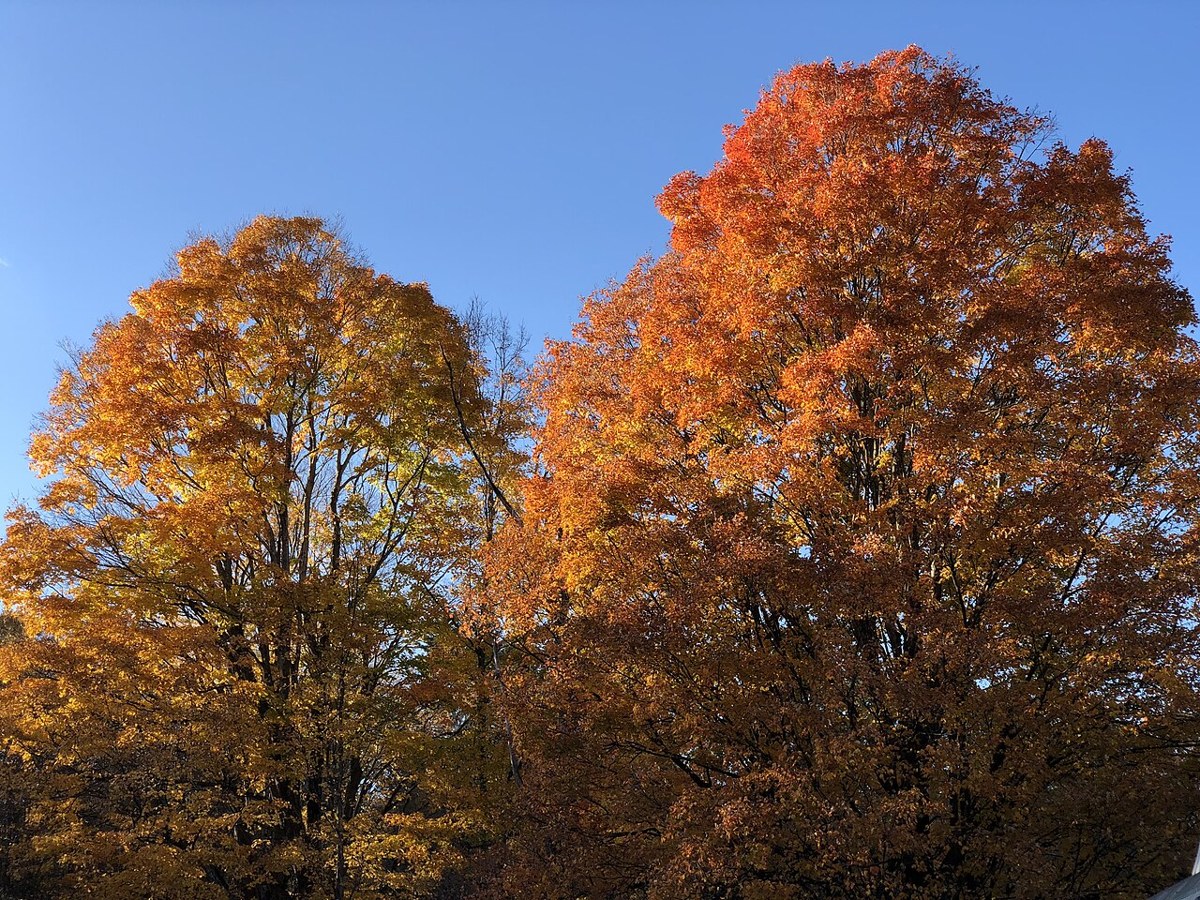
Maples (genus Acer) are trees and large shrubs with opposite leaves and paired, winged seeds, the “helicopters” every child has dropped from a height. There are roughly 130 species worldwide, most of them in eastern Asia. About 13 are native to the United States, and between them they grow wild in every state except Hawaii, from the sugar bush of New England to the canyons of Utah and the rain forests of the Pacific Northwest.
When one of our articles lists “Maple” as a tree for Massachusetts or New York, it could mean a native sugar or red maple, but it could just as easily mean a Norway maple, a sycamore maple or a Japanese maple bought at a garden center. Those three are Eurasian, and Norway maple is one of the most troublesome invasive trees in the Northeast. This guide shows you how to recognize a maple, which species are native and where, how to grow the important ones, and how to tell the natives from their imported look-alikes.
In Massachusetts and New York the two native maples you will meet most are red maple and sugar maple, followed by silver maple along rivers and the small understory maples, striped maple and mountain maple, in cool upland woods.
Identification
Three features together mark a maple: opposite leaves and buds (each pair sits directly across the twig from the other), palmate leaf veins (the main veins spread from one point at the base of the blade, like fingers from a palm), and paired winged seeds called samaras. Only a few other common trees have opposite branching (ash, dogwood, buckeye and horse-chestnut), and none of them has the maple’s samaras. Sweetgum and sycamore have maple-like leaves but they are alternate on the twig.
Leaves
Most maples have simple leaves with three to five lobes. The shape of the notches between the lobes is the quickest field mark. Sugar maple has smooth-edged lobes separated by rounded, U-shaped notches, with only a few large, blunt teeth. Red maple leaves are smaller, with three main lobes, V-shaped notches and many fine, sharp teeth. Silver maple leaves are cut almost to the midrib, very jagged, and silvery-white underneath. Black maple resembles sugar maple but the leaf often droops at the sides and is fuzzy beneath. Box elder is the odd one out: it has compound leaves with three to five (sometimes seven) leaflets, so it is often mistaken for poison ivy or an ash. Vine maple has seven to nine shallow lobes and an almost round outline.
Flowers & Seeds
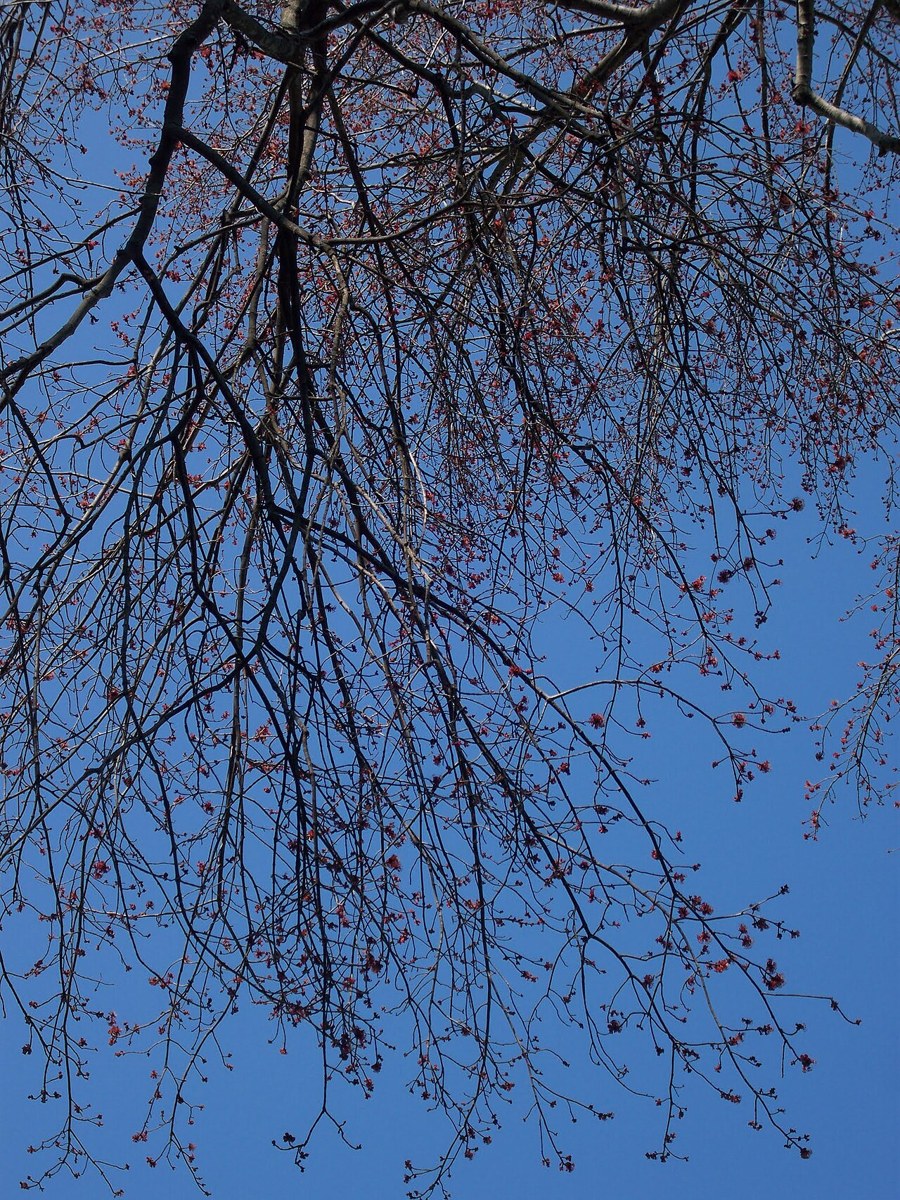
Maple flowers are small but plentiful. Red and silver maples bloom on bare branches in late winter, red maple tinting whole hillsides red weeks before the leaves open. Sugar maple’s yellow-green flowers hang on long stalks as the leaves emerge. The seeds ripen as samaras: red and silver maple drop theirs in late spring, while sugar, black, box elder and most western maples release them in fall. The angle between the two wings helps too: sugar maple wings are nearly parallel and U-shaped, silver maple’s are large and spread at a wide angle.
Bark & Twigs
Young red maple has smooth, pale gray bark that breaks into long scaly plates with age. Sugar maple bark becomes deeply furrowed into long, irregular plates. Striped maple is unmistakable, with green bark streaked with white vertical stripes. Twigs help in winter: red maple twigs and buds are red and blunt, sugar maple buds are sharply pointed and brown, and box elder twigs are green or purple with a whitish bloom.
Fall Color
Fall color varies by species and by individual tree. Sugar maples go yellow, orange or red; red maples turn scarlet to yellow; silver maple is usually a dull yellow; Norway maple stays green late into fall and then turns yellow, which is one way to spot it in a native woodland.
Quick Facts
| Genus | Acer |
| Family | Sapindaceae (Soapberry; formerly placed in its own family, Aceraceae) |
| U.S. Native Species | About 13, plus naturally occurring hybrids such as Freeman maple |
| Growth Forms | Large shade trees, small understory trees and multi-stemmed shrubs; all deciduous |
| Mature Height | About 10–30 ft for shrubby species (vine, mountain, Rocky Mountain maple); 60–100 ft for sugar, silver and bigleaf maple |
| Sun Exposure | Full Sun to Full Shade, depending on species (sugar maple seedlings are very shade tolerant) |
| Water Needs | Wet to dry: silver and red maple tolerate flooding; bigtooth maple handles dry canyons |
| Soil Type | Most loams; red maple tolerates acidic, wet soils; sugar maple prefers deep, well-drained, fertile soil |
| Bloom Time | Late winter to spring |
| Fall Color | Yellow, orange and red |
| Wildlife Value | Caterpillar host for hundreds of moth species; early pollen for bees; seeds for squirrels, chipmunks and birds; browse for deer and moose |
| Toxicity | Wilted or dried red maple leaves are poisonous to horses |
| USDA Hardiness Zones | About 2–9, depending on species |
Native Range
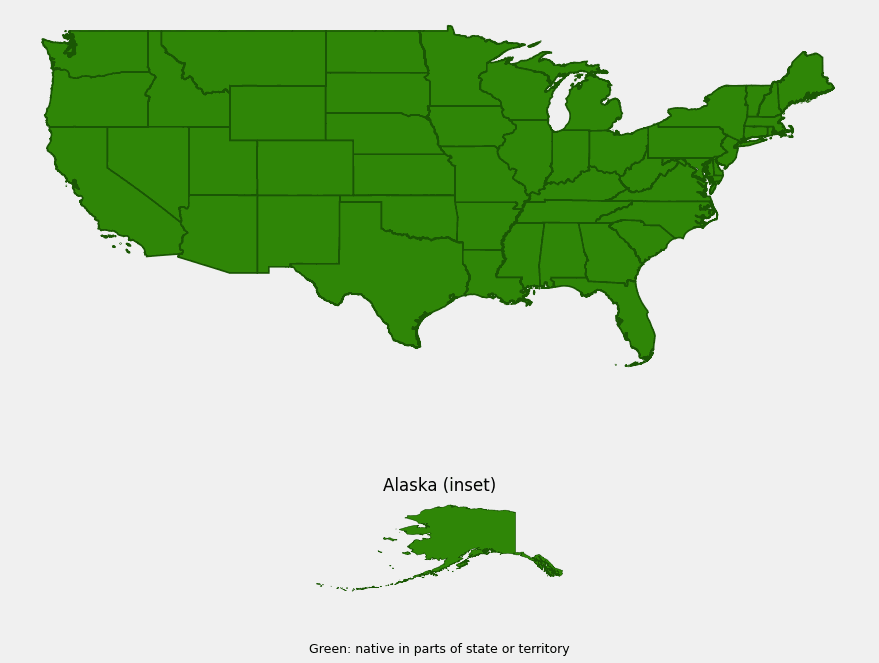
Every one of the lower 48 states has at least one native maple. The East has the most: red, sugar, silver, black and box elder maples, with striped and mountain maples in the Appalachians, the Northeast and the Great Lakes, and chalk and Florida maples in the Southeast. Red maple is often called the most abundant tree in eastern North America, growing from Newfoundland to Florida and west to Minnesota and east Texas.
Sugar maple’s range is centered on New England, New York, Pennsylvania and the Great Lakes, running south in the Appalachians to Georgia and west to Missouri and eastern Kansas. Box elder is the most widespread maple on the continent, growing along rivers from the Atlantic to California, including the Great Plains states where it is often the only native maple.
In the West, Rocky Mountain maple grows from Alaska and Montana to New Mexico and California; it is the maple of the southeast Alaska coast. Bigtooth maple lines canyons from Idaho and Utah to Arizona, New Mexico, west Texas and Oklahoma’s Wichita Mountains. Bigleaf maple and vine maple grow in the moist forests of Washington, Oregon and northern California. No maple is native to Hawaii.
📋 Regional plant lists featuring native maples: NH, ME, VT · CT, MA, RI · NY, PA, NJ north · DE, NJ south, NY Long Island · MD, VA, WV · NC, SC · GA, AL, MS · AR, LA, OK east, TX east · KY, TN · OH, IN · IL, IA, MO · MI, WI, MN east · ND, SD, MN west · NE, KS, CO east · UT, CO west · MT, WY · ID, OR east, WA east · OR west, WA west · AZ, NM · CA, NV · TX south/west/central · Alaska
Native Species
These are the maples native to the United States. Every species with a full Plant Native profile is linked.
Sugar Maple (Acer saccharum)
The tree of maple syrup and of New England’s most famous fall color. A large, long-lived shade tree, 60–80 ft tall or more, native from Maine and Minnesota south to Georgia and Missouri. It wants deep, well-drained soil and suffers along salted roads and in hot, compacted urban sites. One of the two “Maples” in our Massachusetts article.
Red Maple (Acer rubrum)
The most adaptable native maple, at home in swamps, dry ridges and city streets from Maine to Florida and west to Minnesota and Texas. Red flowers in late winter, red seeds in spring, red leaf stalks and usually scarlet fall color. Grows 40–70 ft. The best native replacement for Norway maple in most yards.
Silver Maple (Acer saccharinum)
A fast-growing floodplain tree of the East and Midwest, with deeply cut leaves that flash silver in the wind. It is excellent along rivers and in wet ground but a poor choice near houses: its wood is brittle and its shallow roots lift sidewalks and invade drains.
Black Maple (Acer nigrum)
A close relative of sugar maple, sometimes treated as a subspecies, found mainly in the Midwest and Great Lakes region on moist, limestone-rich soils. Its leaves are darker, often three-lobed with drooping sides and fuzzy undersides. It is also tapped for syrup and tolerates heat and drought somewhat better than sugar maple.
Box Elder (Acer negundo)
The only native maple with compound leaves. A fast, short-lived tree, 30–60 ft, native across most of the country along streams and in disturbed ground. It is valuable along rivers and in tough prairie towns but weedy in gardens, and box elder bugs gather on female trees. It has become invasive in parts of Europe and Asia.
Striped Maple (Acer pensylvanicum)
A small understory tree of cool northeastern and Appalachian woods, also called moosewood because moose and deer browse its twigs. Large three-lobed “goosefoot” leaves and green bark striped with white make it one of the easiest trees to identify. It needs shade and cool, moist soil.
Mountain Maple (Acer spicatum)
A shrubby maple, 10–25 ft, of northern forests from Maine and the Great Lakes south in the Appalachians. Its flowers stand upright in spikes in early summer, unusual for a maple, and the coarsely toothed leaves turn orange and red in fall. Good for shady, moist naturalistic plantings.
Chalk Maple (Acer leucoderme)
A small southeastern maple, usually 20–30 ft, of rocky slopes and stream banks from North Carolina to Georgia, Alabama, Arkansas and east Texas. Its chalky white bark and orange-red fall color in the Deep South make it a good small tree for southern gardens.
Florida Maple (Acer floridanum)
The southern sugar maple, native from Virginia to Florida and west to Texas and Oklahoma. Many botanists treat it as a separate species; others, including the title of our profile, file it under sugar maple. It has smaller, pale-backed leaves, tolerates heat that sugar maple cannot, and colors yellow to orange in fall.
Bigleaf Maple (Acer macrophyllum)
The giant maple of the Pacific Coast, growing from southern British Columbia to southern California with leaves up to a foot across. In western Oregon and Washington its trunks are often blanketed in mosses and ferns. Its sap can be made into syrup.
Vine Maple (Acer circinatum)
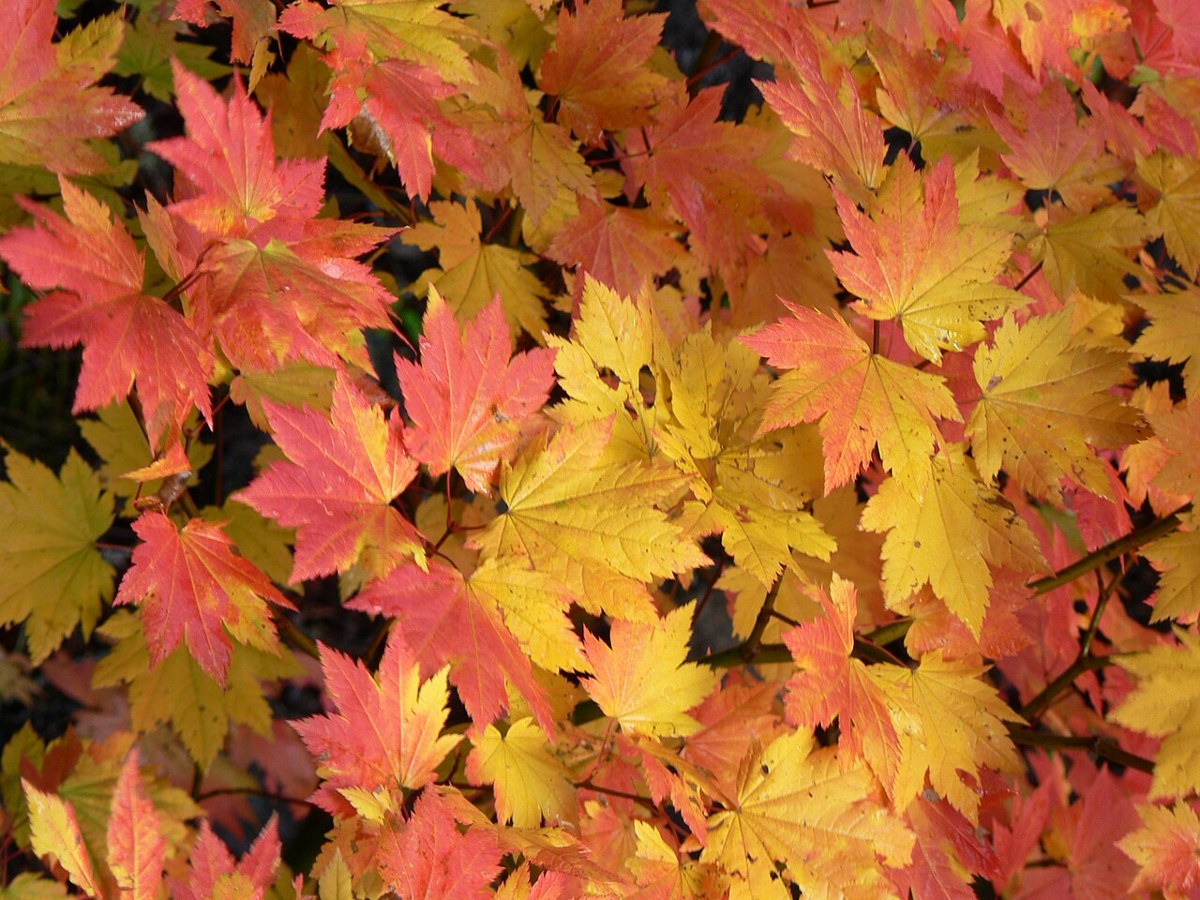
A multi-stemmed small tree or shrub of Pacific Northwest forests, often sprawling and rooting where branches touch the ground. It is the West’s best answer to the Japanese maple: nearly round, seven- to nine-lobed leaves that turn orange and red in fall.
Rocky Mountain Maple (Acer glabrum)
A shrub or small tree, 10–30 ft, of mountain slopes and canyons throughout the West, with small three-lobed leaves on red twigs. The variety douglasii reaches southeast Alaska, making it Alaska’s only native maple.
Bigtooth Maple (Acer grandidentatum)
The canyon maple of the interior West, related to sugar maple, growing from Idaho and Utah to Arizona, New Mexico and Texas. Its fall color makes places like Utah’s Wasatch canyons and Texas’s Lost Maples State Natural Area famous. Very drought tolerant once established and a good small tree for western gardens.
Freeman Maple (Acer × freemanii)
A natural hybrid of red and silver maple that occurs where the two grow together. It is the parent of popular street trees such as Autumn Blaze, which combine silver maple’s speed with red maple’s color.
Non-Native Look-Alikes
Many of the maples planted along streets and in yards are not native. Some are harmless ornamentals; others spread into woodlands. Our New York article names “silver, sugar, Norway, red and sycamore” maples as the common species; the first three of those plus red maple are native, but Norway and sycamore maples are European imports.
Norway maple (Acer platanoides) is the most common non-native maple in the Northeast and Midwest and is invasive. Its dense shade and shallow roots suppress wildflowers and tree seedlings, and its seedlings carpet the floor of many eastern woodlands. Massachusetts has banned its sale, and New York regulates it as an invasive species. To tell it from sugar maple, break a leaf stalk: Norway maple oozes milky white sap, sugar maple’s sap is clear. Norway maple leaves are also wider than long, with bristle-tipped teeth, its samaras spread almost in a straight line, and it holds its green leaves into November. Purple-leaved forms such as ‘Crimson King’ are Norway maples too.
Sycamore maple (Acer pseudoplatanus), from Europe and western Asia, has thick, coarsely toothed five-lobed leaves and grows well in salt spray, so it was planted in coastal towns. It also spreads by seed and is considered invasive in parts of the Northeast; Massachusetts bans its sale as well.
Japanese maple (Acer palmatum) is a small, slow tree with finely cut leaves, the “Japanese Maple” of our New York article. It is a well-behaved ornamental in most places, although seedlings do appear in woods near plantings in parts of the mid-Atlantic. For a native alternative with similar leaves, try vine maple in the Northwest or striped, mountain or chalk maple in the East.
Amur maple (Acer ginnala, also A. tataricum subsp. ginnala) is a small multi-stemmed tree from northeast Asia grown for its red fall color and winged seeds. It seeds heavily and is considered invasive in parts of the Upper Midwest and New England, where it crowds out native shrubs.
Trident maple (Acer buergerianum), from China, is a tough small street tree with three-pointed leaves. It is not known as a significant invader, but it offers less to native insects than a native maple.
Growing & Care Guide
Choosing a Native Maple
Match the maple to the site. For a large shade tree on good soil in the Northeast and Midwest, plant sugar maple or black maple away from road salt. For wet or acidic ground, and for most suburban yards, plant red maple. For a small tree near a patio, consider striped maple in shade, chalk maple in the South, bigtooth maple in the interior West or vine maple in the Northwest. Avoid silver maple and box elder near buildings, septic lines and driveways.
Light
Sugar maple, striped maple and mountain maple are shade-tolerant woodland trees and grow well under taller trees when young. Red maple grows in sun or part shade. Silver maple, box elder and bigtooth maple want full sun.
Soil & Water
Red and silver maples handle wet soils and occasional flooding. Sugar maple prefers deep, moist, well-drained loam and dislikes compacted clay, drought and de-icing salt. Water any newly planted maple deeply once a week through its first two summers. A 2- to 3-inch layer of mulch over the root zone, kept away from the trunk, helps more than fertilizer.
Planting Tips
Plant in early fall or early spring. Dig a hole two to three times as wide as the root ball but no deeper; the root flare should sit at the soil surface. Maples are prone to girdling roots when grown in containers, so tease circling roots apart at planting.
Pruning & Maintenance
Prune in summer or late fall, after the leaves are fully grown. Maples “bleed” sap heavily if cut in late winter; it does not harm the tree but is messy. Remove crossing branches and narrow forks while the tree is young. Common problems include tar spot and other leaf spots (cosmetic), verticillium wilt and, on sugar maple, decline from salt and compacted soil.
Propagation
Red and silver maple seeds ripen in late spring and should be sown fresh; they sprout within days. Sugar, black and most western maple seeds ripen in fall and need two to three months of cold, moist stratification. Many nurseries carry red, sugar and bigtooth maple grown from regional seed.
Landscape Uses
- Shade trees for large yards and parks (sugar, black, red maple)
- Rain gardens, pond edges and floodplain restoration (red and silver maple, box elder)
- Small trees for shady woodland gardens (striped, mountain and vine maple)
- Drought-tolerant small trees for the interior West (bigtooth and Rocky Mountain maple)
- Maple syrup from your own trees (sugar, black, red and box elder maple)
- Native replacements for Norway and Japanese maples
Wildlife & Ecological Value
For Pollinators
Red and silver maples flower so early that they are among the first major sources of pollen and nectar for honey bees and native bees in late winter. Sugar maple flowers follow a few weeks later.
For Caterpillars and Birds
Maples are larval hosts for hundreds of moth species, including the rosy maple moth, cecropia and polyphemus moths and many inchworms. Those caterpillars feed nesting songbirds. Maple seeds are eaten by squirrels, chipmunks, mice and birds such as evening grosbeaks and finches. Woodpeckers and yellow-bellied sapsuckers drill maple bark for sap, and cavities in old silver and red maples shelter owls, wood ducks and raccoons.
For Mammals
White-tailed deer, moose and elk browse maple twigs, especially striped and mountain maple. Beavers cut maples along streams.
Ecosystem Role
Sugar maple and American beech form the classic northern hardwood forest, and maple leaves rot quickly into rich soil. In many eastern forests red maple has become far more common over the last century as fires became rare, replacing some oak and pine.
Cultural & Historical Uses
Native peoples of the Northeast and Great Lakes made maple sugar long before Europeans arrived, collecting sap in late winter and boiling it down. Today sugar maple sap, about 2 percent sugar, is boiled at a ratio of about 40 gallons of sap to 1 gallon of syrup. Vermont, New York and Maine lead U.S. production. Black, red, silver, box elder and bigleaf maples can be tapped too, with lower sugar content.
Hard maple (sugar and black maple) is prized for flooring, furniture, bowling alleys, butcher blocks and baseball bats. Sugar maple is the state tree of New York, Vermont, West Virginia and Wisconsin, and red maple is the state tree of Rhode Island. Our New York article mentions maple used in medicine; those claims are folk history, not proven treatments.
Frequently Asked Questions
Which maples are native to Massachusetts and New York?
Red, sugar and silver maple are the common natives, along with striped and mountain maple in cooler woods, black maple in limestone areas and box elder along rivers. Norway, sycamore, Japanese and Amur maples are not native.
How can I tell a Norway maple from a sugar maple?
Snap a leaf stalk in summer. Milky sap means Norway maple; clear sap means sugar maple. Norway maple leaves are broader with hair-like tips on the teeth, its seeds spread nearly flat, and it stays green into November.
What native maple is best for a small yard?
Red maple fits most yards. For something smaller, choose chalk maple in the South, striped or mountain maple in shady northern gardens, vine maple in the Pacific Northwest or bigtooth maple in the interior West.
Can I make syrup from red or silver maple?
Yes. Their sap is lower in sugar than sugar maple’s, so it takes more sap per gallon of syrup, and the trees bud out earlier, which ends the season sooner. Black maple and box elder are also tapped.
Are maple leaves poisonous?
Wilted or dried red maple leaves are toxic to horses and can cause fatal anemia, so keep red maples and their fallen branches away from horse pastures. Maples are not known to be dangerous to people or dogs.
Is Autumn Blaze maple native?
Autumn Blaze is a cultivar of Freeman maple, a natural hybrid of two native maples, red and silver. It is a native hybrid, but it is a single cloned selection rather than a wild-grown plant.

Looking for a nursery that carries native maples?
Browse our native plant nursery directory: Alabama, Alaska, Arizona & Arkansas · California · Colorado, Connecticut, Delaware, Florida & Georgia · Idaho, Illinois, Indiana, Iowa & Kansas · Kentucky, Louisiana, Maine, Maryland, Massachusetts, Michigan, Minnesota, Mississippi, Missouri & Montana · Nebraska, Nevada, New Hampshire, New Jersey, New Mexico, New York, North Carolina, North Dakota, Ohio & Oklahoma · Oregon · Pennsylvania, Rhode Island, South Carolina, South Dakota, Tennessee, Texas, Utah, Vermont & Virginia · Washington · West Virginia, Wisconsin & Wyoming

