
Native Goldenrods (Solidago)
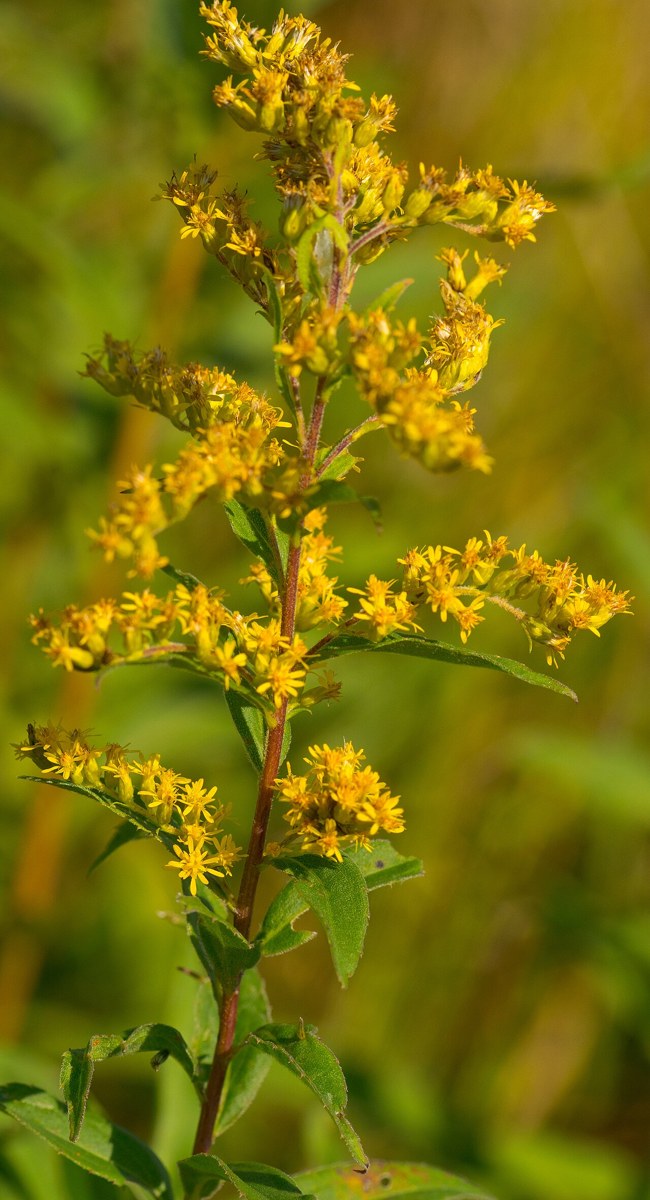
Goldenrods (genus Solidago) are the late-summer and fall wildflowers that turn roadsides, prairies, old fields and woodland edges gold across nearly all of the United States. Botanists recognize roughly 75 to 80 species in North America north of Mexico, and almost every goldenrod you will see growing wild in the U.S. is native. They range from foot-tall rock-garden plants of the high mountains to seven-foot meadow giants, and from sun-loving prairie species to shade-tolerant woodland goldenrods.
When a garden article or plant tag simply says “goldenrod,” it could mean any of these species, or a garden selection bred from them. That matters, because goldenrods differ a great deal in behavior. Some, such as Canada and tall goldenrod, spread fast by underground rhizomes and can take over a small bed. Others, such as showy, stiff, wreath and sweet goldenrod, stay in tidy clumps and make excellent perennials. Choosing the right species for your region and site is the key to enjoying goldenrod instead of fighting it.
Goldenrods are also among the most valuable plants for wildlife in North America. They feed bees, butterflies, beetles and wasps at the end of the season, host more than 100 species of moth and butterfly caterpillars, and provide seeds and winter cover for birds. And despite their reputation, they do not cause hay fever. This guide covers how to recognize goldenrods, where they grow, the most important native species, and how to tell them from non-native garden goldenrods and other yellow look-alikes.
Identification
Goldenrods are perennial members of the aster family (Asteraceae). Most grow from a woody crown or creeping rhizomes and send up unbranched leafy stems each year that flower at the top in late summer or fall. Individual species can be hard to tell apart, even for experienced botanists, but the genus as a whole is easy to recognize.
Flowers
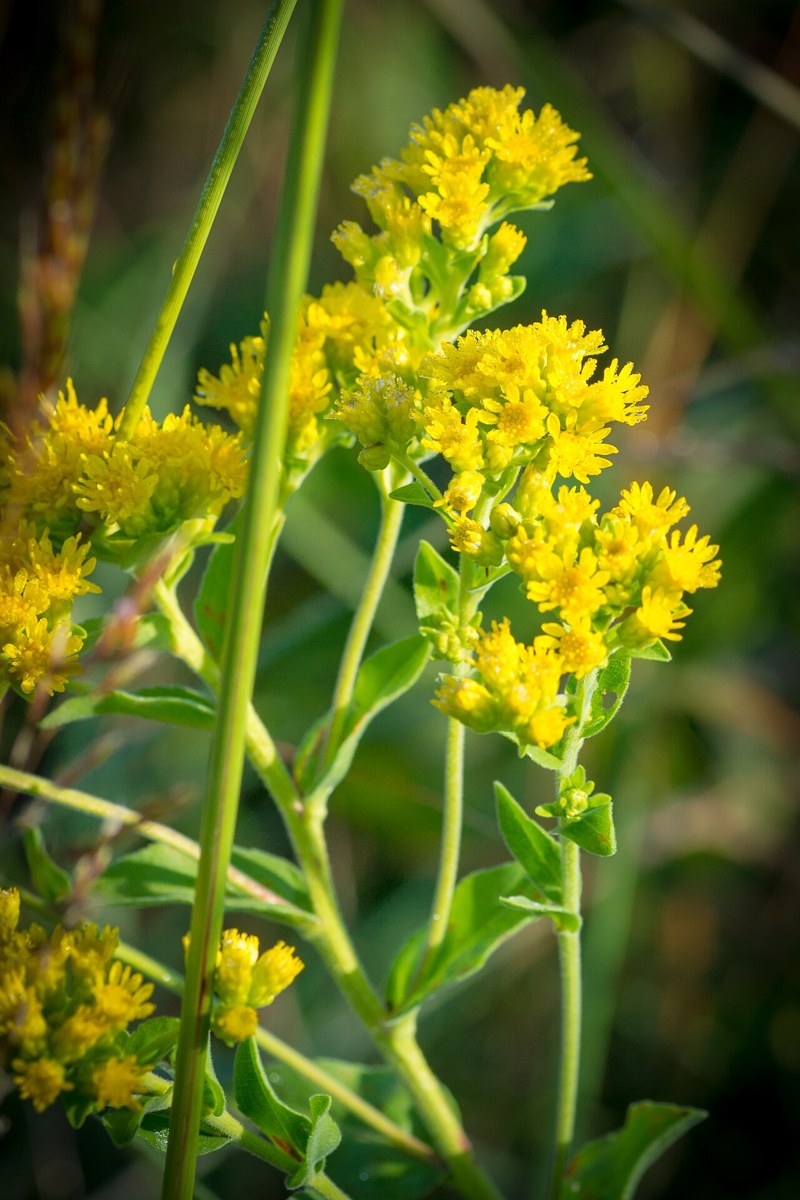
What looks like a single goldenrod “flower” is a tiny head, usually less than a quarter inch across, made of a few short yellow ray florets around a few yellow disk florets. Hundreds or thousands of these heads are packed into a larger cluster. The shape of that cluster is the first thing to check: plume-like with arching, one-sided branches (Canada, tall and rough goldenrod); wand-like and narrow (showy, wand and seaside goldenrod); flat-topped (stiff and Ohio goldenrod, formerly placed in a separate genus, Oligoneuron); or scattered in small clusters along the stem where the leaves join it (wreath and zigzag goldenrod). Nearly all are yellow; silverrod (S. bicolor) is the notable exception with white rays.
Leaves
Leaves are alternate, simple and usually lance-shaped, getting smaller up the stem. Useful clues include whether the leaves have one main vein or three parallel veins (Canada, tall and giant goldenrod have three), whether they are toothed or smooth-edged, hairy or smooth, and whether the basal leaves are much larger than the stem leaves (showy, gray and early goldenrod). Sweet goldenrod’s leaves smell of anise when crushed.
Stems & Roots
Stems are often green to reddish, sometimes with a whitish bloom (giant goldenrod) or a blue-purple waxy coating (wreath goldenrod). Some species, including zigzag goldenrod, have stems that bend at each leaf. Below ground, goldenrods are either clump-formers that expand slowly from a crown or rhizomatous spreaders that run several inches to a foot or more each year. Ask which type you are buying before you plant.
Seeds
After flowering, each head produces small, dry seeds (achenes) topped with a tuft of white bristles that carry them on the wind, giving the plants a fluffy look in late fall and winter. Seed heads left standing are eaten by finches and other small birds.
Quick Facts
| Scientific Name | Solidago (includes species once placed in Oligoneuron) |
| Family | Asteraceae (Aster) |
| U.S. Native Species | About 75–80 in North America north of Mexico (approximate; experts split and lump differently) |
| Plant Type | Herbaceous perennial wildflowers, clump-forming or rhizomatous |
| Mature Height | From under 1 ft (alpine species) to about 7 ft; most garden species 2–5 ft |
| Mature Spread | 1–3 ft clumps; rhizomatous species spread indefinitely |
| Growth Rate | Moderate to fast |
| Sun Exposure | Mostly Full Sun; woodland species (wreath, zigzag) take Part Shade to Shade |
| Water Needs | Dry to moist, depending on species; most are drought tolerant once established |
| Soil Type | Average to poor; sand, loam and clay; many prefer lean soil |
| Soil pH | Wide range, acidic to alkaline by species |
| Bloom Time | July – November (early goldenrod in July; wreath and seaside into fall) |
| Flower Color | Yellow (white in silverrod) |
| Fall Color | Some species turn reddish or purple; stiff goldenrod often colors well |
| Fruit | Small achenes with white bristles, wind-dispersed |
| Wildlife Value | Very high: late nectar and pollen, host to 100+ caterpillar species, seeds for birds |
| Deer Resistant | Moderately; deer and rabbits browse some species, especially young growth |
| USDA Hardiness Zones | 2–10, depending on species |
Native Range
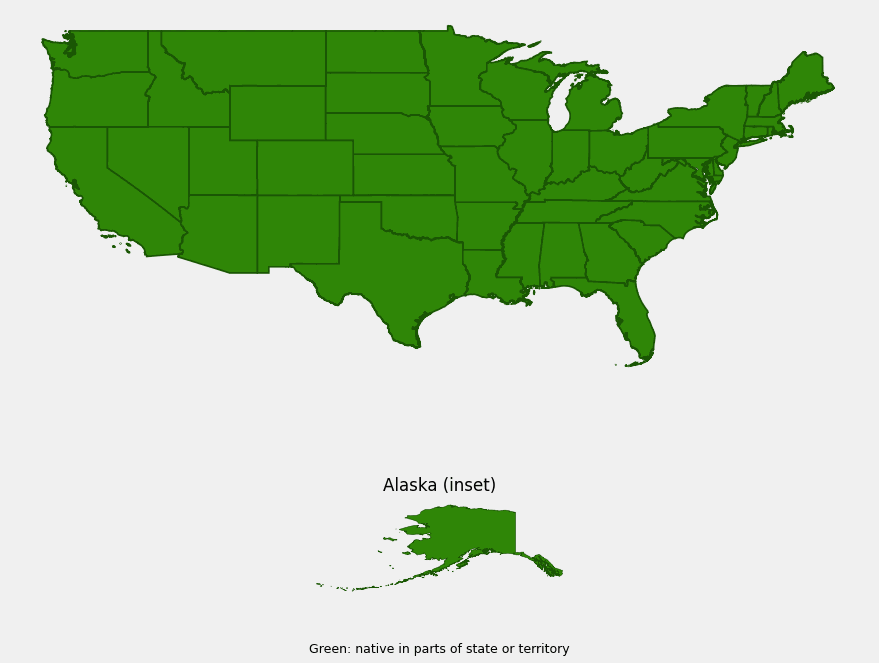
Goldenrods are native in all 48 contiguous states and in Alaska. The genus is centered in eastern and central North America, where a single county can hold a dozen or more species, from prairie goldenrods on the Great Plains to woodland goldenrods in the Appalachians and coastal species along the Atlantic and Gulf shores. The West has fewer species, but goldenrods still grow in mountain meadows, stream banks, canyons and coastal prairies from the Rockies to the Pacific. Northern goldenrod (S. multiradiata) and others reach Alaska and the high Arctic.
Hawaii has no native goldenrods. In other parts of the world the tables are turned: Canada goldenrod and giant goldenrod, both native here, are serious invasive plants in Europe and East Asia, where they form huge stands in abandoned fields. In the U.S., goldenrods are part of the native flora and are not regulated as weeds, even where vigorous species are unwelcome in a garden.
Each region has its own best goldenrods. Gardeners in the Midwest and Northeast have the widest choice; the Southeast has coastal plain specialists such as wand and Leavenworth’s goldenrod; the Southwest relies on species like velvety and Wright’s goldenrod; and the Pacific Northwest has West Coast Canada goldenrod (S. elongata, treated by some botanists as part of S. lepida) and the alpine northern goldenrod. Buy plants grown from seed collected in your own region whenever you can.
📋 Regional plant lists with native goldenrods: New Hampshire, Maine & Vermont · Connecticut, Massachusetts & Rhode Island · New York, Pennsylvania & Northern New Jersey · Delaware, Southern New Jersey & Long Island · Maryland, Virginia & West Virginia · North Carolina & South Carolina · Georgia, Alabama & Mississippi · Kentucky & Tennessee · Ohio & Indiana · Michigan, Wisconsin & Eastern Minnesota · Illinois, Iowa & Missouri · Arkansas, Louisiana, Eastern Oklahoma & Eastern Texas · North Dakota, South Dakota & Western Minnesota · Nebraska, Kansas & Eastern Colorado · South & West Texas · Arizona & New Mexico · Utah & Western Colorado · Montana & Wyoming · Idaho, Eastern Oregon & Eastern Washington · Western Oregon & Western Washington · California & Nevada · Alaska
Native Species
These are some of the most widespread and garden-worthy goldenrods native to the United States. Each name links to a full profile with range, care and wildlife details.
- Canada Goldenrod (Solidago canadensis): The classic old-field goldenrod, native across most of the continent. Three-veined, toothed leaves and broad, arching plumes of tiny heads in late summer. Spreads aggressively by rhizomes, so it is best in meadows and large wild areas rather than small beds.
- Tall Goldenrod (Solidago altissima): Very similar to Canada goldenrod but taller (often 4–7 ft) with grayish, finely hairy stems. Common across the eastern and central U.S. It hosts the goldenrod gall fly, whose round stem galls are easy to spot in winter.
- Giant Goldenrod (Solidago gigantea): Smooth stems with a whitish bloom and three-veined leaves; prefers moist soils, wet meadows and stream banks across much of the country. Another fast spreader.
- Showy Goldenrod (Solidago speciosa): A well-behaved clump-former with upright, club-shaped plumes on reddish stems, 2–4 ft tall. Native to prairies, open woods and sandy ground through much of the East and Midwest. One of the best goldenrods for a perennial border.
- Stiff Goldenrod (Solidago rigida): Flat-topped clusters of larger heads above thick, fuzzy, gray-green leaves. A tough, drought-tolerant prairie plant of the Midwest and Plains, with scattered eastern populations. Clump-forming.
- Rough-leaved Goldenrod (Solidago rugosa): Wrinkled, hairy leaves and wide-spreading, arching flower branches in fall. Native to fields, wet thickets and woodland edges in the eastern U.S. The compact cultivar ‘Fireworks’ is a popular garden selection.
- Wreath Goldenrod (Solidago caesia): Arching, blue-purple stems with small clusters of flowers in the leaf axils from September into October. A shade-tolerant woodland species of the eastern U.S. that stays in clumps.
- Zigzag Goldenrod (Solidago flexicaulis): Broad, sharply toothed leaves on stems that zigzag between leaves, with small yellow clusters in the axils. Grows in rich, shady woods of the eastern and central U.S. and spreads moderately.
- Seaside Goldenrod (Solidago sempervirens): Thick, smooth, somewhat fleshy leaves and large showy plumes from late summer into fall. Native to dunes and salt marshes along the Atlantic and Gulf coasts and very salt tolerant.
- Sweet Goldenrod (Solidago odora): Smooth, narrow, untoothed leaves with an anise scent when crushed. Grows in dry, sandy open woods and fields of the eastern and southern U.S.
- Gray Goldenrod (Solidago nemoralis): A short (1–2 ft), gray-hairy goldenrod of dry, poor, sandy or rocky soils east of the Rockies. Its one-sided plume often nods at the tip. Excellent for dry, lean sites.
- Early Goldenrod (Solidago juncea): The first goldenrod to bloom in much of the Northeast and Midwest, often by July. Long-stalked basal leaves and smooth stems. Grows in dry fields and roadsides.
- Silverrod (Solidago bicolor): The only common eastern goldenrod with white rays, on narrow wands 1–3 ft tall. Native to dry, open woods and rocky ground in the eastern U.S.
- Northern Goldenrod (Solidago multiradiata): A low alpine and subalpine goldenrod of Alaska, the Rockies, the Sierra Nevada and the Cascades, usually under a foot tall, with larger heads than most lowland species.
- Velvety Goldenrod (Solidago velutina): A soft-hairy goldenrod of dry slopes, pine forests and canyons in the Southwest and Great Basin. One of the goldenrods Arizona and New Mexico gardeners can use for fall pollinator gardens.
More native goldenrod profiles: Wright’s Goldenrod (S. wrightii) of the Southwest and southern Plains · Leavenworth’s Goldenrod (S. leavenworthii) of the southeastern coastal plain · Wand Goldenrod (S. stricta) of coastal plain bogs and pine savannas · Elm-Leaved Goldenrod (S. ulmifolia) of eastern woodlands. A close cousin in a separate genus, grass-leaved goldenrod (Euthamia graminifolia), has narrow, grass-like leaves and flat-topped flower clusters.
Non-Native Look-Alikes
Because nearly all wild goldenrods in the U.S. are native, the non-native goldenrods you are most likely to meet are in garden centers, not fields.
- Garden hybrids such as ‘Little Lemon’: ‘Little Lemon’ is a dwarf goldenrod about a foot tall, sold as a Solidago hybrid with a plant patent. The sources we checked do not publish its exact parentage, so treat it as a garden hybrid rather than a native wildflower. It is a tidy, easy plant for the front of a sunny border and still attracts pollinators, but if you want a short native goldenrod with known wild origins, gray goldenrod, showy goldenrod or a nursery-grown local species are good substitutes.
- European goldenrod (Solidago virgaurea): Native to Europe and Asia, not North America. It is grown as an herb and in some perennial gardens, and it has been used in European garden goldenrod hybrids. It is not considered invasive in the U.S., but it is not a native plant and should not be planted in natural areas.
- European-bred garden goldenrods: Many compact cultivars sold under German names, such as ‘Goldkind’ (‘Golden Baby’), were bred in Europe and may combine North American and European parents. Check the label for a species name; if it only says “Solidago hybrid,” it is a garden plant of mixed or uncertain origin.
- Common tansy (Tanacetum vulgare): Not a goldenrod at all, but often confused with one from a distance. It has flat-topped clusters of round, buttonlike yellow heads with no rays and fern-like, strongly scented leaves. Tansy is a non-native, invasive weed in many northern and western states and is listed as a noxious weed in several of them.
- Tansy ragwort (Jacobaea vulgaris): A European plant with daisy-like yellow flowers and deeply lobed leaves, invasive in pastures of the Pacific Northwest and parts of the Northeast and toxic to livestock. Unlike goldenrods, its flower heads are daisy-like, close to an inch across, with distinct spreading rays.
Two native plants also get mistaken for goldenrods. Ragweeds (Ambrosia) bloom at the same time but have inconspicuous green flowers and are the real cause of late-summer hay fever. Grass-leaved goldenrods (Euthamia) are true goldenrod relatives with narrow leaves and flat-topped clusters, now placed in their own genus.
Growing & Care Guide
Goldenrods are some of the easiest native perennials to grow. Most thrive on neglect and decline in overly rich, heavily watered beds, where they grow floppy and spread faster.
Light
Most goldenrods need full sun, at least six hours a day, for strong stems and heavy bloom. Woodland species are the exception: wreath goldenrod, zigzag goldenrod and elm-leaved goldenrod grow and flower well in part shade to fairly deep shade, which makes them some of the few native fall bloomers for shade gardens.
Soil & Water
Match the species to your site. Gray, stiff, sweet and early goldenrod tolerate dry, sandy or rocky soil and almost never need watering once established. Showy and Canada goldenrod handle average garden soil. Giant, rough-leaved and wand goldenrod tolerate moist to wet ground, and seaside goldenrod thrives in sandy, salty soil near the coast or along winter-salted roads. No fertilizer is needed; rich soil causes tall, floppy growth.
Planting Tips
Plant container-grown goldenrods in spring or early fall, about 18 to 24 inches apart for clump-formers. Keep spreading species (Canada, tall, giant and rough-leaved goldenrod) in meadows, large borders with tough neighbors, or beds edged by pavement. Goldenrods grow easily from seed: sow outdoors in late fall or give seed about 60 days of cold, moist stratification before spring sowing.
Pruning & Maintenance
To keep tall species shorter and sturdier, cut stems back by about a third to a half in late spring or early summer (before July); they will branch and bloom slightly later on shorter stems. Leave the dead stems standing through winter for birds and overwintering insects, then cut them down in spring. Divide clump-formers every few years if they decline in the center. Powdery mildew and rust are common on some species late in the season but rarely do lasting harm; good air flow and full sun help.
Landscape Uses
- Pollinator and butterfly gardens, paired with smooth blue aster and other fall asters
- Prairie and meadow plantings with little bluestem and common milkweed
- Perennial borders, using clump-formers such as showy, stiff and sweet goldenrod
- Shade gardens, with wreath and zigzag goldenrod
- Coastal and roadside plantings, with salt-tolerant seaside goldenrod
- Dry, poor soils and slopes, with gray and stiff goldenrod
- Cut and dried flowers; cut stems just as the flowers open
Wildlife & Ecological Value
Few native plants support as much wildlife as goldenrods, which is why ecologists rank them among the most important perennials for a wildlife garden.
For Pollinators
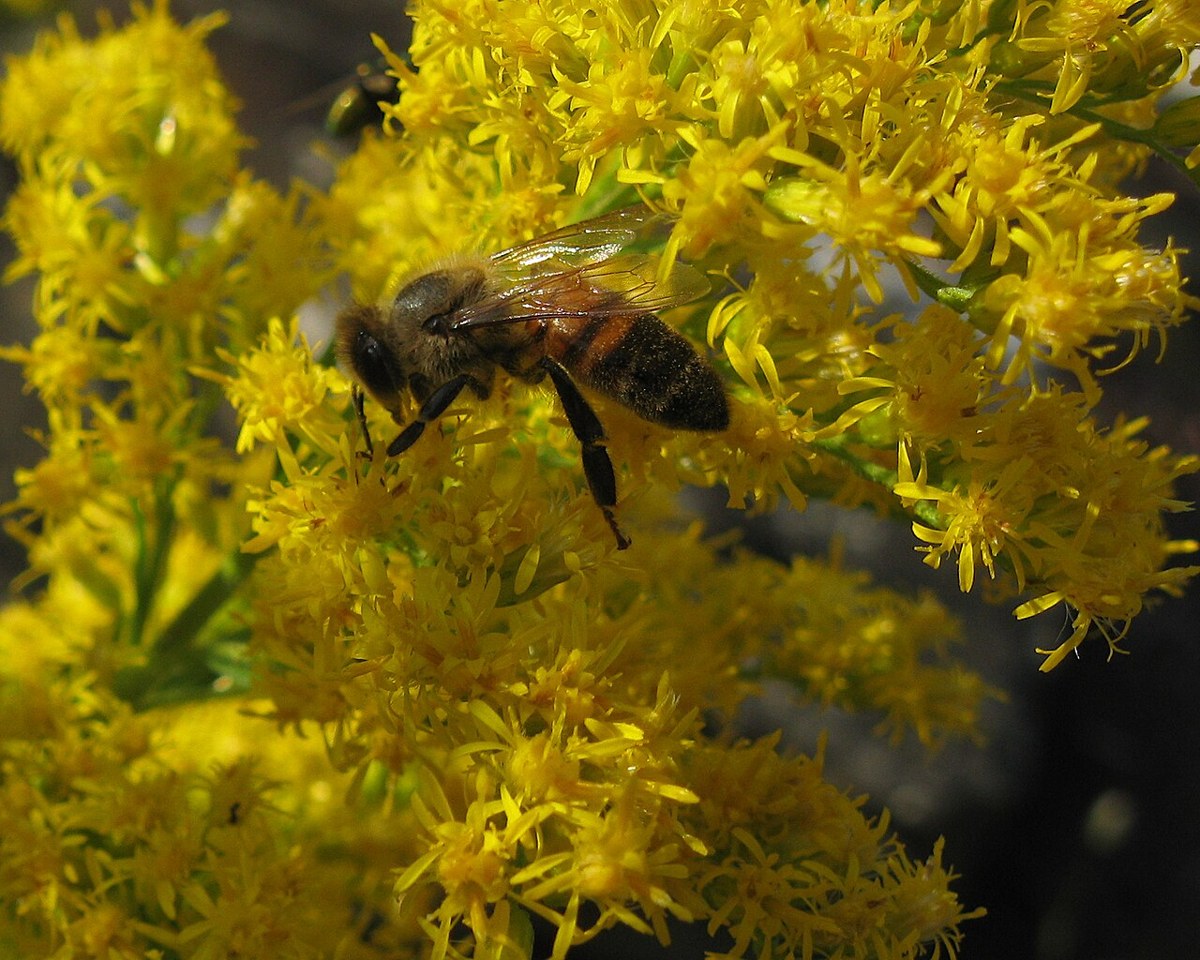
Goldenrods bloom when many other flowers are finished, supplying nectar and pollen to bumble bees building up fall colonies, to solitary bees, wasps, flies and beetles, and to migrating monarch butterflies fueling up for the trip south. Several native bees specialize in collecting pollen from goldenrods and asters. Soldier beetles, locust borers and many other insects gather on the flower heads, which is why a goldenrod patch in September hums with activity.
For Caterpillars & Other Insects
Goldenrods host more than 100 species of moth and butterfly caterpillars in the eastern U.S., including several flower moths and a variety of small leaf-mining and stem-boring moths. They also support a remarkable set of gall-making insects. The round “ball galls” on tall goldenrod stems are made by the goldenrod gall fly; elliptical galls and bunched “rosette” galls at the stem tips are made by other insects. Chickadees and downy woodpeckers peck open the ball galls in winter to eat the larvae inside.
For Birds
The caterpillars and other insects on goldenrods are important food for nesting songbirds. In fall and winter, goldfinches, juncos, sparrows and other seed-eaters feed on the seeds, and dense stands give cover to ground-nesting birds and wintering sparrows.
Ecosystem Role
Goldenrods are among the first perennials to fill abandoned fields, holding soil and building habitat as land returns to meadow and forest. Some species release chemicals that slow competing plants, which helps them form large colonies. In prairies and meadows they are a key part of the late-season flower supply that carries pollinator populations into winter.
Cultural & Historical Uses
The genus name Solidago comes from the Latin solidare, “to make whole,” reflecting the old European use of goldenrods as wound herbs. Native American peoples and early settlers used several North American species in traditional practice, and sweet goldenrod leaves were brewed as a tea substitute during and after the American Revolution, when imported tea was boycotted. These are historical uses, not recommendations.
Goldenrods have also been used as dye plants, giving shades of yellow and gold on wool. In the 1920s and 1930s, Thomas Edison experimented with goldenrod as a domestic source of rubber, breeding plants with higher latex content in Florida, though the project never became commercially practical. Kentucky and Nebraska have both chosen goldenrod as their state flower, South Carolina’s state wildflower is goldenrod, and Delaware’s state herb is sweet goldenrod.
The plant’s reputation as a hay fever trigger is a long-running myth. Goldenrod pollen is heavy and sticky and is carried by insects, not wind, so very little of it reaches people’s noses. The real culprit is ragweed, which blooms at the same time with inconspicuous green flowers and releases enormous amounts of wind-blown pollen.
Frequently Asked Questions
Does goldenrod cause hay fever?
Rarely. Goldenrod pollen is heavy and insect-carried, so little of it becomes airborne. The late-summer allergy season is driven mainly by ragweed, which blooms at the same time nearby. People who handle cut goldenrod heavily can occasionally react, as with many flowers.
Will goldenrod take over my garden?
Some species will. Canada, tall, giant and rough-leaved goldenrod spread by rhizomes and are best in meadows or large beds. Clump-forming species such as showy, stiff, wreath, sweet, gray and seaside goldenrod stay put and are well suited to borders.
Is ‘Little Lemon’ goldenrod native?
‘Little Lemon’ is a garden hybrid, not a wild native species. It is a compact, useful border plant that pollinators still visit, but if you want a short native goldenrod, try gray goldenrod or a locally grown clump-forming species.
Which goldenrods grow in shade?
Wreath goldenrod (S. caesia), zigzag goldenrod (S. flexicaulis) and elm-leaved goldenrod (S. ulmifolia) are native woodland goldenrods that bloom well in part shade to shade. Most other goldenrods need full sun.
Which goldenrod should I plant in the West?
Choose a species native to your area. In the Southwest, velvety goldenrod and Wright’s goldenrod are good choices; in the Pacific Northwest, West Coast Canada goldenrod grows in meadows and along streams, and northern goldenrod suits mountain rock gardens. Regional native plant societies and nurseries can point you to local seed sources.

Looking for a nursery that carries native goldenrods?
Browse our native plant nursery directory: Alabama, Alaska, Arizona & Arkansas · California · Colorado, Connecticut, Delaware, Florida & Georgia · Idaho, Illinois, Indiana, Iowa & Kansas · Kentucky, Louisiana, Maine, Maryland, Massachusetts, Michigan, Minnesota, Mississippi, Missouri & Montana · Nebraska, Nevada, New Hampshire, New Jersey, New Mexico, New York, North Carolina, North Dakota, Ohio & Oklahoma · Oregon · Pennsylvania, Rhode Island, South Carolina, South Dakota, Tennessee, Texas, Utah, Vermont & Virginia · Washington · West Virginia, Wisconsin & Wyoming

