
Native Violets (Viola)
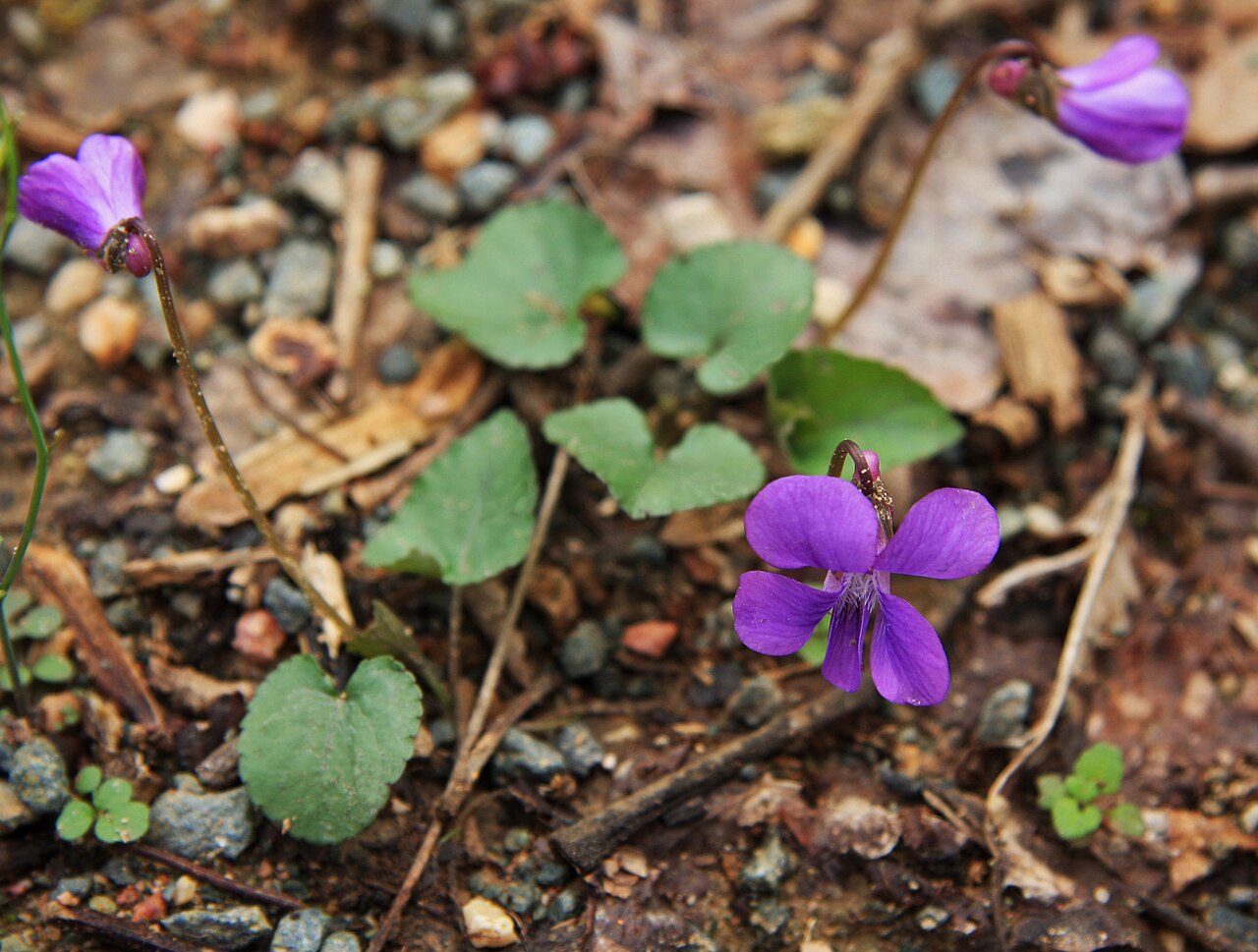
Violets (genus Viola) are small, mostly perennial wildflowers in the violet family (Violaceae), known for their five-petaled, nodding flowers with a nectar spur at the back. The genus has roughly 500 to 600 species worldwide, and around 70 to 80 species are native to the United States, with native violets in every one of the 50 states, from the arctic tundra of Alaska to the cloud forests of Hawaii. Native violets come in blue, purple, white, cream and yellow, and they include tiny, stemless woodland plants, leafy-stemmed species a foot tall, and, in Hawaii, woody shrubs.
If you came from our guide to ground covers for Maryland, a few corrections help. Most native violets prefer part shade and moist, humus-rich soil, not full sun and dry ground (birdsfoot violet is the main exception). They are pollinated mainly by early bees, not hummingbirds, and their most important wildlife role is as the only caterpillar food for fritillary butterflies. Maryland has many native species, and common blue violet, cream violet, Canada violet and birdsfoot violet all make good ground covers there in the right site.
The violets in garden centers are mostly European: sweet violet (V. odorata), pansies (V. × wittrockiana) and Johnny-jump-up (V. tricolor). This guide covers the native species, how to recognize them and tell them from the imports, and how to use them in gardens.
Identification
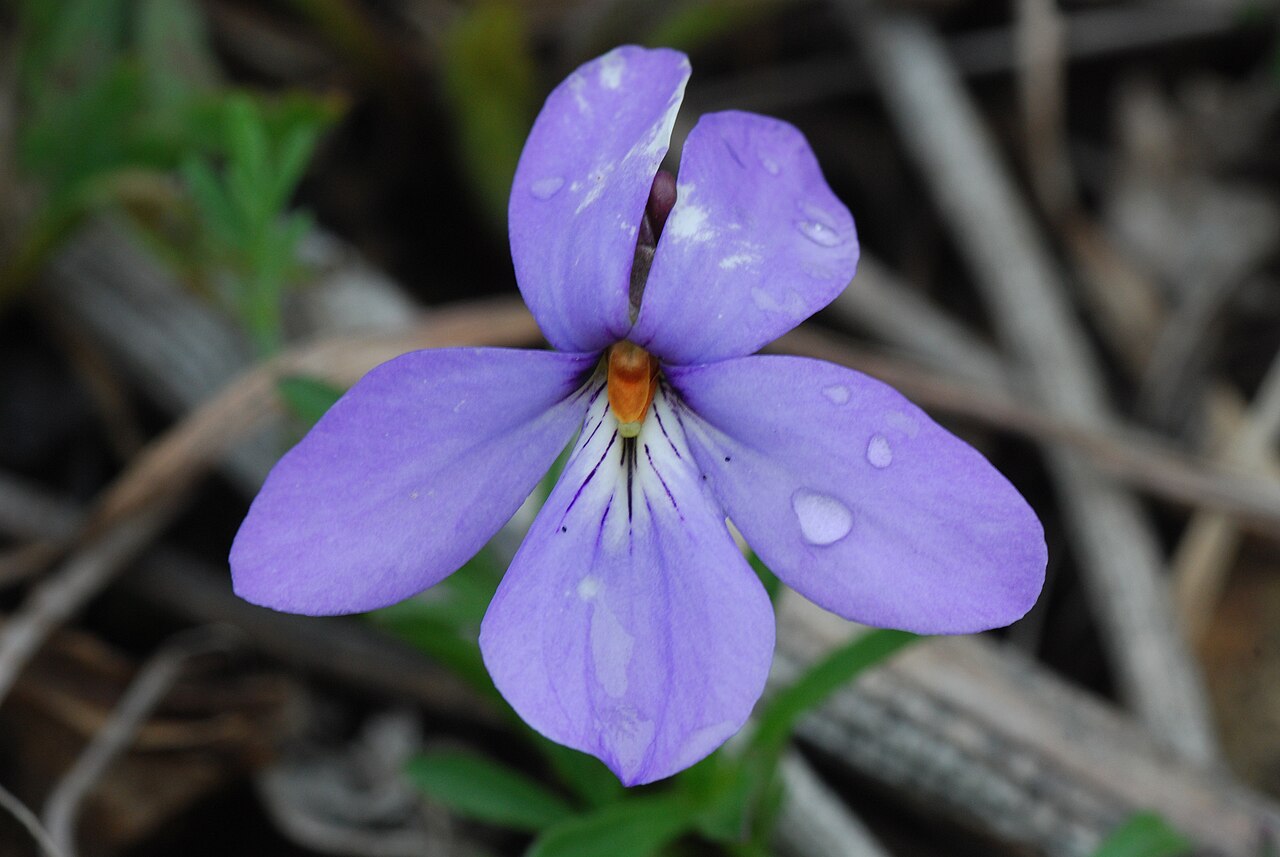
Violets are easiest to recognize by their flowers: five petals, with two upper petals, two side petals and one lower petal that extends backward into a spur holding nectar. The lower petal is usually marked with dark veins that guide bees to the center, and the side petals of many species have small tufts of hairs called beards. Telling species apart is harder; botanists look at whether the plant has a leafy stem, the leaf shape, the hairs on petals and leaves, and the flower color.
Growth Form
Native violets fall into two groups. Stemless violets, such as common blue violet and birdsfoot violet, have leaves and flower stalks rising directly from a crown or rhizome at ground level. Stemmed violets, such as Canada violet, downy yellow violet and cream violet, have upright stems with leaves and flowers along them. Most native violets are 2 to 8 inches tall in flower; Canada violet can reach 12 to 16 inches.
Leaves
Most violet leaves are heart-shaped with scalloped or toothed edges, often getting larger after flowering. Exceptions are distinctive: birdsfoot violet has leaves deeply cut into narrow, toe-like segments; bog white violet has long, narrow, lance-shaped leaves; roundleaf violet has nearly round leaves lying flat on the ground; and Walter’s violet has small, silvery-mottled leaves with purple undersides.
Flowers
Violets bloom mainly in spring, from February in the Deep South to June in the mountains and far north. Blue and purple species dominate the East; yellow violets are common in the West and in eastern woodlands; white violets favor wet ground and rich woods. Most native violets also produce a second kind of flower in summer: cleistogamous flowers, small, petal-less buds near the ground that never open and pollinate themselves, producing most of the plant’s seed.
Seeds
Violet seed capsules split into three boat-shaped valves that squeeze and shoot the seeds several feet. Many seeds carry an oily appendage that ants carry back to their nests, planting the seeds far from the parent. This is why violets turn up in lawns, cracks and beds where nobody planted them.
Quick Facts
| Scientific Name | Viola (genus) |
| Family | Violaceae (Violet) |
| U.S. Native Species | About 70–80 (approximate; varies with classification) |
| Plant Type | Mostly low perennial wildflowers; a few annuals; shrubs in Hawaii |
| Mature Height | 2–8 in for most species; Canada violet to about 16 in |
| Mature Spread | 4–12 in per plant; many spread by seed, rhizomes or runners |
| Sun Exposure | Part shade to shade for most; full sun for birdsfoot and prairie species |
| Water Needs | Moderate to high for most; low for birdsfoot violet on sandy soil |
| Soil Type | Moist, humus-rich woodland soil for most; sandy or rocky for birdsfoot; wet for marsh and bog species |
| Bloom Time | Early spring to early summer, with hidden self-pollinating flowers in summer |
| Flower Color | Blue, violet, white, cream or yellow |
| Wildlife Value | Only larval host for greater and lesser fritillary butterflies; early bees; seeds spread by ants |
| Deer Resistant | No; deer and rabbits eat violets |
| USDA Hardiness Zones | About 2–9 depending on species; Hawaiian species tropical |
Native Range
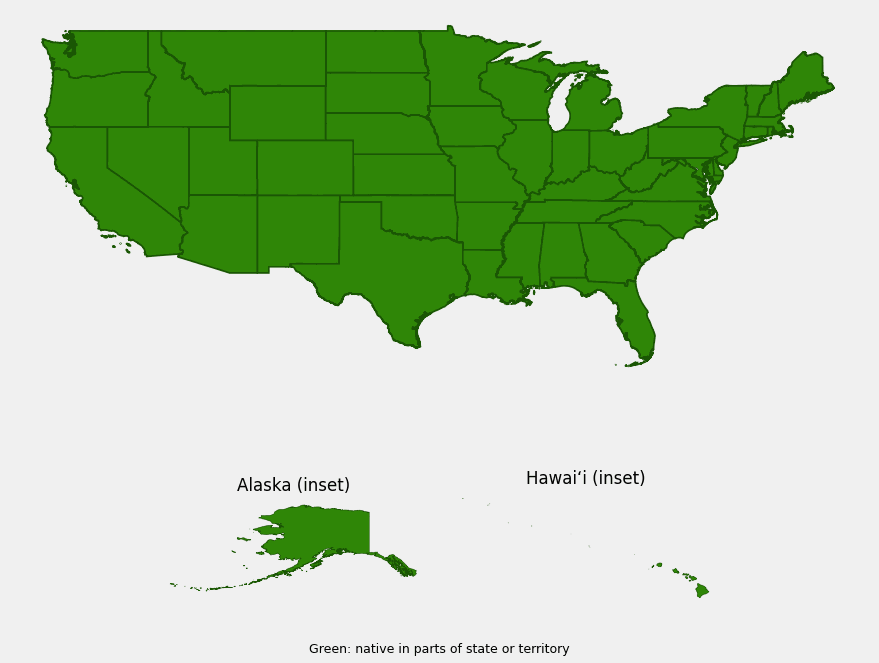
Native violets grow in all 50 states. The eastern United States is especially rich: a single woodland in Pennsylvania, Ohio or North Carolina may hold eight or ten species. common blue violet spreads across the eastern and central United States west to the Dakotas, Kansas and Texas. birdsfoot violet ranges from New England and the Great Lakes south to Florida and Texas on dry, sandy and rocky ground. Woodland species such as downy yellow violet, cream violet and long-spurred violet center on the Northeast, the Appalachians and the Midwest.
In the West, yellow violets dominate: stream violet, redwood violet, Nuttall’s violet, pine violet and California golden violet range through the Rockies, Great Basin, Sierra Nevada and Pacific Coast. early blue violet and Canada violet are among the most widespread species, growing in the Rockies and Pacific states as well as across the North. Alaska has several native violets, including early blue violet and Alaska violet (V. langsdorffii). Hawaii has about eight endemic species found nowhere else, several of them woody shrubs, and most are rare; several are federally listed as endangered.
Introduced violets, chiefly sweet violet and Johnny-jump-up, have naturalized in many states, so a violet in a lawn is not automatically native. Check the identification notes below.
📋 Regional plant lists covering native violet ranges: Maine, New Hampshire & Vermont · Southern New England · New York, Pennsylvania & Northern New Jersey · Delaware, Southern New Jersey & Long Island · Maryland, Virginia & West Virginia · North Carolina & South Carolina · Georgia, Alabama & Mississippi · Arkansas, Louisiana, Eastern Oklahoma & East Texas · Kentucky & Tennessee · Ohio & Indiana · Illinois, Iowa & Missouri · Michigan, Wisconsin & Eastern Minnesota · Dakotas & Western Minnesota · Nebraska, Kansas & Eastern Colorado · South & West Texas · Arizona & New Mexico · Utah & Western Colorado · Montana & Wyoming · Idaho, Eastern Oregon & Washington · Western Oregon & Washington · California & Nevada · Alaska · Hawaii
Native Species
These 15 species include the native violets most often grown in gardens and the most widespread wild species. Each links to a full profile; more profiles are listed at the end of this section.
Common Blue Violet (Viola sororia)
Native to: the eastern and central United States, west to the Dakotas, Kansas and Texas. The violet of lawns, yards and woodland edges, with heart-shaped leaves and blue-violet flowers with white centers. It spreads freely and makes a tough, shade-tolerant ground cover. The gray-white, blue-centered form called Confederate violet (‘Priceana’) is the same species. It is the state flower of Illinois, New Jersey, Rhode Island and Wisconsin.
Birdsfoot Violet (Viola pedata)
Native to: the eastern and central United States, from New England and Minnesota south to Florida and Texas. Deeply cut, bird’s-foot leaves and large, flat, pansy-like lavender flowers with orange stamens. It needs full sun and sharply drained sandy or rocky soil, and it does not spread aggressively. One of the showiest native violets, but fussy in rich, wet garden soil.
Downy Yellow Violet (Viola pubescens)
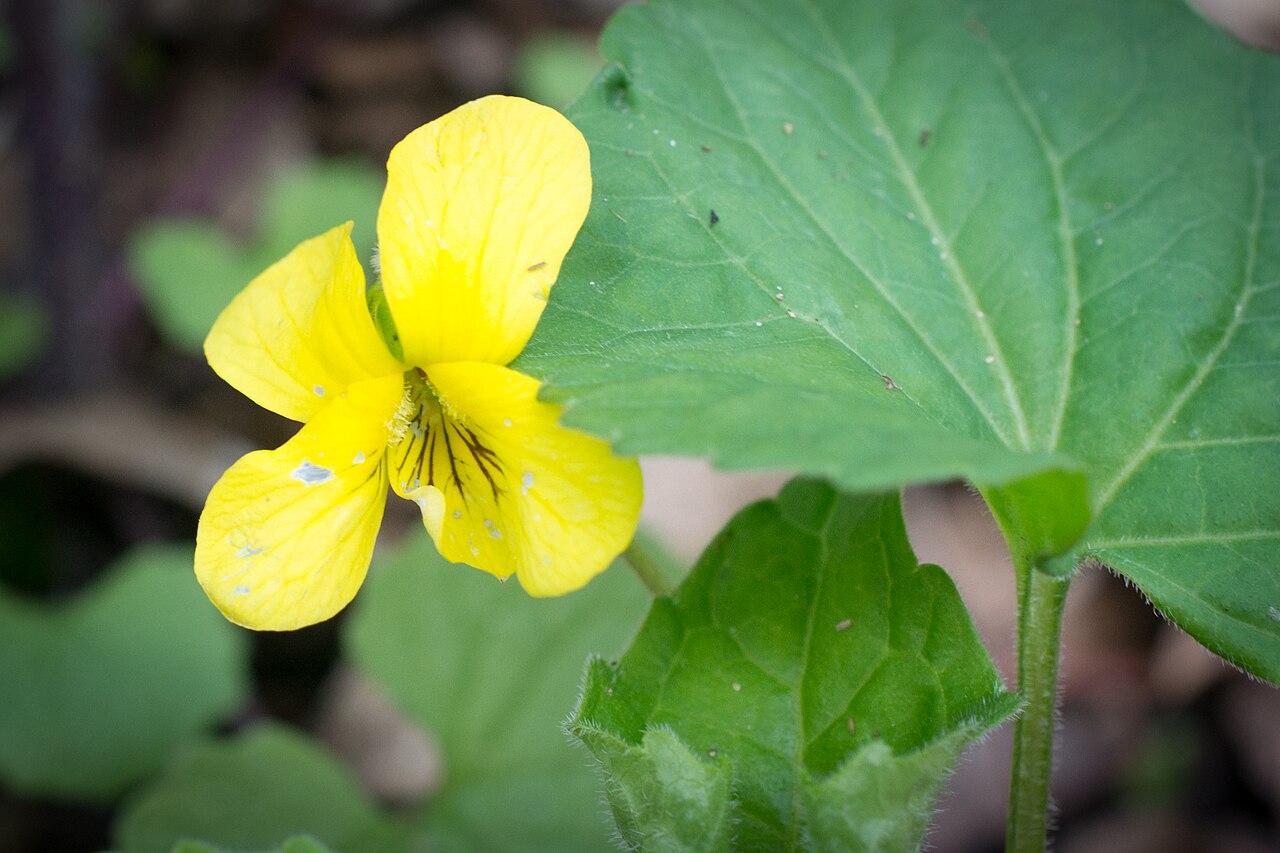
Native to: the eastern and central United States, from New England to the Dakotas and south through the Appalachians. A stemmed woodland violet with soft-hairy leaves and stems and bright yellow flowers veined in purple. It grows in rich, moist deciduous woods and stays in clumps rather than running.
Canada Violet (Viola canadensis)
Native to: the Northeast, Appalachians and Great Lakes, and the Rocky Mountains and other western mountains. A tall, leafy-stemmed violet, 8 to 16 inches, with white flowers that have yellow centers and purple-tinged backs. It blooms for weeks in spring and often again in fall, and it spreads into a lush, shade-loving ground cover.
Sweet White Violet (Viola blanda)
Native to: the Northeast, Great Lakes and Appalachian Mountains. A small, stemless violet of cool, moist woods with glossy, heart-shaped leaves and tiny, fragrant white flowers whose upper petals twist backward.
Marsh Blue Violet (Viola cucullata)
Native to: the eastern United States from Maine to Minnesota and south to Georgia, mostly in wet places. A stemless violet of marshes, wet meadows and stream banks, with flowers held high above the leaves and a dark-violet center. Side petals carry club-shaped hairs. Good for rain gardens and pond edges.
Early Blue Violet (Viola adunca)
Native to: much of the West, Alaska and the northern states east to New England. A small, variable violet with a hooked spur and blue to violet flowers, from coastal meadows to alpine slopes. It is the main host plant of several western fritillaries, including the federally threatened Oregon silverspot.
Roundleaf Yellow Violet (Viola rotundifolia)
Native to: the Northeast and Appalachian Mountains, south to Georgia. One of the first violets to bloom, with small yellow flowers above nearly round leaves that lie flat on the forest floor and grow large and leathery in summer.
Cream Violet (Viola striata)
Native to: the eastern and central United States. A stemmed violet with cream-white flowers striped with purple, blooming long in spring. It tolerates sun to shade and spreads by seed into a dense ground cover, sometimes too vigorously for small beds.
Long-Spurred Violet (Viola rostrata)
Native to: the Northeast, Great Lakes and Appalachian Mountains. A stemmed woodland violet whose pale lilac flowers have a slender spur about half an inch long, longer than that of any other eastern violet. It prefers rich, rocky, moist woods.
Walter’s Violet (Viola walteri)
Native to: the Southeast, from the Ohio Valley and Virginia south to Florida and west to Texas. A low, trailing violet with small, rounded, silvery-mottled leaves with purple undersides and lavender flowers. It spreads by runners and makes a refined, evergreen ground cover for shady southern gardens.
Bog White Violet (Viola lanceolata)
Native to: the eastern United States from Maine to Minnesota and south to Florida and Texas. Long, narrow, lance-shaped leaves and small white flowers with purple veins. It grows in wet, sandy and peaty soils, bogs and pond edges, spreading by runners.
California Golden Violet (Viola pedunculata)
Native to: California, mainly on coastal and foothill grassy slopes. Large, deep yellow to orange flowers with brown veins on open grassy slopes in late winter and spring. It goes dormant in summer drought. It is the host plant of the endangered callippe silverspot butterfly.
Redwood Violet (Viola sempervirens)
Native to: the Pacific Coast and nearby mountains of California, Oregon, Washington, Idaho and Alaska. An evergreen, creeping violet with small, leathery, heart-shaped leaves and yellow flowers, spreading by runners across the shady floor of redwood and conifer forests. Excellent for dry or moist shade on the Pacific Coast.
Stream Violet (Viola glabella)
Native to: the Pacific states, Alaska and the northern Rocky Mountains. A stemmed yellow violet with bright green, heart-shaped, toothed leaves, growing along streams and in moist forests and meadows. It spreads into colonies in moist shade gardens.
More native violet profiles: Goosefoot Violet (Viola purpurea) · Field Pansy (Viola bicolor) · Halberd-Leaved Violet (Viola hastata) · Western Heart’s Ease (Viola ocellata) · Labrador Violet (Viola labradorica) · Nuttall’s Violet (Viola nuttallii) · Pine Violet (Viola lobata)
Non-Native Look-Alikes
Sweet Violet (Viola odorata)
A European and Asian violet grown for centuries for its perfume, with very fragrant deep violet or white flowers in early spring. It has naturalized in lawns, shady yards and woodland edges in many states and can spread aggressively by long runners. Look for creeping above-ground runners and strongly scented flowers; common blue violet has no runners and little scent. Its leaves are finely hairy and rounded-heart-shaped.
Pansy (Viola × wittrockiana)
Garden pansies are hybrids bred in Europe from Johnny-jump-up and other European species. Their large, flat, often blotched flowers in nearly every color are unmistakable. They are grown as cool-season annuals and rarely persist or spread, but they are not native and offer limited value compared with native violets.
Johnny-Jump-Up or Heartsease (Viola tricolor)
A small European annual or short-lived perennial with purple, yellow and white “faces,” branching leafy stems and deeply lobed leaf-like stipules. It reseeds freely and has naturalized in many states. The similar European field pansy (V. arvensis) is a weed of fields and lawns. Do not confuse either with the native field pansy (V. bicolor), a tiny annual with pale blue-white flowers that grows wild in fields across the East and South.
Labrador Violet Imposters
Purple-leaved plants sold as ‘Labrador violet’ are often European dog violet (V. riviniana ‘Purpurea’), which can reseed heavily. The true native Labrador violet (V. labradorica) is a small, green-leaved northern species. Buy from native-plant nurseries that list the scientific name and source.
Not Violets at All
African violets (Saintpaulia) are tropical houseplants in another family, and dog-tooth violets (Erythronium) are native trout lilies in the lily family. Neither is a true violet.
Growing & Care Guide
Most native violets are easy, long-lived plants once they are matched to the right light and soil. Many spread on their own, so think of them as a living ground layer rather than individual specimens.
Light
Woodland violets (common blue, Canada, downy yellow, sweet white, long-spurred, Walter’s, redwood and stream violets) grow best in part shade to full shade, especially under deciduous trees that let in spring sun. Birdsfoot violet, prairie violets and California golden violet need full sun.
Soil & Water
Most species like moist, humus-rich, well-drained soil with leaf litter. Marsh blue violet and bog white violet tolerate wet and even saturated soil. Birdsfoot violet is the reverse: it rots in rich, wet soil and needs lean, sandy or gravelly ground that dries quickly. Water new plantings through their first summer.
Planting Tips
Plant in spring or early fall, 8 to 12 inches apart for ground covers. Leave fallen leaves in place; they protect the crowns and shelter overwintering fritillary caterpillars. In lawns, common blue violet is a native, mowing-tolerant ground cover that feeds butterflies, so consider letting it stay.
Maintenance
Native violets need little care. Spreading species such as common blue, cream and Canada violet can seed into neighboring beds; pull unwanted seedlings in spring, or plant them where a self-sustaining carpet is welcome. Avoid insecticides, which kill the fritillary caterpillars that are one of the main reasons to grow violets.
Pests & Problems
Leaf spot, powdery mildew and violet sawfly larvae may chew or spot the leaves in summer, but plants recover. Slugs and rabbits eat violets. Chewed leaves in late spring may be fritillary caterpillars, which are spiny and black or brown and feed at night; leave them.
Propagation
Divide clumps in early spring or fall. Seed is best collected from closed capsules just before they split, often by tying a small mesh bag over them, and sown fresh outdoors in fall; it needs a cold, moist winter to germinate.
Landscape Uses
- Shade ground cover under trees and shrubs, and between spring ephemerals
- Butterfly gardens, as the essential host plant for fritillaries
- Lawn alternatives and “bee lawns” (common blue violet)
- Rain gardens and pond edges (marsh blue and bog white violet)
- Rock gardens, sandy slopes and prairie gardens (birdsfoot violet)
Wildlife & Ecological Value
For Pollinators
Violets are among the first flowers of spring and are visited by mason bees, small mining bees, bumblebee queens, bee flies and early butterflies. One mining bee, Andrena violae, specializes in violet pollen.
For Butterflies
Native violets are the only larval food of the greater fritillaries (Speyeria), including the great spangled fritillary, Aphrodite fritillary and the declining regal fritillary, and of several lesser fritillaries (Boloria). Female fritillaries lay eggs near violets in late summer; the tiny caterpillars hibernate in the leaf litter and eat the new violet leaves in spring. The variegated fritillary also uses violets. Several fritillaries that depend on violets are federally listed, including the Oregon silverspot and the callippe and Behren’s silverspots.
For Birds and Mammals
Ants carry off and plant most violet seeds. Ground-feeding birds such as wild turkeys, mourning doves and quail eat some seeds, and rabbits, deer and groundhogs eat the leaves.
Cultural & Historical Uses
Violets are the state flower of Illinois, New Jersey, Rhode Island and Wisconsin, and common blue violet is the species most often meant. Indigenous peoples and settlers in North America ate young violet leaves as spring greens, and violet flowers have long been candied or made into jelly and syrup.
The flowers and young leaves of common blue violet are generally regarded as edible. Violet roots and seeds, however, can cause vomiting and stomach upset and should not be eaten. As with any wild plant, eat only species you have identified with certainty, never from sprayed lawns or roadsides, and keep in mind that several native violets are rare and protected.
Frequently Asked Questions
Are violets good ground cover for Maryland?
Yes, in shade or part shade. common blue violet, cream violet and Canada violet spread into low, durable carpets in moist, rich soil, while birdsfoot violet suits sunny, sandy or rocky sites. All are native to Maryland and feed fritillary butterflies.
Do violets need full sun?
Most native violets do best in part shade with moist, humus-rich soil. Birdsfoot violet, prairie violets and California golden violet are exceptions and need full sun and good drainage.
Are the violets in my lawn native?
If you are in the eastern or central United States and the plant has heart-shaped leaves, no runners and unscented blue-violet flowers, it is most likely common blue violet, which is native. Sweet-scented violets with creeping runners are usually European sweet violet.
Do violets attract hummingbirds?
Not really. Violets are pollinated mainly by early bees and bee flies. Their biggest wildlife value is as the only food plant for fritillary butterfly caterpillars.
Are pansies native?
No. Pansies are hybrids bred in Europe, and Johnny-jump-up is a European species. The small native field pansy (Viola bicolor) grows wild in the East and South but is rarely sold.
Are violets invasive?
Native violets are not invasive, although common blue and cream violet can spread aggressively in gardens. Introduced sweet violet spreads by runners and can crowd out other plants in lawns and woodland edges.
Are violets edible?
The flowers and young leaves of common blue violet are generally regarded as edible. Do not eat violet roots or seeds, which can cause stomach upset, and never gather violets from treated lawns or roadsides.

Looking for a nursery that carries Native Violets?
Browse our native plant nursery directory: Alaska, Alabama, Arkansas & Arizona · California · Colorado, Connecticut, Delaware, Florida, Georgia & Hawaii · Iowa, Idaho, Illinois, Indiana & Kansas · Kentucky, Louisiana, Massachusetts, Maryland, Maine, Michigan, Minnesota, Missouri, Mississippi & Montana · North Carolina, North Dakota, Nebraska, New Hampshire, New Jersey, New Mexico, Nevada, New York, Ohio & Oklahoma · Oregon · Pennsylvania, Rhode Island, South Carolina, South Dakota, Tennessee, Texas, Utah, Virginia & Vermont · Washington · Wisconsin, West Virginia & Wyoming

