
Native Lupines (Lupinus)
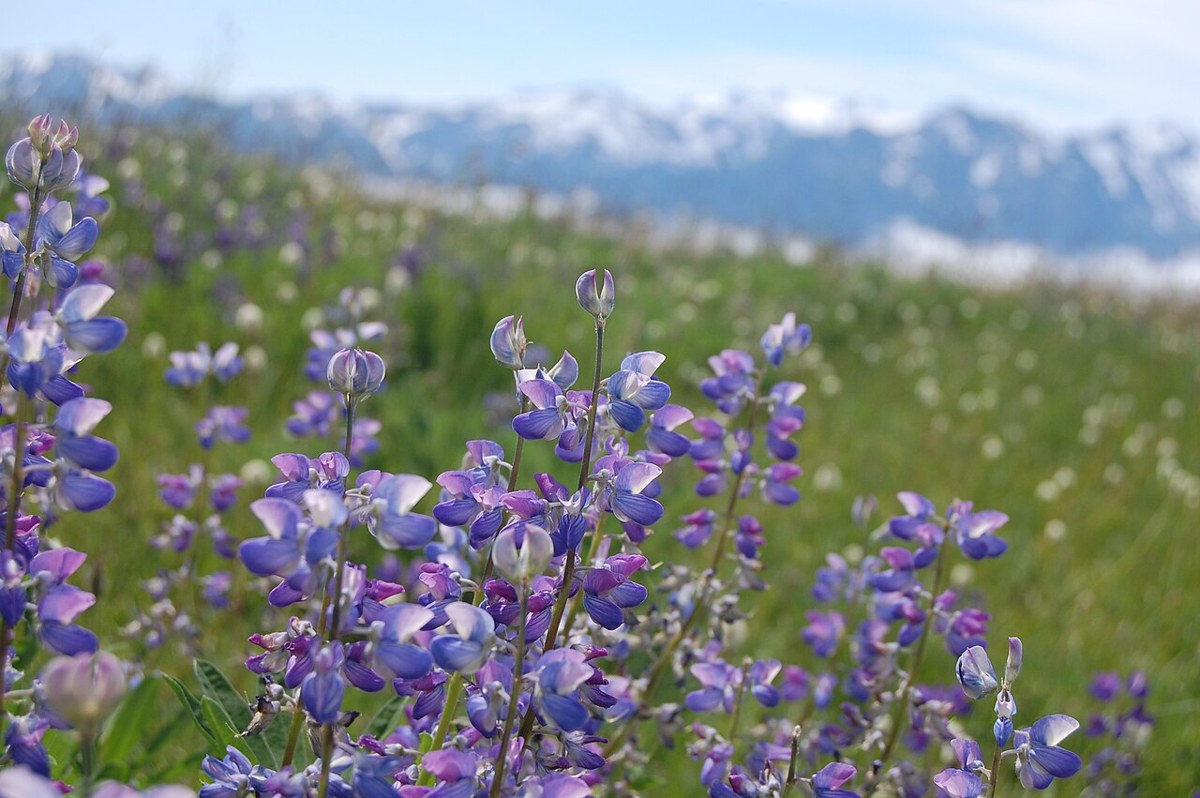
Lupines (genus Lupinus) are members of the pea family known for their tall spikes of pea-like flowers and their fan-shaped, palmately compound leaves. North America is one of the world’s centers of lupine diversity: more than 100 species are native to the United States, and California alone has dozens. They range from tiny desert annuals a few inches tall to coastal shrubs over 6 feet, and their flowers come in blue, purple, pink, white, yellow and bicolors.
Most native lupines grow in the West, from the Great Plains and Rocky Mountains to the Pacific coast and Alaska. The East has far fewer, but they include some of the most beloved wildflowers in the country: the wild blue lupine of sandy pine barrens and oak savannas, the silvery sky-blue lupine of Southeastern sandhills, and the Texas bluebonnet. Several of these native lupines are the only food plants for rare butterflies, so planting the right lupine can make a real difference for wildlife.
The lupines sold in most garden centers, however, are not wild natives. The tall, multicolored “Russell” lupines and similar hybrids were bred in England, mostly from the western big leaf lupine, and they behave very differently from wild species. This guide explains how to recognize lupines, which native species grow in each part of the country, how to tell them from garden hybrids and Mediterranean crop lupines, and how to grow them. Like most lupines, all of them are poisonous if eaten, especially the seeds.
Identification
Lupines are annuals, perennials or shrubs in the pea family (Fabaceae). They are easiest to recognize by their leaves, which no other common wildflower quite matches, combined with upright spikes of pea flowers.
Leaves
Most lupines have palmately compound leaves: five to seventeen narrow leaflets radiating from the tip of a long leaf stalk like the spokes of a wheel or the fingers of a hand. The leaflets are often covered with fine silky or silvery hairs, and many species fold their leaflets at night or in strong sun. Raindrops and dew collect as beads at the center of the leaf. A few southeastern species, including sky-blue lupine (L. diffusus) and lady lupine (L. villosus), are exceptions with simple, undivided, silvery-hairy leaves.
Flowers
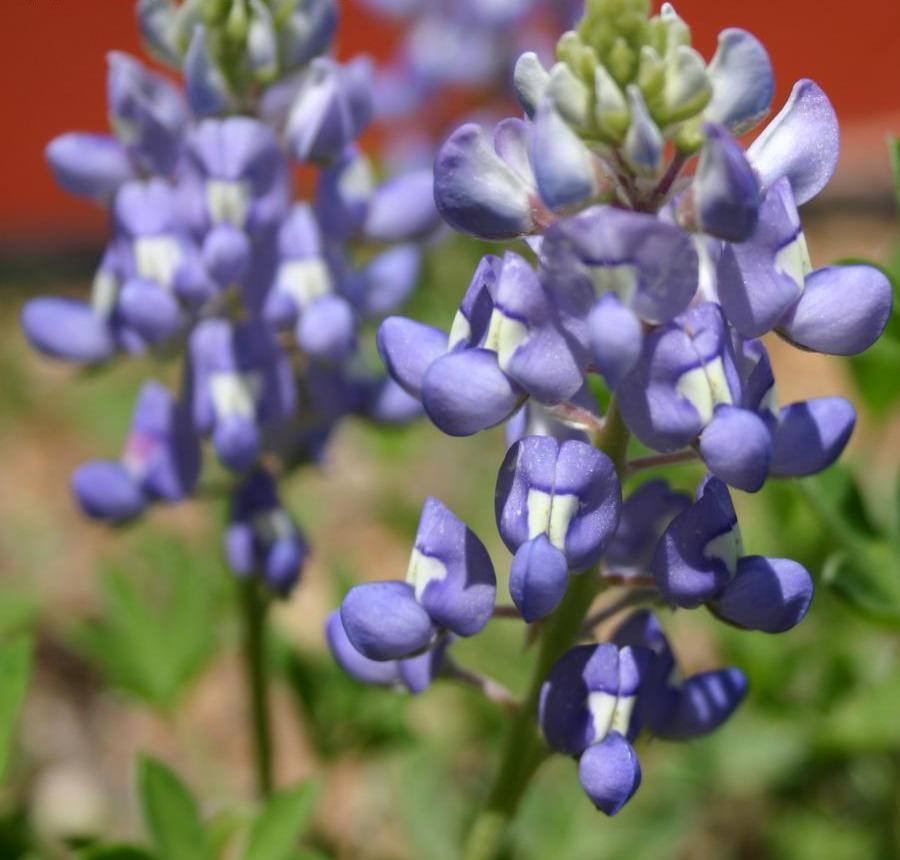
The flowers are classic pea flowers: an upright petal (the banner), two side petals (the wings) and a pointed, boat-shaped keel enclosing the stamens and pistil. They are arranged in whorls or spirals on an upright spike (raceme) at the top of the stem. In many species the banner carries a white or yellow spot that changes color, often to magenta or purple, after the flower has been pollinated, signaling bees to move on to fresh flowers. Most native species bloom in spring and early summer, from February in the low deserts and Texas to July and August in the mountains and Alaska.
Fruit & Seeds
After flowering, lupines produce flattened, usually hairy pods 1 to 2 inches long. As the pods dry they twist and split open suddenly, flinging the hard, round to flattened seeds several feet. The seeds are the most toxic part of the plant.
Roots
Perennial lupines grow from a deep taproot, which helps them survive drought but makes established plants hard to move. Like other legumes, lupine roots host nitrogen-fixing bacteria in small nodules, allowing them to thrive in poor, sandy or gravelly soils where other plants struggle.
Quick Facts
| Scientific Name | Lupinus |
| Family | Fabaceae (Pea or Legume) |
| U.S. Native Species | More than 100 (approximate; most in the West, especially California) |
| Plant Type | Annuals, herbaceous perennials and shrubs |
| Mature Height | From a few inches (desert annuals) to 6 ft or more (coastal bush lupines); most perennials 1–3 ft |
| Mature Spread | 6 in – 2 ft for herbaceous species; shrubs to 6 ft or more |
| Growth Rate | Fast (annuals); moderate (perennials) |
| Sun Exposure | Full Sun to light Part Shade |
| Water Needs | Mostly dry to average with sharp drainage; a few meadow species like moist soil |
| Soil Type | Sandy, gravelly or rocky, low in nutrients; poor in heavy wet clay |
| Soil pH | Acidic for eastern species (wild blue, sky-blue lupine); neutral to alkaline for many western and Texas species |
| Bloom Time | February – August, depending on species and elevation |
| Flower Color | Mostly blue to purple; also white, pink, yellow and bicolors |
| Fruit | Hairy pods that split explosively; seeds poisonous |
| Wildlife Value | High: bumble bees and other bees; larval host for rare blue and elfin butterflies |
| Toxicity | Poisonous to people and livestock, especially seeds and pods |
| Deer Resistant | Usually; deer avoid most species, though rabbits and voles may eat young plants |
| USDA Hardiness Zones | 2–10, depending on species |
Native Range
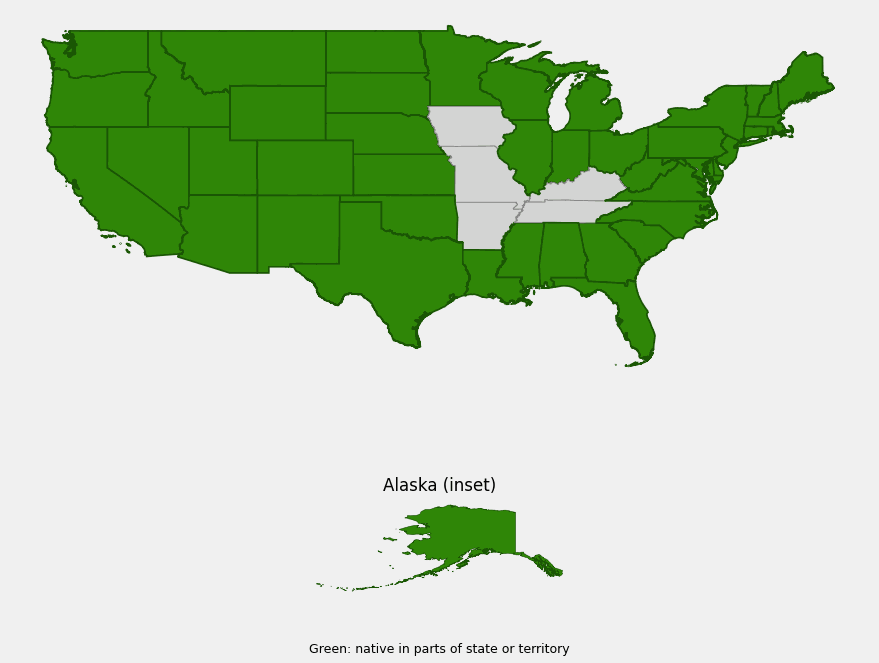
Native lupines grow in 44 states. They are found in every western state and Alaska, and across the Great Plains, where species such as Nebraska lupine (L. plattensis), rusty lupine (L. pusillus) and silvery lupine reach the western Dakotas, Nebraska, Kansas, Oklahoma and Texas. California, Oregon and the Great Basin have the greatest variety, with lupines in coastal dunes, grasslands, chaparral, deserts, forests and alpine meadows. Colorado gardeners have several good natives, including silvery lupine (L. argenteus), silky lupine (L. sericeus), Nebraska lupine and King’s lupine (L. kingii).
East of the Plains, native lupines are mostly limited to sandy, open habitats. Wild blue lupine (L. perennis) grows from Maine and the Great Lakes south along the Atlantic and Gulf coastal plains to Florida and Louisiana, in pine barrens, oak savannas, sand prairies and dunes. Sky-blue lupine and lady lupine grow in the dry sandhills of the Carolinas, Georgia, Florida and the Gulf states, and Texas has its famous bluebonnets. We found no native lupine populations in Missouri, Tennessee, Kentucky, Arkansas or Iowa, and none in Hawaii.
Many eastern “wild” lupines are actually garden escapes. The great roadside drifts of pink, purple and white lupines in Maine, the Maritimes and parts of New England and the Great Lakes are mostly big leaf lupine and Russell hybrids, which are native to the West but introduced in the East. Where they spread they can crowd out wild blue lupine and the rare butterflies that depend on it. Big leaf lupine and Nootka lupine are also serious invasive plants in parts of Europe, Iceland and New Zealand.
📋 Regional plant lists with native lupines: New Hampshire, Maine & Vermont · Connecticut, Massachusetts & Rhode Island · New York, Pennsylvania & Northern New Jersey · Delaware, Southern New Jersey & Long Island · Maryland, Virginia & West Virginia · North Carolina & South Carolina · Georgia, Alabama & Mississippi · Ohio & Indiana · Michigan, Wisconsin & Eastern Minnesota · Illinois, Iowa & Missouri · Arkansas, Louisiana, Eastern Oklahoma & Eastern Texas · North Dakota, South Dakota & Western Minnesota · Nebraska, Kansas & Eastern Colorado · South & West Texas · Arizona & New Mexico · Utah & Western Colorado · Montana & Wyoming · Idaho, Eastern Oregon & Eastern Washington · Western Oregon & Western Washington · California & Nevada · Alaska
Native Species
These are some of the most important and widely grown native lupines. Each name links to a full profile.
- Wild Blue Lupine (Lupinus perennis): The main native lupine of the eastern U.S., from Maine and Minnesota to Florida and Louisiana. A 1–2 ft perennial with blue spikes in May and June, found in dry, sandy, acidic soils of pine barrens, oak savannas and sand prairies. The only larval food plant of the federally endangered Karner blue butterfly. This is the native lupine for Pennsylvania, Wisconsin and other eastern gardens.
- Sky-blue Lupine (Lupinus diffusus): A Southeastern coastal plain lupine with simple, silvery, evergreen leaves and pale blue spikes in early spring. Grows in deep, dry sandhills of the Carolinas, Georgia, Florida and the Gulf states, and is one of the lupines Florida gardeners can find in the wild. Difficult to transplant.
- Texas Bluebonnet (Lupinus texensis): The best-known Texas bluebonnet, a winter annual that carpets central Texas roadsides and prairies in March and April. Deep blue flowers with a white tip on the spike. Sow seed in fall.
- Silvery Lupine (Lupinus argenteus): A variable perennial of sagebrush, meadows and open forests across the Rocky Mountains and Great Basin, with silvery-hairy leaves and blue to purple flowers in summer. One of the most common native lupines in Colorado, Wyoming and Montana.
- Big Leaf Lupine (Lupinus polyphyllus): A tall perennial of moist meadows and stream banks in the Pacific states and northern Rockies, with large leaves of up to 17 leaflets. Native in the West but introduced in the East, and the main parent of Russell hybrid lupines.
- Nootka Lupine (Lupinus nootkatensis): A coastal lupine of Alaska and British Columbia with blue-purple spikes, common in meadows and gravel bars. Introduced to Iceland for erosion control, where it is now invasive.
- Arctic Lupine (Lupinus arcticus): A hardy northern perennial of Alaska and northwestern Canada, found in tundra, meadows and open woods. One of the best lupines for very cold climates.
- Broadleaf Lupine (Lupinus latifolius): A lush perennial with broad leaflets and tall blue-purple spikes, common in mountain meadows and forest openings of the Pacific states.
- Coastal Bush Lupine (Lupinus arboreus): A fast-growing shrub to about 6 ft with fragrant, usually yellow flowers, native to the central California coast. It has become invasive on dunes north of its natural range, including in northern California, so plant it only within its native area.
- Silver Lupine (Lupinus albifrons): A rounded shrub with silvery leaves and blue-violet spikes in spring, from California’s coastal ranges, foothills and the Sierra Nevada. A good drought-tolerant shrub for California gardens.
- Arroyo Lupine (Lupinus succulentus): A robust California annual with thick, fleshy stems and deep purple-blue flowers, common in grasslands, disturbed slopes and roadsides after wet winters.
- Sky Lupine (Lupinus nanus): A small California annual that paints grassy hills blue in spring, often with California poppies. Easy from seed sown in fall.
- Arizona Lupine (Lupinus arizonicus): A pink-purple desert annual of sandy washes in Arizona, southeastern California and southern Nevada, blooming after good winter rains.
- Coulter’s Lupine (Lupinus sparsiflorus): A slender Sonoran Desert annual with blue flowers, often blooming with desert poppies and owl’s clover in Arizona springs.
- Oregon Lupine (Lupinus oreganus): Also called Kincaid’s lupine, a federally threatened prairie perennial of western Oregon and southwestern Washington, and the main host of the rare Fender’s blue butterfly.
More native lupine profiles: Prairie Lupine (L. lepidus) · Summer Lupine (L. formosus) · Miniature Lupine (L. bicolor) · Stinging Lupine (L. hirsutissimus) · Collared Annual Lupine (L. truncatus) · Chick Lupine (L. subvexus) · Bajada Lupine (L. concinnus) · Chamisso Bush Lupine (L. chamissonis) · Harlequin Lupine (L. stiversii)
Non-Native Look-Alikes
Most lupines for sale are not wild native species, and some wild-looking roadside lupines are escapes. Here is how to tell them apart.
- Russell hybrid lupines: Developed in the 1930s by George Russell, a gardener in York, England, mainly from the western big leaf lupine. They have very dense, chunky spikes 2–3 ft tall in a wide range of colors (red, pink, yellow, white, purple and bicolors). They are short-lived in hot, humid summers and are not native anywhere. Where they escape, especially in New England and the Maritimes, they compete with native plants. Gallery, Minarette and other compact lupine series belong to the same group.
- Big leaf lupine outside the West: Native from California to Alaska and the northern Rockies, but introduced and spreading in the Northeast and Great Lakes. If you live in the East and want a native lupine, plant wild blue lupine instead; it is the one that supports the Karner blue and frosted elfin butterflies.
- White lupine (Lupinus albus): A Mediterranean crop lupine grown for its large seeds, which are sold pickled as “lupini” beans after long soaking to leach out the bitter, toxic alkaloids. It is an annual with white to pale blue flowers and is not native to North America.
- Narrow-leaved or blue lupine (Lupinus angustifolius) and yellow lupine (L. luteus): Mediterranean annuals grown as forage, cover crops and grain lupines, including in the Southeast. They occasionally escape from fields. Narrow-leaved lupine has very slender leaflets and blue flowers; yellow lupine has fragrant yellow flowers.
- Other lupine-like plants: False lupines (Thermopsis) have yellow lupine-like spikes but leaves with just three leaflets. Baptisias have three-part leaves as well. Neither has the fan of five or more leaflets typical of lupines.
Growing & Care Guide
Native lupines reward gardeners who copy their wild conditions: sun, sharp drainage and lean soil. In rich, wet, heavy soil most of them fail within a season or two.
Light
Give lupines full sun or light, dappled shade, such as the edge of an oak or pine woodland. Wild blue lupine flowers best in open savanna light and declines when trees close in overhead. In hot desert and southern gardens, annual lupines grow through the cool season and are finished before summer heat arrives.
Soil & Water
Sandy, gravelly or rocky soil that drains quickly is ideal. Because lupines fix their own nitrogen, they need no fertilizer, and rich soils encourage disease and competing weeds. Most native species are drought tolerant once established and are prone to crown rot if kept wet, especially in summer. Eastern species prefer acidic sand; many western species and bluebonnets tolerate neutral to alkaline soils.
Planting Tips
Lupines are best grown from seed or very young plants, because the long taproot resents disturbance. Seeds have hard coats: nick them with a file or rub them on sandpaper, or soak them overnight in warm water before sowing. Sow annual species and bluebonnets in fall so they grow roots through winter, and sow perennial species in fall or early spring. Using a lupine-specific rhizobium inoculant helps seedlings in soils where lupines have not grown before. Plant out nursery seedlings while they are small.
Pruning & Maintenance
Remove spent flower spikes if you want a tidier look or a few later blooms, or leave some to set seed if you want annuals to return. Wear gloves and keep pods away from children and pets. Aphids, especially the large lupine aphid, can cluster on stems in spring; a hard spray of water usually controls them. Many perennial lupines are short-lived, so let a few plants reseed to keep a colony going.
Landscape Uses
- Pollinator and butterfly gardens in sunny, well-drained sites
- Restoration of sandy habitats, such as pine barrens, oak savannas and sand prairies with wild blue lupine
- Wildflower meadows with bluebonnets, poppies or other regional annuals
- Dry slopes and rock gardens with western perennials such as silvery lupine
- Drought-tolerant shrub plantings with silver lupine and other bush lupines in California
- Soil building on poor, disturbed ground, where lupines add nitrogen
Wildlife & Ecological Value
Native lupines punch well above their size for wildlife, both as spring nectar and pollen plants and as hosts for some of North America’s rarest butterflies.
For Pollinators
Lupine flowers are built for bees. A visiting bee lands on the wings and keel, pushing them down so pollen is pressed onto its underside. Bumble bees are the main pollinators of most species, along with mason bees, leafcutter bees and other native bees. Hummingbirds and butterflies may visit occasionally, but lupines are primarily bee flowers rather than hummingbird flowers.
For Butterflies
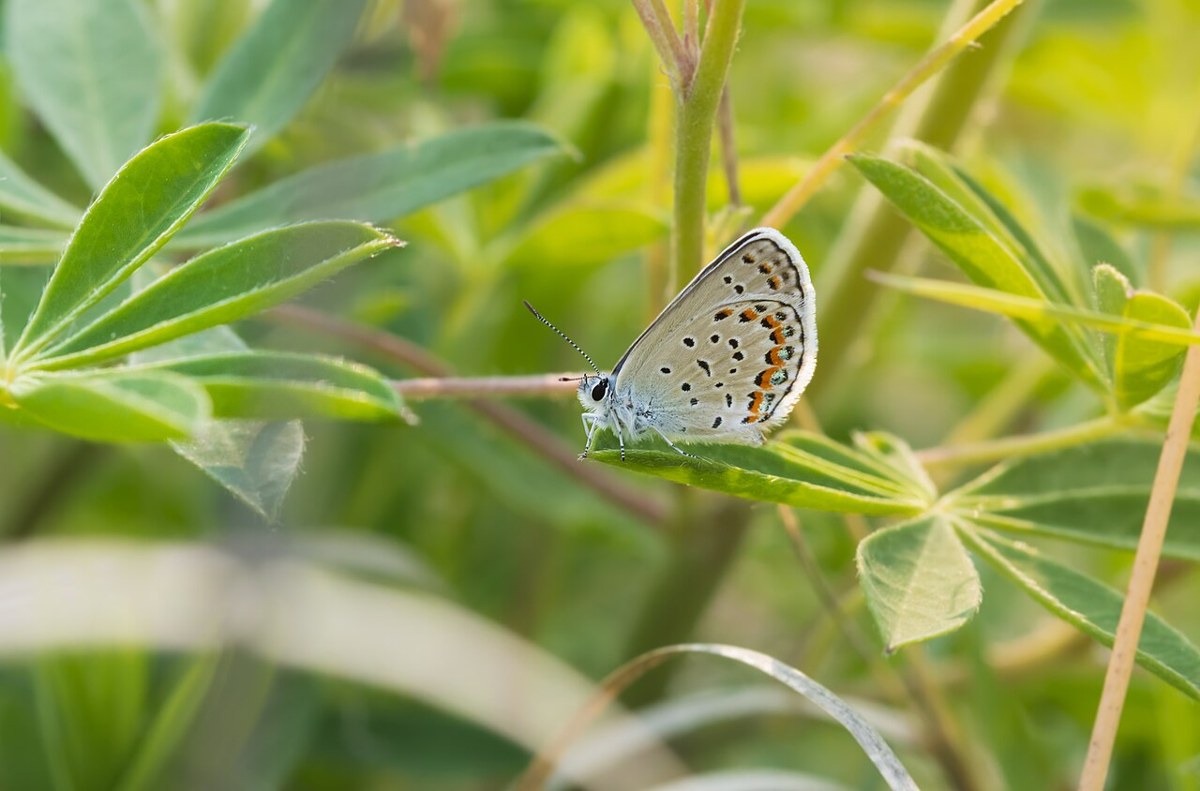
Many small blue and elfin butterflies lay eggs on lupines. Wild blue lupine is the only caterpillar food of the federally endangered Karner blue and a key host for the frosted elfin, both of which have declined as sandy savannas disappeared. In the Pacific Northwest, Kincaid’s lupine is the main host of the federally protected Fender’s blue butterfly. Restoring native lupine stands is central to the recovery plans for these butterflies.
For Birds & Mammals
Some ground-feeding birds and small mammals eat lupine seeds, and the caterpillars and bees on lupines feed insect-eating birds. Despite their toxicity, lupines are browsed at times by deer, elk and pronghorn, and livestock losses occur when hungry animals eat large amounts, especially of pods and seeds.
Ecosystem Role
Through their root nodules, lupines add nitrogen to poor soils. They are often among the first plants to colonize disturbed ground, burned areas, glacial gravels and volcanic slopes. After the 1980 eruption of Mount St. Helens, prairie lupine was one of the first plants to grow on the barren pumice plains, and scientists studied how it helped rebuild the soil.
Cultural & Historical Uses
The name Lupinus comes from the Latin lupus, “wolf.” An old belief held that lupines “wolfed” nutrients from the soil, when in fact they enrich it. Mediterranean peoples have grown white lupine for its seeds for thousands of years, always soaking them for days to remove the toxic alkaloids. Some Native American groups in the West also used particular lupine species, but wild lupine seeds and plants are poisonous and should not be eaten.
In Texas, lupines are a cultural symbol. The Texas Legislature named the bluebonnet the state flower in 1901, originally Lupinus subcarnosus, and in 1971 extended the designation to L. texensis and the other Texas bluebonnets. Spring bluebonnet season along Texas highways, helped by decades of roadside wildflower seeding, draws visitors from around the country.
In the Northeast, the famous lupine fields of Maine and the Maritimes are mostly descendants of garden lupines, a reminder that not every beloved wildflower is native. Conservation groups in the Great Lakes, New York and New England have worked for decades to restore wild blue lupine in pine barrens and oak savannas to bring back the Karner blue butterfly.
Frequently Asked Questions
Are lupines native to the United States?
Yes. More than 100 lupine species are native to the U.S., most of them in the West. The East has fewer, chiefly wild blue lupine, the southeastern sandhill lupines and the Texas bluebonnets. The colorful Russell lupines sold in garden centers are English-bred hybrids, not native wildflowers.
Are lupines poisonous?
Yes. Lupines contain bitter alkaloids that are toxic to people, pets and livestock, and the seeds and pods are the most dangerous parts. Do not eat any part of wild or garden lupines, and keep pods away from children. Sheep and cattle have been poisoned by grazing large amounts of wild lupine.
What family are lupines in?
Lupines are in the pea or legume family (Fabaceae), not the poppy family. Their pea-shaped flowers, pods and nitrogen-fixing roots are typical of legumes.
When do native lupines bloom?
Most native lupines bloom in spring to early summer. Desert and Texas species flower from late winter to April, eastern wild blue lupine in May and June, and mountain and Alaskan species from June into August. They are not late-summer or fall bloomers.
Why do my lupines die after a year or two?
Usually because the soil is too rich, too wet or too heavy, or summers are too hot and humid for the type you planted. Russell hybrids are especially short-lived in warm climates. Choose a species native to your area, plant it in sharply drained, lean soil in full sun, and let it reseed.

Looking for a nursery that carries native lupines?
Browse our native plant nursery directory: Alabama, Alaska & Arizona · California · Colorado, Connecticut, Delaware, Florida & Georgia · Idaho, Illinois, Indiana & Kansas · Louisiana, Maine, Maryland, Massachusetts, Michigan, Minnesota, Mississippi & Montana · Nebraska, Nevada, New Hampshire, New Jersey, New Mexico, New York, North Carolina, North Dakota, Ohio & Oklahoma · Oregon · Pennsylvania, Rhode Island, South Carolina, South Dakota, Texas, Utah, Vermont & Virginia · Washington · West Virginia, Wisconsin & Wyoming

