
Native Indian Paintbrushes (Castilleja)
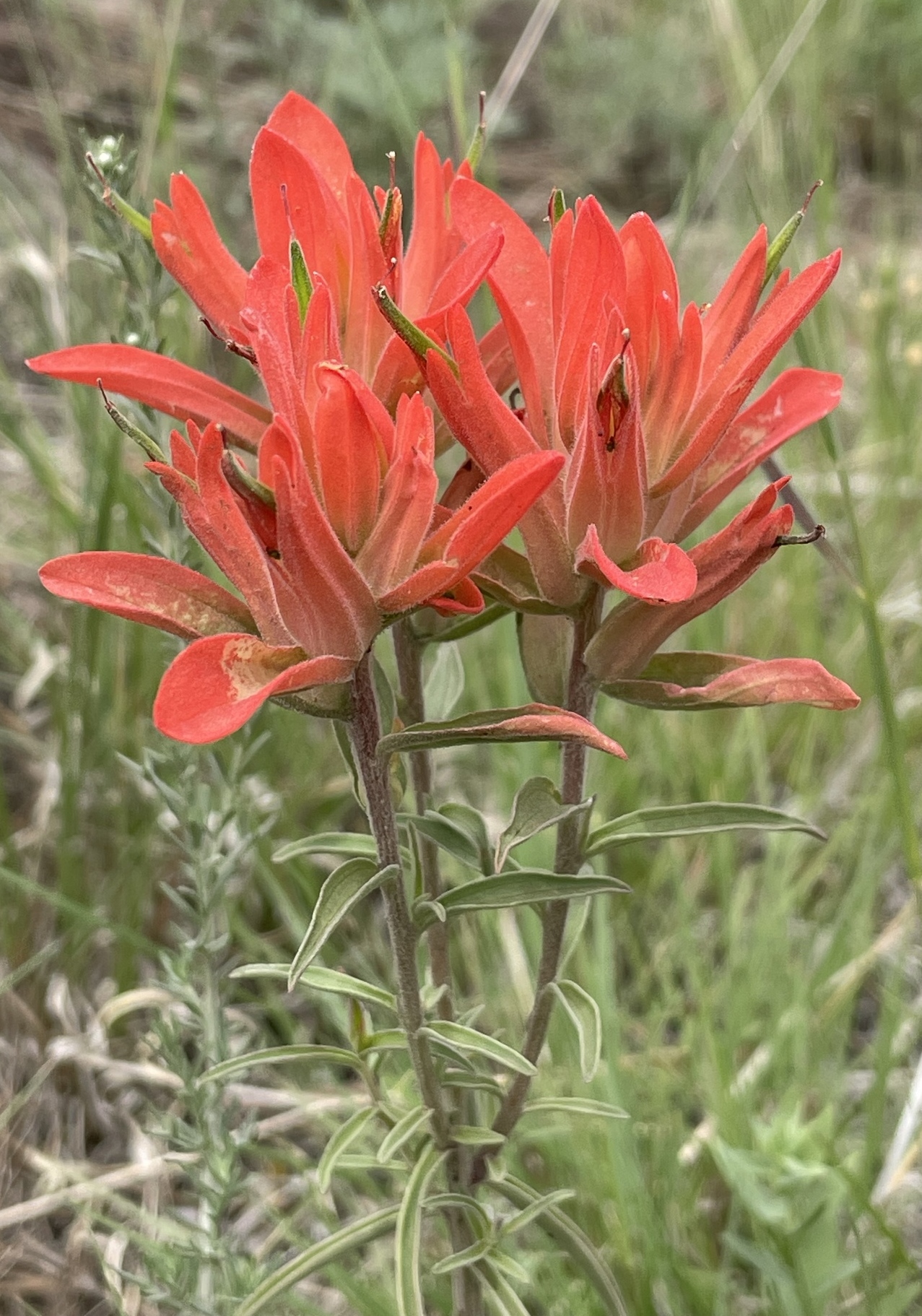
Indian paintbrushes (genus Castilleja) are the wildflowers that look as if their tips were dipped in paint. Their brilliant scarlet, orange, pink, magenta, yellow or cream color comes not from the flowers themselves but from leafy bracts that surround small, tubular flowers. The genus has about 200 species, almost all in the Americas, and the great majority are native to western North America, where paintbrushes color deserts, prairies, mountain meadows and alpine slopes from Alaska to Texas.
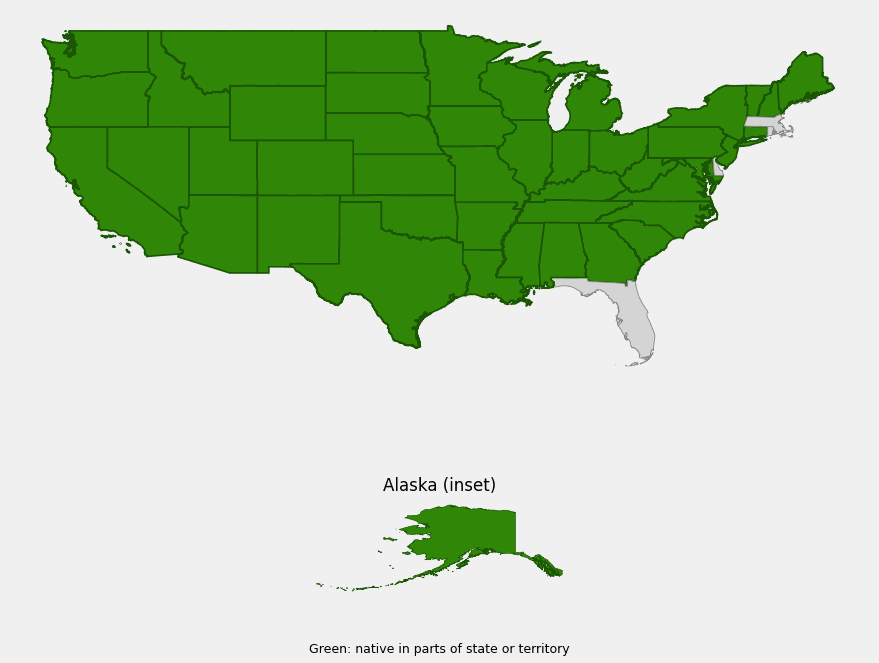
All of the paintbrushes and owl’s clovers that grow wild in the United States are native. Every state outside Florida has at least one, but the eastern half of the country has only a handful, led by scarlet paintbrush (C. coccinea). In the Rocky Mountains, the Great Basin, the Southwest and California, dozens of species overlap, and they hybridize so freely that even botanists sometimes struggle to name a plant. Wyoming paintbrush is Wyoming’s state flower, and Texas paintbrush shares roadsides with bluebonnets every spring.
Paintbrushes are also unusual garden plants. They are hemiparasites: green plants that make their own food but also tap into the roots of neighboring plants for water and nutrients. That is why they are famously hard to grow alone in a pot or a bare bed, and why they thrive in natural settings next to grasses, sagebrush and other wildflowers. This guide explains how to recognize the main native species, where each grows, and how to give them the companion plants they need.
Identification
Paintbrushes are easiest to spot in bloom, when the colored bracts stand out from a long way off. Up close, a few details separate paintbrushes from penstemons, gilias and other red wildflowers.
Stems & Leaves
Most paintbrushes are perennials with several unbranched, leafy stems 6 inches to 2 feet tall rising from a woody base. Scarlet paintbrush, Texas paintbrush and the owl’s clovers are annuals or biennials. Leaves are alternate and stalkless, either narrow and undivided (as in wholeleaf and Wyoming paintbrush) or split into three to five narrow lobes (as in scarlet and harsh paintbrush). Many species are covered in fine, sticky or woolly hairs, which can give the foliage a gray or purplish cast.
Bracts
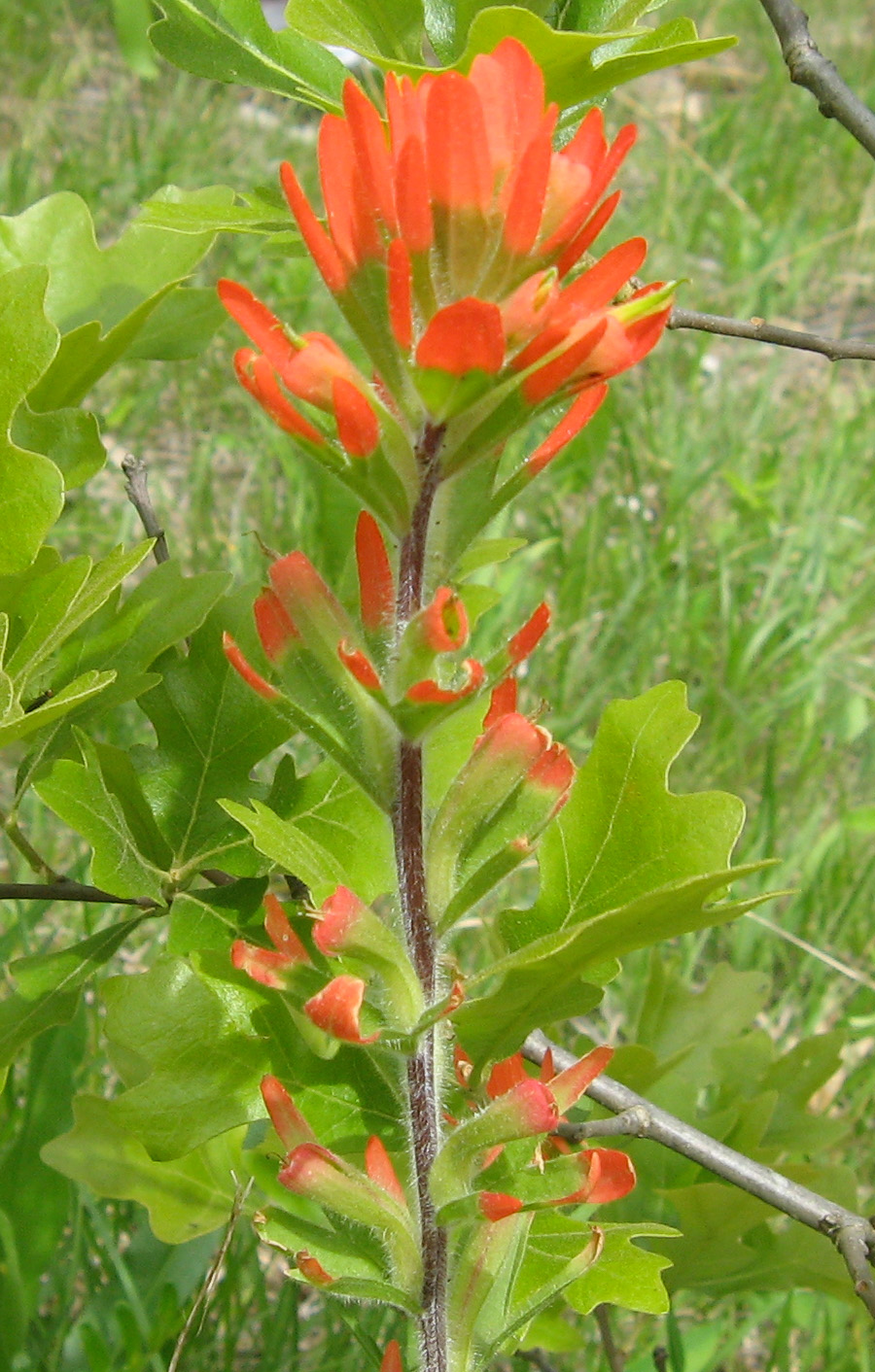
The showy “paintbrush” at the top of the stem is a dense spike of bracts, modified leaves that are green at the base and brightly colored toward the tip. Bract color varies even within a species: scarlet paintbrush has occasional yellow forms, and purple paintbrush comes in purple, pink, orange and yellow. Bract shape, whether entire, three-lobed or deeply cut, is one of the main clues to species.
Flowers
The true flowers are slender tubes, usually greenish, yellowish or pale, tucked among the bracts. Each has a long, beak-like upper lip (galea) that holds the stamens and a small lower lip. In hummingbird-pollinated species the beak pokes out beyond the bracts; in bee-pollinated species such as downy paintbrush and the owl’s clovers, the lower lip is larger and often brightly colored. Bloom time runs from early spring in the deserts and Texas to late summer in the high mountains.
Fruit & Seeds
Each flower makes a small, oval capsule filled with many tiny seeds with a loose, net-like coat. The seeds scatter close to the parent in late summer and fall and need cold, moist winter conditions before they germinate.
Quick Facts
| Scientific Name | Castilleja (about 200 species worldwide, most in western North America) |
| Family | Orobanchaceae (Broomrape family; formerly placed in the Figwort family) |
| Plant Type | Hemiparasitic perennials, biennials and annuals |
| Mature Height | 6–24 in for most species (some to 3 ft) |
| Mature Spread | 6–18 in |
| Growth Rate | Moderate once attached to a host; slow and difficult alone |
| Sun Exposure | Full sun (a few mountain species take light shade) |
| Water Needs | Low to average, by species; desert and Plains species very drought tolerant |
| Soil Type | Lean, well-drained sandy, gravelly or rocky soil; mountain species in moist meadows |
| Soil pH | Slightly acidic to alkaline (about 6.0–8.0) |
| Bloom Time | March – September, by species and elevation |
| Flower Color | Bracts scarlet, orange, red, pink, magenta, purple, yellow or cream |
| Fall Color | None of note |
| Fruit | Small capsules with many tiny seeds |
| Deer Resistant | Moderately; occasionally browsed |
| USDA Hardiness Zones | About 2–10 across the genus |
Native Range
Paintbrushes are native across most of the United States, but they are far more diverse in the West. California, Oregon, Washington, Idaho, Nevada, Utah, Colorado, Wyoming, Montana, Arizona and New Mexico each have many species, ranging from low-desert annuals to alpine perennials above treeline. Alaska has several, including giant red paintbrush and northern species that reach the Arctic coast. New Mexico alone has well over a dozen, including wholeleaf, woolly, Wyoming and downy paintbrushes.
On the Great Plains, downy paintbrush grows in shortgrass and mixed-grass prairie from the Dakotas and Montana to Texas, and purple and Texas paintbrush color the southern prairies of Texas, Oklahoma and nearby states. East of the Mississippi, scarlet paintbrush is the main species, growing in prairies, wet meadows, fens and glades from Minnesota and the Great Lakes to the southern Appalachians. In northern New England, the pale northern paintbrush (C. septentrionalis) grows in alpine meadows and ravines of the White and Green Mountains and on Mount Katahdin.
Scarlet paintbrush has declined in much of the East as prairies and meadows were lost. It is now rare in many eastern states, and along parts of the Northeast and mid-Atlantic coast it is known mainly from old records; the map shows only states with confirmed native populations. No paintbrush is native to Florida or Hawaii.
📋 Regional plant lists with native Indian paintbrushes: Arizona & New Mexico · South & West Texas · California & Nevada · Utah & Western Colorado · Montana & Wyoming · Idaho, Eastern Oregon & Eastern Washington · Western Oregon & Washington · Alaska · Nebraska, Kansas & Eastern Colorado · North Dakota, South Dakota & Western Minnesota · Arkansas, Louisiana, Eastern Oklahoma & Eastern Texas · Illinois, Iowa & Missouri · Michigan, Wisconsin & Eastern Minnesota · Ohio & Indiana · Kentucky & Tennessee · Maryland, Virginia & West Virginia · North Carolina & South Carolina · Georgia, Alabama & Mississippi · New York, Pennsylvania & Northern New Jersey · New Hampshire, Maine & Vermont
Native Species
These are the US-native paintbrushes gardeners and hikers are most likely to meet, roughly from east to west. Each linked name goes to our full profile.
Scarlet Indian paintbrush (Castilleja coccinea) is the paintbrush of the East and Midwest, an annual or biennial 1 to 2 feet tall with three-lobed, scarlet-tipped bracts (occasionally yellow) in late spring. It grows in moist prairies, meadows, fens and limestone glades from Minnesota and the Great Lakes to the southern Appalachians and Louisiana, and is now rare in much of the East.
Texas paintbrush (Castilleja indivisa) is an annual with unlobed, bright red-orange bracts that blooms with bluebonnets in March and April across east and central Texas and into Oklahoma and Louisiana. It is one of the easiest paintbrushes to start from seed in a wildflower meadow.
Purple paintbrush (Castilleja purpurea) is a low perennial of rocky limestone prairies in Texas and Oklahoma, north into Kansas, with narrow, lobed leaves and bracts in purple, pink, orange or yellow, depending on the variety.
Downy paintbrush (Castilleja sessiliflora) is the Great Plains species, a soft, hairy plant 4 to 12 inches tall with pale greenish bracts and long, curved, cream to pinkish flower tubes. It grows in dry prairie from the Dakotas and Montana south to Texas, Arizona and New Mexico, and east into Wisconsin and Illinois.
Wholeleaf Indian paintbrush (Castilleja integra) has narrow, untoothed, gray-green leaves and orange-red to scarlet bracts. It is common in grasslands and open pine and pinyon-juniper woods of New Mexico, Arizona, Colorado and west Texas and is one of the best paintbrushes for New Mexico gardens.
Woolly paintbrush (Castilleja lanata) is covered in white, woolly hairs, with bright red bracts in spring and summer. It grows on rocky slopes and desert grasslands of west Texas, New Mexico and Arizona, often among shrubs that serve as hosts.
Wyoming paintbrush (Castilleja linariifolia), Wyoming’s state flower, has thread-like leaves on tall, loose stems and red to orange bracts in summer. It grows with sagebrush and in open woods from Montana and Wyoming south to Arizona, New Mexico and California.
Desert paintbrush (Castilleja angustifolia, including C. chromosa) is an early-blooming species of the sagebrush steppe and deserts of the Great Basin and Colorado Plateau, with orange-red to crimson bracts from March to June.
Giant red paintbrush (Castilleja miniata) is the tall, bright red paintbrush of moist mountain meadows, streamsides and forest openings throughout the West, from Alaska and the Rockies to the Sierra Nevada and the mountains of Arizona and New Mexico.
Rosy or splitleaf paintbrush (Castilleja rhexiifolia) brings magenta, rose and crimson bracts to subalpine and alpine meadows of the Rockies and Cascades in mid to late summer.
Wavy-leaved paintbrush (Castilleja applegatei) has sticky, wavy-edged leaves and red to orange bracts. It grows in dry, rocky places with sagebrush and conifers in California, Oregon, Nevada, Idaho and Utah.
Harsh paintbrush (Castilleja hispida) is a bristly, hairy species with deeply lobed leaves and scarlet to orange bracts, found in meadows and open slopes of the Pacific Northwest and northern Rockies.
Coast paintbrush (Castilleja affinis) grows on grassy slopes, coastal scrub and chaparral of California’s coast ranges, with bright red bracts in spring.
Felt paintbrush (Castilleja foliolosa) is a shrubby California species densely covered in gray, felt-like hairs, with orange-red bracts on dry, rocky chaparral slopes.
Monterey paintbrush (Castilleja latifolia) is a rare, low, broad-leaved species of coastal dunes and scrub around Monterey Bay in California.
More native paintbrush and owl’s clover profiles: purple owl’s clover (C. exserta) · dense-flowered owl’s clover (C. densiflora) · valley tassels (C. attenuata). These annual owl’s clovers, once placed in the genus Orthocarpus, carpet California and Arizona grasslands in spring.
Other notable natives include northern paintbrush (C. septentrionalis) of northern New England and the upper Great Lakes, sulphur paintbrush (C. sulphurea) of Rocky Mountain meadows, and golden paintbrush (C. levisecta), a rare species of Puget Sound and Willamette Valley prairies that has been the focus of a long recovery effort.
Non-Native Look-Alikes
There are no non-native Castilleja species growing wild in the continental United States, so any paintbrush you find on a hike in the lower 48 states or Alaska is a native plant. The confusion comes from other red, spiky wildflowers and from plants sold under the paintbrush name:
- Orange hawkweed (Pilosella aurantiaca, also sold as Hieracium aurantiacum): A European plant often called “devil’s paintbrush,” with clusters of orange dandelion-like flowers on hairy, leafless stems. It is an invasive weed of pastures and mountain meadows in the Northeast, the Great Lakes states and the Pacific Northwest, and several western states list it as a noxious weed.
- Tassel flower or Flora’s paintbrush (Emilia): Small tropical annuals with red or orange tufted flower heads, sold as garden “paintbrushes.” They are not related to Castilleja and are naturalized in Florida and Hawaii.
- Penstemons and skyrocket gilia: Native red wildflowers often confused with paintbrush at a distance. Their color comes from true, open-mouthed tubular flowers, not bracts. See our guides to native penstemons and skyrocket gilia.
Growing & Care Guide
Paintbrushes have a reputation for being impossible in gardens, but most failures come from growing them like ordinary perennials. Give them a host, lean soil and room to self-sow, and many species will settle in.
Light
Plant paintbrushes in full sun. A few mountain species, such as giant red paintbrush, tolerate light shade in hot regions, but most bloom poorly and decline in shade.
Soil & Water
Desert, Plains and Southwest species need lean, fast-draining sandy, gravelly or rocky soil and very little water once established; rich soil, heavy mulch and frequent watering cause rot. Mountain species such as giant red and rosy paintbrush need more moisture and cooler summers and are difficult at low elevations. Scarlet paintbrush likes moist, not soggy, prairie soil. Never fertilize: paintbrushes are adapted to poor soil and their hosts do best without it.
Planting Tips
The key to success is a host plant. Paintbrush roots form small connections (haustoria) with the roots of nearby plants and draw water and nutrients from them. Good hosts include native bunchgrasses such as blue grama, Idaho fescue and little bluestem, as well as big sagebrush, penstemons, buckwheats and fringed sage. The most reliable approach is to buy a paintbrush grown in the same pot as a host and plant the pair together without separating them. Plant in spring or early fall and disturb the roots as little as possible.
Pruning & Maintenance
Leave plants alone after bloom so the seed can ripen and scatter. Perennial species can be cut back in late fall or early spring. Do not weed too thoroughly around paintbrushes: the grasses and wildflowers growing beside them are often their hosts. Most perennial species live only a few years, so let them reseed to keep a planting going.
Propagation
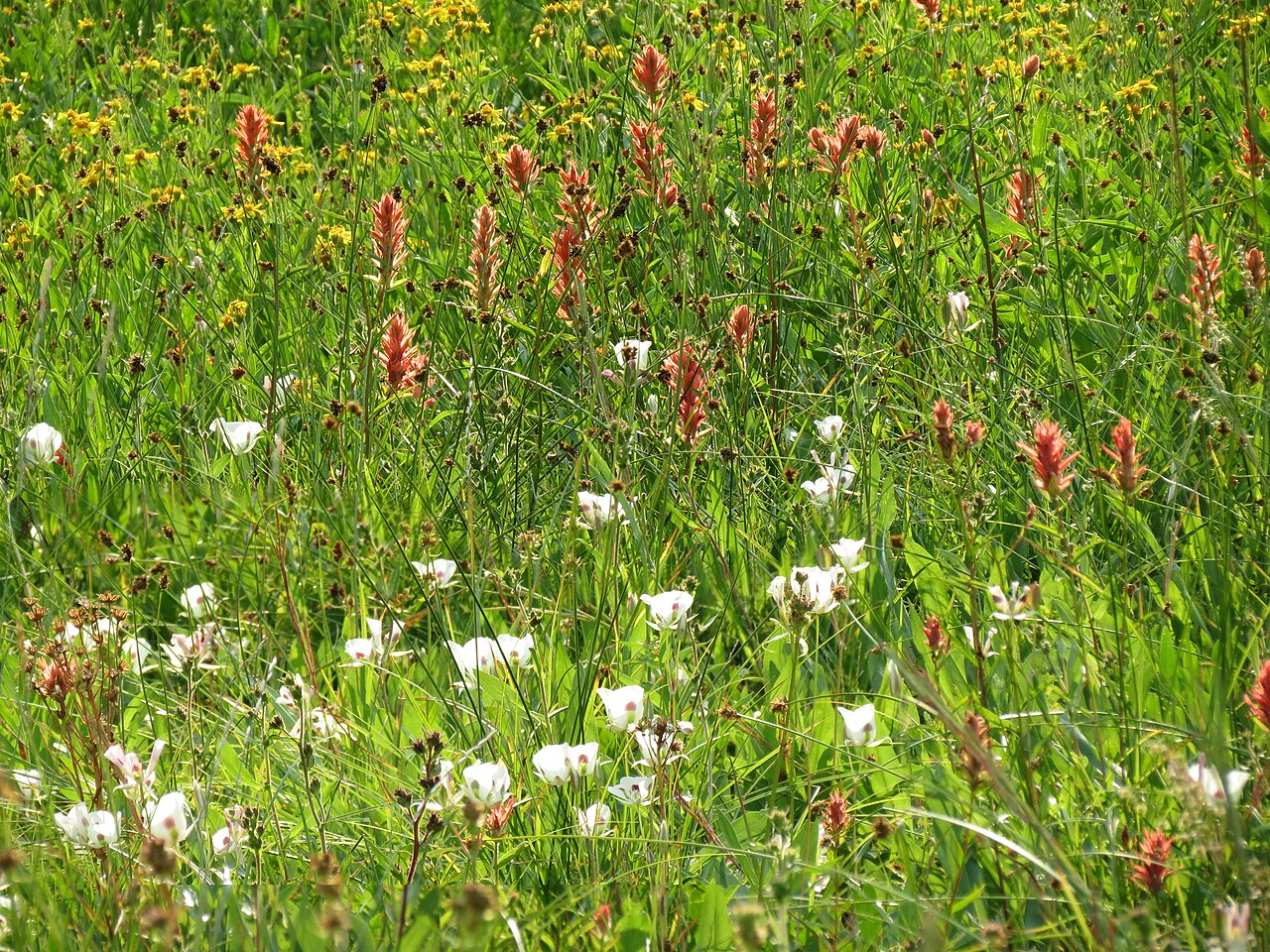
Grow paintbrushes from seed. Sow the tiny seed in fall on the surface of a pot or bed that already holds an established host grass, or give it 60 to 90 days of cold, moist stratification before spring sowing. Seedlings can survive a short time on their own, but they need to reach a host’s roots within the first season. Texas paintbrush and the owl’s clovers are easiest when scattered in fall into a wildflower meadow with bluebonnets and grasses.
Landscape Uses
- Native meadows and prairie plantings, sown or planted among bunchgrasses
- Xeriscapes and rock gardens in the Southwest and Intermountain West, paired with blue grama, penstemons and sagebrush
- Hummingbird gardens, where red species provide nectar in spring and summer
- Texas wildflower meadows with bluebonnets and other spring annuals
- Restoration of sagebrush, prairie and mountain meadow habitats, using local seed sources
Wildlife & Ecological Value
Paintbrushes are small plants with an outsized role in western meadows and grasslands.
For Pollinators
Red and orange paintbrushes are classic hummingbird flowers: the long, tubular flowers hold nectar where a hummingbird’s bill can reach it, and the bright bracts act as a signal. Broad-tailed, rufous, black-chinned and ruby-throated hummingbirds all visit them. Paler species such as downy paintbrush and the owl’s clovers are pollinated mainly by bumblebees and other bees.
Butterflies
Paintbrushes are host plants for several checkerspot butterflies, including the variable checkerspot, Edith’s checkerspot and Fulvia checkerspot, whose caterpillars feed on the leaves and absorb bitter chemicals that help protect them from predators.
For Birds & Mammals
Beyond hummingbirds, some songbirds glean insects from the flower spikes, and deer, elk and livestock occasionally browse the plants. Small rodents eat some seed.
Ecosystem Role
Because they take resources from dominant grasses and shrubs, paintbrushes help keep those plants from crowding out other wildflowers, which can increase the variety of plants in a meadow. Some species also pick up chemical compounds from their hosts; paintbrushes growing on lupines, for example, can take up lupine alkaloids, which may help deter herbivores.
Cultural & Historical Uses
The genus is named for Domingo Castillejo, an 18th-century Spanish botanist. Its common name refers to the painted look of the bracts, and many Native American stories explain paintbrush as the brush left behind by a painter capturing the colors of a sunset. Owl’s clover gets its name from the small, eye-like markings on the flowers of some species.
Several Native peoples used paintbrushes for dyes and in ceremonies, and some recorded traditional uses involved the flowers and roots. Because paintbrushes can absorb toxic compounds, such as alkaloids and selenium, from their host plants, they should not be eaten or used as home remedies.
Wyoming adopted Wyoming paintbrush as its state flower in 1917, and paintbrushes are emblems of many western parks and wildflower festivals. Interest in growing them has risen with the native plant movement, and nurseries in Colorado, New Mexico and the Intermountain West now produce paintbrushes paired with host grasses for home gardens.
Frequently Asked Questions
Why is Indian paintbrush so hard to grow?
Paintbrushes are hemiparasites: they make their own food but also need to connect to the roots of nearby host plants for water and nutrients. Planted alone in rich, watered garden soil, they usually fade within a season. Plant them with native bunchgrasses or shrubs, in lean, well-drained soil, and they have a much better chance.
Will Indian paintbrush harm my other plants?
Not noticeably. Paintbrushes take only a small share of resources from their hosts, and the grasses and shrubs they attach to keep growing normally. In meadows, this slight weakening of dominant grasses can actually help other wildflowers.
Which Indian paintbrushes grow in New Mexico?
New Mexico has many, including wholeleaf, woolly, Wyoming, downy and desert paintbrush at low and middle elevations and giant red and rosy paintbrush in the mountains. Wholeleaf paintbrush is one of the most widespread and adaptable for New Mexico gardens.
Is it OK to pick or dig wild paintbrush?
Please don’t. Dug plants almost never survive because their host connections are broken, and picking flowers reduces seed for next year. Several species are rare, and digging plants on public land is usually illegal. Buy nursery-grown plants or collect a small amount of seed where it is allowed.
Are paintbrushes perennial?
Most western species are short-lived perennials that last a few years. Scarlet paintbrush is an annual or biennial, and Texas paintbrush and the owl’s clovers are annuals that return each year from seed.

Looking for a nursery that carries Native Indian Paintbrushes?
Browse our native plant nursery directory: Alabama, Alaska, Arizona & Arkansas · California · Colorado, Connecticut & Georgia · Idaho, Illinois, Indiana, Iowa & Kansas · Kentucky, Louisiana, Maine, Maryland, Michigan, Minnesota, Mississippi, Missouri & Montana · Nebraska, Nevada, New Hampshire, New Jersey, New Mexico, New York, North Carolina, North Dakota, Ohio & Oklahoma · Oregon · Pennsylvania, South Carolina, South Dakota, Tennessee, Texas, Utah, Vermont & Virginia · Washington · West Virginia, Wisconsin & Wyoming

