
Native Sedges (Carex)
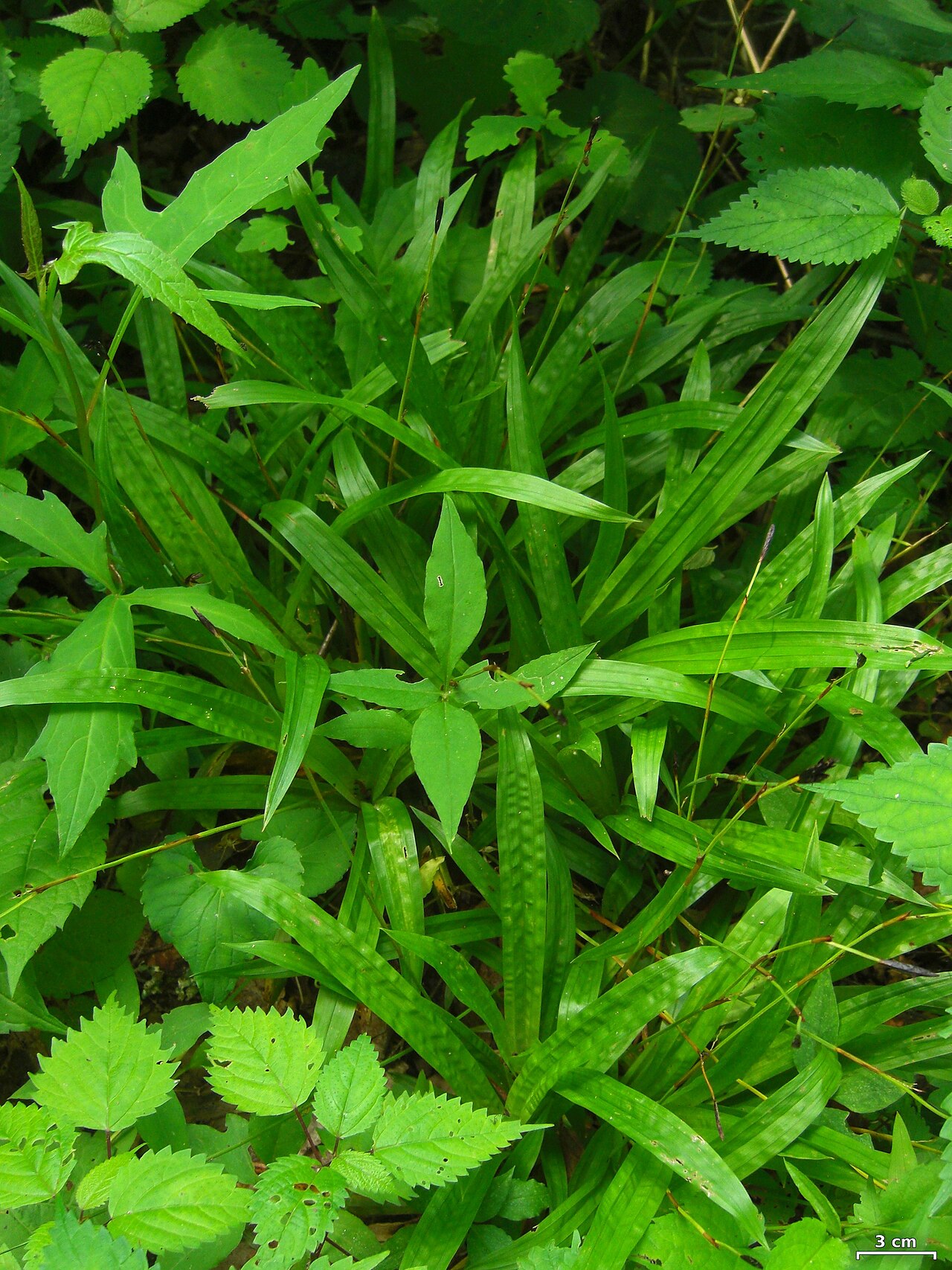
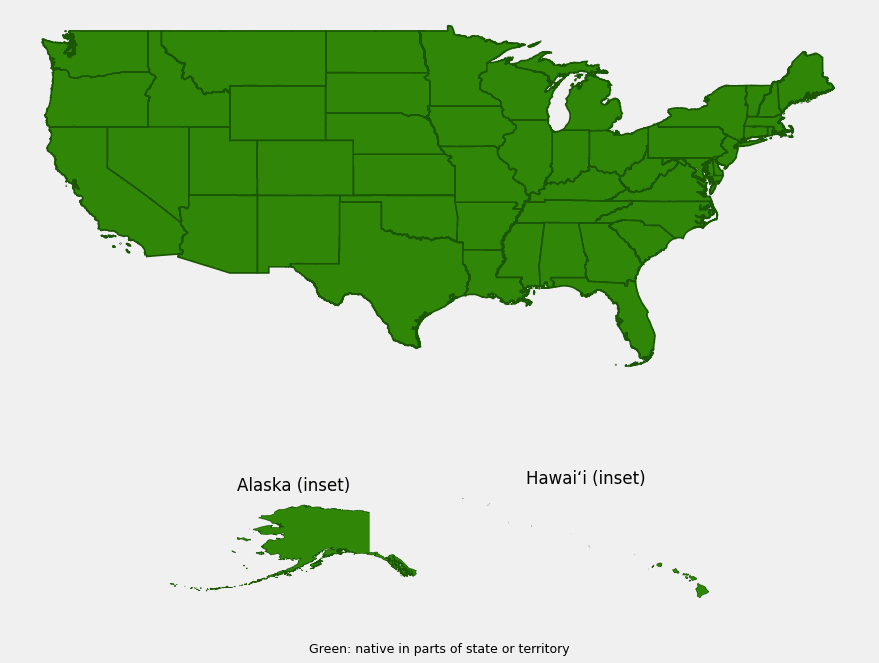
Sedges in the genus Carex are grass-like perennials of the sedge family (Cyperaceae), and together they form the largest genus of flowering plants in North America. Roughly 2,000 species grow worldwide, and more than 400 are native to the United States, with native species in every state from Florida to Alaska and Hawaii. They grow in almost every habitat: dry oak woods, prairies, mountain meadows, bogs, marshes, stream banks and alpine tundra.
For gardeners, native sedges are the answer to one of the hardest landscape problems: what to plant in shade, under trees, or in wet spots where turf grass fails. Species like Pennsylvania sedge form soft, fine-textured carpets in dry shade; others such as palm sedge and fox sedge thrive in soggy soil and rain gardens. Most are evergreen or semi-evergreen, need no mowing or fertilizer, and stay put. In Illinois and across the Midwest, sedges are among the most reliable native ground covers you can plant.
Sedges are easy to overlook because their flowers are small and wind-pollinated, but they are ecologically important. Their seeds feed birds and waterfowl, their leaves feed the caterpillars of several butterflies, and their dense roots hold stream banks and wetland soils. This guide introduces the most useful native species, explains how to tell sedges from grasses, and points out the popular Japanese and New Zealand sedges that are sold as substitutes.
Identification
The old rhyme “sedges have edges, rushes are round, grasses are hollow right up from the ground” is a good start. Most Carex share a few easy features.
Stems
Roll a flowering stem between your fingers: in most sedges it is triangular in cross-section and solid, not round and hollow like a grass. The stems usually lack the swollen joints (nodes) found on grass stems.
Leaves
Sedge leaves grow in three ranks around the stem rather than two, and their sheaths wrap completely around it without the split collar of a grass leaf. Leaf width varies enormously: under 1/16 inch in Pennsylvania sedge and eastern star sedge, about 1/2 inch in palm sedge, and up to an inch or more in seersucker sedge and bigleaf sedge. Many species are evergreen or semi-evergreen, and some, like seersucker sedge, have pleated or puckered leaves.
Flowers
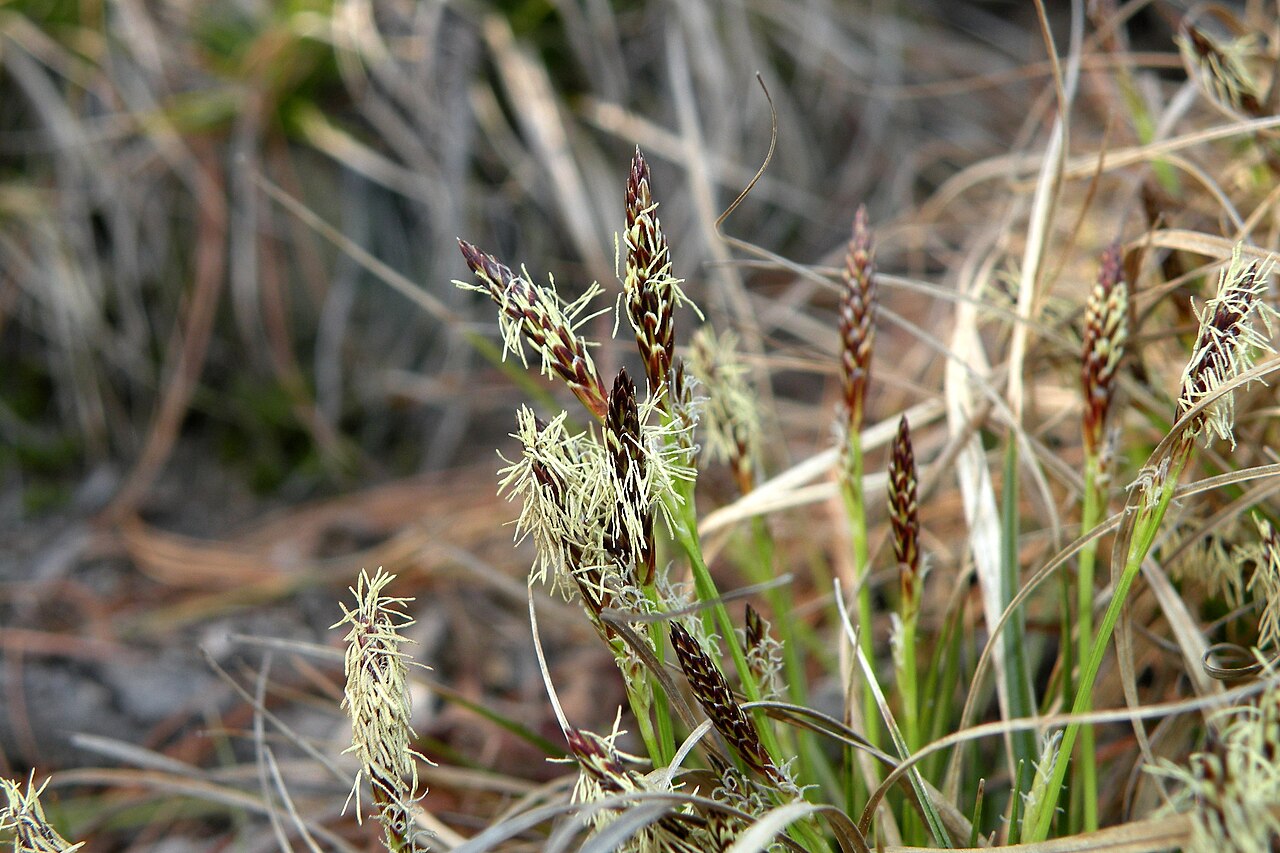
Sedge flowers are tiny and lack petals. They are arranged in spikes, and in many species male and female flowers sit in separate spikes on the same stem, with slender male spikes at the top and plumper female spikes below. In early spring, the yellow or cream stamens of woodland sedges such as Pennsylvania sedge can be surprisingly showy.
Fruit & Seeds
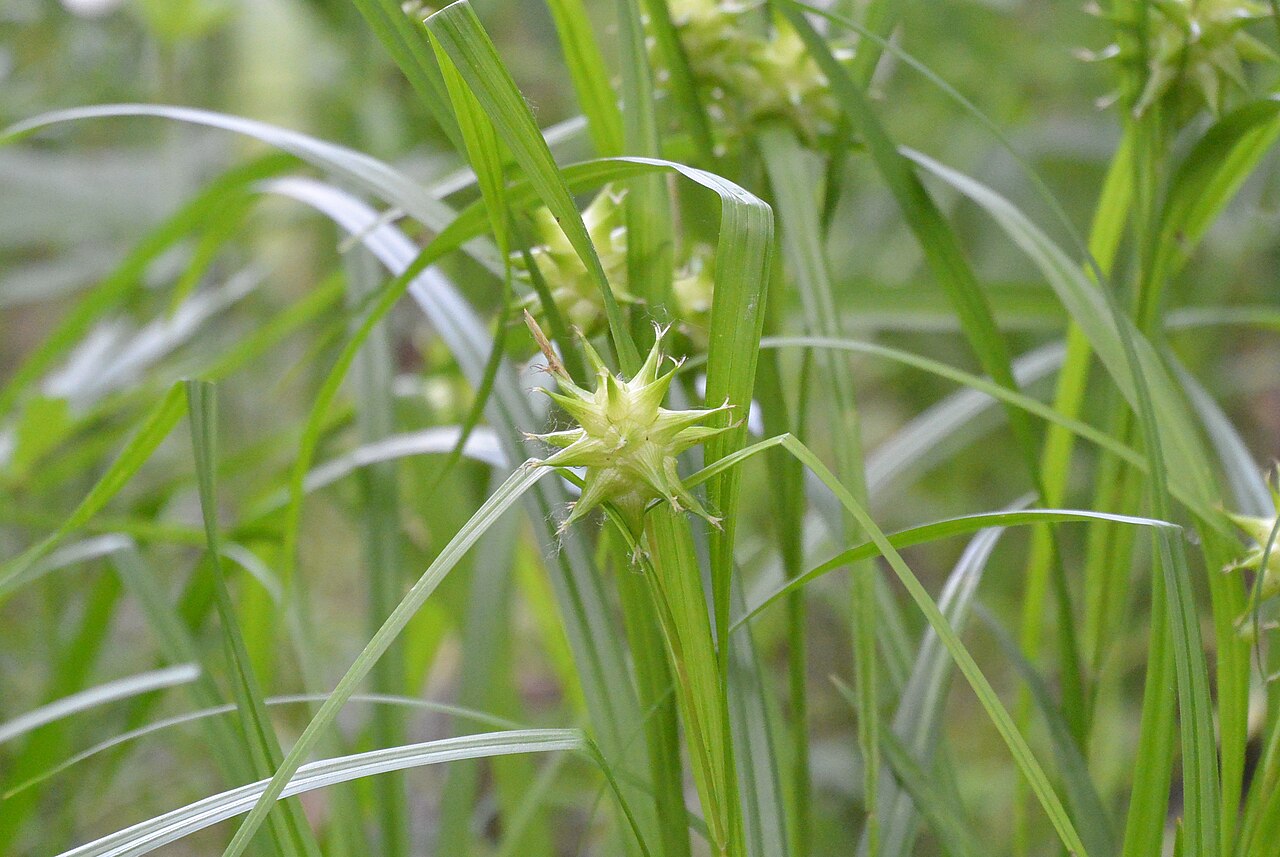
The single most important identification feature of Carex is the perigynium, a small sac that wraps each seed. Its shape gives many sedges their character: the spiky, mace-like heads of Gray’s sedge, the inflated, papery clusters of hop sedge and bladder sedge, the bristly fox-tail heads of fox sedge, and the drooping, caterpillar-like spikes of long hair sedge. Botanists usually need mature perigynia, and often a hand lens, to tell close species apart.
Quick Facts
| Scientific Name | Carex (genus) |
| Family | Cyperaceae (Sedge) |
| U.S. Native Species | More than 400; native in all 50 states |
| Plant Type | Grass-like perennials, clumping or spreading by rhizomes |
| Mature Height | 4 in (Texas sedge) to 3–4 ft (lake sedge, long hair sedge) |
| Mature Spread | 6 in – 2 ft clumps; rhizomatous species form colonies |
| Growth Rate | Slow to moderate |
| Sun Exposure | Full Sun to Full Shade, depending on species |
| Water Needs | Dry (Pennsylvania sedge) to permanently wet (tussock, lake sedge) |
| Soil Type | Nearly all soil types; match the species to its habitat |
| Soil pH | Acidic to alkaline (about 4.5–8.0) |
| Bloom Time | Early spring – early summer for most species |
| Flower Color | Inconspicuous; green, brown, cream or yellow stamens |
| Fall Color | Mostly evergreen or semi-evergreen; some turn tan or golden |
| Fruit | Small seed (achene) enclosed in a sac called a perigynium |
| Deer Resistant | Moderately; deer and rabbits graze some species |
| USDA Hardiness Zones | 2–11 across the genus |
Native Range
Native sedges grow in every U.S. state. They are especially diverse in the Northeast, the Great Lakes and Upper Midwest, the Appalachians and the Rocky Mountains, where cool, moist habitats support dozens of species in a single county. Wetlands are sedge strongholds: tussock sedge, lake sedge and many others form sedge meadows from New England to the Dakotas, and slough sedge lines marshes on the Pacific Coast.
Sedges are also important in drier habitats. Pennsylvania sedge carpets the floors of oak woods across the eastern half of the country, threadleaf and needleleaf sedges grow in western grasslands and sagebrush, and foothill sedge and San Diego sedge grow in California oak woodlands and canyons. Alaska has well over a hundred native sedges, many in the tundra. Hawaii has a small number of native Carex, mostly in its mountain forests and bogs.
In Illinois, more than 100 native Carex species have been recorded, from prairies and savannas to floodplain forests and fens. That makes the state a good place to replace turf, liriope and pachysandra with native sedges suited to every light and moisture condition.
📋 Regional plant lists (native sedges grow in every region): Illinois, Iowa & Missouri · Ohio & Indiana · Michigan, Wisconsin & Eastern Minnesota · Dakotas & Western Minnesota · Nebraska, Kansas & Eastern Colorado · Kentucky & Tennessee · New York, Pennsylvania & North Jersey · Southern New England · Northern New England · Delaware, South Jersey & Long Island · Maryland, Virginia & West Virginia · North & South Carolina · Georgia, Alabama & Mississippi · Arkansas, Louisiana, Eastern Oklahoma & East Texas · South & West Texas · Arizona & New Mexico · Utah & Western Colorado · Montana & Wyoming · Idaho & Eastern Oregon/Washington · Western Oregon & Washington · California & Nevada · Alaska · Hawaii
Native Species
With hundreds of native species, no list can be complete. These 15 are among the most useful in gardens and restorations, chosen to cover dry shade, moist woods, wet ground and the West. Every species with a full Plant Native profile is linked here or in the list that follows.
Pennsylvania Sedge (Carex pensylvanica)
The best-known native sedge for gardens: a soft, fine-textured, 6–10 in groundcover that spreads slowly by rhizomes under oaks and other trees. Native across the eastern U.S. and west to the Dakotas. It thrives in dry shade where grass fails and can be left unmowed or trimmed a couple of times a year as a “no-mow lawn.”
Eastern Woodland Sedge (Carex blanda)
A tough, clumping, light green sedge, 6–18 in, native east of the Rockies. It tolerates sun or shade, clay, compaction and occasional foot traffic, and it self-seeds gently into bare spots. One of the easiest sedges for beginners in Illinois and the Midwest.
Eastern Star Sedge (Carex radiata)
A fine, arching, bright green clump, about 1 ft, of moist to dry eastern woods, with tiny star-shaped seed clusters. Useful as a shade filler between ferns and spring wildflowers.
Longbeak Sedge (Carex sprengelii)
A clumping sedge of woodland edges and slopes in the northern U.S., 1–2 ft, with drooping seed spikes in late spring. Tolerant of dry shade and a good companion for Pennsylvania sedge.
Seersucker Sedge (Carex plantaginea)
A bold woodland sedge with broad, evergreen, puckered leaves up to an inch wide, 6–12 in tall, and dark purple-black flower spikes in early spring. Native to rich, moist deciduous woods of the Northeast, Great Lakes and Appalachians. Superb with ferns and spring ephemerals.
Eastern Narrowleaf Sedge (Carex amphibola)
An evergreen, clumping sedge, about 1–2 ft, of moist eastern and southern woods and floodplains. Adaptable to clay and partial sun; good for shady rain-garden edges.
Palm Sedge (Carex muskingumensis)
Named for the Muskingum River in Ohio, this 2–3 ft sedge has leaves arranged in tiers along the stems, like little palm trees. Native to floodplain forests and wet meadows of the Midwest. It spreads into a dense, weed-suppressing mass and handles both wet soil and average garden beds in part shade.
Gray’s Sedge (Carex grayi)
A 2–3 ft clump of bright green leaves topped by spiky, mace-like seed heads that are excellent in dried arrangements. Native to moist woods and floodplains of the eastern and central U.S. Grows in sun or shade with steady moisture.
Hop Sedge (Carex lupulina)
A wetland sedge, 2–3 ft, with large, inflated seed sacs clustered like hops. Native to swamps, wet woods and pond edges across the East. Good for rain gardens, swales and shoreline plantings.
Long Hair Sedge (Carex crinita)
Also called fringed sedge, a large, fountain-like clump, 2–4 ft, with long, drooping, caterpillar-like seed spikes. Native to swamps and wet woods of the East. A handsome specimen for wet shade.
Tussock Sedge (Carex stricta)
The dominant plant of sedge meadows in the Northeast and Midwest, 2–3 ft, forming raised tussocks that stand above standing water. Essential for wetland restoration and wet, sunny sites.
Fox Sedge (Carex vulpinoidea)
A widespread, adaptable clump-former, 1–3 ft, with bristly, foxtail-like seed heads. Native to nearly every state. It establishes quickly from seed in wet meadows, ditches, swales and rain gardens.
Texas Sedge (Carex texensis)
A tiny, fine-textured sedge, often only 4–6 in, of lawns, roadsides and open woods in the south-central U.S. It is increasingly used as a low-water lawn alternative in Texas and the South.
Slough Sedge (Carex obnupta)
A tall, glossy, evergreen sedge, 2–5 ft, that forms large colonies in marshes, wet meadows and stream banks along the Pacific Coast from California to Washington and British Columbia. Excellent for bank stabilization and bioswales in the Pacific Northwest.
Field Sedge (Carex praegracilis)
Also called clustered field sedge, a western native, 6–18 in, that spreads by rhizomes in moist meadows and alkaline flats. In California it is a popular low-water lawn substitute that tolerates foot traffic and mowing.
More native sedge profiles: Awl-fruited Sedge (Carex stipata) · Sallow Sedge (Carex lurida) · Lake Sedge (Carex lacustris) · Creeping Sedge (Carex laxiculmis) · Bladder Sedge (Carex intumescens) · Bristly Sedge (Carex comosa) · Swan’s Sedge (Carex swanii) · Cherokee Sedge (Carex cherokeensis) · Bigleaf Sedge (Carex amplifolia) · Santa Barbara Sedge (Carex barbarae) · California Meadow Sedge (Carex pansa) · Torrent Sedge (Carex nudata) · Two-Tooth Sedge (Carex serratodens) · Foothill Sedge (Carex tumulicola) · San Diego Sedge (Carex spissa)
Non-Native Look-Alikes
Many of the sedges sold in garden centers come from Japan or New Zealand. They are attractive and generally well behaved, but they offer less to native insects and wildlife than native species, and one Asian sedge is invasive on Atlantic beaches.
Japanese sedge (Carex morrowii), including cultivars such as ‘Ice Dance’ and ‘Variegata’, is a stiff, glossy, evergreen clump with white or cream leaf edges. Oshima sedge (Carex oshimensis), best known as ‘Evergold’, has narrow, arching, creamy-yellow striped leaves and is widely used in containers and shade borders. Both come from Japan. Native alternatives for shade include seersucker sedge, eastern narrowleaf sedge and Pennsylvania sedge.
Leatherleaf sedge (Carex buchananii) and orange sedge (Carex testacea) are New Zealand species grown for their unusual coppery-brown or orange-bronze foliage. They are often mistaken for dead grass by visitors. They are hardy only to about zone 6 or 7 and are not native anywhere in North America.
Asiatic sand sedge (Carex kobomugi), from East Asia, is invasive on coastal dunes from New Jersey to North Carolina, where it forms dense mats that crowd out American beachgrass and native dune plants. It is not a garden sedge but shows that not every Carex is harmless.
Two other groups are often confused with sedges in yards. Liriope and mondo grass (Liriope and Ophiopogon), common Asian groundcovers, are not sedges at all but members of the asparagus family; liriope has become invasive in some southeastern woodlands. Nutsedges (Cyperus), the lawn weeds with triangular stems and tuber-like “nutlets,” are in the same family but a different genus; purple nutsedge is introduced, while yellow nutsedge is native but weedy.
Growing & Care Guide
The secret to growing sedges is to match the species to the site. A sedge from a dry oak woods will drown in a rain garden, and a marsh sedge will sulk in dry shade.
Light
Sedges cover the full range of light. Shade and part shade: Pennsylvania, eastern woodland, eastern star, longbeak, seersucker, eastern narrowleaf, palm and long hair sedges. Sun to part sun: fox, tussock, field, Texas and slough sedges. Gray’s sedge and hop sedge handle either, given moisture.
Soil & Water
For dry shade under oaks and maples, use Pennsylvania sedge, eastern woodland sedge or longbeak sedge; water them through their first summer, then leave them alone. For average garden soil, palm, Gray’s, eastern star and seersucker sedges do well with occasional watering. For wet soil, rain gardens, swales and pond edges, choose fox, tussock, hop, long hair, lake or slough sedge. Most sedges tolerate clay, and none need fertilizer.
Planting Tips
Plant plugs or small pots in spring or early fall. For a groundcover, space Pennsylvania and other small sedges 8 to 12 inches apart; they will knit together in two or three seasons. Space larger clumping species 18 to 24 inches apart. Mulch lightly with shredded leaves between plugs to hold moisture and suppress weeds until the sedges fill in.
Pruning & Maintenance
Most native sedges need little care. Comb or trim out old, tattered leaves in early spring before new growth starts; evergreen species can simply be tidied. Pennsylvania sedge and Texas sedge can be mowed high (4 inches or more) once or twice a year if you want a lawn-like look. Keep weeds out during establishment; once sedges close their canopy they suppress most weeds on their own.
Propagation
Clumping sedges divide easily in spring or early fall. Rhizomatous species can be propagated from sections of rhizome. Many wetland sedges grow readily from seed sown in fall or after cold, moist stratification. Pennsylvania sedge rarely produces viable seed in gardens and is best propagated by division.
Landscape Uses
- Dry shade groundcover under trees with Pennsylvania sedge and eastern woodland sedge
- No-mow or low-mow lawn alternatives with Pennsylvania, Texas and field sedges
- Rain gardens, bioswales and pond edges with fox, tussock, hop and slough sedges
- Woodland gardens with ferns, wild ginger and spring wildflowers
- Replacing liriope, pachysandra and Asian sedges in borders and foundation plantings
- Erosion control on stream banks and shaded slopes
Wildlife & Ecological Value
Sedges are quiet workhorses for wildlife, especially in wetlands and woodlands.
For Pollinators
Sedges are wind-pollinated, but they are important caterpillar host plants. The eyed brown and Appalachian brown butterflies of eastern wetlands feed on sedges, as do several skippers, including the dun skipper, broad-winged skipper and mulberry wing. Dense sedge clumps also shelter overwintering insects. Early-spring pollen from woodland sedges is gathered by some bees.
For Birds
Sedge seeds are eaten by ducks, rails, sparrows, juncos, wild turkeys and ruffed grouse. Sedge meadows provide nesting habitat for sedge wrens, swamp sparrows, rails and bitterns, and many birds use sedge leaves as nesting material.
For Mammals
Deer, elk, moose and muskrats graze sedges, particularly the tender spring growth of wetland species. In mountain meadows and tundra, sedges are major forage for elk, caribou and mountain goats. Small mammals shelter in tussocks and dense clumps.
Ecosystem Role
Sedges build and hold wetland soils. Tussock sedge and lake sedge form the structure of sedge meadows; slough sedge and other rhizomatous species bind stream banks; and many sedges filter sediment and nutrients from runoff. In northern and mountain peatlands, sedge roots and leaves are a major part of the peat itself.
Cultural & Historical Uses
Sedges have a long history of human use. In California, the rhizomes of Santa Barbara sedge and related species are a primary basketry material for Pomo, Miwok and other tribes, who tend sedge beds by digging and thinning them to produce long, straight runners. Those fine baskets are among the most celebrated in the world.
Elsewhere, sedge leaves were used for weaving mats, stuffing boots for insulation in the Arctic, and thatching. In the northern prairies and sedge meadows, settlers cut “marsh hay” from tussock sedge and other wetland sedges for livestock bedding and winter fodder.
Today native sedges are at the center of a quiet revolution in landscaping. As gardeners look for alternatives to thirsty lawns and Asian groundcovers, nurseries across the country have begun to grow Pennsylvania sedge, Texas sedge, field sedge and dozens of others, and botanic gardens and native plant societies have trialed them as no-mow lawns and shade groundcovers.
Frequently Asked Questions
What is the best native sedge for ground cover in Illinois?
For dry shade under trees, Pennsylvania sedge is the classic choice, with eastern woodland sedge and longbeak sedge as tougher, clumping companions. For moist or wet areas, palm sedge, Gray’s sedge and fox sedge are excellent. All are native to Illinois.
How do I tell a sedge from a grass?
Check the stem: most sedges have solid, triangular stems without joints, and leaves in three ranks. Grasses have round, usually hollow stems with swollen joints and leaves in two ranks. Remember “sedges have edges.”
Can sedges replace a lawn?
In the right site, yes. Pennsylvania sedge (dry shade), Texas sedge (the South) and field sedge (California and the West) make soft, low lawns that need little water and only occasional mowing. They tolerate light foot traffic but not heavy play.
Are Japanese sedges like Evergold invasive?
Japanese and New Zealand garden sedges are not considered invasive in North America, but they are not native and support less wildlife. Asiatic sand sedge, a different species, is invasive on Atlantic coastal dunes.
Are sedges deer resistant?
Moderately. Deer browse some species, particularly in spring, but they rarely destroy established plantings. Pennsylvania sedge and most woodland sedges are seldom heavily damaged.

Looking for a nursery that carries native sedges?
Browse our native plant nursery directory: Alaska, Alabama, Arkansas & Arizona · California · Colorado, Connecticut, Delaware, Florida, Georgia & Hawaii · Iowa, Idaho, Illinois, Indiana & Kansas · Kentucky, Louisiana, Massachusetts, Maryland, Maine, Michigan, Minnesota, Missouri, Mississippi & Montana · North Carolina, North Dakota, Nebraska, New Hampshire, New Jersey, New Mexico, Nevada, New York, Ohio & Oklahoma · Oregon · Pennsylvania, Rhode Island, South Carolina, South Dakota, Tennessee, Texas, Utah, Virginia & Vermont · Washington · Wisconsin, West Virginia & Wyoming

