
Native Asters (Symphyotrichum and relatives)
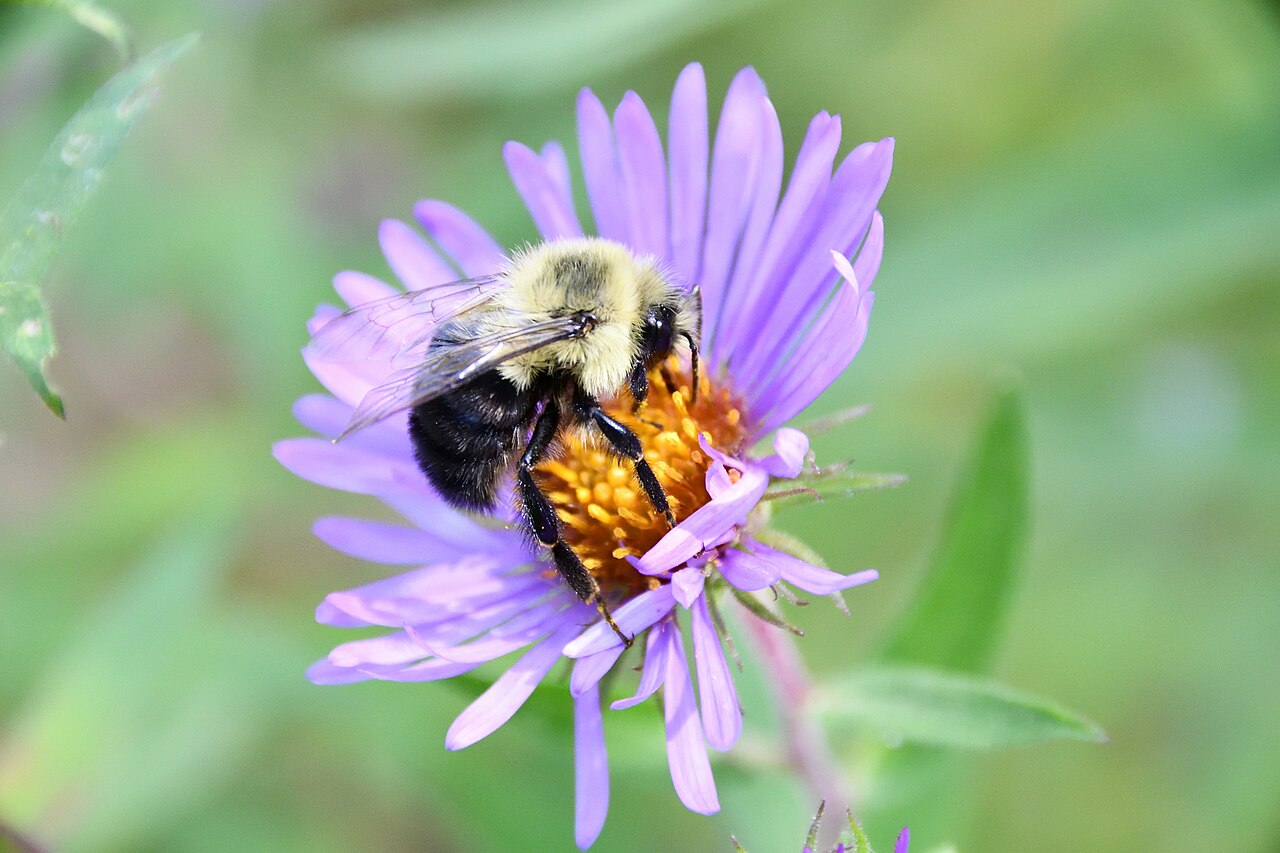
Native asters are the flowers that close the growing season. When most summer perennials are fading, asters cover meadows, roadsides, woodland edges and prairies with clouds of purple, blue, pink and white daisies, and bees, butterflies and migrating monarchs crowd onto them. Almost every part of the United States has its own native asters, from the tall, violet New England aster of eastern wet meadows to the tiny white heath aster of dry prairies and the lavender Pacific aster of the West Coast.
If you learned these plants as Aster, you are not wrong, just out of date. Botanists now place nearly all North American asters in other genera, chiefly Symphyotrichum, with others in Eurybia, Doellingeria, Ionactis, Oclemena, Sericocarpus, Ampelaster, Dieteria and Machaeranthera. The name Aster itself now belongs mostly to Eurasian species, including several popular garden asters that are not native here. This guide explains the change, introduces the most important native species in each region, and helps you tell the natives from the imported garden asters.
If you came from our South Carolina, Arizona or flower-gardening articles, the native asters for your area are described below, along with tips for keeping them upright and free of mildew.
Identification
Asters belong to the sunflower family (Asteraceae). Like a sunflower or daisy, what looks like a single flower is really a head of many tiny flowers: a central button of yellow disk florets surrounded by a ring of narrow, petal-like ray florets.
Flowers
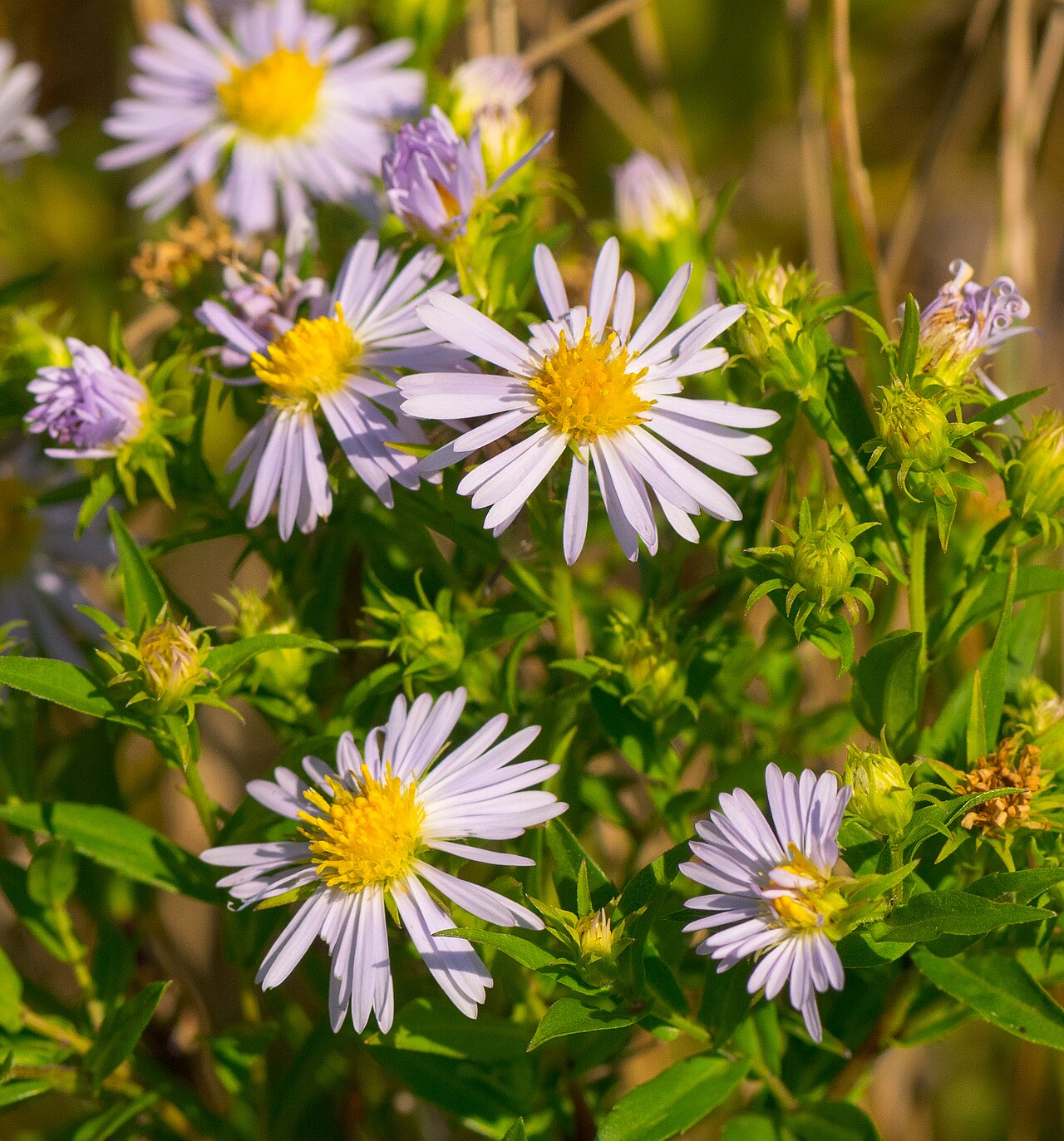
Native asters have rays in white, blue, lavender, violet, purple or pink, around a disk that is usually yellow when fresh and often turns red, purple or brown as the florets age. Heads range from about ¼ inch across in heath and calico aster to more than 1½ inches in New England, aromatic and Georgia aster. Below each head is a cup of small, overlapping green bracts (phyllaries), whose shape and hairiness help separate species. Most bloom from late summer to late fall, after the main goldenrod peak.
Leaves & Stems
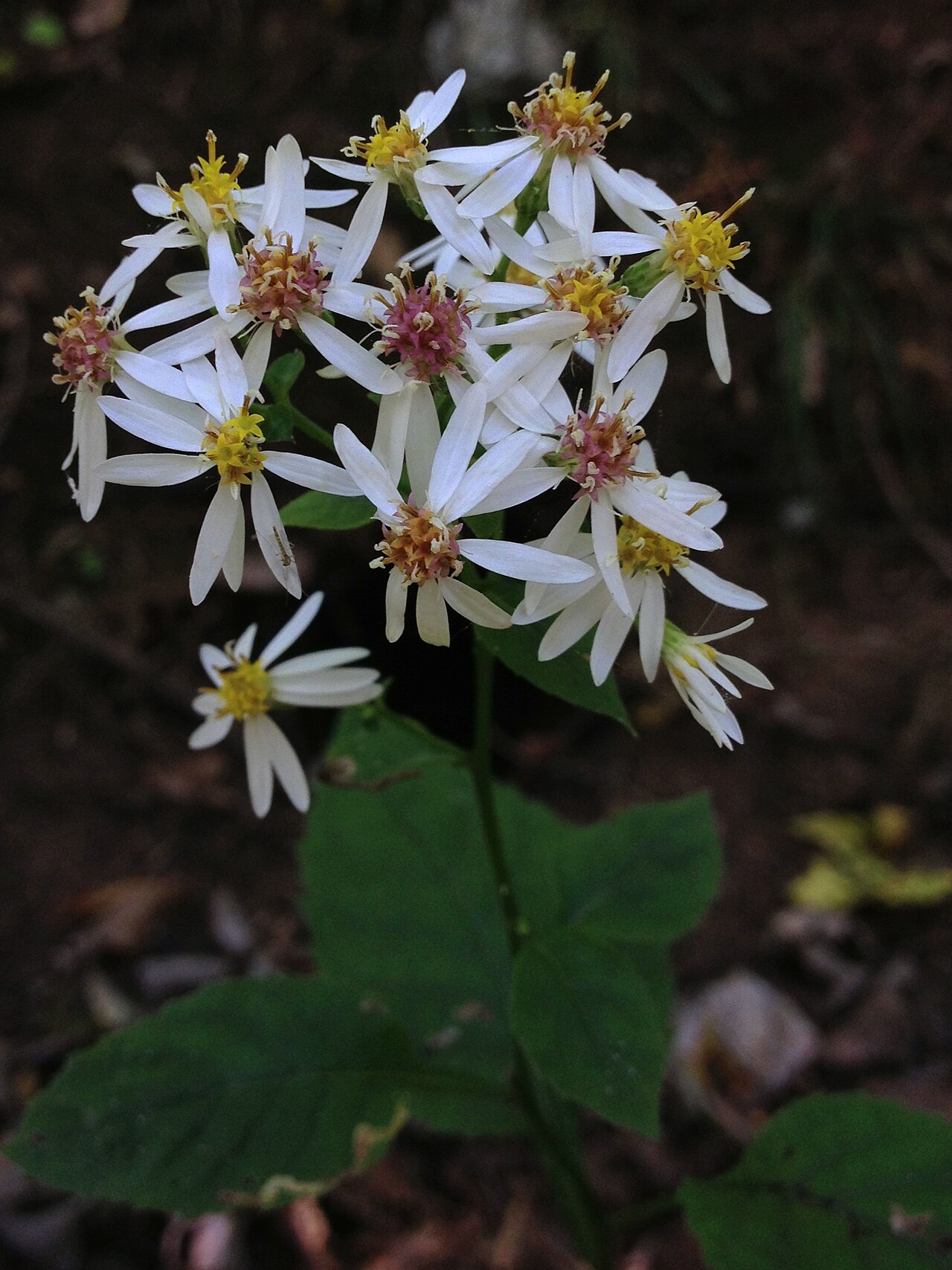
Leaves are alternate and simple, but their shape varies a great deal and is one of the best clues to species. New England, late purple and smooth blue asters have leaves that clasp the stem with earlike lobes. Heart-leaved, white wood, large-leaved and Short’s asters have heart-shaped lower leaves on long stalks. Heath and frost asters have small, narrow leaves crowded on stiff, branching stems. Many species have distinctive stems, too: hairy and sticky in New England aster, smooth and waxy blue-green in smooth blue aster, dark and zigzag in white wood aster.
Seeds
Each floret produces a small, dry seed (achene) topped with a tuft of white or tan bristles (pappus) that carries it on the wind. The fluffy seed heads remain on the plants into winter.
Telling Asters from Fleabanes
Native fleabanes (Erigeron) look similar but usually bloom in spring and early summer and have many more, very thin rays, often 50 to 150 per head. Asters typically have fewer, broader rays and bloom from late summer on.
Quick Facts
| Scientific Name | Symphyotrichum Nees (main genus), plus Eurybia, Doellingeria, Ionactis, Dieteria and other related genera |
| Family | Asteraceae (Sunflower) |
| US-Native Species | About 75 Symphyotrichum species, plus several dozen more in related genera (approximate) |
| Growth Forms | Mostly clump-forming or rhizomatous perennials; a few annuals and one southeastern vine (climbing aster) |
| Mature Height | Mostly 1–4 ft; New England and flat-top white aster can reach 6 ft |
| Sun Exposure | Mostly Full Sun; wood asters and calico aster take Part Shade to Shade |
| Water Needs | Varies by species: wet-meadow species want moist soil; prairie species are drought tolerant |
| Soil Type | Most soils, from sand to clay, depending on species |
| Bloom Time | Late summer to late fall (August to November) |
| Flower Color | White, blue, lavender, violet, purple or pink rays; yellow disks aging red or purple |
| Wildlife Value | Key late-season nectar for bees and migrating monarchs; caterpillar host for pearl crescent and many moths; seeds eaten by finches and sparrows |
| Deer Resistant | No; deer and rabbits often browse asters |
| USDA Hardiness Zones | Varies; species exist for roughly zones 2–10 |
Native Range
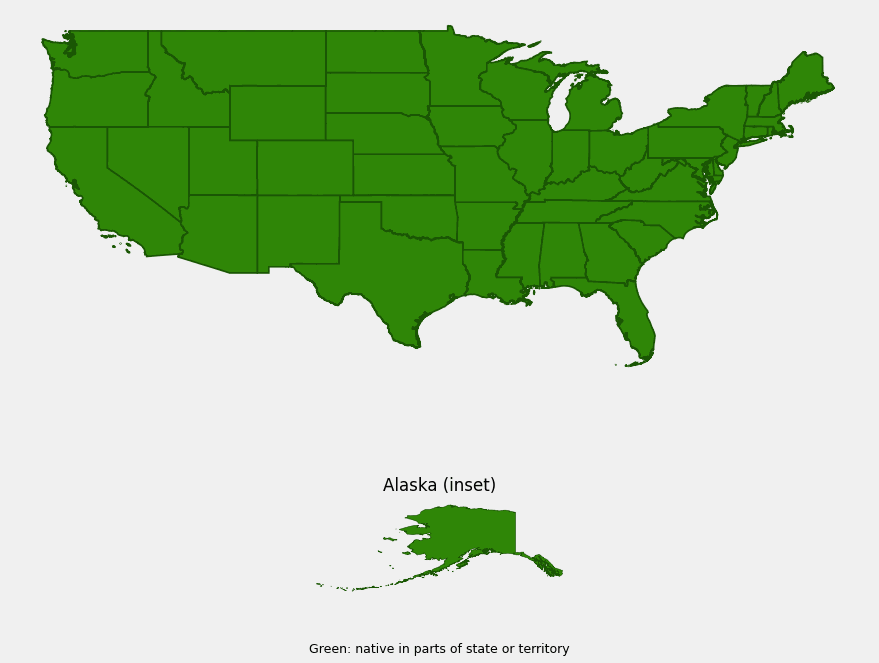
Native asters grow in all 48 contiguous states and in Alaska. The East and Midwest have the most species. Wet meadows, prairies, old fields, woodland edges and forest openings from Maine to Florida and west to the Great Plains may hold half a dozen species within walking distance. The Southeast adds coastal-plain specialists such as Georgia, Elliott’s, savannah, eastern silver and climbing asters, plus saltmarsh asters along the coast.
Farther west, asters are fewer in number but still common. Smooth blue, heath, panicled and western asters range into the Rocky Mountains, and the purple tansyasters (Dieteria and Machaeranthera) take over in the deserts and dry grasslands of the Southwest, including Arizona. On the Pacific coast, Pacific aster and Douglas aster are the common native species, and Alaska has several boreal species.
Asters are not native to Hawaii, and the European and Asian garden asters described below are not native anywhere in the US, even where they are widely planted.
📋 Regional plant lists with native asters: New Hampshire, Maine & Vermont · Connecticut, Massachusetts & Rhode Island · New York, Pennsylvania & Northern New Jersey · Delaware, Southern New Jersey & Long Island · Maryland, Virginia & West Virginia · North Carolina & South Carolina · Georgia, Alabama & Mississippi · Arkansas, Louisiana, Eastern Oklahoma & Eastern Texas · South & West Texas · Kentucky & Tennessee · Ohio & Indiana · Illinois, Iowa & Missouri · Michigan, Wisconsin & Eastern Minnesota · North Dakota, South Dakota & Western Minnesota · Nebraska, Kansas & Eastern Colorado · Montana & Wyoming · Utah & Western Colorado · Arizona & New Mexico · Idaho, Eastern Oregon & Eastern Washington · Western Oregon & Washington · California & Nevada · Alaska
Why Asters Changed Their Name
For two centuries, nearly all asters in North America and Eurasia were lumped in the single genus Aster. Starting in the 1980s and 1990s, studies of chromosomes and then DNA showed that the North American asters are more closely related to goldenrods, fleabanes and other New World daisies than to the Eurasian Aster. In 1994 the botanist Guy Nesom formally moved them into separate genera, and the Flora of North America adopted the change in 2006.
The result is that New England aster went from Aster novae-angliae to Symphyotrichum novae-angliae, white wood aster from Aster divaricatus to Eurybia divaricata, and flat-top white aster from Aster umbellatus to Doellingeria umbellata. Many nurseries and older books still use Aster, and some of our own species pages carry the older name in their titles. The common names did not change, so “aster” is still correct.
Native Species
These are the most widely grown and ecologically important native asters, from east to west. Each linked name goes to our full growing guide.
New England aster (Symphyotrichum novae-angliae) is the showiest native aster, 3 to 6 feet tall with hairy, clasping leaves and large heads of deep purple to pink rays around orange-yellow disks in September and October. It grows in moist meadows, wet prairies and roadsides across the Northeast, Midwest and upper South to the Great Plains. It is a top monarch nectar plant. Compact selections include ‘Purple Dome’.
Smooth blue aster (Symphyotrichum laeve) has smooth, waxy, blue-green leaves that clasp the stem and sky-blue to lavender heads on 2- to 4-foot stems in early fall. It grows in dry to average prairies, meadows and open woods over most of the country east of the Cascades and Sierra Nevada. It tolerates drought and resists mildew better than New England aster.
Aromatic aster (Symphyotrichum oblongifolium) forms a dense, rounded mound 1 to 3 feet tall, covered with violet-blue heads from late September into November, often the last native flower in bloom. Its small, rough leaves smell faintly balsamic when crushed. Native to dry prairies, limestone glades and bluffs from Pennsylvania west through the Midwest and Great Plains, it is one of the best asters for sunny, dry gardens. ‘Raydon’s Favorite’ and ‘October Skies’ are popular selections.
New York aster (Symphyotrichum novi-belgii) grows in moist meadows, shores and salt-marsh edges along the Atlantic coast from Newfoundland to Georgia. It has smooth, narrow leaves and blue-violet flowers on 1- to 4-foot stems. In Britain it was bred into hundreds of “Michaelmas daisy” cultivars.
Heath aster (Symphyotrichum ericoides) is a bushy prairie species with tiny, needle-like leaves and hundreds of small white heads on arching branches in fall. It thrives in dry, sandy or rocky soil from New England across the Midwest and Plains to the Rocky Mountains and the Southwest, including Arizona.
Calico aster (Symphyotrichum lateriflorum) carries small white heads along one side of horizontal branches; their disks turn from yellow to purple, giving a two-toned “calico” look. It grows in woodland edges, thickets and old fields across the eastern half of the country and takes part shade. ‘Lady in Black’ has dark purple foliage.
Heart-leaved aster (Symphyotrichum cordifolium), also called blue wood aster, has heart-shaped, toothed leaves and airy sprays of pale blue flowers. It is one of the best asters for shade, growing in open woods and woodland edges throughout the East and Midwest.
White wood aster (Eurybia divaricata) brightens dry shade with loose clusters of small white flowers on dark, zigzag stems 1 to 3 feet tall in late summer. Native to eastern deciduous forests from Maine to Georgia and west to Ohio and Alabama, it spreads into a tough groundcover under trees.
Large-leaved aster (Eurybia macrophylla) forms carpets of big, heart-shaped basal leaves in northern and Appalachian forests from Maine to Minnesota and south in the mountains to Georgia. Most plants send up few flower stalks, but those that do carry flat clusters of lavender or white heads in late summer.
Flat-top white aster (Doellingeria umbellata) grows 3 to 6 feet tall in wet meadows, swamp edges and moist thickets of the Northeast, Great Lakes and Appalachians. Its white flowers come in broad, flat-topped clusters in late summer, earlier than most asters, and attract many bees and butterflies.
Sky blue aster (Symphyotrichum oolentangiense) is a Midwestern prairie and savanna species with rough, sandpapery leaves and clear sky-blue flowers in fall. It needs sun and well-drained soil and is native from the Great Lakes and Ohio Valley west to the Plains and south to Texas.
Late purple aster (Symphyotrichum patens) grows in dry, open woods, clearings and roadsides through the East and South, including South Carolina. Its rough, heart-shaped leaves wrap around the stem, and its deep violet heads sit at the tips of wiry branches.
Georgia aster (Symphyotrichum georgianum) has the largest, deepest purple flowers of any eastern aster. It is a rare plant of dry, open woods, power-line corridors and roadsides in the Piedmont of the Carolinas, Georgia and Alabama, where fire once kept the woods open. It was a candidate for federal listing until conservation agreements with landowners and utilities protected key sites. Buy only nursery-propagated plants.
Pacific aster (Symphyotrichum chilense) is the common native aster of the West Coast, from British Columbia to California, in coastal prairies, bluffs and open grassland. It has lavender to pale violet flowers from summer into fall and spreads by rhizomes.
Hoary tansyaster (Dieteria canescens) is a gray-hairy, short-lived perennial or biennial of dry plains, deserts and mountains across the West, with violet rays around yellow disks from summer to fall. In Arizona and the Southwest it is one of the “purple asters” pollinator gardeners mean, along with the annual Tahoka daisy (Machaeranthera tanacetifolia) and Bigelow’s tansyaster (Machaeranthera bigelovii). In the Mojave and Sonoran deserts, the shrubby Mojave woodyaster (Xylorhiza tortifolia) fills the same role in spring.
More aster profiles: Smooth Aster (Aster laevis, same species as smooth blue aster) · Douglas Aster (S. subspicatum) · Arrow-leaved Aster (S. urophyllum) · Frost Aster (S. pilosum) · Purplestem Aster (S. puniceum) · Short’s Aster (S. shortii) · Silky Aster (S. sericeum) · Rice Button Aster (S. dumosum) · Panicled Aster (S. lanceolatum) · Drummond’s Aster (S. drummondii) · Elliott’s Aster (S. elliottii) · Savannah Aster (S. chapmanii) · Eastern Silver Aster (S. concolor) · Southern Annual Saltmarsh Aster (S. divaricatum) · Climbing Aster (Ampelaster carolinianus)
Non-Native Look-Alikes
Several asters sold at garden centers are European or Asian. None of them is a major invasive species in the US, but they offer less to native insects than our own asters, and one spreads aggressively.
- Alpine aster (Aster alpinus): A low European mountain plant, 6 to 12 inches tall, with single, large violet, pink or white heads in late spring and early summer, much earlier than native asters. Garden plants are European, though a small native variety of the species grows wild in Alaska and parts of the northern Rockies.
- Italian aster (Aster amellus): A European species with rough, gray-green leaves and large violet-blue heads in late summer, sold in many named cultivars.
- Frikart’s aster (Aster × frikartii): A garden hybrid of Italian aster and a Himalayan aster, best known as ‘Mönch’ and ‘Wonder of Staffa’. It has lavender-blue flowers over a long summer-to-fall season.
- Tatarian aster (Aster tataricus): A tall Asian aster, 4 to 7 feet, with big paddle-shaped basal leaves and pale blue-lavender flowers very late in fall. It spreads by rhizomes into large patches and is best avoided where you want a native planting.
- China aster (Callistephus chinensis): An annual from China in a different genus, sold as bedding plants and cut flowers with double, pompon or spider-shaped blooms in many colors. It is planted fresh each year and does not persist.
Two native plants share the name without being true asters: Stokes’ aster (Stokesia laevis), a southeastern wildflower with large, fringed blue flowers in summer, and the white-topped asters (Sericocarpus) of eastern dry woods. Both are good native choices in their own right.
Growing & Care Guide
Light
Most asters bloom best in full sun, at least six hours a day. In too much shade, sun-loving species such as New England, smooth blue and aromatic aster flop and flower poorly. For shade, choose the woodland species: white wood, heart-leaved, large-leaved, calico and Short’s aster.
Soil & Water
Match the species to your site. New England, New York, flat-top white, purplestem and swamp-edge asters like moist, even wet, soil. Aromatic, smooth blue, heath, sky blue and silky aster prefer well-drained, dry to average soil and become floppy and short-lived in rich, wet beds. Once established, prairie asters need no watering except in severe drought, and western tansyasters need very little water at all.
Planting Tips
Plant in spring or early fall. Space larger species 2 to 3 feet apart for good air circulation, which reduces powdery mildew. Place tall asters toward the back of a border, because their lower leaves often yellow and drop by bloom time; shorter plants in front hide those “bare knees.”
Pruning & Maintenance
To keep tall asters such as New England aster compact and less likely to flop, cut the stems back by about a third to a half in late spring or early summer, finishing by early July. They will branch and bloom a little later on shorter stems. Powdery mildew is common on New England and New York asters in late summer; it looks unsightly but rarely harms the plant. Good sun and spacing help, and resistant species include aromatic and smooth blue aster. Leave the seed heads standing over winter for birds, and cut stems back in spring. Divide crowded clumps every three to four years in spring.
Propagation
Asters grow easily from fresh seed sown outdoors in fall or after about 30 to 60 days of cold, moist stratification. Most species can also be divided in spring, and many root readily from spring stem cuttings. Several species self-sow, so deadhead if you want to limit seedlings.
Landscape Uses
- Pollinator gardens, paired with late goldenrods such as showy goldenrod and stiff goldenrod for a fall show
- Prairie and meadow plantings with little bluestem and black-eyed Susan
- Rain gardens and wet meadows with New England, purplestem or flat-top white aster and sweet Joe-Pye weed
- Woodland gardens with white wood and heart-leaved aster and wreath goldenrod
- Dry, sunny borders and rock gardens with aromatic, heath or silky aster
- Desert and xeriscape gardens in the Southwest with tansyasters and Mojave woodyaster
Wildlife & Ecological Value
For Pollinators
Asters are among the most important fall nectar and pollen plants in North America. Bumblebees, honeybees, sweat bees, mining bees and many other native bees visit them, including several specialist bees that collect pollen mainly from asters. Migrating monarchs, painted ladies, sulphurs and skippers depend on aster nectar to fuel their fall flights.
For Butterflies & Moths
Native asters are caterpillar host plants for the pearl crescent butterfly and, in parts of the East and Midwest, the silvery checkerspot, along with well over a hundred species of moths. That makes them one of the most valuable perennials for supporting the insects that songbirds feed their young.
For Birds
Goldfinches, juncos, chickadees and native sparrows eat aster seeds in fall and winter, especially when the seed heads are left standing. The dense stems also give cover to ground-feeding birds.
Ecosystem Role
Asters bridge the gap between the end of summer bloom and the first hard frost, when few other flowers are available. In prairies, meadows and woodland openings, they are a dominant part of the late-season plant community.
Cultural & Historical Uses
The word aster comes from the Greek for “star,” after the starry flower heads. In England, New York aster and New England aster became so popular in the 1800s and early 1900s that they were bred into hundreds of “Michaelmas daisies,” named because they bloom around the feast of St. Michael on September 29. Many of the asters in European gardens today descend from these two North American species.
Several Native American peoples used native asters, for example burning or smoking certain species in ceremonies, and some used the young leaves of large-leaved aster as a cooked green. These are historical uses, not recommendations.
The botanical renaming of North American asters since the 1990s is one of the best-known examples of how DNA studies have changed plant names. Even now, many seed catalogs list the same plant under both Aster and Symphyotrichum.
Frequently Asked Questions
Are asters native to the United States?
Yes. Roughly 75 native species of Symphyotrichum, plus many more in related genera, grow wild in the US, in every state except Hawaii. Most asters sold as alpine, Italian, Frikart’s or China asters, though, are European or Asian.
Why are asters now called Symphyotrichum?
DNA studies showed that North American asters are not closely related to the Eurasian Aster, so botanists moved them into their own genera, mainly Symphyotrichum, Eurybia and Doellingeria. The common names stayed the same.
Which asters are native to South Carolina?
Good choices include late purple, Georgia, Elliott’s, eastern silver, calico, frost and rice button aster, plus climbing aster and saltmarsh asters near the coast. New England aster grows wild only in the mountains of the western Carolinas.
Which asters are native to Arizona?
In Arizona, look for hoary tansyaster, Tahoka daisy, Bigelow’s tansyaster and heath aster in dry sites, panicled aster along streams, and Mojave woodyaster in the desert. They are visited by many native bees and butterflies.
How do I keep asters from getting powdery mildew?
Give them full sun and good air circulation, avoid overhead watering in the evening, and choose resistant species such as aromatic or smooth blue aster. Mildew on New England aster is cosmetic and doesn’t kill the plant.

Looking for a nursery that carries Native Asters?
Browse our native plant nursery directory: Alabama, Alaska, Arizona & Arkansas · California · Colorado, Connecticut, Delaware, Florida & Georgia · Idaho, Illinois, Indiana, Iowa & Kansas · Kentucky, Louisiana, Maine, Maryland, Massachusetts, Michigan, Minnesota, Mississippi, Missouri & Montana · Nebraska, Nevada, New Hampshire, New Jersey, New Mexico, New York, North Carolina, North Dakota, Ohio & Oklahoma · Oregon · Pennsylvania, Rhode Island, South Carolina, South Dakota, Tennessee, Texas, Utah, Vermont & Virginia · Washington · West Virginia, Wisconsin & Wyoming

