
Native Oaks (Quercus)
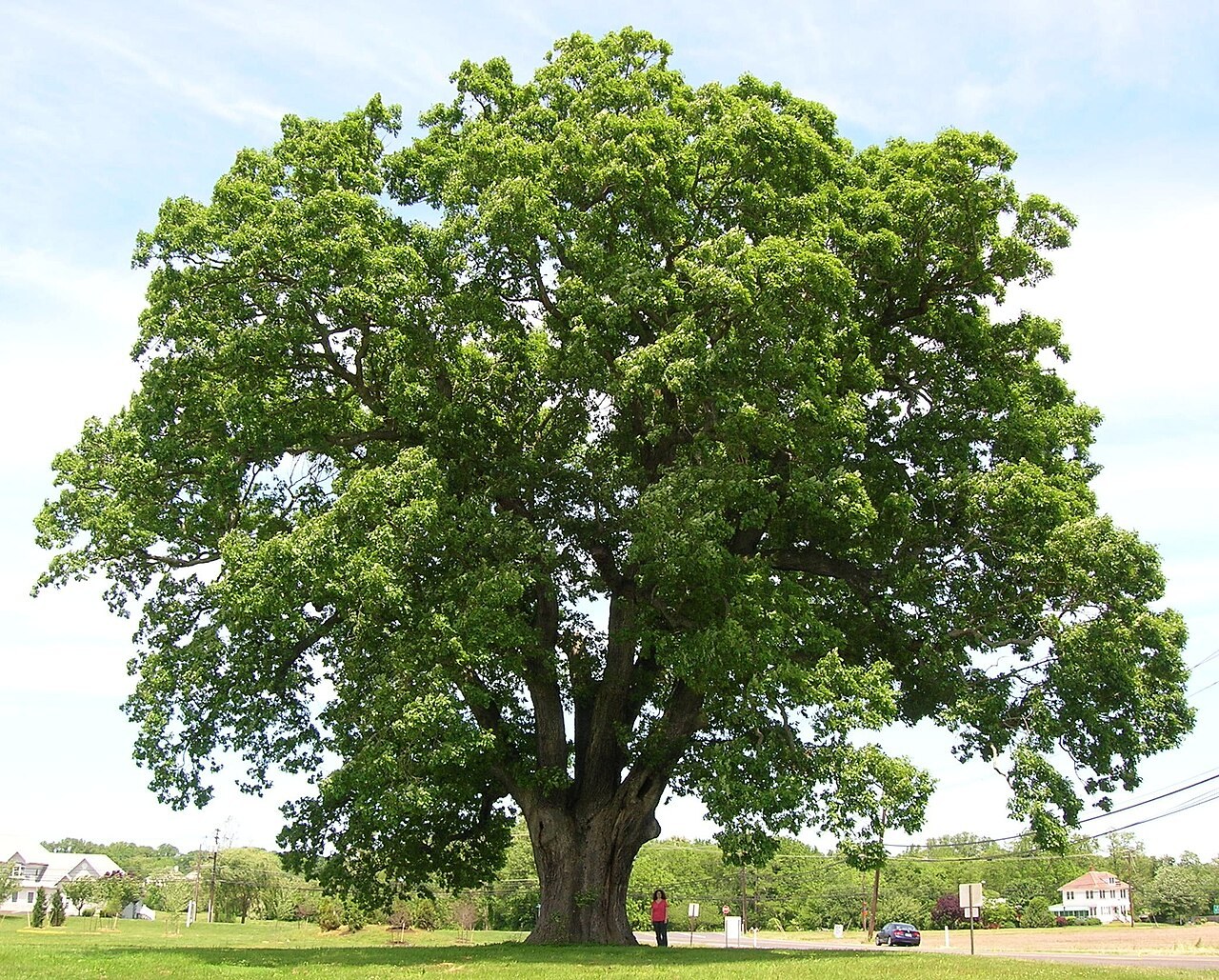
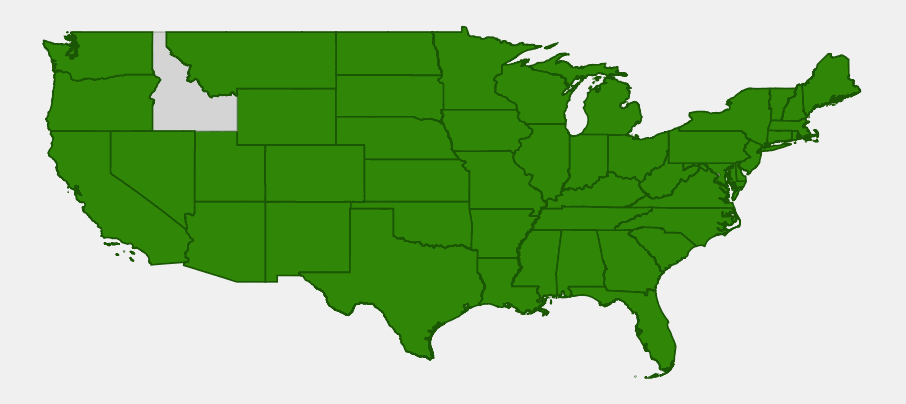
Oaks (genus Quercus) are the backbone of American forests. About 90 species grow wild in the United States, and at least one oak is native to every state in the lower 48 except Idaho. They range from 100-foot white oaks and spreading southern live oaks to knee-high running oak in Florida sandhills and evergreen scrub oaks in California chaparral. Every one of them produces acorns.
Many of our tree articles simply say “oak,” because several kinds grow wild in most regions. This guide explains how to recognize an oak, how botanists split native oaks into the white oak and red oak groups (plus a smaller group of western “golden cup” oaks), and which species grow where. It features the most widely planted and ecologically important natives and links every oak profile on Plant Native, so you can choose the right oak for your region and soil.
Oaks are worth the effort. No other group of North American trees supports as many kinds of insects, and their acorns feed deer, turkeys, jays, woodpeckers, squirrels, bears and wood ducks. A single mature oak in a yard can do more for local wildlife than a whole bed of ornamental shrubs. The one caution: oak leaves and green acorns are high in tannins and can poison cattle, horses and dogs that eat large amounts.
Identification
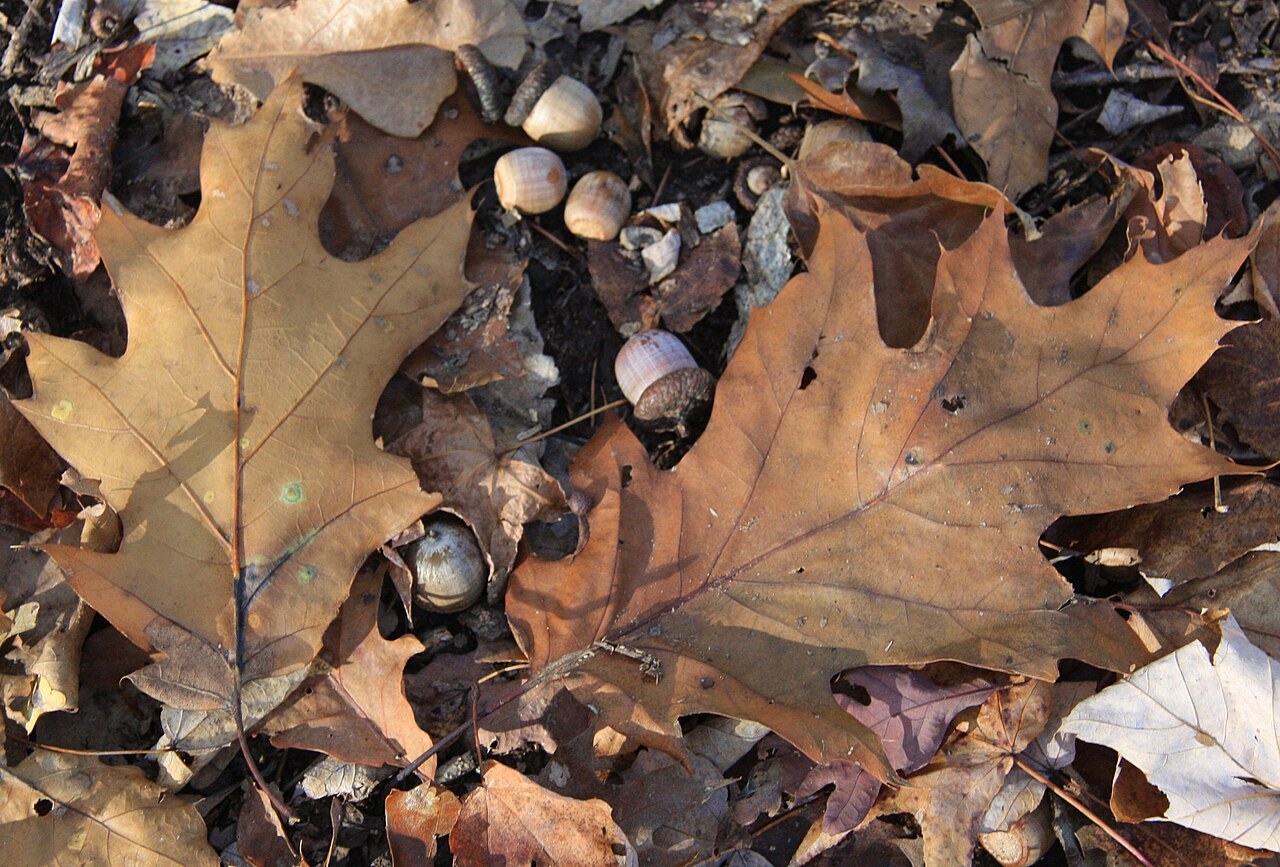
All oaks bear acorns, a nut seated in a scaly or bumpy cup. That is the surest way to know you have an oak. Leaves are alternate (one per node), usually clustered toward the branch tips, and range from deeply lobed to toothed to completely smooth-edged. Buds are clustered at the twig tip, a useful winter clue.
White Oak Group
The white oak group (section Quercus) includes white oak, bur oak, swamp white oak, post oak, chestnut oak, overcup oak, chinkapin oak and the evergreen southern live oak. Their leaf lobes or teeth are rounded, with no bristle tips. Their acorns mature in a single season, are relatively low in tannin and sweet, and often sprout soon after they fall in autumn. The inside of the acorn shell is hairless. White oak wood has its pores plugged by growths called tyloses, which makes it watertight; that is why it is used for whiskey and wine barrels. Bark is often pale gray and scaly or blocky.
Red Oak Group
The red oak group (section Lobatae, also called black oaks) includes northern red oak, black oak, scarlet oak, pin oak, Shumard oak, southern red oak (Q. falcata), willow oak and water oak. Their leaf lobes or tips end in sharp bristles, even on unlobed leaves like willow oak. Most take two growing seasons to mature their acorns, so you can find tiny first-year acorns on twigs alongside full-sized ones. The acorns are bitter, high in tannin, sprout the following spring, and the inside of the shell is woolly. Bark is usually darker and often has smooth, shiny vertical stripes between ridges on younger trunks. Many red oaks turn red to scarlet in fall.
Intermediate (Golden Cup) Oaks
A small western group (section Protobalanus) has features of both: acorns that take two years to mature but sweeter kernels, and cups covered in golden, fuzzy scales. It includes canyon live oak, island oak, Palmer oak and huckleberry oak.
Flowers & Acorns
Oaks are wind-pollinated. In spring they hang out long, yellow-green male catkins as the leaves unfold, which shed large amounts of pollen; the tiny female flowers sit at the leaf bases. Acorn size and cup shape are some of the best ID features: bur oak has a huge acorn with a fringed, mossy cup; overcup oak’s cup almost encloses the nut; willow and water oaks have tiny round acorns under half an inch long.
Quick Facts
| Genus | Quercus |
| Family | Fagaceae (Beech) |
| U.S. Native Species | About 90, plus many natural hybrids |
| Growth Forms | Large deciduous and evergreen trees, small trees and shrubs |
| Mature Height | Under 3 ft (running oak) to over 100 ft (white, red and bur oaks) |
| Sun Exposure | Full Sun to Part Shade; young trees tolerate some shade |
| Water Needs | Varies: swamp species need wet soils, many western oaks are very drought tolerant |
| Soil Type | Most soils; many eastern oaks prefer acidic soil, bur and chinkapin oaks tolerate alkaline |
| Bloom Time | Early to late spring (wind-pollinated catkins) |
| Flower Color | Yellow-green catkins; not showy |
| Fall Color | Red to scarlet (many red oaks); brown to purplish (many white oaks); evergreen live oaks |
| Fruit | Acorns, maturing in 1 season (white oaks) or 2 seasons (most red oaks) |
| Toxicity | Leaves and green acorns can poison cattle, horses and dogs in quantity |
| Wildlife Value | Outstanding: hosts hundreds of caterpillar species; acorns feed dozens of birds and mammals |
| Deer Resistant | No; seedlings and saplings are heavily browsed |
| USDA Hardiness Zones | About 3–10, depending on species |
Native Range
Oaks are native across nearly all of the lower 48 states. The greatest variety is in the Southeast and Texas, which has more native oak species than any other state, and in the mountains of Arizona, New Mexico and west Texas, where Mexican oak species reach their northern limits. In the North and on the Great Plains, choices narrow to a handful of tough species such as bur oak, northern red oak, white oak and northern pin oak. Bur oak is the oak of the Dakotas and reaches into southeastern Montana and northeastern Wyoming.
In the West, Gambel oak forms thickets across the southern Rockies and the mountains of Utah, Colorado, Arizona and New Mexico. Oregon white oak is the only native oak of Washington and most of Oregon, growing from the Puget Sound lowlands and Willamette Valley through the Columbia River Gorge and down into California. California has the richest oak flora in the West, roughly 20 species, from valley oak and blue oak to the scrub oaks of the chaparral. Idaho has no native oaks, and none are native to Alaska or Hawaii.
Because oaks hybridize readily, especially within the same group, many local populations include intermediate trees that do not fit field-guide descriptions. Some names on our list, such as wavyleaf oak, describe hybrid swarms rather than tidy species. Where you garden, the best oak is almost always one of the species that grows wild in your county.
📋 Regional plant lists featuring native oaks: NH, ME, VT · CT, MA, RI · NY, PA, NJ north · DE, NJ south, NY Long Island · MD, VA, WV · NC, SC · GA, AL, MS · AR, LA, OK east, TX east · KY, TN · OH, IN · IL, IA, MO · MI, WI, MN east · ND, SD, MN west · NE, KS, CO east · UT, CO west · MT, WY · ID, OR east, WA east · OR west, WA west · AZ, NM · CA, NV · TX south/west/central
Native Species
These are some of the most widely grown and ecologically important native oaks. Each links to its full profile, with range and care details.
White Oak (Quercus alba)
The classic eastern oak, native from Maine and Minnesota to Florida and Texas. It grows 60 to 100 feet with a broad crown, pale gray scaly bark and leaves with 5 to 9 rounded lobes that turn wine-red to brown in fall. It is slow but extremely long-lived and is often cited as the single best tree for wildlife in the East.
Bur Oak (Quercus macrocarpa)
The toughest oak for the Midwest and Plains, native from the East to the Dakotas, Montana and Wyoming. Thick, corky bark lets it survive prairie fires. Its leaves have a deep “waist” near the middle and its large acorns sit in a fringed cup. It tolerates clay, alkaline soil, drought and cold to zone 3.
Swamp White Oak (Quercus bicolor)
A white oak for wet and heavy soils, native mostly from New England and the Great Lakes south to the central Appalachians and Missouri. Leaves are shallowly lobed, dark green above and silvery white beneath. It is one of the best oaks for urban streets and poorly drained yards.
Red Oak (Quercus rubra)
Northern red oak is the fast-growing, widespread red oak of the East, reaching 60 to 80 feet. Its bristle-tipped leaves turn russet to red in fall, and its bark shows shiny, flat-topped “ski track” ridges. It is a good large shade tree from Maine to Georgia and west to Minnesota.
Pin Oak (Quercus palustris)
A red oak of floodplains with a pyramid shape and drooping lower branches, native mainly from the Mid-Atlantic to the Midwest. It is widely planted but needs acidic soil; in alkaline soils it turns yellow from iron deficiency. Northern pin oak is the better choice for the upper Midwest.
Willow Oak (Quercus phellos)
A southern red oak with narrow, willow-like leaves and tiny acorns, native from New Jersey to Texas. It grows quickly, tolerates wet soils and city conditions, and is one of the most popular street oaks in the Southeast.
Southern Red Oak (Quercus falcata)
A common upland red oak of the Southeast and lower Mid-Atlantic, recognized by leaves with a long, curved middle lobe and a rounded, bell-shaped base. Cherrybark oak (Q. pagoda), its bottomland relative, has more evenly lobed leaves and bark like a black cherry.
Shumard Oak (Quercus shumardii)
A large red oak of southern and Midwestern bottomlands and limestone slopes, tolerant of both wet and alkaline soils and of drought once established. It turns red in fall and is widely planted in Texas and the Southeast.
Chestnut Oak (Quercus prinus)
A white oak of dry, rocky Appalachian ridges, now usually called Quercus montana. It has wavy-toothed leaves like a chestnut and very thick, deeply ridged bark. It is one of the best oaks for poor, dry, acidic soils in the East.
Post Oak (Quercus stellata)
A slow-growing, drought-tolerant white oak of dry uplands from the Mid-Atlantic to Texas and Oklahoma, where it forms the Cross Timbers with blackjack oak. The leaves have a cross-shaped outline. Established trees are sensitive to soil compaction and grade changes.
Live Oak (Quercus virginiana)
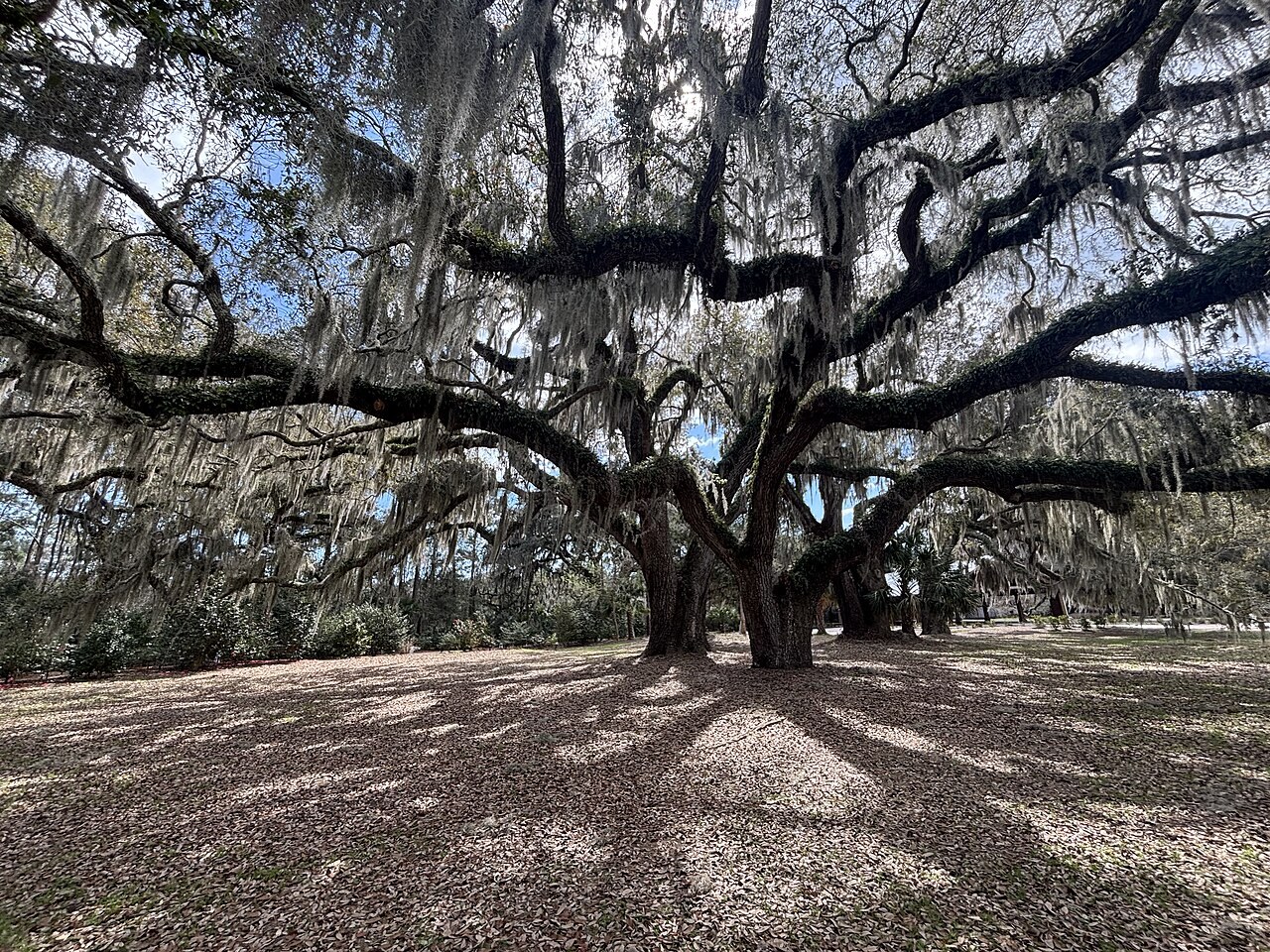
The evergreen oak of the Southeast coast, from Virginia to Florida and Texas. Open-grown trees spread far wider than they are tall, often draped with Spanish moss. Despite the evergreen leaves, it is a member of the white oak group. It is very wind-tolerant and long-lived.
Oregon White Oak (Quercus garryana)
The Pacific Northwest’s only native oak, from southern British Columbia through western Washington and Oregon into California. Oak prairies and savannas dominated by this tree are among the region’s most threatened habitats, and planting it is a high-value restoration step.
Gambel Oak (Quercus gambelii)
The oak of the southern Rockies and Colorado Plateau, forming dense, suckering thickets or small trees on foothills from Utah and Colorado to Arizona, New Mexico and west Texas. It is very drought and cold tolerant and a key food source for mule deer and wild turkeys.
Coast Live Oak (Quercus agrifolia)
An evergreen red oak of coastal California with holly-like, cupped leaves. It is the dominant tree of many coastal valleys and hills from Mendocino County to Baja California and is highly susceptible to sudden oak death in the north of its range.
Valley Oak (Quercus lobata)
California’s largest oak, a deciduous white oak of deep valley soils that can exceed 100 feet. Much of its original habitat has been converted to farms and cities, so it is a priority tree for restoration in the Central Valley and Coast Ranges.
More Native Oaks on Plant Native
Eastern, Southern and Midwestern oaks: Scarlet Oak (Quercus coccinea) · Black Oak (Quercus velutina) · Northern Pin Oak (Quercus ellipsoidalis) · Shingle Oak (Quercus imbricaria) · Chinkapin Oak (Quercus muehlenbergii) · Dwarf Chinkapin Oak (Quercus prinoides) · Bear Oak (Quercus ilicifolia) · Blackjack Oak (Quercus marilandica) · Overcup Oak (Quercus lyrata) · Swamp Chestnut Oak (Quercus michauxii) · Nuttall Oak (Quercus nuttallii) · Water Oak (Quercus nigra) · Laurel Oak (Quercus laurifolia) · Darlington Oak (Quercus hemisphaerica) · Swamp Post Oak (Quercus similis) · Sand Post Oak (Quercus margarettae) · Arkansas Oak (Quercus arkansana) · Maple-leaf Oak (Quercus acerifolia) · Oglethorpe Oak (Quercus oglethorpensis) · Georgia Oak (Quercus georgiana) · Boynton Oak (Quercus boyntonii) · Bluff Oak (Quercus austrina)
Florida and Coastal Plain sandhill and scrub oaks: Turkey Oak (Quercus laevis) · Bluejack Oak (Quercus incana) · Sand Live Oak (Quercus geminata) · Chapman Oak (Quercus chapmanii) · Myrtle Oak (Quercus myrtifolia) · Sandhill Oak (Quercus inopina) · Running Oak (Quercus pumila)
Texas and Southwestern oaks: Texas Red Oak (Quercus buckleyi) · Plateau Live Oak (Quercus fusiformis) · Lacey Oak (Quercus laceyi) · Bigelow Oak (Quercus sinuata var. breviloba) · Monterrey Oak (Quercus polymorpha) · Shin Oak (Quercus havardii) · Mohr Oak (Quercus mohriana) · Sandpaper Oak (Quercus pungens) · Gray Oak (Quercus grisea) · Wavyleaf Oak (Quercus undulata) · Emory Oak (Quercus emoryi) · Arizona Oak (Quercus arizonica) · Mexican Blue Oak (Quercus oblongifolia) · Silverleaf Oak (Quercus hypoleucoides) · Netleaf Oak (Quercus rugosa) · Toumey Oak (Quercus toumeyi) · Scrub Oak (Quercus turbinella) · Chisos Oak (Quercus graciliformis) · Coahuila Scrub Oak (Quercus intricata) · Lateleaf Oak (Quercus tardifolia) · Robust Oak (Quercus robusta) · Hinckley Oak (Quercus hinckleyi)
California and Pacific oaks: Blue Oak (Quercus douglasii) · California Black Oak (Quercus kelloggii) · Interior Live Oak (Quercus wislizeni) · Engelmann Oak (Quercus engelmannii) · Canyon Live Oak (Quercus chrysolepis) · Scrub Oak (Quercus berberidifolia) · Coastal Sage Scrub Oak (Quercus dumosa) · Pacific Scrub Oak (Quercus pacifica) · Tucker Oak (Quercus john-tuckeri) · Mueller Oak (Quercus cornelius-mulleri) · Leather Oak (Quercus durata) · Palmer Oak (Quercus palmeri) · Island Oak (Quercus tomentella) · Santa Cruz Island Oak (Quercus parvula) · Huckleberry Oak (Quercus vacciniifolia)
Several of these, including Hinckley oak, Boynton oak, Oglethorpe oak and island oak, are rare species with small wild ranges. Buy them only as nursery-propagated plants, never wild-dug.
Non-Native Look-Alikes
A few Old World oaks are planted in American yards, parks and wildlife food plots. They can be hard to tell from natives at a glance, and one is spreading into native woods.
- Sawtooth oak (Quercus acutissima), from East Asia. Its narrow, chestnut-like leaves have a row of bristle-tipped teeth, and its acorns sit in a cup fringed with long, curling scales. It grows fast and was widely promoted for deer and turkey food plots, but it now seeds into native forests in the Southeast and Mid-Atlantic and is listed as invasive or an emerging invasive threat by invasive-plant councils in several states. Do not plant it; for acorn production choose a native white oak, swamp chestnut oak or Shumard oak instead.
- English oak (Quercus robur), from Europe. A white-group oak with small, round-lobed leaves with ear-like lobes at the base and a very short leaf stalk, and acorns held on long stalks. It is common in older plantings in the Northeast, Midwest and Pacific Northwest, and the narrow upright ‘Fastigiata’ form is popular in cities. It occasionally self-seeds near plantings.
- Cork oak (Quercus suber), from the Mediterranean. An evergreen oak with small, gray-backed leaves and thick, spongy, deeply fissured bark that is the source of commercial cork. It is grown as a street and park tree in California and the Southwest, where it is easy to confuse with native live oaks until you touch the bark.
- Other imports include holm oak (Q. ilex) in California and Chinese cork oak (Q. variabilis), which looks like sawtooth oak but has whitish leaf undersides.
Growing & Care Guide
Light
Almost all oaks grow best in full sun. White oaks, red oaks and many others tolerate partial shade when young and can wait for years beneath the canopy, but they need sun to mature and produce good acorn crops.
Soil & Water
Match the oak to your site. For wet or heavy soils choose swamp white, pin, willow, overcup, Nuttall or swamp chestnut oak. For dry, sandy or rocky ground choose post, blackjack, chestnut, bear, turkey or scrub oaks. For alkaline soils choose bur, chinkapin, Shumard, live or Texas red oak. In the arid West, native oaks such as Gambel, blue, Engelmann and scrub oaks need little or no irrigation once established; summer watering near the trunk of established California oaks invites root rot.
Planting Tips
Oaks quickly form a deep taproot, so small trees, seedlings and even acorns establish faster than large balled trees. Plant in fall or early spring, keep grass and weeds away from the root zone, and protect young trees from deer and rabbits with a tube or cage for the first several years. A small oak often overtakes a larger transplant within a decade.
Pruning & Maintenance
Prune young oaks in winter to develop one strong central trunk. In regions with oak wilt (much of the Midwest, Texas and parts of the East), avoid pruning or wounding oaks in spring and early summer (roughly February through July, depending on region), when the sap beetles that spread the fungus are active; red oaks are especially susceptible. In coastal California and southwest Oregon, sudden oak death affects tanoak, coast live oak and several other species. Protect established oaks from soil compaction, trenching and grade changes, which kill more mature oaks than any disease.
Propagation
Collect acorns as soon as they fall and float-test them; discard any that float. Plant white oak acorns right away in fall because they sprout quickly. Red oak acorns need a winter of cold, moist stratification and can be planted in fall outdoors or kept in the refrigerator in damp sand and sown in spring. Protect seed beds from squirrels and jays.
Landscape Uses
- Large shade trees for yards, parks and streets
- Wildlife habitat: the single best genus for supporting insects, birds and mammals
- Savanna and prairie-edge restoration with bur, white, post and Oregon white oaks
- Rain-garden edges and wet sites with swamp white, pin, overcup and willow oaks
- Coastal and wind-exposed sites with live oak and sand live oak
- Dry hillsides, chaparral and xeric gardens with western scrub oaks and Gambel oak
Wildlife & Ecological Value
For Pollinators
Oaks are wind-pollinated, so bees visit them mainly to collect pollen in spring. Their real importance to insects is as host plants. Research by entomologist Doug Tallamy found that oaks support more species of moth and butterfly caterpillars than any other genus of North American trees, numbering in the hundreds, along with many gall wasps, leaf beetles and other insects.
For Birds
Those caterpillars are the main food that chickadees, warblers, vireos and other songbirds feed their nestlings. Acorns feed wild turkeys, wood ducks, blue jays, acorn woodpeckers, red-headed woodpeckers and many others. Blue jays carry and bury acorns, planting new oaks far from the parent tree.
For Mammals
Acorns are a critical fall and winter food for white-tailed and mule deer, black bears, squirrels, chipmunks, mice and raccoons. In good “mast” years, acorn crops affect deer health and the populations of mice and the animals that eat them for years afterward.
Ecosystem Role
Oaks dominate or co-dominate forests over much of the country and shape fire-adapted savannas from the Midwest to Oregon and California. Their slow-rotting leaf litter builds soil and shelters overwintering insects. Old oaks with cavities house owls, woodpeckers, bats and flying squirrels.
Cultural & Historical Uses
Oak wood built American ships, barns, furniture and floors. White oak’s watertight wood made barrels for whiskey and wine, and the frigate USS Constitution earned the nickname “Old Ironsides” in part because of its live oak frame, which cannonballs failed to pierce. The U.S. Navy once set aside live oak forests in the South to secure its supply of ship timber.
Acorns were a staple food for many Native American peoples, especially in California, where acorns of black, tanbark, valley and other oaks were gathered each fall. They were shelled, ground and leached in water for many hours to remove bitter tannins before being made into mush or bread. This was a specialized traditional process; raw acorns are high in tannins and can cause illness, and they are a known cause of poisoning in livestock and dogs.
Oak bark was the main source of tannin for leather tanning in early America, and oak galls were used to make ink. In 2004 the oak was named the national tree of the United States.
Frequently Asked Questions
How do I tell a white oak from a red oak?
Look at the leaf tips. White oak group leaves have rounded lobes with no bristles; red oak group leaves have pointed lobes or tips ending in small bristles. White oak acorns mature in one season and sprout in fall; most red oak acorns take two seasons and sprout the next spring.
Which oak grows fastest?
Among native oaks, northern red oak, pin oak, willow oak, water oak, Nuttall oak and Shumard oak are relatively fast, often growing 1 to 2 feet a year on good sites. White oak, post oak and most western oaks are slower but extremely long-lived.
Is there a native oak for small yards?
Yes. Consider dwarf chinkapin oak, bear oak or blackjack oak in the East; Lacey oak or Mohr oak in Texas; Gambel or scrub oak in the Southwest; or one of the California scrub oaks. Bur oak and white oak need room for a crown 60 feet or more across.
Are acorns poisonous to dogs and horses?
They can be. Acorns and oak leaves contain tannins that can cause stomach upset and, in larger amounts, kidney damage in dogs, horses and cattle. Rake up heavy acorn drops in areas where pets or livestock graze.
Is sawtooth oak a good wildlife tree?
It produces lots of acorns quickly, but it is not native and is spreading into forests in the Southeast and Mid-Atlantic. Native oaks support far more insects and produce acorns that wildlife use just as well. Plant a native oak suited to your site instead.

Looking for a nursery that carries native oaks?
Browse our native plant nursery directory: Alabama, Arizona & Arkansas · California · Colorado, Connecticut, Delaware, Florida & Georgia · Illinois, Indiana, Iowa & Kansas · Kentucky, Louisiana, Maine, Maryland, Massachusetts, Michigan, Minnesota, Mississippi, Missouri & Montana · Nebraska, Nevada, New Hampshire, New Jersey, New Mexico, New York, North Carolina, North Dakota, Ohio & Oklahoma · Oregon · Pennsylvania, Rhode Island, South Carolina, South Dakota, Tennessee, Texas, Utah, Vermont & Virginia · Washington · West Virginia, Wisconsin & Wyoming

